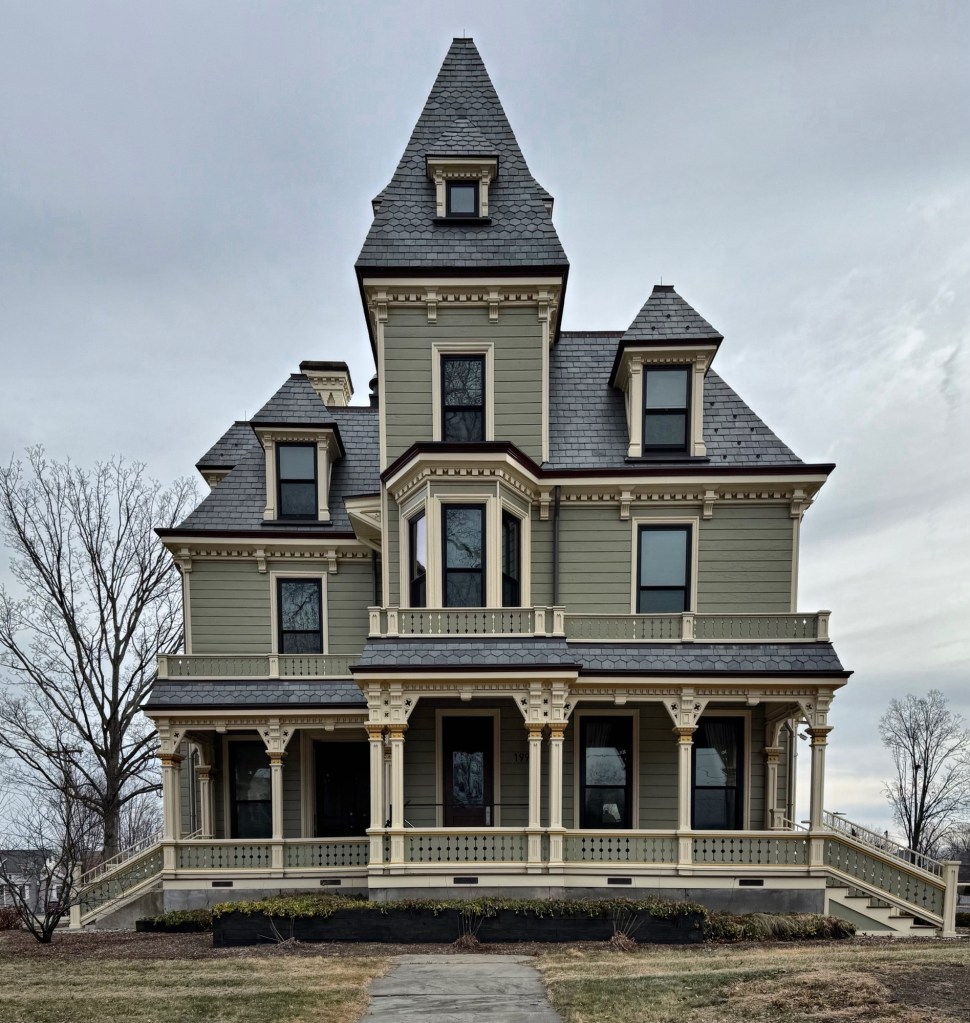
Emerson Gaylord Mansion // c.1871

Emerson Gaylord (1817-1899) was a businessman and politician from Chicopee, Massachusetts, who operated the Gaylord Manufacturing Company and later, the Ames Sword Company, furnishing military swords and other goods for the Union during the Civil War. His business did extremely well and he became one of the wealthiest men in the industrial city. In 1856, Gaylord purchased the property at the corner of Springfield Street and Fairview Avenue and resided in a home here until years following the war, when he demolished the original structures on the site in 1870 to build a new home currently known as the Gaylord Mansion, worthy of his stature and notoriety in Chicopee. In 1962, Elms College purchased the Gaylord Mansion for $50,000. In 1997, an Elms College Cornerstone Campaign raised $100,000 to refurbish the exterior of this historical treasure. In February 2020, the Gaylord mansion underwent another renovation by the college to transform the interior into a classroom-meeting space with dorm residences on the top floors dubbing it “Living-Learning, Community and Cultural Center”.
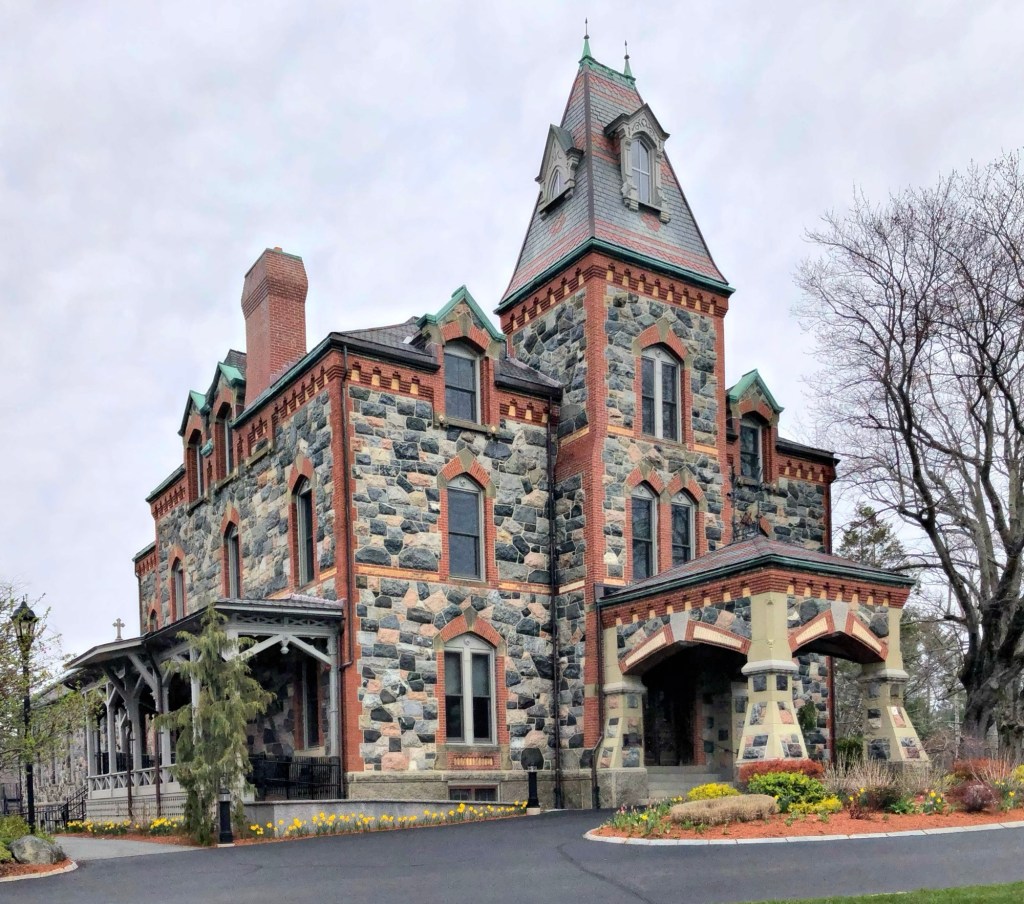
Porphyry Hall // 1880

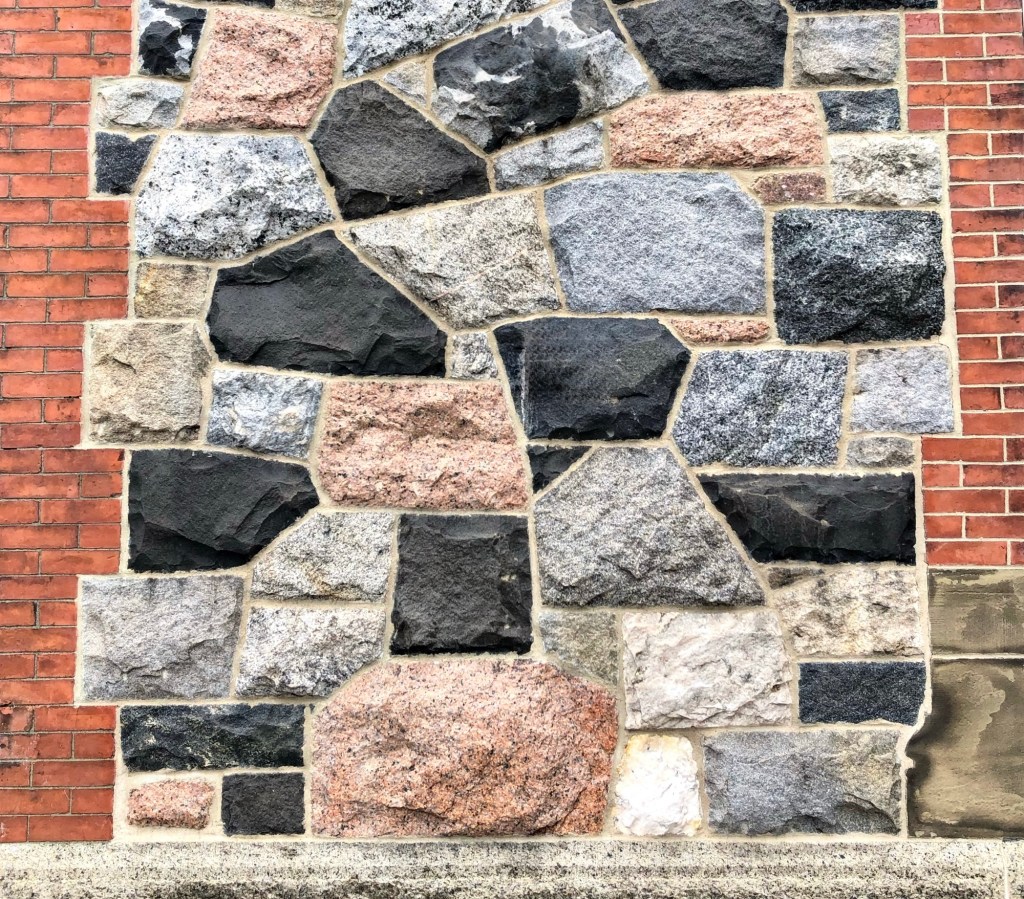
The Jacob E. Spring Mansion, also known as Porphyry Hall, is a high-style estate house located in Danvers, Massachusetts, that is one of the finest and most unique in the state! The house was built in 1880 for Jacob Evans Spring (1825-1905), who was born in Brownfield, Maine, and at the age of twenty, he went to Argentina and amassed a fortune in the wool business in Buenos Aires between 1845 and 1865, when he returned to the United States. Jacob and his wife, Sara Duffy, would purchase a large farm in Danvers and began planning for their family country home. Their residence was built on a high hill over two years and constructed of over 40 types of stones of irregular size and color with door and window sills of Nova Scotia freestone with arches of the doors and windows and corners of brick. The mansion was designed by architect George M. Harding of Boston, and built by several skilled masons over many months. Mr. Spring named his estate, “Porphyry Hall” with Porphyry meaning an igneous rock with large crystals in a fine-grained matrix; suitable for the walls of their mansion. The Spring’s lived lavishly at this home and spent nearly all of their fortune, selling the property after just ten years to the Xaverian Brothers, who opened it as Saint John’s Normal College. In 1907, the compound was re-organized as a Catholic boys prep school. In 1915, a chapel was added to the rear of the building, constructed from gray fieldstone to blend with the main house. Have you ever seen a building like this?

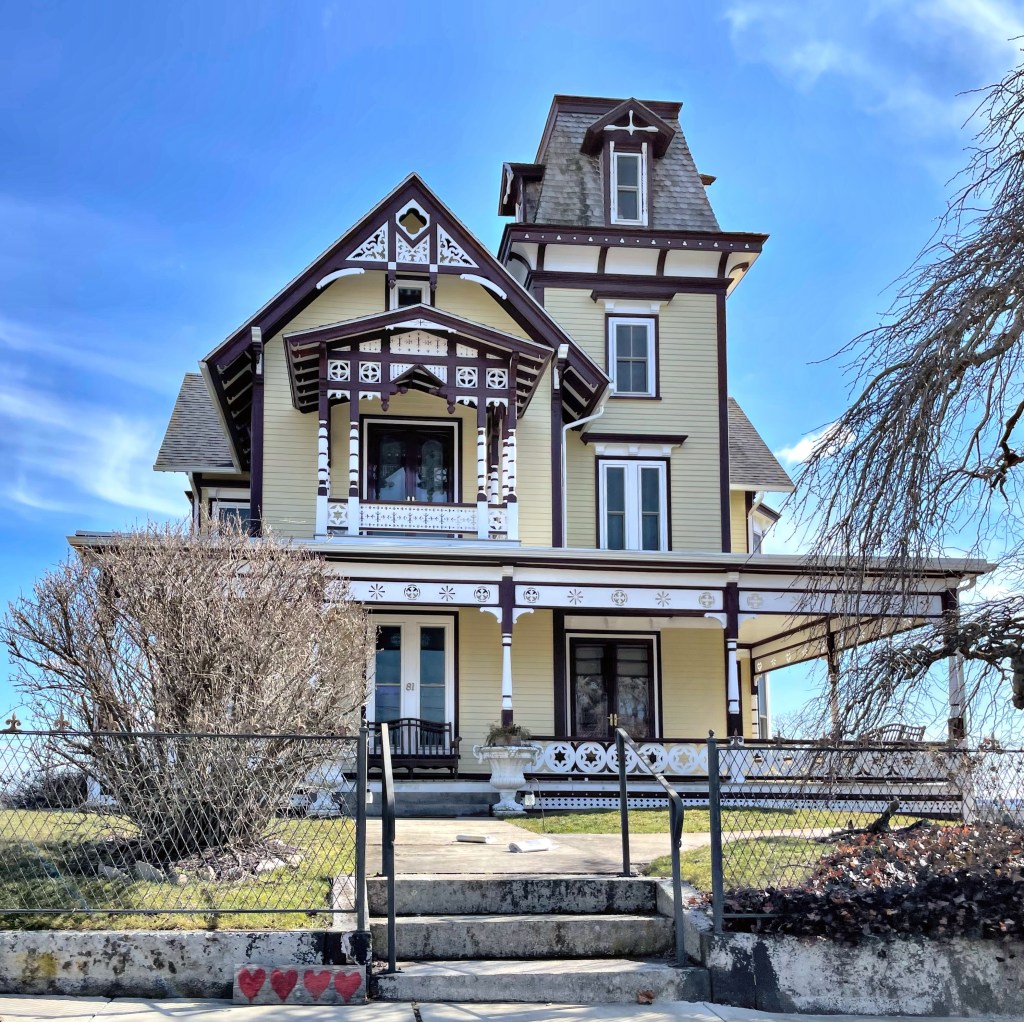
Deacon Robert Palmer House // 1884

Perched on the highest hill in the coastal village of Noank, Connecticut, you will find this absolutely enchanting gingerbread Victorian mansion. The house was built in 1884 for Deacon Robert Palmer (1825-1913), a wealthy man who wasn’t only deacon of the village’s Baptist church, he was the owner of a flourishing shipyard, and it was his shipyard workers who built him, with loving care, a house he could be proud of! Robert ran the shipyard in town first with his brother, and then with his son. During the late nineteenth and early twentieth centuries the shipyard was the largest facility for building and repair of wooden vessels in southern New England, employing over 300 men. The yard specialized in building railroad car floats, schooner barges, and dump scows as well as fishing smacks. Robert Palmer and Son went out of business in 1914 with the passing of the Robert. The Stick style mansion with mansard roofed tower remained in the Palmer family until the early 2000s when it sold and was restored to her former glory. The residence features exposed rafters, a pagoda-like second story balcony, a frieze with geometric cut-outs, and a wrap-around porch which provides sweeping views of the ocean. I can only imagine how beautiful this old Victorian is on the inside!