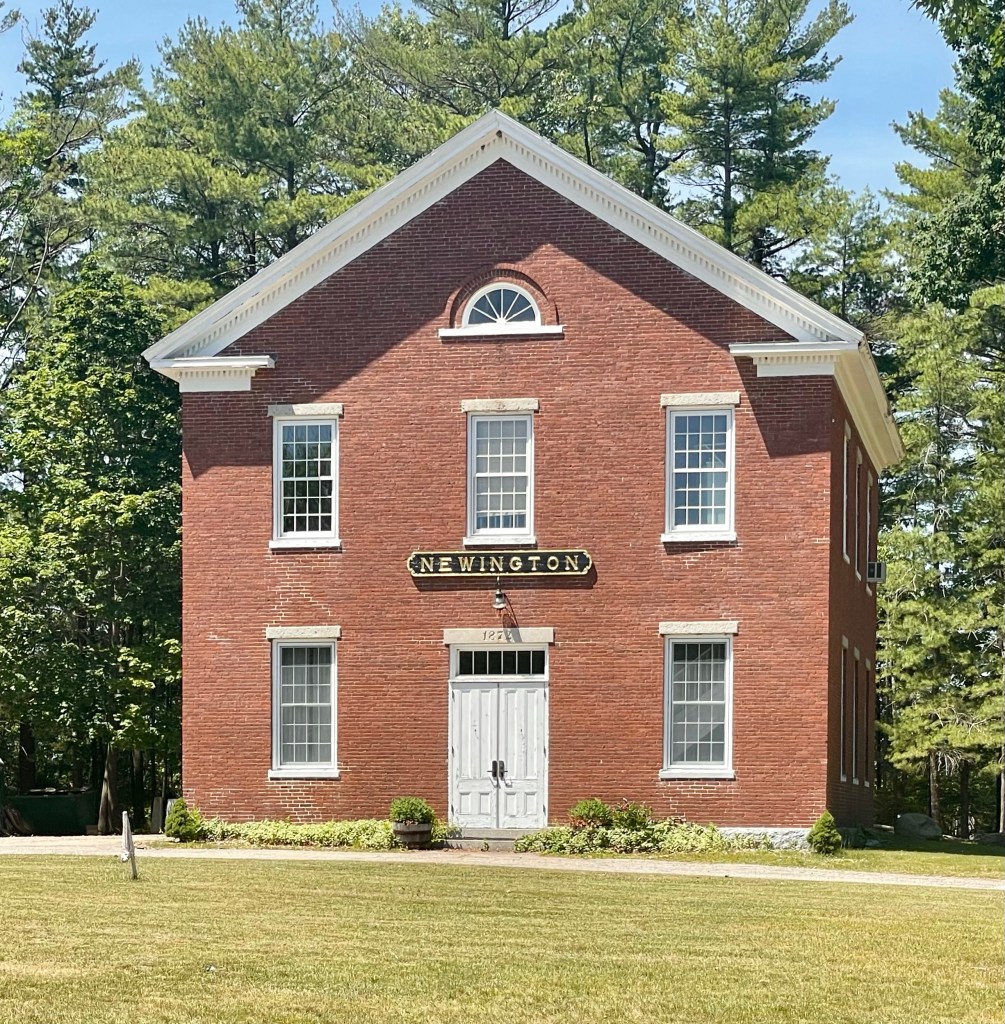
Set in Newington Center, the historic core of the quaint town of Newington, NH, this old Town Hall building looks much like it did when constructed 150 years ago. Newington was originally a part of the town of Dover, and due to boundary disputes among early river settlers and native people, this area was later called Bloody Point. The town was eventually incorporated in 1764, and town functions were held in the local meetinghouse, a common tradition at the time before the separation of church and state. After the American Civil War, the town erected this town hall building which was a one-stop shop for civic functions. The Old Town Hall has served as a school, meeting hall, government office building, home of the local Grange hall and as a local social hall. In 1872 when the building was completed, the town had just 414 residents, a number that has only doubled since that time. The design of the brick town hall is a blending of styles, all were out of fashion when this was built, which include Federal and Greek Revival elements. By the second half of the 20th century, new town offices were built nearby.
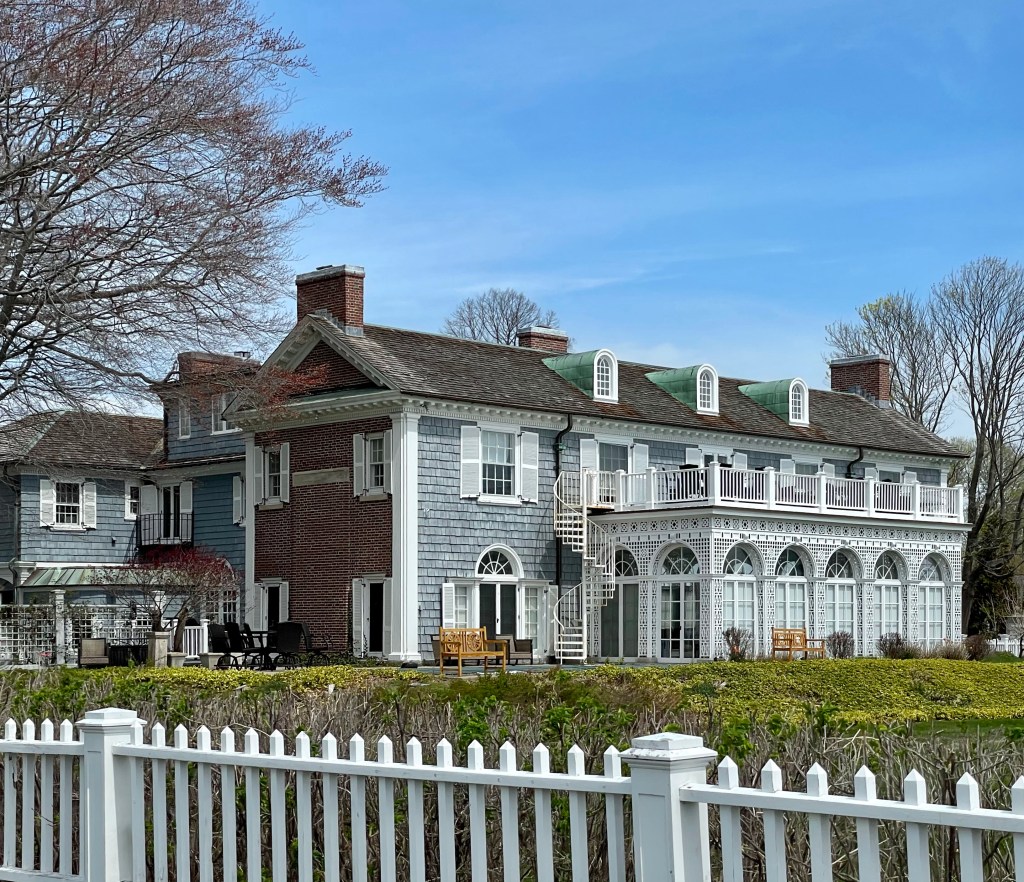
This magnificent coastal mansion embodies historical elegance in Rye Beach, NH. Built in 1914-15 for Clement Studebaker Jr., the Studebaker Estate is one of the most elegant and most recognized residences on the New Hampshire coast, and among the best preserved. The Colonial Revival home is clad with shingle siding with two strong brick end walls. A solarium runs along the ocean-facing facade with ample glazing and delicate woodwork which presents a welcoming presence to passing motorists. Clement Studebaker Jr. was an American businessman and the son of wagon, carriage and automobile manufacturer Clement Studebaker. He held executive positions in the family’s automobile business, Studebaker Corporation. The Studebaker summer residence was recently sold, and the interior photographs are amazing!
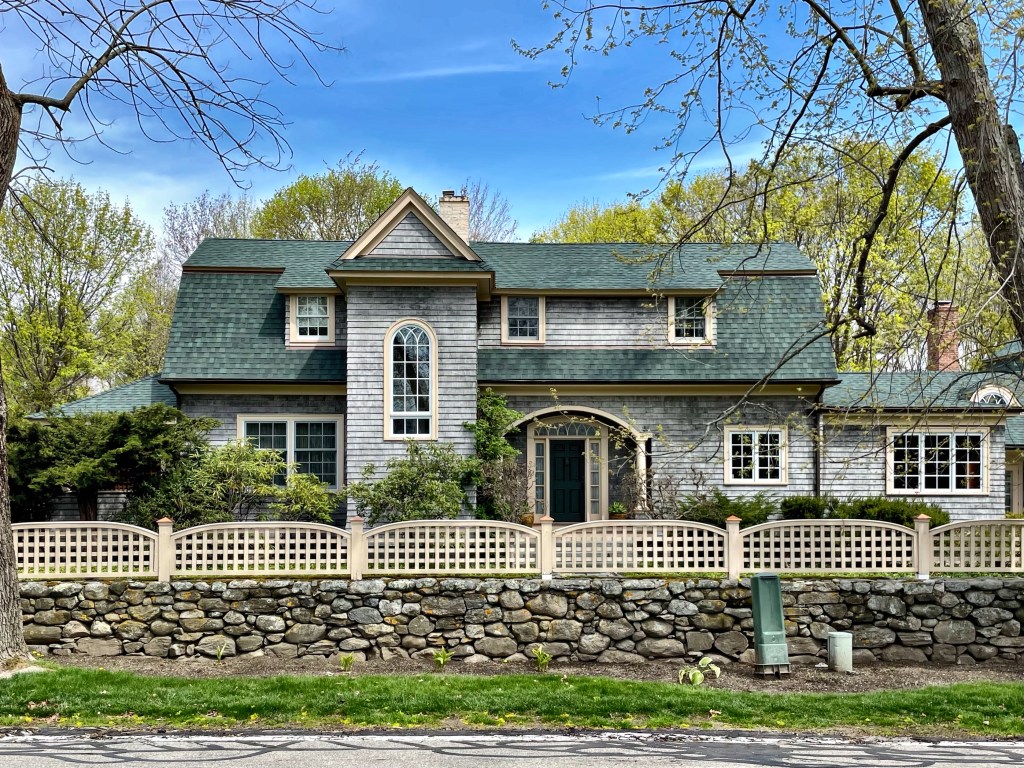
Built at the same time as his summer residence in Rye Beach (last post), George Allen had this gorgeous carriage house built to store his horses and carriage to get around his summertime town. The carriage house is a blending of the Colonial Revival and Shingle styles that mimics much of the main home’s design including the gambrel roof and columned entry. Sometime in the 20th century, with no more use of a carriage house, the property was sold off by heirs of Mr. Allen and converted to a private residence. The new owners have preserved the essence of the original use and made the home stand out among the adjacent mansions.
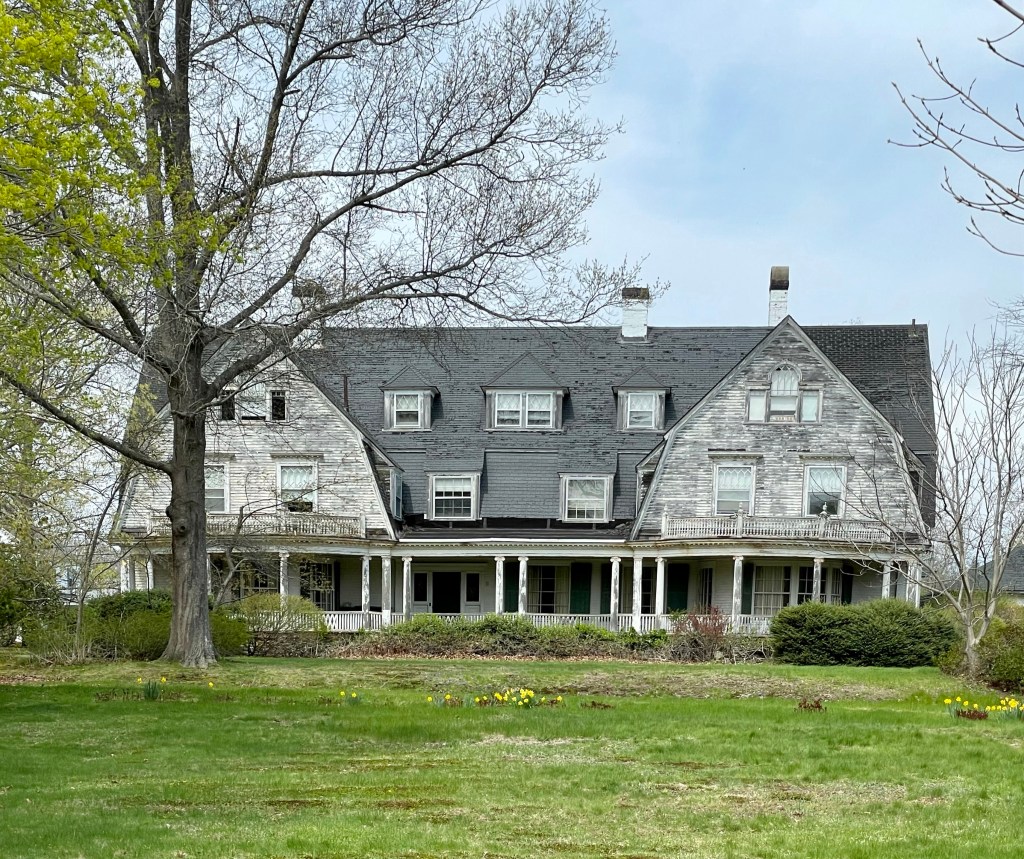
This massive summer “cottage” in Rye Beach, NH, was built around 1895 for St. Louis businessman George L. Allen. The massive Colonial Revival home features a gambrel roof with a series of gabled, hipped and shed dormers to break it up. A circular driveway would have allowed visitors for Great Gatsby-esque parties to get dropped off by their driver and enter right into the home’s large stair-hall. The most stunning facade is the rear, which faces a lawn with views out to the Atlantic Ocean. A full-length porch on the first floor sits recessed under the floor above to provide shelter from the harsh summer sun. Sadly, the mansion has seen better days and appears to be a shadow of its former self. Luckily, almost all of the historic windows remain and the home can definitely be saved. Fingers and toes are crossed to see this beauty preserved.
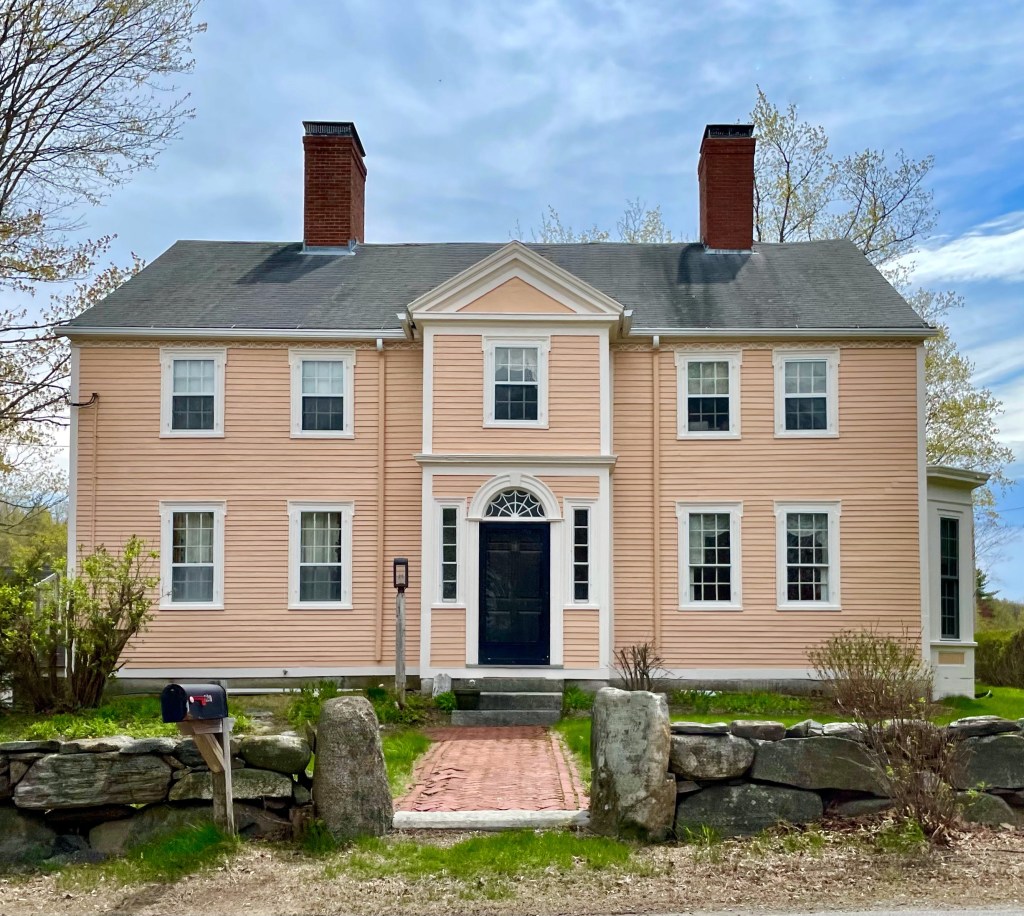
The Parsons Homestead in Rye, contains some of the most interesting early Federal-style design elements in the coastal towns of New Hampshire outside of the principal towns of Portsmouth and Exeter. When the Parsons House assumed its present appearance at the turn of the nineteenth century, Rye was a coastal farming community, but despite its rural character, the town developed distinctive preferences within the Federal style. There is no architect listed for the home, but it is highly likely a housewright took cues from William Pain’s “The Practical Builder” (1774, published in Boston in 1792). This book, inspired directly by the designs of British architect Robert Adam, allowed carpenters to take plans from one of the earliest “do-it-yourself” manuals ever published. The builders’ manuals and pattern book offered carpenters and other construction workers important resources for designs and techniques in house design and construction. Those unable to afford an architect’s services could feel confident in the good taste of their residence by selecting designs from a pattern book style in southeastern New Hampshire. Records show the land here was purchased in 1757 by Samuel Parsons (1707-1789). The property was acquired by his son Captain Joseph Parsons (1746-1832), who was a Doctor and Captain in the Revolutionary War. It is likely that he or his own son built this “modern” Federal home, and incorporated some of the old features of the family home inside.
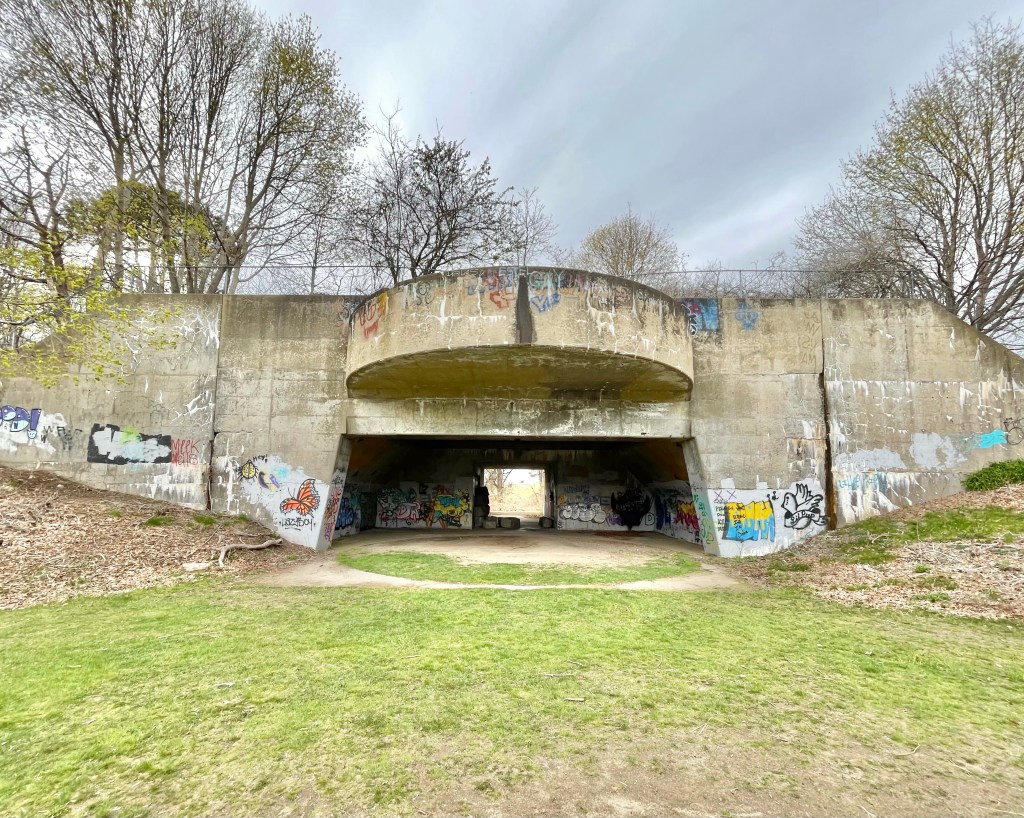
Odiorne Point in Rye New Hampshire was owned by the Odiorne Family from at least 1800, when the family built a farmhouse on the land. The peninsula juts out into the Atlantic Ocean, just south of Portsmouth, and it was seen as a strategic position by the United States Government, to protect the Portsmouth Naval Shipyard. With the advent of World War II, the United States Government deemed it necessary to improve the fortifications commanding the approaches to the Portsmouth Navy Yard, so the Government acquired this property and named it Fort Dearborn. Giant 16” coast defense guns and other equipment were installed to protect the coast from the impending German advance into North America. The Government acquisition on Odiorne’s Point included Mr. Odiorne’s home and 24 other properties, with many fine old homes on the coast demolished to make way for military facilities, but the Odiorne house was converted to a barracks. When The Nazi forces were beat in Europe, the fort was deactivated and all the guns were removed. In the Cold War period, the U.S. Air Force took formal possession of 45.3 acres at Odiorne’s Point in 1955, which it had been using since 1949 as the Rye Air Force Station. By 1961, the defensive use of the site was not as important, and the site was sold to the State of New Hampshire as a State Park. Today, you can explore the park and the decaying concrete batteries up close, which is a favorite excursion of mine.
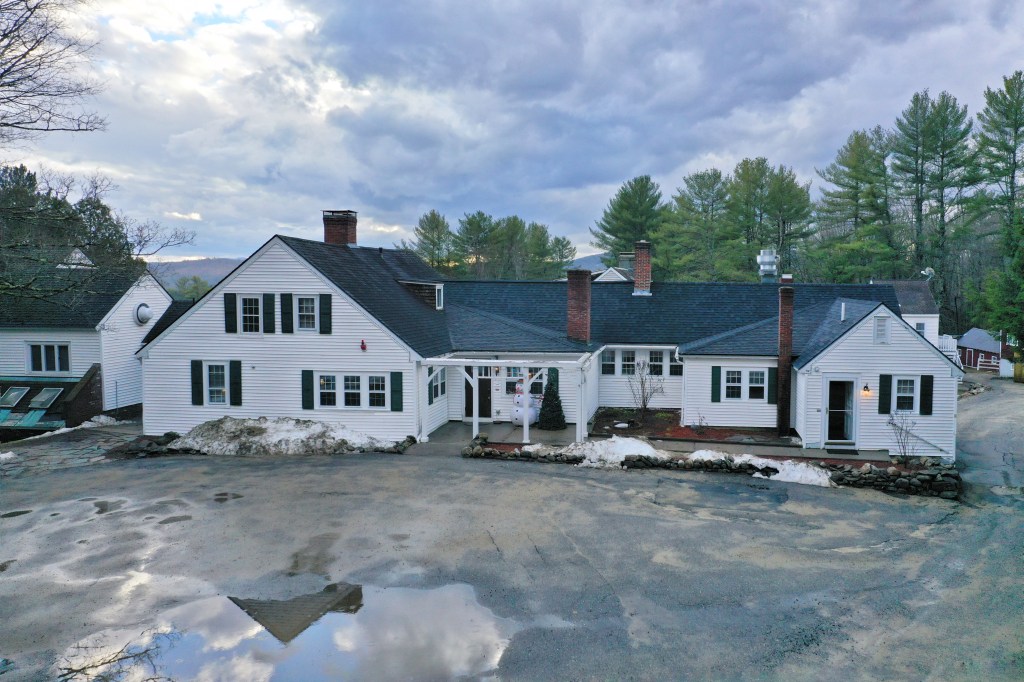
At the base of Ragged Mountain, on a winding dirt road lined by towering pine trees, I came across the New Hampshire Mountain Inn. The original Cape block of the house was built in the late 18th century and operated as a farm for a family in the rural town of Wilmot, New Hampshire. By the mid-19th century, the construction of the Northern Railroad through New Hampshire, created a housing demand for railroad workers who spent long days laying rail lines, thus the beginning of this farm becoming a short-term boarding house began. The railroad line was officially abandoned by the 1990s, and later converted to a linear park with biking, walking, and snowmobile trails in various sections. After the railroad’s construction, the farm saw visitors beginning in the 1930s, drawn to the area due to the skiing opportunities in the area. Subsequent owners added onto the farmhouse numerous times, to accommodate growing flocks of skiers every season. The house features telescoping additions, similar to many historic farms in New England, but on three sides, which expanded the once small farmhouse to a modern inn. The siting of the property on a hill overlooks the distant mountains with fresh country air blowing across the sloping fields.
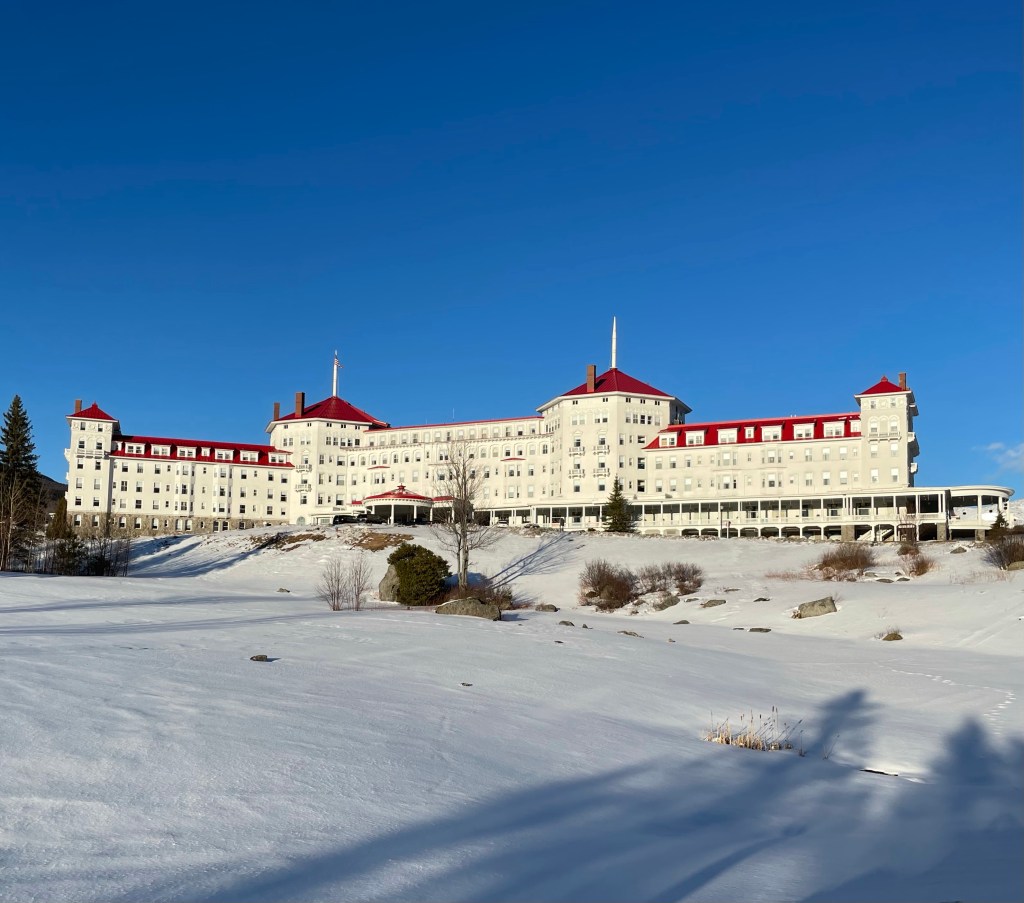
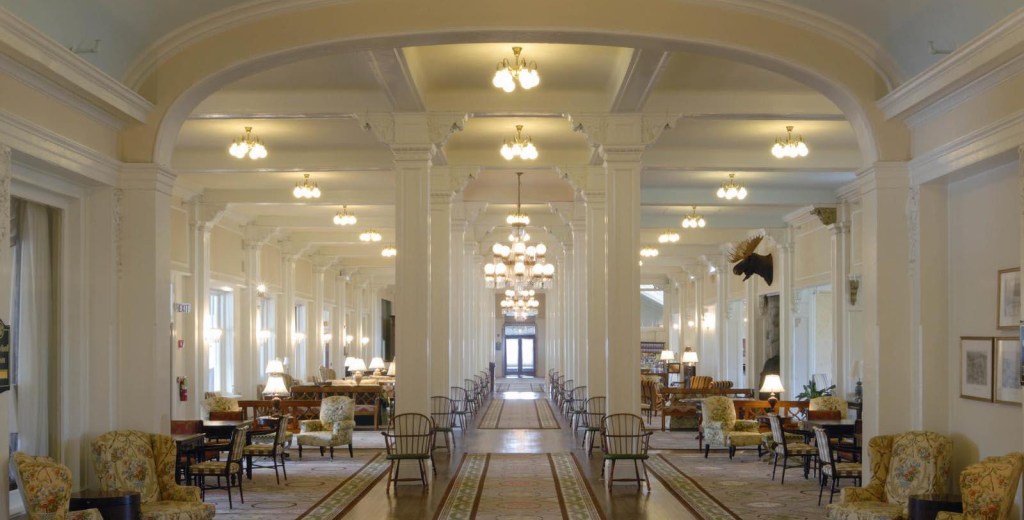
The Omni Mount Washington (originally the Mount Washington Hotel), surrounded by the great White Mountains of New Hampshire, was completed in 1902, at the end of the Gilded Age and the grand hotel era of America. The grand hotel was financed by Joseph Stickney, a native of New Hampshire, who made a fortune before the age of 30 investing in the coal business in Pennsylvania. In 1881, Stickney purchased the Mount Pleasant Hotel, a nearby summer resort and enlarged it, and acquiring a taste for hospitality development in the White Mountains (it was later demolished in the 1930s). He hired architect Charles Alling Gifford to design a new, larger resort across the street which in total, cost him over $50,000,000 in today’s dollars! Ironically, Joseph Stickney, had famously told the press on the opening day: “Look at me, for I am the poor fool who built all this,” as the economy was starting to turn right as the hotel opened. He died one year later in 1903. Nevertheless, up to fifty trains a day unloaded the families of the country’s wealthiest people, mostly from New York City, who stayed here for Summers at a time, leaving behind “the yellow fever and cholera in the cities” for fresh air and open space. The hotel’s design incorporated some of the most cutting-edge innovations of its age, including a steel-frame superstructure, an electrical power plant, and a sophisticated internal heating system. Roughly 250 Italian artisans were brought in to provide artistic touches to the structure by working on its exterior granite and stucco masonry including the two massive octagonal towers, and installing Tiffany stained glass windows.
After Joseph Stickney’s death in 1903, Carolyn his widow, became extremely rich (the couple never had children). Carolyn spent her summers at the hotel for the next decade, a nearby chapel honoring her late husband. The hotel did well in the subsequent decades until the advent of income tax, Prohibition, and the Great Depression, which harmed many large resorts’ profits. In 1936, Mrs. Stickney’s nephew, Foster Reynolds, inherited the hotel, but it closed in 1942 because of World War II. A Boston syndicate bought the extensive property for about $450,000 In 1944. The Bretton Woods monetary conference took place that year, establishing the World Bank and the International Monetary Fund. After subsequent owners, in 2015, the hotel and the Bretton Woods Mountain Resort were purchased by Omni Hotels & Resorts, who have been advocates to the history and preservation of the building and surrounding area, also overseeing the hotel’s inclusion to the illustrious Historic Hotels of America list.
There is so much more I could write about the Omni Mount Washington Resort, from the incredible interior spaces, to Carolyn’s marriage to a French prince, to the supposedly haunted sites… So much history to uncover, so little time!
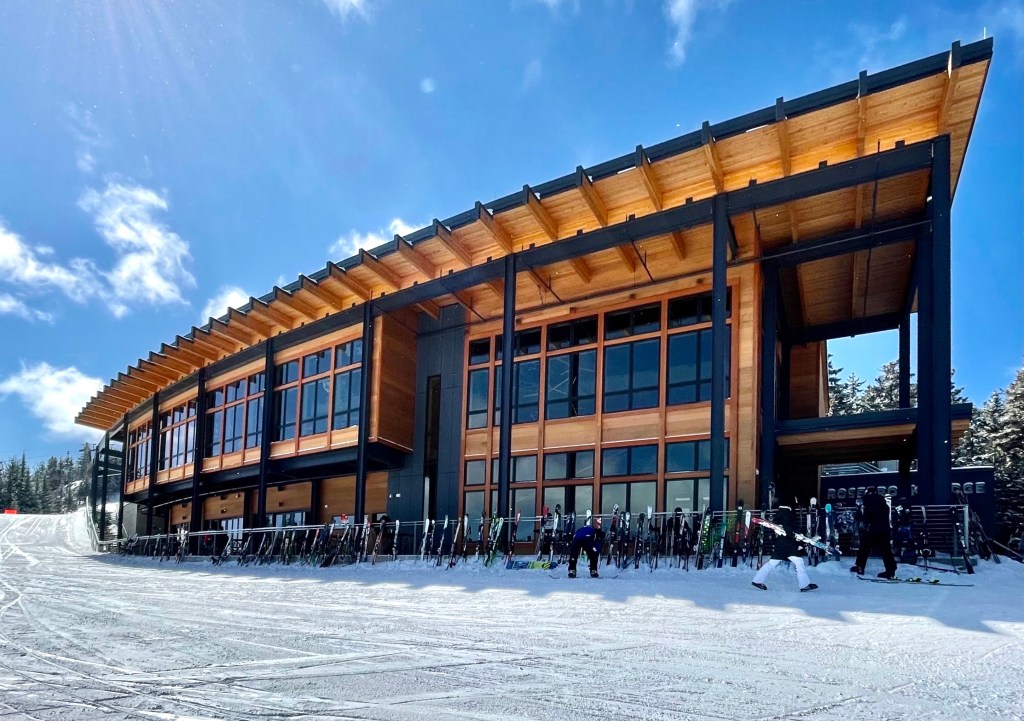
Located at the top of Rosebrook Mountain in the Bretton Woods Ski Resort, this stunning modern lodge building provides possibly the best mountain views in New England. After a couple runs on the slopes, I took the gondola up to the top, exiting to a sweeping view of the White Mountains and the iconic Mount Washington Hotel (more on that later). At the top, is this large, well-sited lodge which is perched upon the mountainside, and an excellent example of Contemporary design done right! Appropriately named Rosebrook Lodge, the new building was just completed in 2020 by designs from architectural firm Bull Stockwell Allen from San Francisco, with help from TruexCullins on the interior design. The two-story lodge is constructed from of timber, steel, stone and glass, which complement the region’s rugged natural beauty and provide a sleek space for on-mountain dining or aprés ski. Inside, the building highlights the outside with walls of windows with warm lighting and woodwork that make relaxing effortless.
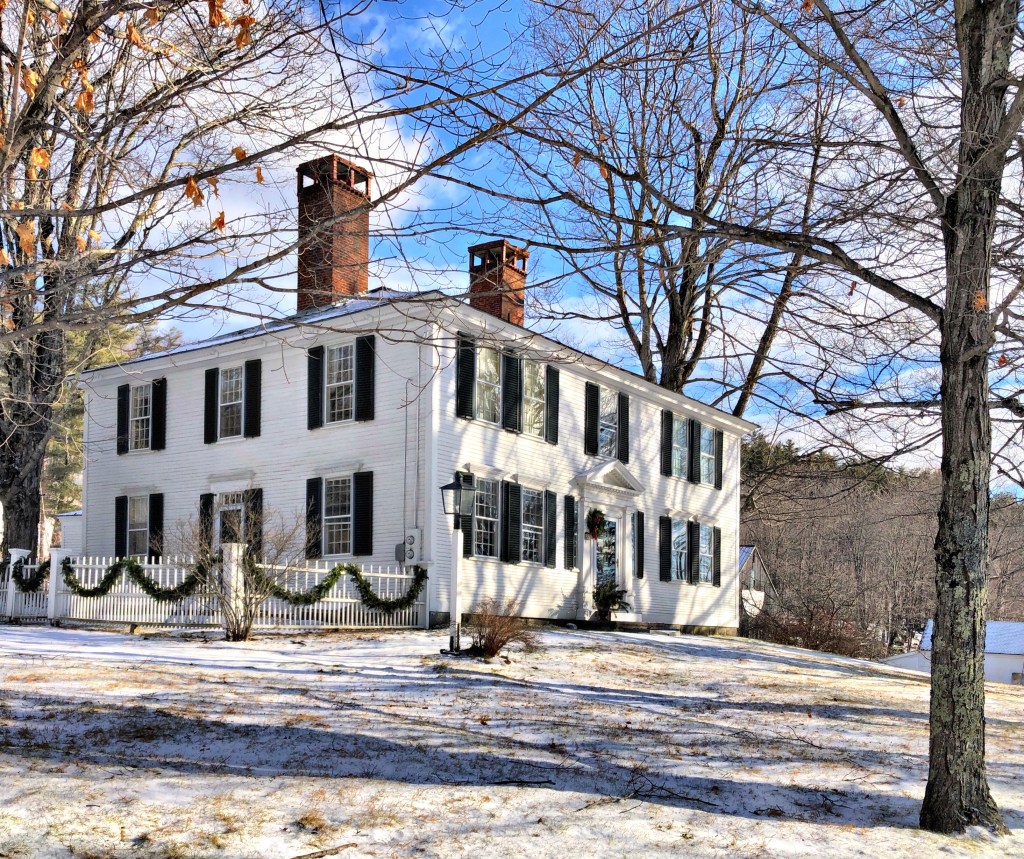
Located adjacent to the Washington Town Green, the Faxon House exemplifies the Georgian architectural style seen in small towns all over the region. The home was built in the early 1790s by a member of the Faxon family. By the early 19th century, the home was owned by Azariah Faxon a storekeeper and the schoolmaster at the District #1 School, which at that time was located between the Town Hall and the Congregational Church in the center of town before being replaced with a larger structure. In 1793, an eight-year-old Sylvanus Thayer moved up to Washington from his family home in Braintree, Massachusetts, to live with his uncle, attending school where he was a teacher. While there, impressionable Sylvanus met Benjamin Pierce, father of future President Franklin Pierce. Both General Pierce and Sylvanus’ Uncle Azaria, who had fought in the Revolutionary War, fed Sylvanus’ growing fascination with military matters, including the dazzling campaigns of Napoleon Bonaparte. Sylvanus later attended nearby Dartmouth College, and went on to become “the Father of West Point” as an early superintendent of the United States Military Academy at West Point and an early advocate of engineering education in the United States.



 Buildings of New England