Hammond Hall // 1903

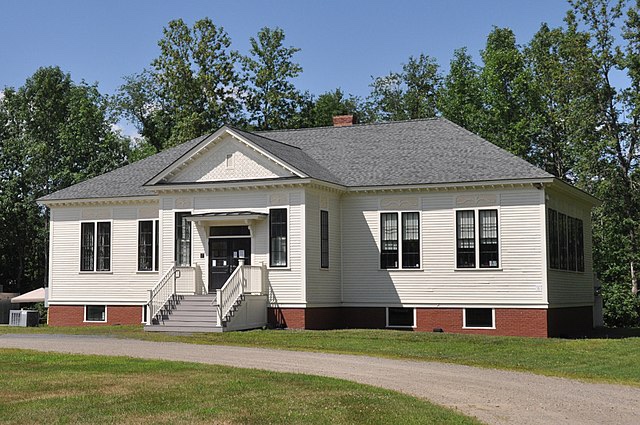
Winter Harbor, Maine, may just be my new favorite place in the state! The town is located just east of Mount Desert Island, south of Gouldsboro (of which it was a village within the town). In 1895, after the Grindstone Neck summer colony was developed, the town’s increased finances and outlook led them to incorporate as a separate town. And what does any new town need? A town hall! Construction of the hall was proposed in 1902 by Edward J. Hammond, owner of a local lumber business who made his fortune shipping and selling the Maine lumber in Boston. Hammond donated the building materials and building lot after a fire swept through Winter Harbor village. The town offices moved out of the building in 1958, and the main hall continued to be used as a school gymnasium until 1987. The town then sold the building to the Winter Harbor Historical Society. Lack of funding by the turn of the present century resulted in the building’s decline, and it was slated for demolition in 2002. It was rescued by Schoodic Arts For All, a cultural organization that brings a variety of events to the space, which now holds a long-term lease on the property. The building looks great today!

Southbury Training School // 1940

The Southbury Training School occupies about 1,500 acres of land in Southbury, Connecticut comprised of two major sections: a self-sustaining 400-acre institutional campus and its contiguous 1,100-acre farm complex. Planning for the Southbury Training School began in 1935 at the height of the Great Depression. The State needed to provide housing and services for 1,200 residents on the waiting list for the Mansfield Training School, the state’s only facility for the mentally handicapped at that time. Site planning and development were the responsibility of architect Edwin A. Salmon, later Chairman of the NYC Planning Commission, along with A. F. Brinckerhoff, who was hired as the landscape architect. Two buildings of the nearly 100 that comprise the campus stood out to me the most, they are the Roselle School and the Administration Building. Both structures were built in 1940 and are hallmark examples of inter-war Colonial Revival style buildings for institutional use. Both structures have large cupolas at the roof and symmetrical facades with applied wood ornament over the brick. The Roselle School has a recessed entry and the Administration Building is notable for its hipped roof and pilastered façade. In recent decades, the State of Connecticut has been under-funding the complex, leading to lawsuits and concerns statewide. The state has been moving residents and patients to other facilities, likely in order to sell-off or redevelop the campus in the future. This is one to watch out for!

A. C. Houghton Mansion // 1897

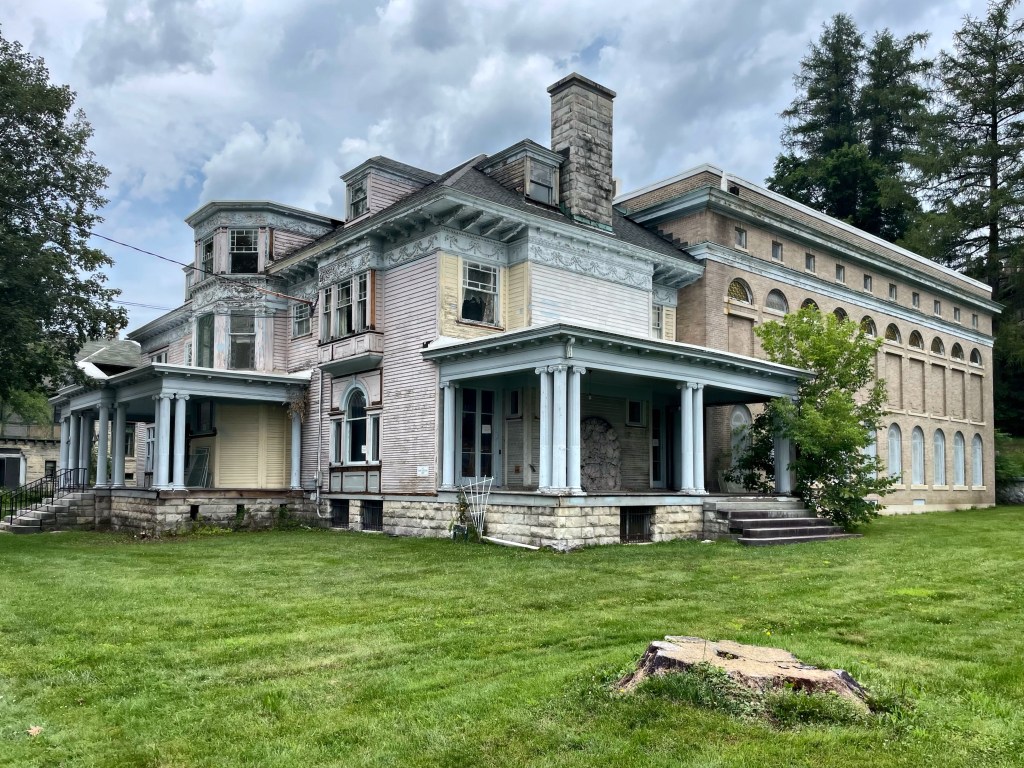
The first mayor of North Adams, Albert Charles “A. C.” Houghton (1844-1914), built this house on Church Street in 1897. Albert was born in Stamford, Vermont and would become president and principal owner of Arnold Print Works (now Mass MoCA campus) and the Beaver Mill in town. He did well for himself and had this large mansion built from plans by Berkshires architect Henry Neill Wilson. Tragically, on August 1, 1914, A. C. Houghton was being driven in town by his driver with his daughter Mary and her husband in the car. They crashed and both Mary and her husband died, with seventy-year-old Albert succumbing to his wounds over a week later in his home. His driver soon thereafter shot himself. The Houghton mansion was inherited by Albert’s wife Cordelia, who passed away in 1918. Their daughter Florence Gallup next inherited the mansion but was living in the Boston area, and she decided to sell the family home to the local Masonic Lodge in 1927. They likely added the brick addition at the rear for meetings and events soon after. It is not clear to me what the mansion is used for today, any locals have more information?

The Porches Inn // 1895

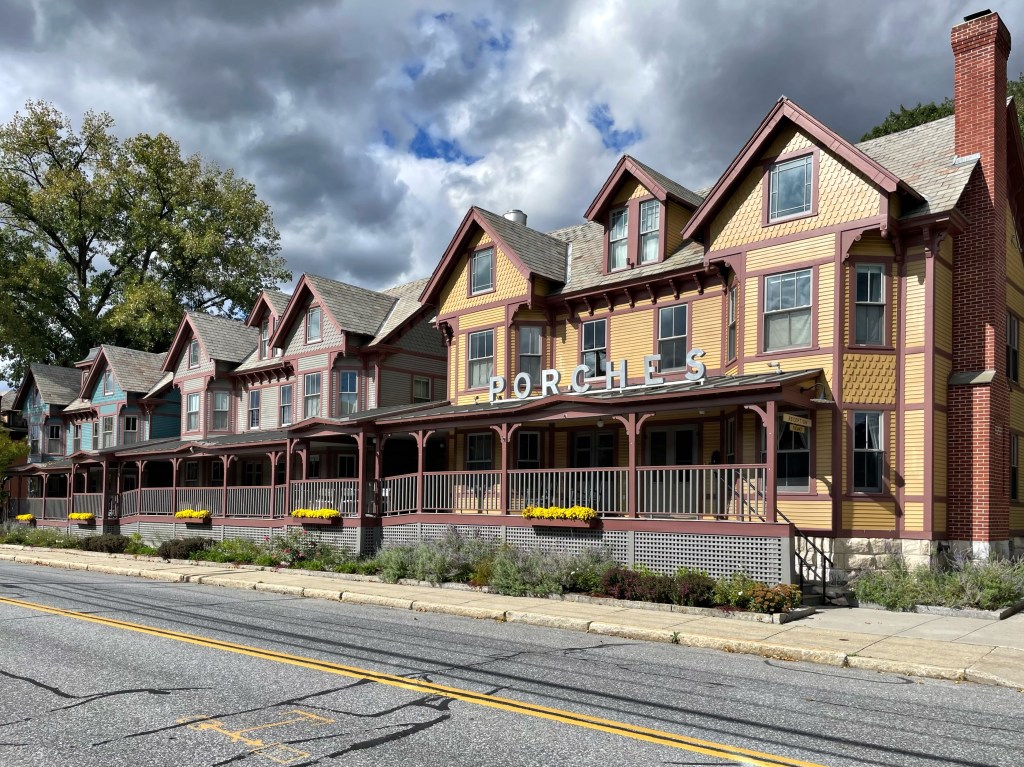
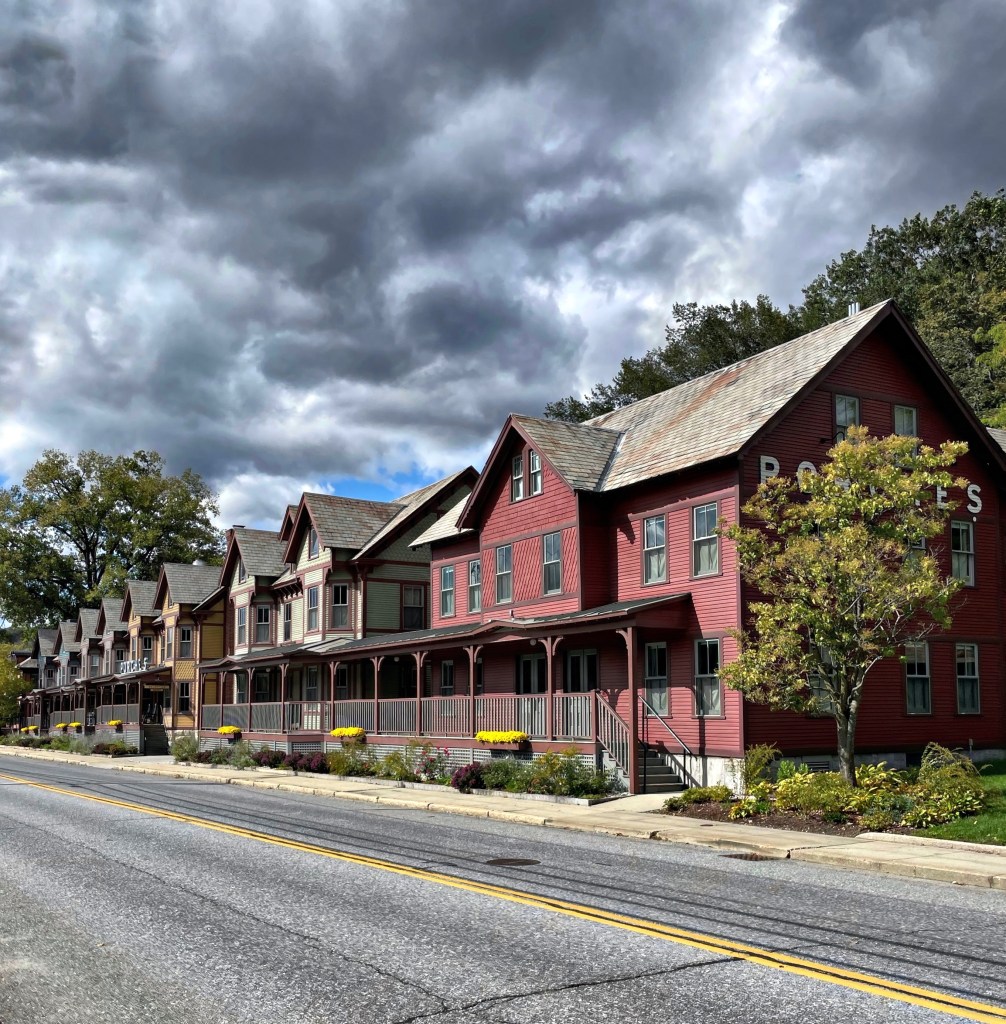
Prior to a few decades ago, there were not many reasons one would visit or stay a weekend in North Adams, Massachusetts. The former industrial city, like many others in the region, saw a sharp decline in population, services, and quality of life when many of the local factories closed in the second half of the 20th century. The major draw of tourists today is Mass MoCA, a museum in a converted factory building complex that is now one of the largest centers for contemporary visual art and performing arts in the United States! The new museum has created a huge demand for restaurants, housing, and hotels of all types in the formerly decaying river city. This is a story of perseverance and rebirth! In the early 2000s, Jack Wadsworth, an alumnus of nearby Williams College, wished to revitalize a block of vacant 19th-century workers houses across from the growing attraction of MASS MoCA. He worked with Burr and McCallum Architects of Williamstown to convert the decaying workers cottages into a boutique hotel. The span of Queen Anne and Colonial Revival cottages were joined via a long porch lined with rocking chairs, and the space between the buildings is bridged with skylights, giving the complex its appropriate name, Porches Inn.

Ashe House // 1898

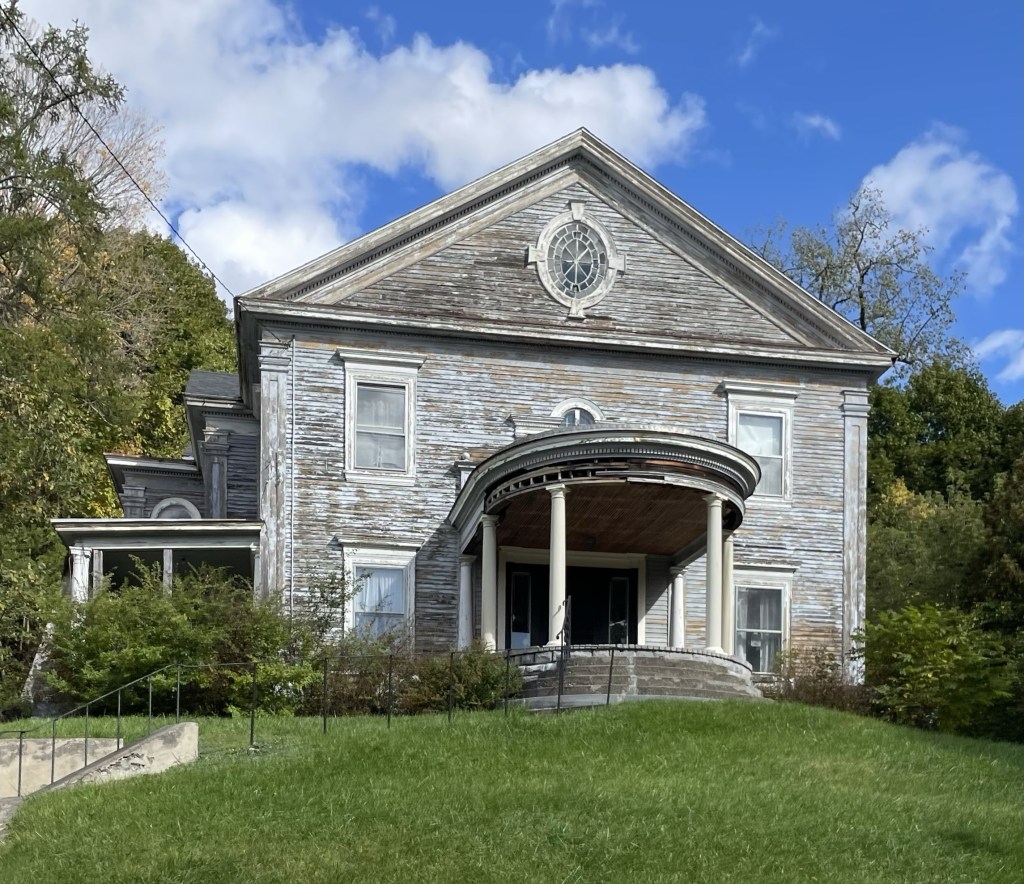
North Adams, like many formerly industrial towns and cities in New England has some amazing old Victorian and Colonial Revival houses built before the factories closed. Luckily for us, this town still has many unaltered residences, with some needing more love than others. This is the Ashe House, built in 1897-8 for Patrick J. Ashe and wife Katherine O’Brien. Classical details from many different styles make this house unique. An oval window dominates the traditional Greek facade which includes a pediment and side pilasters. A palladian window sits over the elliptical porch which is supported by columns. This one has so much potential!!

St. John of the Cross Catholic Church // 1907

One of the more substantial buildings in the small town of Middlebury, Connecticut is this large church which faces the town green. In 1904 St. John of the Cross Parish was granted ecclesiastical status however, a decade would pass before the newly constructed stone church on the Middlebury Green was dedicated on November 22, 1914. The building was constructed in rubblestone with a Classical Revival temple-front pavillion and two Renaissance Revival square towers with open belfries. Reports stated that the building took over five years to construct, which was almost entirely built with volunteer labor and built with stones taken from parishioners fields. The architect of the church is unknown.

Middlebury Town Hall // 1936

The first white settlers arrived in what is now the Town of Middlebury, Connecticut in the early 1700s, displacing Algonquin people who lived there long before. By the late 1700s, there was sufficient population to justify a petition to the General Assembly for establishment of a separate Middlebury ecclesiastical society, and such action was taken by the legislature December 29, 1790. They named the new town Middlebury due to its location between the existing towns of Waterbury, Woodbury and Southbury. The first church edifice was completed four years later, on the town green in the center of the new town. Other buildings normally found in a village center followed, including store, tavern, school, blacksmith shop and other churches. The town grew organically as a more agricultural center and saw some suburban development due to the proximity to larger population centers. In 1935, a fire destroyed the existing 1840s church and 1890s town hall, forcing the town to rebuilt. They hired J. Frederick Kelly, who was not only an architect but a historian who restored many significant buildings all over the state, to furnish plans for a new town hall. The present Classical/Colonial Revival building features two columns in antis and recessed pediment that echoes the adjoining Greek Revival church, but the Town Hall is executed in brick instead of wood (to give it more fireproofing than the last building). On the sides, the building has elliptical and round-headed windows and other elaborate details that suggest the Federal style.

Frederic Bronson Barn // c.1895

Not many buildings in Greenfield Hill, Fairfield, Connecticut showcase the neighborhood’s transition from farming community to affluent suburb quite as well as this stone barn turned house on Hillside Road. The stone barn was constructed around c.1895 for Frederic Bronson Jr. (1851-1900) a prominent New York attorney and treasurer of the New York Life and Trust Company which was founded by his grandfather, Isaac Bronson. In about 1892, Frederic demolished his ancestral home and hired architect Richard Morris Hunt to design a new country estate for his family. The house was called Verna and is also located in Fairfield. Today Verna is known best as the Fairfield County Day School. As with many wealthy men of the Gilded Age, Frederic wanted his rural retreat to also work as a gentleman’s farm, where he could have staff farm and tend to livestock on the expansive rolling hills bounded by historic stone walls. He appears to have had this barn built for his livestock shortly after the main house, Verna was completed nearby. Bronson died in 1900 and some of the property was later sold off. This property was acquired by a Charles Stillman in 1941 and it is likely him that converted the barn into a charming residence.

Harold C. Bullard House // 1927

Some towns have the best (and high quantity of) examples of Colonial Revival houses in New England, and Fairfield, Connecticut is definitely one of those towns! This house on Barlow Road was erected in 1927 by Harold Camp Bullard (1879-1949), an engineer at the Bullard Machine Tool Company of Bridgeport, which was started by his father. The architect of the house is unknown, but the property stands out for its bold proportions, prominent Palladian window over the rounded entry portico, and rounded dormers at the gambrel roof.

Greenfield Hill Congregational Church // 1855

Local residents of northern Fairfield successfully petitioned the General Assembly to establish a Congregational church in 1725 as a new Northwest Parish, a distinct group from the Fairfield Congregational Church. Their first meeting house was erected just years later in 1727. A larger, more substantial meetinghouse was built in 1760. The area of Greenfield Hill has always been remote and more suburban, but became important in the late 18th century when Timothy Dwight became minister of the Greenfield Hill Congregational Church in 1783. Dwight would go on to become the eighth president of Yale College (1795–1817). With increased funds and affluent members, another church was built in 1850 from plans by esteemed architect Richard Upjohn, in the Gothic style. Sadly, just years after it was completed, a fire from a furnace inside destroyed the church. So again, they rebuilt in 1855 with the building we see today, sort of. Architect Alfred Nash furnished plans for the building which was more Italianate in design. The church would be modernized in the 1940s in the Colonial Revival style, from plans by local architect Cameron Clark, likely inspired by the collection of Colonial-era homes nearby, including his own home in Greenfield Hill. The church remains a visual anchor for the affluent neighborhood.