Woodstock Artists Association & Museum // 1919

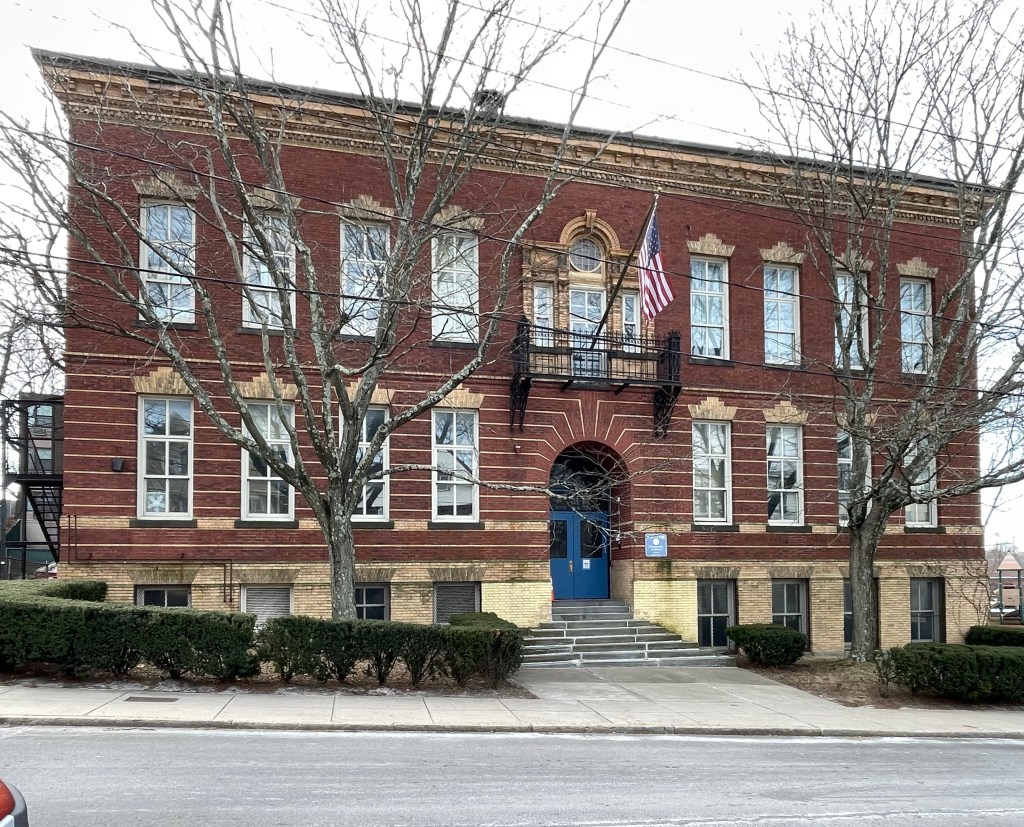
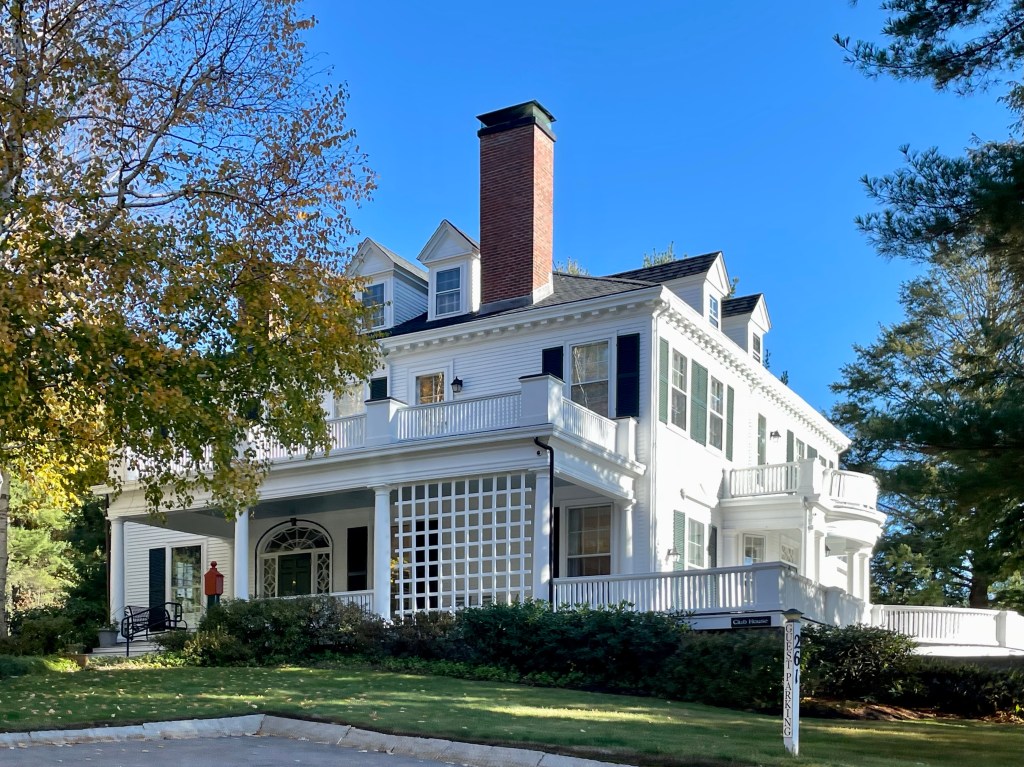
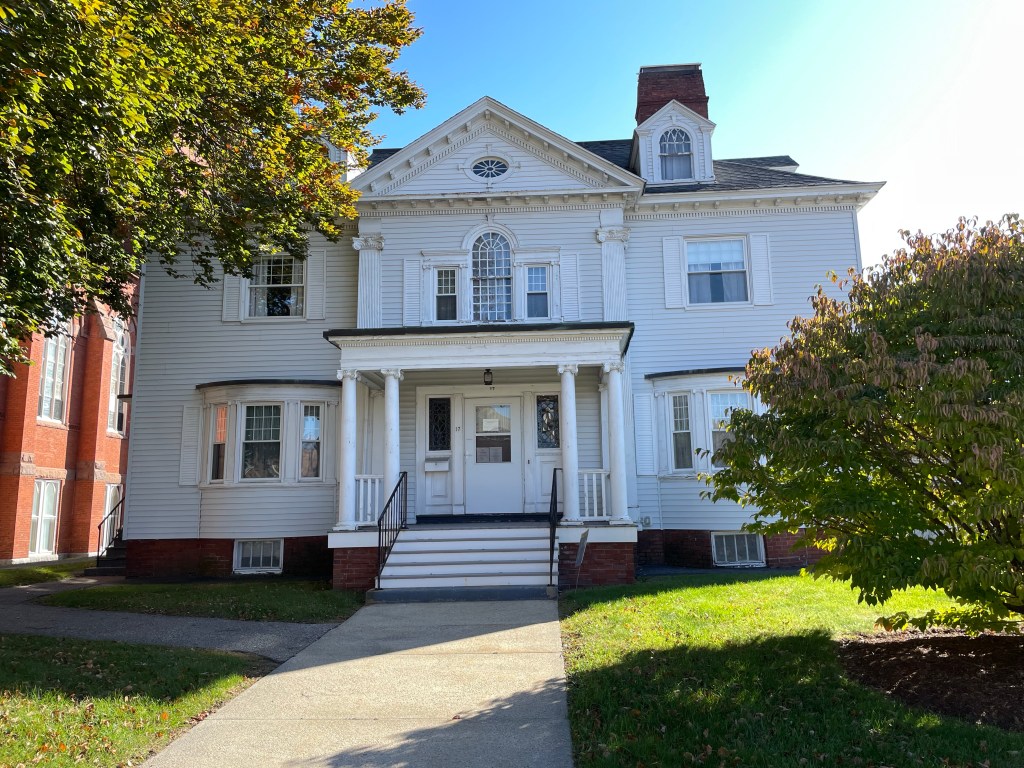
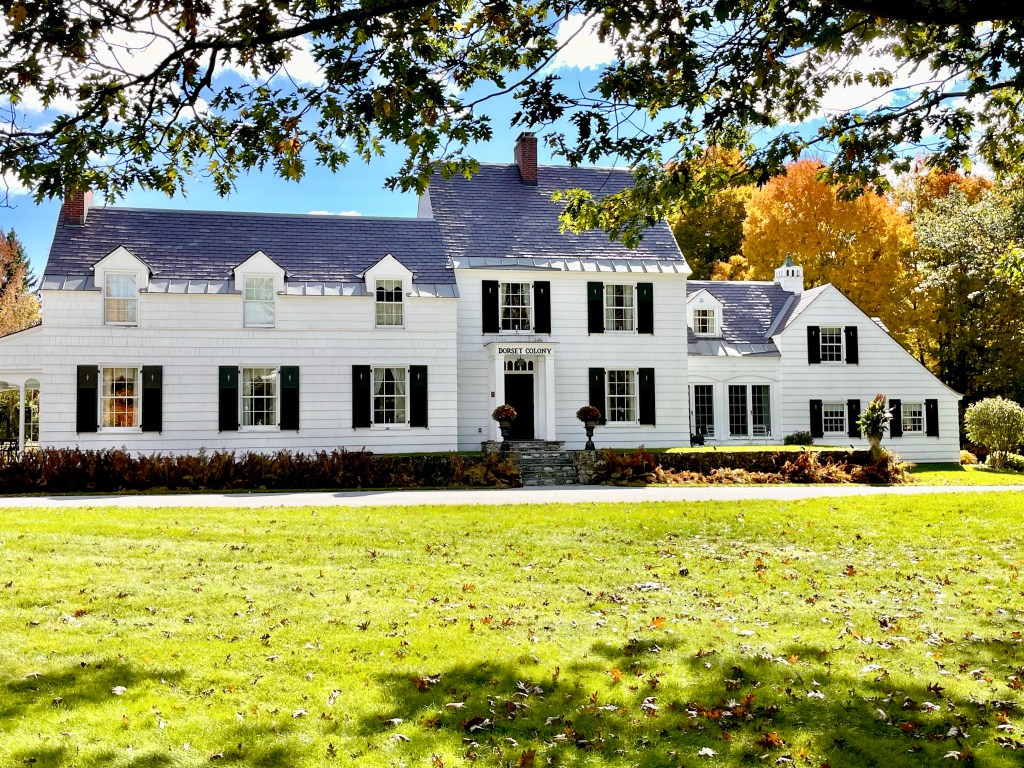
By 1919, artists from all over the United States and Europe were living and creating art in Woodstock, NY. As a thriving and expanding group of diverse individuals, the need for a welcoming and open-minded gallery space was quickly recognized. To facilitate this, a group of five painters established two complimentary organizations: The Woodstock Art Association (later changed to Woodstock Artists Association in 1933) who would maintain the exhibition space and set its artistic principles, and the Artists Realty Company who would finance the construction and maintenance of the physical space. The five painters being: Carl Eric Lindin (1869-1942), John F. Carlson (1874-1945), Frank Swift Chase (1886-1942), Henry Lee McFee (1886-1953) and Andrew Dasburg (1887-1979). New York City architect William A. Boring was commissioned to design the new museum and art space for the group. Boring (whos career was anything but boring) briefly worked for McKim, Mead and White for a year before starting his own practice with Edward Tilton in 1891. His most noted work is his 1897 Immigration Station on Ellis Island for which he and Tilton won the design competition as relative unknowns. The refined Colonial Revival building for the Woodstock Artists Association sits right in the middle of the village and its symmetrical façade is defined by a central double door entrance with transom and pedimented enframement. Of particular interest is the row of four elliptical windows above the double-hung windows.

Woodstock Town Hall and Police Station // 1936

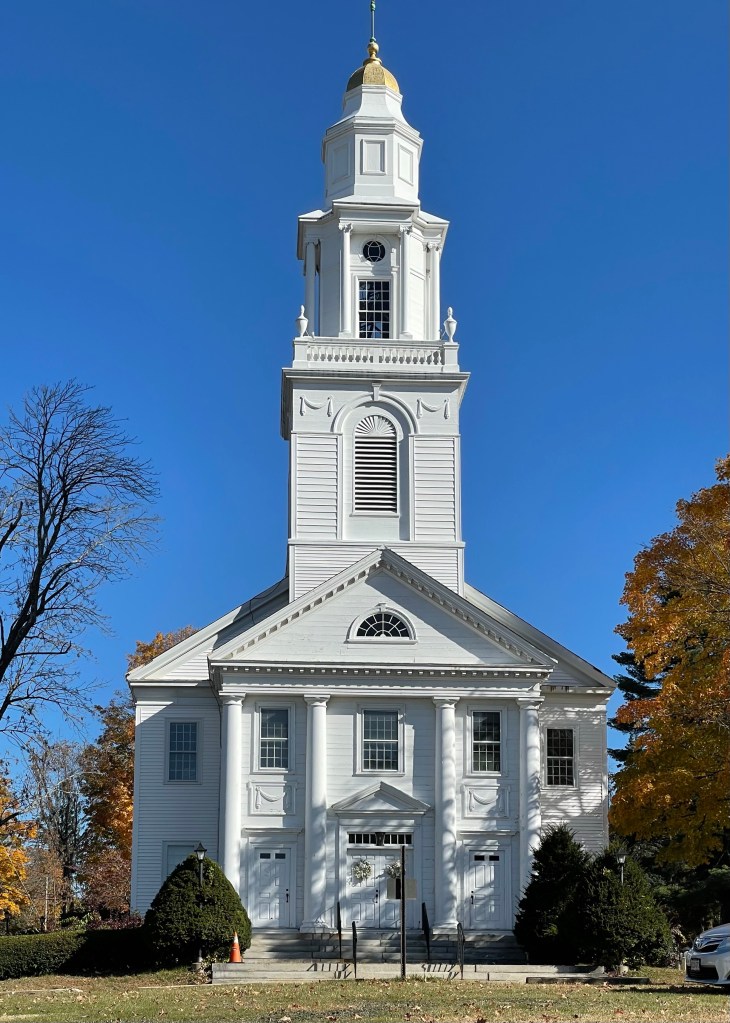
Buildings of New England hits the road! Occasionally, I like to explore and learn about towns and villages in places outside of New England, and one place that has always piqued my interest is Ulster County, NY. One of the more well-known towns in Ulster County is Woodstock, an absolutely vibrant and charming village in the mountains. The first European settlers in the Town of Woodstock were Dutch, along with a few Palatine Germans, who established farms on the fertile land. The town saw some industrial development along Sawkill Creek, but experienced substantial building growth in the early 20th century after the area attracted artists of all types to the area. The village saw population growth which necessitated new city facilities like a town hall and police station. In 1936, construction began on a combined town hall office and police station for the village, in the midst of the Great Depression (possibly using New Deal funds?) The Colonial Revival style building exhibits brick construction with corner quoins, Classical elements like the pediment and columned portico, and a cupola. The only notable alteration since its construction is the infill of the former fire station doors.

Colonial Inn, Ogunquit // 1897

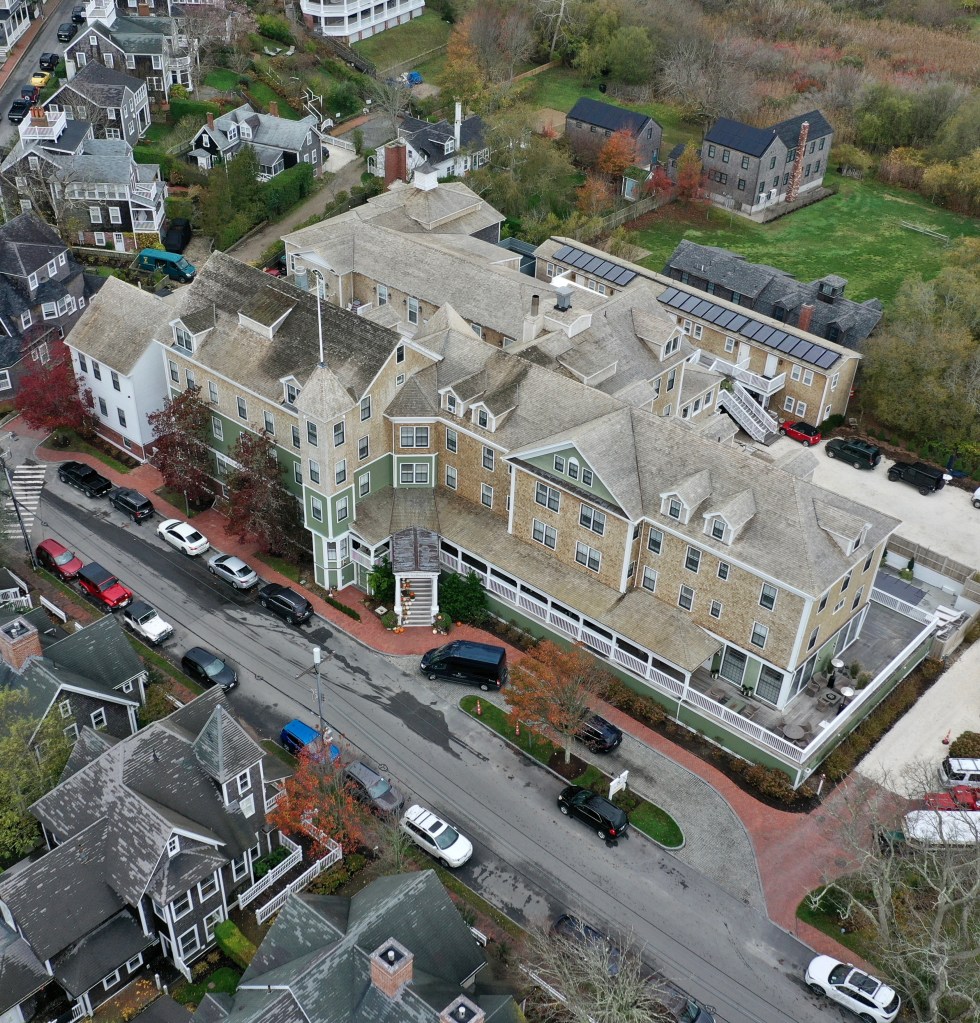
As Ogunquit surged in popularity as a coastal summer retreat in the late 19th century, the flocks of city-dwellers needed a places to rest their head after splashing in the crisp Maine ocean. The original structure began with a mid-19th century house, likely in the Greek Revival style. It was expanded in the 1880s when it opened as a hotel for tourists, equipped with a mansard roof. The hotel consistently sold out of rooms in the summer months and the proprietors decided to expand in about 1897 with a sizeable Queen Anne style addition. A fire in 1951 destroyed the rear wing of the building and the conical tower roofs were removed, resulting in the final form seen today. The hotel is historically significant because it is the only surviving 19th-century hotel in Ogunquit that still serves as a hotel and largely retains its historic appearance, enhanced following a 2013 restoration by the owners who worked with David Lloyd of Archetype Architects. Other hotels of the period have either been converted to condominiums or been engulfed by modern alterations. The hotel was thus placed on the National Register of Historic Places, a large, and worthy addition!

Ogunquit Playhouse // 1937

Opened in 1933 in a converted garage and relocated to the existing building upon its completion in the summer of 1937, the Ogunquit Playhouse is an important part of Maine’s historic twentieth-century cultural landscape. The Playhouse was founded by former Hollywood director and Broadway producer Walter Hartwig and his wife Maude, and the building was designed by theater architect Alexander Wyckoff. The site on Rt-1 was intentional as the highway was the main coastal route for the inter-war summer tourist travel. The Colonial-inspired theater was in keeping with the historic nature of New England, but with the grandeur to attract a nation-wide summer audience. Early articles mentioned the building constructed of “…steel and wood, painted white with green shutters and roof, is simple in line, suggesting the Colonial architecture of New England”. Walter Hartwig died in 1941, and his widow Maude took over as the producer for the upcoming season. In 1947, she engaged George Abbott, New York’s most distinguished playwright/producer to share in the managerial duties, and in 1950 John Lane arrived as co-producer. Lane acquired the property in the following year, counting among his first tasks the rebuilding of the stage which was destroyed by a storm the year prior and changing the landscape to move the parking lot in front of the building to the side. The Ogunquit Playhouse continues its 26-week season runs from May through October, with off-season co-productions at The Music Hall in Portsmouth, NH. Go see a show before the season is over!

Lower Falls Firehouse // 1900

The Newton Lower Falls Firehouse was built in 1900 to serve the village’s fire prevention needs. As nearby Waban Village’s population surged (along with a stronger tax base) the City of Newton constructed a new fire station in 1918, that could serve both areas. This, the already outdated station, was converted to a village library on the ground floor with a janitor’s apartment and storage above. The space was determined to be surplus by the City and was sold off in 1979, quickly converted to housing by a developer. The building retains much of its original character, down to the hose-drying tower.

Harlow House // c.1909

Located on a dead end street in Waban, you’ll find this stunning Shingle style property, which rambles on forever! The house was built in the first decade of the 20th century and blends the Shingle style with the ever-popular Colonial Revival style. I could surprisingly not locate the architect for the house, but I’d guess that it was designed by the architectural firm of Longfellow, Alden, & Harlow, the last of which, Alfred Branch Harlow, shared a last name with the original owner of the home, Arthur Brooks Harlow. (And the same last name as Louis K. Harlow, an artist who lived one street away in a similar style home). I am not sure if these two were related, but thats my hunch. If anyone wants to do more digging on this and share the story with me, I’d be so grateful!

Winona and Winslow Blanchard House // c.1915

This Colonial Revival house on Pine Ridge Road in Waban Village, Newton, is one of a handful of the brick houses in the neighborhood, and one of the more refined examples of the style in the neighborhood without architectural embellishments from other styles. The home was built around 1915 for Winslow Blanchard and his wife Winona. Winslow was an engineer who served as President of the Blanchard Machine Company in Cambridge. It is probable that the couple hired Dorchester-based architect Edwin J. Lewis to design the home; as Winona grew up in the Ashmont section of town where Lewis lived. Additionally, the couple hired Lewis to make alterations to their recently completed home in 1919. The house retains its original slate roof, front door with pedimented entry, and is covered in climbing ivy, which isn’t great for the masonry but looks so good!

Thomas M. James House // c.1900

When the Waban section of Newton got a rail line connecting it to Boston, development boomed! Architects who lived in other parts of the Boston area saw an immense opportunity, not only for work, but for a bucolic setting where they could also reside. One of these architects that lived and worked in Waban was Thomas Marriott James, who in the early 20th century, designed and moved into this house on Pine Ridge Road. James was also born in Cambridge but received no academic architectural training. By 1893, Boston directories record that he was a draftsman at the office of Eugene L. Clark, a prolific designer of suburban homes. His residence in Waban blends the Shingle and Colonial Revival styles under a broad gambrel roof. The verandah is inset and has segmental bays with shingle posts as supports. The kneewall is also shingled, adding to the composition.

LeClear House // c.1915

Waban in the late 19th and early 20th centuries was a hotbed for architect-designed houses as their own residences. This Colonial Revival/Tudor Revival style estate was designed by Gifford LeClear (1874–1931), a prominent architect in the Boston area. Gifford LeClear was born in Rutherford, New Jersey to Thomas and Cornelia (King) LeClear. He was educated in the private schools in Boston before entering Harvard University. He graduated with a Bachelor of Arts degree in 1895 and Master of Arts in 1896. He then worked for a year in the engineering department of the West End Street Railway before forming his partnership with Densmore in 1897. The partnership of Densmore & LeClear was formed in April 1897, practicing as mechanical and electrical engineers. One of the firm’s major projects in this role was the design of the building systems for the new campus of the Harvard Medical School in Boston.

Lamont Residence // 1907

In 1907, William F. Lamont and his family moved into this beautiful turn-of-the-century home in the rapidly developing Waban Village in Newton, Massachusetts. The extension of the circuit railroad connected this part of Newton (which had previously been farmland) to Downtown Boston, opening up the area to development for middle-income families who sought land and fresh air in the suburbs. The first house on Alban Road in Waban was built for the Lamont Family, and it perfectly blends multiple architectural styles under a gambrel roof.

What is your favorite feature of this house?

Eva Southwick House // 1898

Okay, there is just something about this house that is so intriguing and unique and stands out among all the other (thousands) of Colonial Revival style houses I have seen. I just can’t quite put my finger on it! This late 19th century beauty was built in 1898 for Eva Bailey and Francis Southwick eight years after their marriage and after the birth of their children. It is unclear who the young family hired as an architect to design the home, but they definitely went with a loose adaptation of the Colonial Revival style in an American Foursquare form. The house has a large Palladian window and a minimal front portico supported by Doric columns.

Ernest Zeiss House // 1897

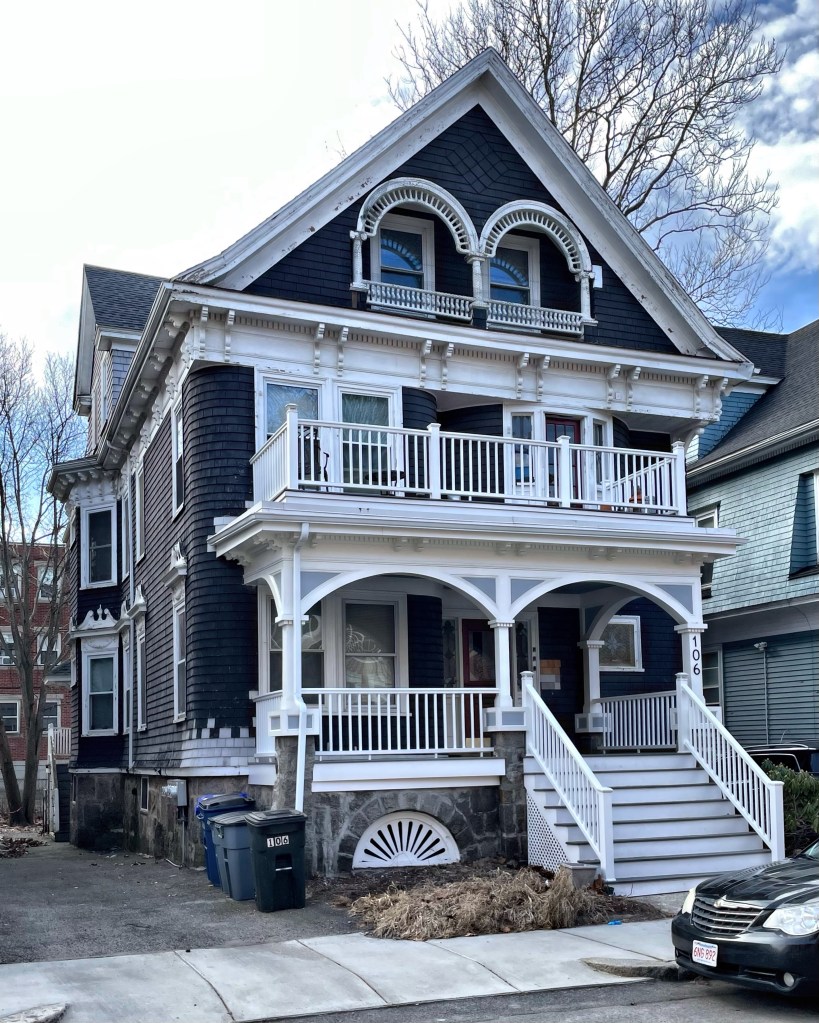
Another eclectic house in Waban is this beauty, a blending of Queen Anne and Colonial Revival styles under an impressive gambrel roof. The home was occupied by Ernest L. Zeiss, a salesman. Waban, which was once a neighborhood within the reach of the middle-class, has since become one of the most desirable neighborhoods in one of the most exclusive towns in the Boston metro. It is safe to say an ordinary 9-5 salesman would not be able to afford a house like this today!

Samuel Sparhawk House // c.1870

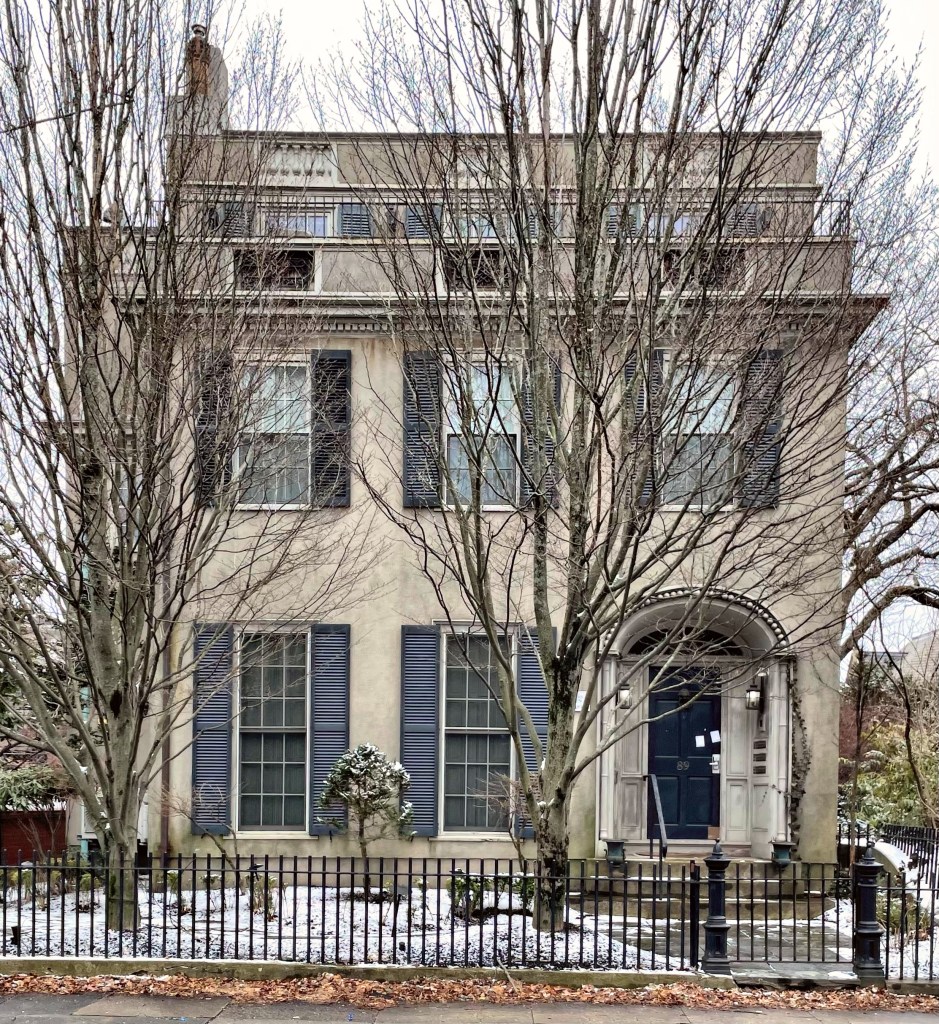
In 1870, Samuel Sparhawk built a large Second Empire style mansion on Mugford Street in Marblehead. Samuel and his brother Peter were among the first large shoe manufacturers in Marblehead, and did very well for themselves. Samuel also worked as Director of the Marblehead Savings Bank. In the early 20th century, the property was sold to Asa A. Schofield. In 1910, a fire at the Second Congregational Church destroyed the 1832 building and embers carried and burned the roof of the old Sparhawk House. The mansard roof was replaced with a simpler hipped roof with dormers.

Orlando Rouland Art Studio // 1926

Born in Illinois, Orlando Rouland (1873-1945) became a painter of rural landscapes, scenes of New York City, and portraits of actors, inventors and Presidents. He lived in New York and resided in Marblehead in summers, taking advantage of the natural scenery and rustic homes for his landscapes. In Marblehead, Rouland formed the Marblehead Arts Association and was President of the North American Artists Group. He built this small building in 1926 as his studio while he spent time in the seaside town, with the large window to provide natural light into the interior. The Colonial Revival style studio has been converted to a residence.

Old North Church, Marblehead // 1825

Old North Church, formally the First Church of Christ Marblehead, was organized in 1635 by fishermen and mariners who formed a church to relieve them of the burden of travel to Salem in order to receive church sacraments and participate in civil affairs (before the separation of church and state). They met in member’s homes until 1638, when a meeting house was constructed overlooking the ocean. By 1695, a “modern” church structure was built on Franklin Street. The structure was not adequate for the growing wealth and prosperity of the town, as Marblehead emerged from local cod fishing to overseas trade. In 1824, merchant-politician William Reed helped the congregation acquire a large lot on Washington Street. Within a year, the new stone church was built. The stone to build the church was blasted from the ledge upon which it stands. In 1879, a wooden meeting house was built to accommodate an increased membership at prayer meetings. The detached meeting house was added onto in 1951, connecting it to the stone church. The two attached buildings were designed/re-designed in the Colonial Revival style to add to the architectural composition of the old Federal period church.