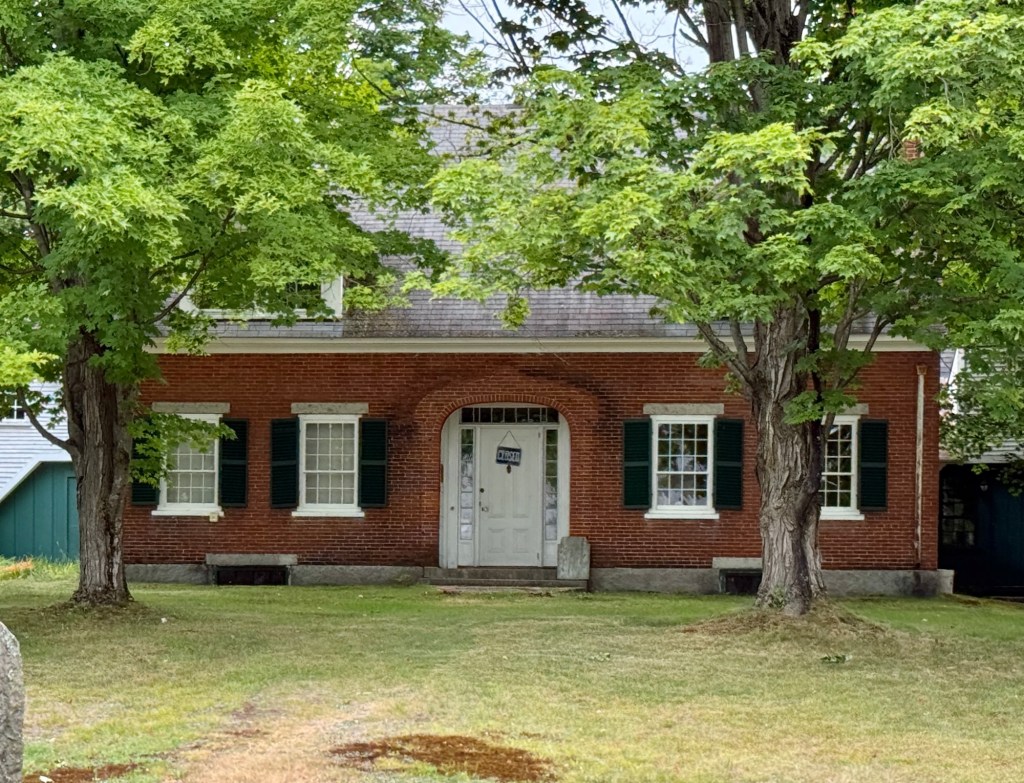
The Whipple House in Ashland, New Hampshire, is a remarkable example of a Federal style cape and significant as the childhood home of a Nobel Prize winner. Built in 1837 by merchant Obadiah Smith (1787-1853), the brick home served as a residence for five generations of the same family and was the birthplace of Nobel Prize-winning physician Dr. George Hoyt Whipple (1878-1976), who shared the Nobel Prize in Physiology or Medicine in 1934 with George Richards Minot and William Parry Murphy for “their discoveries concerning liver therapy in cases of anemia”. Towards the end of his life, in 1970, Dr. Whipple donated the family home to the town as to preserve its legacy as a museum. Architecturally, the home reflects the simplicity and craftsmanship of New England’s mid-19th century vernacular design, featuring a symmetrical five-bay façade with center entrance containing a fanlight transom and oversized dormers on the roof which date to the 20th century. It remains as the headquarters of the Ashland Historical Society.

