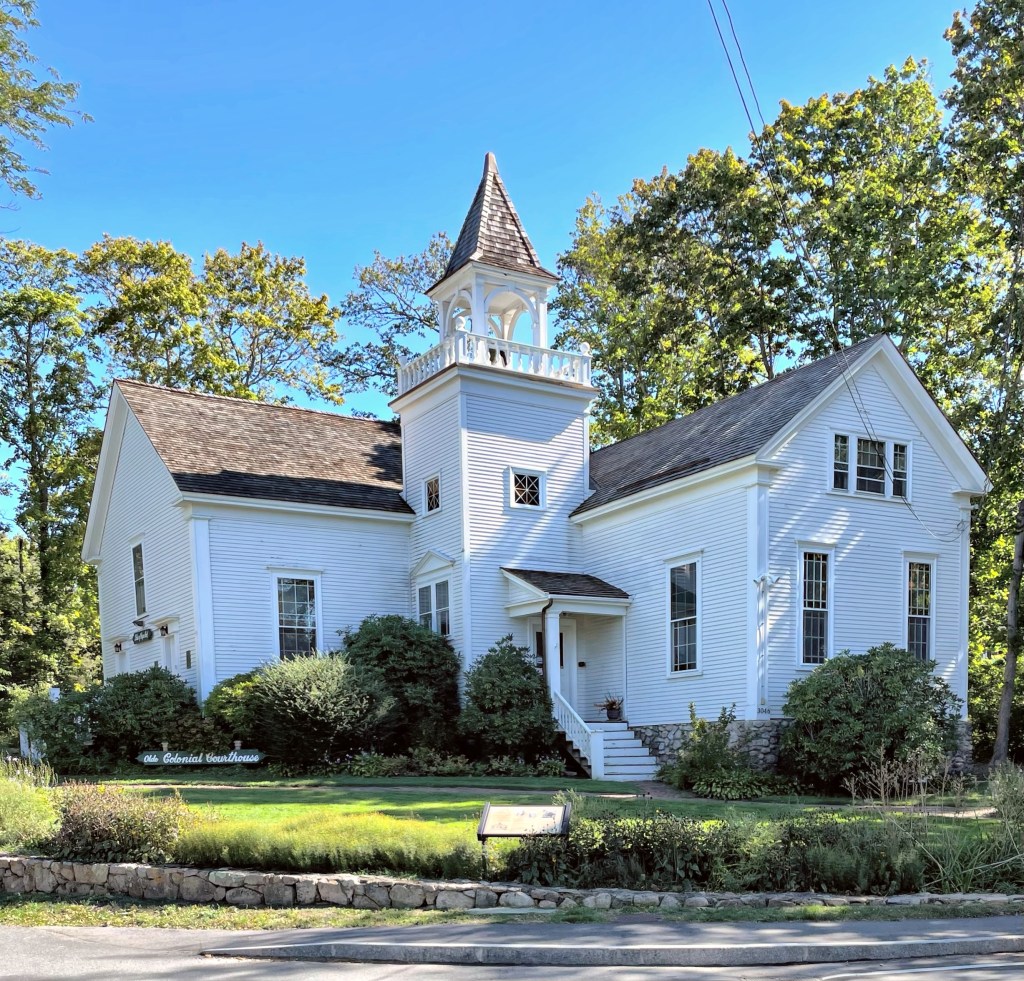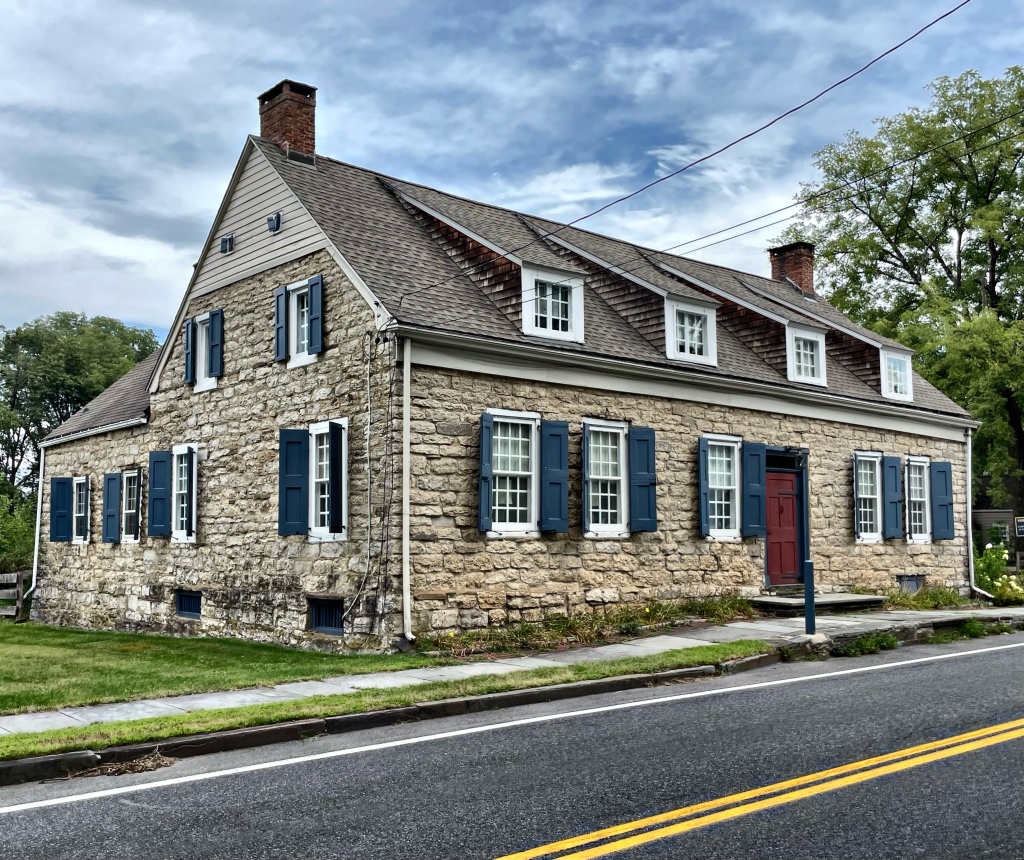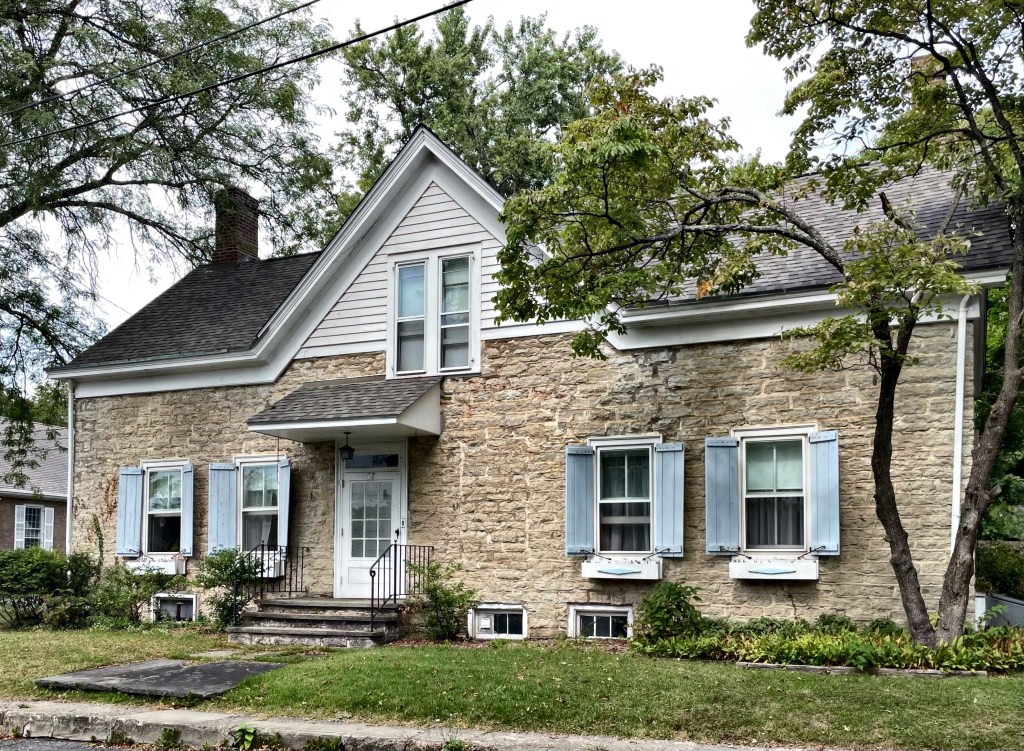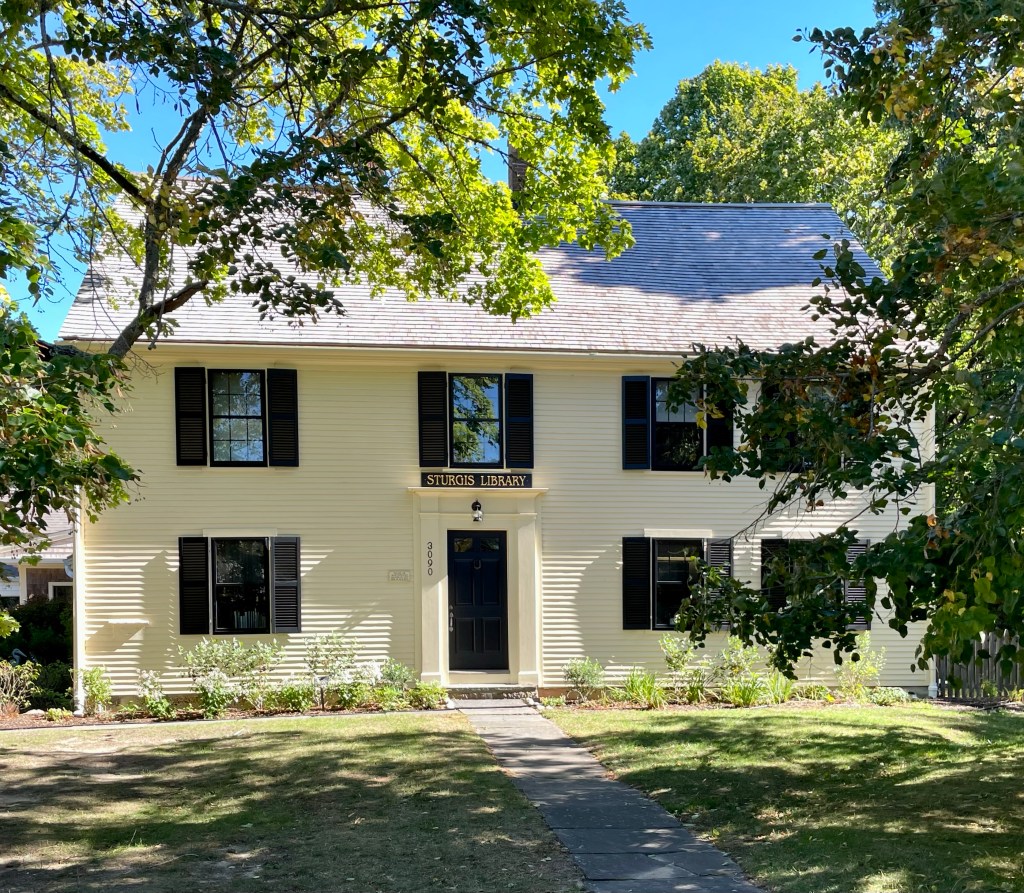
Captain John Prince House // c.1761

In 1758, John Prince married Anna Bowen in Marblehead. Within a year, they started their family, and needed a new residence to serve as their family home. This house was constructed by 1761 and is oriented to the south, taking advantage of the narrow lot. The house has a large central chimney which would have warmed the interiors throughout the cold, New England winters.

Alexander Watts House // c.1755

In 1748, Alexander Watts, a merchant and sea captain purchased land in Marblehead, building a dwelling house, shop, and barn. This home was likely built in the 1750s, not long after he purchased the lot from David LeGallais, a merchant and prominent landowner in town. The gambrel-roofed Georgian house with its elaborate entry stands out on the street for its large frontage, with many other period homes sited on narrow lots, with the side of the house facing the street. He likely lived in the shop nextdoor until he had enough money to build this separate, more elaborate dwelling. Captain Watts died in 1772, and the property was willed to his “wife Rachel for her widowhood, and at her decease, one-half was to descend to her heirs, and the other half to his kinsman, Alexander Watts of London, England”. By the 1780s, the property was noted as “much decayed” with his widow likely struggling to maintain the property, renting the shop to others for income. On April 13, 1795, the estate was divided, meaning Rachel, Alexander’s widow, likely died at the home.

John Wright House // c.1770

Jonathan Wright bought land on State Street in Marblehead in 1770 to build a new home for his family. The large property included his Georgian, gambrel-roofed home and a small pond/marsh in the rear. Sadly, John died by 1773 and his widow Abigail had to sell the property to settle the debts of the estate. Isaac Martin bought the house, and it passed down to his son Thomas, a wagoneer, when he died in 1777. The marsh was eventually drained by the town in the 20th century, likely due to issues with mosquitos and disease and the old barn was converted to a residence behind. The old Wright house has remained a well-preserved Georgian residence for 250 years!

John Adams House // c.1795

In 1795, mariner and fisherman John Adams had this late-Georgian house built in Marblehead, which resembles many homes in the area built a century earlier. The house was apparently built by Benoice Johnson, a cabinetmaker from Roxbury who settled in Marblehead. The gambrel-roofed house had a later lean-to added on the rear for additional square footage. Adams died in 1816 and the house remained in his family until the Great Depression!

Merritt House // c.1725

In 1725, Samuel Merritt, a fisherman, inherited some of his father’s land in Marblehead and built this house. After Samuel Merritt died in 1743, his second wife Mary, her daughters Mary and Elizabeth and her son-in-law James Dennis, lived in the house. They added the one-story lean-to, giving the house a saltbox roof in 1762. This house, and many others in Marblehead are the reason why human-scaled historic neighborhoods built before the automobile, are some of the best places to explore. Historic preservation equals tourism, which results in tax revenue and property values, stabilizing neighborhoods and cities from the ebbs and flows of the economy. Gotta love it!

Pearson-Bessom House // c.1720

In 1720, James Pearson acquired a house lot on Windmill Hill in Marblehead, and he soon after built a house in the bustling harbor town. He lived in the house until 1734, when it was sold to a Giles Irwin. After Mr. Irwin’s death, it was conveyed to John Patton and John Bailey, both mariners, who likely split up the home inside. From this, fireplaces were punched into the central chimney inside, totaling 10 fireplaces in the home! John Bailey also worked as the Captain of Fort Sewall during the War of 1812. His wife Mary, served as temporary commander of Ft. Sewell after his death until a successor was appointed. The house eventually came under the ownership of siblings Carrie Florence Bessom (1867-1944) and her brother Frank Lewis Bessom (1870-1952). Florence operated an antiques store in town and Frank worked as a welfare commissioner. The home is a great example of a Georgian, Colonial-era home with a gambrel roof and even has the two (what I believe to be) separate coal doors in the raised stone foundation when the home was occupied by two families.

Trevett House // c.1715

One of my favorite houses in Marblehead, Massachusetts is the Trevett House on Washington Street, a perfectly preserved stretch of Colonial-era homes that transports you to centuries past. The Trevett House was built around 1715 by merchant Samuel Russell, a wealthy merchant and slaveholder in town, who had this house built as a gift for his sister Elizabeth Trevett and her husband Captain Benjamin Trevett. The house passed to their son Russell Trevett and then on to his son Captain Samuel Trevett. Captain Trevett (1751-1832) was born in this house and is best known for leading the Marblehead artillery company to Boston, fighting at the Battle of Bunker Hill in 1775. At the battle, Captain Samuel Trevett was the only artillery officer that day to make a pretty good account of himself. He disobeyed Col. Gridley’s orders to remain off the Charlestown Peninsula and fire at the navy from the relative safety of Cobble Hill. He survived the battle and the war and died at his family home in 1832. The Marblehead Arts Association bought the house in 1928, and the amazing paneled interiors were featured in publications on early Colonial architecture, and documented as part of the Historic American Buildings Survey.

Powsland-Homan-Dixey House // 1732

The colonial home at 33 Washington Street in Marblehead was built in 1732 for (and likely by) Jonathan Powsland, a joiner (furniture maker-carpenter). In the 1740s, Peter Homan added the rear lean-to, giving the home a saltbox appearance, possibly after he married into the Powsland family. The home was eventually owned by the Dixey Family. John Dixey (1776-1868) spent a good part of his life as a ship master and had several sons that also went to sea. The most well known son was Richard W. Dixey (1809-1860) who, along with two other Marbleheaders, captained the ship that took the first American Consulate to China.

Homan House // 1744

This perfect Georgian house in Marblehead was built in 1744 for Richard Homan (1713-1803), a sea captain who also fought in the Revolutionary War. In 1736, Richard married Hannah Goodwin, the daughter of William Goodwin, a notable housewright. William Goodwin seemingly gave the newlywed couple land on his estate and likely built this stunning home for them. Hannah died in 1772, and remarried in 1776 to Susanna Stacey, who he also outlived. The couple moved to Ipswich, and this home was sold to his son, William. In the 1800s, the property was owned by William Hawkes Jr., a trader and shopkeeper who apparently operated a “rum shop” out of the first floor of the home. It remained in the Hawkes Family until at least 2013. The house features a gambrel roof of cedar shingles, 12-over-12 windows, a pedimented entry, and a period-appropriate paint color.

Blanchard House // c.1778

One of the oldest extant homes in Wilton Center is this Revolutionary-era Georgian house. The home was likely built in the 1770s and has a sloping saltbox roof at the rear. The house was the property of the Blanchard Family to this day. The house shows the more rural, vernacular Georgian style common in small towns in New Hampshire from the 1700s.