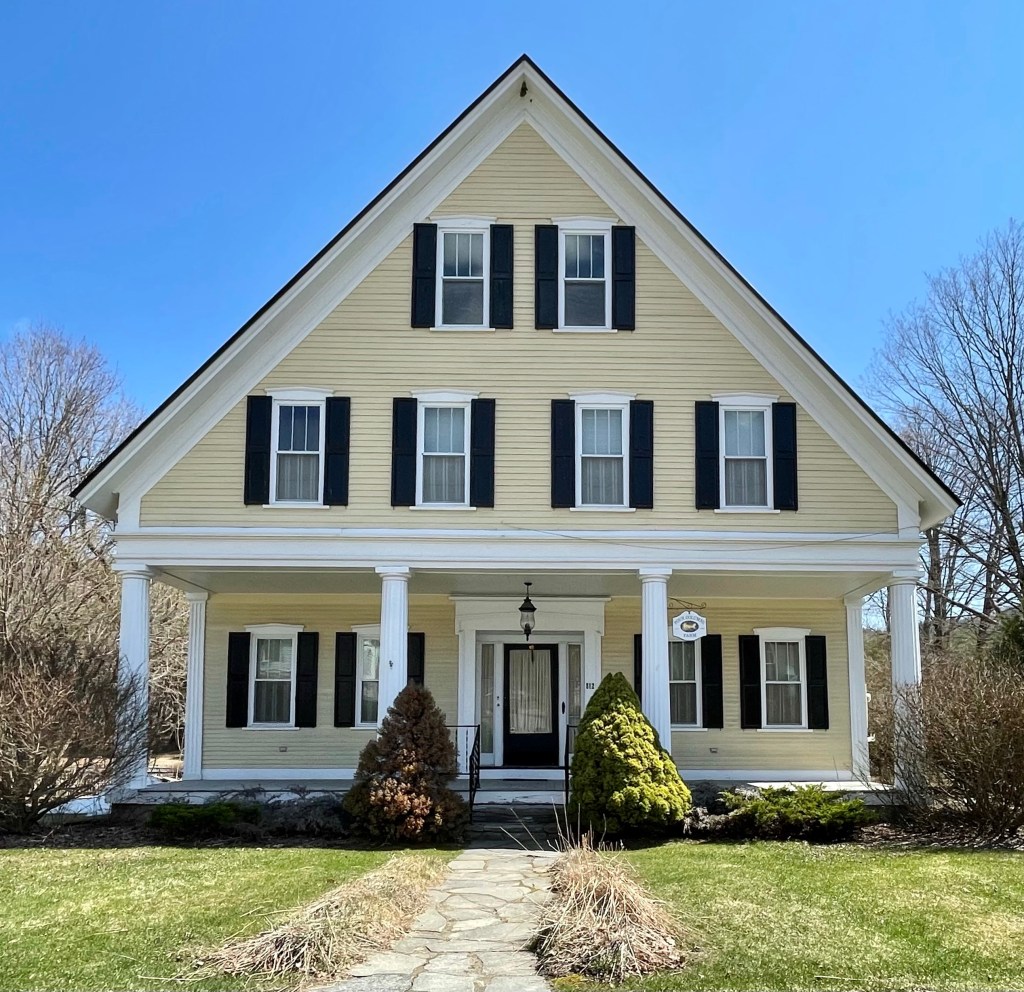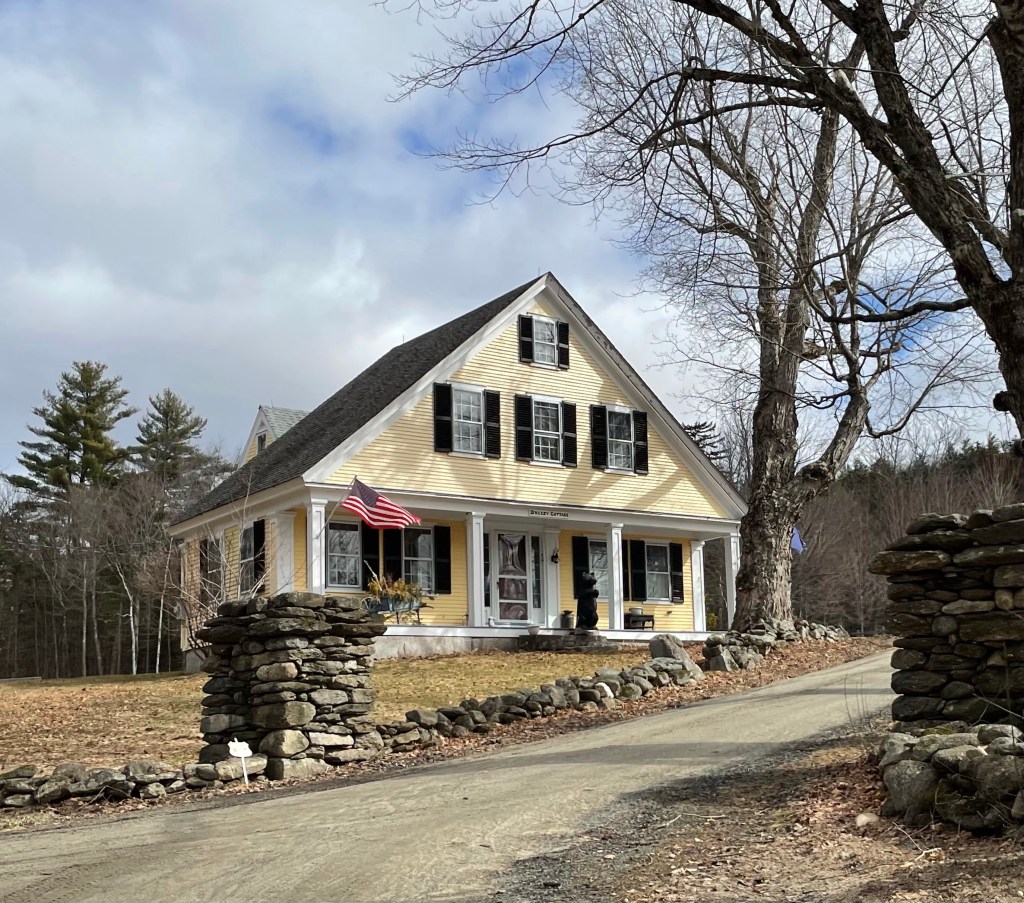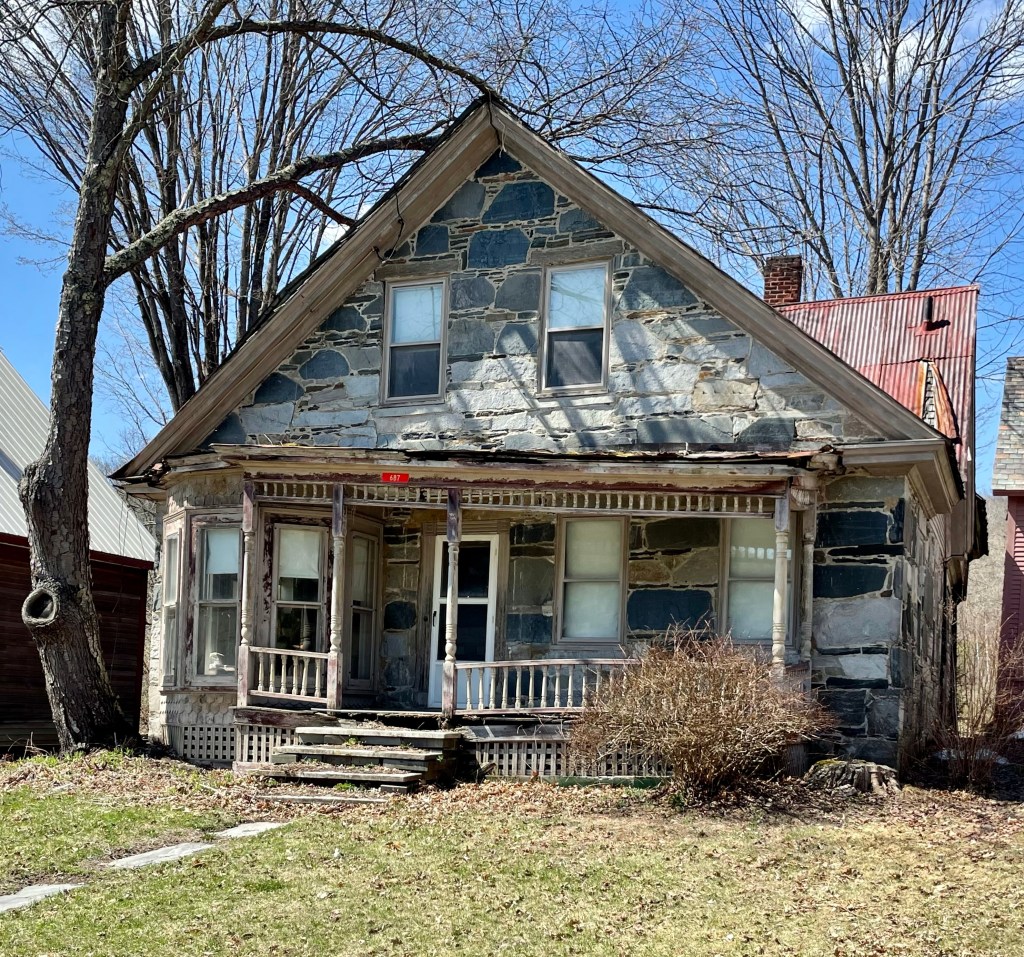
On the backroads of the rural town of Wilmot, NH, I stumbled upon this perfect Greek Revival cottage tucked away on a dirt road. The home was built in 1840 by Col. Samuel Thompson, likely operated as a farm. The property was purchased by the Tewksbury Family decades later, who likely gave the home its name “Breezy Cottage”, after an older colonial home nearby, and subsequently the name of the street in which it is sited. The Greek Revival home is symmetrical with a wide, gabled roof and upper floors overhanging the recessed front porch. The home features bold corner and entry pilasters.
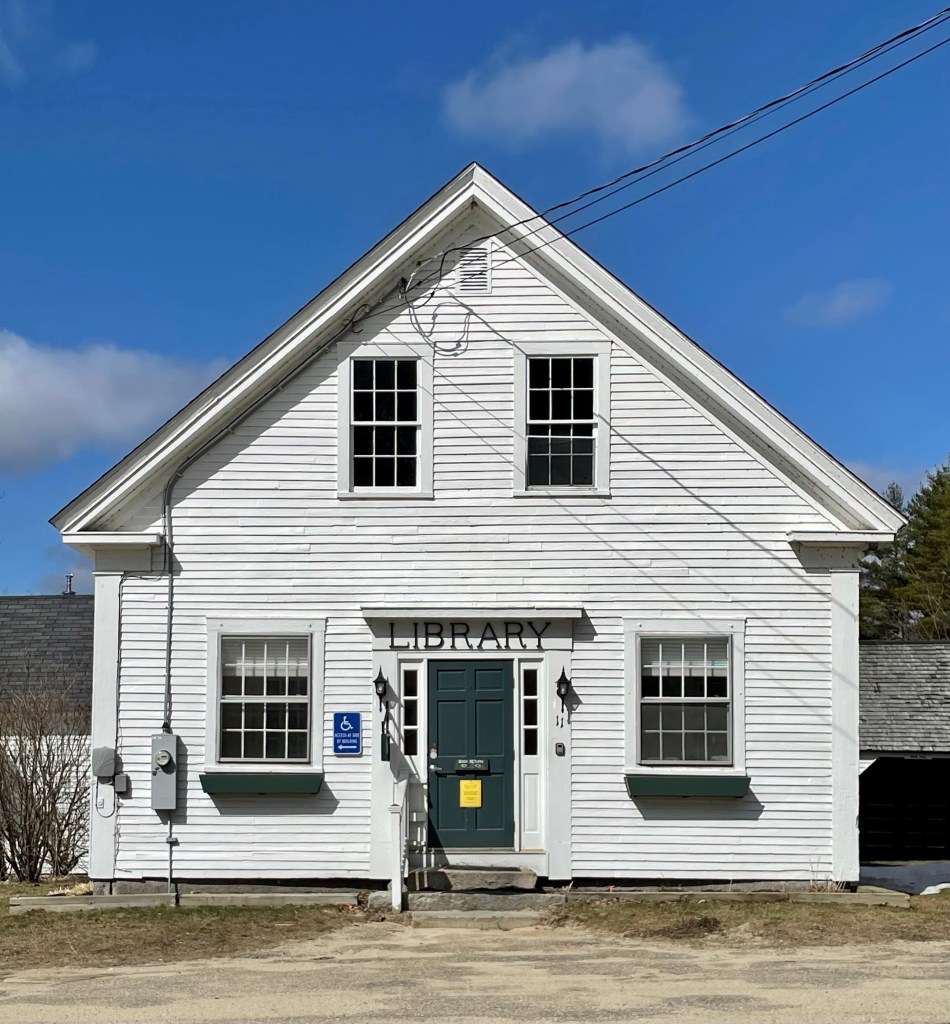
Driving through the quaint village of Wilmot Center in New Hampshire, I had to pull over to snap a photo of this little library building. When I got home, I learned that the building was constructed in 1854 not as a library, but as a schoolhouse! The vernacular Greek Revival school served as one of many district schoolhouses in the region, dispersed around small towns to be within walking distance of the sparsely developed parts of the state. With population growth in the 20th century and the proliferation of the personal automobile, these small regional schools became obsolete. Many of these buildings were converted to other civic uses or as personal residences, but most were demolished. The Wilmot Public Library located in the former schoolhouse in 1972 and is now connected to the town offices next door.
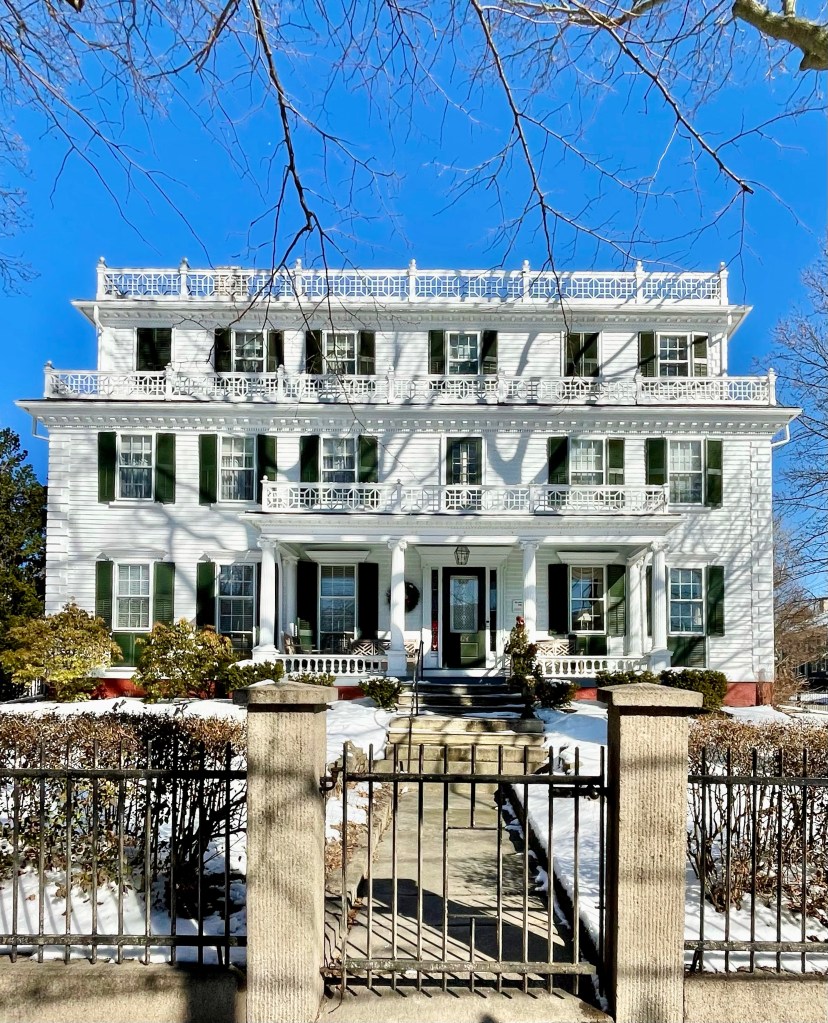
William Bradford (1729-1808), who would become Deputy Governor of Rhode Island from 1775 to 1778, came to Bristol to practice medicine by 1758. When he arrived, he rented Mount Hope Farm (featured before), before building a home in town. When the British Navy bombarded Bristol on October 7, 1775, his home was among the buildings destroyed. He afterward went aboard ship to negotiate a cease fire, saving what was left of the town. In 1792, he built a 2 1/2-story Federal style, boxy house on this lot, close to the street. The home was willed to his son Hersey, who resided there until the 1840s, when he mortgaged the house to Francis Dimond, who resided in a Greek Revival temple front home (also featured on here previously). He gifted the modest Federal home to his daughter, Isabella, possibly as a wedding gift upon her marriage to Samuel Norris, a sugar refiner. Mr. Norris and Isabella hired architect Russell Warren, who designed her father’s home nearby, to renovate the house in the spring of 1845, moving the house away from Hope Street. The house was given its third floor and additional bay, along with the ornate design which characterizes it to this day, including the Ionic porch and Chinese Chippendale balustrade. The house remained in the Norris family until 1942 and is now a B&B.
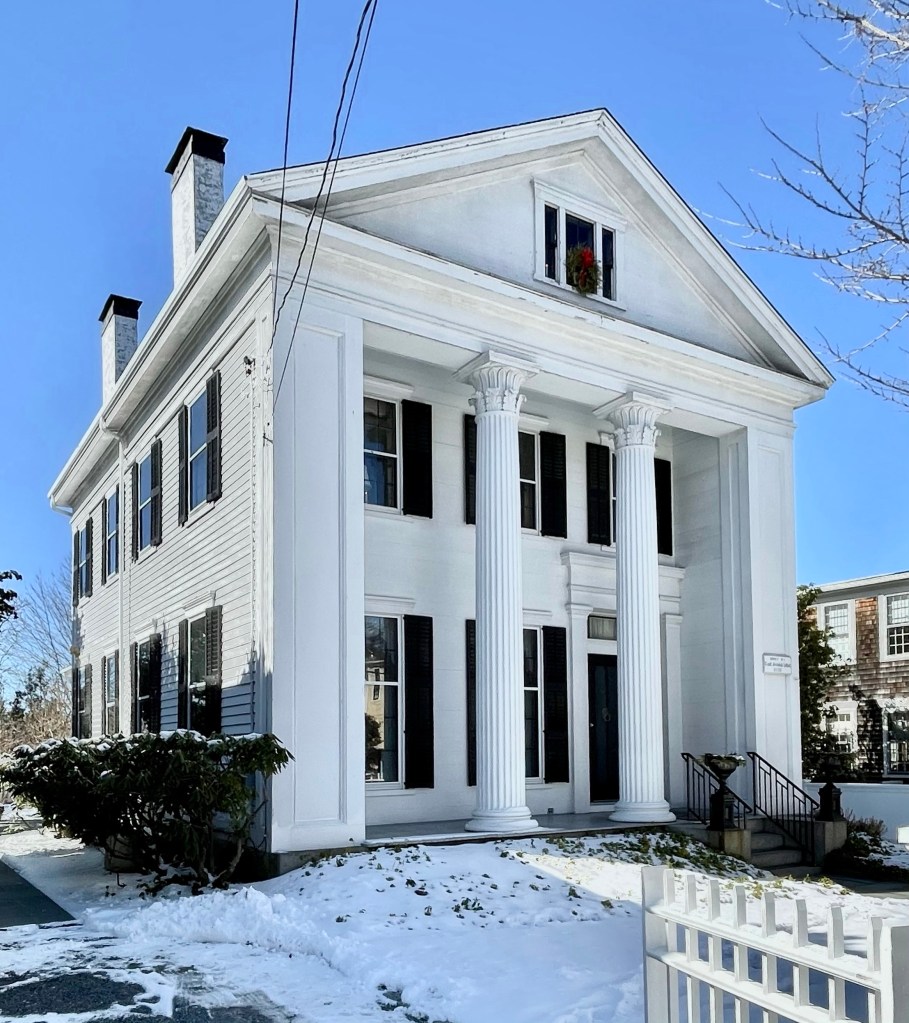
Built in 1838, just three years after the Talbot House in Bristol, Rhode Island, (just two houses away), the Dimond House remains as the other of the two remaining Greek, temple-front homes in town. Like the Talbot House, this home was also designed by Russell Warren, but is unique as it is in the tetrastyle (with four columns) and utilizes the Ionic order with the capitals featuring volutes (scrolls). Additionally, a polygonal bay can be seen on the right side of the home. Images show that the bay features stunning lancet windows! The home was designed for Francis Moore Dimond (1796-1859), who was born in Bristol, and later traveled to the Caribbean and served for several years (1832-1835) as the United States consul at Port-au-Prince. It is entirely possible that Dimond was involved in the slave trade, but I wasn’t able to find more than a couple articles referencing his connections to the infamous DeWolf Family. From 1842 to 1849, Dimond was United States Consul to the Mexican port city of Veracruz. When he returned to Rhode Island, he promoted the Southern Pacific Railway and presided over its construction. He was elected lieutenant governor of Rhode Island in 1853. He became the governor of Rhode Island when Philip Allen, then Governor, resigned to become a Senator. He held the governor’s office just one year. He moved back to Bristol and lived out his final days at his home.
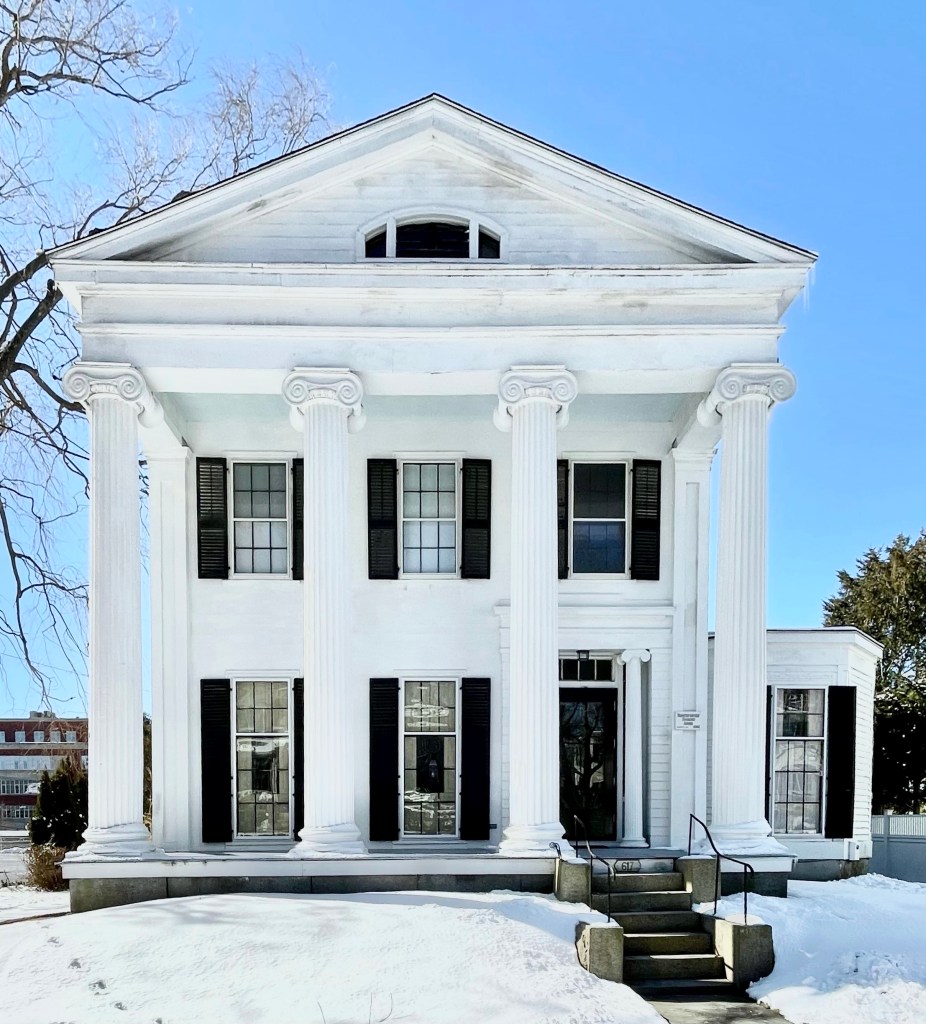
Anyone that has followed this account for a while knows at least one thing, I LOVE Greek temple-front homes. Designed by famed architect, and Bristol-native, Russell Warren, this 2-story, 3-bay, gable-roof Greek Revival house is one of the finest in the state. Its facade has a pair of fluted Corinthian columns, set in antis (where the side walls extend to the front of the porch). A simple side-hall entrance is framed by heavy Doric pilasters, supporting a broad, plain entablature, making this such a head-turning Greek Revival home. The walls are sheathed with horizontal flush boarding at the facade to give a smoother look and clapboards on the side and rear. The home was built for Josiah Talbot, a sea captain. The house is excellently preserved to this day, almost 200 years later.
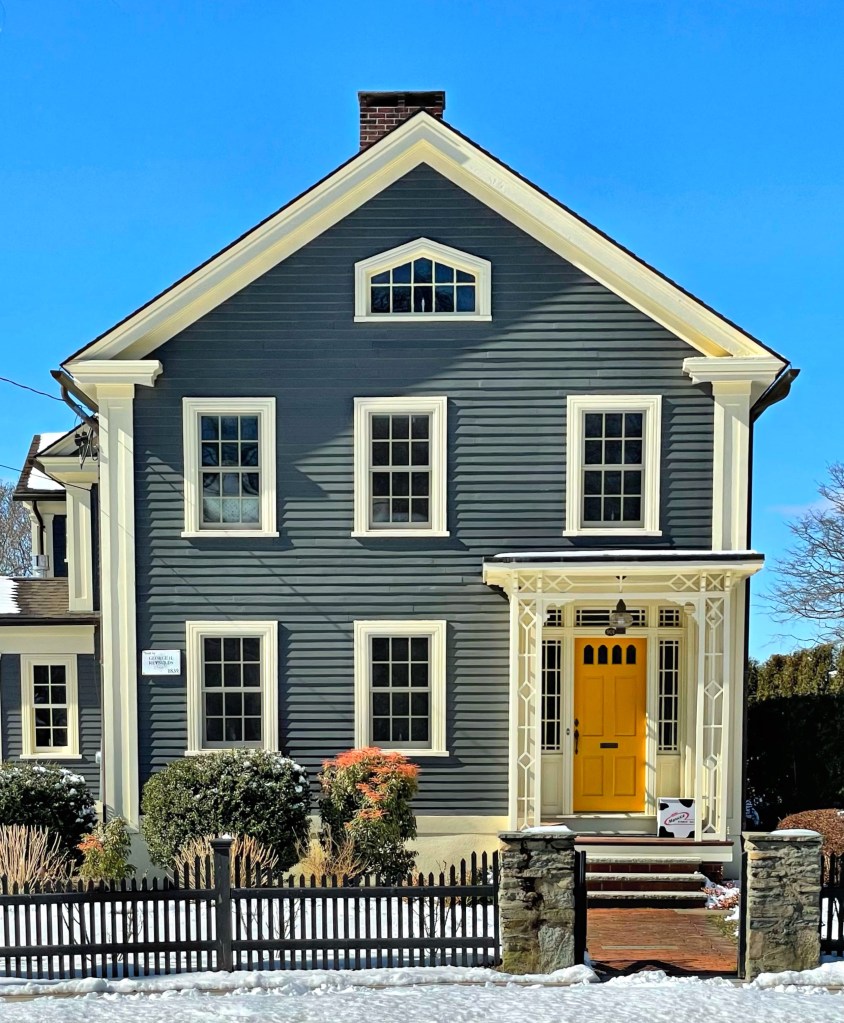
This two-story Greek Revival home was built in 1839 for George H. Reynolds (1809-1880), a descendant of Joseph Reynolds, who’s home was featured here previously. In 1836, George Reynolds worked as a blacksmith; by 1837 he sold shoes and groceries. By 1840, he was appointed postmaster. The side-hall home features corner pilasters and a gorgeous pedimented window in the gable end. The home was given a delicate entry portico in the latter half of the 19th century which immediately caught my attention.
On September 15, 1847, a ship carrying 66 men and women and children docked at Long Wharf in Boston. This group of ex-slaves, led by Rev. Peter Randolph, emancipated by their former slave master Carter H. Edlow from the Brandon Plantation in Prince Georges County, Virginia. Members of the Boston Anti-Slavery Society, led by William Lloyd Garrison met the newcomers and made them welcome by securing lodging and work for self-support. The group settled in the South End on Ottaway Court not far from the Holy Cross Cathedral. The group first joined the Twelfth Baptist Church of Boston before establishing their own congregation. They eventually occupied this church in 1887, the building was designed by architect Nathaniel Bradlee in 1860, which was built for what was then the Third Presbyterian Church of Boston. The church has remained here for nearly 150 years, seeing the rapid change in the neighborhood. The church building accommodated meetings including the Professional Black Women’s Business Club, which bolstered Black women in business, many members owned stores in the South End. Many members left the area amid growing gentrification in the 1980s and 1990s, and from that, the aging population remaining made keeping the doors open difficult. Sadly, the church relocated out of the building in 2020 and appears to have sold the building, leaving its future uncertain.
Lewis Hayden was born into slavery in Lexington, Kentucky, in 1811, as one of a family of 25. Hayden was first owned by a Presbyterian minister, Rev. Adam Rankin. He sold off Lewis’ brothers and sisters in preparation for moving to Pennsylvania, and he traded 10-year-old Hayden for two carriage horses to a man who traveled the state selling clocks. In the mid-1830s, Hayden married Esther Harvey, also a slave. She and their son were sold to U.S. Senator Henry Clay, who sold them both to the Deep South, and Hayden never saw them again. By 1842, Hayden married a second time, to Harriet Bell, who was also enslaved, and he cared for her son Joseph as his stepson. After this marriage, Hayden began making plans to escape to the North, as he feared his second family might be split up like the first. In 1844, he and his family escaped with assistance of abolitionists all the way to Canada. From Canada, the Haydens moved in 1845 to Detroit in the free state of Michigan, and the next year, they moved to Boston, at the center of anti-slavery activity with the city’s strong abolitionist base. In Boston, Hayden became a lecturer and ran a clothing shop, acquiring enough money to live in this large home in Beacon Hill. The Haydens routinely cared for fugitive slaves at their home, which served as a boarding house. Guests included Ellen and William Craft, who escaped from slavery in 1848. Hayden prevented slave catchers from taking the Crafts by threatening to blow up his home with gunpowder if they tried to reclaim the pair. Hayden died in 1889, outliving the abolishment of slavery. Harriet died in 1894 and left $5,000, the entirety of their estate, to the Harvard University for scholarships for African American medical students. It was believed to have been the first, and perhaps only, endowment to a university by a former slave. Their former home remains a stop on Boston’s Black Heritage Trail.
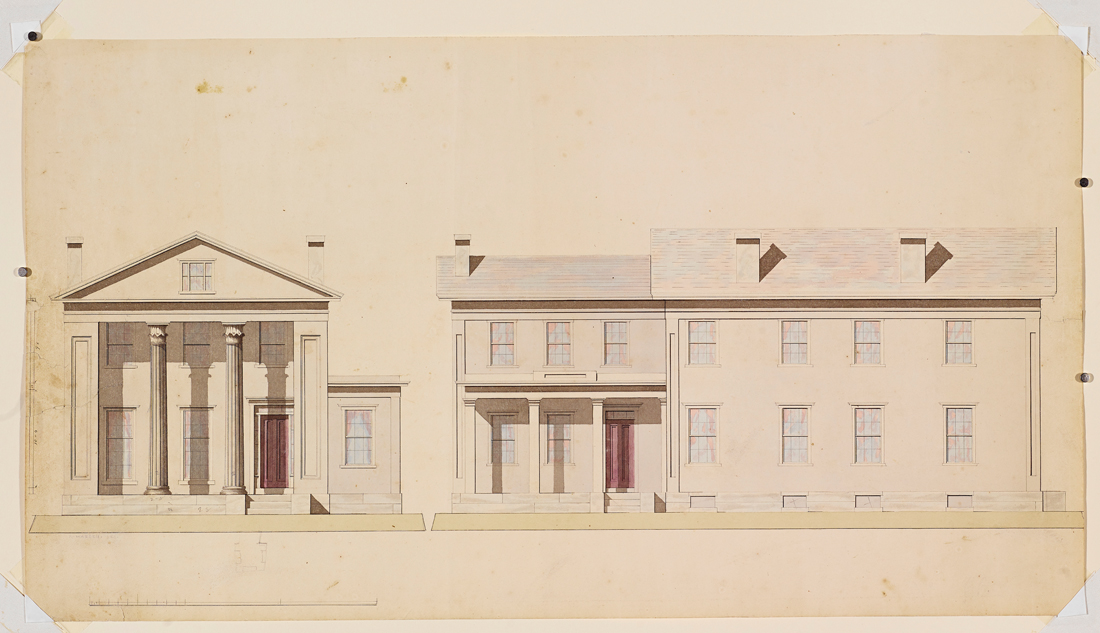
One of the last remaining grand 19th-century lakeside mansions in the city of Burlington, Vermont, the Follett House stands as an excellent example of Greek Revival architecture and preservation. The Follett House was built in 1841 for Timothy Follett, a prosperous Burlington developer and former Chittenden County judge. Follett hired architect Ammi B. Young to design his estate. Young would go on to become the first Supervising Architect of the U.S. Treasury Department. As a federal architect, he was responsible for creating monumental civic buildings across the United States numerous custom houses, post offices, courthouses and hospitals, many in his favorite Greek Revival style. The house is oriented facing west toward Lake Champlain, with a terraced lawn extending towards the water. The main facade features monumental columns creating a greek temple front, supporting a pediment. The secondary entry is a more modest interpretation of the style with a smaller classical portico. After the home was built, Follett became president of the Rutland & Burlington Railroad, the first Railroad between Boston, MA and Burlington, VT, from 1845-1852. He lost the house, along with his personal fortune, when the railroad went bankrupt in 1852. The house was soon after bought by Henry R. Campbell, superintendent of the rival Central Vermont Railroad.
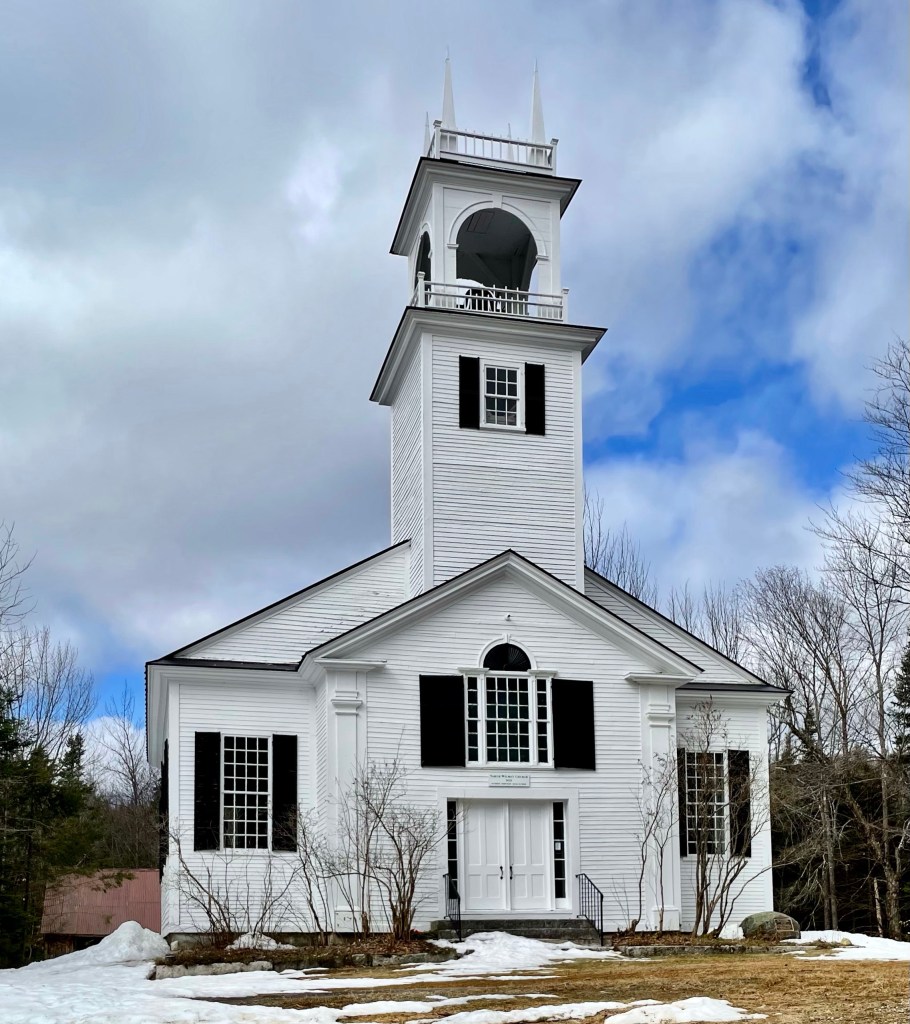
In the township of Washington, New Hampshire, about three miles from the Washington Town Green, stands a rural church building, a white wooden structure complimenting freshly fallen snow. This church is honored as the mother church of the first Seventh-Day Adventists. Its story started in 1842 by a local group of farmers calling themselves Christian Brethren, who dissented sharply from the strict Congregationalism of the Church in Washington Center. Many of the Christian Brethren became Adventists about the time this building was first used, and thereafter some of them began worshiping on the Seventh Day; and eventually the majority did so. In 1862 the official Seventh-day Adventist denomination was born at this place. Today, the building is a regular point of pilgrimage for members of the massive, international congregation.