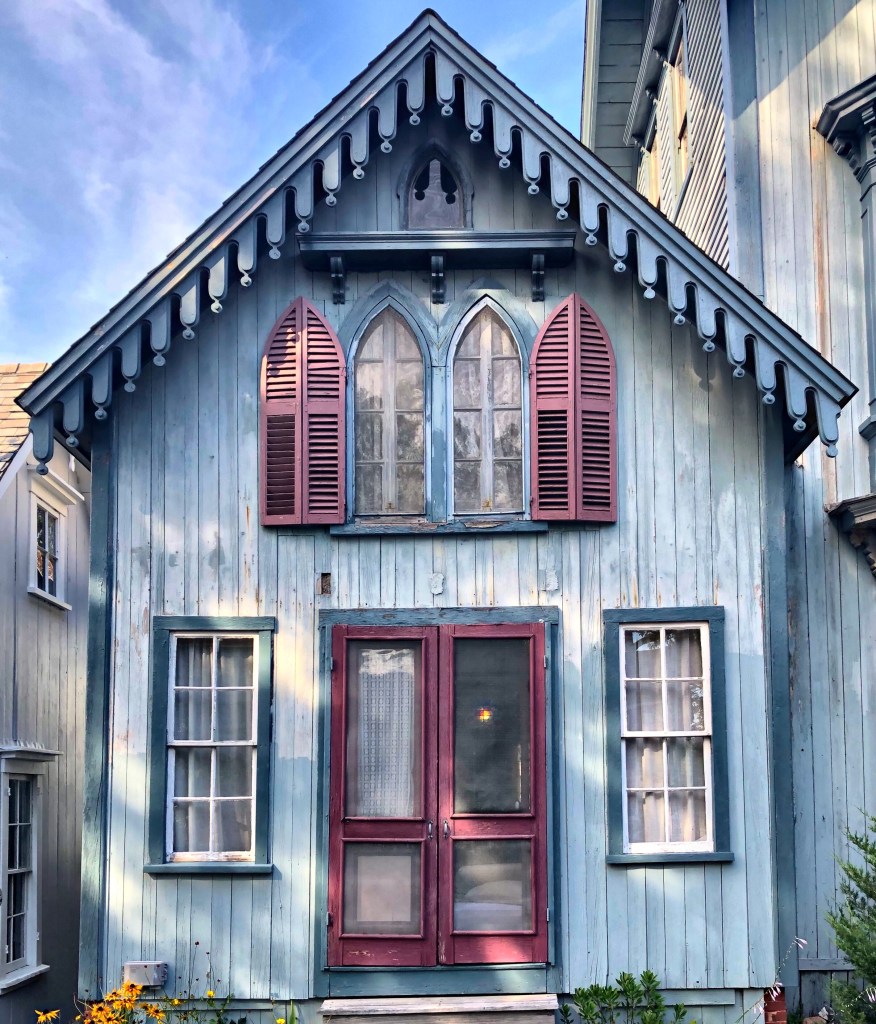
Riday-Evans Cottage // c.1880

This cottage on Ocean Ave in Oak Bluffs was built before 1880 for J.F. Riday, a manager at the American Mail and Export Journal at the Wesleyan Building on Bromfield Street in Boston. The quaint cottage was photographed shortly after it was built with Riday and two women (one likely being his wife) posing on the front porch overlooking the ocean. By the early 20th century, the home was owned by George and Corielle Evans, a couple from Mexico. They likely modified the home with the shingled siding and front porch with sheltered balcony above, while the original lancet windows and doors remained.

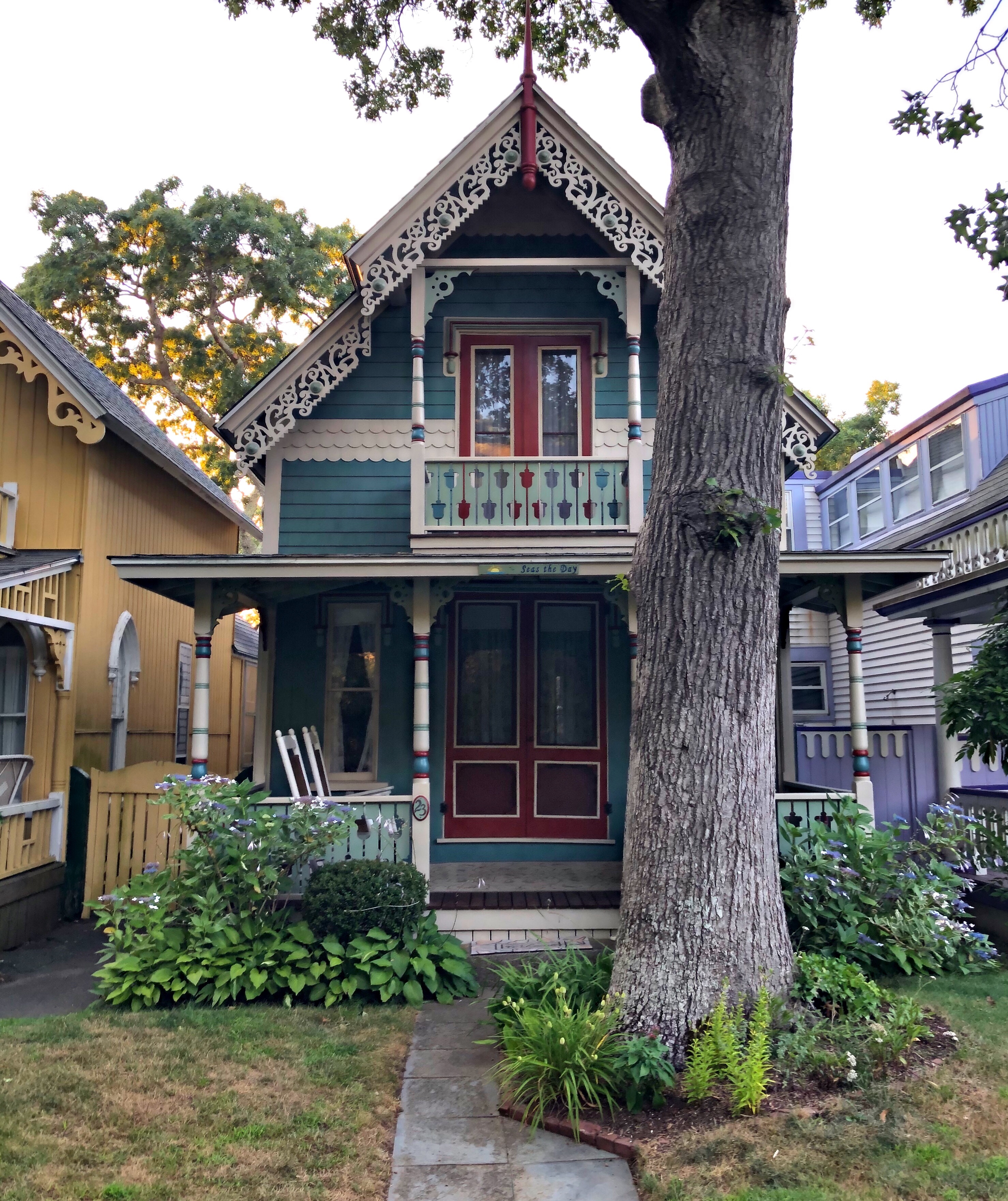
Jones Cottage // 1876

This charming little cottage in Oak Bluffs was built in 1876 for Charles N. Jones, a resident of Medford, MA who had a home built there in 1872. His family’s summer cottage on Martha’s Vineyard was designed by the Ripley Brothers, Alonzo and Walter, carpenters who lived in town and designed and built many of the charming little summer homes there. The home features a wrap-around porch, a covered balcony at the second floor, and pierced board balustrade and cornerboards. Oh, and the paint scheme is perfect!

Aunt Georgia’s House // c.1880

Located on the iconic Circuit Street in Oak Bluffs, this Eclectic Victorian cottage has a storied past related to Black history on the island. Even though Oak Bluffs was a relatively safe place for African Americans to be, there were still limits on their rights. In some parts of Oak Bluffs there were laws that said that certain property could only be owned by whites. The island became a vacation spot for thousands every summer in the 19th century and seeing a lack of options for Black travelers, Mrs. Georgia O’Brien and Ms. Louisa Izett began to operate an inn for people of color. The inn was one of two such residences in Oak Bluffs and has since been listed on the African American Heritage Trail of Martha’s Vineyard. The home has since been named the Tivoli Inn and retains much of the original gingerbread trim. In recent years, Martha’s Vineyard was given the nickname, “The Black Hamptons,” due to its popularity as a place for wealthy African-Americans to vacation, it remains a very diverse island in summer months.

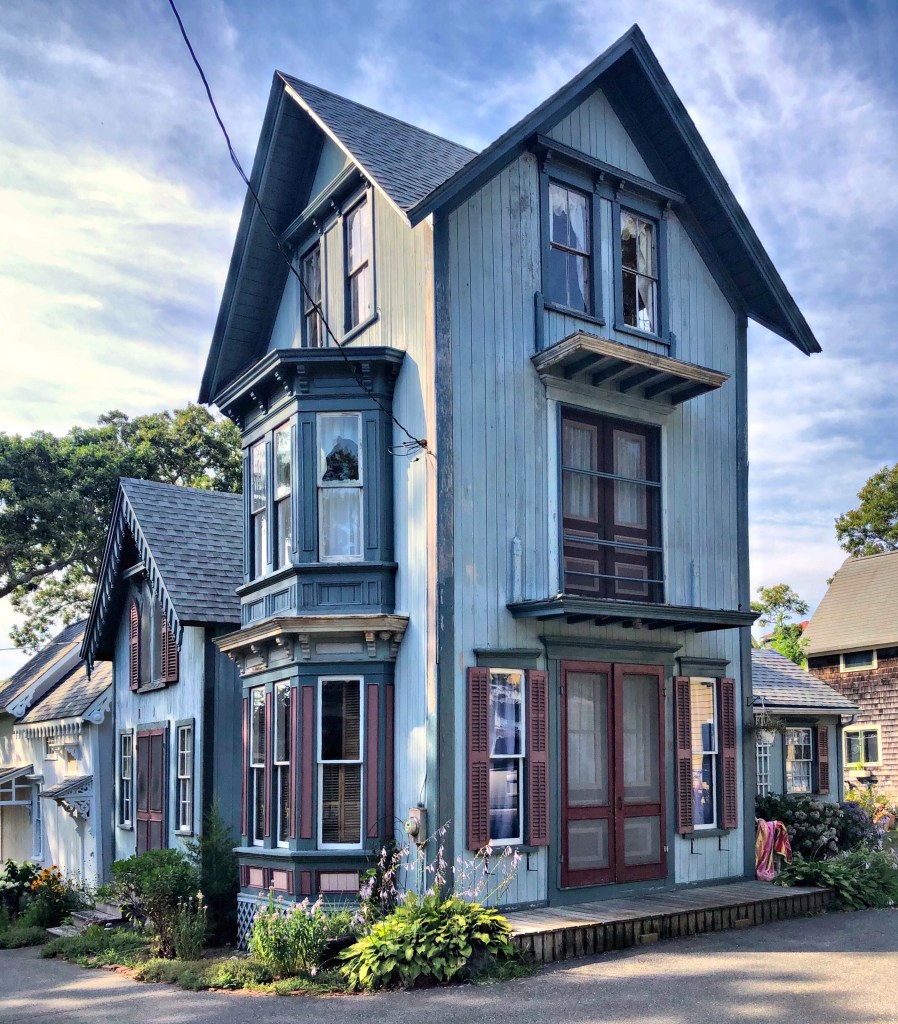
Tall Timbers Cottage // c.1870

Tall Timbers is one of the more unique cottages in the Wesleyan Grove development, a religiously oriented summer community in Oak Bluffs on Martha’s Vineyard. The cottage was actually built in two phases. The small two story cottage was built first before 1870 and features gothic bargeboard, lancet windows, and paired doors. It was purchased around 1870 by William Newell, of Rhode Island, who had a three-story wing added to serve as a summer cottage. The addition is notable for the full-length vertical boards that rise through the entire three stories without a break like trees after harvesting, likely the inspiration for the name of the cottage. William Newell was a manufacturer of brass fixtures and ran a foundry in Central Falls in Rhode Island. Mr. Newell was active in politics and early in his career joined the cause of the anti-slavery party, which was likely solidified in his experiences in the ethnically diverse Martha’s Vineyard.

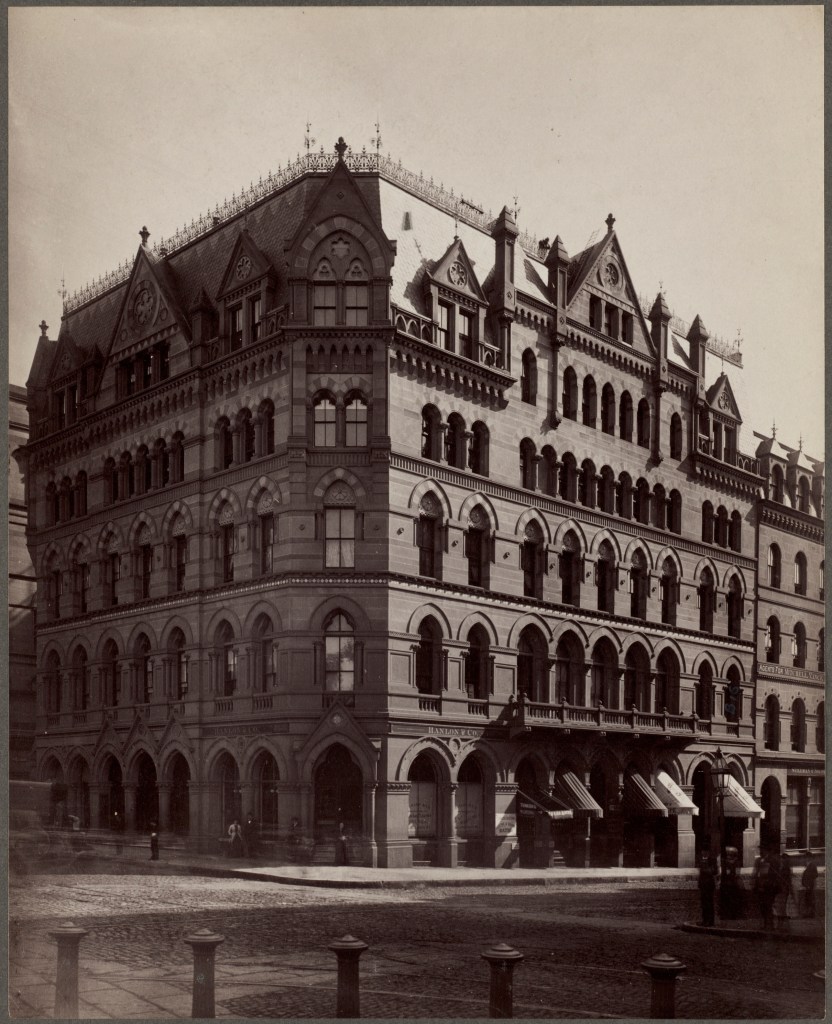
Hotel Boylston // 1870-1894

C.1875 image of Hotel Boylston, BPL image.

Standing just 24 years, the Hotel Boylston at the corner of Boylston and Tremont Streets, evoked the Victorian-era grandeur of Boston. Built in 1870, the Victorian Gothic hotel (what we consider apartment building today) was designed by the architectural team of Cummings and Sears, who were very busy at the time in Boston and beyond. The 5 1/2-story building was constructed of sandstone and featured Gothic arches, dormers of varied sizes and shapes, and a mansard roof with iron cresting. The building (and the three others on Tremont Street) was razed in 1894 and replaced with the Hotel Touraine a few years later.

Chapel in the Pines // 1889

The Chapel in the Pines church had its origins in the growing desire by many late-19th century New Englanders to move away from the strictures of fundamentalist religion. A Universalist Society was formed in Eastham on the Cape for the erection of a new place of worship. Local families and esteemed citizens pooled resources and constructed the building themselves over five months, under the direction of an Elkany Hopkins (though sources state he died in 1885). The Victorian Gothic church has a certain flair with the turned posts at the entry, bell tower, and roof cresting. After serving various congregations and uses (including as the First Encounter Coffeehouse a renowned venue for folk and acoustic music since 1974), the building was purchased by the Nauset Fellowship. In 2017 and 2018, the Chapel underwent a renovation with money raised from the community along with two grants from the Town of Eastham’s Community Preservation Act funds.