Giddings Homestead // c.1800

This old gambrel-roofed home sits on the beginning of Pautipaug Hill Road just outside the industrial village of Baltic, in Sprague, Connecticut. The house’s history is a little unclear, but it shows up on historic maps as being owned by W. Giddings. This appears to have been Walter Giddings (1788-1854). Walter may have built or inherited this property from his father Nathaniel, who died in 1809. Walter married Laura Lucretia Fillmore in 1811 and they had four children. Laura died in 1827 at just 37 years old and Walter remarried within a year to Lydia Lathrop Ladd. The property remained in the Giddings Family at least into the second half of the 19th century. It was later “Victorianized” with two-over-two windows, side and front porches, and a octagonal bay window. The home has been suffering from deferred maintenance for over 15 years (as far back as Google maps goes) and was listed for sale, so here’s to hoping this old beauty survives!
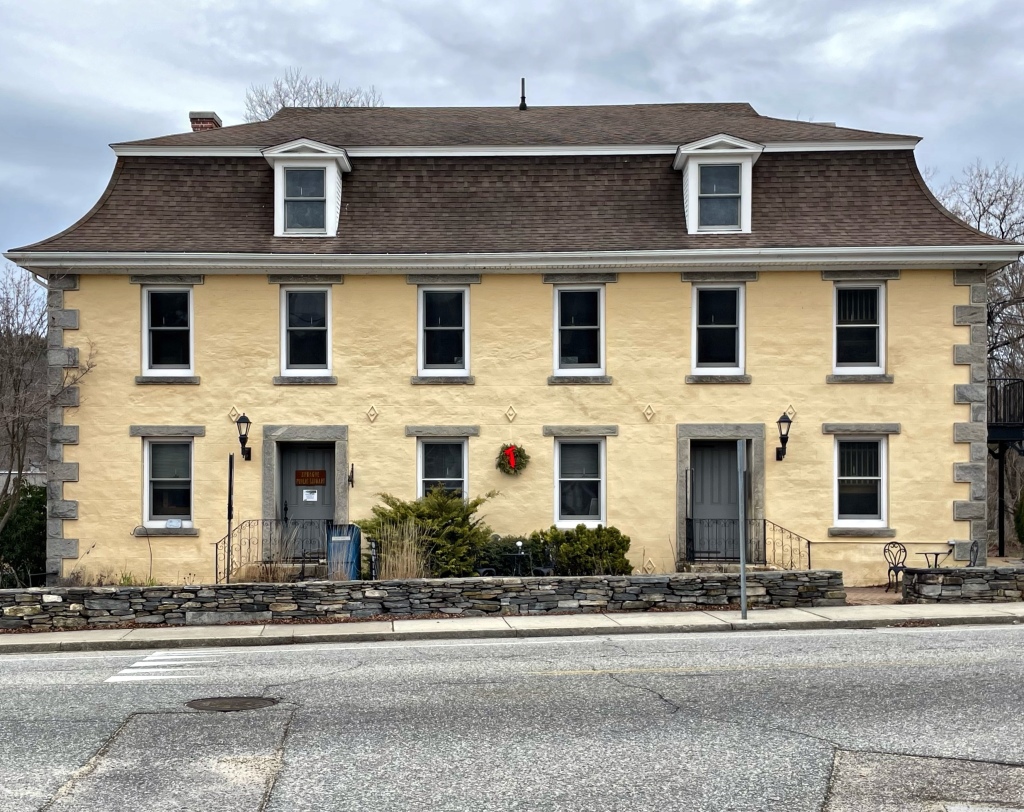
Sprague Grist Mill – Sprague Public Library // c.1875

The town of Sprague, Connecticut was incorporated in 1861, with the land formed from portions of the town of Franklin. A few years earlier, in 1856, former Rhode Island Governor and U.S. Senator William Sprague III of Rhode Island had laid out plans to build “the largest mill on the Western Continent” in eastern Connecticut, only to die later that year. His nephews William and Amasa Sprague constructed the Baltic Cotton Mill in what was to become the village of Baltic, which is today the geographic and population center of the town of Sprague. The village of Baltic developed largely between the years 1857-1861, when the Sprague brothers developed the mill, commercial buildings, and workforce housing for the employees. In 1870, 804 men, 396 women, and 210 children worked in the Baltic mill. This building was constructed after the initial period of development for the town in about 1875 as a grist mill. It is now home to the town’s library!

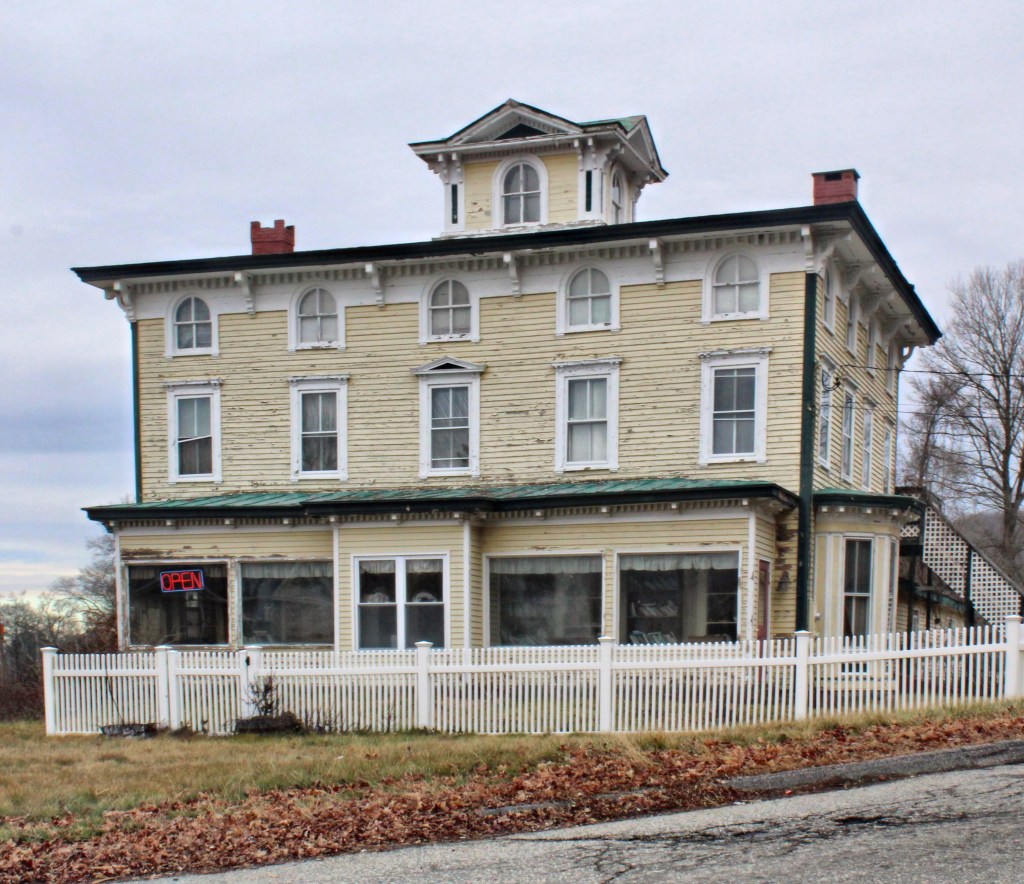
Smith’s Corner Store // c.1865

One of the largest and most stunning buildings in the town of Franklin, Connecticut is this Italianate style structure along the Hartford-Norwich Turnpike. The building appears to have been built soon after the conclusion of the American Civil War by brothers John Owen Smith (1819-1896) and Prentice Orrin Smith (1817-1898) who possibly operated the building as a tavern or inn along the route between Hartford and Norwich. The three-story, five-bay facade structure featured round arched windows at the top floor, a raised belvedere at the roof, bracketed cornice with overhanging eaves, and later storefronts at the facade. The building is occupied today by Victorian House, a furniture store.

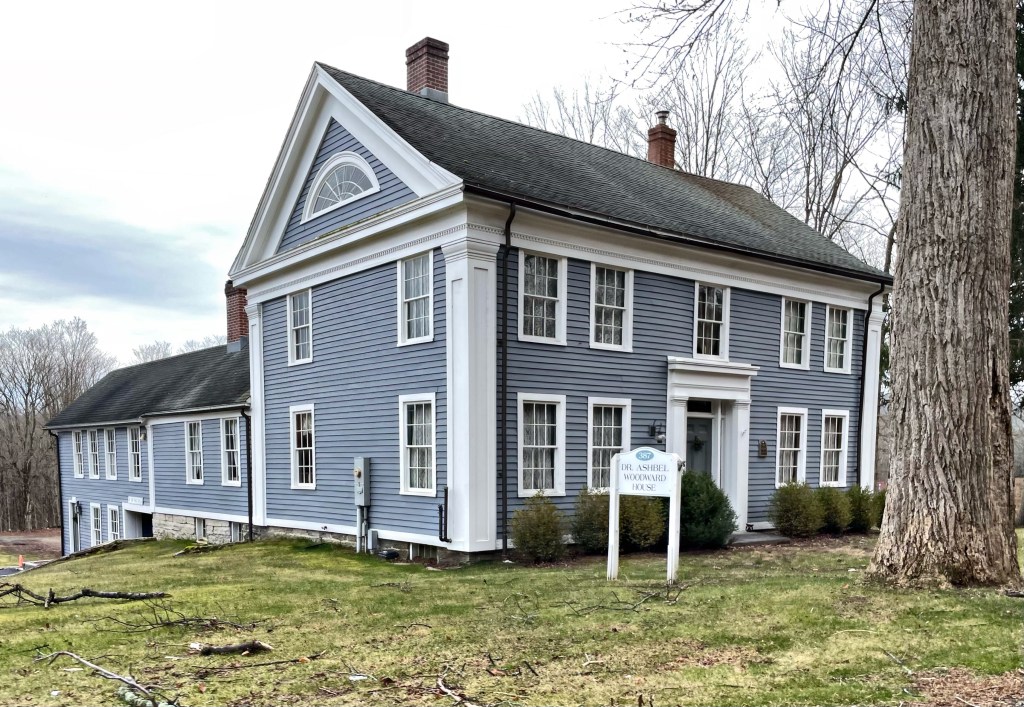
Dr. Ashbel Woodward House // 1835

The Ashbel Woodward House in Franklin, Connecticut was built in 1835, on land purchased by Doctor Ashbel Woodward, a prominent local physician, a year prior. Woodward, was a graduate of Bowdoin College, and he began practice in Franklin in 1829, serving as the town’s primary medical practitioner until his death in 1885. Though in his 60s at the outbreak of the Civil War, Woodward perhaps lent his greatest service to his country when he served as a battlefield surgeon and medical facilities inspector for the Union army. Besides his work in medicine, Woodward collected literature and numerous artifacts pertaining to Franklin’s past and eventually wrote a book detailing the town’s history. The Ashbel Woodward House is an excellent example of the Greek Revival architectural style in a five-bay form. Interestingly, there are semi-elliptical windows in the pediment gable ends on the side elevations, seemingly a nod to the Federal style that was waning out of style at the time. The property is in use today as a museum, documenting the life of Dr. Woodward and the people of Franklin, Connecticut.

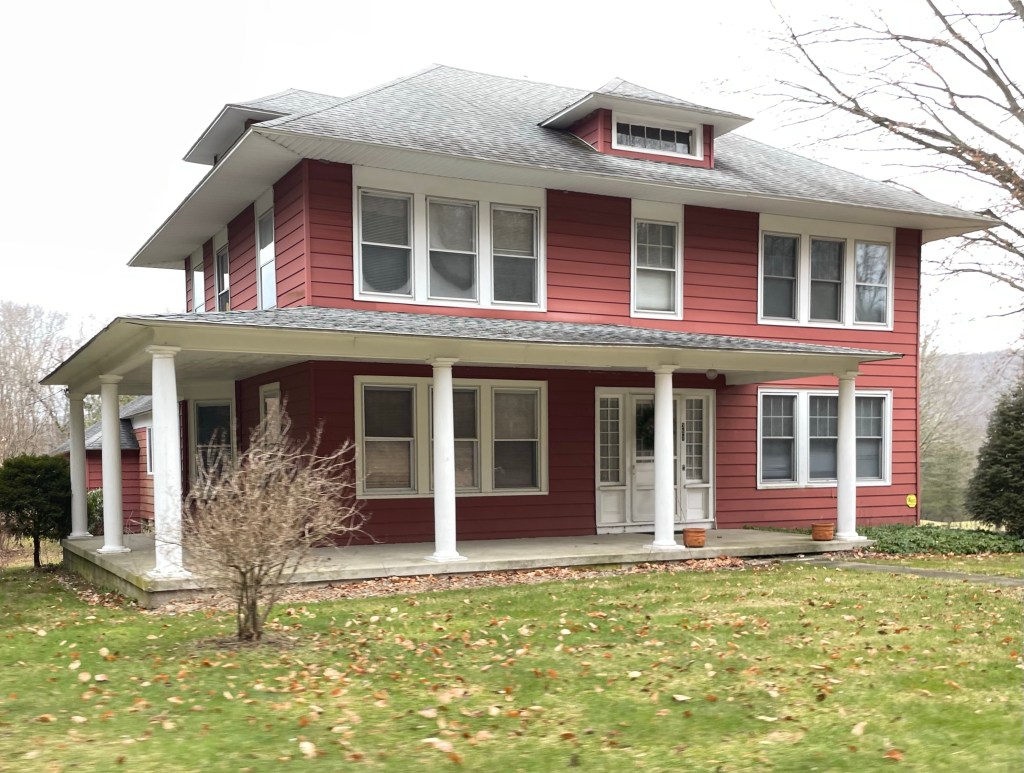
Oliver Johnson House // 1905

Prairie style architecture is not nearly as common in New England as it is in the Mid-western United States. The style was almost always seen in early 20th century residential designs and is characterized by horizontality, low slope roofs, overhanging eaves, and open interior floor plans. This New England vernacular version of the Prairie style employs some Arts and Crafts influence with Tuscan columned porch and wood frame construction, rather than the more bulky and bold use of brick and stone. This residence sits on a busy state route in the sleepy town of Franklin, Connecticut. This house appears to have been built for Oliver Johnson who was about seventy by the time the house was built. Do you know of any other Prairie Style houses in New England?

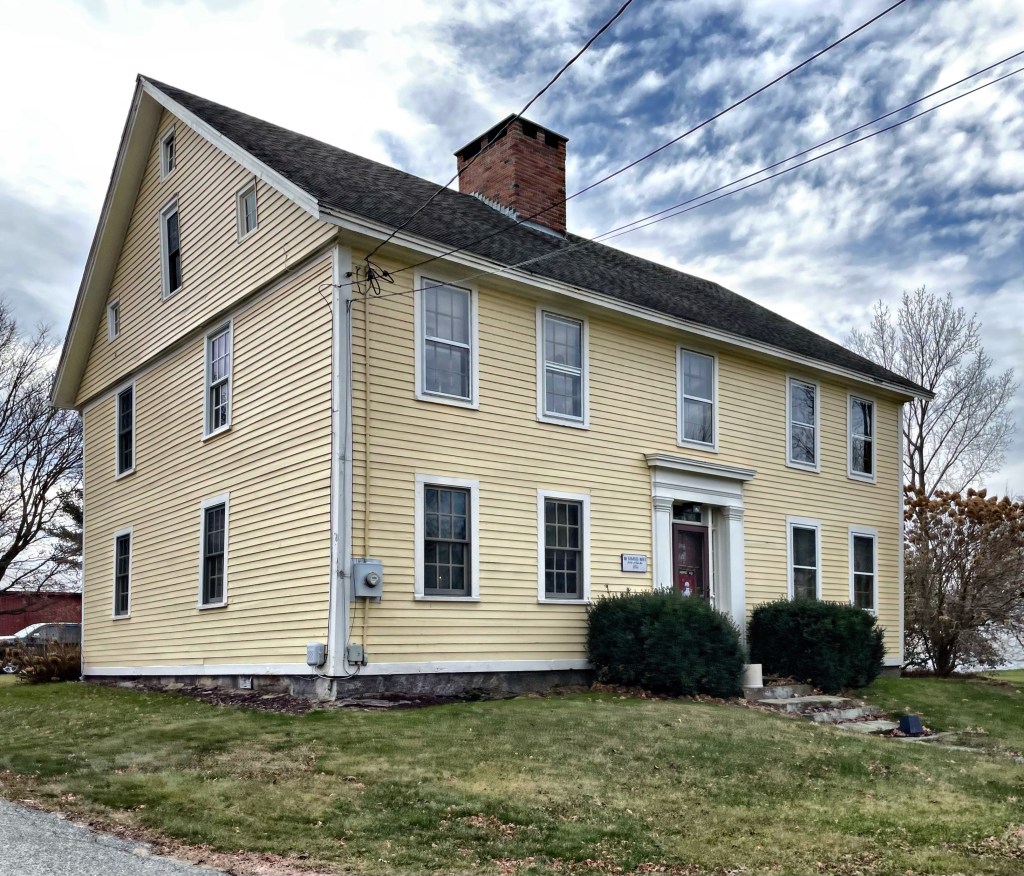
Rev. Samuel Nott House // 1784

Reverend Samuel Nott (1754-1852) was born in Saybrook, Connecticut and did not have an easy beginning. When he was young, the family home burned, destroying all family possessions. Some years later on a business trip, he was beaten and robbed. At twelve years old, he began working for his father, later becoming a blacksmith by 16. For a while, young Nott lived with a Rev. Dr. Welsh of Mansfield. The older man had a profound religious influence on the young lad. At age 23, Nott entered Yale, but the college closed when British troops entered New Haven. In 1782, he married Lucretia Taylor and passed his examination for the ministry. A year before his marriage, he was invited to serve a parish in West Farms, now Franklin. He was apparently anxious to accept the position at the rural village, as the farmers attending the congregational church had fired their previous two pastors, he accepted the call regardless. During his tenure, he prepared more than 40 young men for college and schooled as many as 300 boys and girls in his home, some as boarding students. He was regarded as one of the most successful educators of the day. Education ran in his family as Samuel’s brother, Eliphalet Nott, would become President of Union College in Schenectady, NY for 62 years, from 1804-1866. Towards the end of Samuel’s life, in his 70s, his wife Lucretia, became an invalid, requiring care and finally passed in 1834. Three of his children also died. Nott passed away at 98 years old in this house, as a result of burns sustained from his own fireplace.

Dr. Stephen Sweet House // c.1845

Connecticut has some of the most stately early 19th century homes in New England, from the larger cities to rural towns like this beauty in little Franklin, Connecticut. This dwelling was built in the 1840s for Dr. Stephen Sweet (1798-1874) a physician near the town green. It was built after his second marriage, after his first wife’s death. His second wife, Matilda, died in the home during childbirth at age 44, along with their son just days later. The house is an excellent example of the Greek Revival style, with a gable roof running parallel to the main street, central entrance and corners framed with pilasters and frieze band at the cornice. At the side of the house, which also fronts a street, the stately home commands the corner with a second entry (maybe for in-patients), and a pair of quarter-round windows in the pediment.

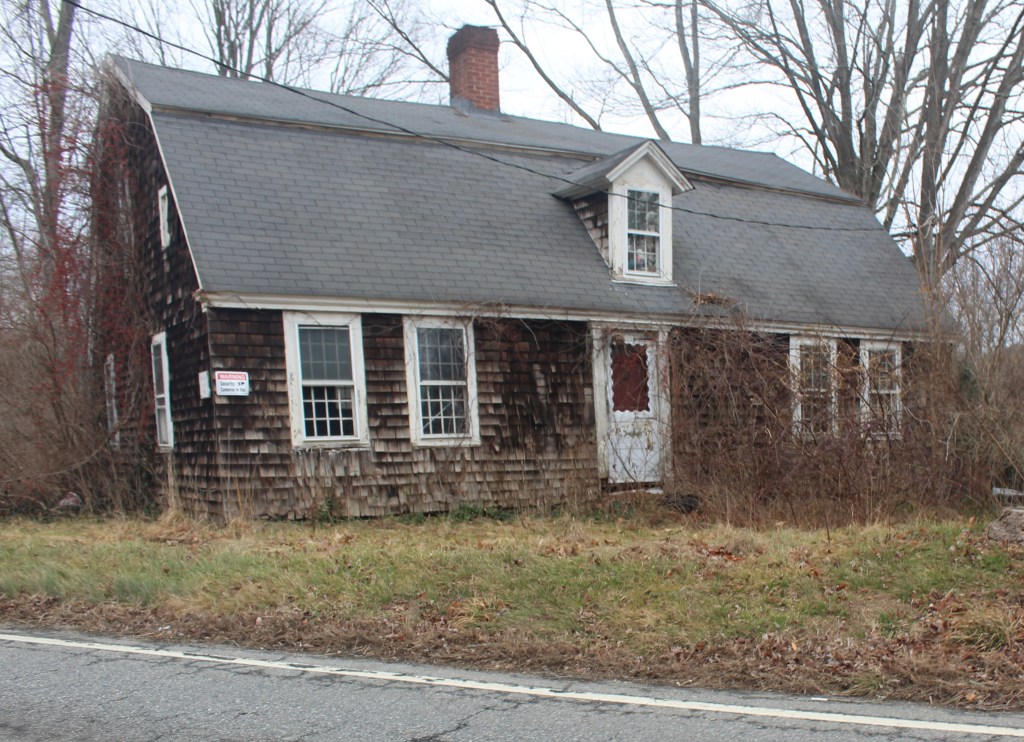
Nathaniel Backus House // c.1702

Welcome to Franklin, Connecticut, which frankly (pun intended) I had never heard of before driving through it not long ago! The town is located in New London County and was originally a part of Norwich, Connecticut and was called West Farms village. The town incorporated in 1786, creating its own town at that time, and the citizens decided to name their new town after Benjamin Franklin. I wonder if there are more place names in the United States after Benjamin Franklin or George Washington…

This is one of the oldest houses in the sleepy town of Franklin, and it was built around 1702 by Nathaniel Backus, about the same time he was married to his wife, Elizabeth. The Georgian Cape house features a large gambrel roof and a small gabled dormer. The house is representative of many of the earliest homes which once existed in this landscape in the early 18th century. The home appears to have been vacant for some time, and in 2022, was auctioned off. Its future is unclear at this time sadly.

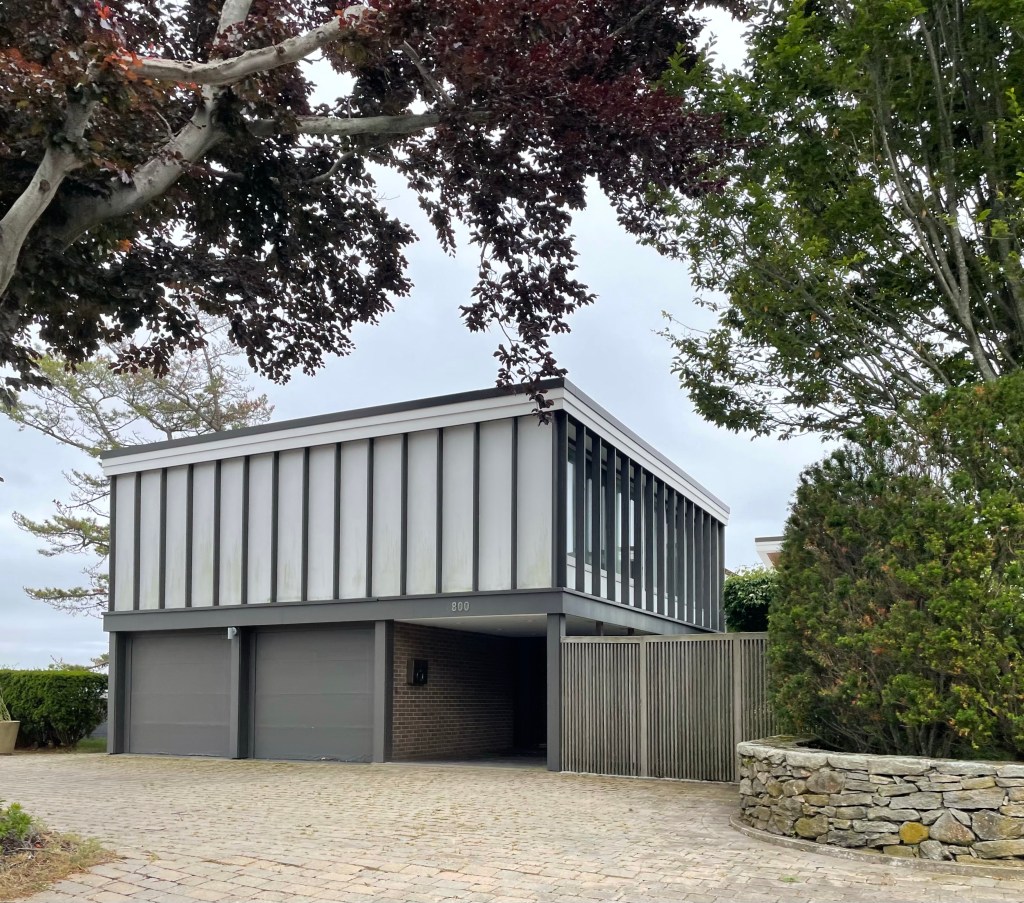
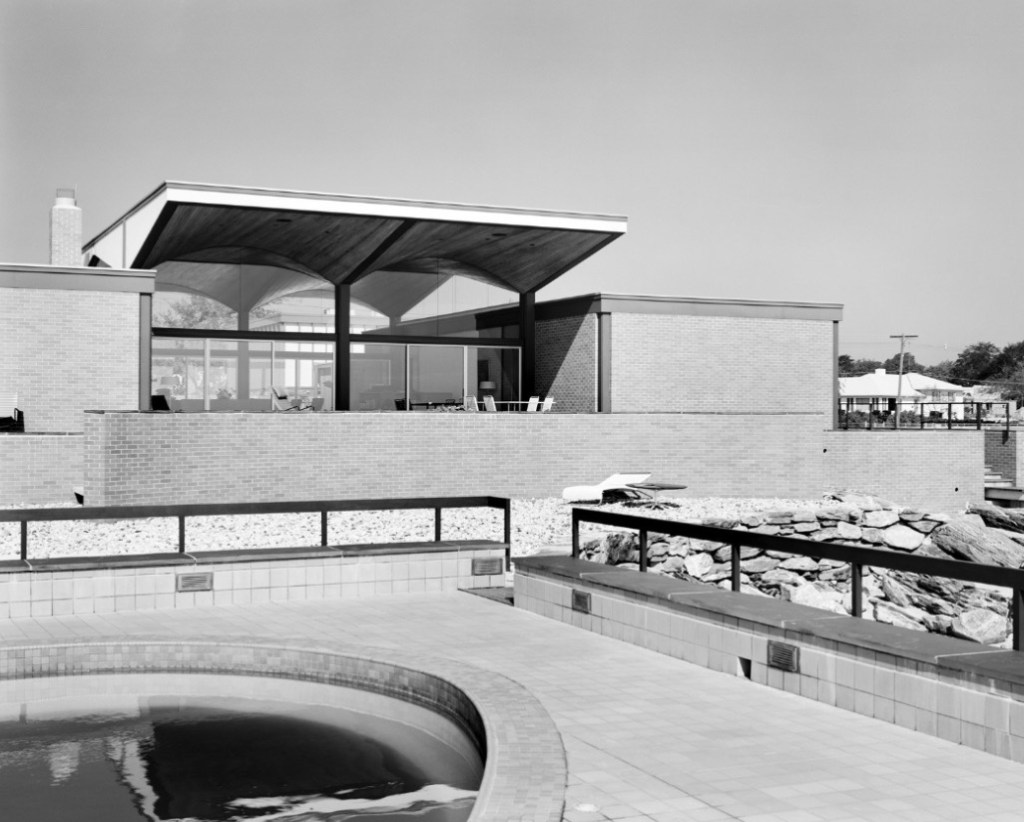
Castle House // 1964

Perched atop the rocky coast of New London, CT, and seemingly at the base of the iconic New London Harbor Light, the “Castle House” stands as one of the most significant examples of 1960s residential design in a state known for such homes. The Castle House was completed in 1964 from plans by German-born American architect Ulrich Franzen (1921-2012), who attended Harvard’s Graduate School of Design after his service in WWII. After graduating, Franzen worked under I.M. Pei, until he formed his own firm, Ulrich Franzen & Associates, in 1955. The home’s signature element is its dramatic free-floating glass living room pavilion with cantilevered paraboloid vaults and flanking service wings, with a jaw-dropping cypress butterfly ceiling. Additionally, the oval pool sits over the harbor water and provides the best possible views of the 1801 lighthouse towering above. The house was recently updated by SchappacherWhite, a design firm who are known for their thoughtful Mid-Century Modern house preservation projects.

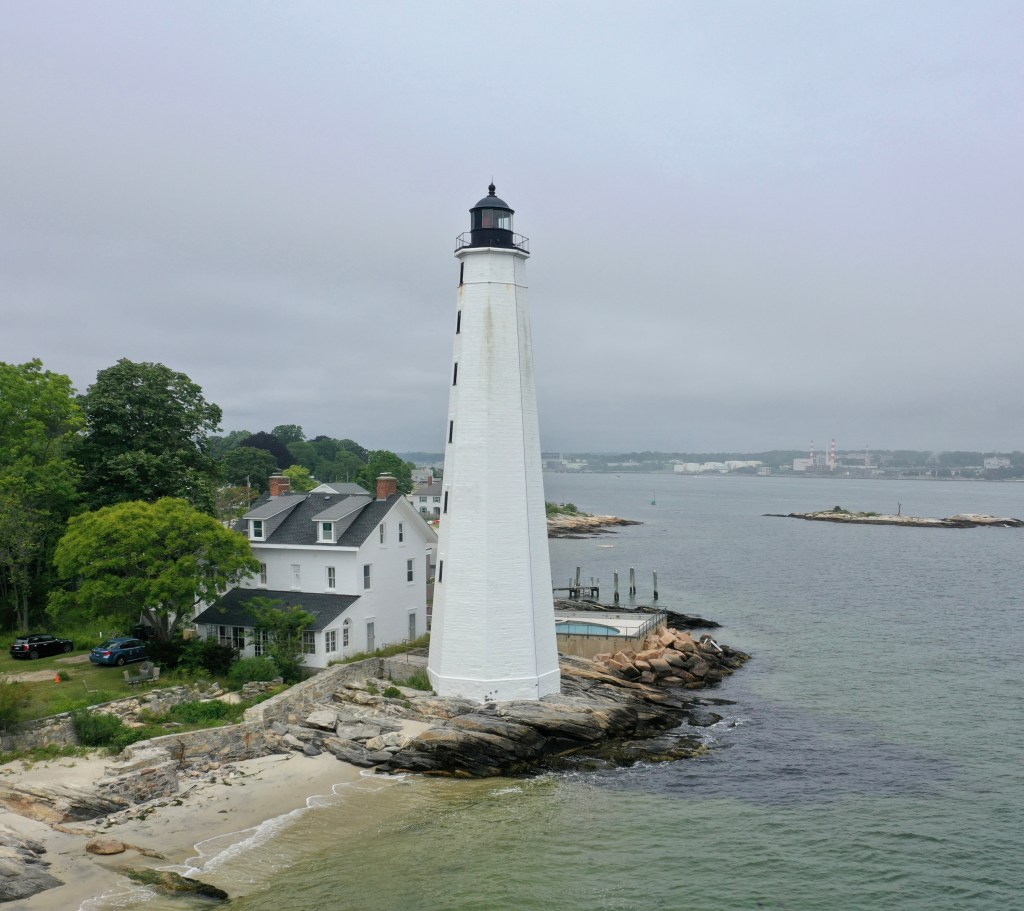
New London Harbor Light // 1801

In 1760, the colonial legislature of Connecticut passed an act creating a committee to pursue the funding, construction, and staffing of a new lighthouse for the harbor entrance at New London. The following year, thousands of lottery tickets were sold to raise £500 for the lighthouse (a popular method of raising funds for construction projects in those days). The lighthouse, a sixty-four-foot-tall stone tower with a wooden lantern at the top, was finished that same year at the west side of the harbor entrance. By 1799, issues began to pile-up, including a crack in the structure compromised the integrity of the tower, compounded by the fact the light was so dim as to often be indistinguishable from the lights of the surrounding homes. These challenges led the charge for a new lighthouse. Congress allocated $15,700 for a replacement lighthouse on May 7, 1800, and New Londoner, Abisha Woodward began construction on the current octagonal, tapered, eighty-foot-tall tower. The present light was completed the next year and is constructed of smooth-hammered freestone which are lined with brick inside. The current gable-roofed, two-and-a-half-story keeper’s residence was built in 1863, and in 1900 it was expanded to provide quarters for the assistant keeper and their families. Today, the keeper’s house is privately owned and the light tower is owned by the New London Maritime Society, who offer tours of the light on occasion.