The Deacon Turner House, built in 1849, is an impressive Greek Revival house located at the Town Common in Willington, Connecticut. The Greek Revival portion was constructed onto an earlier house or store that was built 50 years prior. The one-story structure was likely moved and incorporated into the current house as a rear ell. The present house was designed by architect Augustus Treusdel of Coventry and built for Deacon John Turner by Emery Williams a well known local builder. John Turner was Deacon of the Willington Congregational Church, nearby.
Located on the southern edge of Willington Connecticut’s town common, this vernacular example of the Federal style with later alterations is really appealing, mostly for its simplicity and proportions. The house was built around 1820 for Hiran Rider, who served as a judge, county sheriff, and town selectman. The Rider Family were hit by tragedy in 1851 when dysentery hit the household, killing Hiram, his wife Sarah, and their daughter. The home was altered by a later owner with 2-over-2 windows, an Italianate style door, and a door hood.
This Greek Revival cottage appears to have been built in the 1830s or 40s based on the style, and early maps list the owner as W. Shaffer. It appears that William Shaffer (1799-1892) was hired by the West Willington Glass Works, which ran a factory across the street, and he either built this home or modernized an earlier home to give it the current configuration. The West Willington Glassworks was in operation 1817-1872 and made everything from inkwells to flasks to pickle jars. The house exhibits bold pilasters at the corners and at the entry with entablatures above them. Oh and that red is just beautiful!
TOOT TOOT! Next stop, Willington, Connecticut. Historically, all of central Connecticut was occupied by various Algonquin tribes which for thousands of years inhabited the region, the larger Pequot and Mohegan, and the smaller Nipmuck, Podunk, Shenipset and Skunkamaug all sharing a common-lineage, and language. In 1720, a party of eight men, originally from England, bought 16,000 acres of the region and called it Wellington after the town in England. Willington was incorporated in 1727. Like many early towns, Willington began as a farming community with modest industry until the 19th century, when the American Industrial Revolution saw mills and factories sprouting up all along the river towns in the region. Villages spouted up in town, mostly following their geographic location in relation to the town center (South Willington, West Willington, etc.) and each had their own industry and character. By the 20th century with industry in decline, many of the former mills and villages closed up and residents moved to “greener pastures”. The town is today mostly rural and serves as a suburb to larger towns nearby.
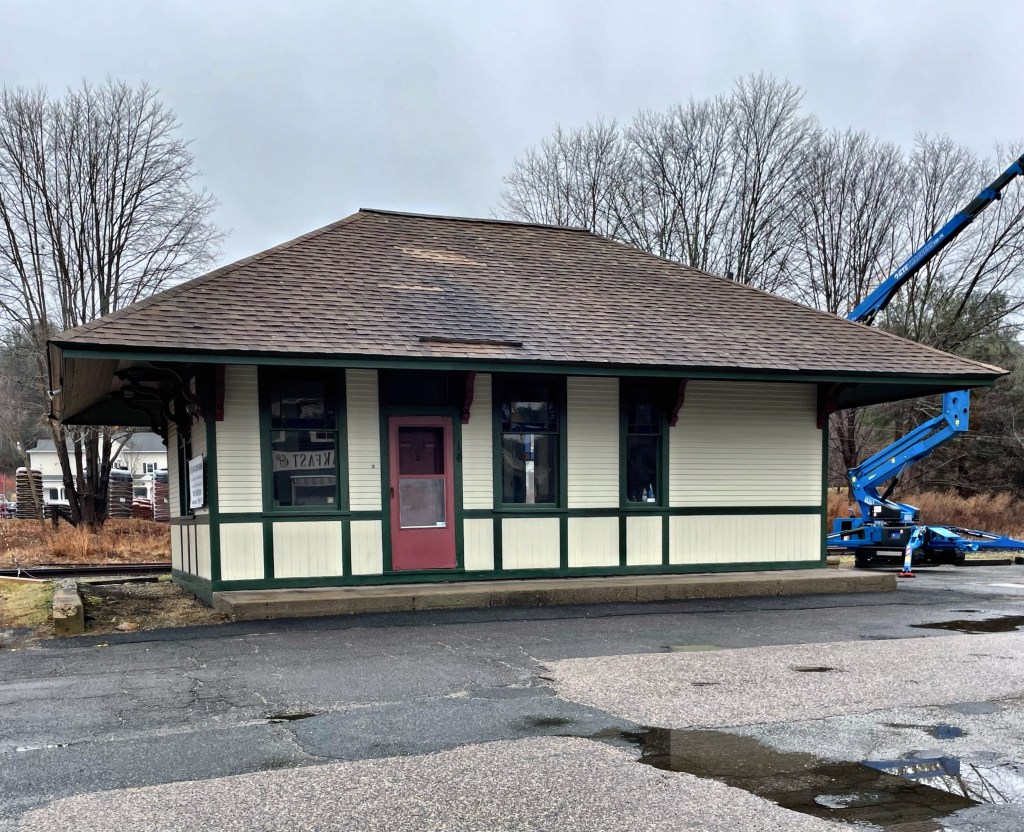
This train depot is located in West Willington just over the town line of Tolland. Due to this, the depot was originally named Tolland Station. Rail service began here in 1850, when the New London, Willimantic and Palmer Railroad Company built a freight and passenger station near this location. The rail line was later absorbed into the larger Central Vermont Railway in 1871. The original depot burned down in 1894, and was replaced that same year by this structure. The line, and this station, were in use for passenger service until 1947, when it closed. The depot has luckily been occupied by businesses ever-since, preserving this building typology in America that we are losing every year.
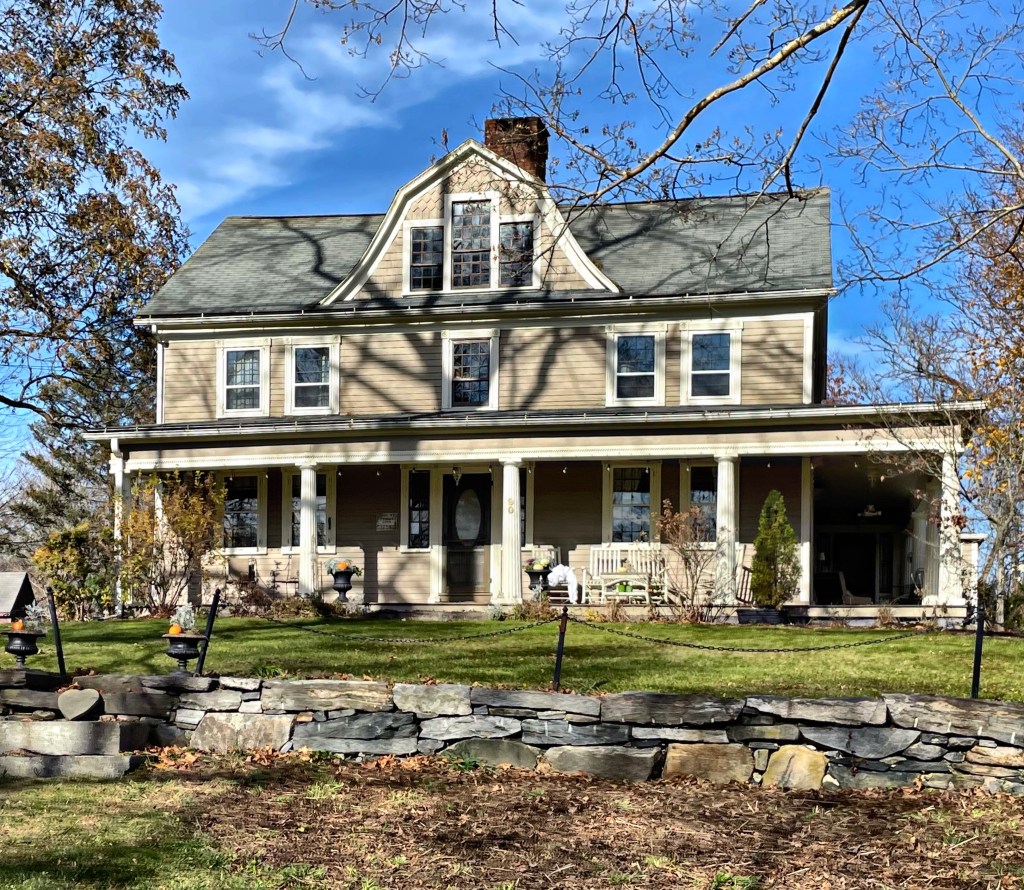
Built by Benjamin Dyer for his son Thomas in 1756, this mansion is believed to be the oldest extant house in Canton, Connecticut. The most famous resident of the house was William Edgar Simonds (1842-1903) who married Sarah Jane Mills, a descendant of Dyer. Simonds was a prominent patent attorney who was awarded the Congressional Medal of Honor for his heroics at the Civil War battle of Irish Bend, Louisiana. After his military service, he attended Yale University, was admitted to the bar and commenced the practice of law in Hartford, Connecticut. In 1883 and 1885, he was a member of the Connecticut State Legislature. In 1889, he was elected as a Republican to the 51st US Congress served until 1891 and was a United States Commissioner of Patents (1891-93). He died at age 60 in Hartford, Connecticut.
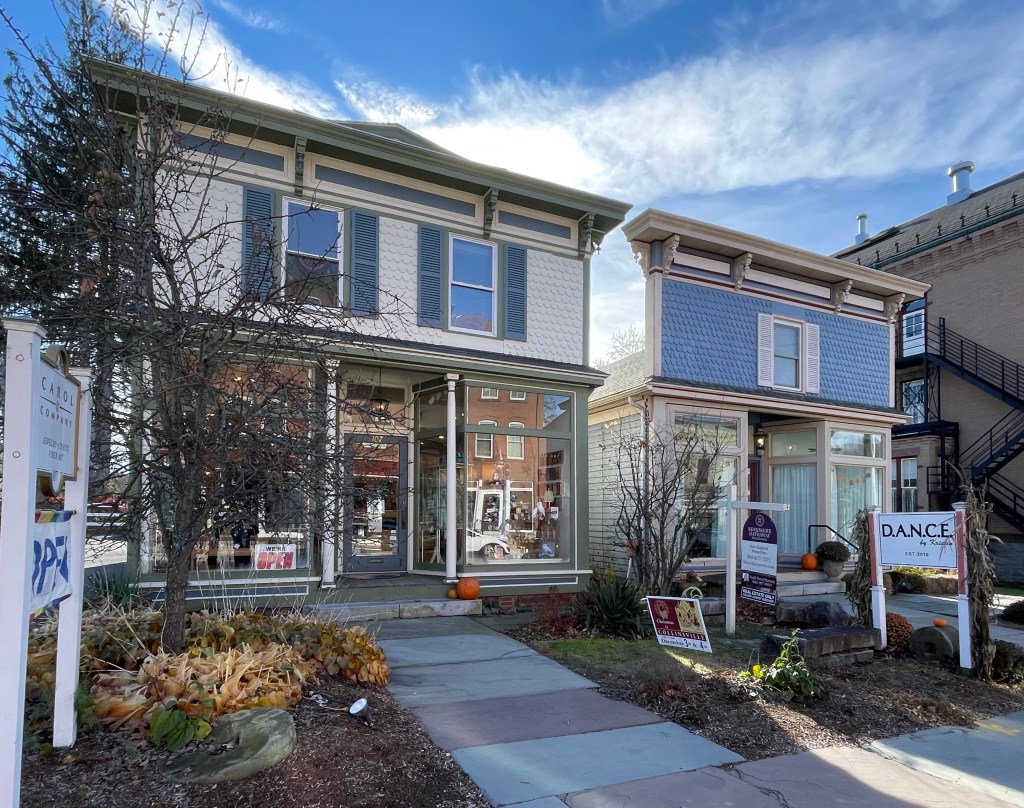
These two Italianate-style stores sit on Collinsville’s Main Street, a walkable main street village along the banks of the Farmington River. Each structure has a central, recessed entry with storefront windows meeting the sidewalk. One structure is two stories with a very shallow gable roof and the other is 1 1/2 stories with a false front. These false front facades remind me of old frontier towns in western movies, they are great!
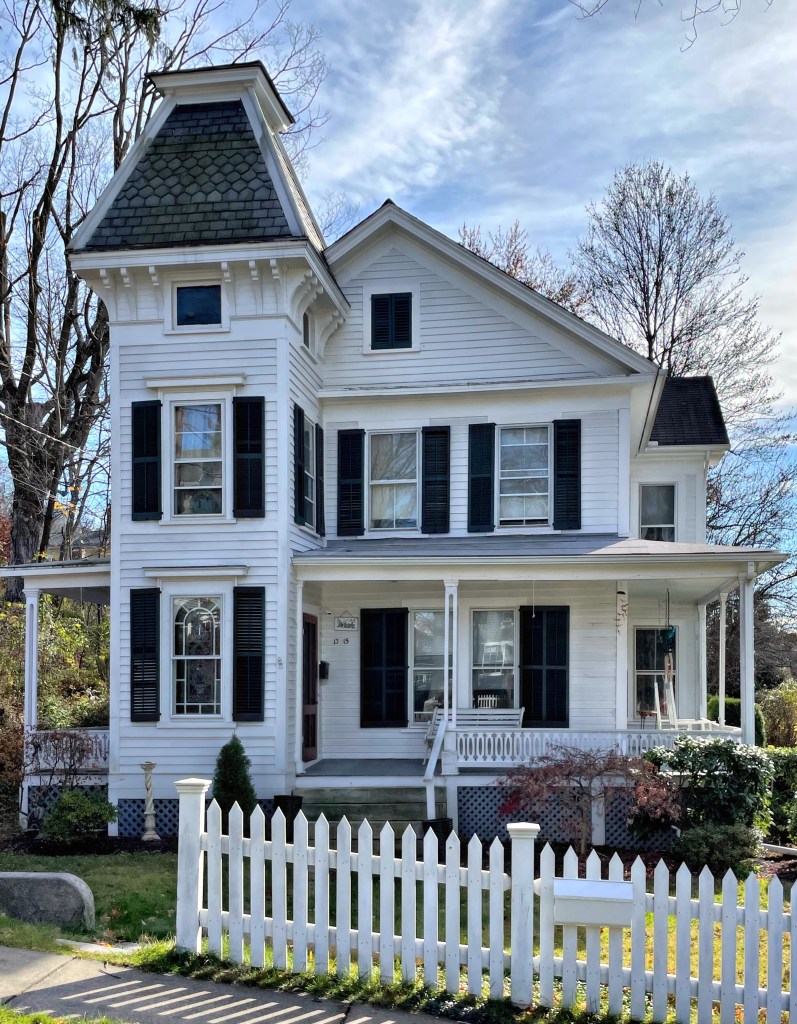
This eclectic house in Collinsville was likely built in the mid-19th century in the Greek Revival style, with its gable roof serving as a pediment. By the end of the 19th century, the prominent corner tower with mansard roof and porch were added to create the oddly pleasing composition we see here today. The home was likely altered by Walter Soudant, who ran a grocery store in the village out of the Valley House (last post). Walter’s daughter, Belle Julie Soudant, was an established singer, who toured Europe before accepting a position as a singing teacher at the Institute of Musical Art in New York, known today as the Juilliard School.
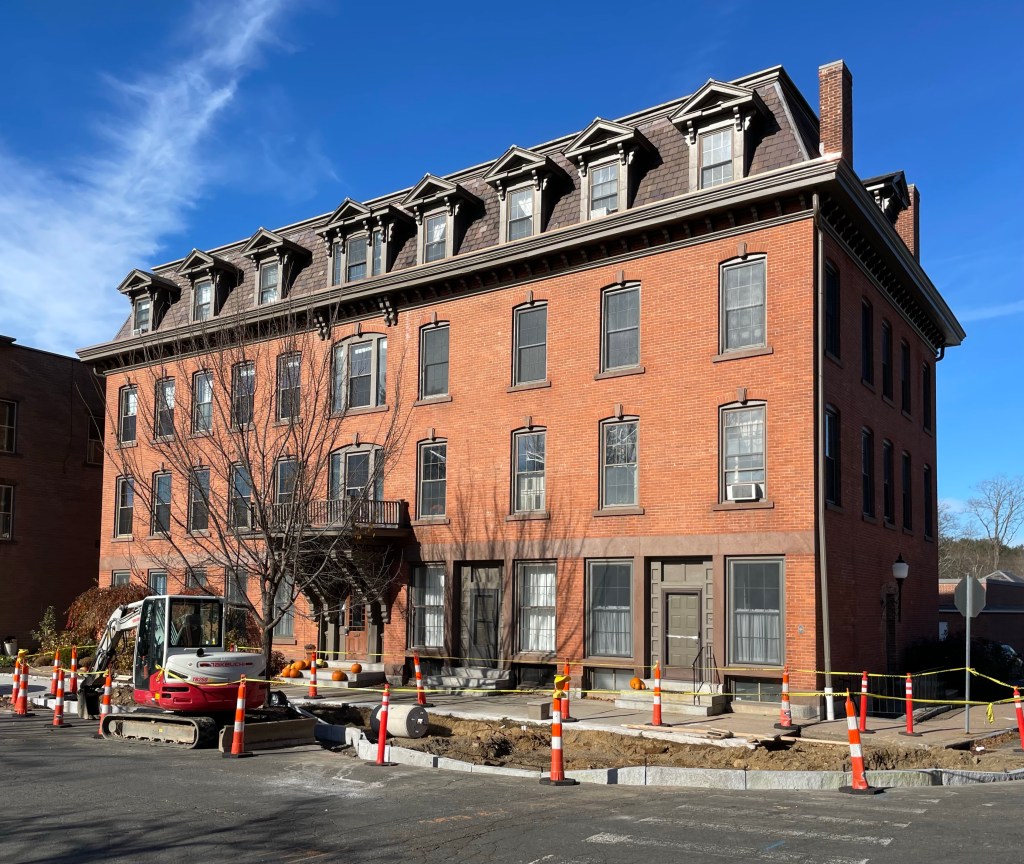
This massive Second Empire structure on Main Street in Collinsville, CT, was built in 1868 by the Collins Company, the major industry in town as housing and stores. In the 19th and early 20th centuries, large industrial employers often provided affordable housing for workers in close proximity to factories to incentivize the long days and difficult working conditions. The Valley House was known as a hotel, but was essentially an apartment hotel, where workers and visitors could reside in a room without a set lease or contract. At the ground floor, retail shops would provide goods and services to residents of the building and the greater village. Today, the rooms have been converted to condominiums.
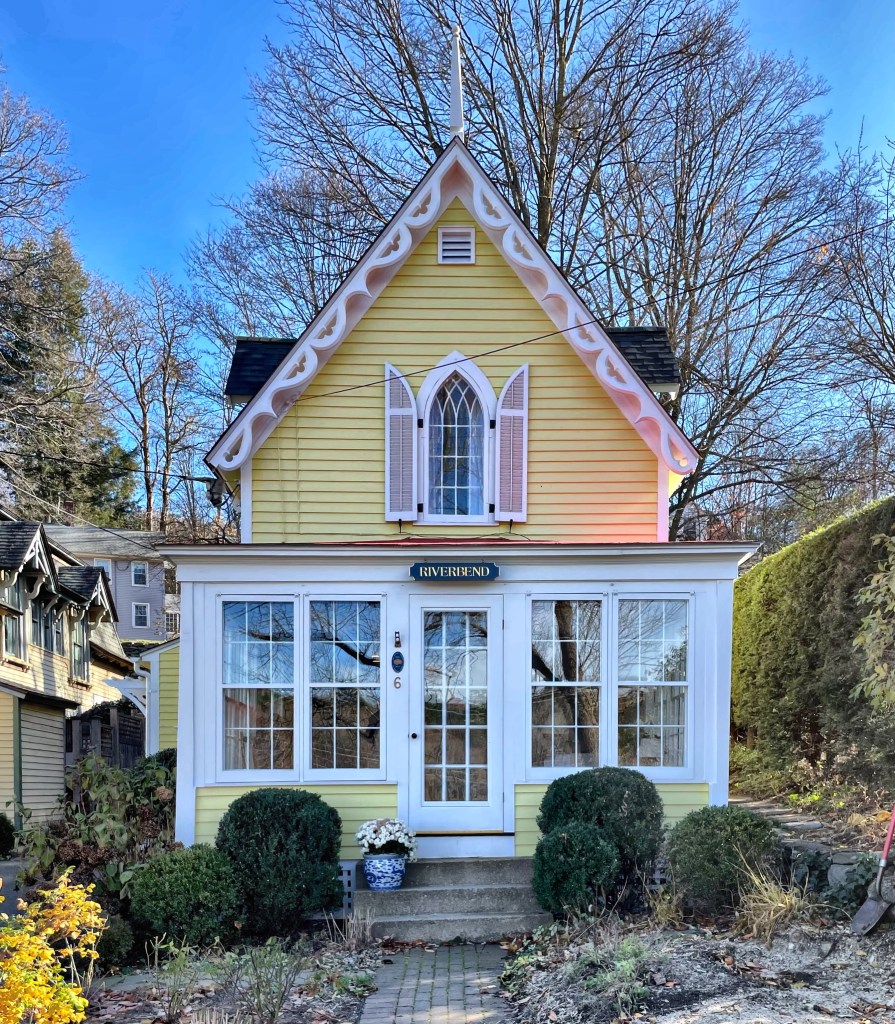
No, this is not Martha’s Vineyard, it is Collinsville, Connecticut! Perched on a hill near the banks of the Farmington River, this quaint little Victorian cottage is one of the better-preserved examples of worker’s cottages in the former industrial village. I could not locate much on the house’s history, beyond that it may have once been part of a larger home, and moved to this site in the 20th century.
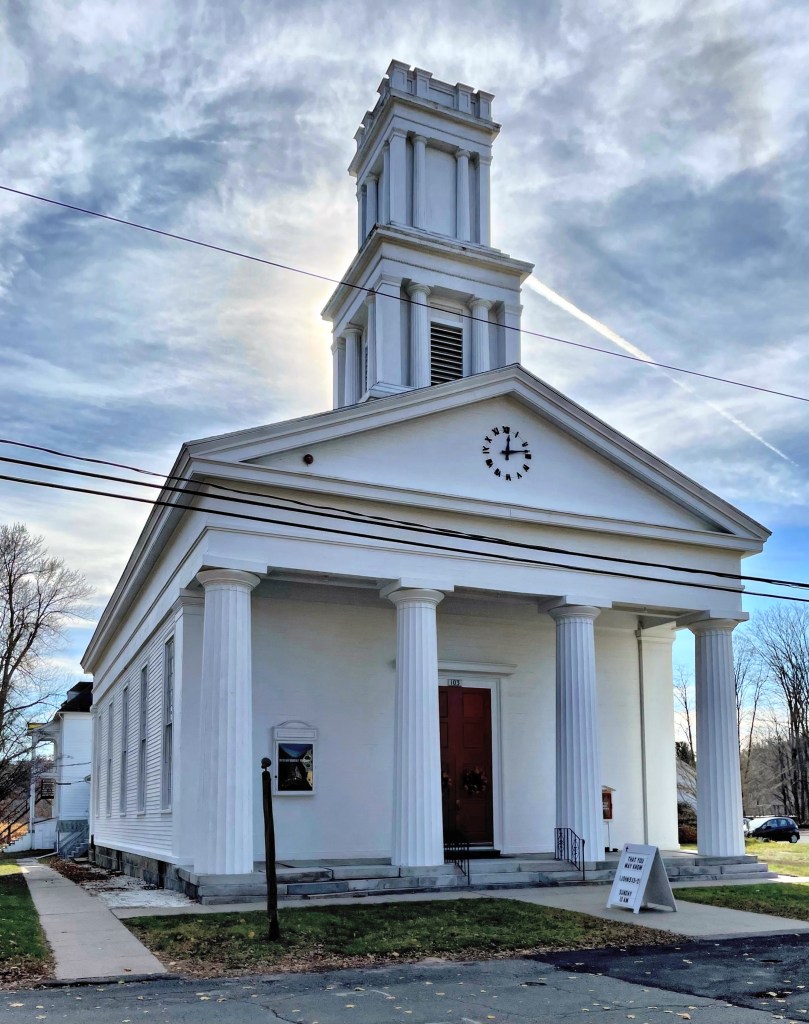
Shortly after Collins and Company was founded in 1826, religious services were held in various homes in the South Canton Village which came to be known as Collinsville. In 1830, the Collins Company erected its first office building on Front Street, and religious services were held there on the second floor. The first church building was erected on land bought by Collins and Company in 1826. By the mid-1850’s, the church membership was outgrowing the building. Although there may have been plans to enlarge the building, tragedy struck and in January 1857, and the church was consumed by fire, which started in the chimney, during a winter storm. The current building was erected almost immediately and dedicated on February 25, 1858. The present church is a grand Greek Revival style building, with a full pediment and large entablature supported by four monumental fluted columns. The two-tiered, square belfry has engaged columns as well. What a great example of a New England church!


 Buildings of New England