I do love a good adaptive reuse story! This Marion, Massachusetts church building was constructed in 1830 for the town’s growing Universalist congregation. Architect Seth Eaton was hired and furnished plans, likely relying on neighbor, Warren Blankinship, a carpenter and congregant, to construct the building. It blends together the Greek and Gothic Revival styles well, but in a less sophisticated form. By the mid 20th century, membership of the church dwindled, and it finally shuttered its doors. With the building’s future uncertain, at a time where demolition for surface parking lots was the go-to solution, Marion residents Andrew and Dorothy Patterson, purchased the building and soon after worked with local artists in town to restore the building for use as an art space. The Marion Art Center was thus founded in 1957, and to this day, serves as a non-profit community cultural organization dedicated to promoting the visual and performing arts.
Just a stone’s throw away from the Marion Town Hall and Elizabeth Taber Library (yes, pun intended), this beautiful 200 year old stone building oozes charm. The building was constructed around 1820 as a salt works storage facility, and is an extremely rare surviving storage facility associated with the early 19th century salt industry. While many storage facilities we know today are void of architecture and soul, this building looks like it was plucked from the French countryside. The salt industry in Massachusetts began on Cape Cod during the Revolution. Salt was a vital necessity for the preservation and curing of fish and meat for sale in this country and overseas. According to local lore, the Old Stone Studio was originally “a place for the conversion of sea water into salt.” Around the Civil War, the building was being used as a whale oil refinery, a fitting use for a fireproof structure. It had fallen into disrepair by the 1880s, until New York magazine editor Richard Watson Gilder bought and restored it as a studio for his wife, artist Helena de Kay Gilder. Gilder renovated the building in the early 1880s as the town of Marion was becoming a vibrant summer colony. He added a massive stone fireplace and new windows to flood the interior with natural light. The towering fireplace, with its 9-foot long mantle, was apparently designed by leading 19th-century American architect and Gilder’s friend Stanford White of McKim, Mead & White. The fireplace provided a stunning backdrop for guests, including President Grover Cleveland and First Lady Frances Folsom Cleveland, who summered in town. Ms. Gilder even painted the First Lady in the studio, and hosted her on occasions.
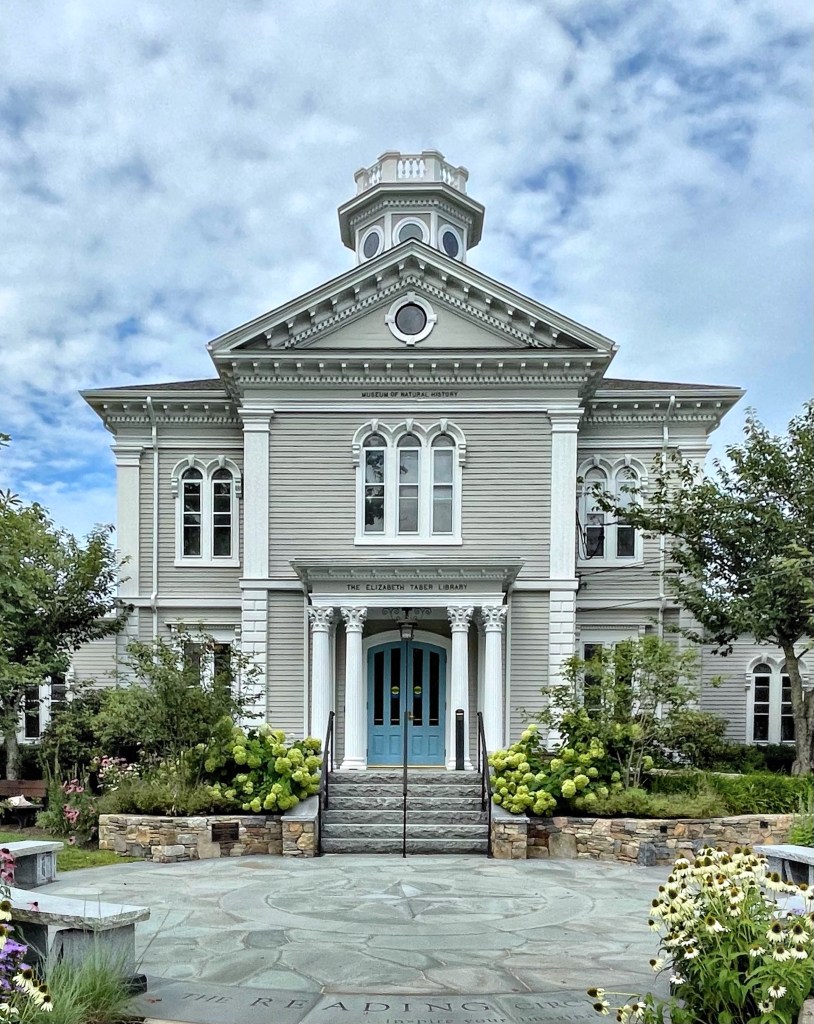
The first of many generous gifts by Elizabeth Taber to the town of Marion, Massachusetts was this gorgeous Italianate style library building. Elizabeth Taber (1791-1888) was educated in the Sippican Village School, immediately giving back, teaching school in Marion while still in her teens. At 33, she married Stephen Taber, a clockmaker, and they had three children, none living to adulthood. They eventually settled in New Bedford, where Stephen made much more money in his trade, paired with investments in whaling excursions leaving the town. In 1870, eight years after the death of her husband, Elizabeth Taber turned her attentions to engaging in projects for the benefit of her hometown, Marion. In 1870, she bequeathed over $20,000 for the design, construction and furnishing of a new library in town that would also house a natural history museum. The natural history museum component of the building had been eclipsed in importance by the library which was expanded by side wings during the mid-20th century. Encompassing a collection of rocks, minerals, stuffed birds and other curiosities, the second floor museum was designed to complement the first floor’s book-learning activities. By the late 1870s, the Taber Library and Natural History Museum had become a key component of the Tabor Academy campus, founded just years later.
Across from the Marion Town Hall (last post), this perfect little cottage showcases what makes coastal New England so special. Built around 1840, by and for Warren Blankinship, a carpenter in town, the home represents a well-preserved example of a modest Greek Revival home. The home is clad in cedar shingles, a hallmark of many coastal homes in New England. White Cedar shingles are so popular historically as the species is such a hard wood that pieces are naturally insect and rot resistant and hold up amazingly well to salt air. Early colonists noted the use of the tree for canoes and other objects by Native people and followed suit, constructing homes from the native tree. The shingles were usually left exposed, and they would eventually weather over time. The exposed, cedar shingles have been a classic look in coastal homes since and even today, evoke a strong sense of place when seen on an old home here.
Welcome to Marion, Massachusetts! Colonized in 1679 as “Sippican”, the town was once a district of adjacent Rochester, Massachusetts. The name, which also lends itself to the river which passes through the north of town and the harbor at the heart of town, was the Wampanoag name for the local tribe that once utilized these lands. Native settlements in present-day Marion dates as far back as 3000 B.C. as the local people were members of the Wampanoag tribe who, when the Pilgrims came, lived in a number of villages in Southeastern Massachusetts under the leadership of the great chief Massasoit. By the 19th century, the town was mostly known for its many local sea captains and sailors whose homes were in town. Today, the coastal town is known for its charming village and large waterfront homes, oh and amazing architecture!
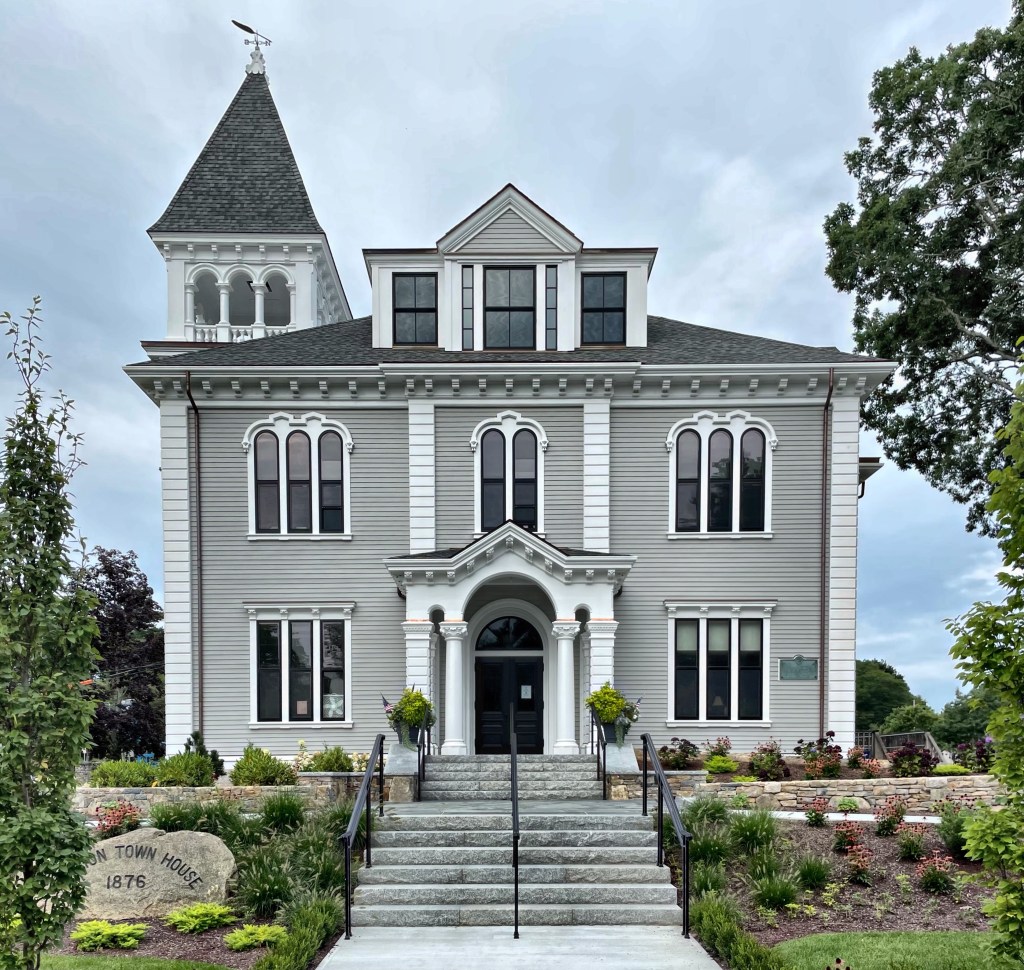
This building was constructed in 1876 by Mrs. Elizabeth Taber (1791-1888), who, at the age of 85, founded Tabor Academy in town. She named it after Mount Tabor in Palestine rather than after herself. The school was built towards the end of the “Age of the Academies”, when in 1852, Massachusetts became the first state in the country to make education compulsory. While some major private institutions already existed, many more were founded in the mid-19th century. Tabor Academy served as a private school for boys and girls over 12 years of age, and was to remain free for local students. With the rise of public schools in the state, many academies began to struggle with admitting students, especially those that had parents willing to pay additional money for enrollment. The school struggled around the Great Depression and thus, traded buildings with the Town of Marion in the 1930s and this building became the Marion Town Hall, a use it retains to this day. The building itself is a stunning Italianate design constructed from plans by Boston architect William GibbonsPreston.
Stay tuned for more buildings and history on one of my favorite Massachusetts towns!
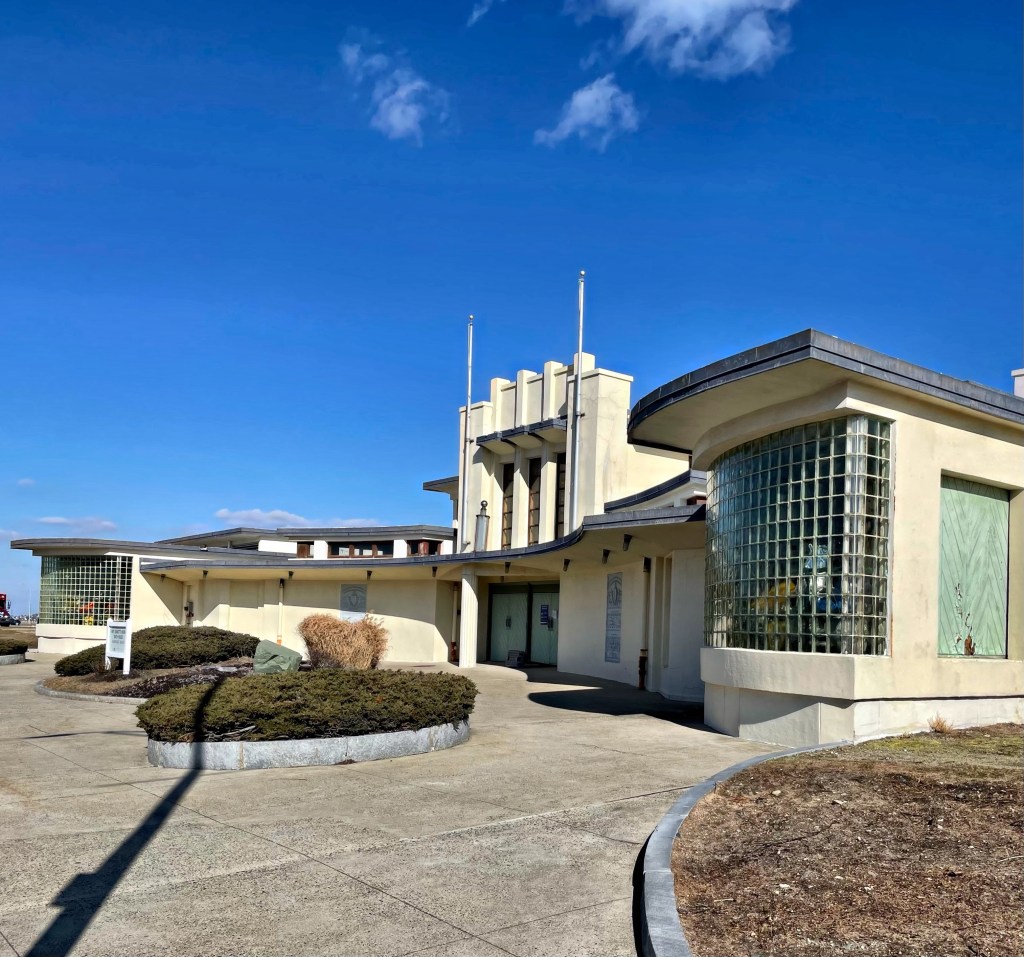
A part of any large public beach in Massachusetts is the public bathhouse, where visitors can go to the bathroom, change, and store belongings in lockers. Ever since the Massachusetts Parks System of Boston acquired land at Nantasket Beach, a bathhouse was here for visitors. The earlier building by Stickney & Austin burned down and was soon replaced. This amazing Art Moderne bathhouse features a central mass with wings adorned by glass block. The architects Putnam & Cox created a whimsical 1935 Moderne design that blends into the sandy beach. The building suffered from the salt air and cold winters and went through a massive restoration in the late 1990s, it was then re-opened and re-named after Mary Jeanette Murray, a state representative.
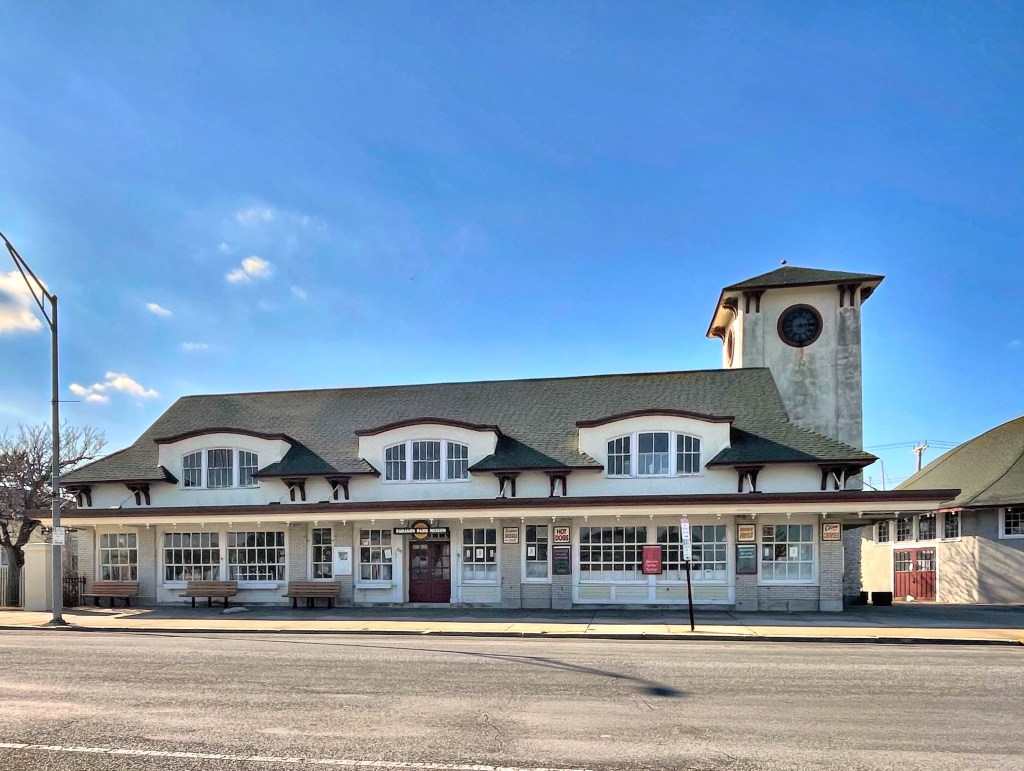
The area of Nantasket Beach in Hull was in the late 19th century, a hotbed of taverns, thievery, and brothels. To counter this, the Metropolitan Park Commission of Greater Boston acquired about 25 acres at Nantasket, which included roughly one mile of shoreline extending north from Atlantic Hill in 1900. The initial appropriations provided for only minimal facilities, such as a bathhouse and a few incidental buildings, one of which was a waiting room for those arriving or departing from the new railroad station (since demolished) at the beach. The MPC hired the Olmsted Brothers landscape architects to design the paths and landscaping for the new park, and they worked with architects Stickney & Austin who designed many of the early buildings. Stickney & Austin designed this stucco-clad building with clock tower to provide shelter from the elements and summer sun for visitors of the reservation. The building is a blending of the Arts and Crafts and Spanish Revival styles, both common at the beginning of the 20th century. The building now houses the Paragon Park Museum, after they relocated the Paragon Park Carousel next door to this building.
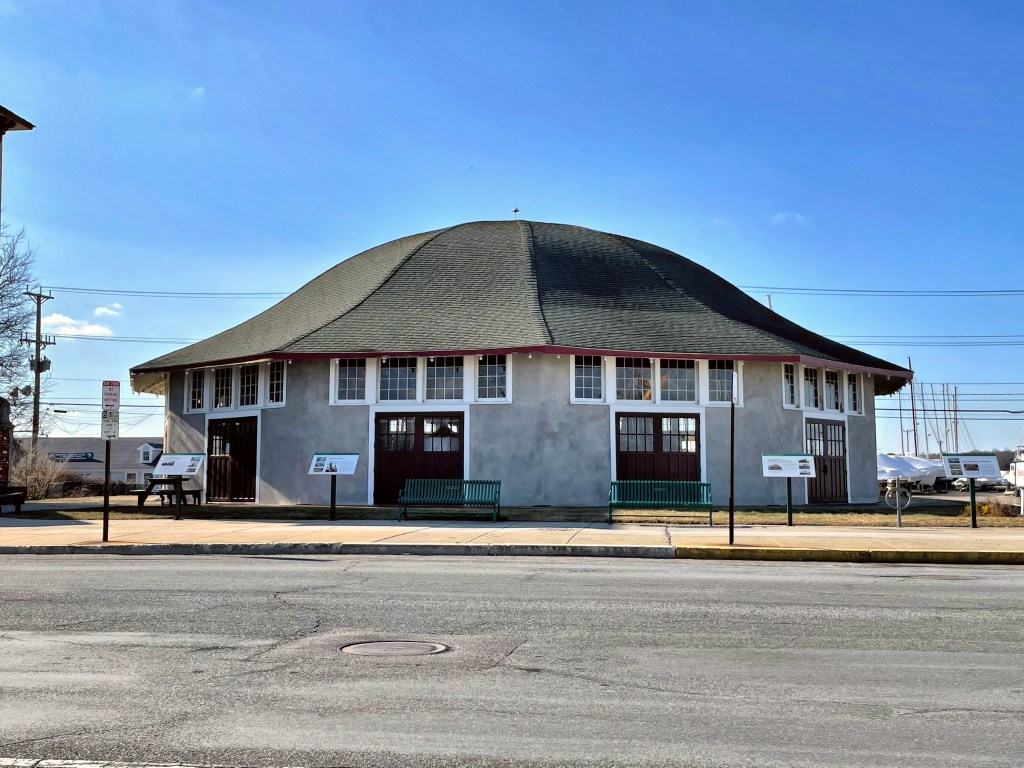
The Paragon Park Carousel at Nantasket Beach in Hull, was built in 1928 for the Paragon Park Amusement Park (featured previously), and is possibly the oldest remaining feature of the old park. When the park was created, many wealthy summer residents clutched their pearls as their quiet, peaceful summers would soon be overrun by those looking for rides and pleasure. From its inception in 1905, Paragon Park placed a carousel at the hub of its amusement attractions, just south of the main entrance gate. While this was just the first of several carousels to be installed in the park, its inclusion in the earliest iteration of Paragon Park shows the importance of the form as an attraction. The current carousel was built in 1928 by the Philadelphia Toboggan Company for Paragon Park, the carousel featured two chariots pulled by two horses each and had four rows of horses (66 in all). One of only 18 four-row carousels ever produced by Philadelphia Toboggan Company it is some forty feet in diameter. Housed in a specially built twelve-sided stucco structure to protect the delicate motor and paint in poor weather. When Paragon Park was sold to developers in 1986, parts of the carousel ride were auctioned off, but most were purchased by a locally organized preservation committee. That same year, it was moved a short distance to its present location to save it from the wrecking ball. It is now operated by the Friends of the Paragon Carousel.
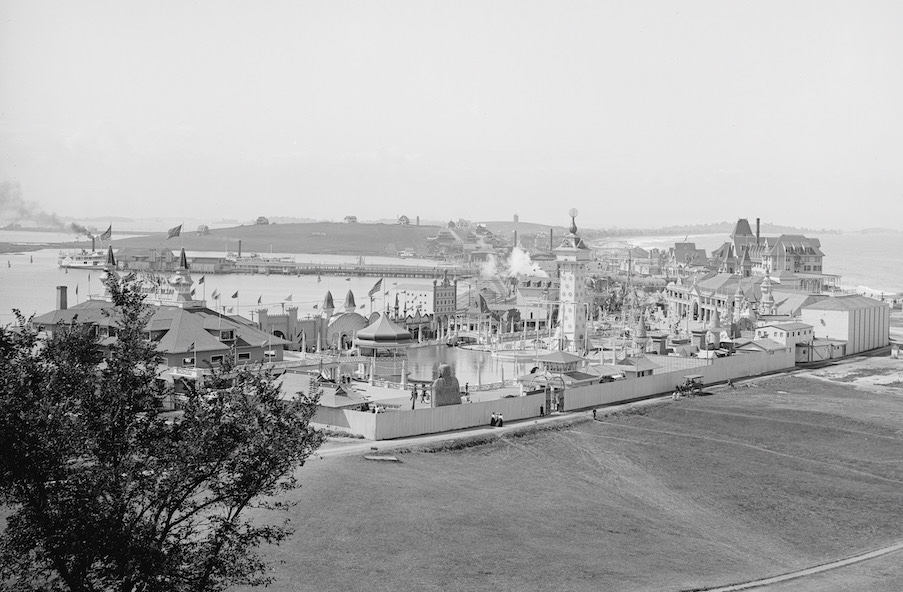
The Nantasket area of Hull on Boston’s south shore had been a popular summer destination since the middle of the 19th century, when resort hotels were developed there to take advantage of the ocean breezes and sweeping vistas. Paragon Park, an amusement park developed at the turn of the century was a great addition to provide activities for the summer visitors and resident alike. Convenient transportation in the form of steamship service and an electric railroad from Boston added to the appeal of the area. The park developed rapidly over the early 20th century and featured rides, activities and shows. The park was thought to be a mini World’s Fair, featuring a lagoon at the center with small boats to ride, and new expositions and features added every summer. The park struggled in the second half of the 20th century as the land value was more expensive and the park was only open a couple months a year. It sold in 1984 to developers who sold off many features and demolished almost all of the structures. The Giant Coaster, built in 1917 was one time, the largest roller coaster in New England. When the park was purchased, the roller coaster was sold to Six Flags America near Washington D.C. and is now The Wild One.
This gambreled Georgian cape house was built around 1744 and first occupied as a tavern. Local tradition holds that in this house, the town officials held meetings and managed governmental duties. After the Revolution, a new town hall was built and the tavern reverted back to its former use. It was occupied by Samuel and Olive Lovell until Olive’s death in the 1840s, she possibly ran the tavern alone for the thirty years she outlived her husband. The home is an excellent example of a pre-Revolutionary Georgian home, with a cedar shingle roof to top it all off!




 Buildings of New England