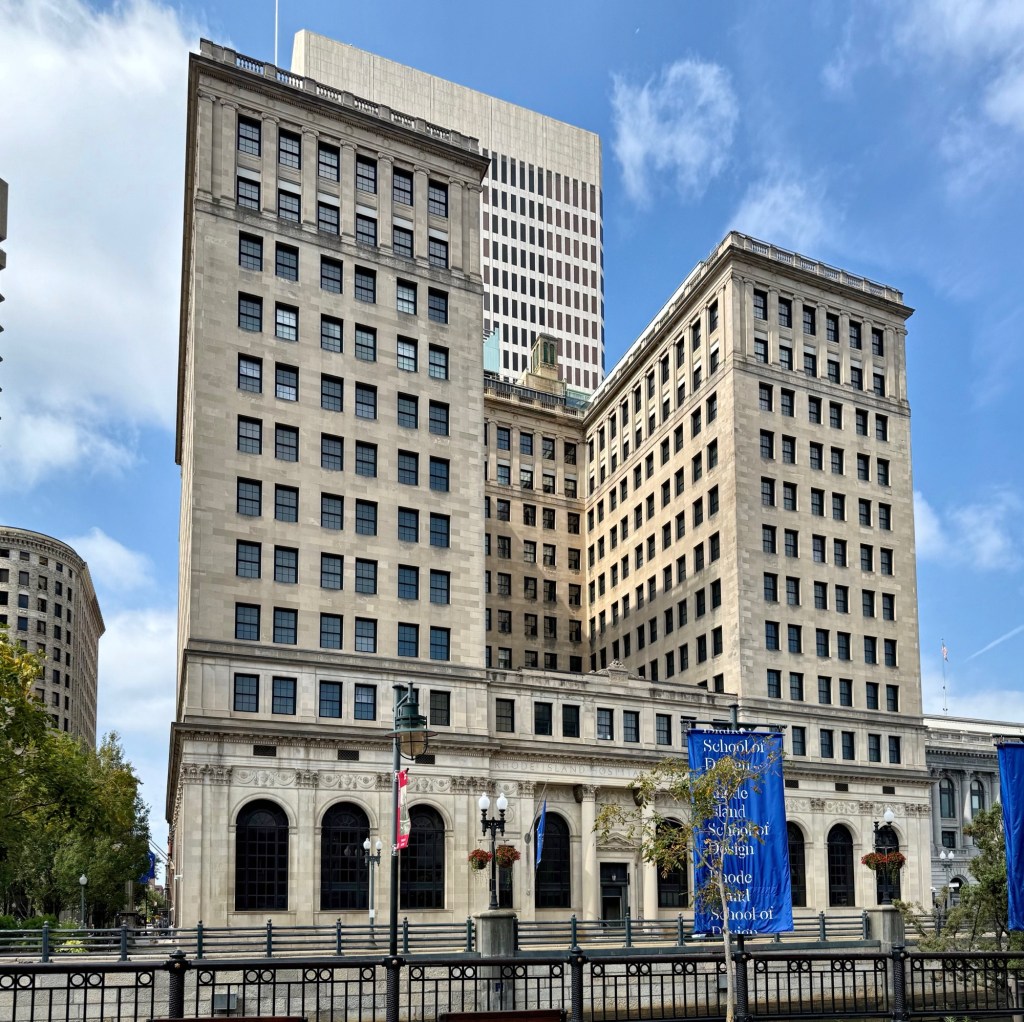
Rhode Island Hospital Trust Building // 1917

Located at the eastern edge of Downtown Providence, the Rhode Island Hospital Trust Building is significant as one of the city’s finest examples of the Beaux Arts style of architecture and as the headquarters of what was once the largest banking institution in the state of Rhode Island. The Rhode Island Hospital Trust incorporated in 1867 as the first trust company in New England. It owes its unique name to the fact that it was chartered by the board of trustees of Rhode Island Hospital, founded four years earlier, with the trust company established to help finance operations of the hospital. The original, purpose-built bank was constructed in 1891, and quickly outgrown as the institution grew exponentially into the early 20th century. In 1916, the trust hired the New York architectural firm of York & Sawyer to furnish plans for the present structure. Construction began in 1917, and after delays caused by WWI, the building finally opened in 1919. The 11-story U-shaped building was designed in an exaggerated form of Renaissance palazzo, with steel-framed construction that is faced with marble on the two lower levels and limestone elsewhere. After a series of mergers throughout the 20th century, the building was owned by FleetBoston, who donated this pristine building to the Rhode Island School of Design (RISD), which was renovated into a dormitory by RISD-alumni and architect Nader Tehrani of NADAAA Architects. It is today known as the Mandle Building.
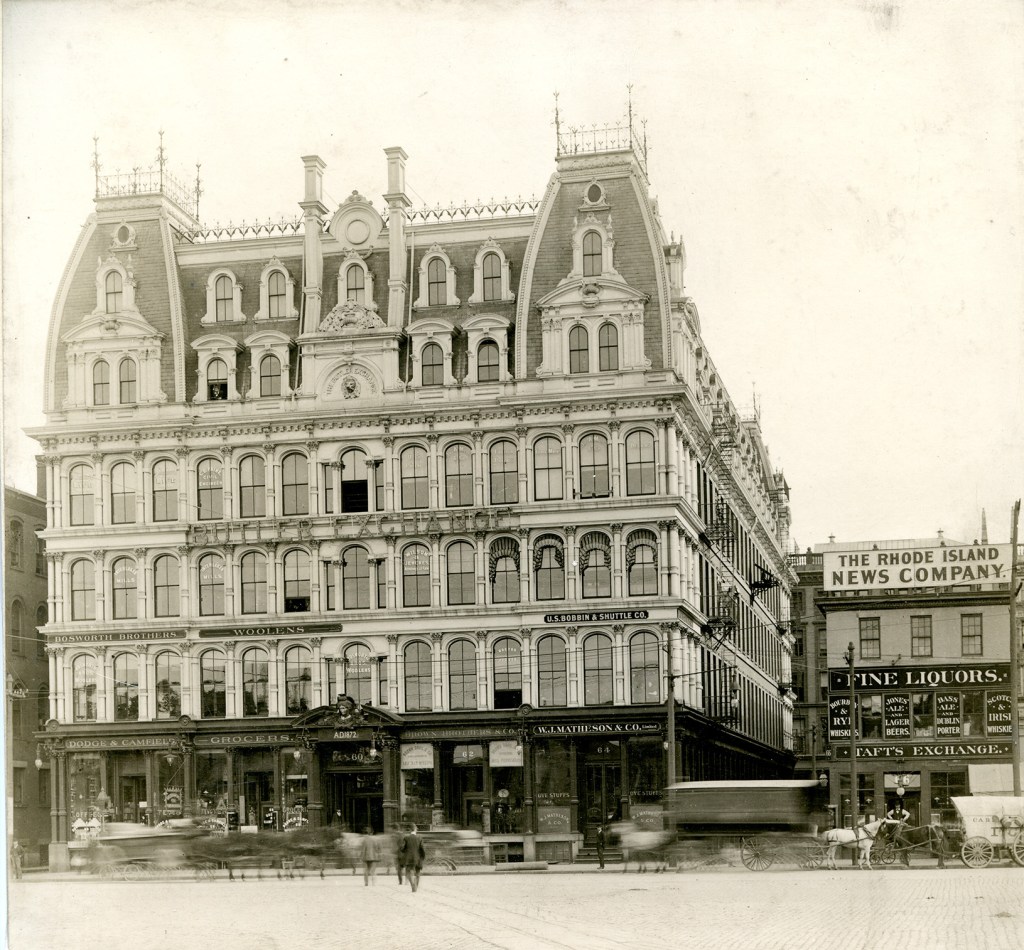
Butler Exchange // 1871-1925

Image Courtesy of Providence Public Library collections.

This magnificent structure formerly in Downtown Providence would likely still exist today had a devastating fire not destroyed it in 1925. When construction on the Butler Exchange began 1871, the area we know today as Downtown was only a cluster of small wooden and brick residences with commercial operations on the ground floors; the key retail shopping districts were across the river around where Brown University is today. The first major commercial development in modern-day Downtown was the Providence Arcade (featured previously), built in 1828, by Cyrus Butler. The Arcade languished in tenants and shoppers earning it the name, “Butler’s Folly”. A half-century later, a new Butler project was about to take off. Cyrus’ heirs built the Butler Exchange, which upon completion in 1873, was the largest building in Providence and its splendid French-inspired two-story mansard roof was a nice pairing with the City Hall being built nearby. The Butler Exchange saw commercial use, offices, and a school before a fire destroyed much of the building, leading to its demolition. The building was later replaced by the Industrial National Bank Building aka the “Superman Building”.

Beneficent House // 1967

Located on the same block as the Arnold-Palmer House (last post) in Downtown Providence, this apartment building is the work of one of the most prolific Modernist architects of the 20th century, Paul Rudolph. During Downtown Providence’s period of urban renewal, which saw the demolition of much of Cathedral Square (much of which remains surface parking lots), planners sought a high-rise apartment building to house displaced elderly residents and others who hoped to reside close to downtown shopping and amenities. Architect Paul Rudolph, who was at the time Dean of Yale’s Architecture School, designed the brick building which employs horizontal bands in concrete which marks off floor levels and provides some breaks in the materiality. The building was originally designed in 1963, but after years of delays and budget cuts from rising construction costs, the balconies and other design features were removed from the final product, leading to its present simplicity. While simple, the building retains intrigue, especially with the projecting window bays and offset openings, a departure from the block apartment buildings at the time.