Elijah Waters House // 1845

Elijah Waters (1773-1846), a hardscrabble farmer in West Millbury inherited his father’s large farm and resided there for over thirty years before wanting something more his style. Unmarried and without children, Elijah (who was 72 at the time), had this impressive Greek Revival farmhouse constructed near his old family homestead. He was possibly looking to spend money saved up and without a wife or heirs to will it to. The massive temple-front Greek Revival mansion has a stunning doorway and six columns supporting a projecting pediment. Within a year after the home was built, Elijah died. The home was willed to his nephew, Jonathan Waters. The house is for sale for $384,000 which is a STEAL!

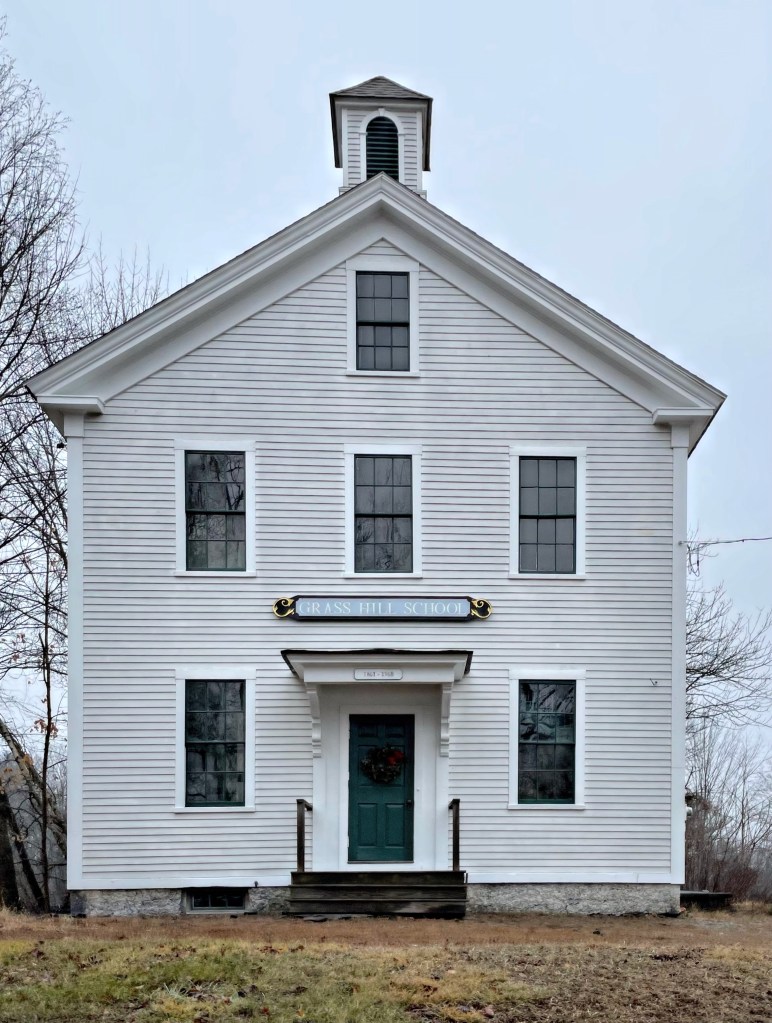
Grass Hill School // 1861

In western Millbury, the Grass Hill school was constructed to provide a place of learning for children in the agricultural section of town. The district school, a remnant of the system of autonomous school districts that characterized the educational system of Massachusetts in the 19th century, this is a larger example of many of them. West Millbury had many wealthy farmers and they financed a district school here as far back as 1814. After two earlier, smaller school buildings, this two-story school was erected and was one of the most substantial. At one time, students in eight grades taught there, all at the same time, with grades 1-4 downstairs and 5-8 upstairs. As there weren’t many students, each grade only took up one or two rows. The building remained as a school for the town until 1968, and the building was leased to the Millbury Historical Society long term. They just completed a massive restoration project for the building, it looks great!
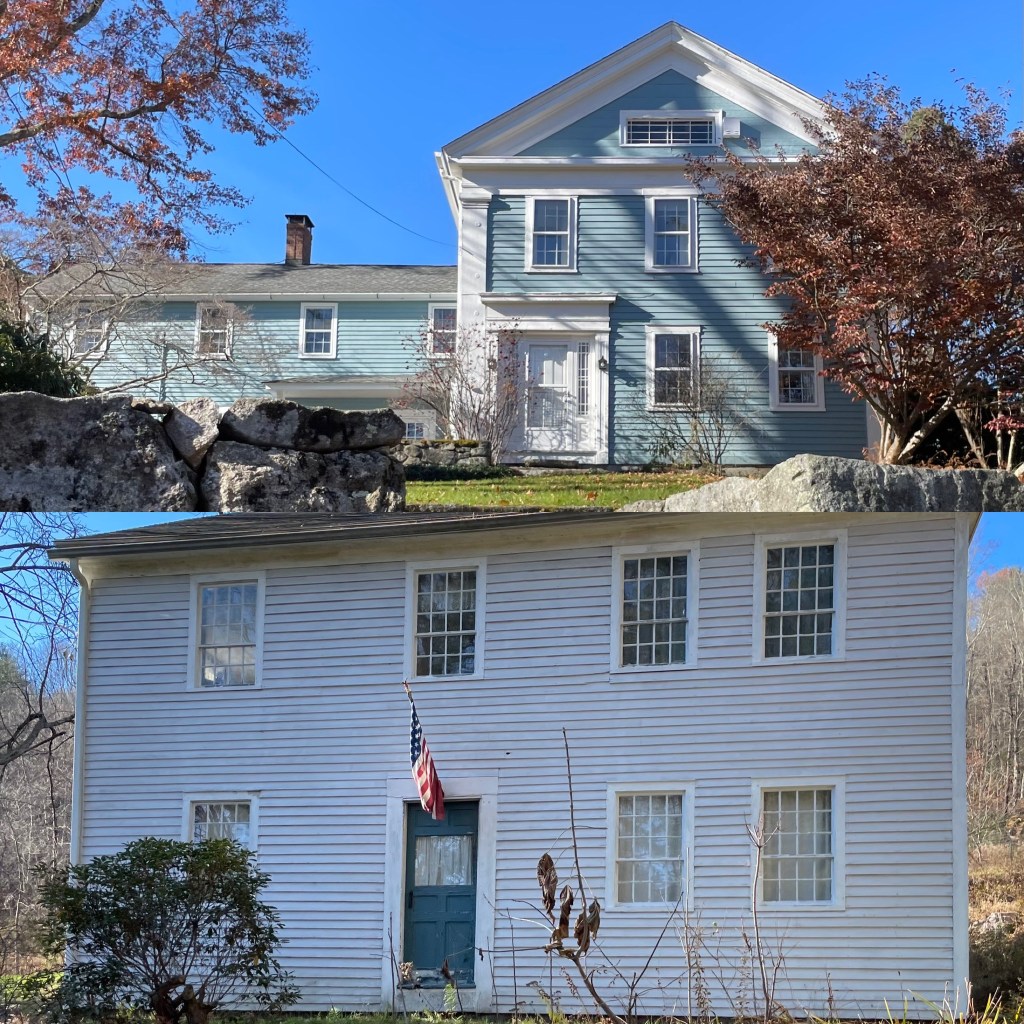
Hall-Balcom House // 1810

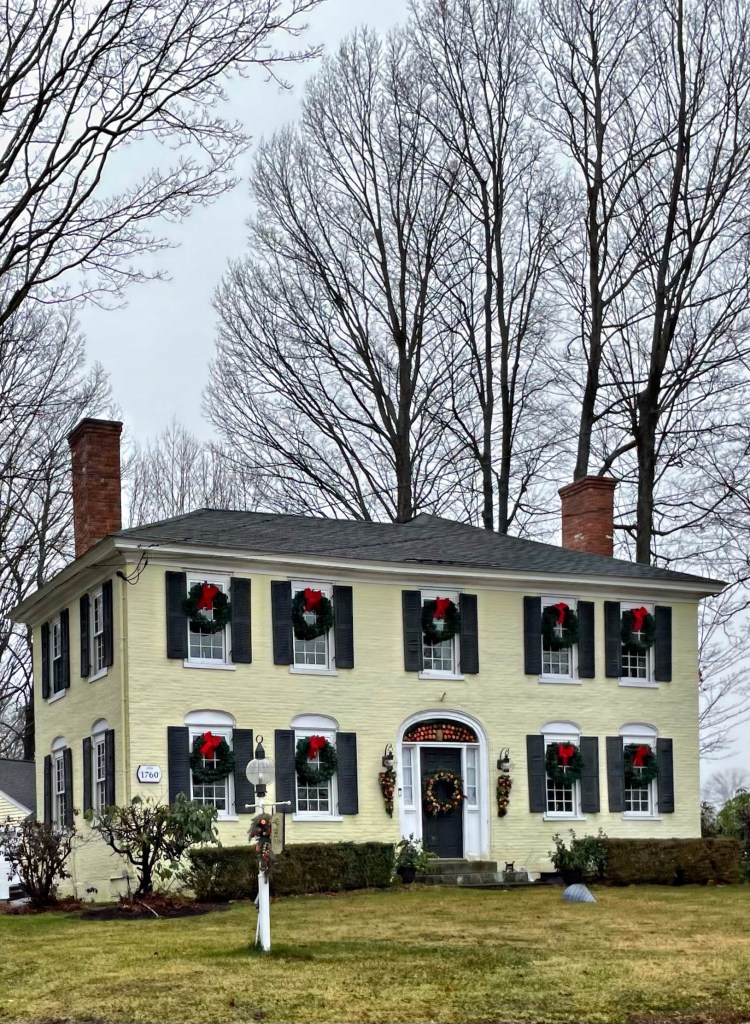
This historic house in West Millbury, Massachusetts, began in the end of the 18th century as a one-and-a-half-story wood-frame farmhouse. By 1810, the home was rotated 90 degrees and a more substantial, two-story brick house was constructed facing the street. The Federal style home was owned by Thaddeus Hall (1779-1855), and after his death, it was owned by his son, Orson Eddy Hall, who possibly rented the property for income while he resided in New Orleans and ran the iconic St. Charles Hotel there. The property was later acquired by Willard Balcom and remained in the family. Oh what I wouldn’t do to see the paint come off this old brick house!!

William Bottomore House // c.1750

This well-kept Federal home in Newport was apparently built pre-Revolution, but it was likely significantly altered in the early 1800s for its namesake, William “Billy” Bottomore. “Billy” was born in Bologna, Italy, and moved to Salem, MA, where he possibly met Michele Felice Cornè, a prolific painter and who is credited in making tomatoes mainstream… seriously. In early 19th century New England tomatoes were thought to be deadly poison. Cornè was accustomed to eating tomatoes in his native land of Italy and would regularly eat them without ill effect and, thus, allayed the fears of the residents of his adopted country. Cornè became friends with Bottomore and they both moved to Newport. Bottomore likely modernized this house with help from his friend and ran a confectionery store in the home.

Alfred Smith House // c.1843

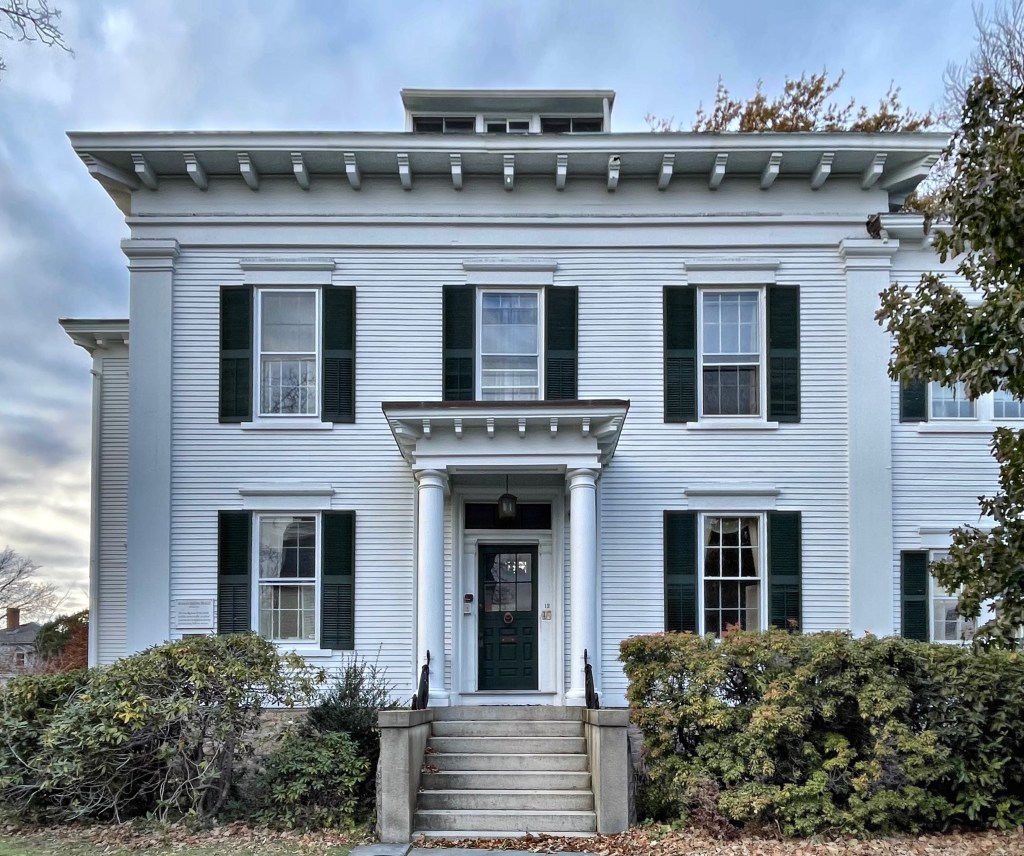
Alfred Smith (1809-1886) was known as “Newport’s Millionaire Real Estate Agent”, working in the mid-late 19th century to get some of America’s most well-connected upper-class acquire properties to build their summer cottages. In his early days, he prospered by assisting prospective developers and buyers to purchase house lots on newly platted streets, including Bellevue Avenue. By the time of his marriage in 1843, he built this stunning Greek Revival mansion, equipped with stunning proportions and corner pilasters. Decades later, to “keep up with the Joneses”, he modernized the house by extending the eaves and adding brackets and the addition of a belvedere at the roof. He was instrumental in much of Newport’s later development, even bankrolling the erection of a stone bridge on Ocean Avenue, to allow carriages and subsequent developable lots to extend in the previously untouched land in south and west Newport. He suffered a stroke in 1886, and died a year later, two years after his late wife. He funded a monument to the family, hiring Augustus St. Gaudens to furnish a stunning memorial “Amor Caritas” which stands in Island Cemetery in Newport. Mr. Smith’s estate was mentioned in the New York Times and stated there was no will, and his four living children would each get upwards of $1 Million (nearly $30 Million a piece based on inflation today)!

Queset House // 1854

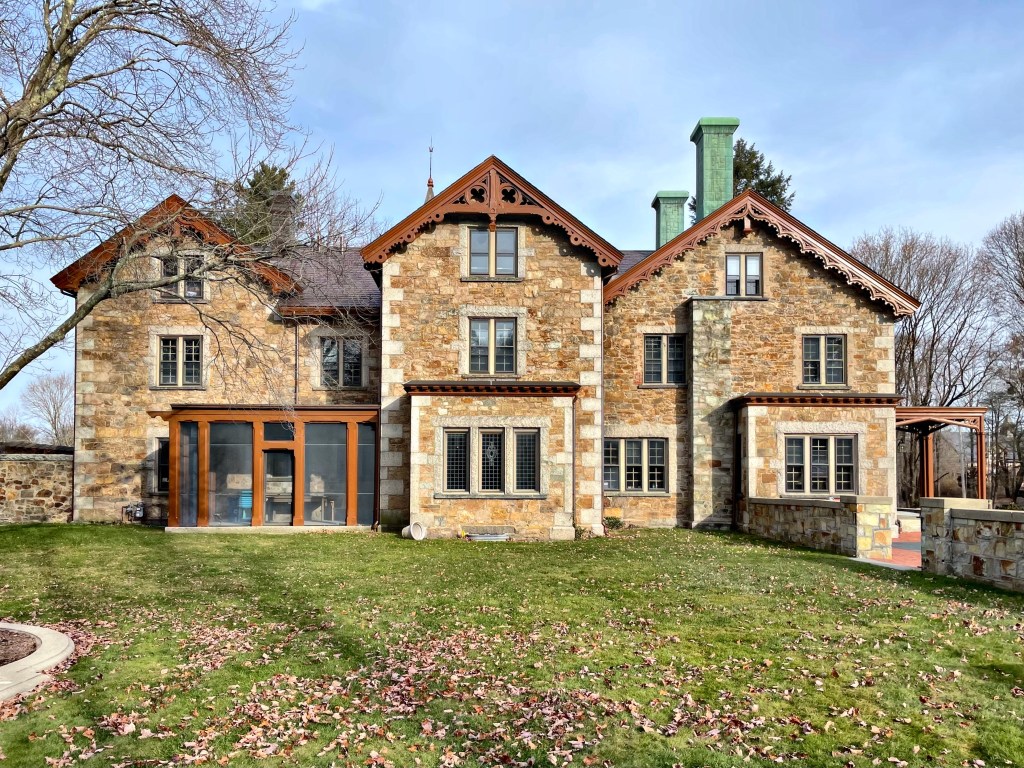
Tucked away behind the Ames Free Library in Easton, you will find one of the most stately examples of Gothic Revival architecture in a house in New England. The house is known as Queset House. Queset was commissioned to be built in 1853 and it was completed the following year for Oakes Angier Ames, of the wealthy Ames Family, who ran a shovelworks in town, and built some of the most handsome structures in the state. The house’s front portion design was drawn from a plan by noted architect Andrew Jackson Downing (who died in 1852). Downing collaborated with Alexander Jackson Davis who provided architectural drawings. The two architects created pattern books which greatly influenced Gothic Revival and Italian Villa style architecture for the next decades, with many wealthy people hiring builders to complete homes in their designs. Queset House is different than most in that the house is constructed of local stone. Oakes would later hire Harvard-educated architect John Ames Mitchell, (a first cousin of Oakes Angier and architect of the nearby Unity Church in Easton) designed the rear addition in 1873, adding the copper-clad chimneys. In the later years of his life, Oakes wanted to help further-improve his town and worked with his family to consult with starchitect H. H. Richardson and landscape starchitect Frederick Law Olmsted on projects in town (the Library, Town Hall, Rockery). After his death in 1899, the home was occupied by his son, famous theatrical producer Winthrop Ames, and his wife. The family would eventually gift the property to the Town of Easton, who today occupy it as an extension of the Public Library, open to the public!

Side view.

Langwater // 1859

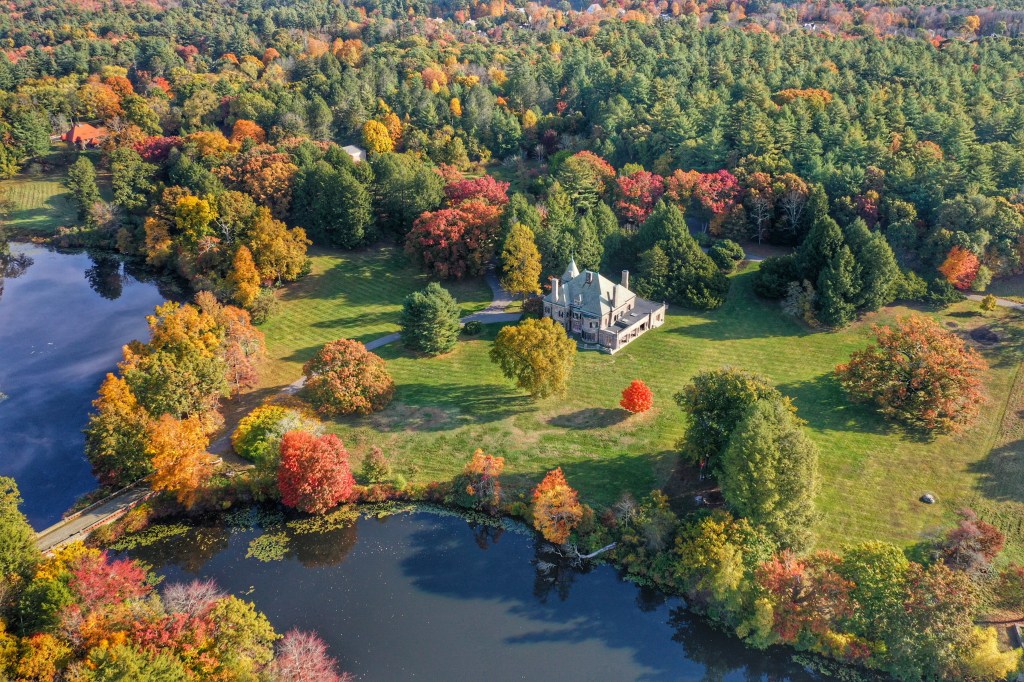
The country estate of Frederick Lothrop Ames (1835-1893), “Langwater” sits in North Easton amongst a collection of some of America’s greatest architectural treasures, all thanks to the Ames Family. The Ames family was a wealthy family which had lived in Easton for many generations. Frederick’s grandfather Oliver Ames Sr. founded the Ames Shovel Works in Easton, Massachusetts. The Shovel Works earned the family a huge fortune, during a time when aggressive canal and railroad expansion was built by the hands of thousands of men using shovels. Frederick’s father Oliver Jr. was president of the Union Pacific Railroad during the building of the transcontinental railroad. Frederick’s cousin Oliver Ames was governor of Massachusetts 1887–1890. Frederick himself was Vice President of the Old Colony Railroad and director of the Union Pacific railroad. At the time of his death, Ames was reported to be the wealthiest person in Massachusetts. With this immense wealth, Frederick built a castle where he would spend most of the year, overseeing his various businesses, in his hometown of Easton, Massachusetts. The mansion was designed by architect George Snell and built around 1860, with a couple additions and updates until Frederick’s death. A few years before his death, Frederick hired famed architect Henry Hobson Richardson, who he already worked with in designing the Oakes Ames Memorial Hall(Easton’s Town Hall), to design a gate house leading to Langwater (more on that later).

“Brookmeade” // 1756

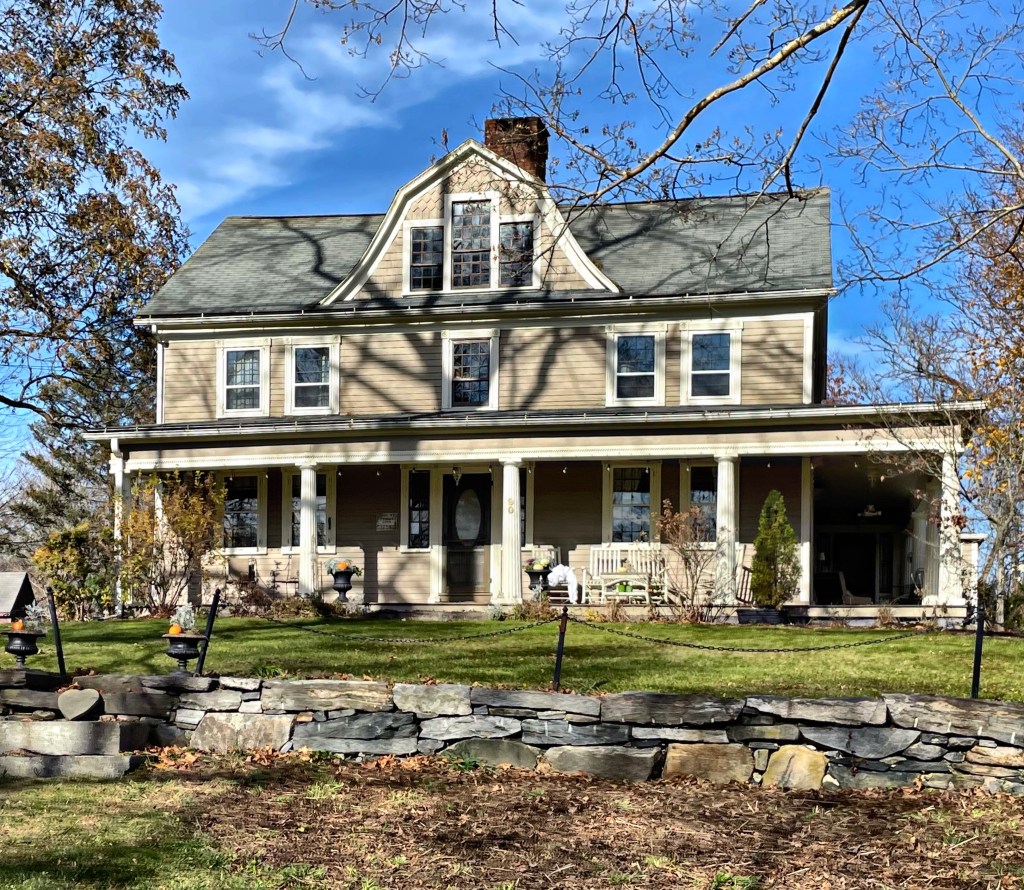
Built by Benjamin Dyer for his son Thomas in 1756, this mansion is believed to be the oldest extant house in Canton, Connecticut. The most famous resident of the house was William Edgar Simonds (1842-1903) who married Sarah Jane Mills, a descendant of Dyer. Simonds was a prominent patent attorney who was awarded the Congressional Medal of Honor for his heroics at the Civil War battle of Irish Bend, Louisiana. After his military service, he attended Yale University, was admitted to the bar and commenced the practice of law in Hartford, Connecticut. In 1883 and 1885, he was a member of the Connecticut State Legislature. In 1889, he was elected as a Republican to the 51st US Congress served until 1891 and was a United States Commissioner of Patents (1891-93). He died at age 60 in Hartford, Connecticut.

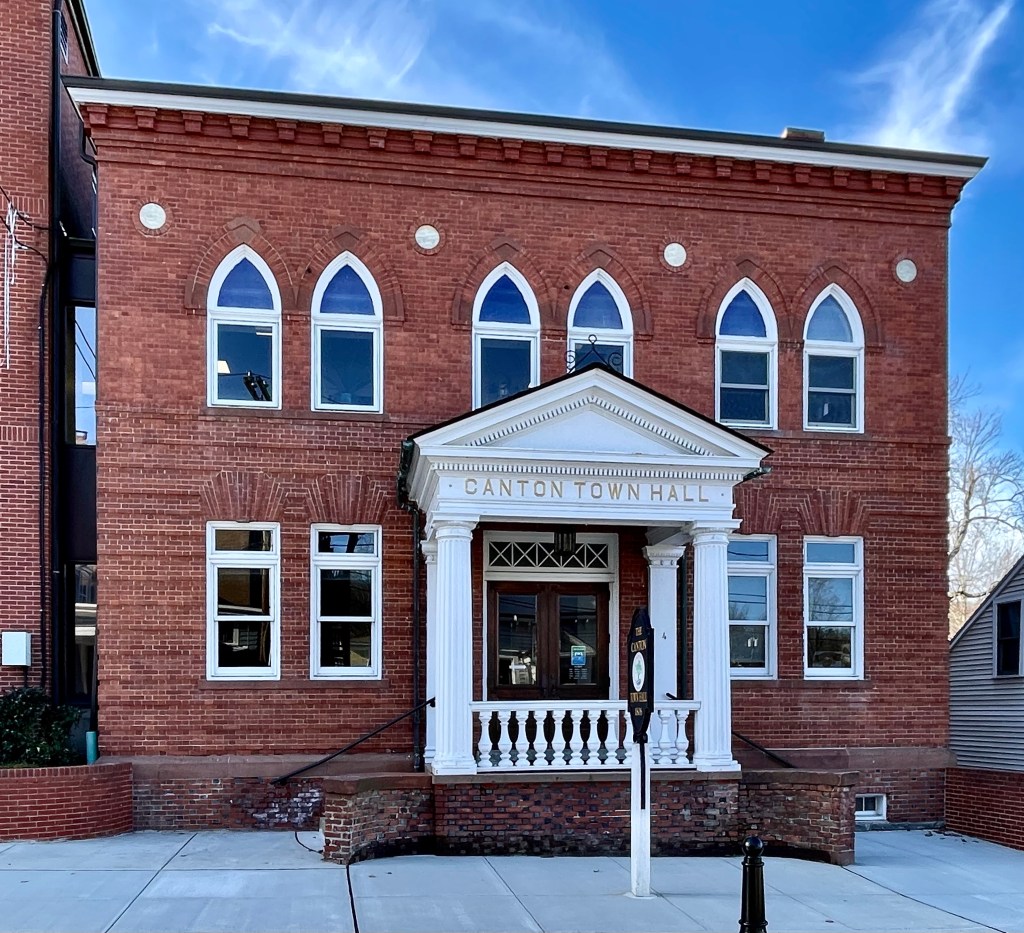
Canton Town Hall // 1902

Collinsville, Connecticut grew in importance and population significantly in the 19th century. The traditional, rural town center of Canton remained pastoral with dairy farms on large agricultural lots. With the population centered around Collinsville, it was decided to erect a new town hall building in Collinsville, which is actually at the far edge of town, but the village where most residents lived. In 1902, this two-story, brick building was constructed just off Main Street. The building is unique for the Colonial Revival design, but with Gothic style lancet windows at the second floor. In the second half of the 20th century, the Town of Canton purchased the larger, three-story brick building adjacent to this building and expanded for additional town offices.

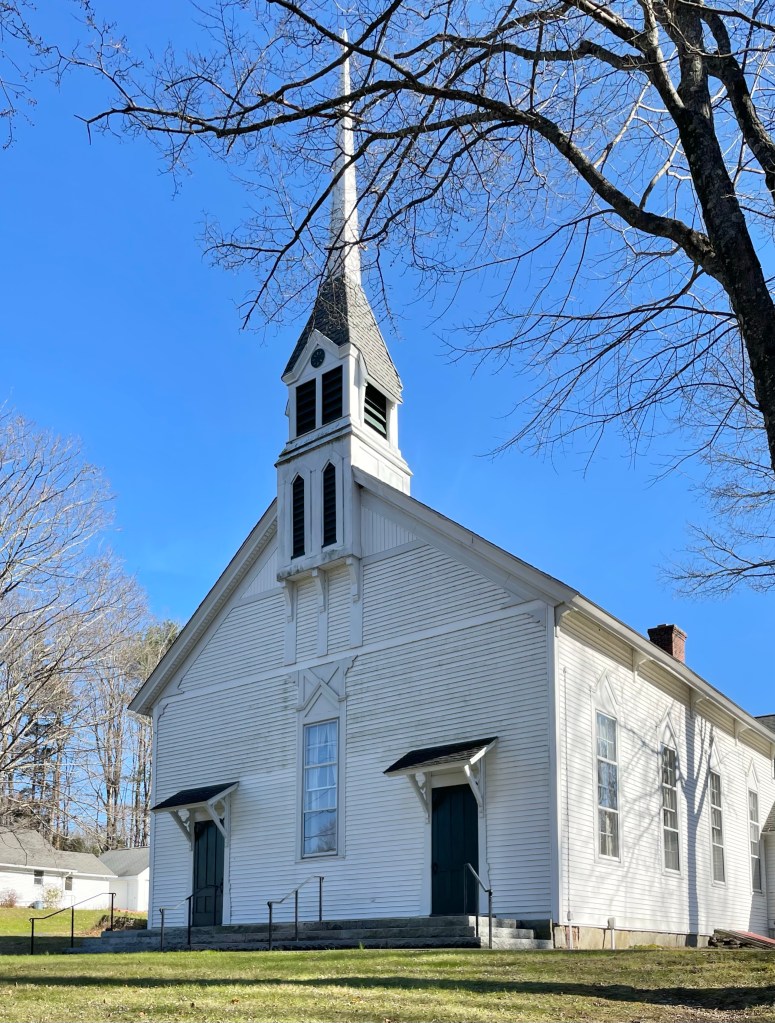
North Canton Methodist Church // 1871

This modest country church in North Canton Village, CT is a fine example of a restrained Stick style church building. The simple plan, steeply pitched roof, adorned woodwork trim to resemble the bracing underneath, and the central spire all work together to create such a beautiful architectural composition. The building was constructed in 1871, and formally opened for its first service one year later.