Chester Masonic Temple // 1907

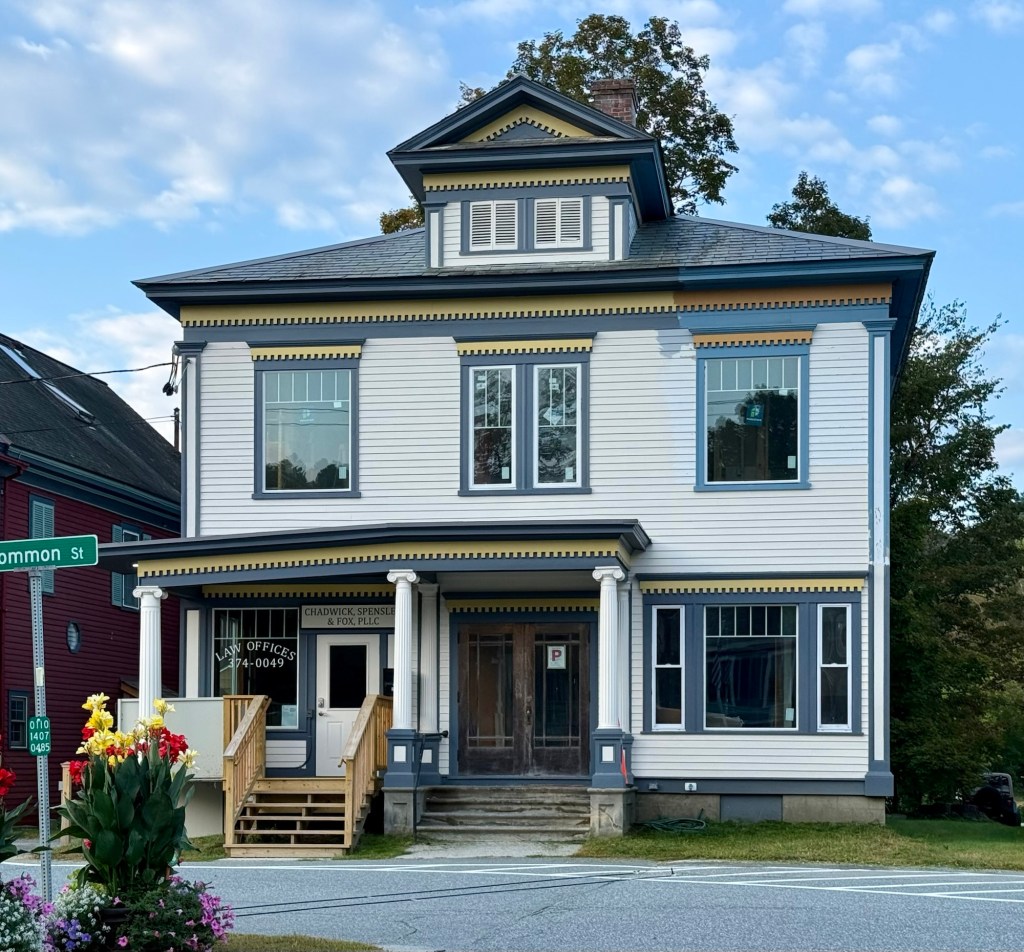
Built in 1907, this handsome building on Main Street in Chester, Vermont, has long been the home to the Olive Branch Lodge 64 of the Freemasons, an international fraternal organization. Colonial Revival in style, the building features corner pilasters that support a denticulated entablature along the eaves of the slate hip roof. A projecting portico over the front entrance is supported by classical Ionic columns. The 1920s marked a heyday for Freemasonry, especially in the United States. By 1930, over 12% of the adult male population of the United States were members of the fraternity. Following the Great Depression and WWII, membership sharply declined in fraternal organizations, like the Masonic Temple. A number of years ago, the Lodge here moved to a new building in a nearby town, and a local law firm purchased the building and spent 18 months renovating the building for use. Today, the historic character and even symbology remain on the building, while it houses a local business. 
Chester Depot // 1872

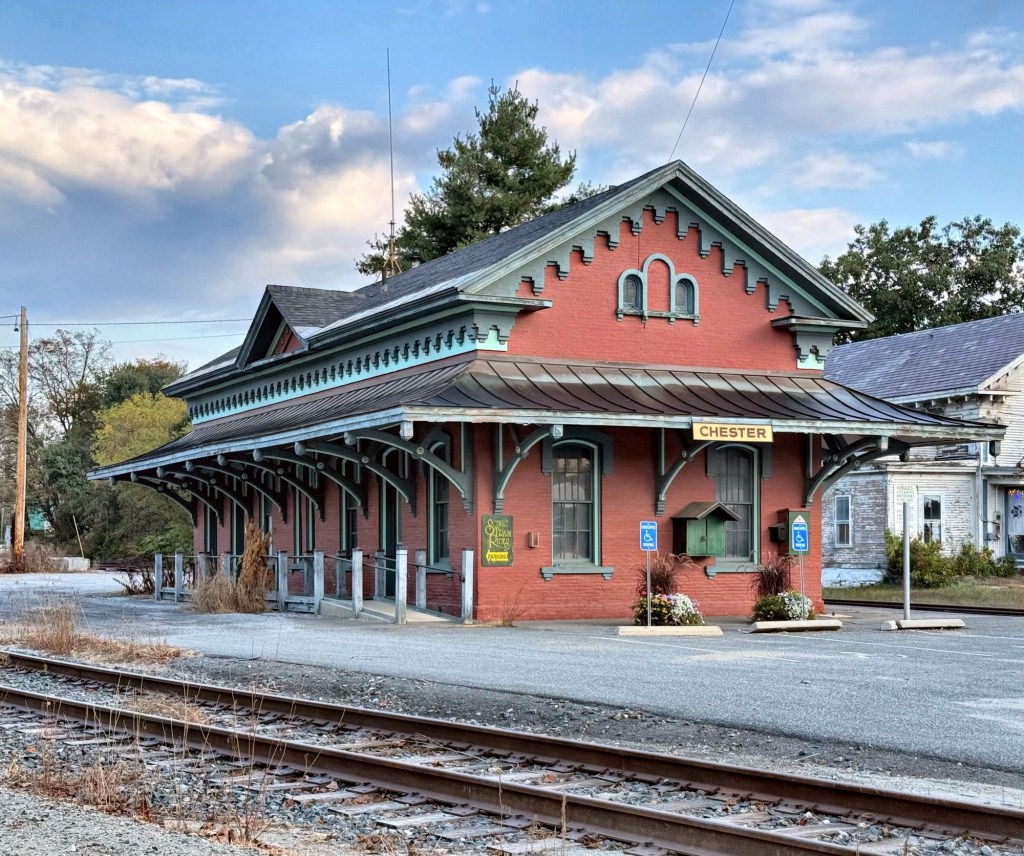
The first public train arrived in Chester, Vermont, on July 18, 1849, and in December, the Rutland & Burlington Railroad opened the first rail line across Vermont linking the Connecticut River valley at Bellows Falls and Lake Champlain at Burlington. A fire destroyed the first station in 1871, and the Vermont Central Railroad built the current station within a year. The State of Vermont purchased the line in 1963, leasing it in part to the Green Mountain Railroad. Exceptional in Vermont, this brick station retains its high-style Italianate design and continues in railroad use. The station can be classified as Italianate/Romanesque in style and has a corbeled cornice, windows capped by brick hood moldings, and a projecting trackside awning. It appears that the station is not in active use, does anyone know more?

Rowell’s Inn // 1826

An outstanding example of a two-story, brick Federal style house with a five bay, front gable elevation, Rowell’s Inn of Andover, Vermont, is arguably the most famous landmark in town. The inn was constructed in 1826 by Edward L. Simons, for whom Simonsville, the area village, is named. Mr. Simons operated the building as a stagecoach inn and tavern for those traveling along major highways through the state. The building was also the home to the local post office, with Mr. Simons serving as the first postmaster. The inn, which had been in operation almost continuously since 1826, was purchased in 1910 by Frederick Rowell, hence the name, Rowell’s Inn. It is not clear when the distinctive wooden porch was added, which includes two-story full-length porches with a third-story porch set within a broad elliptical arch set in a flush-board pediment. The historic porch was altered years ago before it was purchased by the present owners, who renamed the building, The Inn Between, continuing its legacy as a stop for weary travelers.

Waterbury Railroad Depot // 1875

Historic train stations are among some of my favorite types of buildings as they transport you to a different time (no pun intended). The Waterbury Railroad Depot was built in 1875 by the Central Vermont Railroad, connecting Montreal, Quebec with New London, CT and to other lines to Boston and Albany on the way. Waterbury service began in 1849, but this updated station was built later as the railway prospered and expanded. The station suffered from some deferred maintenance for decades in the mid-20th century and its fate (like many such stations) was unknown. Beginning in the late 1990s into the 2000s, Revitalizing Waterbury worked with the Great American Station Foundation, the Vermont Agency of Transportation, and Green Mountain Coffee Roasters Foundation, establishing a capital fundraising campaign meeting the goal of $1,200,000 through donations from the private sector and community members. These funds helped restore the building in phases, beginning when Keurig Green Mountain, Inc. agreed to lease the station from Revitalizing Waterbury, and created a visitor center and cafe (now Black Cap Coffee and Bakery) that has become a first-class attraction and provided an economic boost to the downtown.

Joshua Parker Farmhouse // 1850

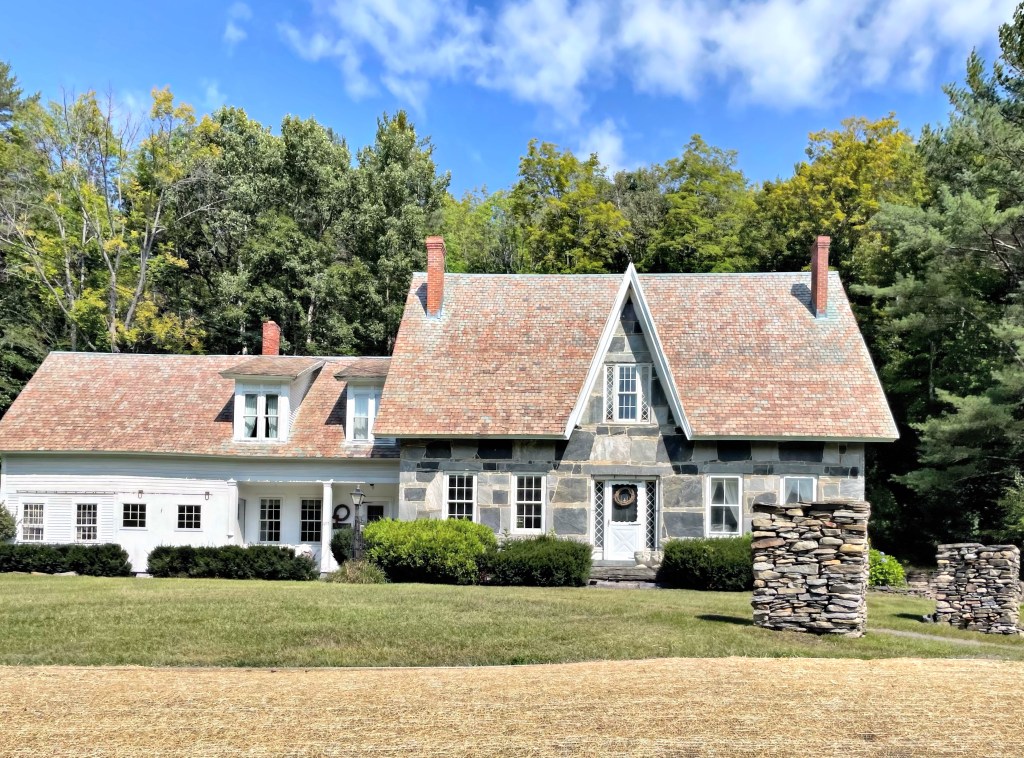
This house in Cavendish was constructed in 1850 by Joshua Parker and is an outstanding example of a gothicized snecked ashlar house. The house is in the Cape form and largely exhibits a more traditional cottage layout, but with the steep gable dormer, giving the home a distinctive Gothic feeling. The 1850 home replaced a late 18th century farmhouse, but in the iconic snecked ashlar construction. The farm grew over the subsequent decades, including a c.1900 snecked ashlar barn (not pictured), which is probably the last building of “Snecked Ashlar” construction erected in the State of Vermont.


Vermont National Bank // 1884

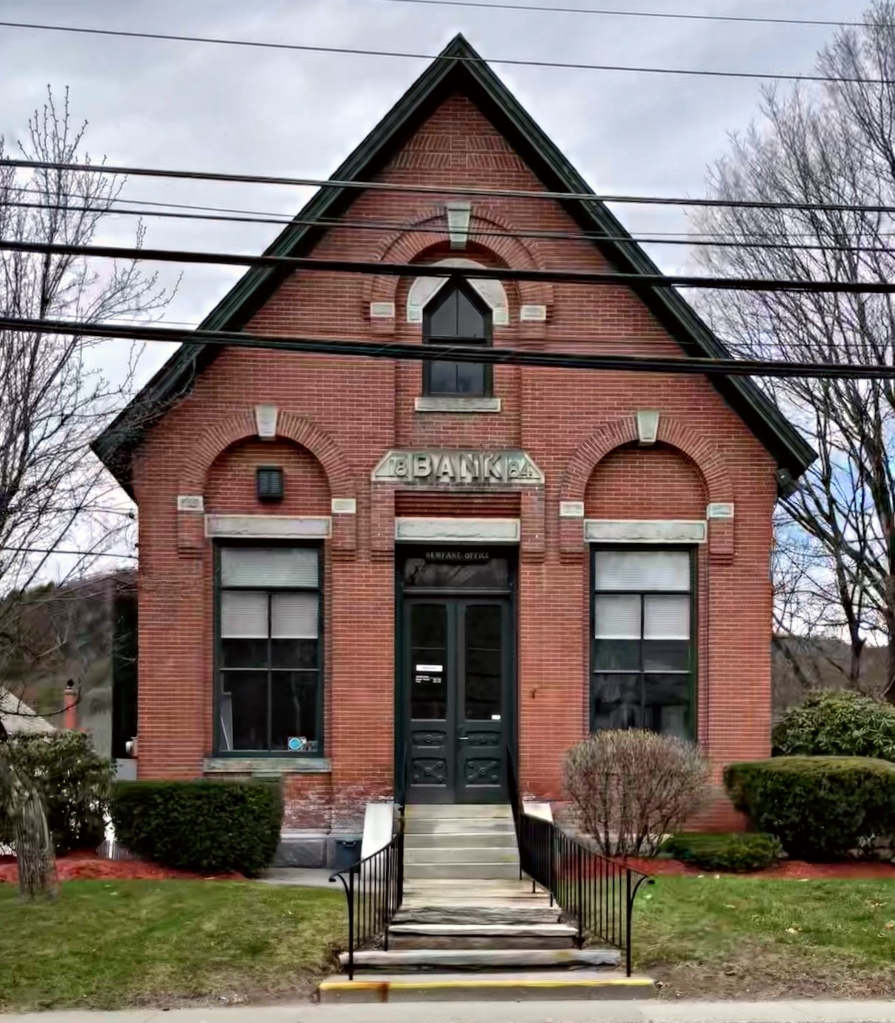
One of the few brick buildings in Newfane’s Village Center is this charming old bank, right on Main Street. The building was constructed in 1884 as the Vermont National Bank and is a vernacular example of the Romanesque Revival architectural style with the arched openings and brickwork. Vermont architect George A. Hines designed the modest building, which was built for $6,650. The bricks for the building were brought into town by ox cart. Those for the front facade cost 5 cents apiece; those for the sidewalls 3 cents; and those for the back wall 2 cents, showing how the best materials go on the highly visible facades.

Richmond Universalist Church-Library // 1897

Have you ever heard of a church becoming a library? Well you have now! Built in 1897 for the Univeralist Unitarian Congregation in Richmond, Vermont, this imposing building stands as a rare high-style Gothic church design for such a small town. The congregation occupied the building until the dwindling population in town made it no longer feasible to keep the doors open, closing in 1956. When the congregation disbanded, the building was sold to a Richmond resident who then offered the property to the Richmond School District, which had its large school next door. Voters accepted the gift at Town Meeting and passed a bond to convert the building into a cafeteria and gymnasium for the school next door. In the mid-1980s, with a new school in town, the school building was abandoned and converted to the Town Hall. The gymnasium and cafeteria in the former church was no longer needed, and some in town proposed to demolish it to build a new, modern library. Preservationists petitioned to save the building, acquiring funds to restore the exterior and convert it to a library. They won. The library operates here to this day as a unique place for residents young and old to read and learn in an architectural treasure.