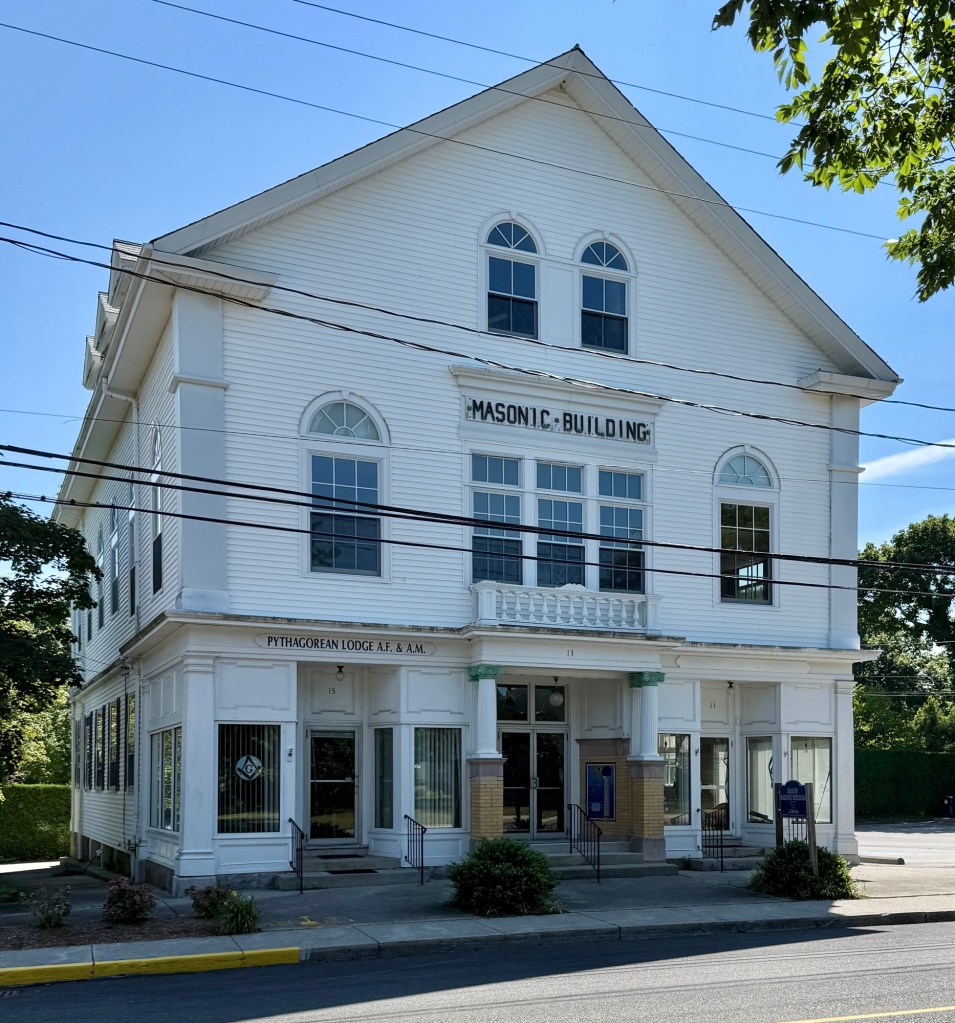
Marion Masonic Hall // 1911

Since its founding in 1863, Marion’s Masonic organization, Pythagorean Lodge, has been one of the town’s most important social and charitable organizations. The organization originally met in a historic Greek Revival style building near the harbor, but it was eventually deemed obsolete for the well-connected group of men who were members there. In 1908, discussions began to build a new, purpose-built Masonic Hall in the village. It was intended to have a three-story building with retail space and apartments on the ground floor to supplement the cost of maintenance, reception and member’s rooms on the second floor, and the banquet hall and kitchen on the top floor. Approximately one-third of the cost for the new building was funded by Henry E. Converse, of the Converse Rubber Company (now the iconic shoe brand), who was a member of the local lodge and summer resident of Marion. Opened in 1911, the new building was designed in the Colonial Revival style with fanlight windows, corner pilasters, and columned entrance, but today lacks the original flair with its unfortunate vinyl siding.
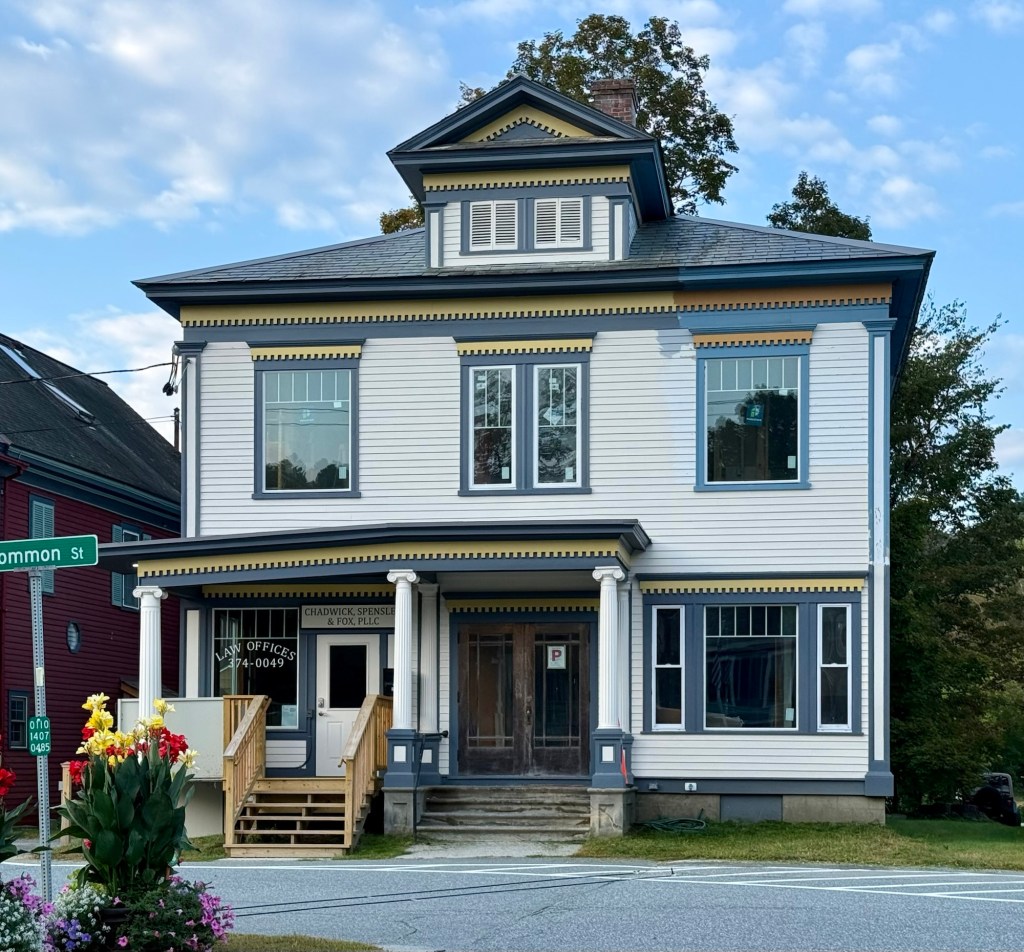
Chester Masonic Temple // 1907

Built in 1907, this handsome building on Main Street in Chester, Vermont, has long been the home to the Olive Branch Lodge 64 of the Freemasons, an international fraternal organization. Colonial Revival in style, the building features corner pilasters that support a denticulated entablature along the eaves of the slate hip roof. A projecting portico over the front entrance is supported by classical Ionic columns. The 1920s marked a heyday for Freemasonry, especially in the United States. By 1930, over 12% of the adult male population of the United States were members of the fraternity. Following the Great Depression and WWII, membership sharply declined in fraternal organizations, like the Masonic Temple. A number of years ago, the Lodge here moved to a new building in a nearby town, and a local law firm purchased the building and spent 18 months renovating the building for use. Today, the historic character and even symbology remain on the building, while it houses a local business. 

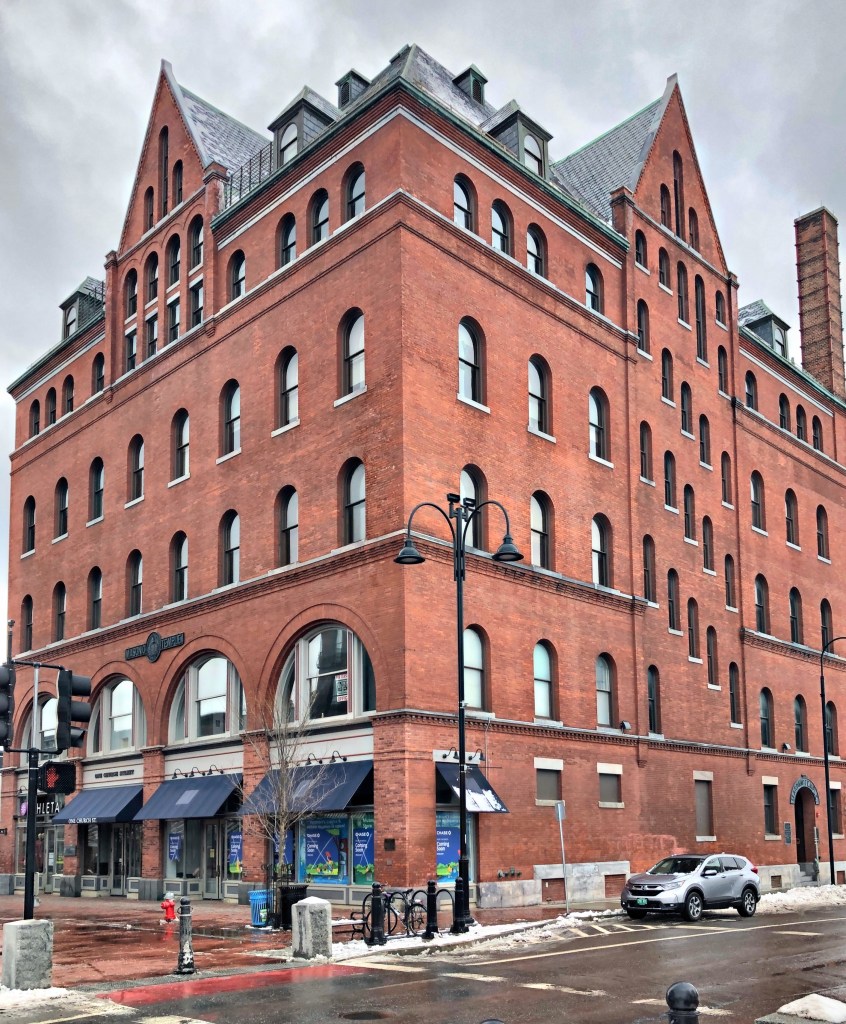
Burlington Masonic Temple // 1898

This large, imposing brick structure across from the Unitarian Church in Burlington, Vermont, was built in 1898 as the state headquarters of the Grand Lodge of Vermont, Free and Accepted Masons. Masonry, also known as Freemasonry, is the oldest and largest fraternity in the world, and they erected architectural landmarks in cities and towns all over the globe. At the end of the 19th century, the Masons in Vermont wanted a large new headquarters to host events and meetings for those visiting from all over. The building was designed by John McArthur Harris of Wilson Brothers & Company of Philadelphia at the time the firm was working on major buildings for the UVM campus. Above the retail use at the ground floor for rental income, multiple floors of meeting and banquet rooms, parlors, library, offices, and regalia spaces culminated in a fifth-floor assembly hall surrounded on three sides by a sixth-floor gallery. At the roof, the gables, along with small hipped dormers, animate a great hipped roof that evokes the symbolic Masonic pyramid. The massive roof, round arches, and a striking stair-step side elevation give the building a purely Richardsonian character, minus the carved sandstone and monumental arches.