“Seven Oaks” // 1873

When strolling around Bristol, Rhode Island, you are overloaded with gorgeous early 19th century house styles, primarily in the Federal and Greek Revival styles. Among these, one house (or should I say mansion) stands out as a flamboyant Victorian Gothic showpiece at the southern end of the downtown area. Built in 1873 for Augustus O. Bourn (1834-1925), the founder of the National Rubber Company (and from 1883 to 1885 governor of Rhode Island), “Seven Oaks” could go toe-to-toe with any house in the state. Bourn’s architect was James Renwick of New York, one of the most celebrated architects of his time. Before designing Seven Oaks, Renwick’s resume included: Smithsonian Institution Building, Washington, D.C.; St. Patrick’s Cathedral, New York City; and the Renwick Gallery, Washington, D.C.. Seven Oaks is a large, hip-and-cross-gable-roof Victorian Gothic mansion constructed of stone, with multiple towers and a slate roof capped with iron cresting.
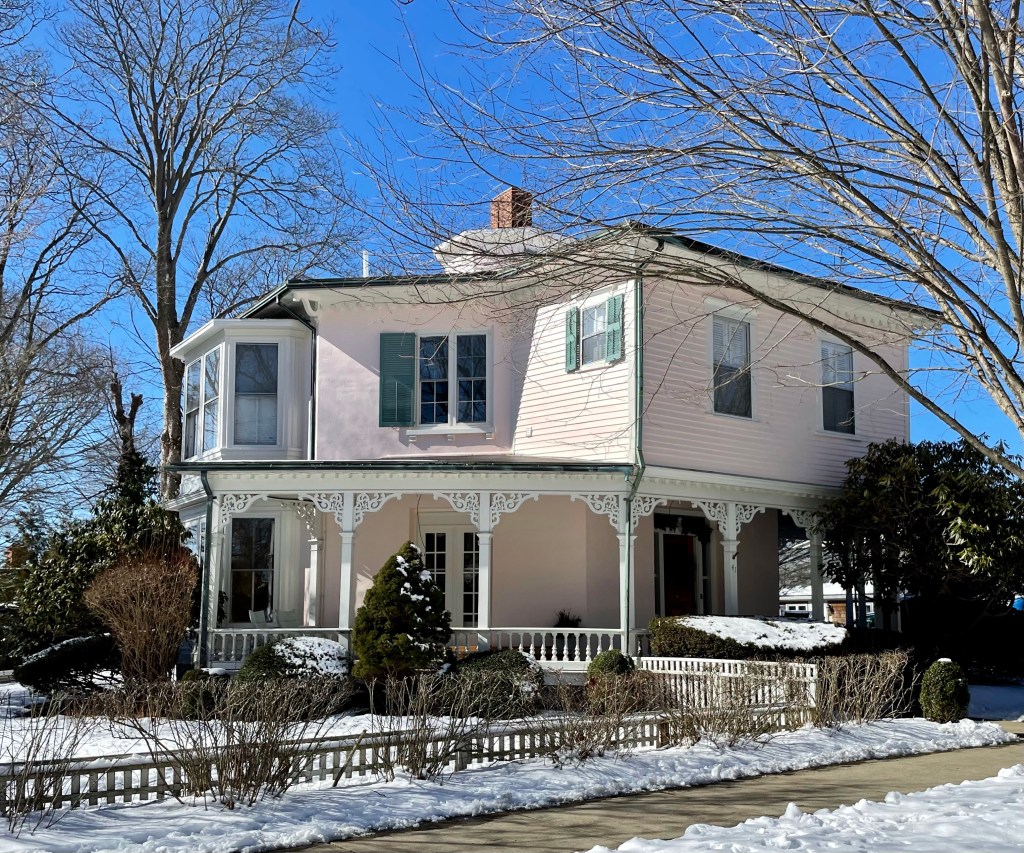
Lemuel Richmond House // 1856

Lemuel Clarke Richmond (1782-1876), a whaler, built this Octagon home in his seventies. This was the second home he built in Bristol Rhode Island, the first being the Richmond-Herreshoff House I featured previously. When Lemuel Richmond sold his 1803 Federal style home, his home was empty as his wife passed and all of his children married and moved out of the house. Octagon houses are fairly rare nationwide, and most were built in a small timeframe in the 1850s. The publication of Orson Squire Fowler’s A Home for All: or the Gravel Wall and Octagon Mode of Building in 1853 briefly brought popularity to octagonal structures. The
octagon, according to its proponents, offered greater floor space, increased air and sunlight, and was a healthful natural form. Orson Squire Fowler was a phrenologist (a pseudoscience which involves the measurement of bumps on the skull to predict mental traits) and lecturer who had a huge impact on American architecture, though only for about a decade. The Richmond House in Bristol also features an octagonal cupola, bracketed porch, and a single-room addition over the porch over the front door. Could you live in an Octagon?

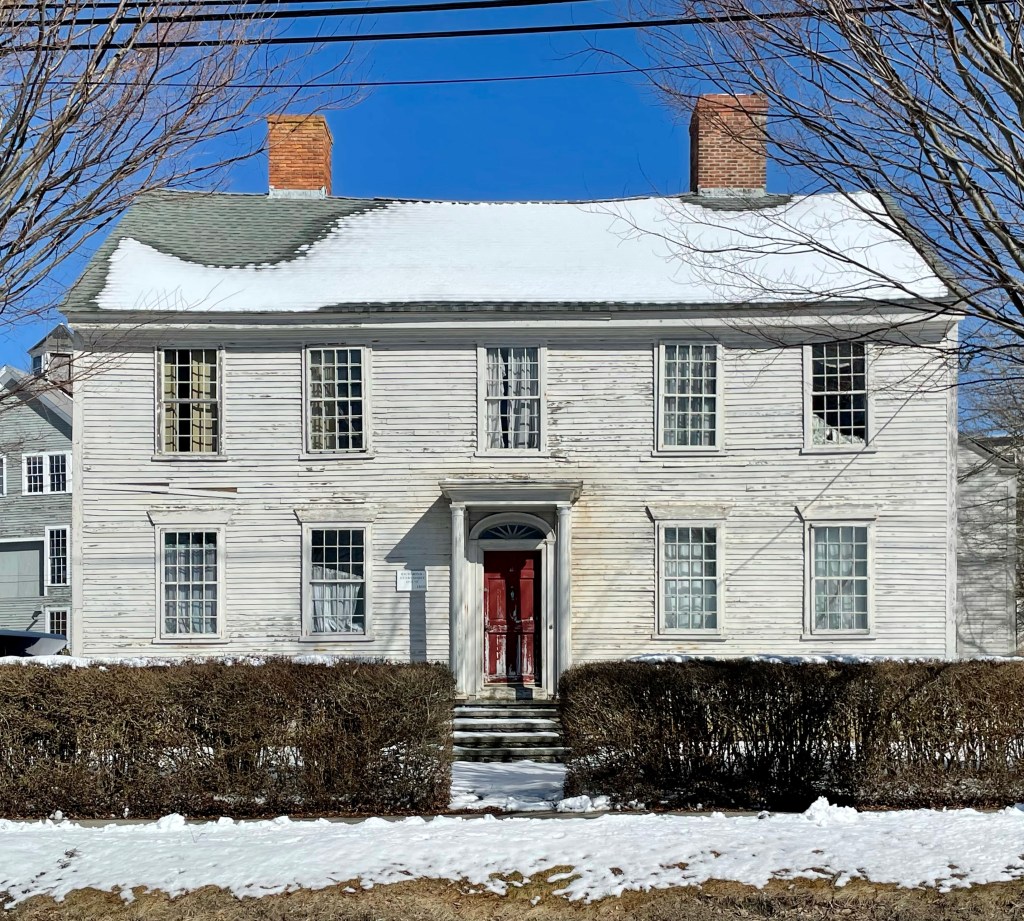
Richmond-Herreshoff House // c.1803

Located on Hope Street, just south of the downtown area of Bristol, Rhode Island, this beautiful Federal-style home overlooks the water, and once oversaw a large ship-building empire. The home was built by Lemuel Clarke Richmond (1782-1876), possibly in response to his marriage to Hannah Gorham in 1803. Richmond was a wealthy whaler who owned nearly twenty ships, including the Empress, a Bristol-built bark. The Federal style home features a five-bay facade with central entry. A modest portico surrounds the door which has a fan light transom above. Oh, and there are some gorgeous 12-over-12 windows on the home, at the ground floor the windows have flared lintels above. The home was sold by Richmond in the early 1850s and rented out to Charles and Julia Ann Herreshoff, who resided there with their eight children! It was here where sons John and Nathanael overlooked the water as young boys and became consumed by the beauty of the ships that sailed by their front yard. The brothers later ran the internationally renowned Herreshoff Manufacturing Company, which occupied land all around the home (and was featured previously). The home was acquired by the family in the 1860s, and often changed hands within the family over the next decades until it was inherited by Norman F. Herreshoff. A collector of Americana, Norman Hcrreshoff completed a series of renovations to the family home, including remodeling of the kitchen to be “old-fashioned” and replacement of the front porch with the small Ionic portico which we see today. The home is owned by the Herreshoff Marine Museum, but has seen better days.

Herreshoff Manufacturing Complex // 1853+

In 1859, 18 year old John Brown Herreshoff (1841-1915) of Bristol, accepted his first commission to design and build a yacht. The fact that he was blind, having completely lost his sight at 15, didn’t seem to slow him down. He became known as the “blind boat builder.” In his early years, John Herreshoff had acquired such a keen knowledge and “feel” of boats that his blindness was no obstacle. The handwork however, was done by his brother, Nathanael Greene Herreshoff, later known as “the Wizard of Bristol.” His skill in shipbuilding became well-known; so in 1863, John took on space in an old rifleworks, hired a crew of shipwrights and established what would become the Herreshoff Manufacturing Company. From 1864 to 1869, the boatworks built forty-three steam yachts, including Seven Brothers, the first steam-powered fishing boat in America. In 1876, Lightning, the first United States Navy torpedo boat, was completed. Construction of larger craft soon followed, including the 94-foot Stiletto, considered the fastest boat in the world, and was later purchased by the Navy, and was its first torpedo boat capable of launching self-propelled torpedoes. J.B. Herreshoff died in 1915 and the company continued under his brother Nathanael, until it was taken over by a syndicate of New York and Boston yachtsmen. Business stagnated after WWI and the business closed after WWII. Today, Burnside Street in Bristol showcases the lasting legacy of the Herreshoff Manufacturing Company and their impact. Also, the Herreshoff Marine Museum sits at the end of the street, continuing that legacy.

John Brown Herreshoff House // c.1870

John Brown Herreshoff, a fully-blind ship-builder, and later Founder and President of the Herreshoff Manufacturing Company in Bristol, built this house at the head of Burnside Street, overlooking his boat works (no pun intended). The home sits next to the stunning Codman Place mansion, featured previously, and takes architectural cues from its neighbor. The home is reported to have been built by J.B. Herreshoff, who despite being completely blind, developed his other senses to a high degree to overcome the handicap of sightlessness, and became renowned for his design skills in his ships. The home has a mansard roof with a central projecting entrance bay, capped with a steeply pitched roof, and a barrel-vaulted dormer and ocular window inset. While the house is now condo units, it retains its architectural integrity at the exterior.

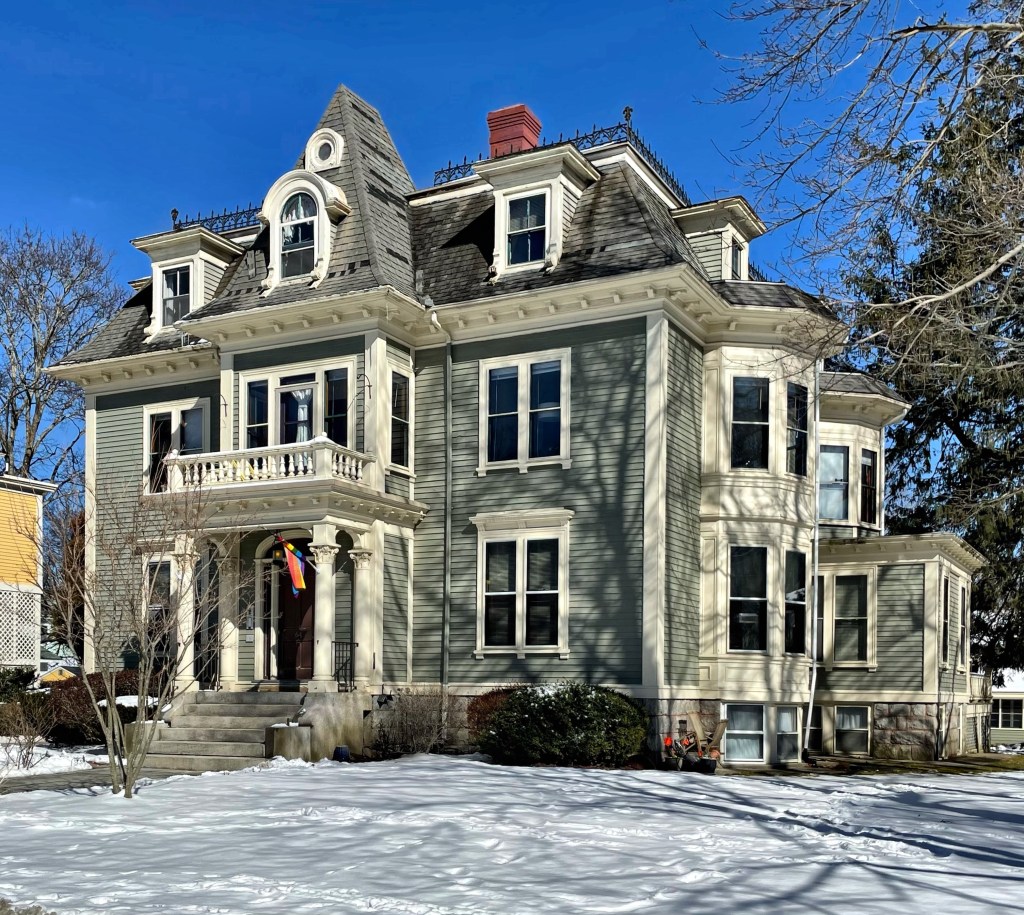
Codman Place // 1870

In 1870, unmarried sisters of the esteemed and respected Codman Family of Boston, Catherine Elizabeth and Maria Potter, commissioned this house from the Newport Rhode Island architect George Champlin Mason. Like many who built in Bristol after the Civil War, the sisters seemed to view the location as a kind of suburb of fashionable Newport. In 1875 they were joined by their brother Henry Codman, who was given a large tower addition to dwell in, preserving the architectural significance to the Second Empire style home. Henry died in 1879, only four years after his tower was constructed, Catherine died in 1898, and Maria died in 1902 and the house was sold soon after her death. The home was converted to seven condominium units in the 1980s, yet retains its architectural grandeur from the delicate iron cresting at the roofs, down to the historic 2-over-2 windows.

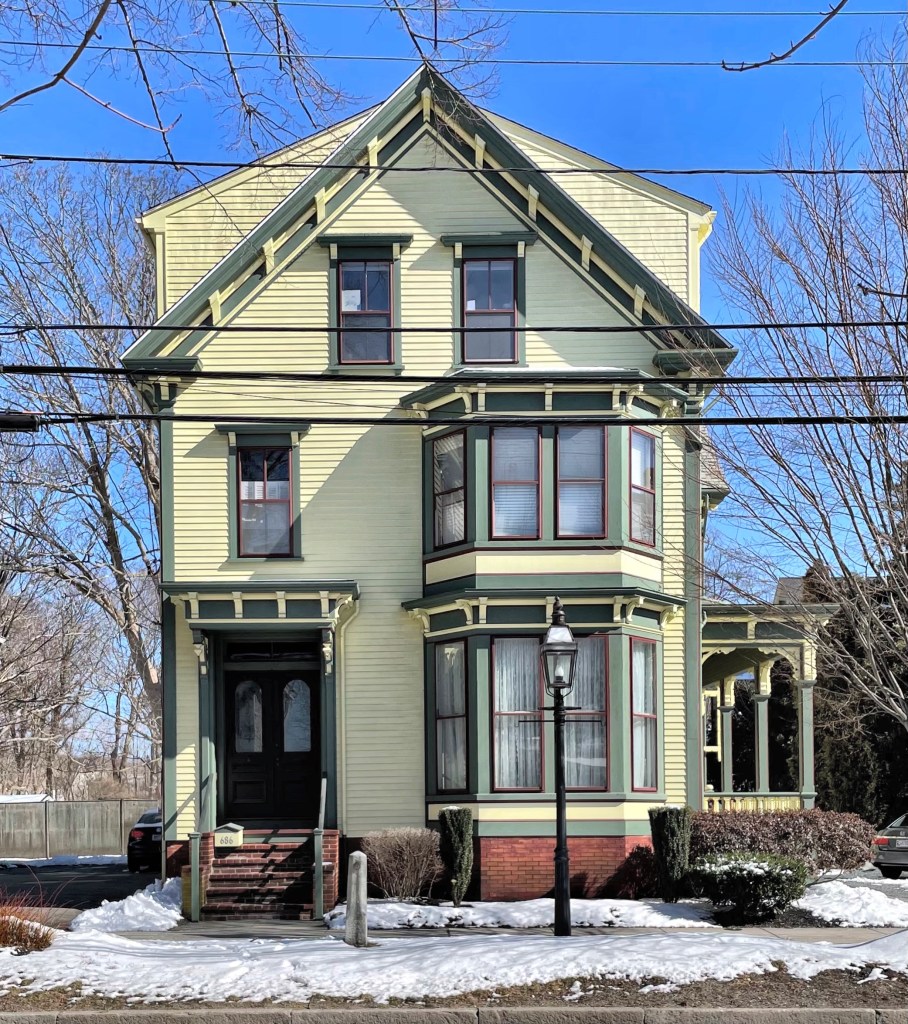
Charles Greene House // 1879

Bristol, Rhode Island is dominated by Federal and Greek Revival homes, but there are some absolutely gorgeous gems built after (I can’t wait to show you a sampling). This Bracketed/Italianate home is a well-preserved example of the style with a side-hall entry, two-story bay window, and hoods over windows and the main entry with brackets. The home was built for Charles Greene, a very active citizen of Bristol. Greene (1822-1899) purchased the Bristol Phoenix in 1862 and remained its editor and publisher for thirty-one years. Active in public and civic affairs, he was first president of the Rhode Island Press Association, clerk of the Supreme and common Pleas Courts of Bristol County from 1865 to 1868, a member of the General Assembly in 1873 and 1874, Sheriff of Bristol County from 1875 to 1877, and a town council member from 1879 to 1881.

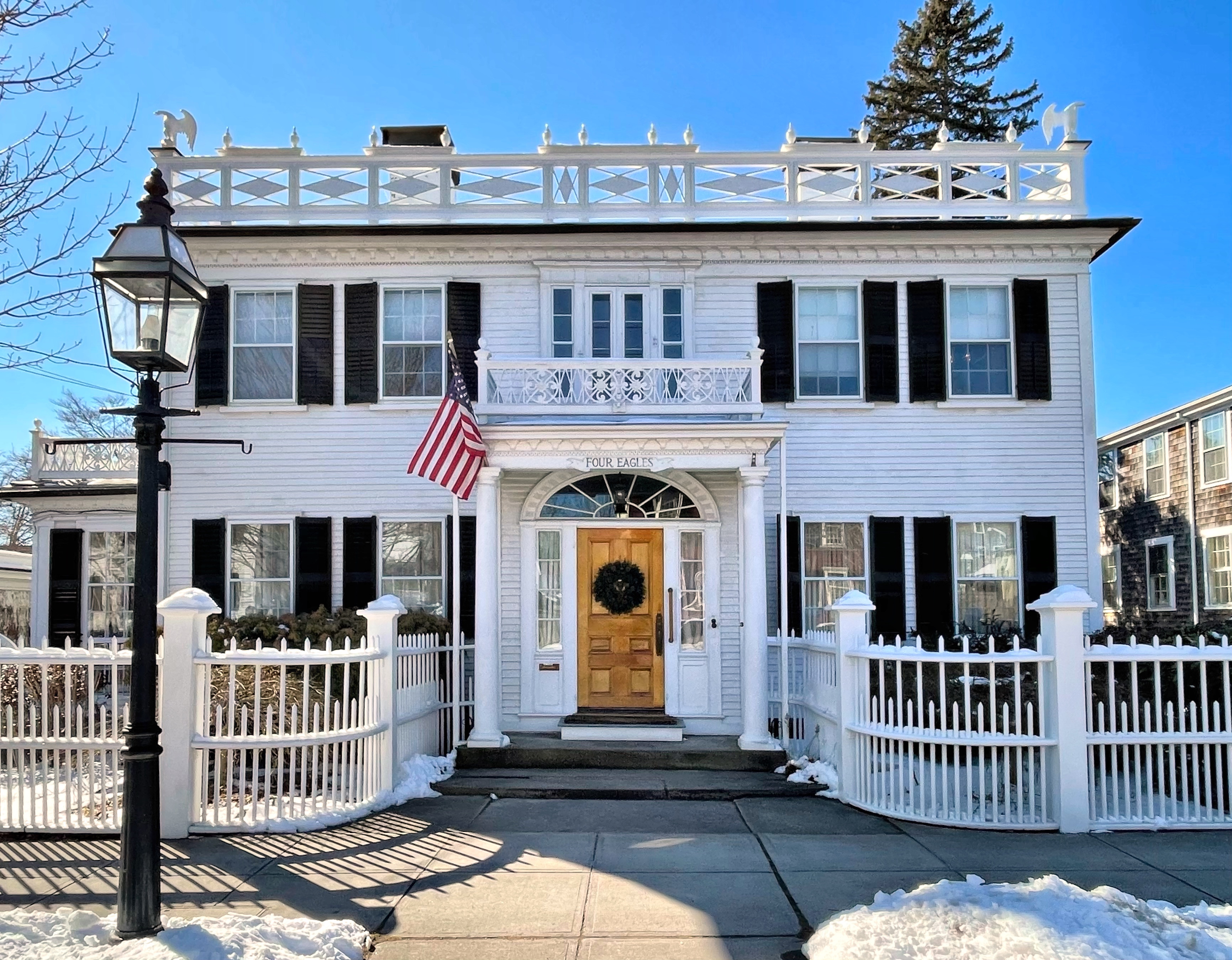
“The House with the Eagles” // 1808

In 1807, a young John Howe (1783-1864), a descendent of the DeWolf family, married Louisa Smith, and built this family home soon after. He hired local esteemed architect Russell Warren (who was the same age as Howe at the time) to design the home, which is a simply designed, hipped roof home with an elliptical fanlight and sidelights at the central entrance. It is embellished with superb architectural woodwork with an ornate roof balustrade. Howe and his family lived in the home until 1822, when it passed to ship captain, Benjamin Churchill, who appears to have been involved with the transport of slaves to the Americas. According to local legend, Churchill gave the house its name by having the sailors of his ship, the Yankee, carve four American eagles, which he placed at the corners of the Chippendale balustrade that crowned his roof. Churchill’s tenure in the home was brief, and in 1825 the house passed to Byron Diman, a powerful merchant with interests in whaling, banking, and the local cotton mills who served as governor of Rhode Island in 1846–1847. The home has been restored numerous times and is well maintained.

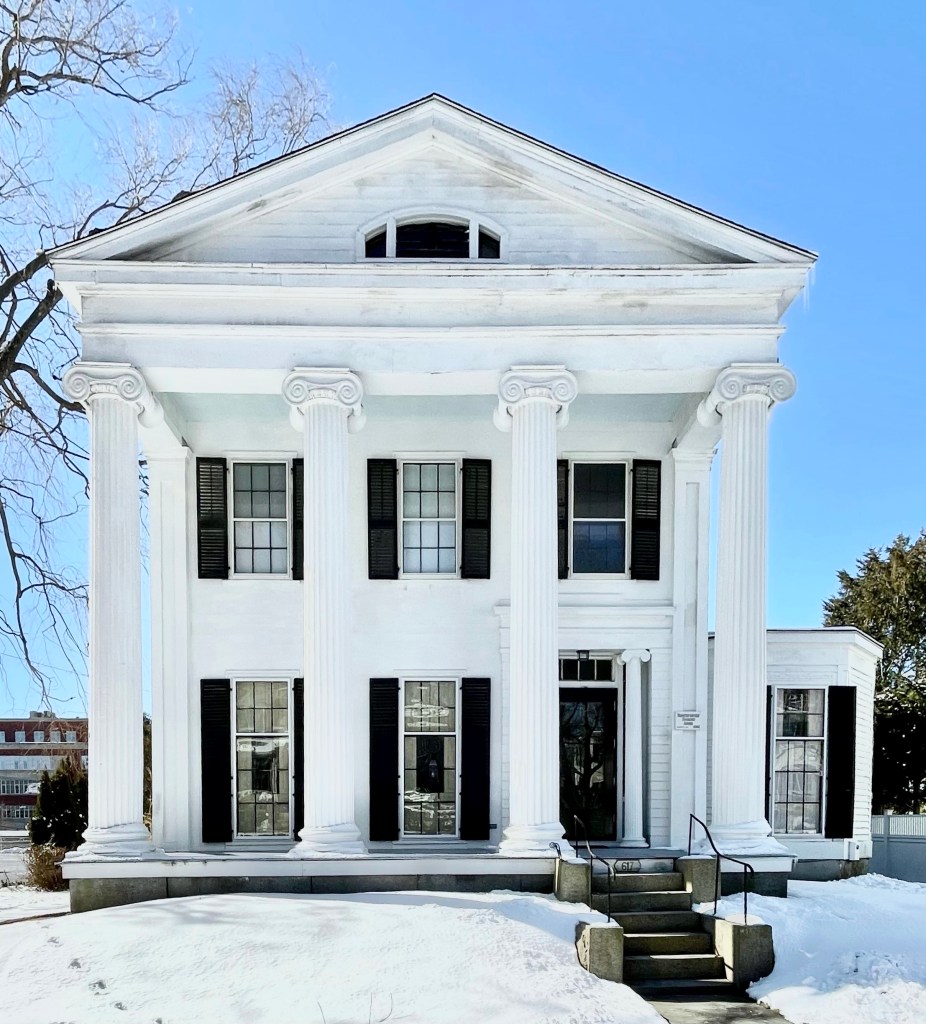
Francis M. Dimond House // 1838

Built in 1838, just three years after the Talbot House in Bristol, Rhode Island, (just two houses away), the Dimond House remains as the other of the two remaining Greek, temple-front homes in town. Like the Talbot House, this home was also designed by Russell Warren, but is unique as it is in the tetrastyle (with four columns) and utilizes the Ionic order with the capitals featuring volutes (scrolls). Additionally, a polygonal bay can be seen on the right side of the home. Images show that the bay features stunning lancet windows! The home was designed for Francis Moore Dimond (1796-1859), who was born in Bristol, and later traveled to the Caribbean and served for several years (1832-1835) as the United States consul at Port-au-Prince. It is entirely possible that Dimond was involved in the slave trade, but I wasn’t able to find more than a couple articles referencing his connections to the infamous DeWolf Family. From 1842 to 1849, Dimond was United States Consul to the Mexican port city of Veracruz. When he returned to Rhode Island, he promoted the Southern Pacific Railway and presided over its construction. He was elected lieutenant governor of Rhode Island in 1853. He became the governor of Rhode Island when Philip Allen, then Governor, resigned to become a Senator. He held the governor’s office just one year. He moved back to Bristol and lived out his final days at his home.

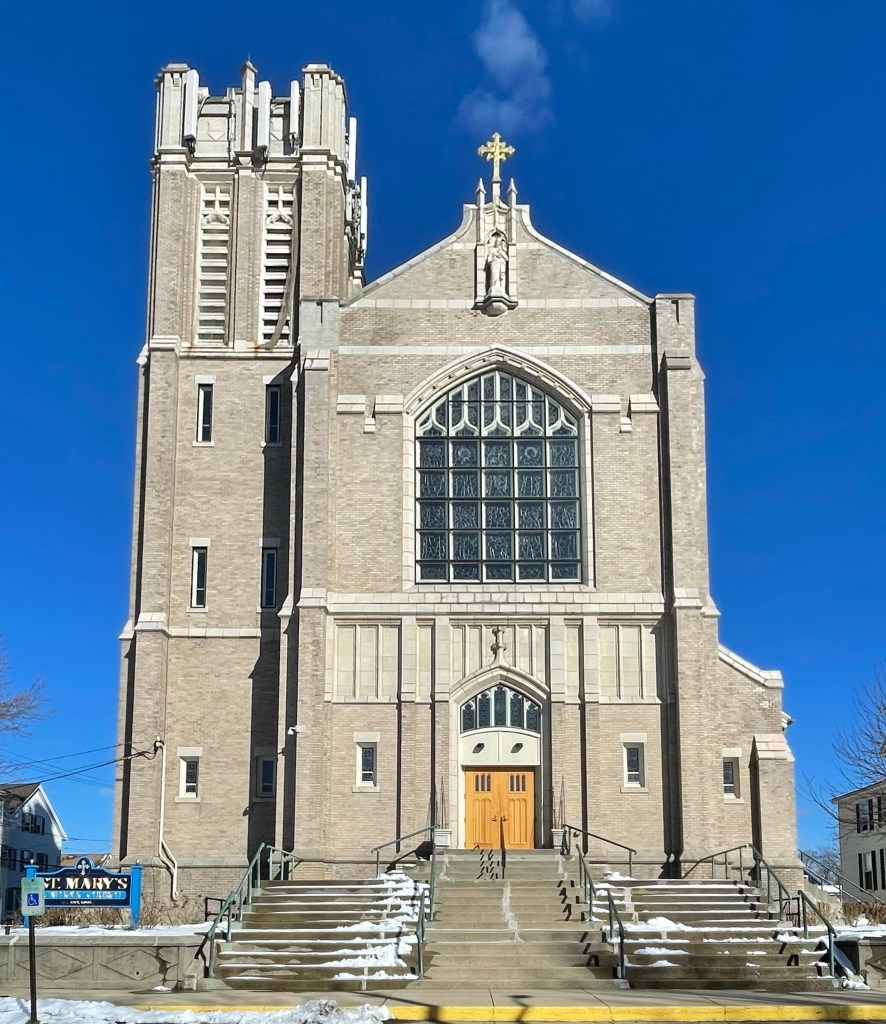
St. Mary’s Catholic Church // 1911

This 2-story Neo-Gothic Revival church constructed of buff brick and limestone, is dominated by an off-center, 4-level tower and showcases how even smaller towns in New England have some of the finest 20th century churches. In 1849 St. Mary’s parish, in nearby Warren, Rhode Island, was founded to serve residents there as well as Irish and French Canadian immigrants in Bristol, which began arriving en masse. Just years later, in 1855, the first St. Mary’s Church in Bristol, was constructed as a plain wooden structure, and operated as a mission of the Warren church. In 1874 the Bristol church became an independent parish and saw large increases to membership with more Irish families settling here. Over the next decades, the space became more cramped and a building campaign was started to get a new place of worship. The present St. Mary’s Catholic Church was built in 1911, from plans by the Providence-based architectural firm of Murphy, Hindle & Wright, who together (and separately) designed many ecclesiastical buildings, in Rhode Island and Massachusetts. The interior is even more stunning than the exterior detailing, and remains very well-preserved.