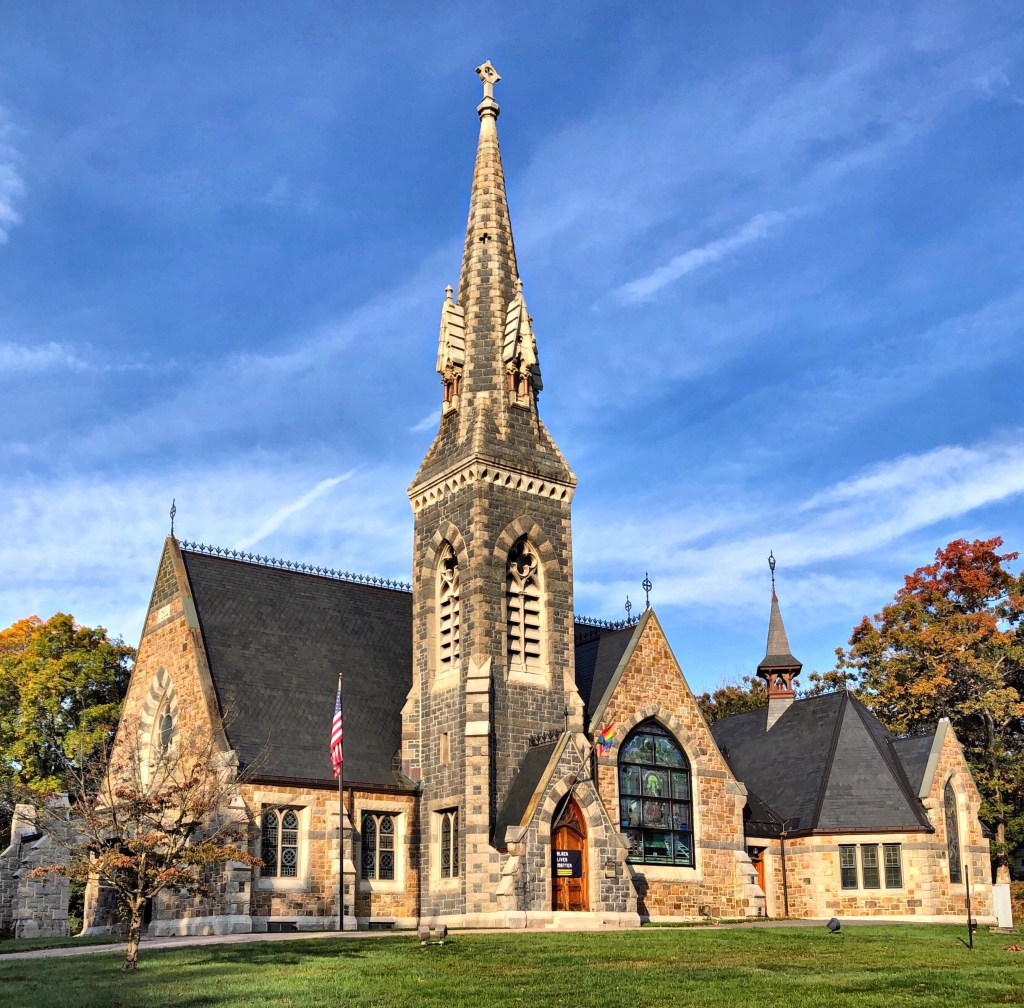
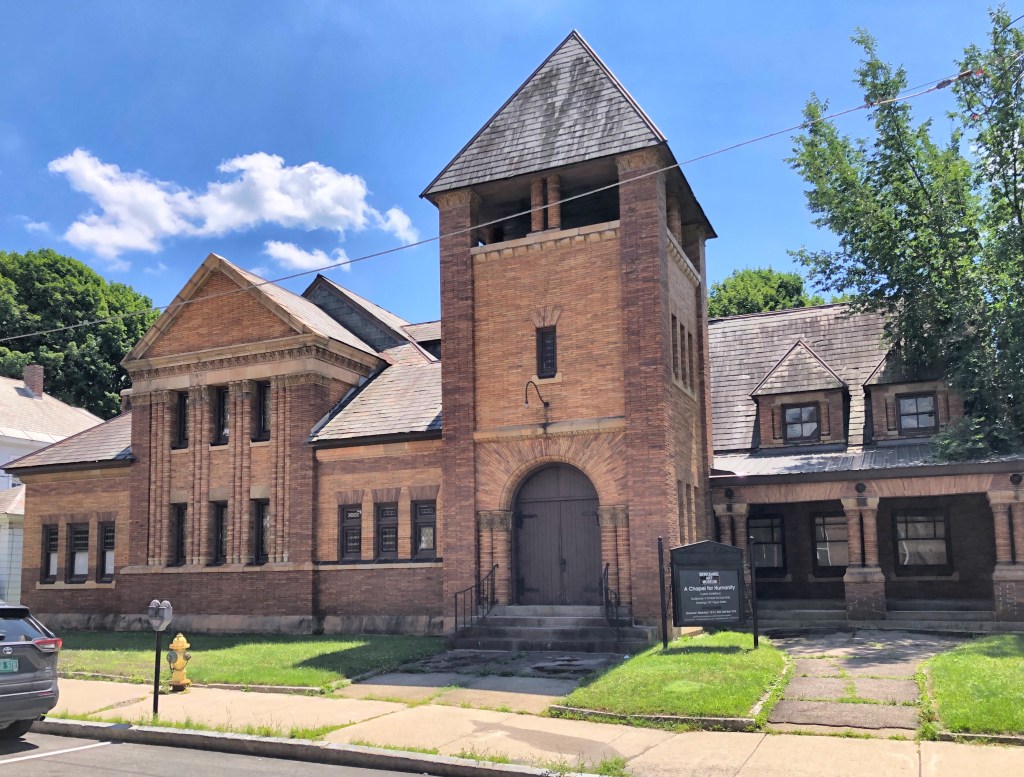
North Adams Universalist Church // 1893

Tucked away off Main Street in North Adams you’ll find this charming little church. The Universalists were organized in North Adams in 1842, restoring an existing church near the Hoosic River. The congregation chose a site for a new church in 1852, and erected a white wooden chapel. It is unclear if the church was outgrown or a fire destroyed it, but the Unitarian society voted to build this church for a cost of approximately $25,000 in 1892. Architect Henry Neill Wilson of Pittsfield drew the plans, and the firm of Porter and Harnam of North Adams constructed the church. Due to the declining population in town in the mid-20th century, the church struggled and was sold to a private owner. The building began to decay by the 1970s and was later sold in 1996 to Barbara and Eric Rudd to house artist Eric Rudd’s installation entitled “A Chapel for Humanity”. The building is currently used as the Berkshire Art Museum Annex.

South Congregational Church // 1824

Built in 1824, the South Church in Kennebunkport Village looked very much as it does today, with the exception of the portico, which was added in 1912. In the early 19th century, architects were seldom employed in such remote areas therefore, builders often used manuals and examples of other churches in addition to their own experience gained from working the large shipbuilding yards adjacent to the Kennebunk River. The cupola, restored in 1991, is designed after an example by Christopher Wren and the steeple retains the original 1824 Aaron Willard clock with its unique wooden face, still keeps accurate time and rings on the hour. The church remains as an active space with a growing congregation in the summer months.

St. Martha’s Catholic Church // 1903

A happy blending of Mission, Colonial Revival and Shingle Styles for the Maine coastal community of Kennebunkport, the St. Martha’s Catholic Church exemplifies the charm of this town. The church is sited on a corner lot with a belfry at its corner. The nave features a central entry with Colonial pilasters and pediment above the second floor windows. The roofline is shaped with Mission style parapet walls and arched openings at the tower, showcasing the Spanish influence in the design. The entire building is wrapped with cedar shingles, as a nod to the coastal summer resort it resides. The church operated here until the mid-late 20th century when it was converted to an art gallery, and now is home to condos.