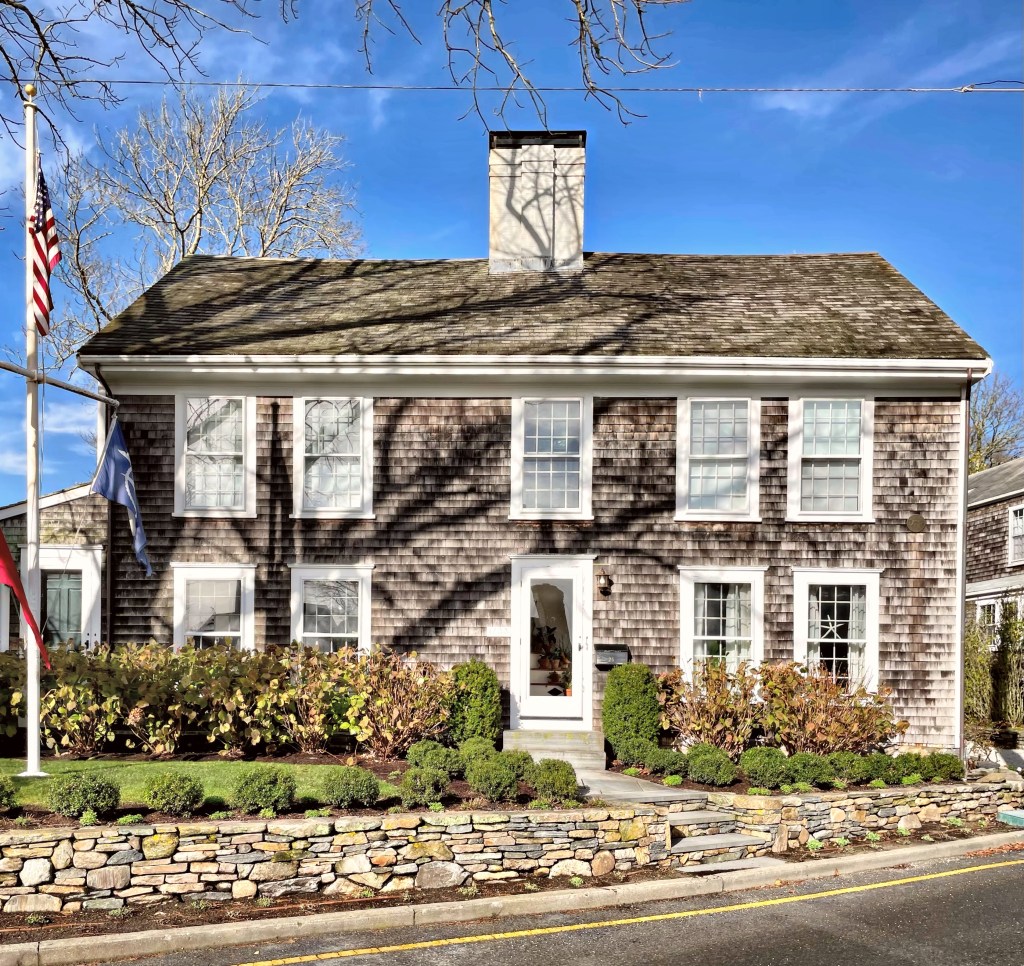
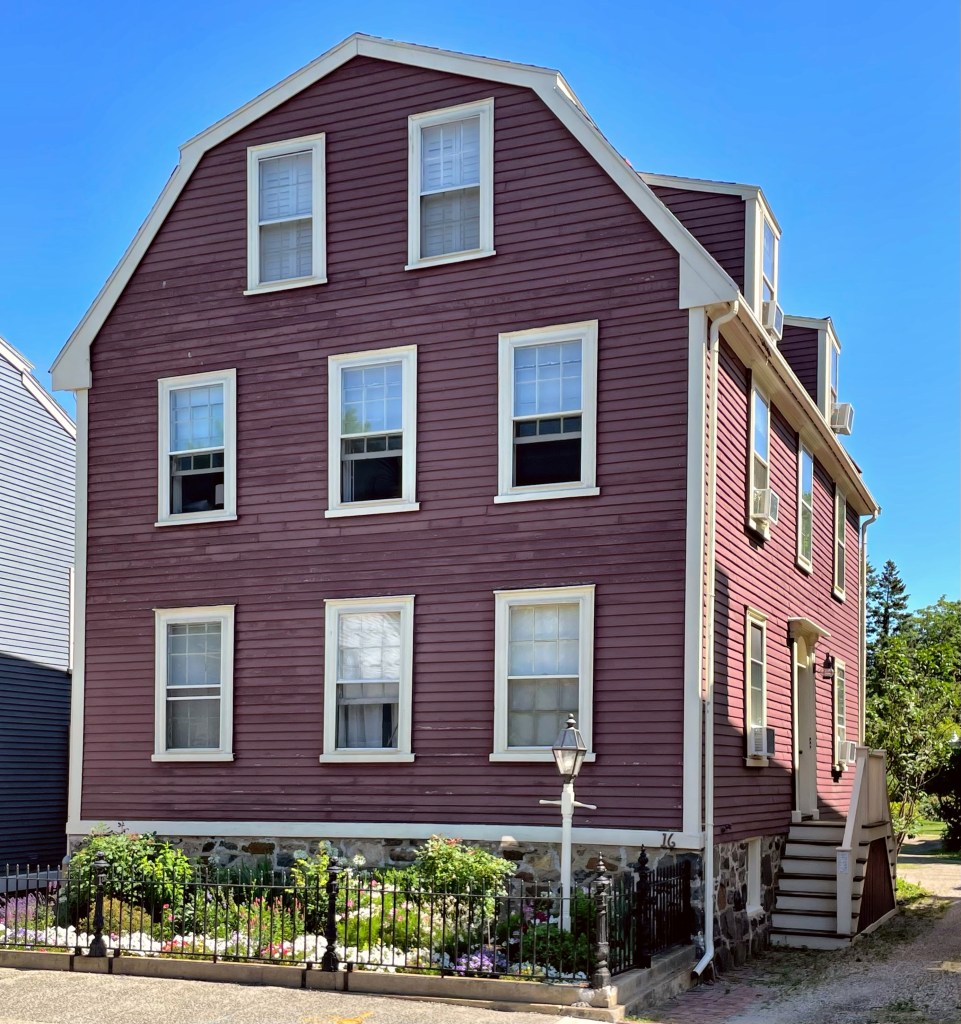
Jonathan Wright bought land on State Street in Marblehead in 1770 to build a new home for his family. The large property included his Georgian, gambrel-roofed home and a small pond/marsh in the rear. Sadly, John died by 1773 and his widow Abigail had to sell the property to settle the debts of the estate. Isaac Martin bought the house, and it passed down to his son Thomas, a wagoneer, when he died in 1777. The marsh was eventually drained by the town in the 20th century, likely due to issues with mosquitos and disease and the old barn was converted to a residence behind. The old Wright house has remained a well-preserved Georgian residence for 250 years!
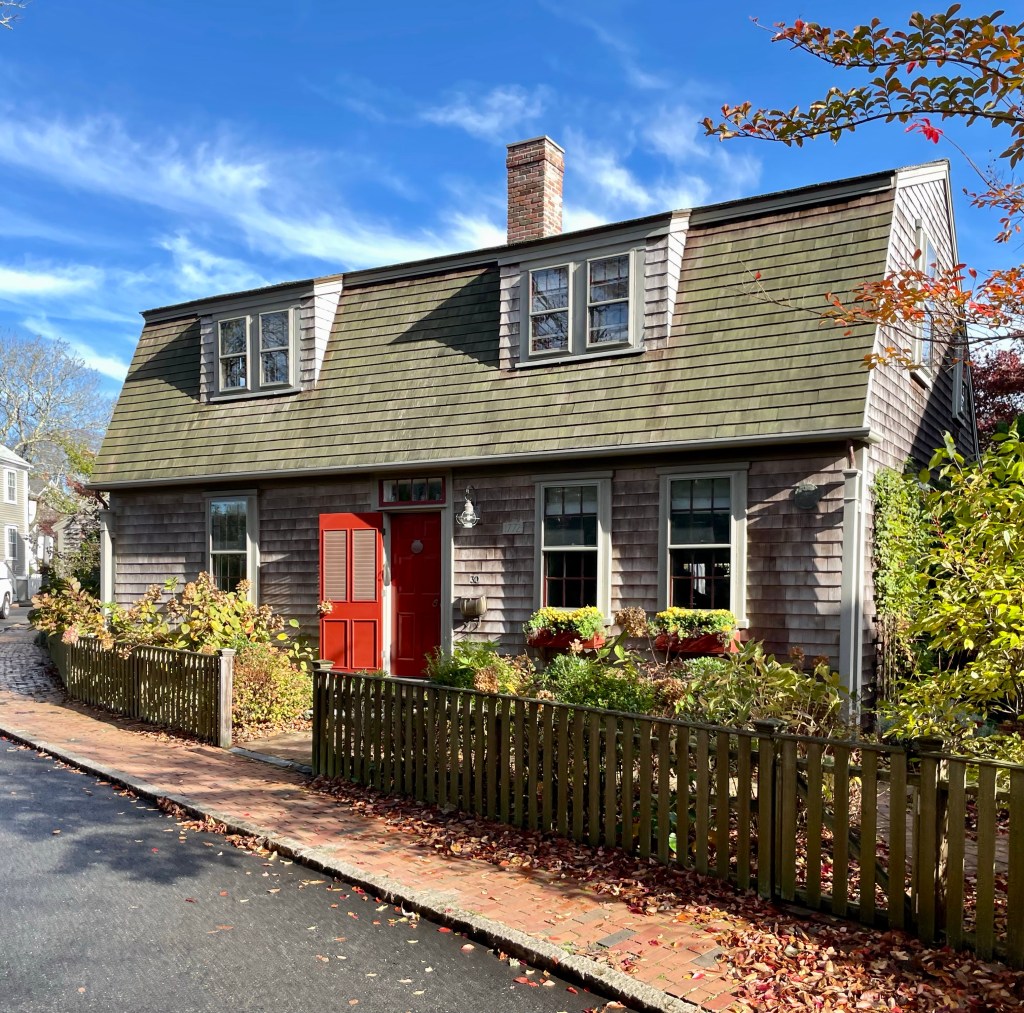
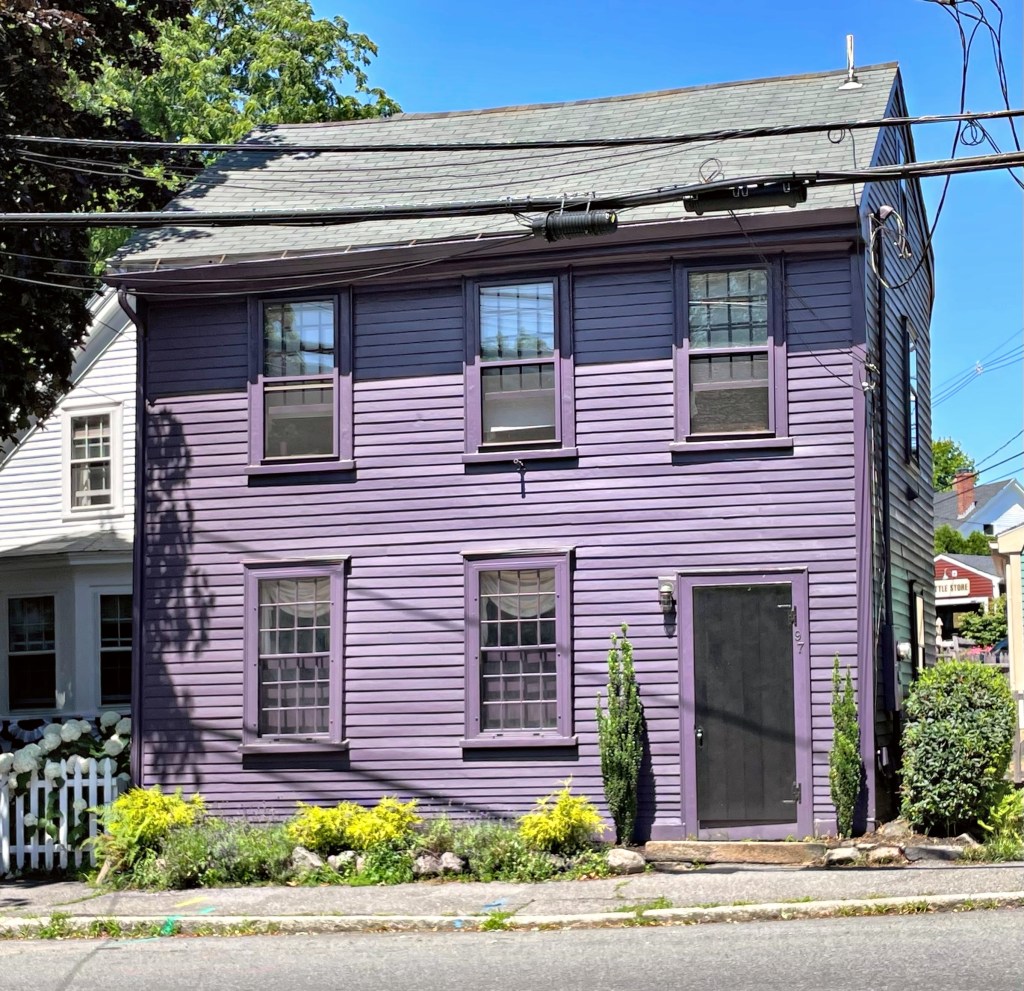
In 1725, Samuel Merritt, a fisherman, inherited some of his father’s land in Marblehead and built this house. After Samuel Merritt died in 1743, his second wife Mary, her daughters Mary and Elizabeth and her son-in-law James Dennis, lived in the house. They added the one-story lean-to, giving the house a saltbox roof in 1762. This house, and many others in Marblehead are the reason why human-scaled historic neighborhoods built before the automobile, are some of the best places to explore. Historic preservation equals tourism, which results in tax revenue and property values, stabilizing neighborhoods and cities from the ebbs and flows of the economy. Gotta love it!
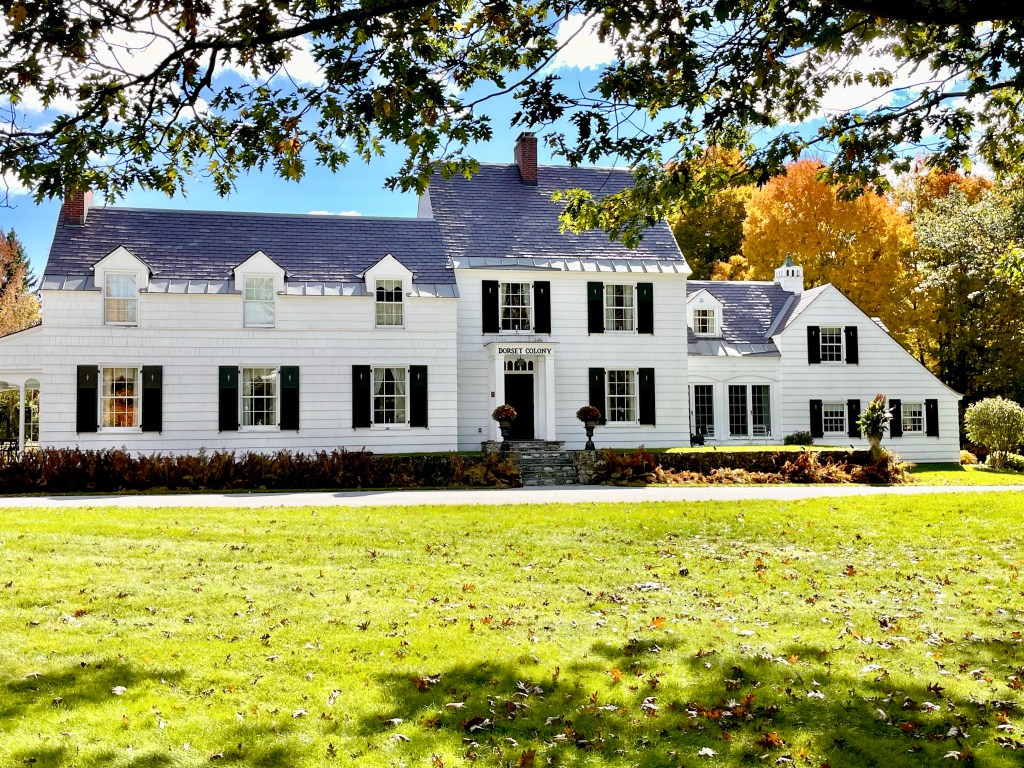
In 1720, James Pearson acquired a house lot on Windmill Hill in Marblehead, and he soon after built a house in the bustling harbor town. He lived in the house until 1734, when it was sold to a Giles Irwin. After Mr. Irwin’s death, it was conveyed to John Patton and John Bailey, both mariners, who likely split up the home inside. From this, fireplaces were punched into the central chimney inside, totaling 10 fireplaces in the home! John Bailey also worked as the Captain of Fort Sewall during the War of 1812. His wife Mary, served as temporary commander of Ft. Sewell after his death until a successor was appointed. The house eventually came under the ownership of siblings Carrie Florence Bessom (1867-1944) and her brother Frank Lewis Bessom (1870-1952). Florence operated an antiques store in town and Frank worked as a welfare commissioner. The home is a great example of a Georgian, Colonial-era home with a gambrel roof and even has the two (what I believe to be) separate coal doors in the raised stone foundation when the home was occupied by two families.
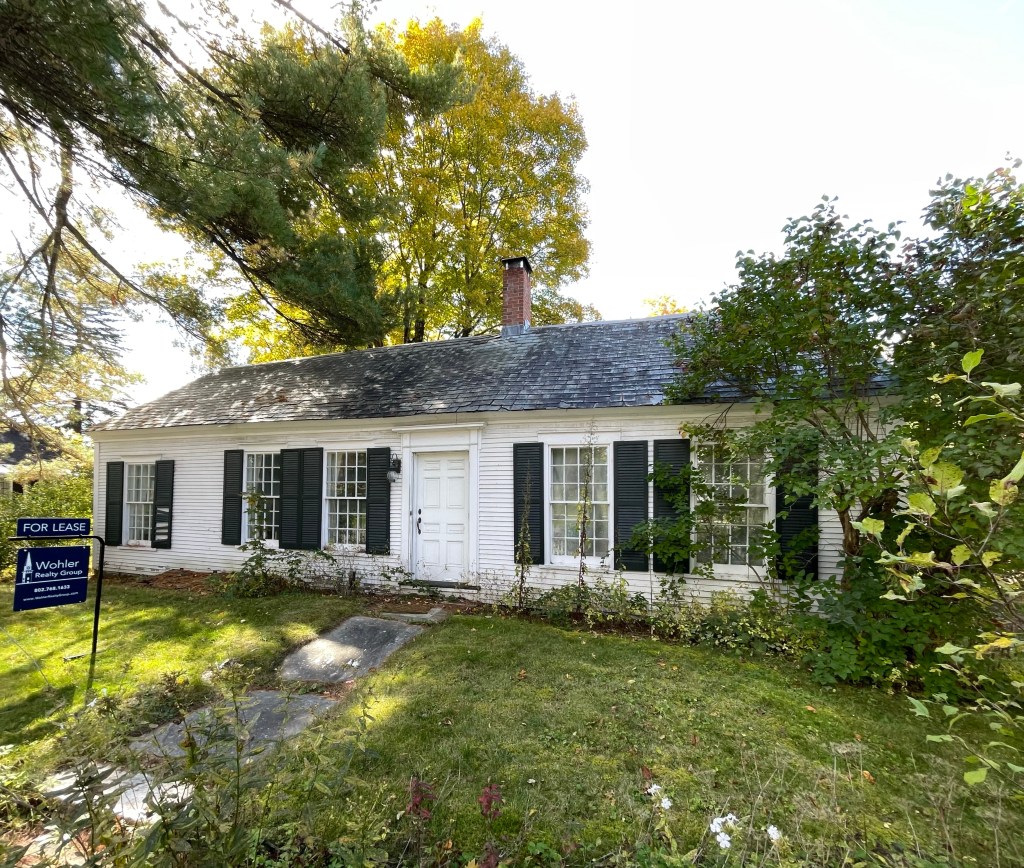
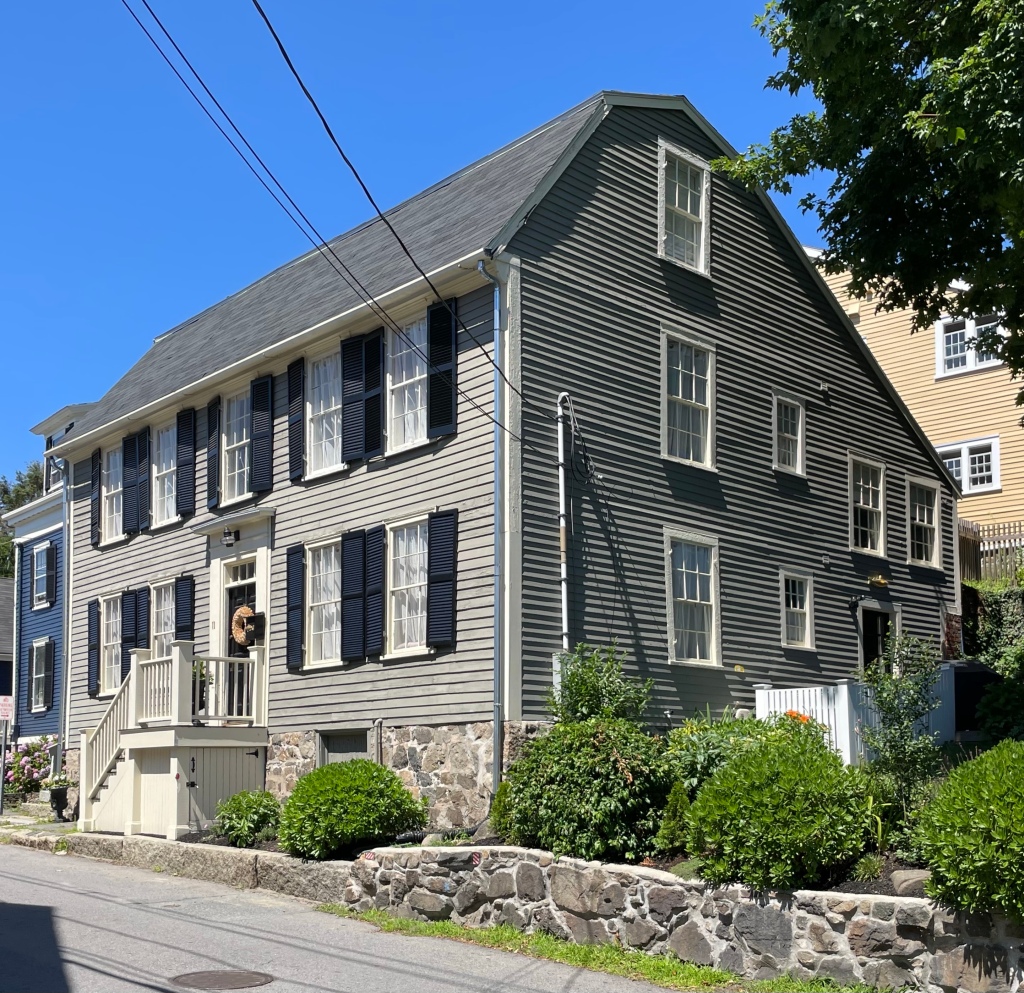
This perfect Georgian house in Marblehead was built in 1744 for Richard Homan (1713-1803), a sea captain who also fought in the Revolutionary War. In 1736, Richard married Hannah Goodwin, the daughter of William Goodwin, a notable housewright. William Goodwin seemingly gave the newlywed couple land on his estate and likely built this stunning home for them. Hannah died in 1772, and remarried in 1776 to Susanna Stacey, who he also outlived. The couple moved to Ipswich, and this home was sold to his son, William. In the 1800s, the property was owned by William Hawkes Jr., a trader and shopkeeper who apparently operated a “rum shop” out of the first floor of the home. It remained in the Hawkes Family until at least 2013. The house features a gambrel roof of cedar shingles, 12-over-12 windows, a pedimented entry, and a period-appropriate paint color.
Next door to the Immaculate Conception Roman Catholic Church (last post) in Everett, you will find the church rectory, which completes the city block. Though very different in architectural style, the building is compatible with its more grand neighbor with the use of materials and setbacks. The rectory was built in 1904 in the Colonial Revival style, which was very popular at the time in New England. The three-story, hip-roofed building has bowed bays that flank a single-story porch with Doric columns that shelters a central entrance with fanlight and sidelights. Other Colonial-inspired details include the tripartite window set into the recessed arch above the porch, modillion cornices and splayed brick lintels with keystones. It is not clear who designed the rectory, but they did a great job at it! Rectories served as the residence of the priest of the church. Not bad digs if you ask me!
This house in the Hill District of Portsmouth, NH was built sometime between 1766 and 1770; however a sign posted on the house indicates an earlier date of 1725. Regardless, the house is one of the best-preserved Georgian homes in the city. The colonial-era home was apparently built for a Henry Sherburne, who was a member of some of New Hampshire’s leading families. By the 1900s, the property was the only in the city with a surviving scrolled pediment doorway from the period. Like other colonial homes in the old North End of Portsmouth, it was barely saved by the bulldozers and urban renewal when it was moved in 1972 to its present site.
Portsmouth, New Hampshire is one of the most charming towns in New England to explore by foot, largely due to its walkable network of streets and tight blocks filled with preserved Revolution-era homes. Like many other cities all over the region (and nation), Portsmouth was hit by Urban Renewal, a planning tool used nationwide to provide Federal funds to address “urban blight” and revitalize downtown cores after decades of suburbanization and loss of tax revenue. An urban renewal district for Portsmouth was its North End neighborhood, which similar to Boston’s, was home to a vibrant Italian-American population.
In 1964, federal funds were allocated to the North End project area in Portsmouth, for urban renewal. Prior to redevelopment, the North End was a mix of residential and commercial buildings, with many older houses converted into storefronts with apartments above. In the mid-1960s, the area was considered overcrowded, run down, and a fire hazard. As a result, the Portsmouth Housing Authority proposed the destruction of approximately 200 buildings, a school, and a church and redevelopment for commercial, industrial, and public use, rather than for residences. The project would displace approximately 300 families as a result. In 1968, Portsmouth Preservation Inc., a preservation organization was formed to attempt to save some of the historic building stock in the area slated for redevelopment. After bitter fighting and preservation advocacy, just fourteen houses were saved and mostly moved to an area known today as “The Hill”. This building is one of them. It was constructed around 1725 for Rev. Jabez Fitch, the new minister of the North Church in town. Fitch graduated from Harvard College in 1694 first settling in Ipswich, MA, before becoming minister of the North Church in 1724, a position he held until his death in 1746. The house was one of the few in the urban renewal area to not have been moved.
When Ridgefield, Connecticut was settled in 1708 by Europeans, there was only one Episcopal Church in the state, and the general assembly allowed dissenters their own churches so long as they continued to pay taxes to support the Congregational Church. Ridgefield’s first Episcopal church, St. Stephen’s was built in 1740 on land granted by the Proprietors who founded the town and laid out lots along the towns new Main Street. In 1776, St. Stephen’s minister, Epenetus Townsend, a Tory (loyal to the British), was ordered to leave town with his wife and five children when the Revolution picked up steam. He was appointed chaplain to a British regiment and in 1779, the battalion was ordered to Nova Scotia. En route by vessel, a severe storm arose and all passengers were lost. The church was taken over by the commissary department of the American Army. During the Battle of Ridgefield, British troops set it on fire as a statement to the townspeople. The church was replaced two more times until 1914 when the present building was constructed. The Colonial Revival church is absolutely stunning and built from plans by (unknown to me) architect Walter Kerr Rainsford. The rubblestone church is one of the most pleasing designs I have seen in Connecticut!
This old Georgian house was built in 1713 on the Proprietors Lot 5, on Ridgefield’s Main Street. Constructed for the first minister of Ridgefield, the home was originally occupied by 25-year-old Reverend Thomas Hawley (1689-1738) not long after his graduation from Harvard in 1709. In addition to being minister of the newly formed Congregational Church, Hawley (also spelled Hauley) also served as school teacher and town clerk. The house employs Dutch Colonial detailing from the gambrel roof to the extended portico over the front door, common in the Dutch colonies in the Hudson River Valley in New York.
Around the year 1713, Benjamin Hoyt built a home for himself and his family on Lot 2 of the laid out building lots along Main Street of Ridgefield CT. The building was originally a one room dwelling with a stone fireplace and no basement and was located next to the David Hoyt mansion (aka The Fountain Inn). After several years, he expanded the property by building around and above the structure, to give it the gambrel roof and size we see today. More than 50 years later, in 1769, the property was purchased by Hoyt’s son-in-law, Timothy Keeler. Timothy Keeler and his wife converted the building into an inn in 1772, just prior to the beginning of the American Revolutionary War. Keeler sided with the American revolutionaries and was active in the local militia. After the Battle of Ridgefield, British forces fired on the Keeler Tavern, because Keeler was an enemy. One of the cannons used to pummel the tavern is still lodged in a corner post of the house to this day. After later owners in the Keeler Family, the property was purchased by world-renowned architect Cass Gilbert, who turned it into his family’s summer home in 1907. In doing so, he made various improvements and additions to the building, in particular he designed a Garden House and added a sunken around the year 1910. Gilbert would also design a fountain as a gift to the town, which sits almost opposite his family’s summer residence. The property was purchased in the 1960s and has since been a historical museum.