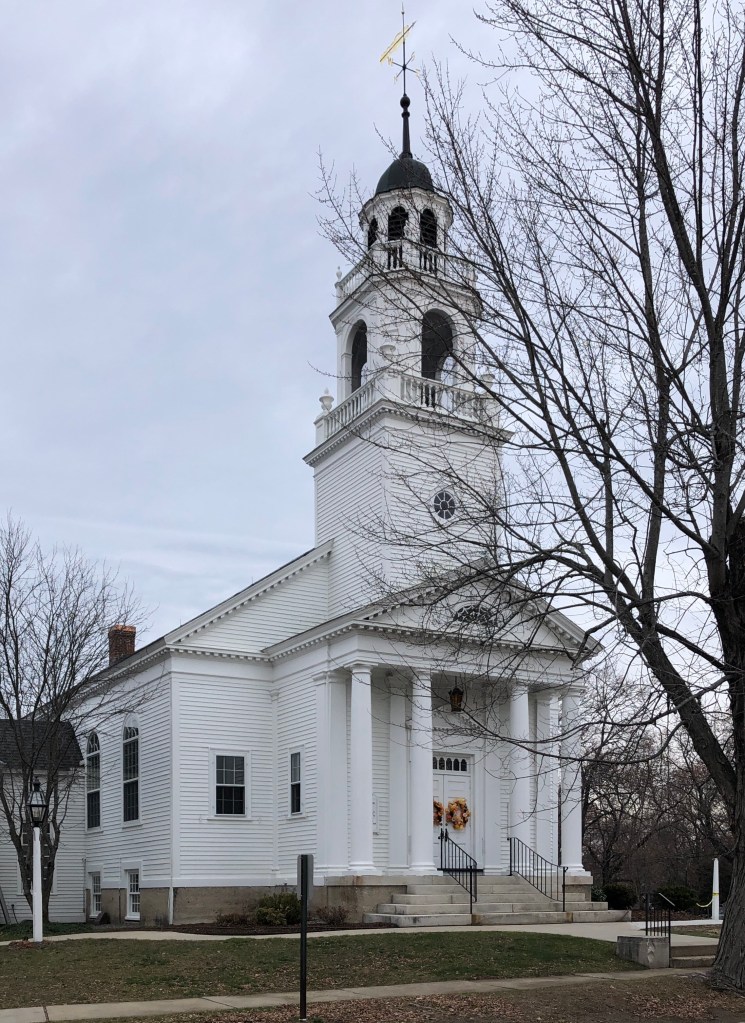
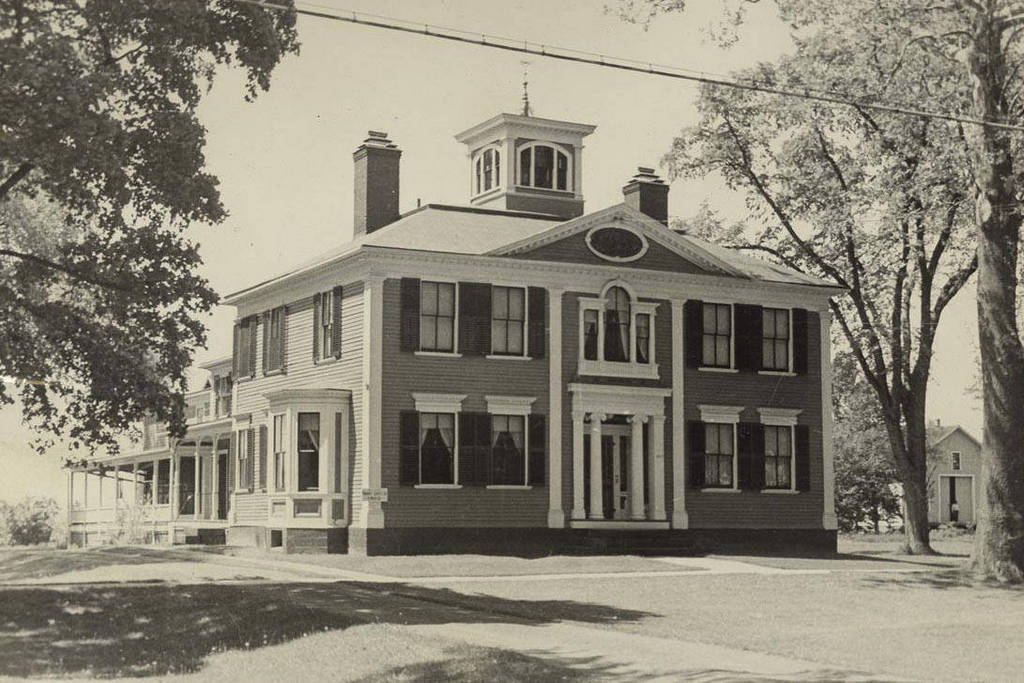
Tewksbury Congregational Church // 1922

Located across the Town Green from the Tewksbury Town Hall (1920), this Colonial Revival style church with Classical elements, perfectly compliments the design motif seen here. The Tewksbury Congregational Church was established in 1734 by some 34 resident families who, after leaving the church in Billerica, established the new town of Tewksbury. Their first church was erected in 1736, and was replaced in 1824. The second church edifice (and much of the town center) suffered a catastrophic fire in 1918, destroying both structures, and resulting in a rebuilding campaign. Architect Curtis W. Bixby of Watertown, furnished designs for the church, which stands boldly beyond a large front lawn.
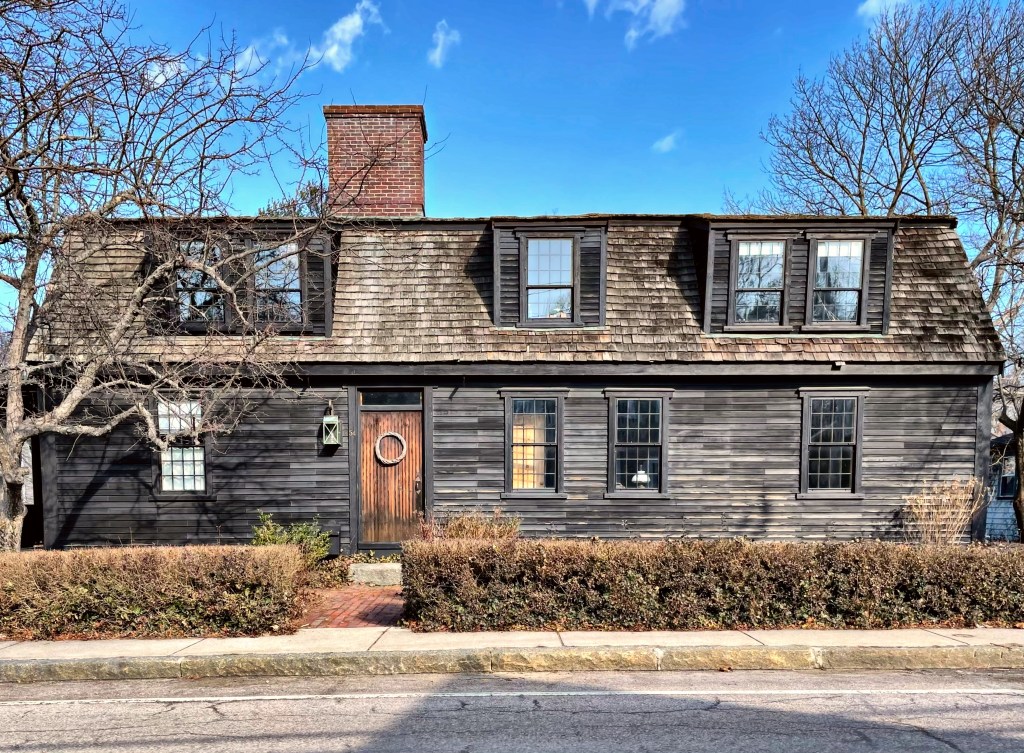
Tirrell-Cobb House // c.1750

One of the most stunning Georgian cape homes I have seen is this charming house in Hull, Massachusetts. Built in the mid-18th century, this house was acquired by Gideon Tirrell after the Revolutionary War. Gideon married Mary Loring, a descendant of John Loring, who built the home in my last post. The family appears to have occupied the home until the Cobb family acquired the house in about 1860, when Capt. Joseph Cobb and his wife, Eliza Turner settled here. He was the third “Keeper of the Lifeboat” from 1858-1876. In his role, he rowed out to sinking ships in the Boston Harbor and attempted to save any sailors still alive, often saving dozens of lives. The home was restored in the 1980s and remains one of the best-preserved in the town!

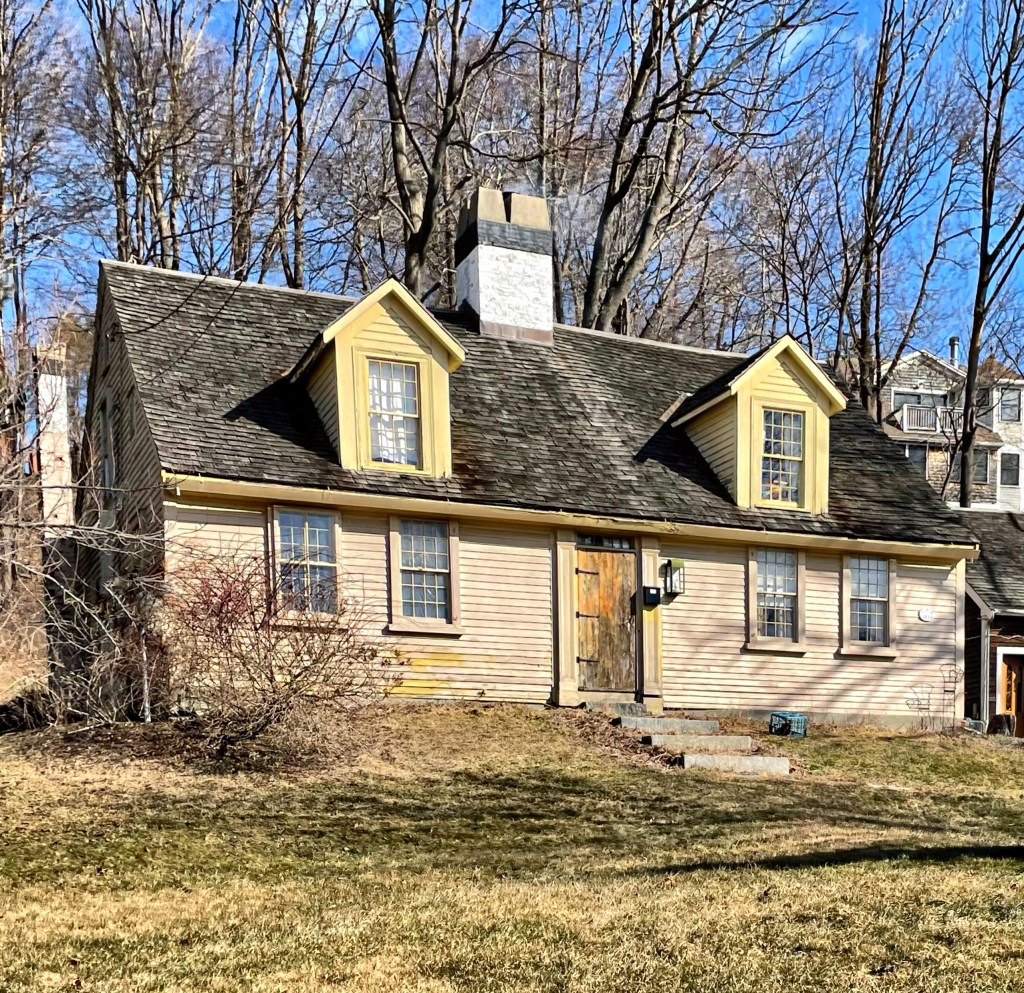
Loring House // c.1658

Likely the oldest home in the town of Hull, the Loring House has ties to the significant Loring Family, who’s descendants include individuals on both sides of the American Revolution, the US Civil War, and today live across North America, Spain, England and Australia. This house was built on land purchased by Thomas Loring (1600-1661) who came to Hingham in 1634 from England. He built a larger estate in town until a fire destroyed all his belongings, and he chose not to rebuild, but acquired property in the adjoining plantation of Hull. In Hull, he served as constable (court officer and tax collector), and raised his family there. His eldest son, John, married in 1657 and likely had this home built on his father’s vast land holdings within the year. John worked as a house-wright and likely built the home himself. He had two wives (his first wife Mary died at 39), and 15 children at the home, though some likely did not live past infancy as was common in early colonial days. John died in 1714, but left a lasting legacy in New England and beyond. Notably, his grandson was Joshua Loring, a British Loyalist who built the famous Loring-Greenough House in Boston. The old Loring House in Hull is very-well maintained inside and out and serves as a time-capsule of days past.

Hollis Congregational Church // 1925

The present Congregational Church in Hollis, NH is the fourth to be located on this site and was constructed in 1925, replacing an earlier 1804 building destroyed by fire in 1923.  The church is oriented with its porticoed facade facing Monument Square and perfectly blends in with the Colonial era homes and buildings around the green to retain the integrity of one of the best town centers in Southern NH. The present church building was designed by Boston architect Oscar Thayer.

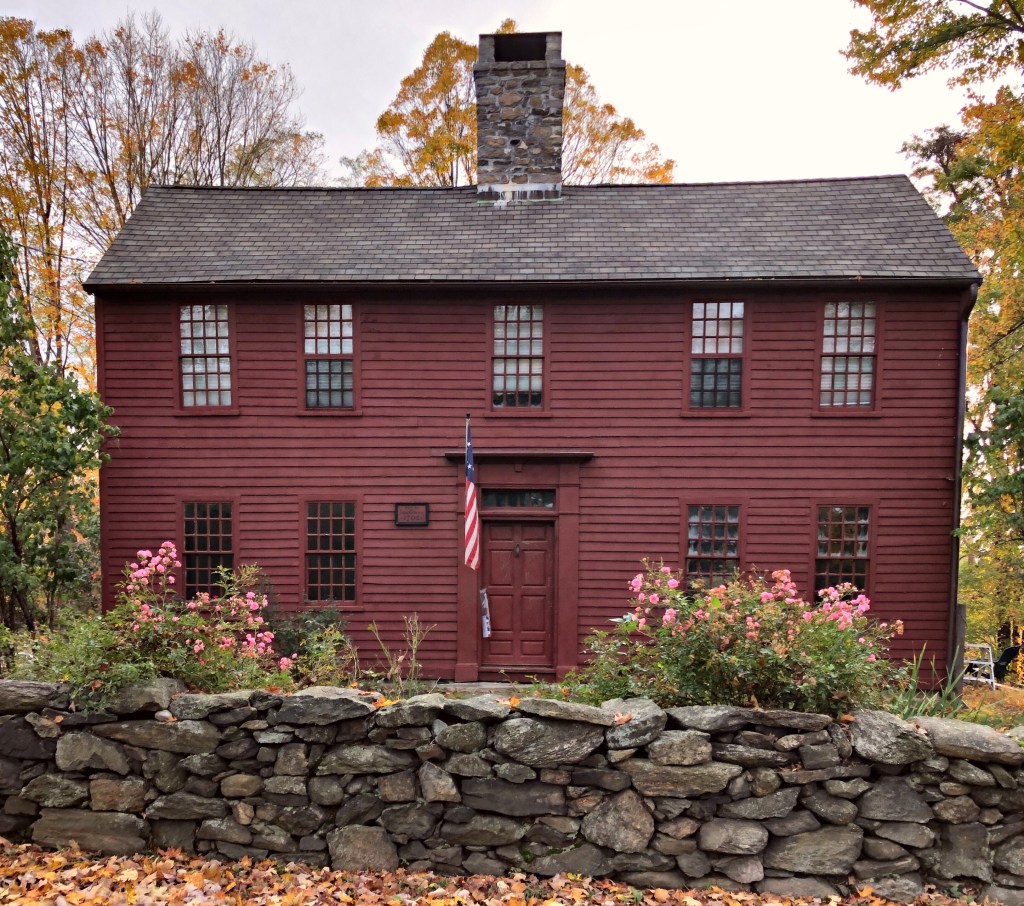
Osborn House // 1772

This homestead in Fairfield, Connecticut is situated on the edge of what was formerly called Pequot Swamp, and was originally built by Stephen Osborn in 1772. It is said to be the third Colonial dwelling erected in this part of the town and was left undisturbed by the British when they burned Fairfield in 1779 and raided various sections of the country along the shore. The home was originally located a few blocks away, but was moved in the 1950s when the highway (I-95) was routed through this part of Fairfield. The saltbox Georgian home was documented prior to the move by the Historic American Buildings Survey (HABS).

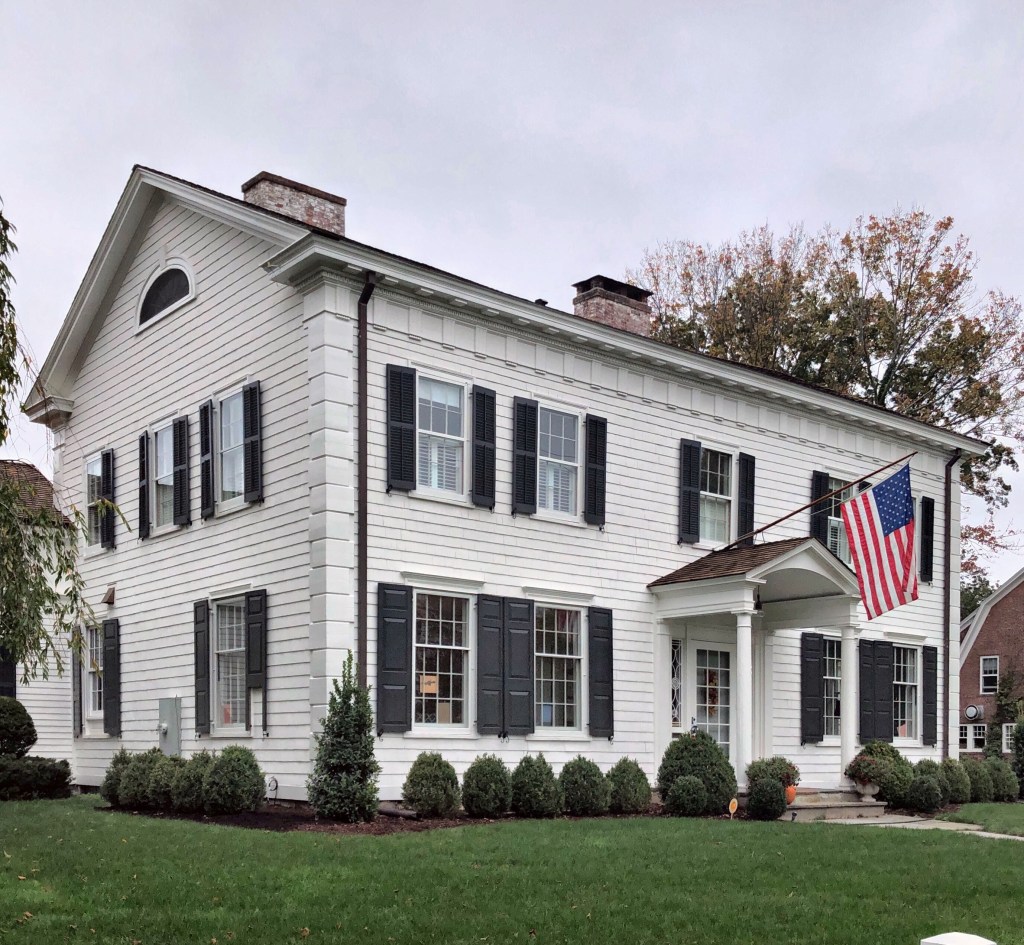
DeForest House // c.1800

At the beginning of the 19th century, Fairfield, Connecticut was slowly recovering from its destruction by the British at the end of the Revolution. By around 1800, a member of the DeForest family appears to have built this home, across from the Town Common, overlooking the recently completed Fairfield County Courthouse. Before the American Civil War, the home was significantly altered, with a central pavilion, new round arch windows, and a full-length front porch, showcasing early Victorian-era desire for detail. The house changed hands several times over the next century, at one point becoming a boy’s school from 1891 to about 1909. In 1930, the house was renovated by architect Walter Bradnee Kirby, who restored the home back to its Colonial past, showing how the pendulum of architectural tastes can change back-and-forth with every passing generation.

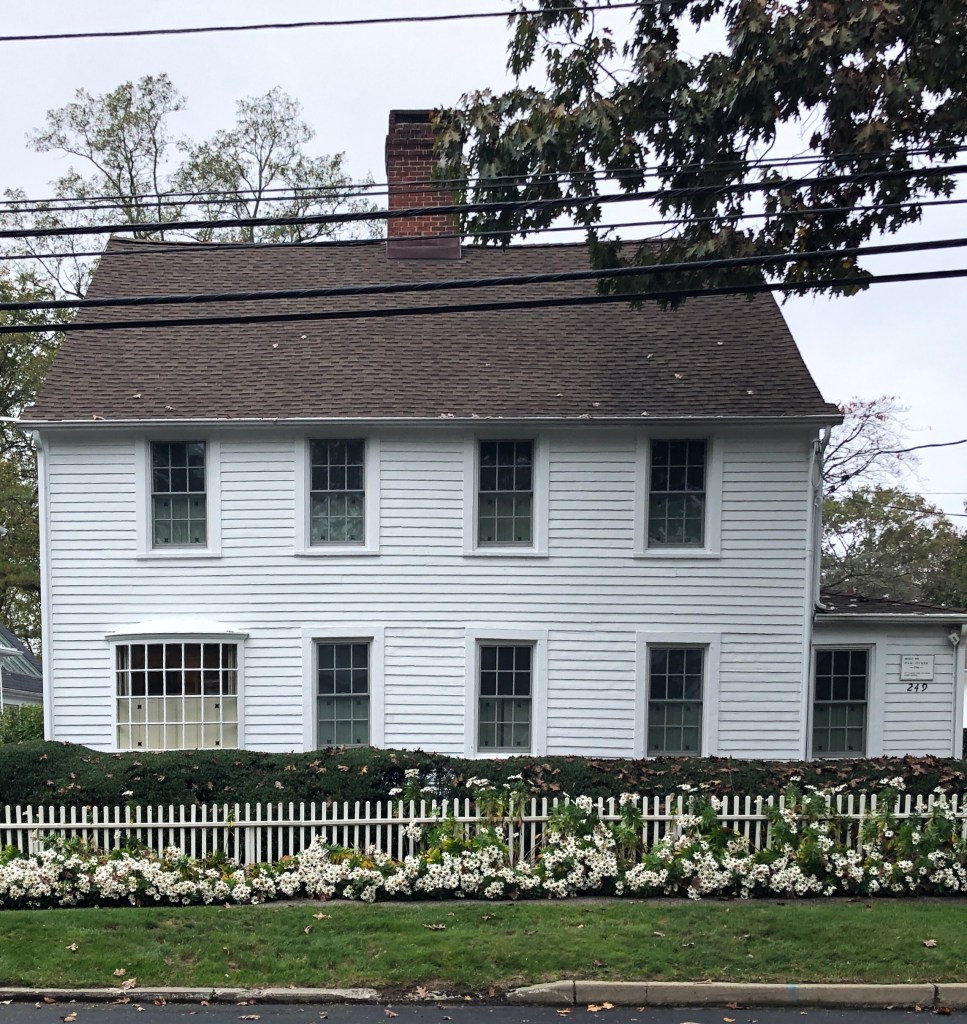
Captain John Maltbie House // 1766

On July 7-8, 1779, the Red Coats marched through Fairfield torching houses to punish the locals for seeking independence. They killed locals, destroying anything they could find on their way out, setting fires to homes and civic buildings around the Green. This home was built by Isaac Tucker, later sold to Jonathan Maltbie, sea captain involved with East Indies trade. He later would fight against the British during the Revolution, and after the war, was hired as captain on one of the first cutter ships built, the Argus. During the British invasion of Fairfield, they attempted to set fire to this home three times, but it seemed to never go up in flames when they returned. The tradition holds that an elderly servant, hiding upstairs, put out the flames and saved the house from destruction, after the British Troops torched it. Burn marks apparently remain inside to this day. Since the home was built, the front door facing the street was relocated to the side, and a large multi-pane bay window was installed in its place.

Thaddeus Leavitt Jr. House // 1800

One of the (many) grand homes on Main Street in Suffield is this Federal style home built in 1800 for a 21-year-old Thaddeus Leavitt. Like his father, Thaddeus was a merchant with a store in Suffield, and was known by the title Colonel, meaning he probably served in the local militia after the Revolutionary War. Immediately after the home was completed, Thaddeus got married and moved into the home with his new wife, Jemima Loomis. They lived happily in their mansion until Thaddeus’ death in 1828 and his wife’s death in 1846. The home was altered in the 1850s with Italianate features including a belvedere and bay windows, which lasted into the 20th century. The home was recently restored back close to original conditions with the removal of the belvedere at the roof.