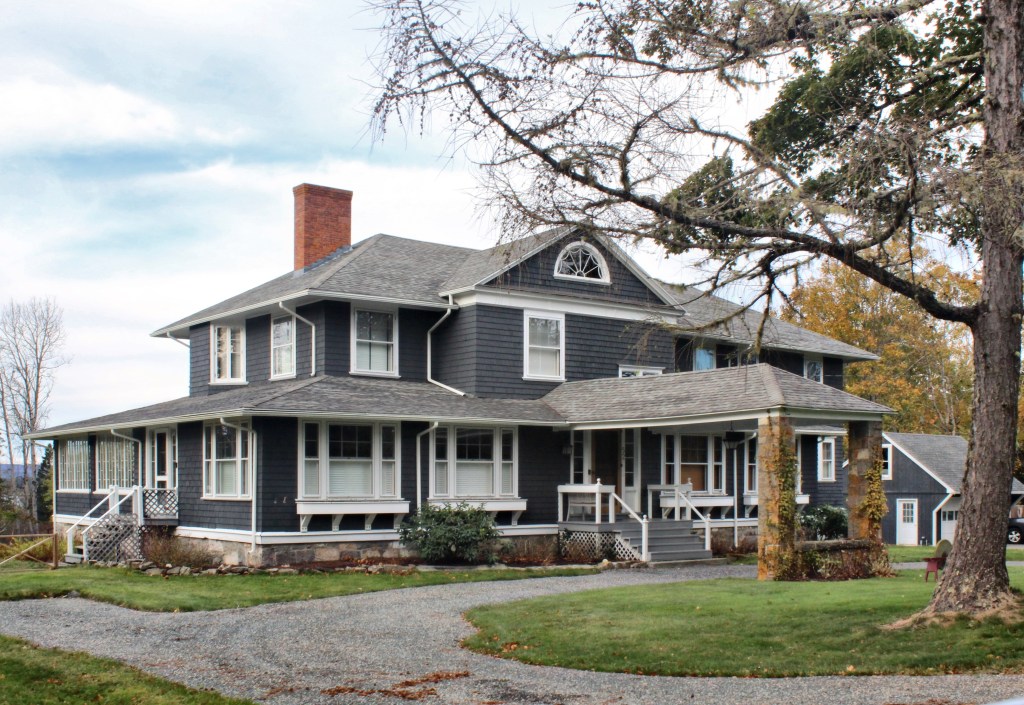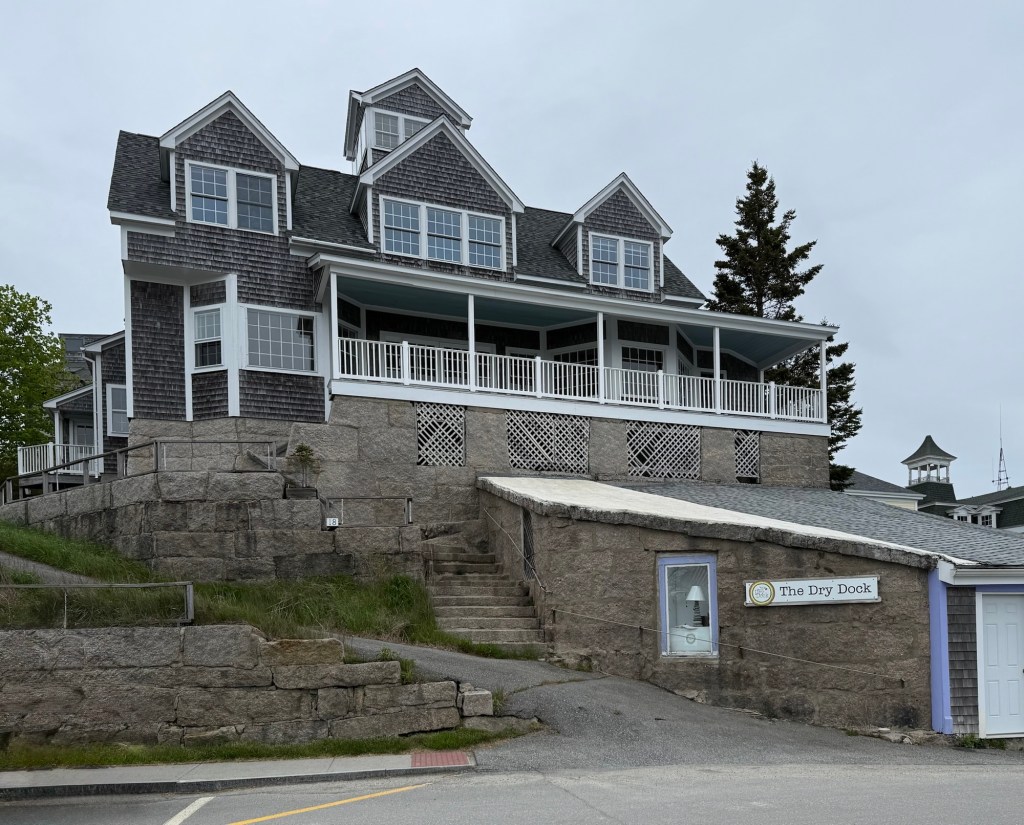
Dr. Benjamin L. Noyes House and Vault // 1903

Benjamin Lake Noyes (1870-1945) was born in Lisbon Falls, Maine, but grew up on Grand Manan, New Brunswick, Canada. He worked at his father’s hardware store before entering Bowdoin Medical College. After graduating, he moved to Stonington, Maine, to work as a physician. Here, he met his wife, Linnie Howard, and they married in 1899. In 1903, the couple had a large Queen Anne style house built on a bluff, overlooking the Stonington Harbor. Dr. Noyes was a physician, surgeon, occultist, inventor, surveyor and antiquarian, who took interest in genealogy and local history in his spare time. By the time of his death Dr. Noyes had completed 100 volumes of material on island history and genealogies of its people. To house his massive collection, he constructed a fire-proof vault of local granite at the base of his home opened his record collection to the public known as the Penobscot Bay Archives. After his death in 1945, much of the collection was sent to the local historical society for preservation. A fire in 1981 destroyed much of the house except the first floor and the granite, fire-proof building, and the upper floors of the Noyes house were rebuilt.
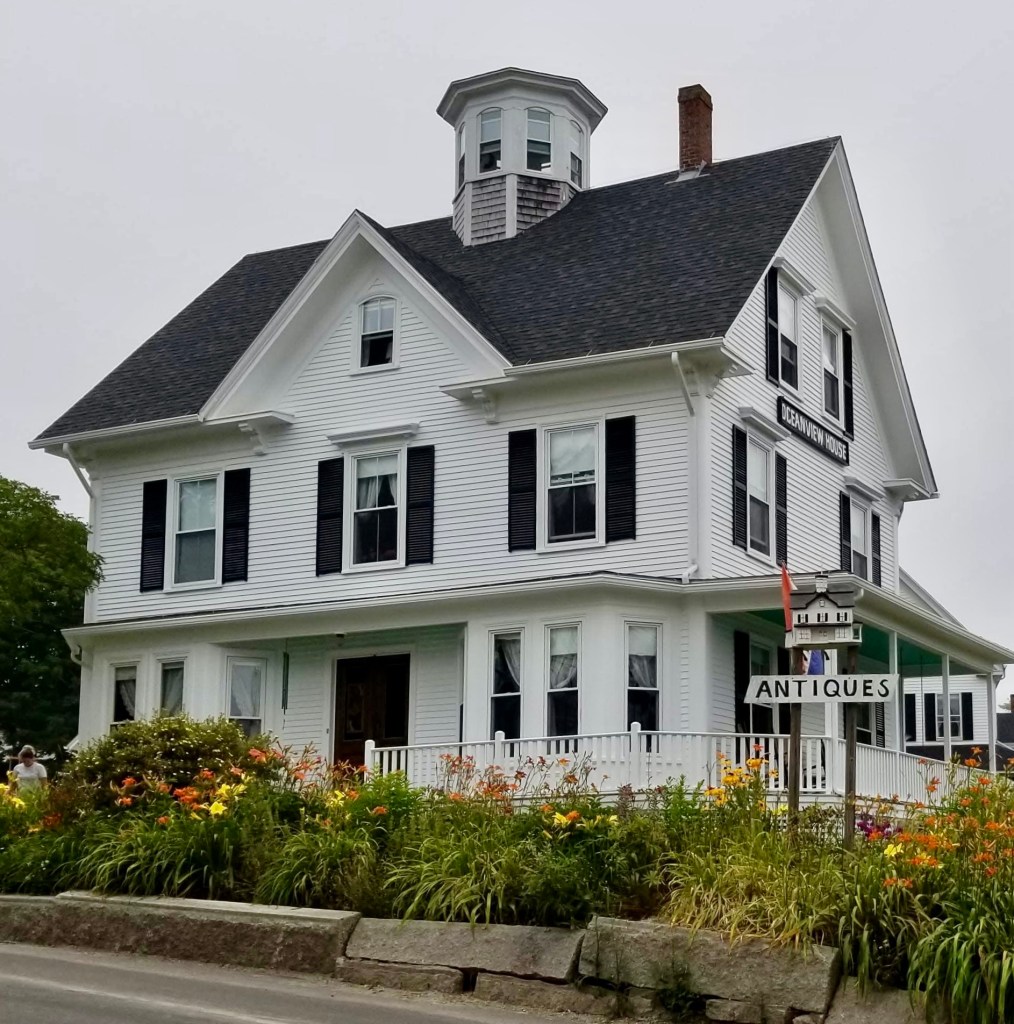
Oceanview House // 1883

At the tail-end of the 19th century, the active fishing town of Stonington, Maine, like many other coastal communities Down East, began to see growing seasonal tourism and summer residents escaping the woes of city life for the cool sea breezes. Although there were neighborhoods of summer cottages built and occupied in the 1890s on Deer Isle, no summer colonies formed in Stonington in the late 19th century, likely due to its industrial nature with fishermen and quarry-workers living in the village. There were however, visitors, and the 1883 Oceanview House was built to house “people from away” every summer. The Oceanview House property also included its own water tank and windmill along with a meeting room for local groups. The late Italianate style building has been lovingly maintained by later owners and most recently, housed an antique store!

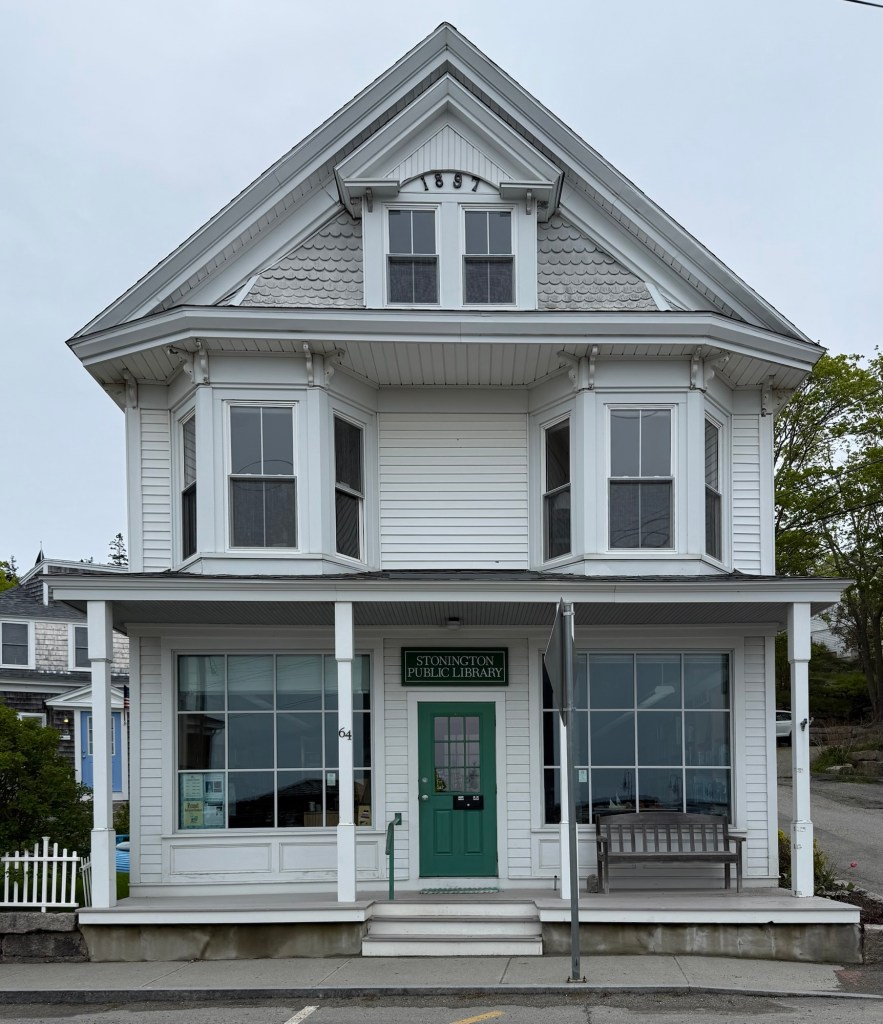
Thurlow Building – Stonington Public Library // 1897

This historic building on Main Street in the working harbor village of Stonington, Maine, was built in 1897 as a commercial block for Mr. Thurlow. John Leman Thurlow (1842-1928) was born on Deer Isle and was engaged in business in town. Mr. Thurlow had this commercial building constructed to house a local grocery store with residences above. Just before its completion, the Deer Isle Gazette wrote, “J. L. Thurlow’s new store is up and the side finish is being put on. It will be a fine commodious two story and a half building, an ornament to the place.” The building later was occupied as a millinery shop, a dress shop, and was purchased in 1959 by a newly established library association. The all-volunteer operation to establish a library in town began in 1955, and a collection of donated books was eventually housed in a rented space until this building was purchased as the home of the village library.

Rockefeller Hall // 1934

In the early 1930s, a U.S. Navy Radio Station at the Otter Cliffs on Mount Desert Island had become dilapidated and Navy funds were not forthcoming for repairs. When John D. Rockefeller Jr. suggested that it be removed, the Navy agreed to include the station in his donation to Acadia National Park, provided that he would build an equally good receiving station nearby. In the midst of the Great Depression, and short on funds, the government accepted the swap. Rockefeller set aside land at the tip of the Schoodic Peninsula, about five miles away across Frenchman Bay, at Winter Harbor. Rockefeller, wishing the station’s buildings to be compatible with others designed for the park, retained Grosvenor Atterbury, the New York architect who designed the park’s gatehouses, to come up with plans for the radio station. It opened in early 1935 and for several years served as an operation center and military housing. After the naval base was closed in 2002, the National Park Service acquired the land and established the Schoodic Education and Research Center (SERC). The SERC campus is managed by the nonprofit Schoodic Institute and the NPS in a public-private partnership as one of 19 NPS research learning centers in the country. They restored Rockefeller Hall (as it became known) in the early 2010s and the stunning architecture can really shine today. The building is a Welcome Center to the institute.

Park Cottage // 1892

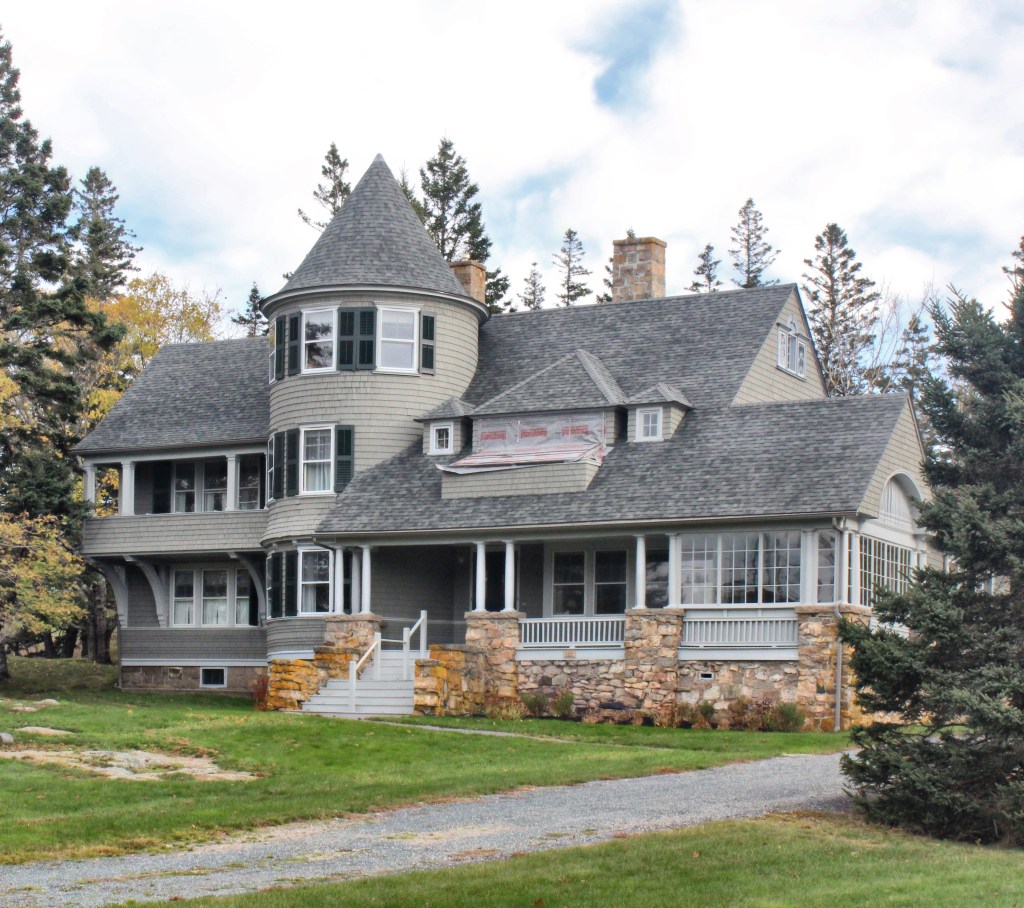
Queen Anne Victorian perfection! This is the Trotter Cottage on Grindstone Neck in Winter Harbor. The house was built in 1892 for one of the proprietors of the Gouldsboro Land Improvement Company, the group that developed the Grindstone Neck Summer Colony. Nathan Trotter (1852-1915) was a commission merchant from Philadelphia who made a name for himself there, eventually investing his money into real estate. He had Philadelphia-based architect Lindley Johnson, who also built other cottages on Grindstone Neck (including one for himself), to design this cottage for his family to visit for the summer seasons. The property became known as Park Cottage under later owner Eleanor Widener Dixon, she and her husband would summer here when not occupying their palatial Pennsylvania estate. Her father, George Dunton Widener and brother, Harry Elkins Widener both perished in 1912 aboard the Titanic. After the Titanic disaster, Eleanor’s mother presented to Harvard University the $2,000,000 Widener Memorial Library in memory of her son. Park Cottage is one of the finest cottages on Grindstone Neck.

Red Chalet // 1891

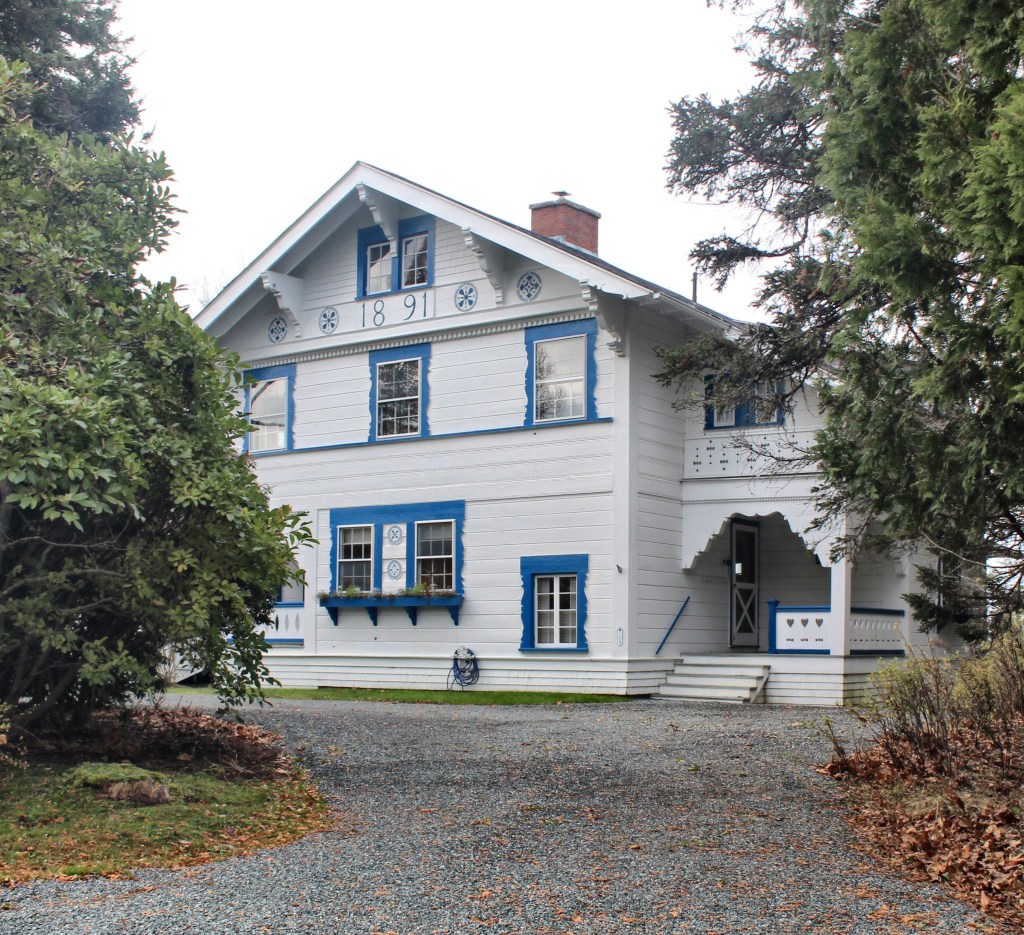
Philadelphia-based architect Lindley Johnson was hired as the official company architect by the Gouldsboro Land Improvement Company’s Grindstone Neck summer colony. As a result, he became the chief tastemaker for the bucolic neighborhood of summer cottages, chapels, and an inn (since demolished). Johnson would design a majority of the cottages in the Shingle style, taking cues from the natural topography and rugged coastlines, but he did deviate from that style a couple times; most notably for his own cottage, “Red Chalet”. While no longer red, the cottage stands out as an extremely rare example of a Swiss Chalet, with its sloping gable roof with wide eaves, exposed stickwork and oversized brackets, decorative carving, and shiplap siding.

Ridgway Cottage // c.1891

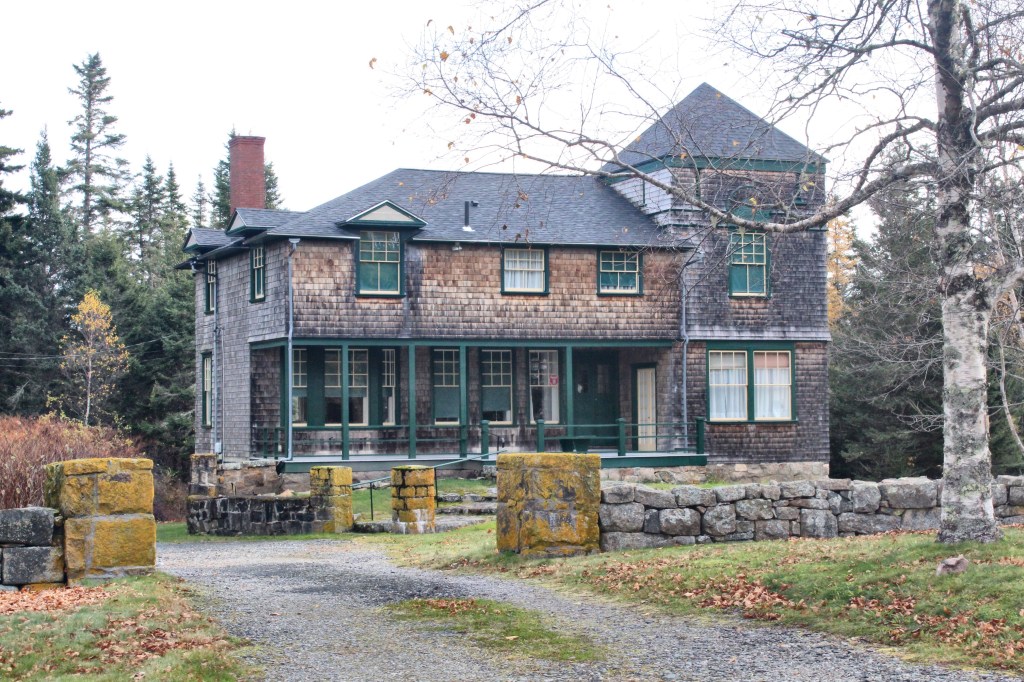
One of my (many) favorite cottages in the Grindstone Neck summer colony of Winter Harbor, Maine, is this pleasing shingled home, built in 1891 for John Jacob Ridgway. Ridgway lived in Philadelphia and worked as an attorney and president of a real estate investment company after sometime as serving as Philadelphia’s Sheriff. For his summer retirement home, he hired the colony’s staff architect, Lindley Johnson (a name I have been repeating on here a lot lately). The Shingle style cottage has a recessed porch, square corner tower with pyramidal roof, and dormers that project over the eaves. I love to see these old rustic cottages with weathered wood siding and deep green trim!

Angelo T. Freedley Cottage // 1892

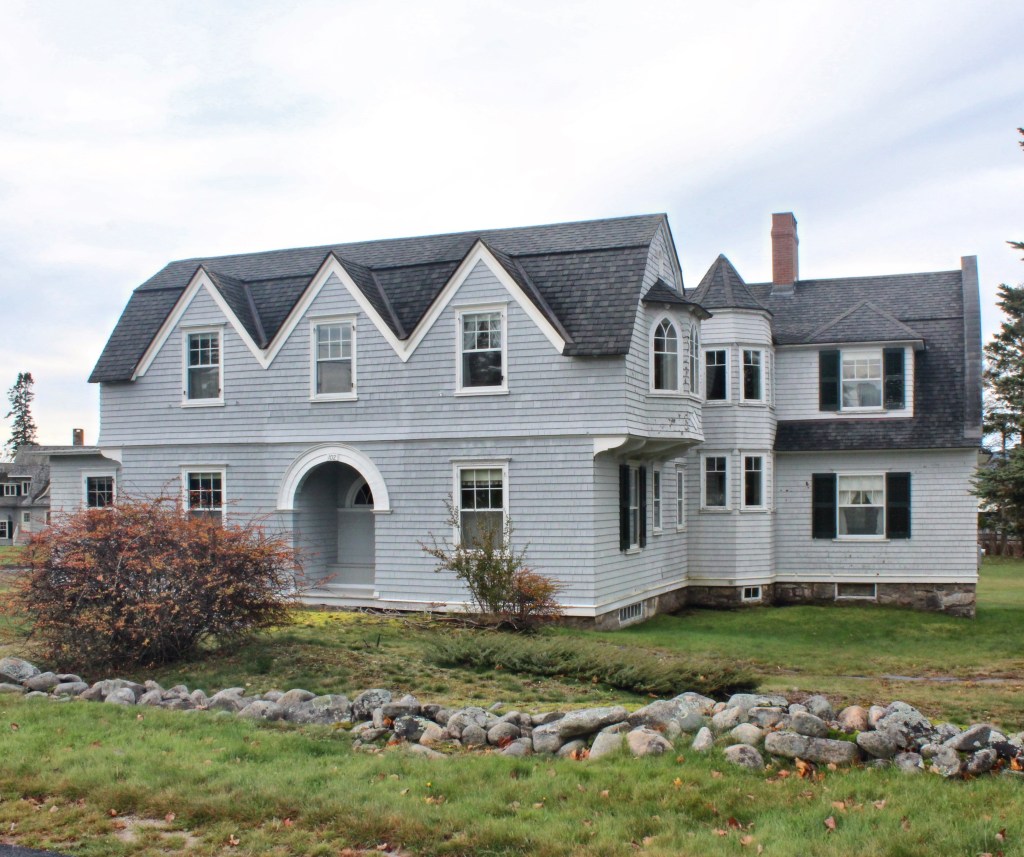
One of the more unique summer cottages on Grindstone Neck is this perfect home built around 1892 for Angelo Tillinghast Freedley. Angelo was one of many Philadelphians who built cottages here on Grindstone Neck, and worked as an attorney there. The house is an excellent example of the Shingle styles under a gross gambrel roof. Houses like this showcase how versatile architect Lindley Johnson was in his many designed cottages here in Maine. The house’s entrance is tucked away on the side of recessed arched opening, how perfect!

J. Bonsall Taylor Cottage // c.1892

John Bonsall Taylor (1854-1929), a Philadelphia patent lawyer and Director of the Gouldsboro Land Improvement Company, charged with developing Grindstone Neck in Maine, built this rustic cottage around 1892 for his family. He hired Lindley Johnson, a Philadelphia-based architect who furnished plans for many other buildings in the summer colony. Johnson trained under renowned architect Frank Furness before opening his own office. The rustic Craftsman house even has a “widows walk” which provides views to Bar Harbor across Frenchman Bay.

Thompson Cottage // c.1892

Who doesn’t love a good porte-cochere? In case you don’t know what they are, a porte-cochere is a covered porch-like structure at an entrance to a building where either a horse and carriage (historically) or car (today) can pass under to provide arriving and departing occupants protection from the elements. They are normally found on larger residences and institutional building where the wealthy frequent. The Thompson Cottage on Grindstone Neck in Winter Harbor was built around 1892 for James B. Thompson from Philadelphia. The original cottage was largely updated after Thompson’s death in 1915, the property was owned by Annie Cannell Trotter, who summered at another house in the colony with her husband Nathan Trotter, until his death.