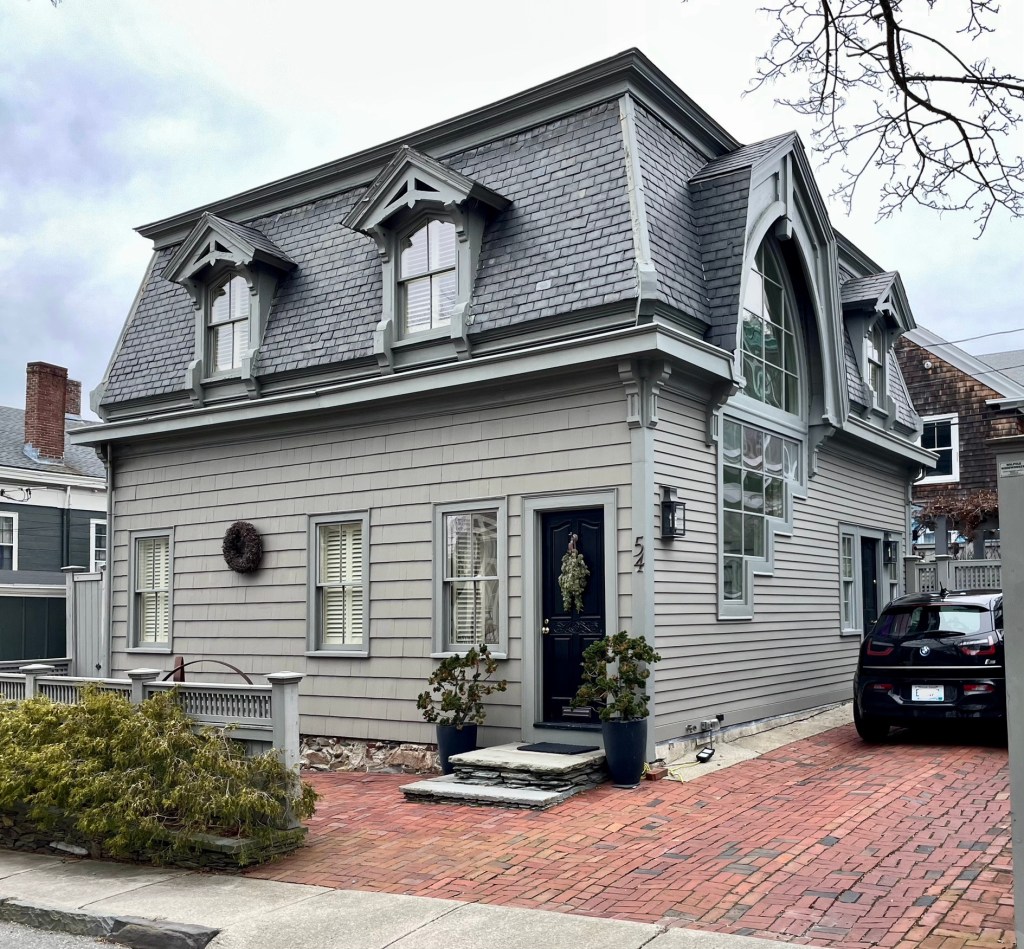
Langley-Dudley Cottage // c.1870

This charming mansard-roofed cottage can be found at 54 Prospect Hill Street in Newport, Rhode Island. While presently a residence, the cottage was originally built around 1870 as a stable or carriage house for the former Bowen-Newton-Tobin House at 204 Spring Street. After the Bowen heirs sold the property, this structure was owned by Mr. John S. Langley, an furniture dealer (who also made coffins and caskets) with the firm Langley & Bennett. The building may have been used for the storage of horses or as a workshop until it was purchased by Mary B. and Dudley Newton, a prominent local architect. They appear to have converted the former stable into a cottage, and rented the property out for additional income. In the renovation, Dudley Newton preserved much of the original detailing above the cornice, and altered openings to provide windows and doors convert the formerly utilitarian structure into a cottage.

Bethshan Cottage // 1884

Bethshan Cottage is one of Newport’s (many) “hidden” gems that gets far too little attention from publications! Located on Gibbs Avenue, down the block from Eveherdee and William Barton Rogers‘ summer cottage, “Morningside”, Bethshan was built in 1884 on land purchased by Major Theodore Kane Gibbs. Theodore was the son of William C. Gibbs, the 10th Governor of Rhode Island, and served in the Union Army during the American Civil War, mustering out as a Major in 1870. Newport-based architect Dudley Newton designed this cottage for Gibbs, which blends nearly every major architectural style of the late 19th century under one, beautiful gambrel roof. The red granite stone walls, red brick trim, red fish-scale slate roof, even the rust-colored mortar, all work together to create a lovely composition, unlike anything else seen in Newport. According to Newport’s Assessor, the house is presently an apartment house.

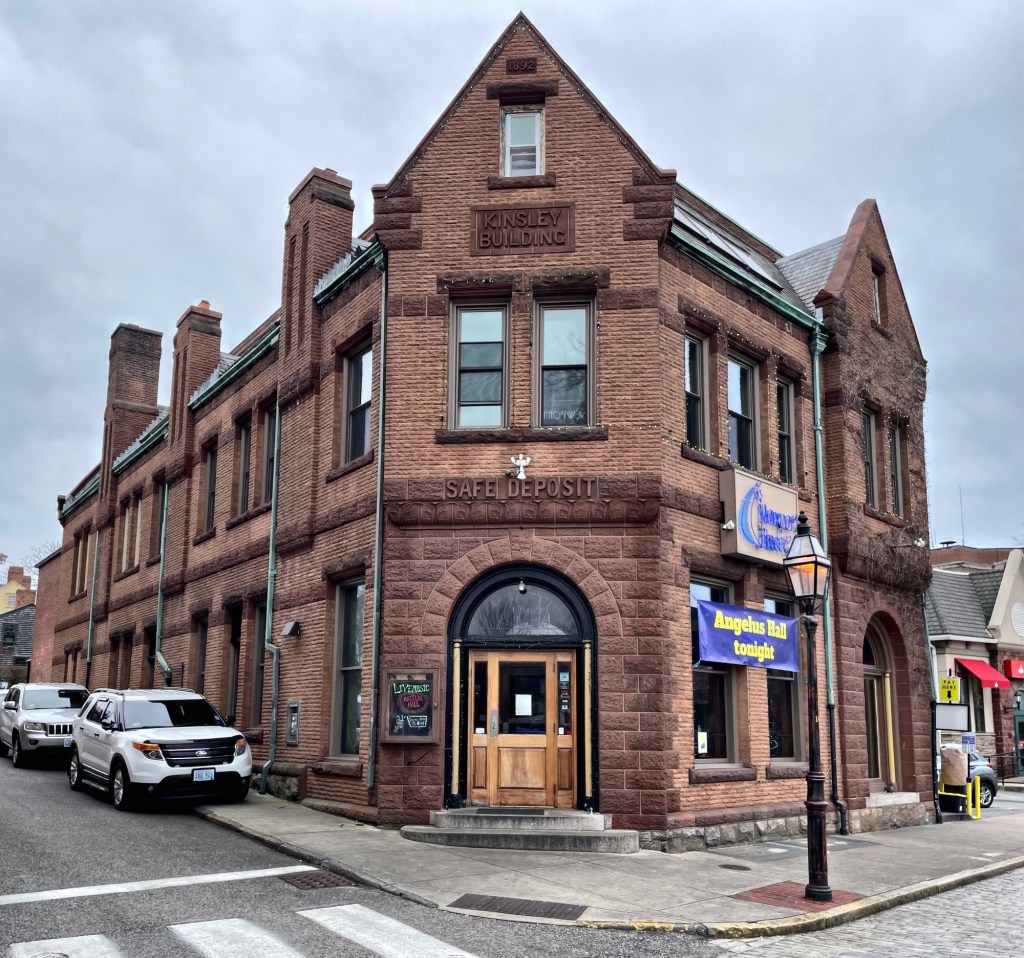
Kinsley Building // 1892

Established in May of 1854, the Aquidneck Bank begun with a capital of $100,000 with Rufus B. Kinsley as its president. The bank became the Aquidneck National Bank in 1865 and continued growing after the Civil War. The directors of the bank eventually left their former building (across Green Street) and moved into this building at Thames and Green Streets, which was built from 1892 to 1893 by local architect Dudley Newton. They named it after the banks founder, Rufus KinsThe Romanesque Revival style block is oriented to the corner and is built of brick and brownstone trim. Arched entrances are a nice Romanesque touch.

Bowen-Newton-Tobin House // c.1825

Who would have ever imagined that the Federal and Second Empire architectural styles could work so well together?! This is the Bowen-Tobin House on Spring Street in Newport, Rhode Island. The house was originally built around 1825 by Stephen Bowen as a typical two-story Federal style house with five-bay facade and entry with pedimented fanlight above. The property and it remained in the Bowen Family until 1892, when it was sold by his heirs to Mary Bailey Newton, the wife of Dudley Newton, a prominent local architect who designed dozens of summer cottages for wealthy residents in Newport. Dudley Newton “modernized” this house, adding a towered mansard roof, bracketed cornice, new two-over-two windows, and a full-length front porch wrapping around the side. The couple later moved the house, which was formerly set back behind a front garden, to the side and at the sidewalk to lay out Green Place (originally Bowen Ct.) and house lots behind this home, removing the front porch in the process. The house was later sold to the Tobin Family.

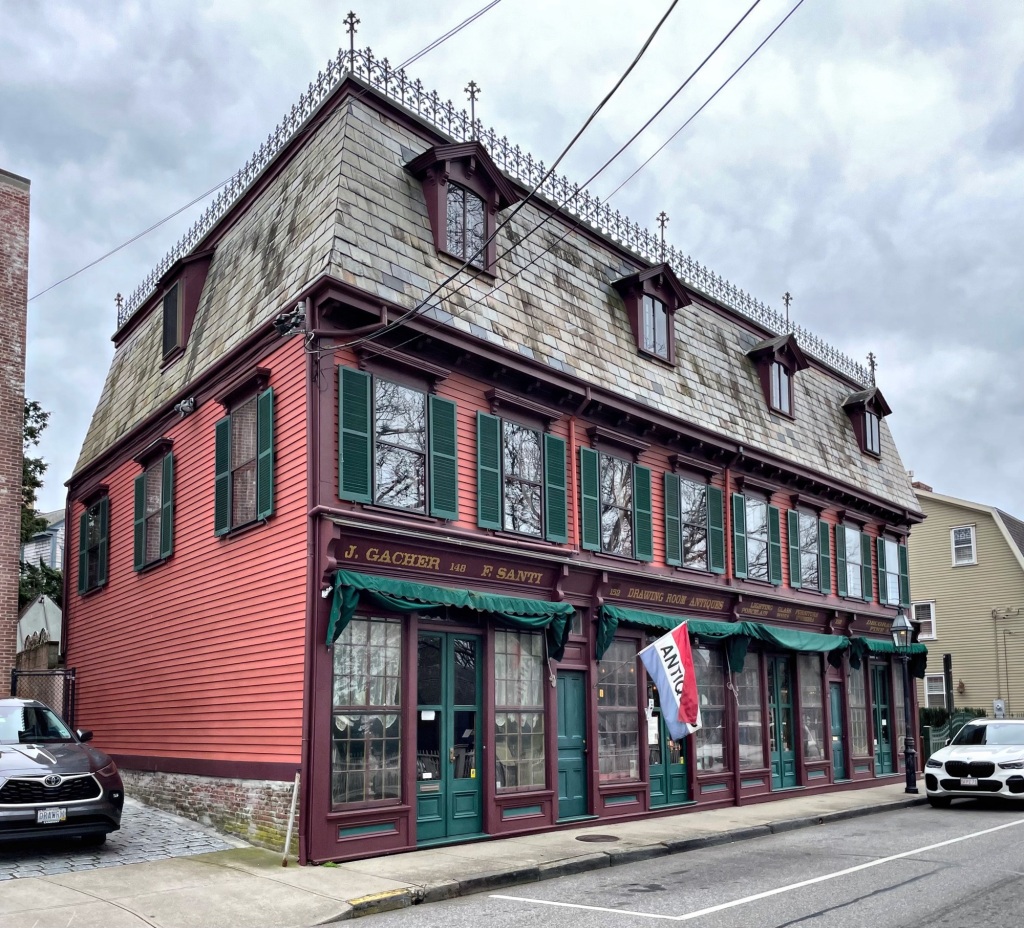
Theodore Helme Block // 1875

One of the finest commercial blocks in Newport is this building, the Theodore Helme Block, located on Spring Street, just behind Trinity Church. The block was built for Helme by 1875 and was possibly an early design by Dudley Newton, a local architect. The Second Empire style block has a slate roof with rare intact iron cresting and small dormers. The building was restored by Federico Santi & John Gacher, who operate The Drawing Room Antiques here.

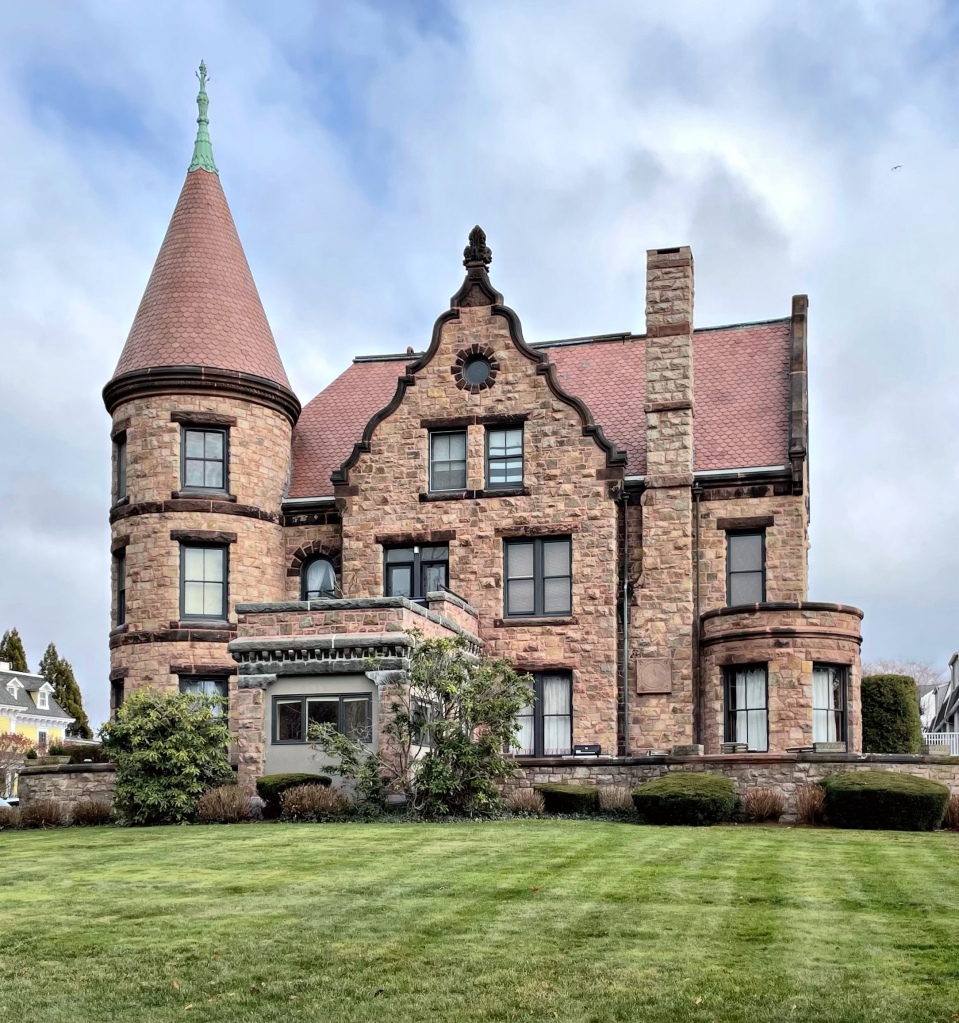
De La Salle // 1884

The Weld family has long been a prominent family in Boston, with ancestors dating back to the 17th century in New England. One of these men was William Fletcher Weld, a merchant, later making investments in railroads and real estate. By the time of his death in 1881, he had an estate of approximately $20 million, or more than half a billion in today’s dollars, and he left nearly all of it to his family. His eldest son, William Gordon Weld II, received a large inheritance and he began construction on this summer “residence”cottage” in Newport. The house was designed by local architect Dudley Newton, who had the estate built of locally-quarried granite. Architecturally, the dwelling is eclectic in style with Dutch Renaissance gables with conical roof forms seen typically in Queen Anne and Romanesque buildings. Weld spent his summers here for over a decade until his death in 1896. His widow Caroline, summered in the mansion until her death in 1918. By this point, Newport was beginning to fall out of favor as a wealthy resort community, and the many Gilded Age mansions were increasingly viewed as costly white elephants from a previous era. This property was sold by the Weld family in the early 1920s and became the De La Salle Academy, a Catholic school for boys, and remained in use until it closed in the early 1970s. After the school closed, the mansion was converted to condominiums and some townhomes were built on the expansive property.

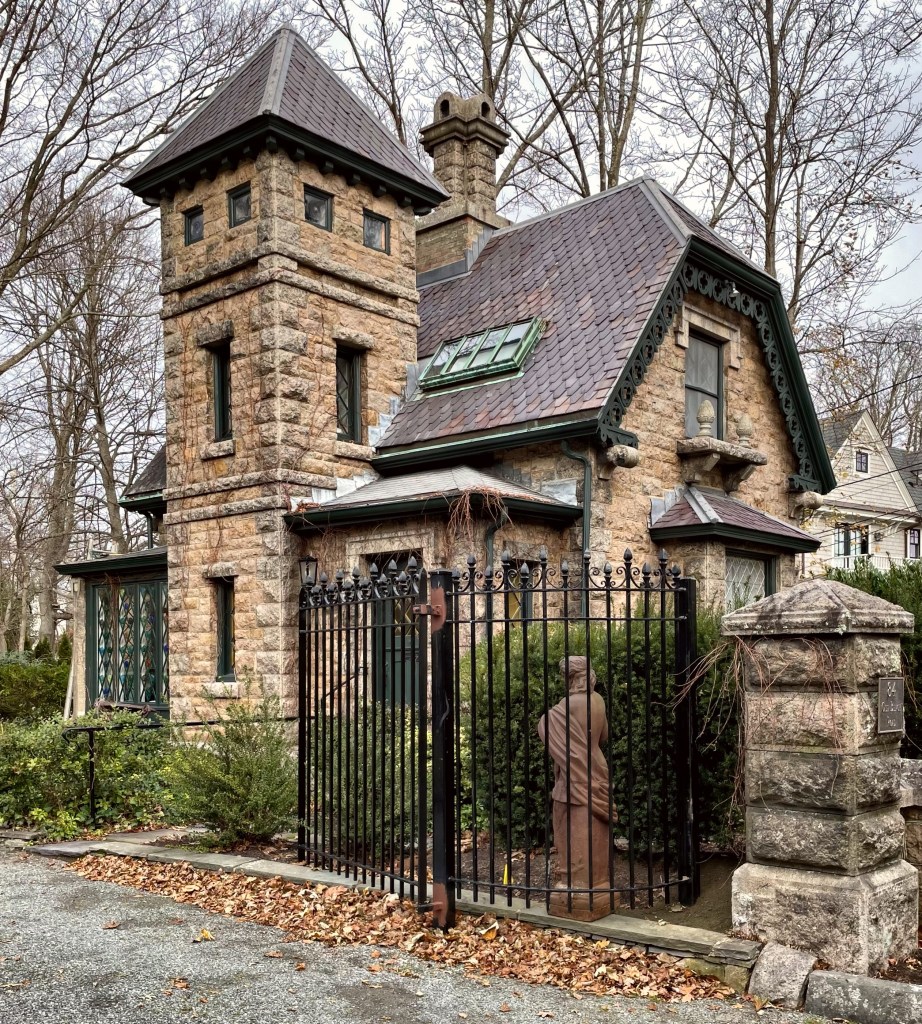
Belair Gate Lodge // 1870

Located at the historic entry to Belair (last post), one of the largest estates in Newport, you would be greeted by this charming stone building, the Belair Gate Lodge. The building is symmetrically massed, 1½-story and built of rough-face-granite-ashlar, similar to the main house. This building can be classified as French Eclectic in style and was designed by Newport architect Dudley Newton, who also designed the 1870 Second Empire renovations to the main house at the same time for owner George Henry Norman. When the Belair estate was subdivided, the gate lodge was sold off as a separate unit, and is now a single family home, aka my dream home. There is something so enchanting about gatehouses!

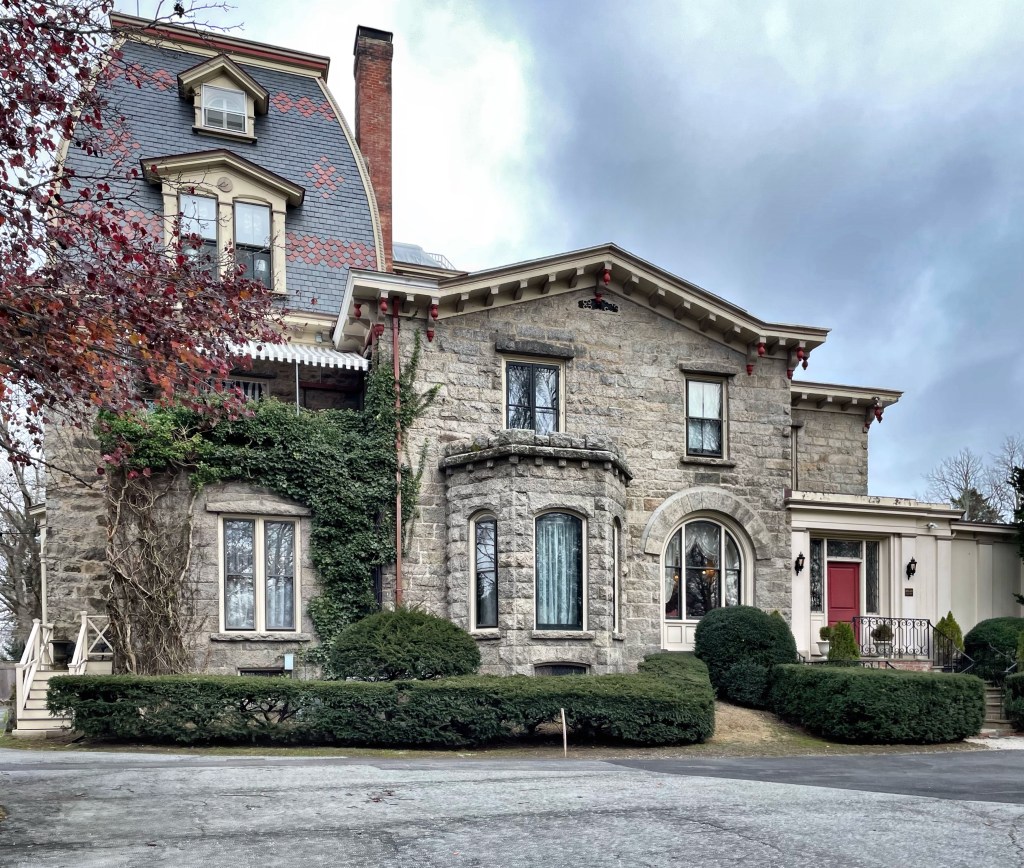
Belair Mansion // 1850

One of the most stunning summer “cottages” in Newport, Rhode Island is this stone behemoth named “Belair”. The house is set back way off the street and was one of the first summer estates built in this section of Newport. Belair was built in 1850 for New York oil baron H. Allen Wright in the Italianate style and constructed of roughly dressed stone and was originally about half of the size of the current footprint. The mansion was designed by architect Seth C. Bradford, who is also credited as architect of the similarly designed Chateau-sur-Mer, built one year later. Wright sold this house to George H. Norman two years after its completion. Norman (1827-1900), founded the Newport Daily News in 1848 and made his fortune as an engineer, first establishing gas works and later water works systems across New England, New York, and the Midwest. Norman made a fortune, and renovated and expanded his mansion in 1870 from plans by Newport architect Dudley Newton, with grand Second Empire additions, including the high convex-mansard corner tower. The original four acre Belair property has been extensively subdivided, and this house now occupies a lot of about an acre; with the original outbuildings sold off, and Belair is now 11 condominium units!

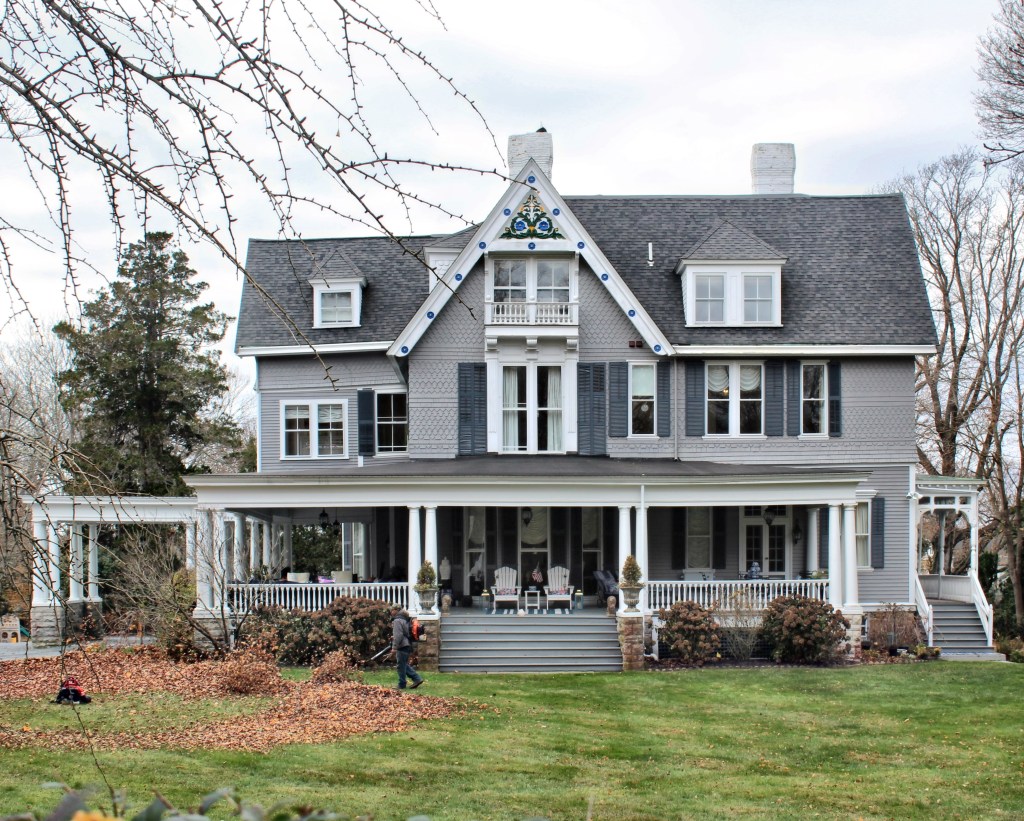
Sunnylea // 1881

One of the best Queen Anne style summer cottages in Newport is this gem, named Sunnylea. The house was built in 1881 for Charles F. Chickering, who ran the Chickering & Sons Piano Company in Boston. Chickering hired local architect Dudley Newton, who had previously apprenticed under George Champlin Mason, a builder of many Newport summer houses. Sunnylea was the first independent commission that Newton designed with his own firm. The house was later owned by Luther Kountze, a New York banker and his wife Annie. After WWII, the home was converted away from single-family use, and was occupied as a prep school, before being converted to condos late in the 20th century. It recently sold, and wow, the interior is just as beautiful as the exterior!