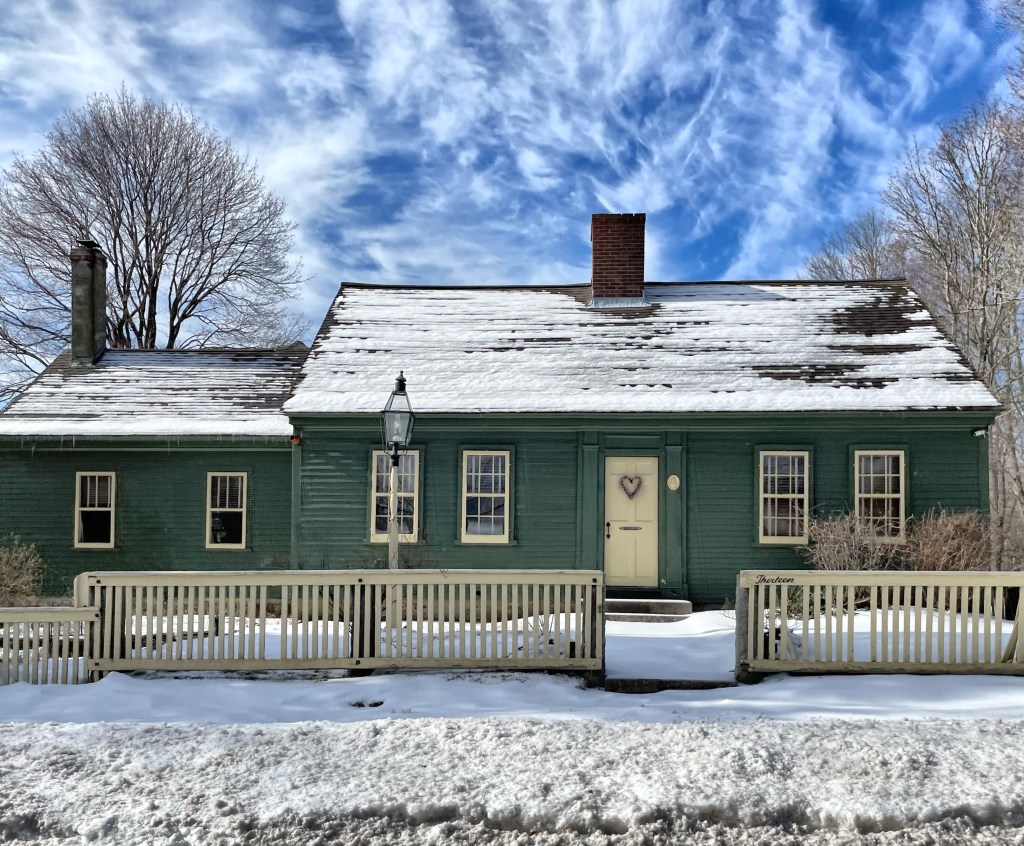
Philip Hathaway House // 1782

Philip Hathaway was born in 1740 in Freetown, Massachusetts, into one of the most prominent local families. He appears to have worked in the maritime trade like many men in his family before accepting positions as the clerk, treasurer, and assessor for the town. Upon the start of the American Revolution, Philip served as Lieutenant of the local militia, which disbanded in 1781. Within a year of mustering out, he built this stately home on Main Street in Assonet Village, just south of the Taunton River. The stately home with its symmetrical facade is special for the projecting windows. A gambrel roof store, which was constructed in the 1790s in town, was moved here and added onto this home as a rear ell and remains there to this day.

East Freetown Grange // 1916

The East Freetown Grange is a community organization founded in 1912, as a meeting place for the local chapter of The National Grange of the Order of Patrons of Husbandry. Granges have been the heart of rural American communities for generations. The home of local chapters of the Order of Patrons of Husbandry, Grange Halls are where farmers have traditionally gathered to learn new agricultural practices, develop strategic business partnerships, and barter for goods and services. Grange Halls also serve as a gathering place for community celebrations and annual agricultural fairs. These social halls can be found in agricultural towns and villages all over New England, and historically have been as important (or more) to farming communities as churches in those areas. Within years of the East Freetown forming an organization, they gathered enough funding to erect this Arts and Crafts style building, with rustic fieldstone piers, likely from stone pulled off farmland nearby. The hall is still used today for everything from agriculture fairs to Girl Scout meetings!

Nichols Homestead // c.1815

At the end of the War of 1812, Captain John Nichols settled in Assonet and appears to have had this Federal style house built soon after. The house remained in the family for at least two successive generations, seeing little exterior modifications during that time. After John’s death in 1848, the property was inherited by his second-born son, Thomas. Dr. Thomas Nichols left town as a young man and studied medicine at Jefferson Medical College in Philadelphia, and returned to Freetown to begin the practice of medicine in 1847, likely to assist his ailing father. In Freetown, Thomas was involved with the local church, politics, medicine, and worked for a local gun manufacturer. After Dr. Nichols died with paralysis, his son, Gilbert inherited the family home. The family home is a great example of the Federal style with a symmetrical facade, low hip roof, twin interior chimneys, and central doorway with sidelights and blind, elliptical fan above. The side porch was likely added in the early 20th century.

Briggs House // c.1790

The village of Assonet in Freetown, MA, has a great collection of late 18th and early 19th century homes built along the riverfront. This home is a great example of a late-Georgian cape house, built in the late 1700s or early 1800s. The home was constructed when Assonet was developing into a prominent, inland commercial fishing port. From this, a shipyard was constructed nearby, where shipbuilders constructed vessels along the river. By the 1850s, the house was owned by Charles Briggs, who worked in the village as a nailer (maker and seller of nails) and his wife Bathsheba. The cottage features a high pitched roof, boxed-eave cornice, and windows standing out from the plane of the house. They really don’t make them like they used to!

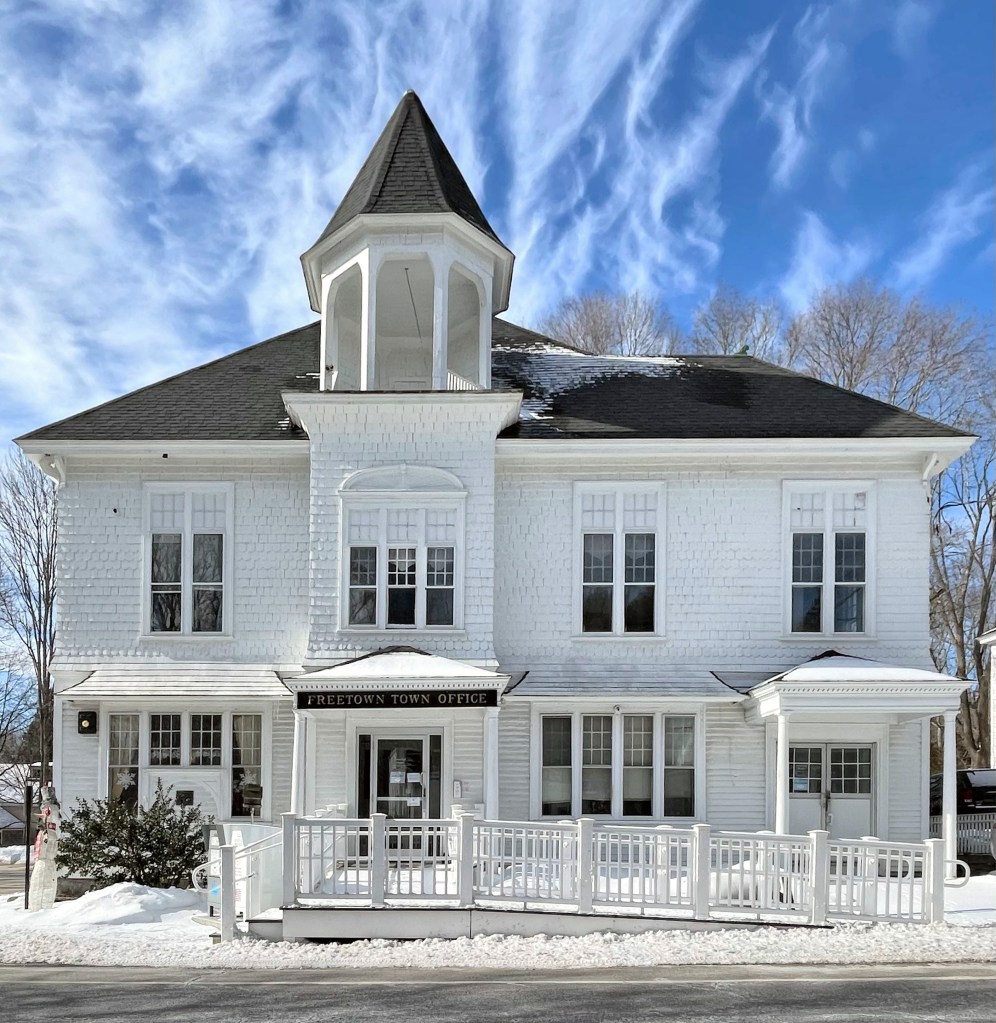
Freetown Town Hall // 1888

Welcome to Freetown, Massachusetts, a town I had not really heard about until recently (don’t come after me)! The land here was originally occupied by the Wampanoag Tribe, who lived off the earth well before colonization. In 1659, twenty-six Plymouth Bay settlers bought from the local native leaders the large tract of upland meadow thereafter called the Freeman’s Purchase, which includes much of Freetown and parts of adjacent towns. The land was divided into lots the following year, but settlement did not occur in earnest until the 1680s. Fall River used to once be a part of Freetown until it separated in the early 19th century, believe it or not! Freetown today is divided into two villages, which historically developed almost entirely independent from one another: Assonet and East Freetown. Assonet became the major “downtown” or populated area of the town and it is named after the River upon which is straddles. East Freetown was always more rural and today retains that charm. Due to Assonet’s location, a new town hall building was proposed in the last decades of the 19th century there. This structure was built and designed in 1888 by Charles C. Marble from Fall River, who combined the Queen Anne style with elements of the Colonial Revival style. The building contained the town offices as well as the fire station. Its wide double doors originally opened onto North Main Street have been replaced with windows, with flared eaves.