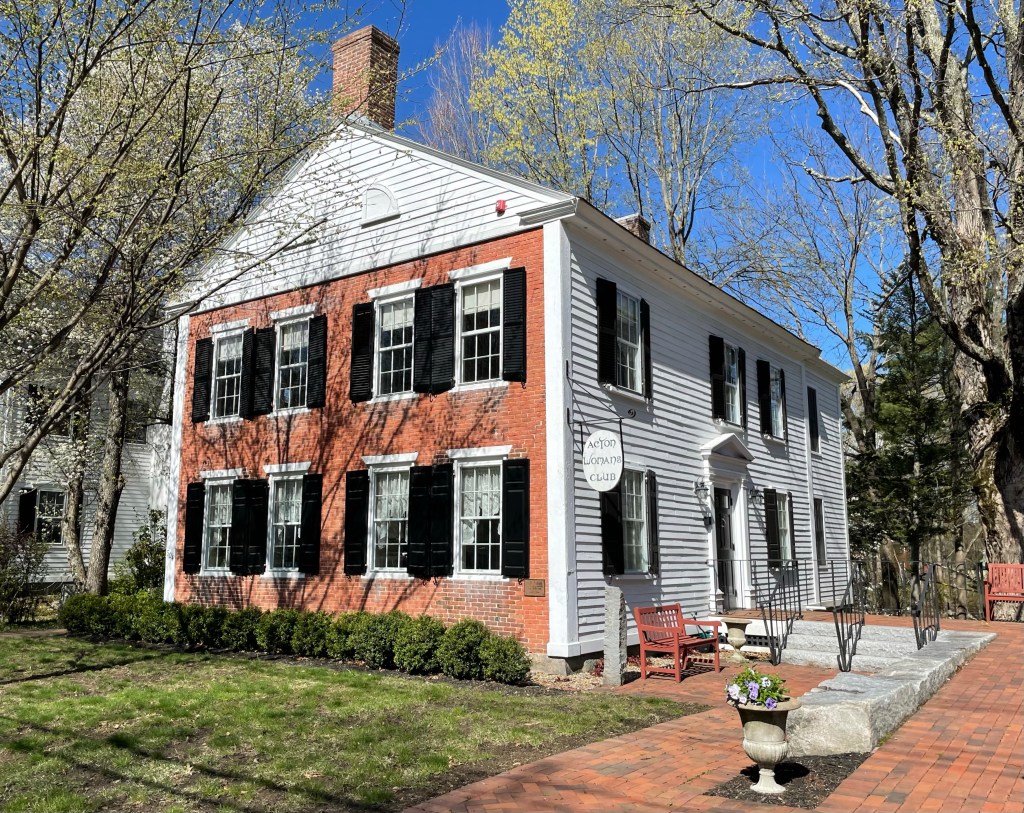
In 1912, a group of under twenty young mothers of Acton, Massachusetts, formed a club to provide a space to discuss issues ranging from child-rearing to larger topics like prohibition and women’s right to vote. The women began meeting at their homes before it was determined that they would need a permanent home. In 1915, the Acton Women’s Club acquired the old Dr. Cowdrey House (last post) next door occupying it and the attached barn. The 1829 Chapel for the Evangelical Society in Acton was part of the property and deteriorating. The Acton Women’s Club decided to sell the historic Cowdrey Home and use those funds to restore and occupy the old brick-end chapel. In 1940, the Club ceremoniously held a Mortgage Burning Party, having proudly paid off its debt. Today, the Acton Woman’s Club is the oldest and last standing brick- ended Federal structure in town.
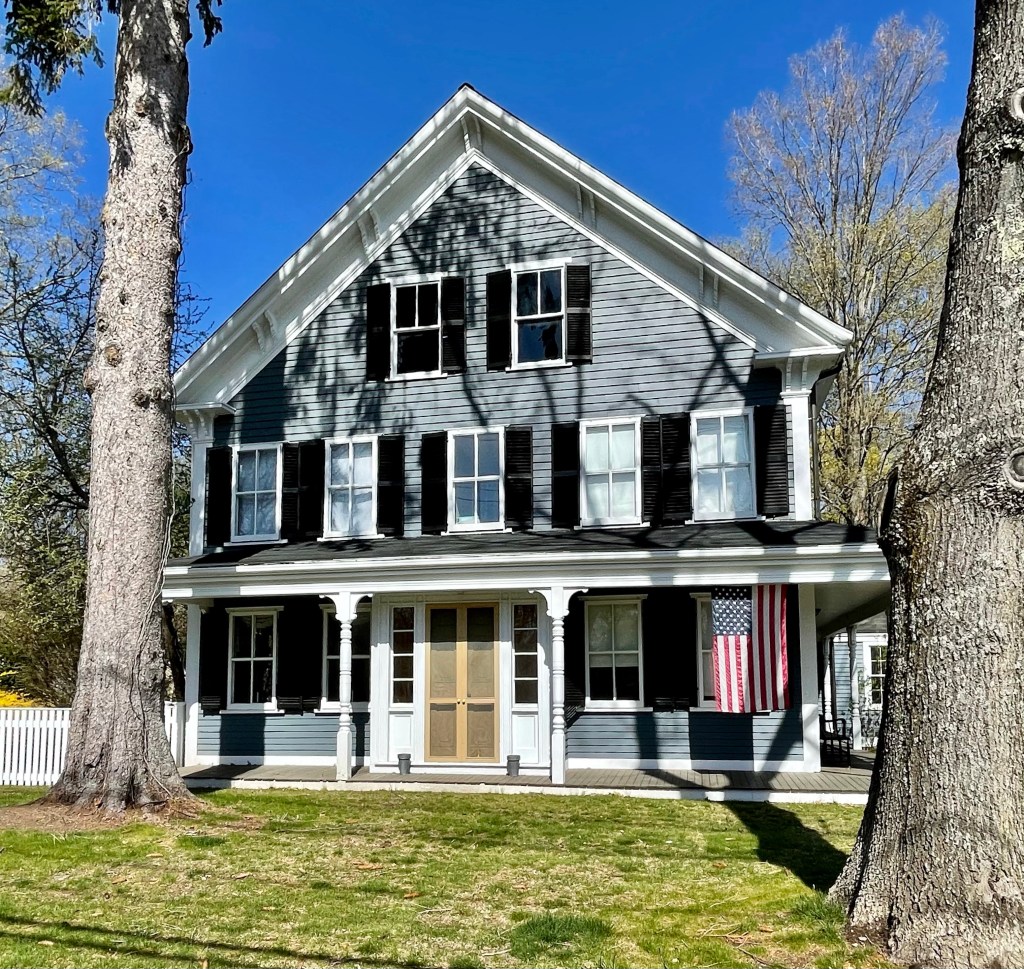
Located in Acton Center, the Dr. Harris Cowdrey House represents the emergence of Acton, Massachusetts from a sleepy rural town to a wealthy suburban town. This home was built in 1830 by Dr. Harris Cowdrey (1802-1875) as a 1 1/2-story gable end Greek Revival home. It was evidently enlarged to its present size decades later, possibly around the time Dr. Cowdrey and his wife Abigail growing their family. The Cowdreys had two children , Arthur who became a physician, after serving in the Civil War as a surgeon, and a daughter Helen who married a doctor herself, Dr. Charles Little also of Acton. After Dr. Harris Cowdrey died in 1875, Helen Cowdrey Little (who’s husband died young at just 32 years old) remained in Acton living with her mother in this house until 1886 when both women died. The home was later occupied by the Acton Women’s Club, who ran a crafts school for children out of the barn. The house showcases the original Greek Revival form, but features mostly Italianate detailing from the brackets, to the wrap-around front porch supported by turned posts.
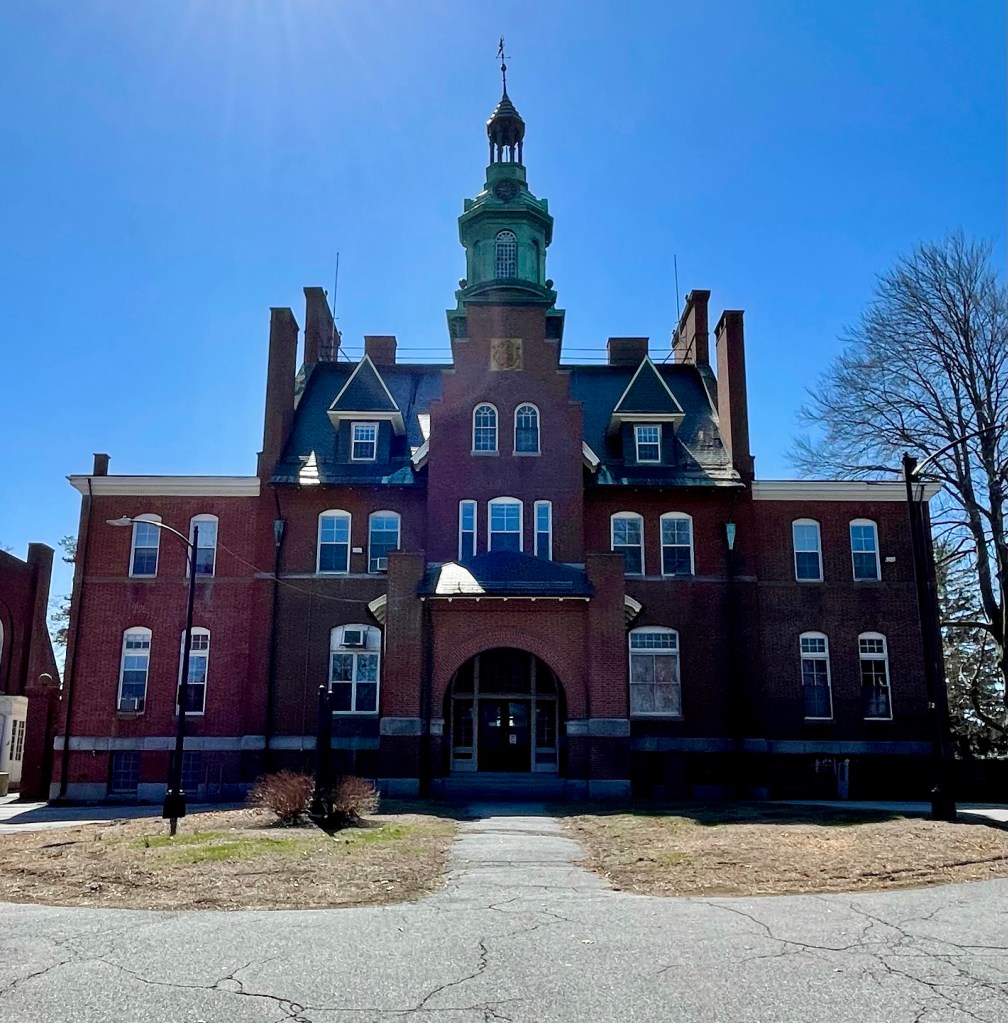
The Tewksbury State Hospital was established in 1852 as one of three Massachusetts State almshouses (along with Bridgewater and Monson). The almshouses were needed due to the unprecedented influx of Irish immigrants at that time, many of which found difficulty locating work. These almshouses represented the state’s first venture into care of the poor, a role previously filled by the cities and towns up to that time. In 1866, when Tewksbury began accepting the “pauper insane”, it became the state’s first facility to accept cases of chronic insanity specifically. Decades later, Massachusetts Governor Benjamin Butler accused the almshouse in Tewksbury in, “trading in bodies of dead paupers and transporting them for a profit to medical schools,” and “tanning human flesh to convert to shoes or other objects”. The facility was later investigated, and no conclusive evidence was found. In the late 19th century, a major rebuilding (and re-branding) campaign to upgrade the old almshouse by replacing its early wood-frame buildings with more durable and fireproof masonry ones was undertaken. One of the earliest “new” buildings was this Queen Anne-style Administration Building, standing at the head of the former entrance drive, which creates a fairly foreboding presence. This building was designed by Boston architect John A. Fox, and showcases the epitome of Queen Anne institutional design. The hospital runs today much like a traditional campus, with some of the older buildings unused, providing a strange composition. The former Administration Building is now home to the Massachusetts Public Health Museum.
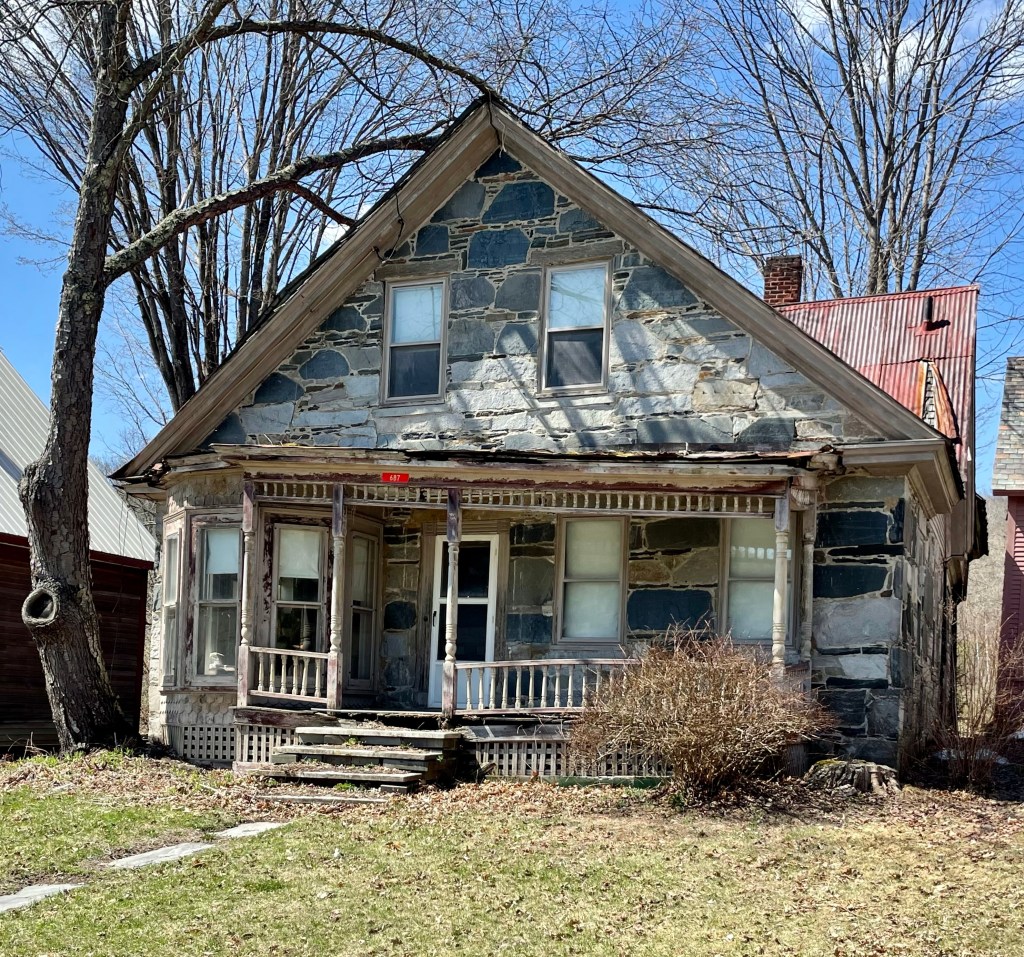
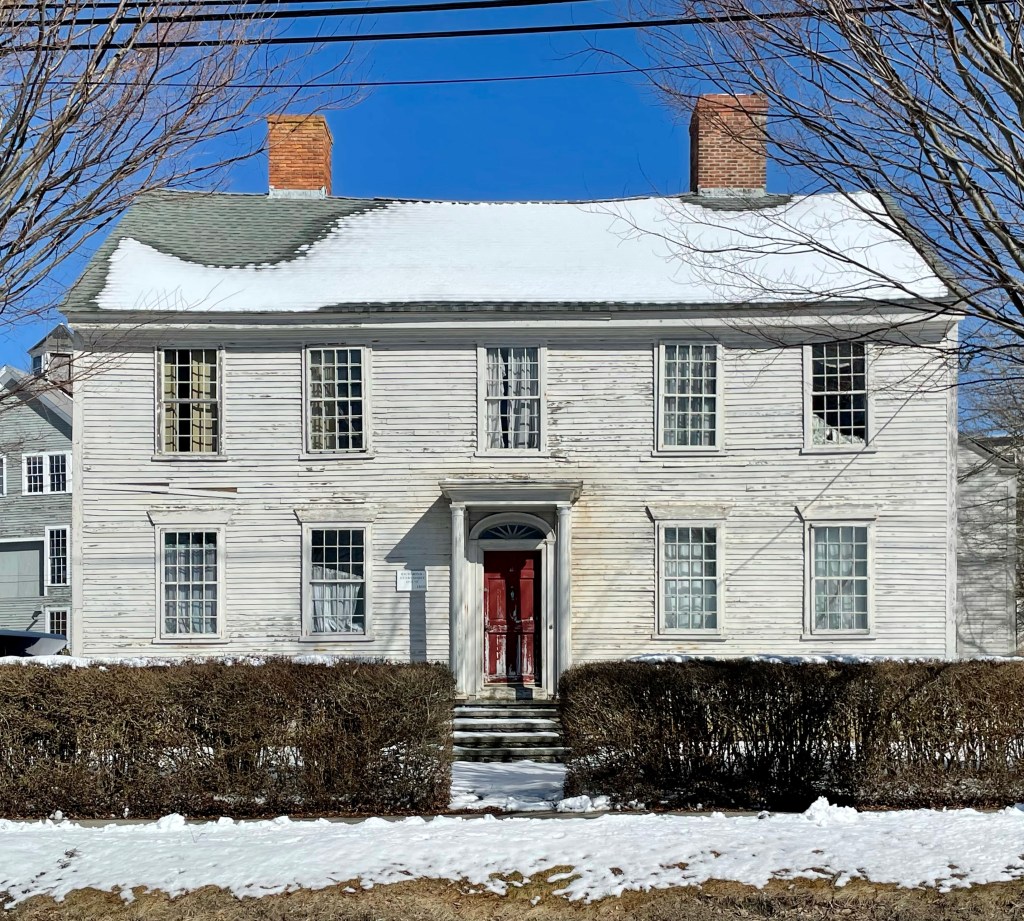
In the early 1830s, skilled masons from Scotland and Ireland came to central Vermont to work on building projects. A number of these workers, mainly from the Aberdeen area, and specialized in a specific building style in which plates of stone are affixed to a rubblestone wall. This method of bonding stonework is so prevalent in Scotland and Ireland it has been referred to in some journals as ‘Celtic Bond’, but in Vermont, it is known as “snecked ashlar”. The mixture of stone sizes and colors produces a strong bond and an attractive finish. This home is a rare example in the state, which is estimated to have about 50 of these homes left. I could not locate any information on the owners of the home, but the house has seen better days, with the wooden front porch shifting away from the main house. Also, if you look closely, you can see the original wood shingle roofing breathing under the sheet metal roof!
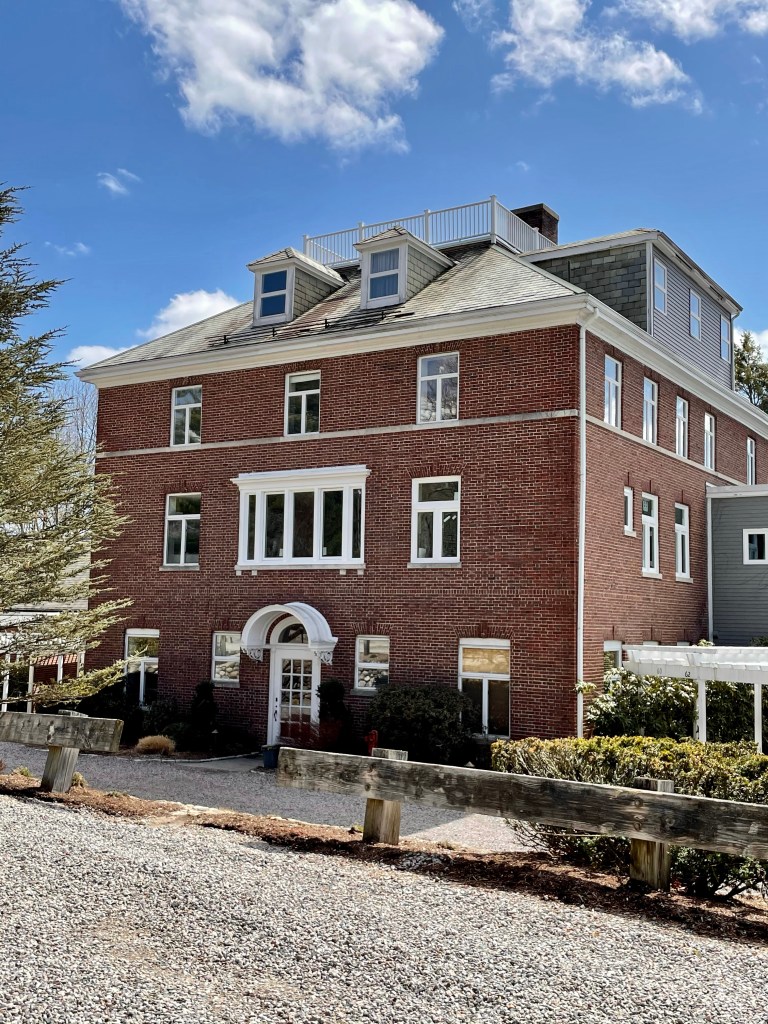
In 1907, the 86-acre Bigelow Estate (featured yesterday), was purchased by Horace K. Turner, owner of an art publishing company founded in Boston about 1904. Turner moved his workshops to the estate so the artists could work in healthy country surroundings. The firm required the long wings contoured into the hillside to provide ample natural light and views to the distance for the workers. In 1920, the entire property, including the Bigelow House and the bungalow workshops, were acquired by the New England Peabody Home, which had been located in Hyde Park for 25 years. It was set up as a school and hospital for “crippled children” and this brick building was added to the center section. Architects for this addition were Coolidge and Shattuck, successors to the firm of Shepley, Rutan, and Coolidge. The Peabody Home was among the first to use sun treatment as a cure for physical ills and the extensive porches were well suited to this purpose. The Peabody Home became obsolete and the property was sold off in the mid-20th century. In 1979, the Peabody Home was sold to Edward Leventhal, who converted the buildings into 22 condominiums. Architects for the project were Jung/Brannen.
One of the lesser-known historic hotels in Boston can be found at the corner of Exeter and Blagden Streets in the Back Bay neighborhood, tucked behind the Boston Public Library’s Johnson addition. Exeter Chambers (now Courtyard by Marriott Boston Copley Square), was built between 1889 and 1890 from plans by architect Theodore Minot Clark. Clark was a professor at MIT and the understudy of Boston’s famed Trinity Church architect, H. H. Richardson. Clark oversaw much of the construction of Trinity Church and his name is even engraved on the building. Exeter Chambers was constructed by the Guastavino Company, a very prominent contractor during the period noted for style and quality, known for the Guastavino tile. Cutting edge techniques such as compression arches and terracotta accents were featured throughout the structure. The hotel was vacant for many years and a renovation in 2004, which added three stories to the building, restored the ornate exterior to its former glory.
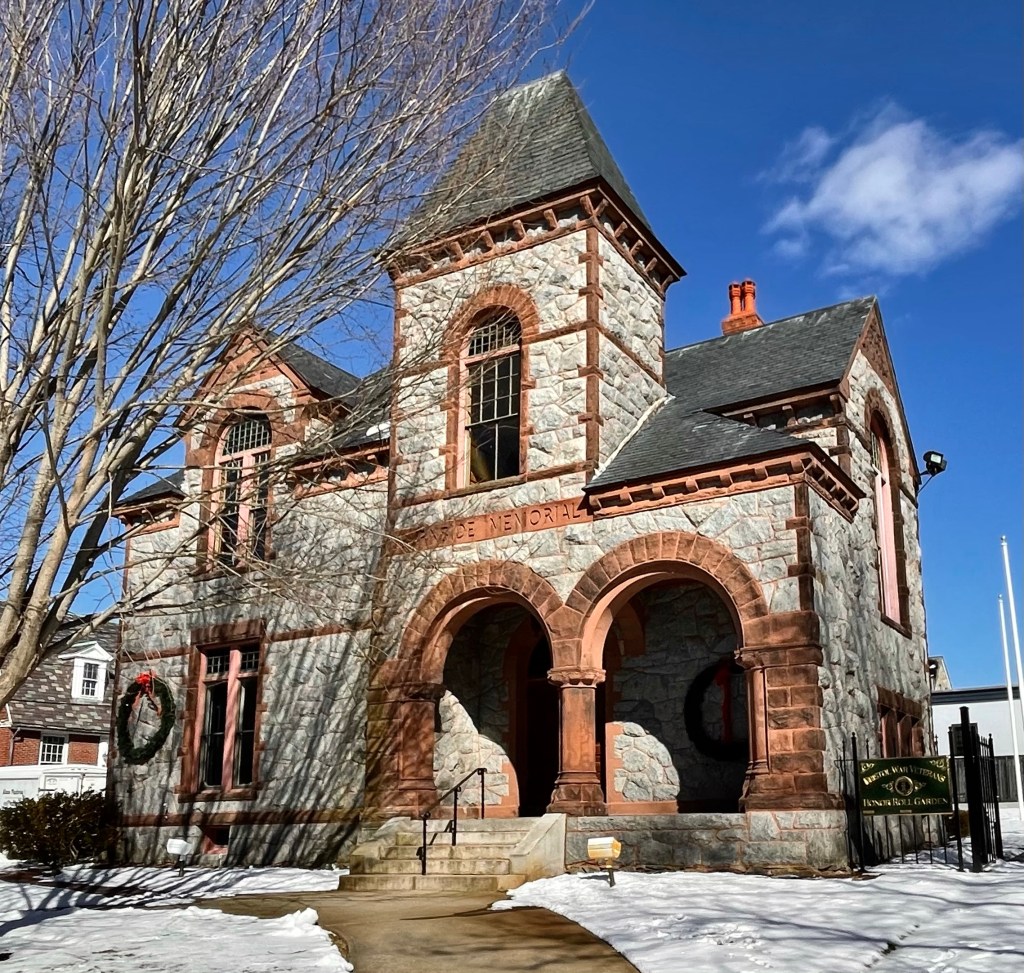
Located on Hope Street in Bristol, the Burnside Memorial Hall stands out as an elaborate, poly-chromed, two-story Richardsonian Romanesque public building. The Town of Bristol required a new town hall, and hired Worcester-based architect Stephen C. Earle to design the new structure. Earle’s program was to combine a town hall with a memorial to Major General Ambrose E. Burnside, Civil War hero, thrice governor of Rhode Island, and later United States senator, who died in 1881. The centerpiece of Burnside Memorial Hall was to be a statue of the general on its porch, long since removed from the building. Bristol town offices were removed from the building in 1969, and shifted to a bland building attached at the rear, Burnside Hall now serves purely as a memorial. Fun Fact: Burnside was noted for his unusual beard, joining strips of hair in front of his ears to his mustache but with the chin clean-shaven; the word burnsides was coined to describe this style. The syllables were later reversed to give the name we know today as “sideburns”!
Land that Mount Hope Farm sits upon in Bristol, Rhode Island was formerly council lands of the Wampanoag Indians, where King Philip’s War of 1675 may be said to have begun and ended. For those of you who do not know about the war, it was an armed conflict running 1675–1678 between indigenous peoples of New England and New England colonists and their indigenous allies. Massasoit, leader of the Wampanoag, had maintained a long-standing alliance with the colonists. Metacom (c. 1638–1676) was his younger son, and he became “sachem” (elected chief) in 1662 after Massasoit’s death. Metacom, however, forwent his father’s alliance between the Wampanoags and the colonists and they fought back. Metacom’s forces could not beat the growing numbers of the colonists, and he was eventually killed near Mount Hope, in Bristol. After his death, his wife and nine-year-old son were captured and sold as slaves in Bermuda. Philip’s head was mounted on a pike at the entrance to Plymouth, Massachusetts, where it remained for more than two decades. His body was cut into quarters and hung in trees. This story, shows how American history is built upon death and suffering and has often been whitewashed to portray early settlers treating native peoples with respect and as equals, which was rarely the case.
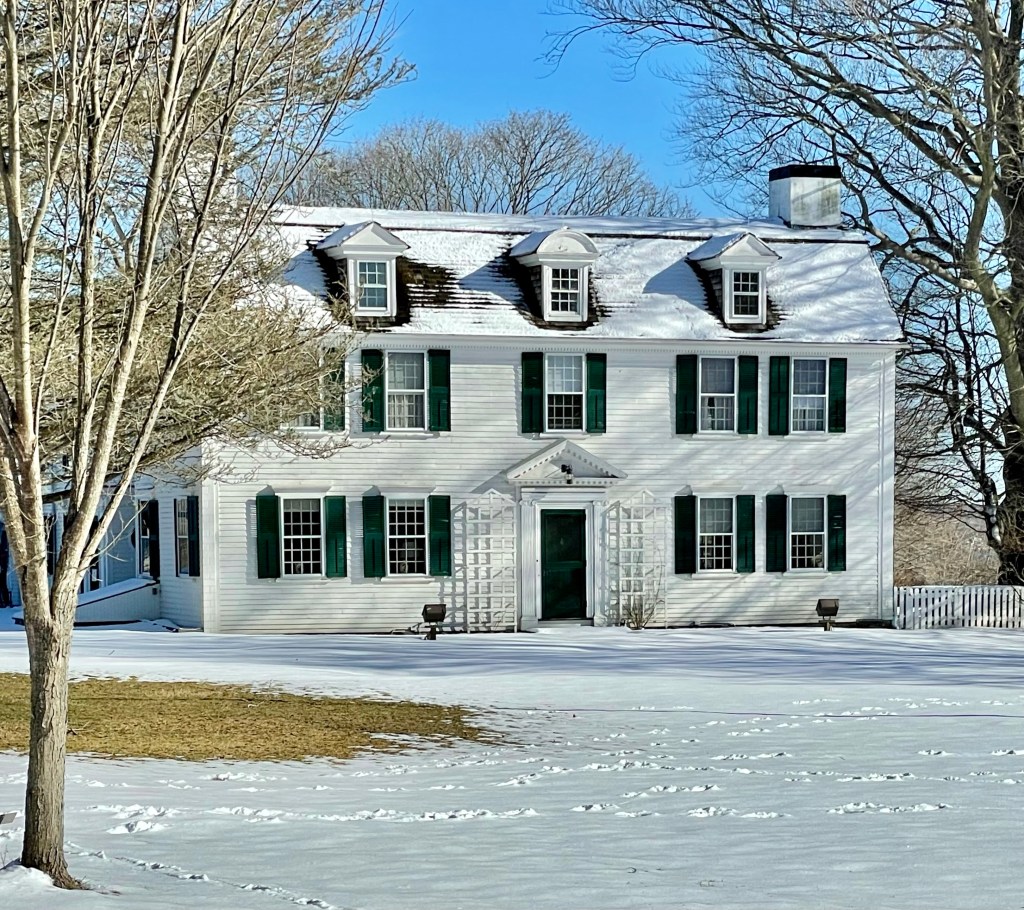
Mount Hope Farm as we know in colonial times, was originally 550 acres in size, owned in 1680 by Nathaniel Byfield. In 1744, the estate was acquired by Isaac Royall. Royall began construction of the house soon after. Isaac Royall Jr. was the son of Isaac Royall Sr. (1677–1739) a slave owner, slave trader, and Antiguan plantation owner who had a home and slave quarters (both extant) in Medford, MA. After his father’s death, Royall Jr. inherited his immense wealth, built upon the backs of others, and built this Georgian farmhouse. It is unknown to me if he ever resided there or had slaves maintain the property, but the home was rented for some time. In 1776, Mount Hope Farm was confiscated by the state, after Royall, a loyalist to England, fled to Nova Scotia. The property was added onto in the 19th and 20th centuries and now sits on 127-acres of land, and is run as a park, inn, and event space.
Located on Hope Street, just south of the downtown area of Bristol, Rhode Island, this beautiful Federal-style home overlooks the water, and once oversaw a large ship-building empire. The home was built by Lemuel Clarke Richmond (1782-1876), possibly in response to his marriage to Hannah Gorham in 1803. Richmond was a wealthy whaler who owned nearly twenty ships, including the Empress, a Bristol-built bark. The Federal style home features a five-bay facade with central entry. A modest portico surrounds the door which has a fan light transom above. Oh, and there are some gorgeous 12-over-12 windows on the home, at the ground floor the windows have flared lintels above. The home was sold by Richmond in the early 1850s and rented out to Charles and Julia Ann Herreshoff, who resided there with their eight children! It was here where sons John and Nathanael overlooked the water as young boys and became consumed by the beauty of the ships that sailed by their front yard. The brothers later ran the internationally renowned Herreshoff Manufacturing Company, which occupied land all around the home (and was featured previously). The home was acquired by the family in the 1860s, and often changed hands within the family over the next decades until it was inherited by Norman F. Herreshoff. A collector of Americana, Norman Hcrreshoff completed a series of renovations to the family home, including remodeling of the kitchen to be “old-fashioned” and replacement of the front porch with the small Ionic portico which we see today. The home is owned by the Herreshoff Marine Museum, but has seen better days.
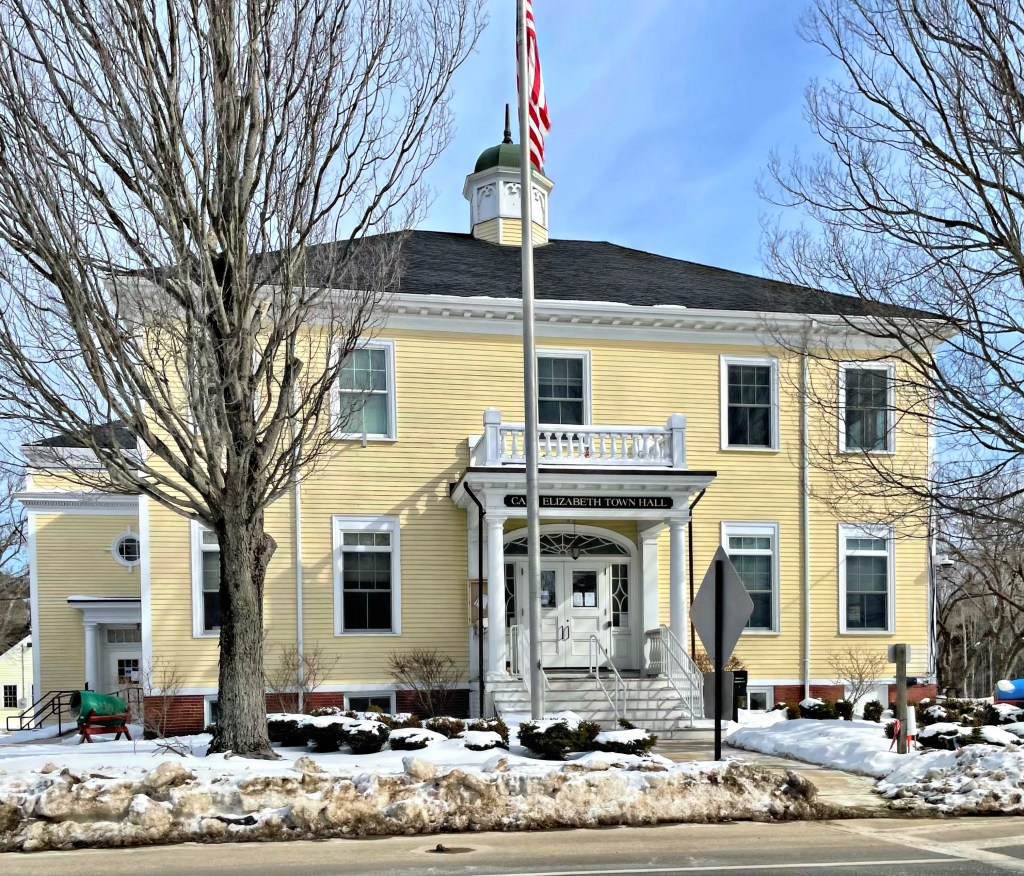
The town of Cape Elizabeth, Maine was originally a part of Portland (named Falmouth at the time) until the citizens there petitioned for and obtained their own government in 1765. Commercial and industrial growth in the north end of the town, nearest the harbor (now South Portland), was in sharp contrast to the continuing rural character of the southern tip of the Cape. In 1895, the two sections agreed to separate, and from that date forward the southern end of the original town became the present town of Cape Elizabeth. Shortly after the separation of South Portland, funding for a new town hall was appropriated, and the town hired Portland-based architect Frederick A. Tompson to design the new building to mark the start of the new town. The Town Hall building was constructed in 1900 and is an excellent example of Colonial Revival architecture with its hipped roof with cupola, classic central portico, and entry with Federal Revival sidelights with a fanlight above.

 Buildings of New England
