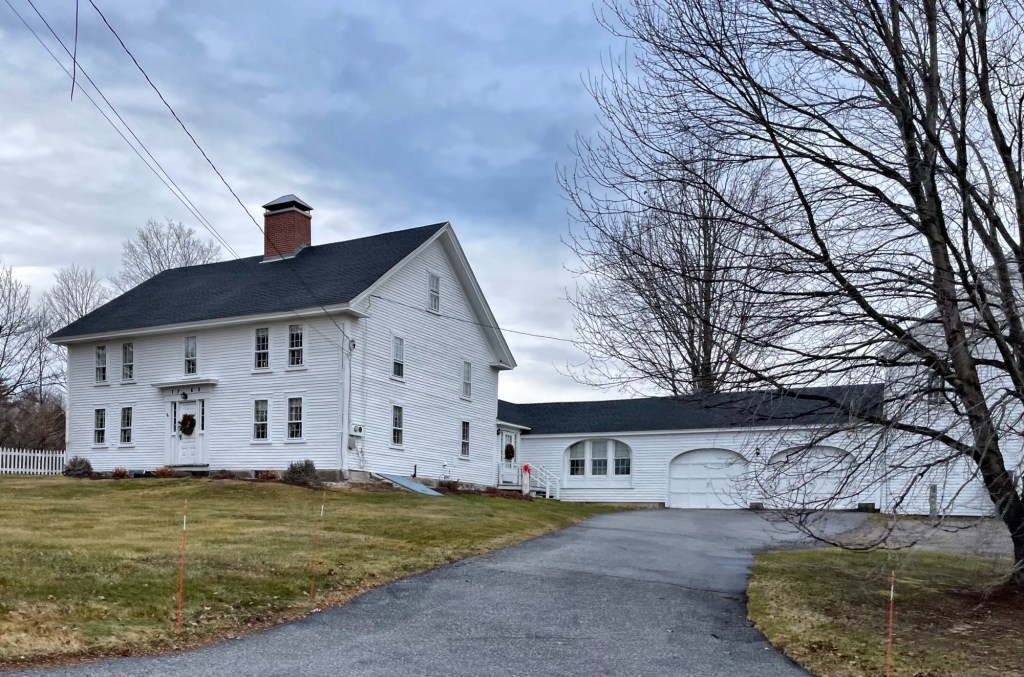
Bailey Farmhouse // c.1767

One of the oldest homes in Weare, New Hampshire is this large, Georgian farmhouse apparently constructed around 1767 by Samuel Bailey. Samuel’s father, Ebenezer Bailey, had purchased a property called “Lot 54, Range 1” in Weare, New Hampshire, which he then divided among his sons, Daniel, Samuel and Ebenezer Jr. for their own settlement in about 1767. Samuel received this lot in South Weare, upon which, the twenty-two-year-old and his wife established a farm and a family of at least eight children. Samuel died in 1824 and the farm was inherited by his son, Amos Wood Bailey, who continued operations here. Today, the large five-bay Georgian farmhouse is connected to a massive barn. It is a really spectacular property.

Osborne Memorial Hall // 1920

Weare is the largest town in Hillsborough County, New Hampshire by land area. As a result, the town’s villages historically were fairly isolated (especially before the arrival of the automobile). Social halls were important gathering places for some of these rural communities, allowing for events and celebrations to be held in a designated location. Before 1920, South Weare only had a Union Church which could meet this demand. In her will, Nellie Osborne donated funds in the memory of her husband Wellman Osborne, who grew up in Weare, to erect a social hall there. South Weare residents established the South Weare Improvement Society to make use of the money and oversee construction of the Memorial Hall. The Arts and Crafts style community building with its pyramidally roof opened in 1921. After numerous decades of deferred maintenance and dwindling use of the facilities, Osborne Hall was in decline and danger of demolition. Luckily, new members banded together and funded a restoration and modernization of the building. Here’s to another 100 years!

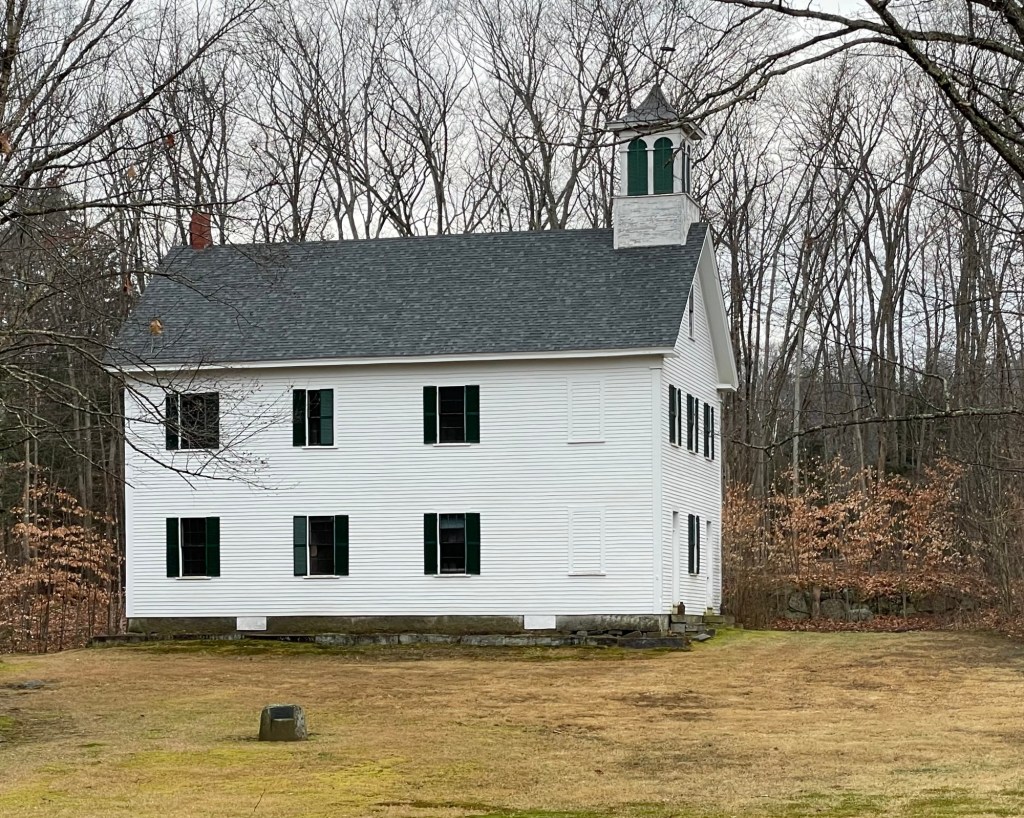
Clinton Grove Academy // 1874

Clinton Grove Academy of Weare, New Hampshire was the first Quaker seminary in the state when it was founded in 1834 by Moses Cartland (1805–1863). Moses Cartland was a Quaker abolitionist who served as the first Principal of the school and for fourteen years after. He later would move to Lee, NH, and aided those who escaped slavery in the south, sheltering them and assisting them on their way north to Canada. The original Academy here served as a private high school and included a classroom building, boarding house, barn and sheds. Students came from as far away as Ontario, Nova Scotia, Minnesota and Texas to study here under Mr. Cartland. In 1872, the Academy complex burned. It was quickly rebuilt as one structure here, in 1874. This building served as a district school until the 1930s. Today, it looks like the building is largely vacant, anyone know what its purpose is?