Acton Women’s Clubhouse // 1829

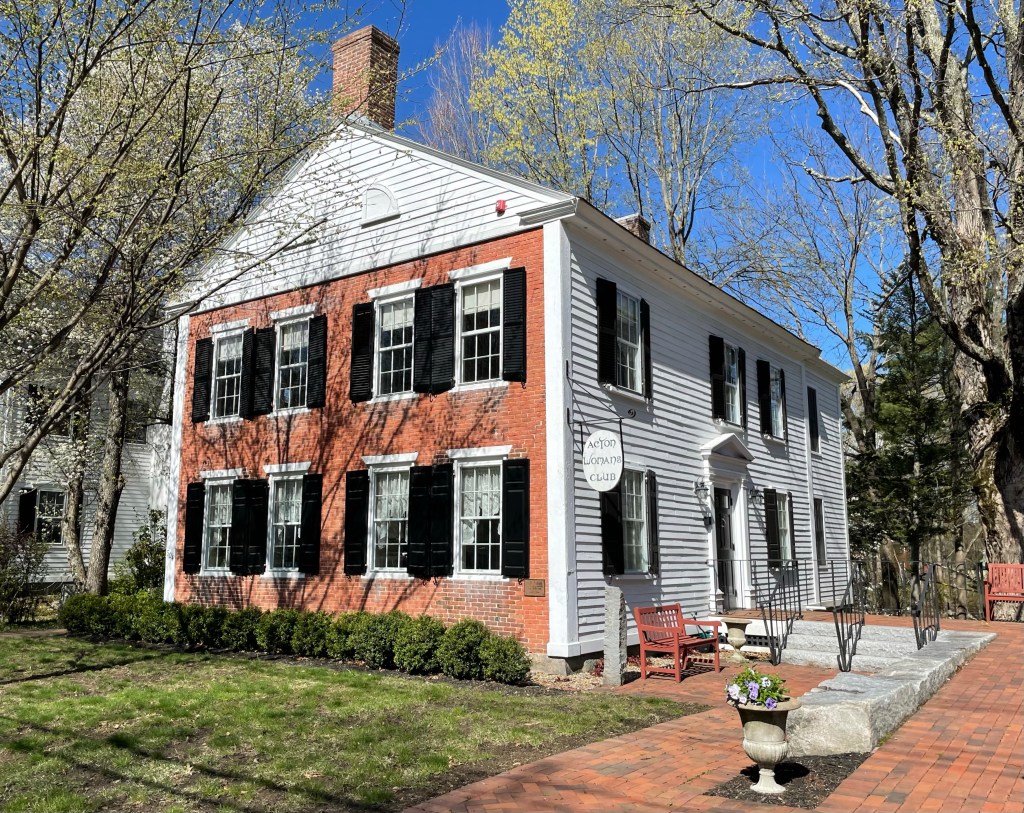
In 1912, a group of under twenty young mothers of Acton, Massachusetts, formed a club to provide a space to discuss issues ranging from child-rearing to larger topics like prohibition and women’s right to vote. The women began meeting at their homes before it was determined that they would need a permanent home. In 1915, the Acton Women’s Club acquired the old Dr. Cowdrey House (last post) next door occupying it and the attached barn. The 1829 Chapel for the Evangelical Society in Acton was part of the property and deteriorating. The Acton Women’s Club decided to sell the historic Cowdrey Home and use those funds to restore and occupy the old brick-end chapel. In 1940, the Club ceremoniously held a Mortgage Burning Party, having proudly paid off its debt. Today, the Acton Woman’s Club is the oldest and last standing brick- ended Federal structure in town.
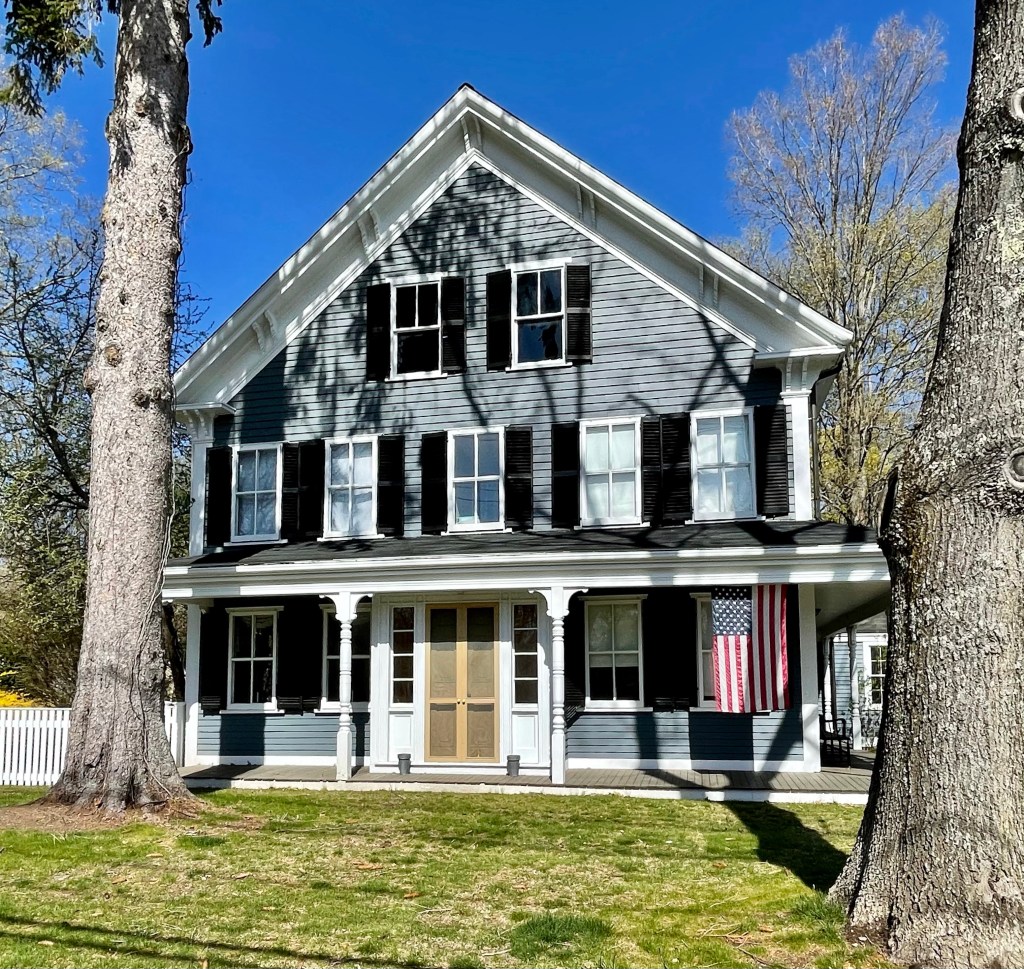
Dr. Cowdrey House // 1830

Located in Acton Center, the Dr. Harris Cowdrey House represents the emergence of Acton, Massachusetts from a sleepy rural town to a wealthy suburban town. This home was built in 1830 by Dr. Harris Cowdrey (1802-1875) as a 1 1/2-story gable end Greek Revival home. It was evidently enlarged to its present size decades later, possibly around the time Dr. Cowdrey and his wife Abigail growing their family. The Cowdreys had two children , Arthur who became a physician, after serving in the Civil War as a surgeon, and a daughter Helen who married a doctor herself, Dr. Charles Little also of Acton. After Dr. Harris Cowdrey died in 1875, Helen Cowdrey Little (who’s husband died young at just 32 years old) remained in Acton living with her mother in this house until 1886 when both women died. The home was later occupied by the Acton Women’s Club, who ran a crafts school for children out of the barn. The house showcases the original Greek Revival form, but features mostly Italianate detailing from the brackets, to the wrap-around front porch supported by turned posts.

Dutch House // 1893

Located on the appropriately named Netherlands Road in Brookline, MA, this house was actually designed as a temporary structure as part of the 1893 World’s Fair, also known as the World’s Columbian Exposition or the White City, depicted in the great book, Devil in the White City. The Dutch House was constructed in 1893 by the Van Houten Cocoa Company of the Netherlands, as a display pavilion and cocoa house. It was located at one end of the Manufactures and Liberal Arts Building (the largest building ever constructed at the time). The Dutch House as we know of it today, was greatly inspired in design by the Franeker City Hall (c. 1591) in the Netherlands. While attending the World’s Fair, Captain Charles Brooks Appleton of Brookline be.came so captivated with the structure that after the Fair, he purchased the building and had it dismantled and transported to Brookline. By the early 2000s, much of the amazing carvings on the building had fallen off, until a new homeowner had them all restored from drawings and images of the building, to the iconic landmark we see today.

Tewksbury State Hospital, Male Asylum // 1901

The Male Asylum building at the Tewksbury State Hospital was built in 1901 from plans by architect John A. Fox, who designed the Administration Building and many other buildings in the hospital/asylum campus. The building was eventually renamed after Anne Sullivan, who is best known as the teacher and companion of Helen Keller. Anne Sullivan contracted a bacterial eye disease known as trachoma, which caused many painful infections and, over time, made her nearly blind. When she was eight, her mother died from tuberculosis, and her father abandoned the children two years later for fear he could not raise them on his own. She and her younger brother, James (Jimmie), were sent to the run-down and overcrowded Tewksbury Almshouse (later renamed the Tewksbury Hospital) as a result, where she endured multiple unsuccessful eye operations and poor, cramped conditions. The male asylum building held cramped dormitories with men and boys suffering from various ailments and mental conditions. The building sits atop a stunning rubblestone foundation and features prominent Romanesque arched windows.

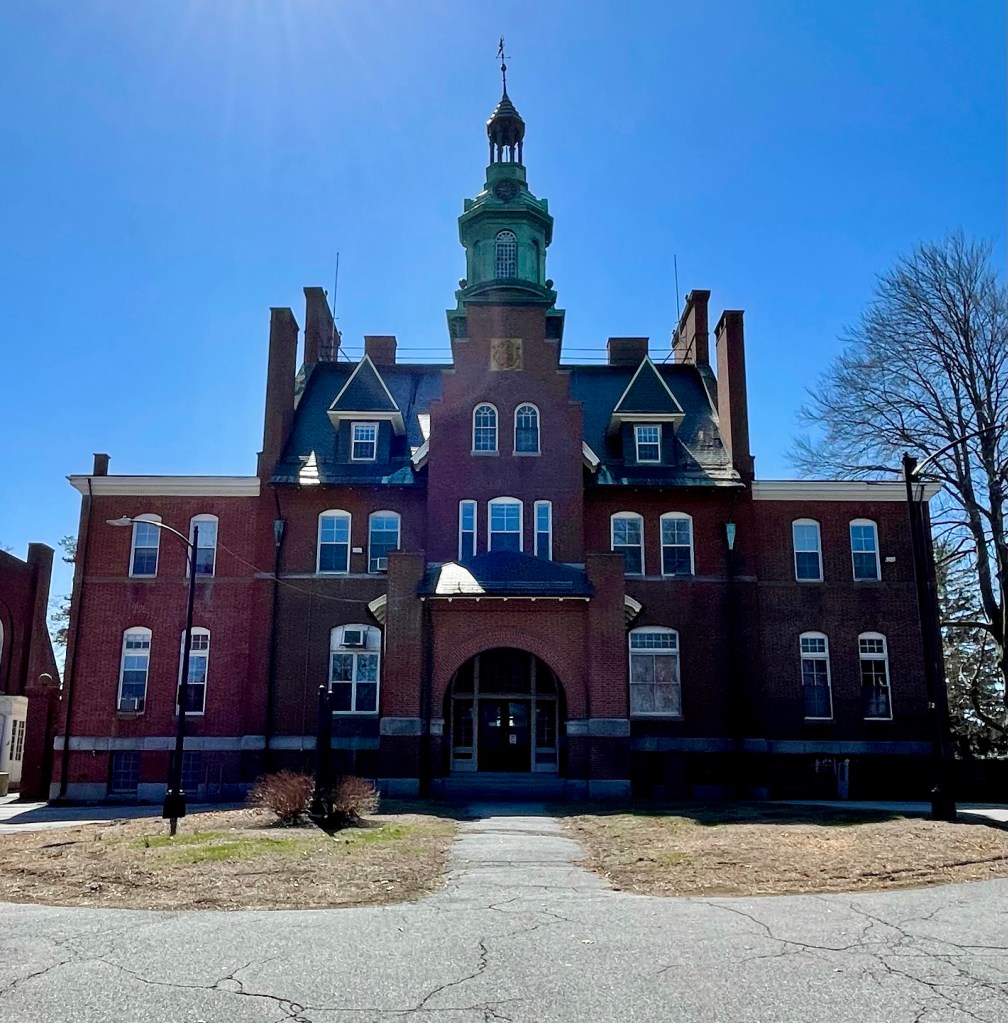
Tewksbury State Hospital, Administration Building // 1893

The Tewksbury State Hospital was established in 1852 as one of three Massachusetts State almshouses (along with Bridgewater and Monson). The almshouses were needed due to the unprecedented influx of Irish immigrants at that time, many of which found difficulty locating work. These almshouses represented the state’s first venture into care of the poor, a role previously filled by the cities and towns up to that time. In 1866, when Tewksbury began accepting the “pauper insane”, it became the state’s first facility to accept cases of chronic insanity specifically. Decades later, Massachusetts Governor Benjamin Butler accused the almshouse in Tewksbury in, “trading in bodies of dead paupers and transporting them for a profit to medical schools,” and “tanning human flesh to convert to shoes or other objects”. The facility was later investigated, and no conclusive evidence was found. In the late 19th century, a major rebuilding (and re-branding) campaign to upgrade the old almshouse by replacing its early wood-frame buildings with more durable and fireproof masonry ones was undertaken. One of the earliest “new” buildings was this Queen Anne-style Administration Building, standing at the head of the former entrance drive, which creates a fairly foreboding presence. This building was designed by Boston architect John A. Fox, and showcases the epitome of Queen Anne institutional design. The hospital runs today much like a traditional campus, with some of the older buildings unused, providing a strange composition. The former Administration Building is now home to the Massachusetts Public Health Museum.

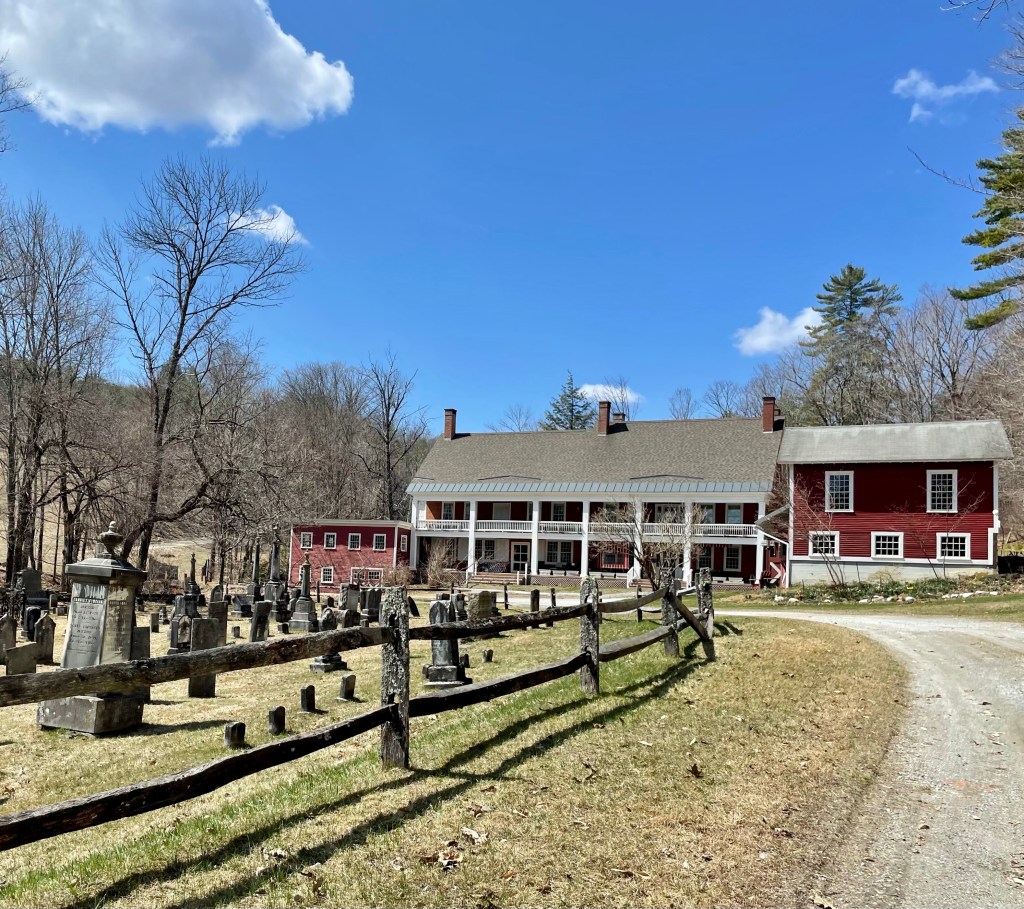
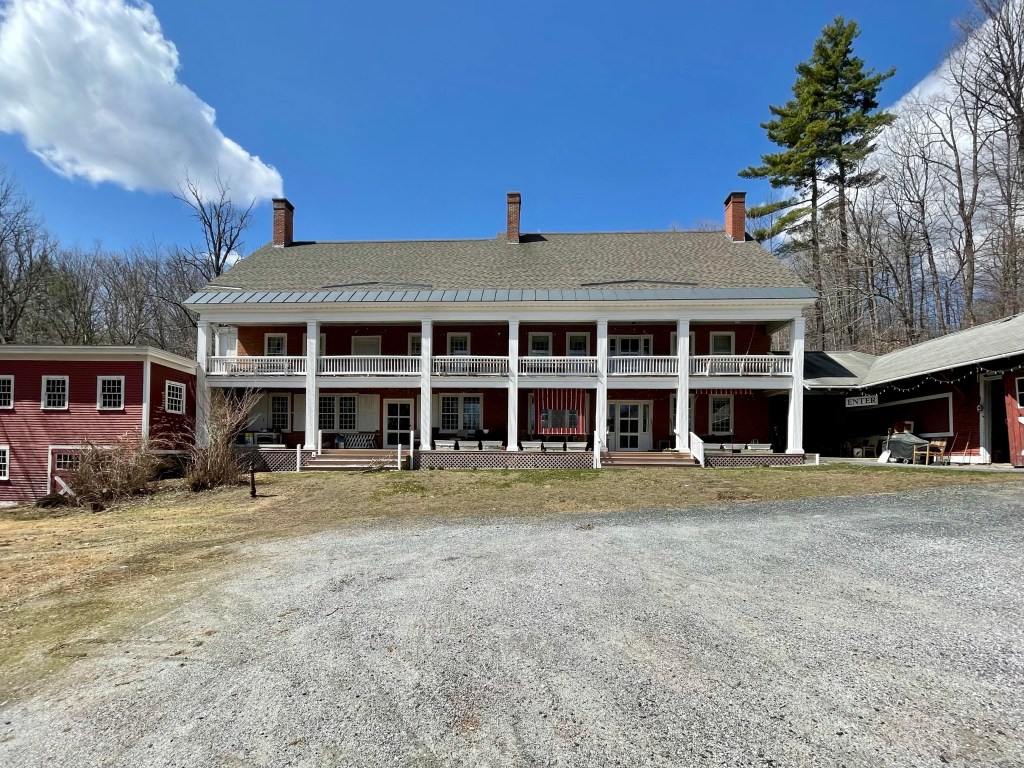
Bailey’s Mills // 1837

Driving down the dirt roads of rural Vermont with no cell phone service can be a great way to explore, so imagine my delight when i drove past this stunning old building tucked behind a historic cemetery! The building was erected in 1835-1837 by Levi Bailey, a local entrepreneur and mill owner who, in 1794, in partnership with a George Betterley, purchased the mill site and proceeded to build a dam, for later development. Legend says, in 1808, he required the good will of David Hapgood, his next door neighbor, so he could buy more land in front of his proposed mill. But, in fact, Levi had so irritated Hapgood somehow, that he instead donated the coveted acre to the Town of Reading for use as a town cemetery, ensuring that Bailey could never control it. Thus a “spite” cemetery was laid out, the only one I am aware of! Underterred, Bailey erected over the next two decades the series of buildings to manufacture goods, the buildings we see today. Bailey’s Mills in Reading, Vermont, is actually three connected, 2 1/2-story, brick, Greek Revival style buildings with several attached wood frame appendages added over time. He lived in the building and a store was run out of the building for locals. The building is now home to the Bailey Mills Bed & Breakfast.

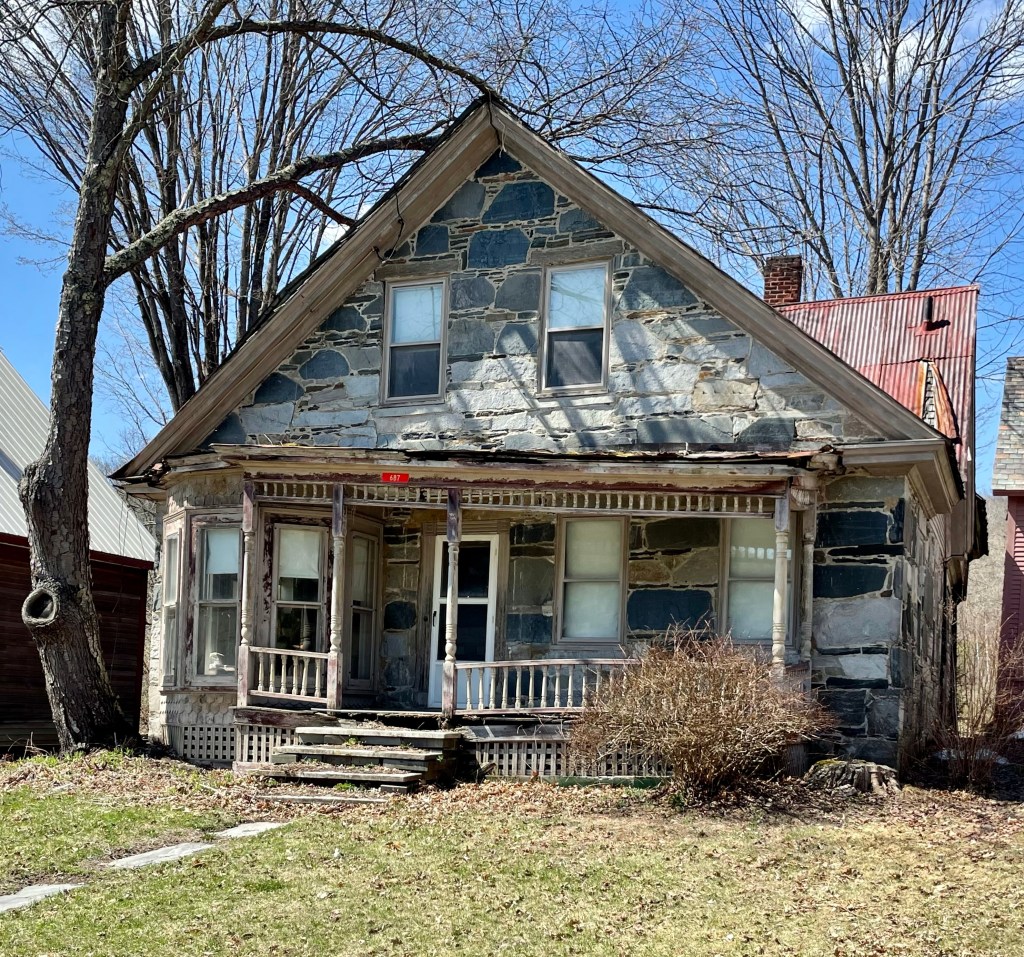
Snecked House // c.1850

In the early 1830s, skilled masons from Scotland and Ireland came to central Vermont to work on building projects. A number of these workers, mainly from the Aberdeen area, and specialized in a specific building style in which plates of stone are affixed to a rubblestone wall. This method of bonding stonework is so prevalent in Scotland and
Ireland it has been referred to in some journals as ‘Celtic Bond’, but in Vermont, it is known as “snecked ashlar”. The mixture of stone sizes and colors produces a strong bond and an attractive finish. This home is a rare example in the state, which is estimated to have about 50 of these homes left. I could not locate any information on the owners of the home, but the house has seen better days, with the wooden front porch shifting away from the main house. Also, if you look closely, you can see the original wood shingle roofing breathing under the sheet metal roof!

Reading Town Hall // 1911

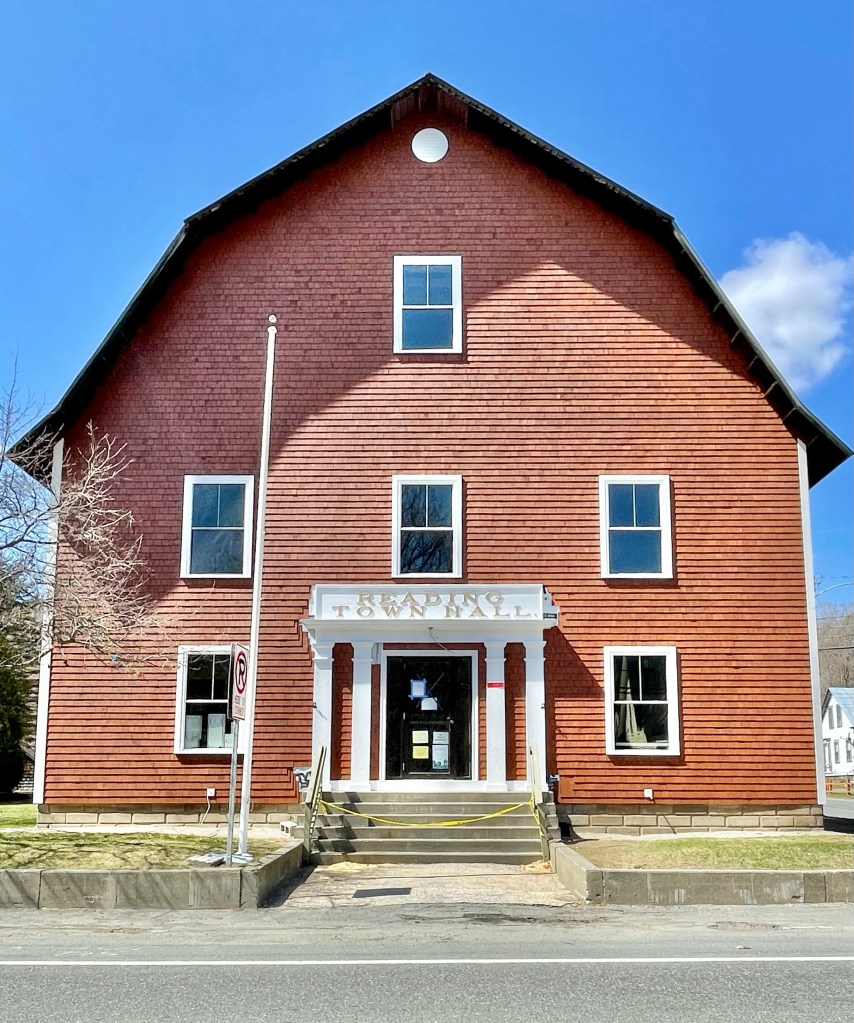
The Reading Town Hall in Reading, Vermont is an imposing shingle-clad, gambrel roof building which sits in the village of Felchville. The hall was built in 1911 as a gift to the citizens of Reading by Wallace F. Robinson. Wallace Robinson was born in Reading in 1832. He went to Boston as a young man and entered into the provisions (groceries) market, and became quite successful, expanding into the wholesale provisions business and meat packing. He was active in civic and business affairs of Boston, most notably as the President of the Boston Chamber of Commerce and as a State Representative in the Legislature for two terms. By around 1900, Robinson had retired and had taken up a life of philanthropy, spending much of his wealth on memorial buildings and to places that had a lasting impact on him, including Robinson Hall at Dartmouth College and renovations at UVM. The design for the Reading Town Hall is especially notable for the fact that it was designed to resemble historic gambrel roofed barns found in the state.

Turner Art Publishing Company Building // 1908

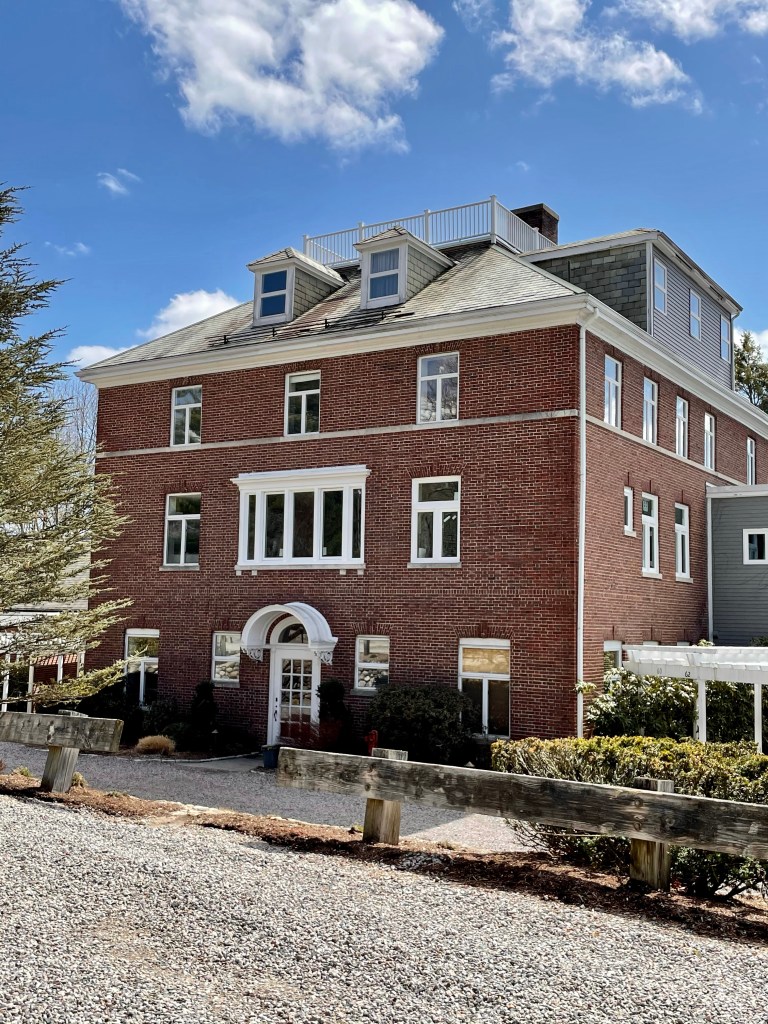
In 1907, the 86-acre Bigelow Estate (featured yesterday), was purchased by Horace K. Turner, owner of an art publishing company founded in Boston about 1904. Turner moved his workshops to the estate so the artists could work in healthy country surroundings. The firm required the long wings contoured into the hillside to provide ample natural light and views to the distance for the workers. In 1920, the entire property, including the Bigelow House and the bungalow workshops, were acquired by the New England Peabody Home, which had been located in Hyde Park for 25 years. It was set up as a school and hospital for “crippled children” and this brick building was added to the center section. Architects for this addition were Coolidge and Shattuck, successors to the firm of Shepley, Rutan, and Coolidge. The Peabody Home was among the first to use sun treatment as a cure for physical ills and the extensive porches were well suited to this purpose. The Peabody Home became obsolete and the property was sold off in the mid-20th century. In 1979, the Peabody Home was sold to Edward Leventhal, who converted the buildings into 22 condominiums. Architects for the project were Jung/Brannen.

Dike-King House // c.1740

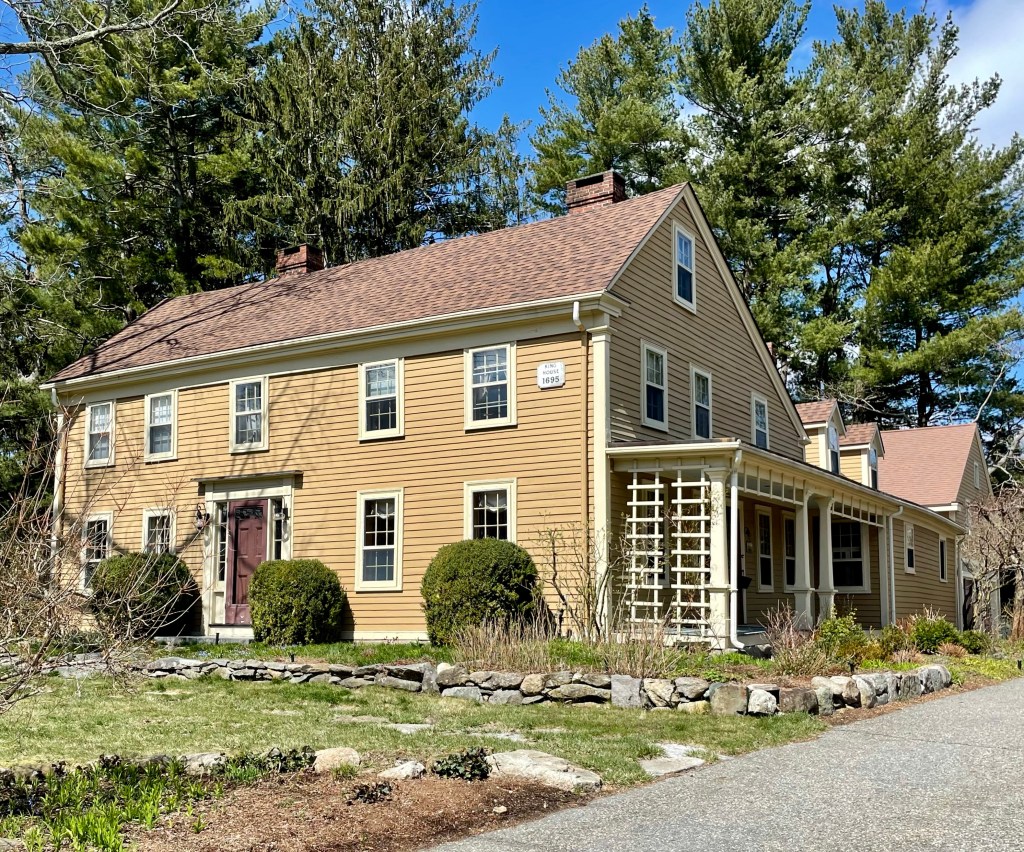
Located in the Oak Hill Village of Newton, the Dike-King House remains as one of a few pre-Revolution houses, but the history is a little murky from what I found. Oak Hill was the most remote village of Newton historically and has maintained much of its open space to this day, as it did not see the suburban development following the streetcar in other villages in town connecting to nearby Boston. This house was apparently built by Jonathan Dike (1673-1751), a cooper, who lived here with his second wife Experience French (yes that was her name). The home he built was likely a much smaller dwelling and was added onto as the family grew. Jonathan died in 1751 and the home went to his eldest living son and later sold to Noah King in 1796. The house plaque on the house gives a date of 1795 as King purchased a house on the lot, but it was likely much older than one year old. Noah King was a housewright, deacon, and son of Dr. John King a prominent civic leader in the town. With his expertise as a housewright, he likely rebuilt much of the house into what we see today. Starting in 1796 through 1923 the property was run as a farm by members of the King family, but land was sold off around the Great Depression for much needed funds. Due to the asymmetry of the house, it is likely that it started as a half-house with just three bays with the door at the left-most bay, with the saltbox roof added around that time.