Mount Hope Farm // 1745

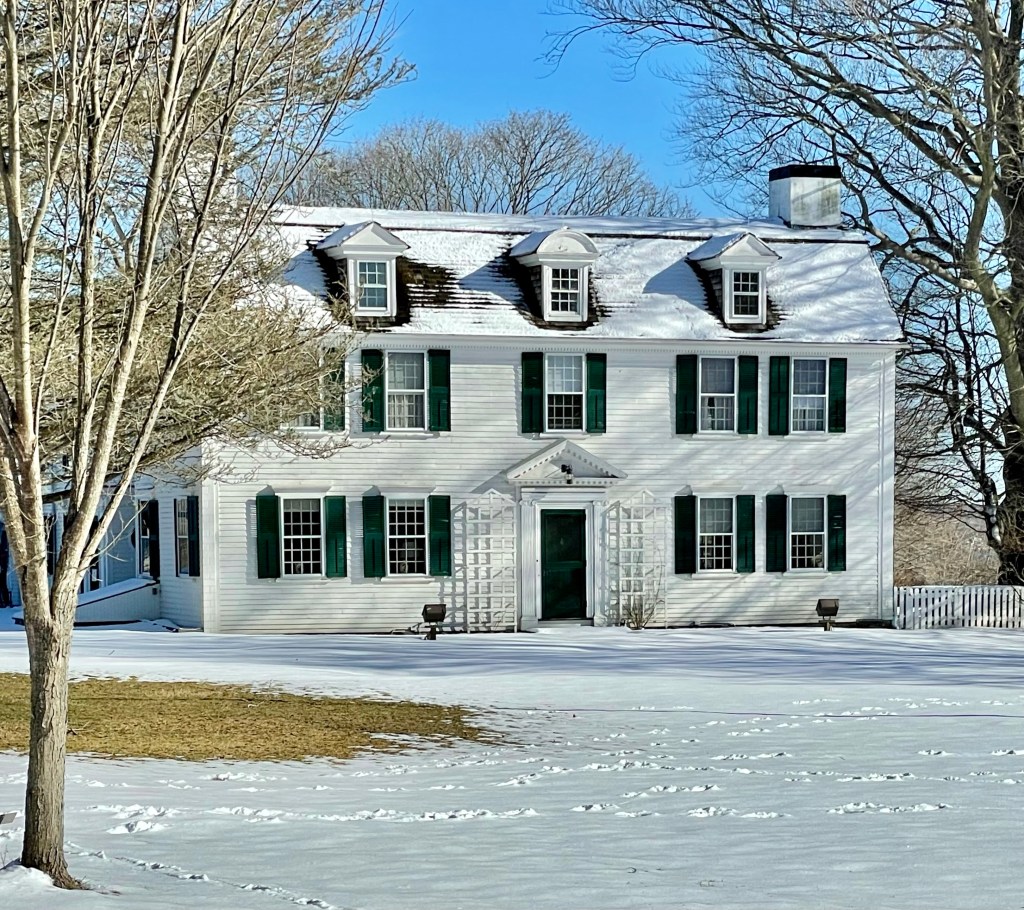
Land that Mount Hope Farm sits upon in Bristol, Rhode Island was formerly council lands of the Wampanoag Indians, where King Philip’s War of 1675 may be said to have begun and ended. For those of you who do not know about the war, it was an armed conflict running 1675–1678 between indigenous peoples of New England and New England colonists and their indigenous allies. Massasoit, leader of the Wampanoag, had maintained a long-standing alliance with the colonists. Metacom (c. 1638–1676) was his younger son, and he became “sachem” (elected chief) in 1662 after Massasoit’s death. Metacom, however, forwent his father’s alliance between the Wampanoags and the colonists and they fought back. Metacom’s forces could not beat the growing numbers of the colonists, and he was eventually killed near Mount Hope, in Bristol. After his death, his wife and nine-year-old son were captured and sold as slaves in Bermuda. Philip’s head was mounted on a pike at the entrance to Plymouth, Massachusetts, where it remained for more than two decades. His body was cut into quarters and hung in trees. This story, shows how American history is built upon death and suffering and has often been whitewashed to portray early settlers treating native peoples with respect and as equals, which was rarely the case.

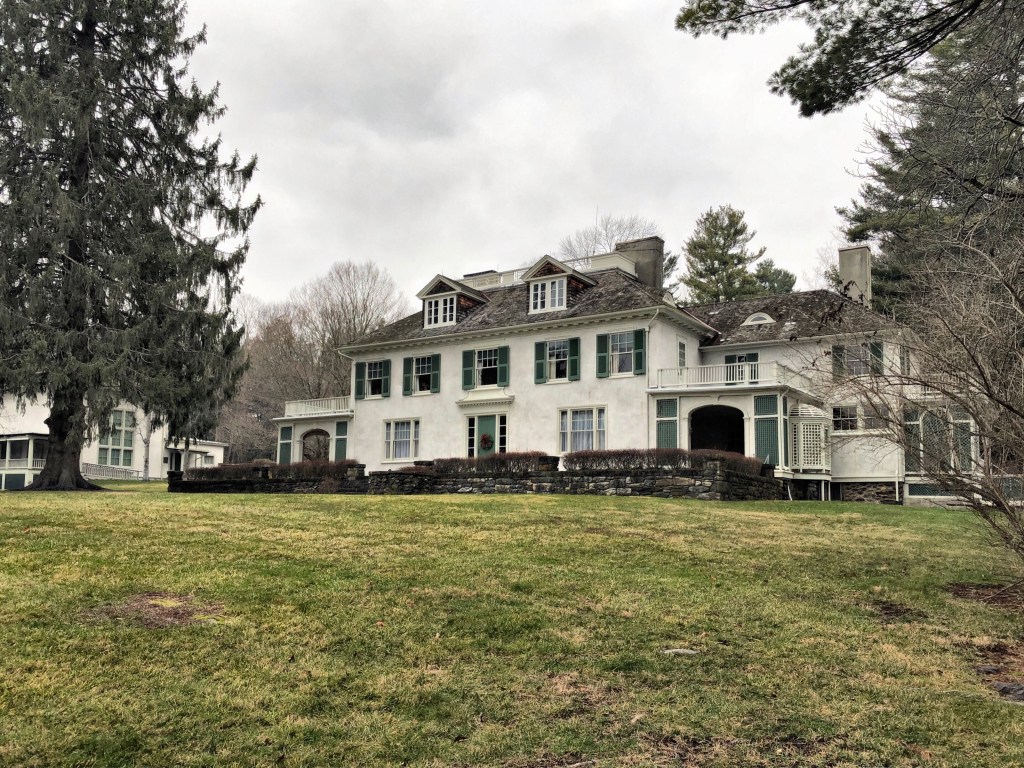
Mount Hope Farm as we know in colonial times, was originally 550 acres in size, owned in 1680 by Nathaniel Byfield. In 1744, the estate was acquired by Isaac Royall. Royall began construction of the house soon after. Isaac Royall Jr. was the son of Isaac Royall Sr. (1677–1739) a slave owner, slave trader, and Antiguan plantation owner who had a home and slave quarters (both extant) in Medford, MA. After his father’s death, Royall Jr. inherited his immense wealth, built upon the backs of others, and built this Georgian farmhouse. It is unknown to me if he ever resided there or had slaves maintain the property, but the home was rented for some time. In 1776, Mount Hope Farm was confiscated by the state, after Royall, a loyalist to England, fled to Nova Scotia. The property was added onto in the 19th and 20th centuries and now sits on 127-acres of land, and is run as a park, inn, and event space.

“Longfield” // 1848

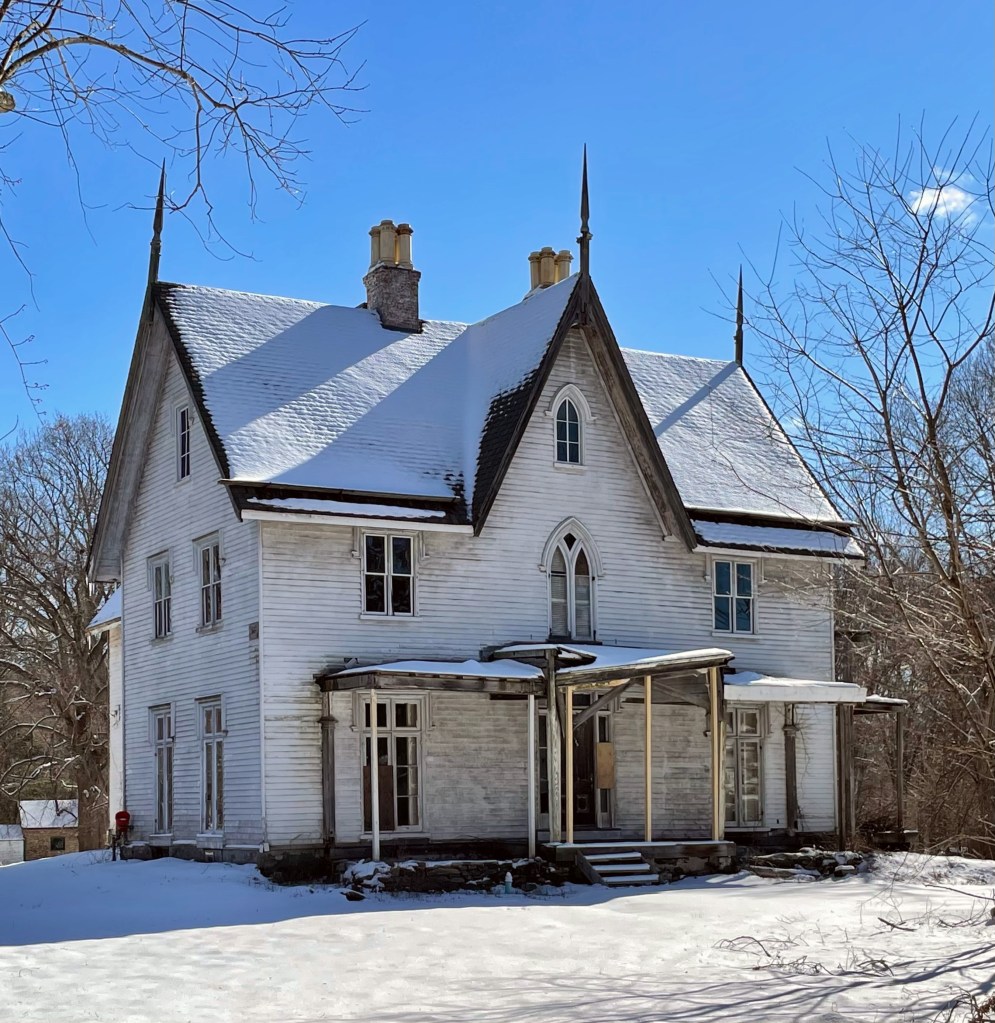
“Longfield”, aka the Abby DeWolf House was built in 1848 and is one of the finest homes in Bristol, Rhode Island. The home was completed from designs by Providence architect Russell Warren, who also designed other mansions in town (I’ll post those later on in this series), the Westminster Arcade in Providence, and “Hey Bonnie Hall” a since demolished Federal style home I featured a couple days ago. Longfield’s name derives from the 60-acre meadow, part of the 300-acre Henry DeWolf farm, given to Abby DeWolf when she married Charles Dana Gibson at just 21 years of age. The DeWolf Family paid for the home as a gift to Abby. The DeWolf Family is infamous for being highly active in the slave trade, and was believed to have transported over 11,000 enslaved people from Africa to the Americas before congress abolished the African Slave Trade in 1808, which “prohibited the importation of slaves into any port or place within the jurisdiction of the United States…from any foreign kingdom, place, or country.” This policy did little as many owners of slaves just kept children born into slavery and also opened plantations in the Caribbean and South America. After Abby died in 1901, the home went to her granddaughter who maintained the home. By the 1970s, the home was sold out of the family and began a period of decades of deterioration to its current state. The interior is effectively gutted, but some original woodwork and fireplaces remain. Recent calls for a townhouse development with ample parking was proposed and approved by the town a couple years ago, but would greatly diminish its siting and architectural integrity. Nothing has happened on the site, but here’s to an appropriate restoration!

Throope Place // 1760

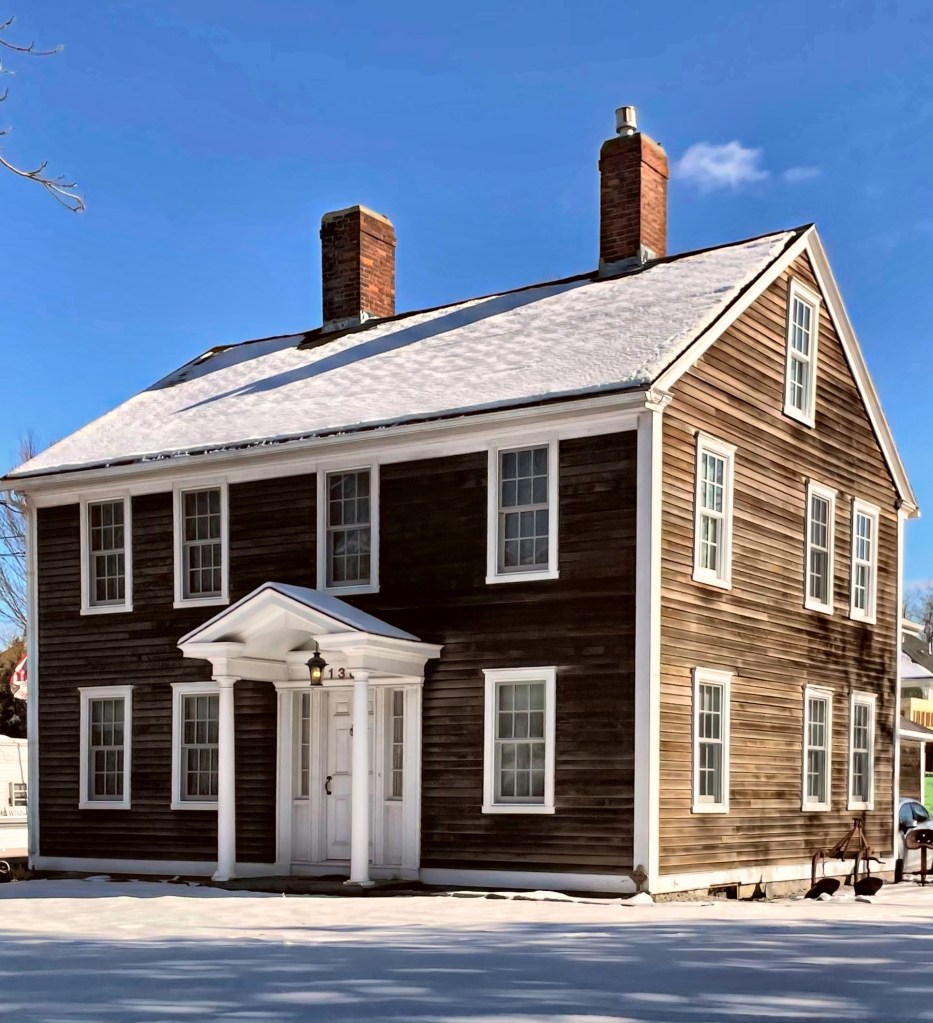
In 1687, William Throope 1637-1704, who migrated to Bristol from Barnstable, Massachusetts by way of England, purchased land in Bristol, Rhode Island. On it, he constructed a small, one-room deep, two-story house. Throope’s grandson, Thomas, Jr. (1710-1771), enlarged the house about 1760, when he constructed this four-bay Georgian home, adding the old 1687 Throope house to the rear. Interestingly, house moves were very common in America to the early 20th century, as materials such as glass, nails, and brick were more expensive while labor was much cheaper, making the reuse of original structures and materials common. The farm eventually passed to Isaiah Drown Simmons (1810-1882), a dairy farmer, in 1830, and remained in the Simmons family until 1922. Records show that the original 1687 house that was moved to the rear of the 1760 house was replaced in the 1830s by Simmons. The home remained in the Simmons Family until after the death of their only daughter Elizabeth, who died in 1914. It appears that the existing front portico was added after that time, which appears more Colonial Revival.

Cape Elizabeth Town Hall // 1900

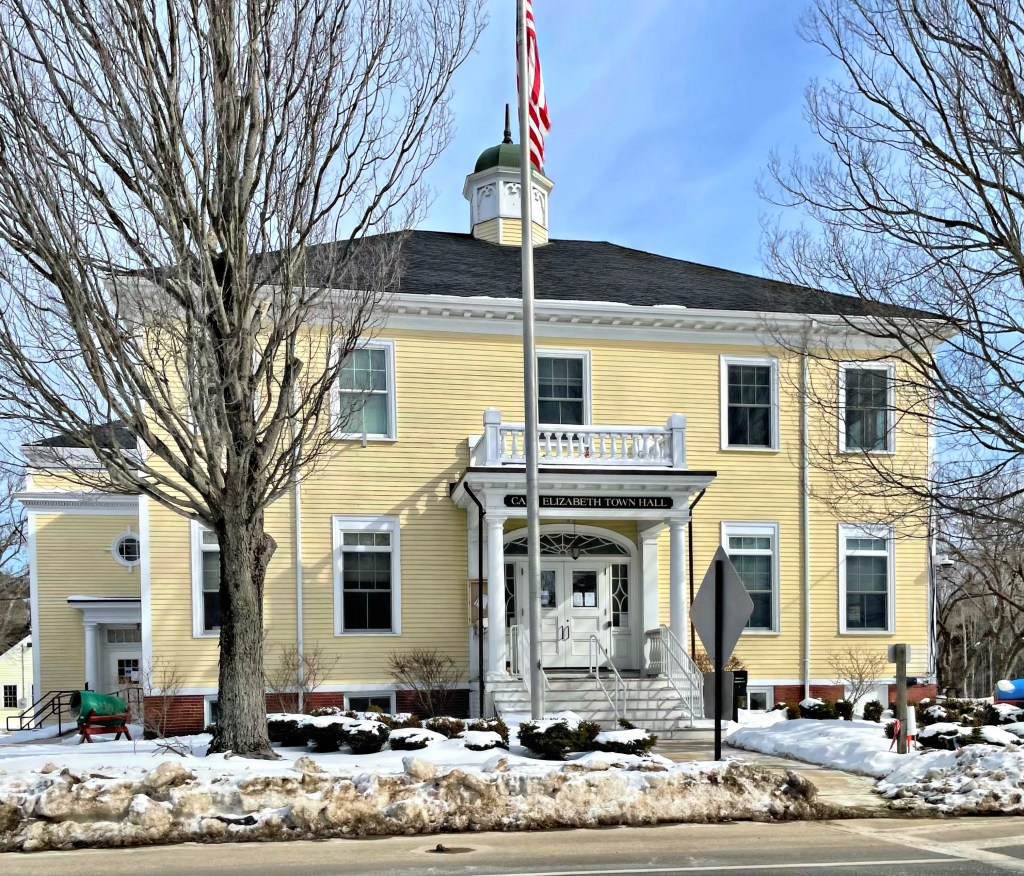
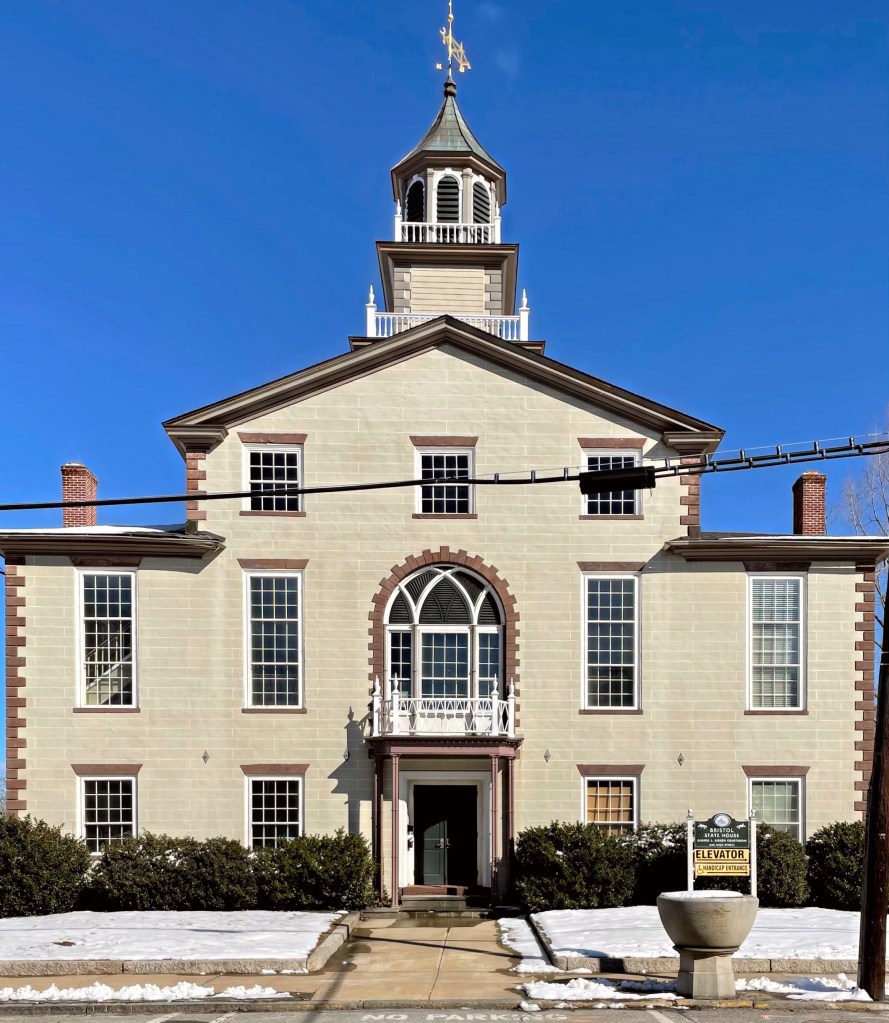
The town of Cape Elizabeth, Maine was originally a part of Portland (named Falmouth at the time) until the citizens there petitioned for and obtained their own government in 1765. Commercial and industrial growth in the north end of the town, nearest the harbor (now South Portland), was in sharp contrast to the continuing rural character of the southern tip of the Cape. In 1895, the two sections agreed to separate, and from that date forward the southern end of the original town became the present town of Cape Elizabeth. Shortly after the separation of South Portland, funding for a new town hall was appropriated, and the town hired Portland-based architect Frederick A. Tompson to design the new building to mark the start of the new town. The Town Hall building was constructed in 1900 and is an excellent example of Colonial Revival architecture with its hipped roof with cupola, classic central portico, and entry with Federal Revival sidelights with a fanlight above.

Washington Congregational Church // 1840

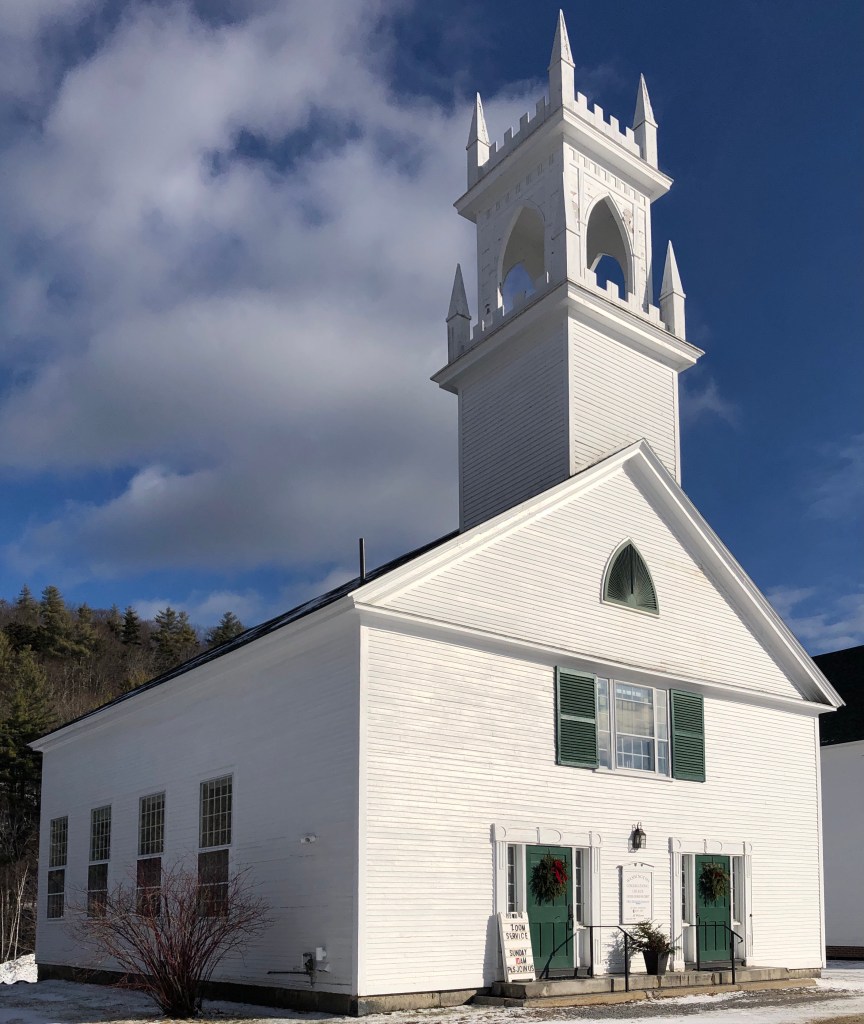
Located adjacent to the Washington Meeting House and Central Schoolhouse on the Washington, New Hampshire Town Green, the Washington Congregational Church perfectly compliments the collection of vernacular buildings here to create a very cohesive, three-building historic district. The church is dominated by a Gothic-inspired two stage square tower adorned by pointed pinnacles and crenellation. The building, constructed in 1840, is a great example of a Gothic Revival vernacular church building in rural New Hampshire and has been well-maintained over the years. In 1960, a fire in the church resulted in several thousand dollars worth of damage. A full basement was built under the church in 1985 to provide space for Sunday School classes and events. The simple arched sanctuary has remained in keeping with the original interior design, and features wide board wainscoting and wooden pews, taken from the old Meeting House.

South Congregational Church, Newport // 1823

The South Congregational Church in Newport, NH, is located (as its name suggests) south of the commercial and civic heart of downtown Newport. The church congregation was founded in 1779 and grew substantially in the early 19th century. The church’s location, outside the present downtown, is the result of a long-running dispute within the town of where its civic heart should be located, to the north or south of the Sugar River. The consequence of this disagreement resulted in the placement of the Baptist church at the town common (north of the present-day commercial downtown), and the placement of this church here. The resulting development to the north of the river left this massive, brick Federal style church towering over the small working-class homes, with a majority of the town’s other significant Federal buildings built years later, like the Eagle Hotel and Old County Courthouse to the north of the river. The 1823 church is thought to have been designed by Elias Carter, who designed many Federal-era churches in the New England area.

Chesterwood // 1901

Chesterwood is the former summer home, studio and gardens of American sculptor Daniel Chester French (1850–1931), who is best known for creating two of our nation’s most powerful symbols: the Minute Man (1871–75) at the Old North Bridge in Concord, Massachusetts, John Harvard in Harvard Yard, and Abraham Lincoln (1911–22) for the Lincoln Memorial in Washington, D.C. Daniel Chester French was one of the most successful artists of the late 19th and early 20th centuries, producing more than 100 works of public sculpture. In the fall of 1895, he and his wife drove by horse and buggy and discovered the resort town of Stockbridge. They returned the next summer and purchased the Marshall Warner farm from the family who had purchased the land from Mohican Native Americans. The French family and two maids moved into the white clapboard farmhouse the next summer. To ensure that his summer would be productive as well as restful, he improvised a studio in the barn. He asked his friend and colleague, architect Henry Bacon, to design a studio for him (Bacon would later work with French on the Lincoln Memorial). Soon, in spite of renovation, the original farmhouse was deemed inadequate and French commissioned Bacon to design a residence, completed in 1901. The family owned the home for decades, even after Daniel Chester French’s death. Much of the credit for Chesterwood’s preservation and metamorphosis from summer retreat to public site belongs to Margaret French Cresson (1889–1973), the sculptor’s daughter. After her parents’ death, she maintained the property and began to use it year-round, assembled the work of her father, and established the estate as a historic site of the National Trust for Historic Preservation.

Hollis Social Library // 1910

An excellent example of Classical Revival architecture, the Hollis Social Library in Hollis, New Hampshire is a single-story building displaying an Ionic portico and capped by a copper dome. The building, which fronts the town green, was constructed in 1910 according to plans by architects Magee and Rowe of Boston. The building was dedicated on August 24, 1910. The Hollis Social Library is believed to be one of the oldest libraries established in the State of New Hampshire. An association was formed in 1851 and a small library was kept in the Congregational Church vestry. After the new Town Hall was built the library was located there until the construction of the current building.

Gates Cobbler Shop // c.1864

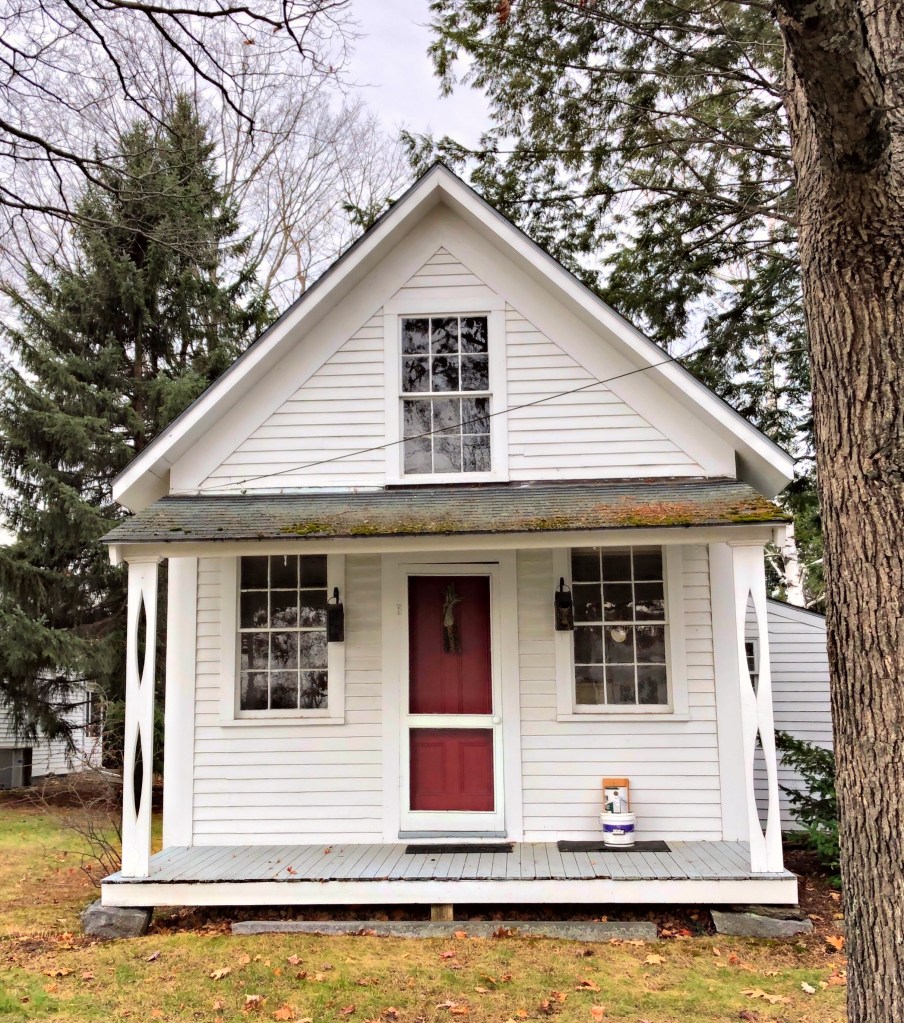
This cute little building was built around 1864 according to public records, as a cobbler (shoe repair) shop in Hollis, New Hampshire. The building, on Main Street, is located adjacent to the former Gates house and was used as his workshop for shoe repairs. The building was used for various purposes until the early 20th century when it was converted to a vehicular garage. The building was restored sometime after WWII and converted to a workshop/study by the owner, bringing the building back to its former glory, though altered. The building, seemingly balancing on stones from the photo, adds much to the pleasant streetscape of Main Street in Hollis.

Commonwealth Trust Company // 1908-c.1974

Ca. 1910 image courtesy of Boston Public Archives.

Located at the corner of Summer and Devonshire Streets in Downtown Boston, the Commonwealth Trust Company’s two-story marble banking house commanded the corner, despite its short stature. The building, completed in 1908, was constructed with Lee marble and decorated with ornate wrought and cast-iron grilles over windows. The building was designed by the architectural firm of Parker, Thomas & Rice in the Classical mode with large, fluted Corinthian columns and boxed corner pilasters framing the recessed center entrance, Corinthian pilasters ran along the side facade. At the inside, the building was coated with Cararra and Blanco marble with paneled oak offices. At the ground floor, offices and banking stations framed the outer walls, with the safety deposit boxes located on the second floor. The building was demolished by the 1970s and replaced with a one-story minimalist Modern building (I could not figure out why the former building was razed). The new building was demolished after a few decades with a larger building, better fitting the commercial district.