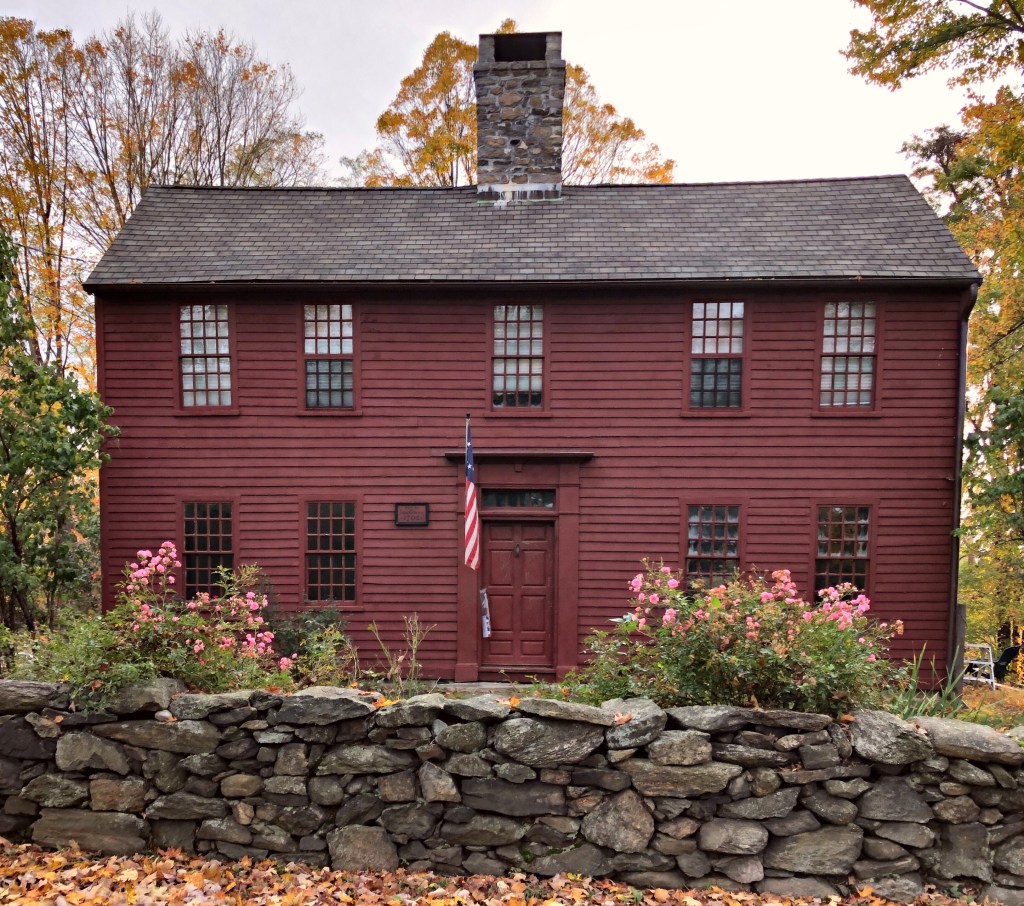
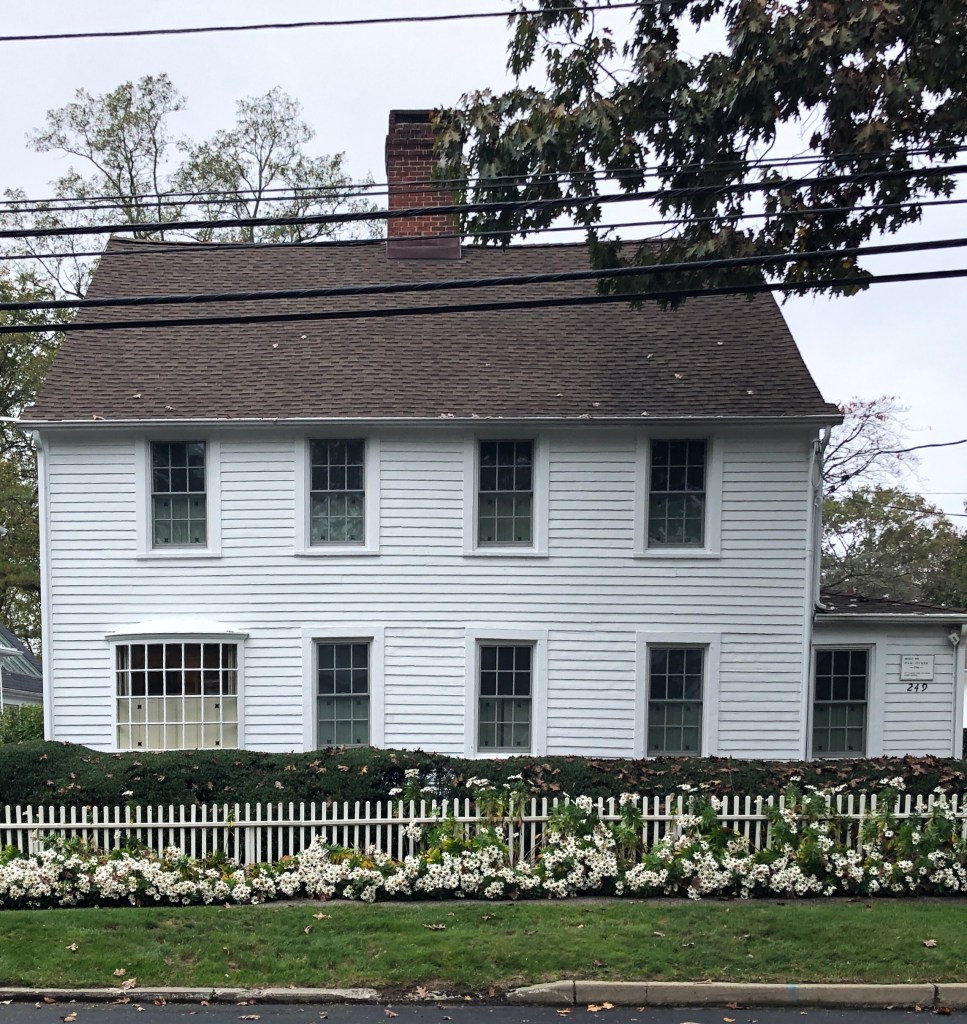
This homestead in Fairfield, Connecticut is situated on the edge of what was formerly called Pequot Swamp, and was originally built by Stephen Osborn in 1772. It is said to be the third Colonial dwelling erected in this part of the town and was left undisturbed by the British when they burned Fairfield in 1779 and raided various sections of the country along the shore. The home was originally located a few blocks away, but was moved in the 1950s when the highway (I-95) was routed through this part of Fairfield. The saltbox Georgian home was documented prior to the move by the Historic American Buildings Survey (HABS).
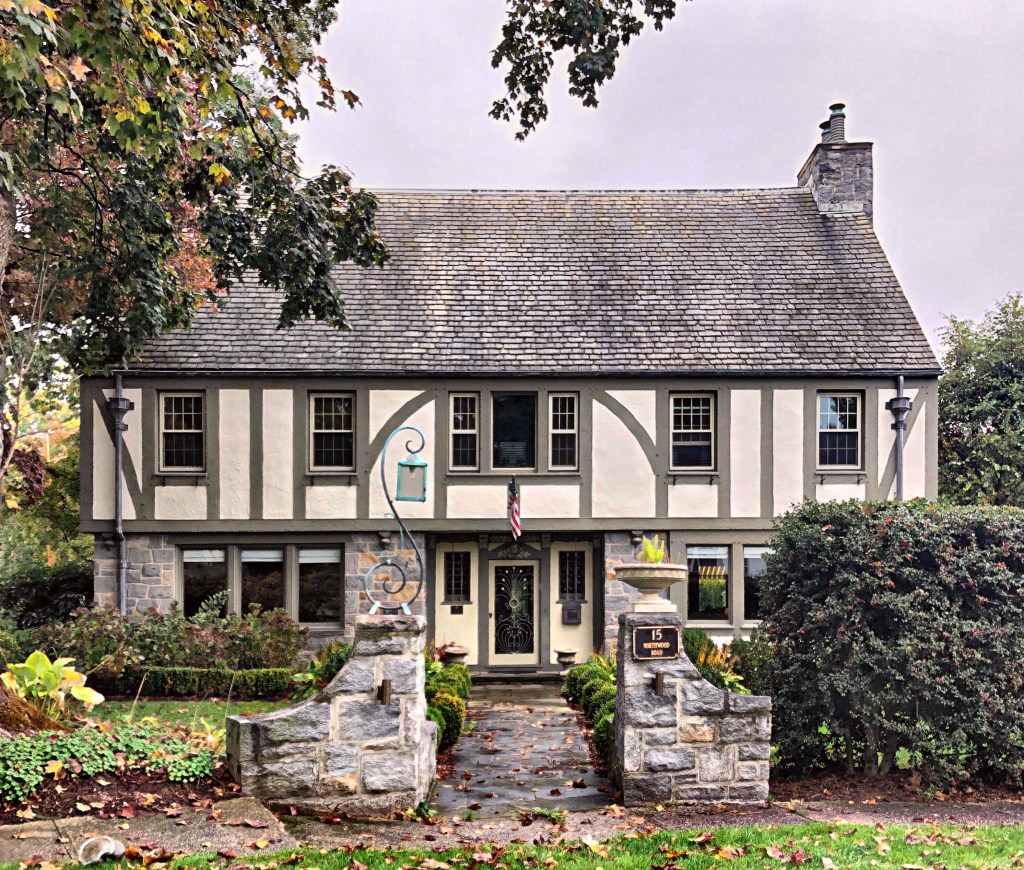
Herbert Almon Chaffee and Irma Chaffee had this Tudor home built by 1931 for their family in Fairfield, Connecticut. Mr. Chaffee was the Vice President and Assistant Treasurer of the City Savings Bank of nearby Bridgeport. Chaffee also at that time worked as Vice President of the A.W. Burritt Company, a lumber mill that produced building supplies and also operated as a real estate company that bought land and constructed on it. The home he had built clearly showcased the company’s work and features hallmarks of the English Tudor Revival style, with half-timbering, slate roof, and jettying (upper floor slightly overhanging the first).
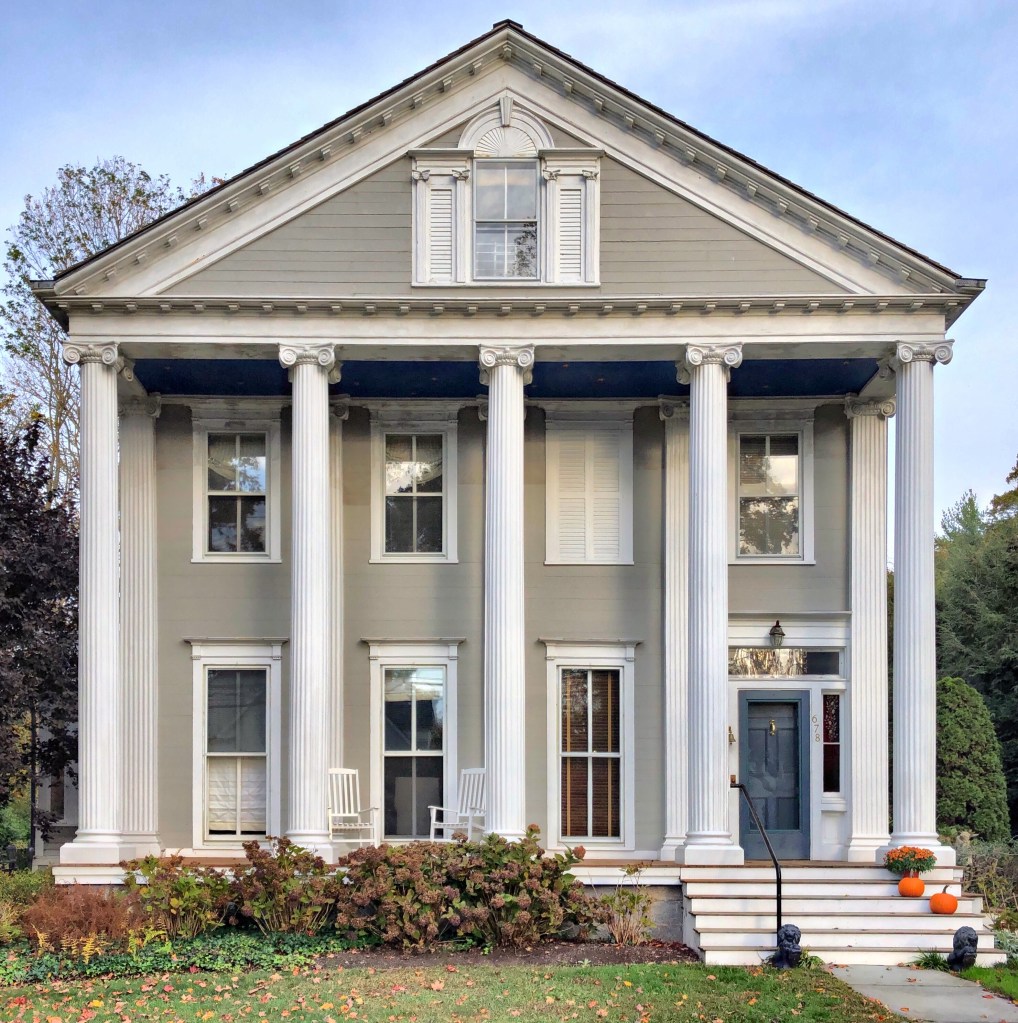
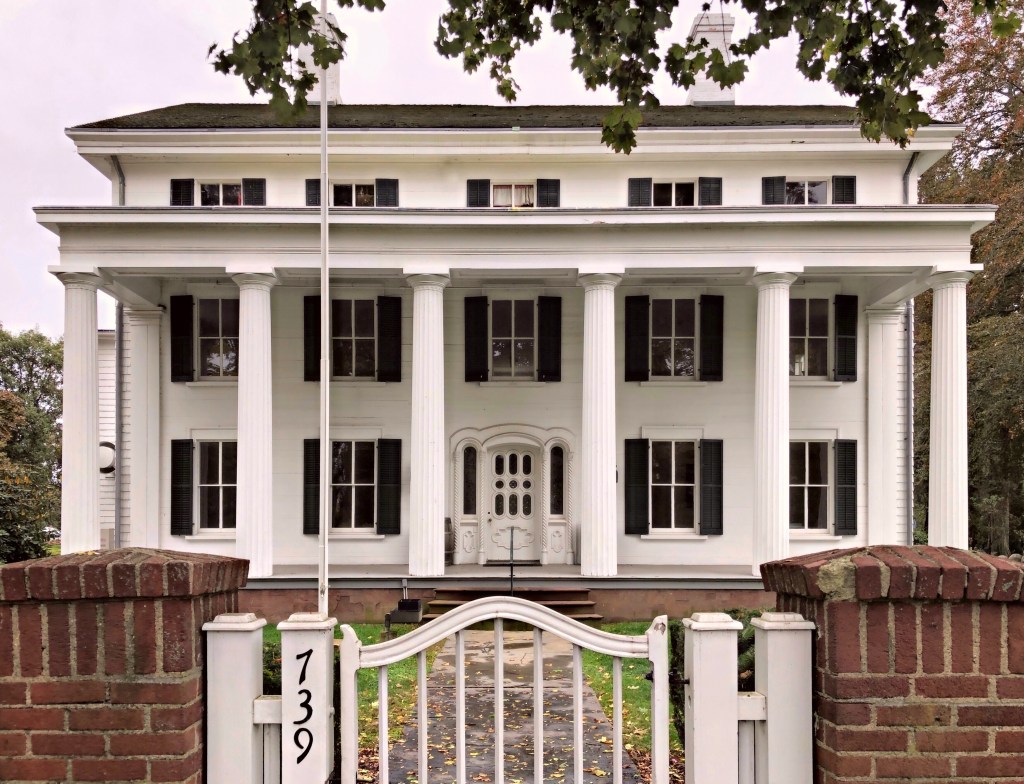
Originally built in 1775, the first iteration of the Burr Homestead, home of Thaddeus and Eunice Burr, which actually saw the marriage of John Hancock, President of the Continental Congress, to Dorothy Quincy. Thaddeus was the cousin of the famous Aaron Burr, Jr., who was the 3rd vice-president of the United States alongside Thomas Jefferson as President. Aaron Burr Jr. is best-known today through his portrayal in the popular play “Hamilton,” where he shoots Alexander Hamilton in a duel. The house was rebuilt in 1794 in its former location in Fairfield, Connecticut after a fire by the British in Fairfield destroyed the first. The home was willed to Thaddeus’ son General Gershom Burr, who eventually sold the mansion to Obadiah Jones. Mr. Jones updated the home by, ““taking out the dormer windows and lifting the roof, taking away the porch and building the broad veranda with its lofty massive fluted columns”. The home was eventually gifted to the Town of Fairfield and is presently maintained by the Fairfield Museum and History Center.
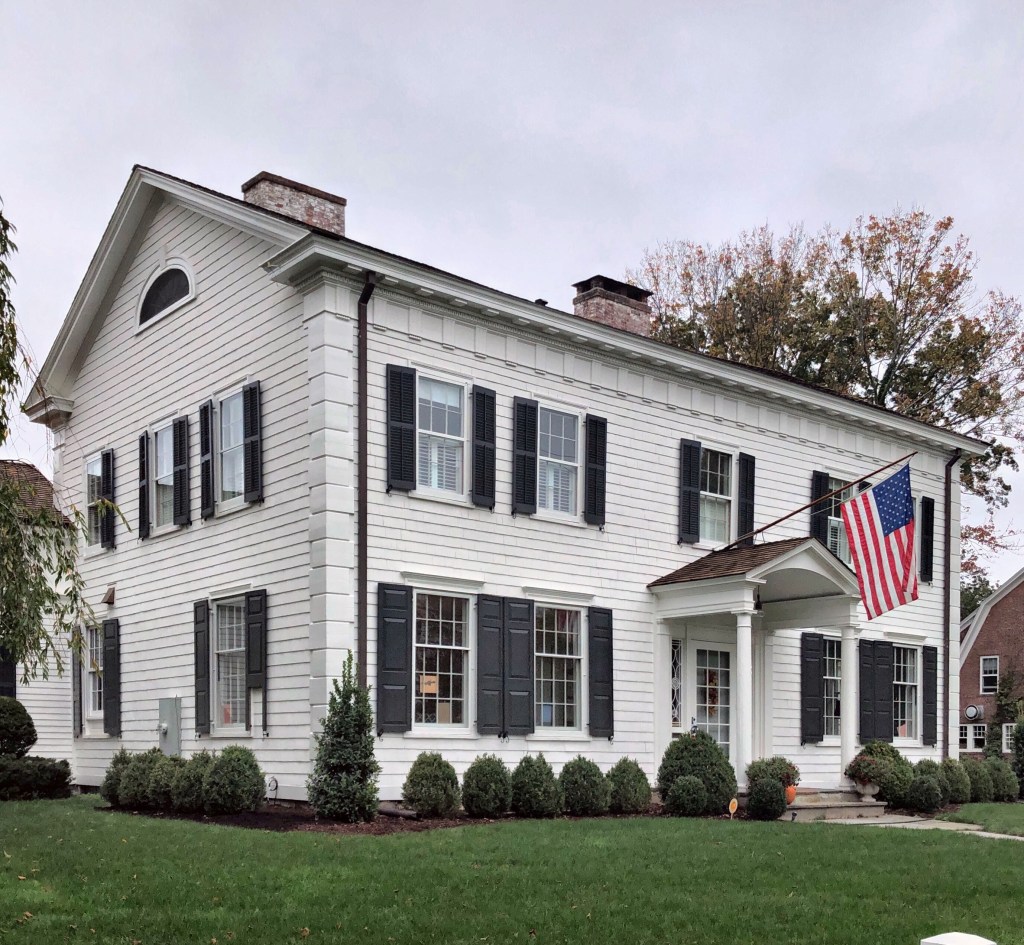
At the beginning of the 19th century, Fairfield, Connecticut was slowly recovering from its destruction by the British at the end of the Revolution. By around 1800, a member of the DeForest family appears to have built this home, across from the Town Common, overlooking the recently completed Fairfield County Courthouse. Before the American Civil War, the home was significantly altered, with a central pavilion, new round arch windows, and a full-length front porch, showcasing early Victorian-era desire for detail. The house changed hands several times over the next century, at one point becoming a boy’s school from 1891 to about 1909. In 1930, the house was renovated by architect Walter Bradnee Kirby, who restored the home back to its Colonial past, showing how the pendulum of architectural tastes can change back-and-forth with every passing generation.
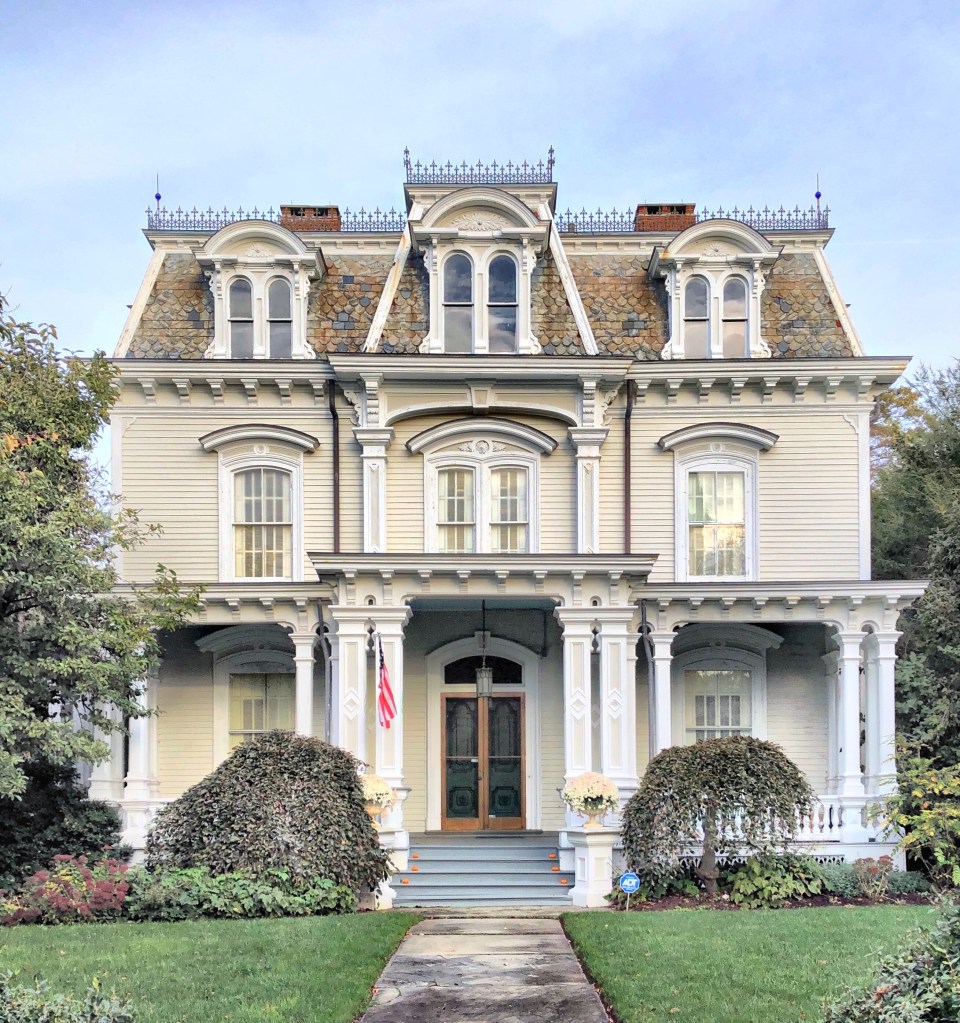
On July 7-8, 1779, the Red Coats marched through Fairfield torching houses to punish the locals for seeking independence. They killed locals, destroying anything they could find on their way out, setting fires to homes and civic buildings around the Green. This home was built by Isaac Tucker, later sold to Jonathan Maltbie, sea captain involved with East Indies trade. He later would fight against the British during the Revolution, and after the war, was hired as captain on one of the first cutter ships built, the Argus. During the British invasion of Fairfield, they attempted to set fire to this home three times, but it seemed to never go up in flames when they returned. The tradition holds that an elderly servant, hiding upstairs, put out the flames and saved the house from destruction, after the British Troops torched it. Burn marks apparently remain inside to this day. Since the home was built, the front door facing the street was relocated to the side, and a large multi-pane bay window was installed in its place.
One of the more stunning homes and parks in Massachusetts is located in Easton, known as the Borderland State Park. Borderland was the 1,200-acre estate of Blanche Ames Ames, an artist, political activist, inventor, writer, and prominent supporter of women’s suffrage and birth control. Blanche Ames’ husband, Oakes Ames (of the Ames Family of Easton), came from a wealthy Massachusetts family that owned the Ames Shovel Works. Marrying in 1900, Blanche and Oakes (who were not related even though they had the same last name) constructed their stone mansion in 1910 and created a system of ponds and dams on their property. Blanche and Oakes, who wanted a fireproof house, became displeased with the work of their architect because of the challenges he faced with their design and engineering requirements. Dismissing the architect, Blanche took over the design and construction management of the mansion and hired the Concrete Engineering Company to draw plans according to her specifications. Also on the grounds is a hunting lodge with fireplace, overlooking the large pond on the estate.
Once the mansion was completed, Blanche set up a studio on in the house and developed a scientific color system for mixing paints. She became the sole illustrator of her husband’s botanical books (Oakes was a renowned authority on orchids and taught botany at Harvard from 1900 until his retirement in 1941). Later in life, Blanche became the co-founder of the Birth Control League of Massachusetts and the Treasurer of the League of Women Voters from 1915 to 1918. She also gained notoriety for her political cartoons depicting the struggle for women’s suffrage. In addition to these many accomplishments, Blanche was an inventor who, in 1939, designed a hexagonal lumber cutter. During World War II she designed, tested and patented a method for ensnaring enemy airplanes in wires hung from balloons. Remaining active her entire life, Blanche received a patent for a water anti-pollution device in 1969, a year before her death.
Hezekiah Porter (1783-1851) built this house in 1822 for him and his family, right in Thetford Center, Vermont. Porter was born in 1783 in Hebron, Connecticut, where he presumably learned the clothier trade, before moving to Thetford in 1806. Porter later operated a brickyard, serving as contractor to the Thetford Center Methodist Church, Town Hall and several other brick homes in town dating from the 1820s and 1830s. Porter lived on this large property with his wife and ten children until his death. The property was later occupied by Hezekiah’s son, Amos P. Porter. In 1888, Amos farmed about 200 acres and had 7 cows, 50 Merino sheep and 18 Jersey cattle!
This transitional Federal house in Thetford was built around 1795 for an Isaac White. The house was later owned by Orange Heaton (who’s name perfectly fits the color of the leaves in the photo). The design is refined, yet stately with the enclosed, gabled, projecting entrance porch. Louvered panels and an elliptical louvered fan frame the door.
William C. Strong purchased the old Wyman Farm in present day Waban Village in 1875, consisting of 93 acres of open land and rolling hills. He subdivided some of the land after the completion of the Waban Station, later developing the Strong’s Block, the premier commercial block in the village. To kick off the development along Windsor Road, he hired architect Herbert Langford Warren, the Dean of Harvard’s Architecture School (who also owned a historic farmhouse nearby) to design a couple homes for sale. This stunning house is notable for the prominent gable end gambrel roof, shingle siding, and porte-cochere.
In 1688, John Staples, settled in the untouched landscape seven miles west of Boston, now known as Waban Village in the town of Newton. John was a weaver by trade but he ended up as the first public school teacher, the town clerk, a policeman, and an alderman. John married and lived in a modest farmhouse for decades here, witnessing the birth of a new nation nearby. The couple had no children of their own but raised some of Mary’s relatives including Moses Crafts, who would eventually take over the home. Craft rebuilt the house on the original foundation around 1750, constructing a colonial farmhouse two and a half stories high with five windows and two rooms across, one room wide.
Joseph Crafts died in 1821 at the age of 85, leaving no will and considerable debts owed. The Judge of Probate ordered the property to be auctioned, and Joseph’s son, Moses Crafts II, made the winning bid of $5.50 for the house, barn, and a large tract of land! In 1824, Moses Craft II sold the property to his cousin William Wiswall, who gave the house a Federal period remodeling.
By the late 19th century, the home and ample farm land were acquired by William Strong and his wife Mary. William, President of the Massachusetts Horticultural Society, used the property for some time as a nursery, with apple orchards and rose gardens. After his petitioning for a train station in Waban, he parceled up the farmland into large house lots for sale, seeing the neighborhood shifting to a suburban village. He soon after built the Strong Block, the first commercial building here.