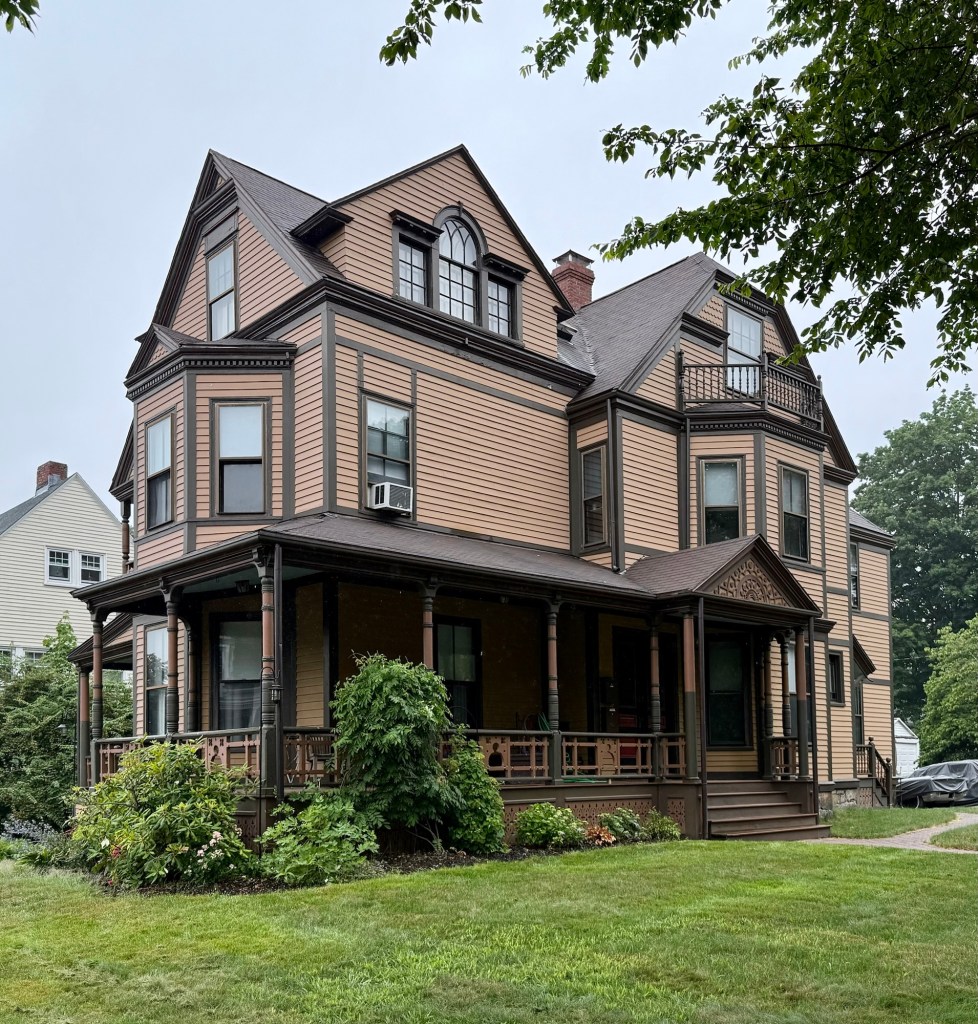
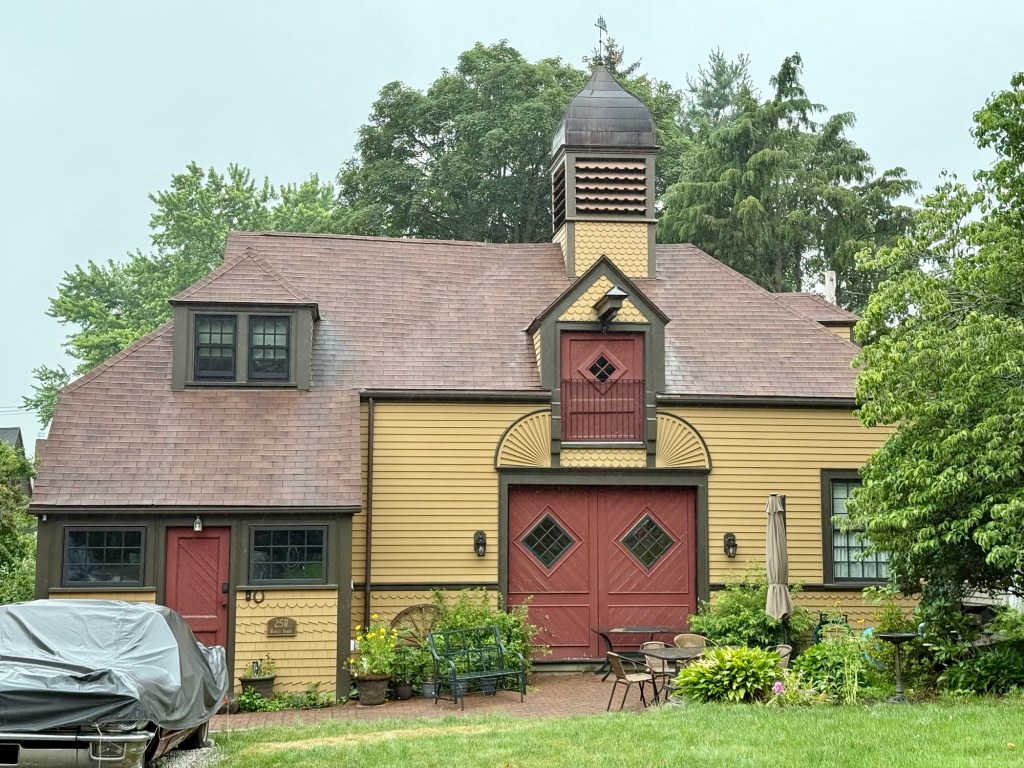
Situated at the corner of Harley and Roslin streets in the Ashmont Hill neighborhood of Dorchester, this property showcases the flair and ornate features of the eclectic Victorian styles, along with an original stable. The property was developed in 1884 by Thomas T. Hartford. Thomas Thurston Hartford (1845-1916), was a shoe machinery manufacturer with offices in the Leather District near downtown Boston, continuing in his father’s company, Hartford Brothers Co. The house and stable are said to have been designed by architect Edwin J. Lewis, Jr., or John A. Fox, who blended Stick and Queen Anne styles. Interestingly, the house features Palladian windows in the gables and was restored by owners, who even went the extra mile to repaint the house in its historic colors.
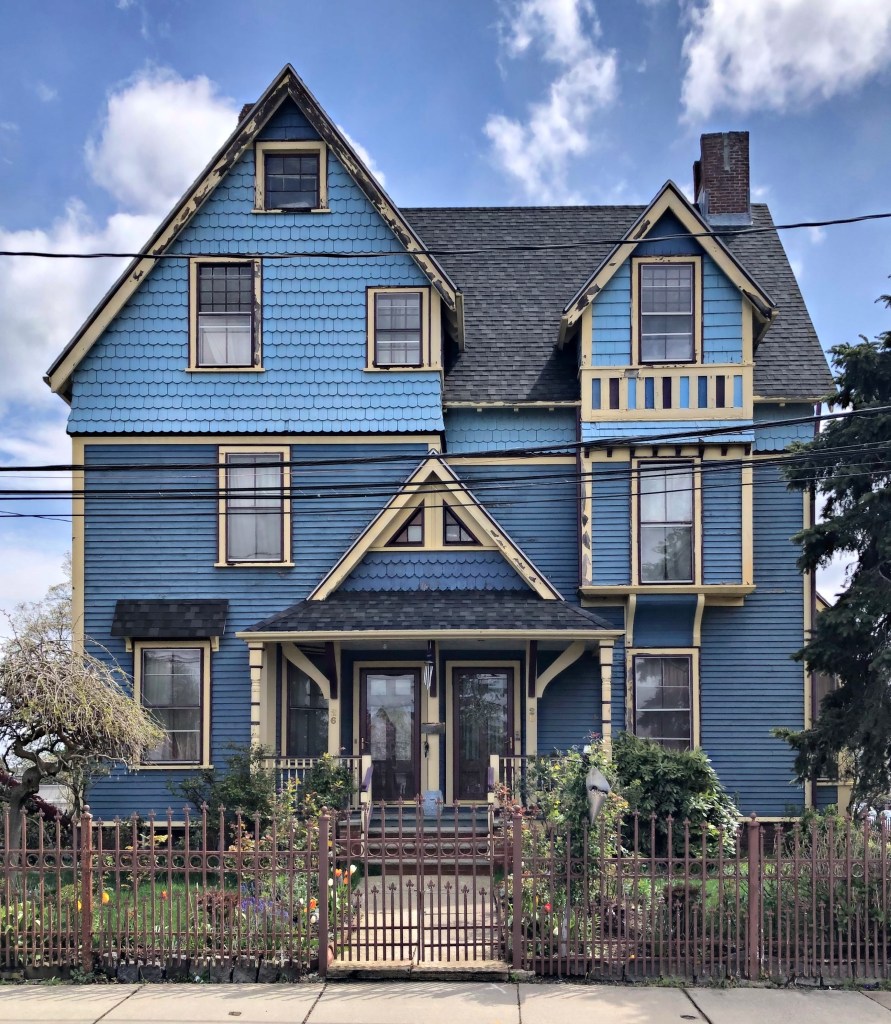
Nothing beats a good Victorian-era house! This example in the Clam Point neighborhood of Dorchester does not disappoint. The Stick-style double-house was built for miss Mary E. Noyes and Ms. Hersey replacing an older house on the lot. The women hired architect John A. Fox to design the house which possesses one of the most complex forms and roof configurations in the neighborhood. Clad with clapboards at the first and second stories, its six intersecting gables are sheathed with scalloped shingles. At the main entrance on the façade is an open porch with square posts and railings with turned balusters. The side façade is even more complex with two side gables and a two-tier porch enlivened by Chinese Chippendale and spool work railings. The Herseys, along with Mary E. Noyes, co-owned the house until 1884; thereafter it was owned by Mary E. Noyes until around World War I. The stick style home really pops with that blue color, what do you think?
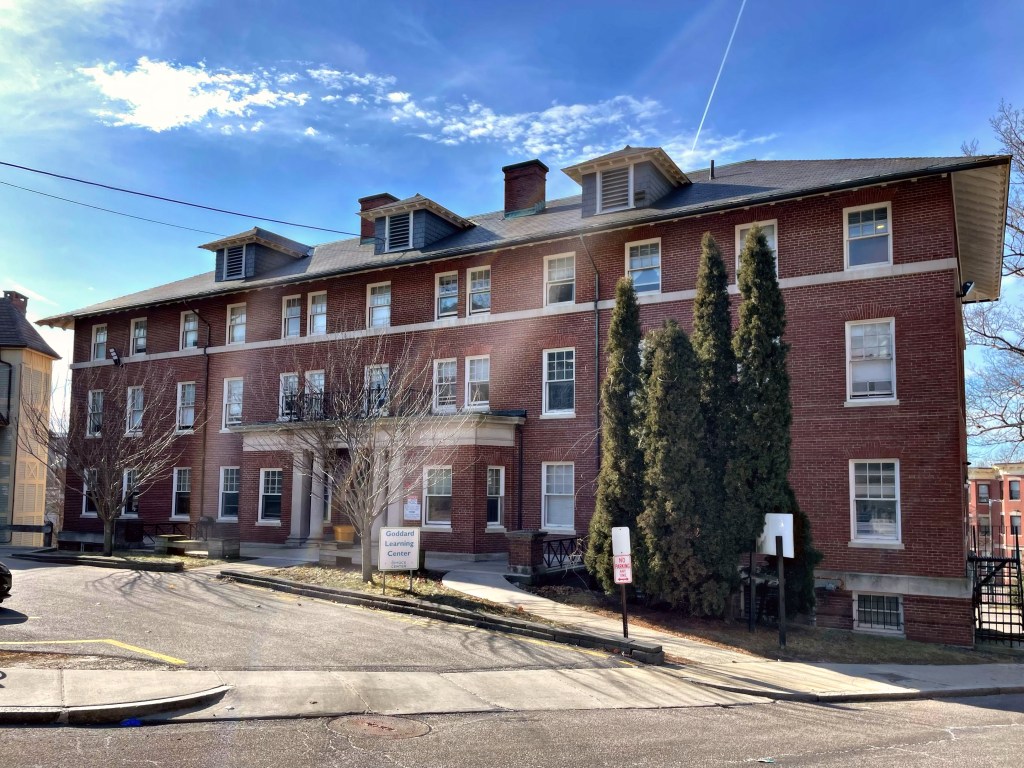
Located adjacent to the Zakrzewska Building and Cary Cottage at the former New England Hospital for Women and Children is the 1909 Goddard Nurses Home, designed by John A. Fox. This three story brick building typifies the Classical Revival style with its recessed central entranceway and symmetrical fenestration with flared brick keystone lintels. The slate hipped roof is perforated by three dormers on the front facade. The broad overhanging eaves have exposed rafters which is an element of Craftsman design, common at the time. The Goddard Nurses Home provided living accomodations for up to fifty nurses who worked at the hospital. It was named after Lucy Goddard, one of the original incorporators of the women’s hospital, she served as president for twenty-five years.
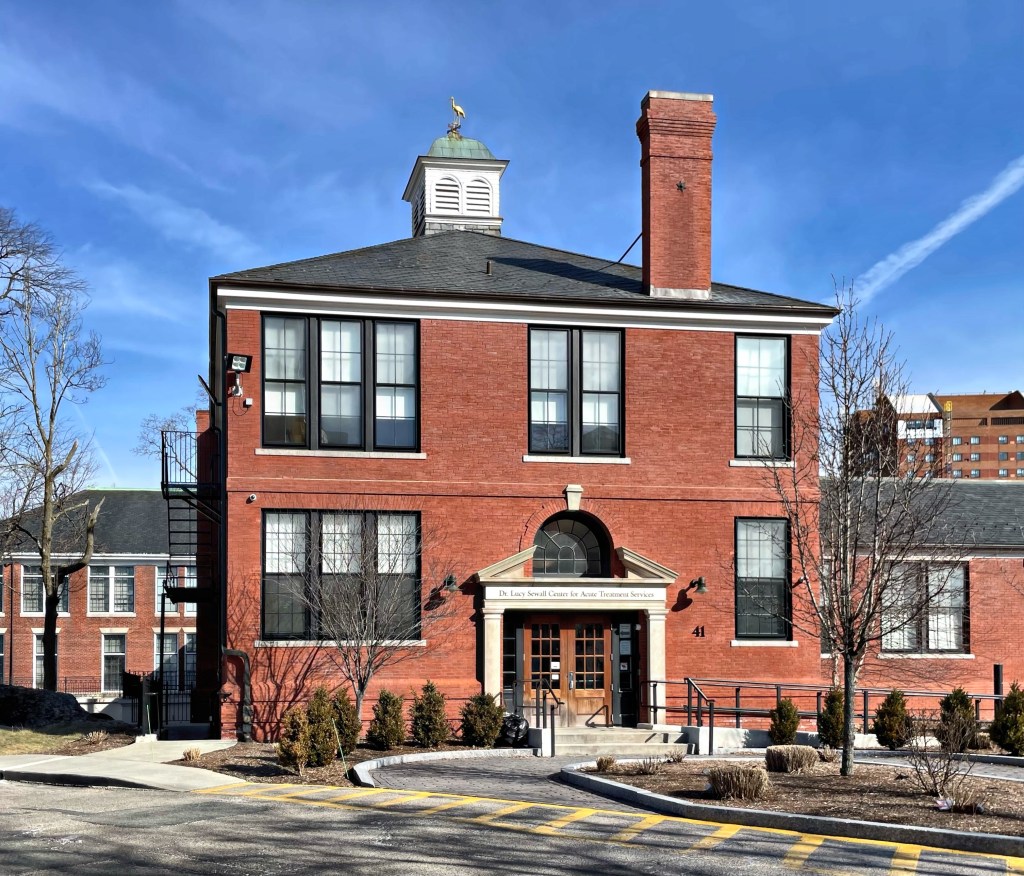
As the New England Hospital for Women and Children continued to grow in the decades following its founding in 1862, expanded facilities were needed to deal with increased patients along with new nurses and doctors to treat them. Land was acquired across from the Cary Cottage and Zakrzewska Building, and a second building campaign began to expand the facilities and grow the women’s hospital. The management of the hospital did not hire Cummings and Sears, but went with architect John A. Fox to furnish plans for a new maternity building. The Sewall Maternity Building was designed in the Colonial Revival style, a relatively modest example that features a unique broken pediment over the door housing a large window. In 1916, the building was expanded by an addition at the rear which enclosed a central courtyard, it was also designed by John Fox.
The Male Asylum building at the Tewksbury State Hospital was built in 1901 from plans by architect John A. Fox, who designed the Administration Building and many other buildings in the hospital/asylum campus. The building was eventually renamed after Anne Sullivan, who is best known as the teacher and companion of Helen Keller. Anne Sullivan contracted a bacterial eye disease known as trachoma, which caused many painful infections and, over time, made her nearly blind. When she was eight, her mother died from tuberculosis, and her father abandoned the children two years later for fear he could not raise them on his own. She and her younger brother, James (Jimmie), were sent to the run-down and overcrowded Tewksbury Almshouse (later renamed the Tewksbury Hospital) as a result, where she endured multiple unsuccessful eye operations and poor, cramped conditions. The male asylum building held cramped dormitories with men and boys suffering from various ailments and mental conditions. The building sits atop a stunning rubblestone foundation and features prominent Romanesque arched windows.
Located adjacent to the Administration Building at the Tewksbury State Hospital, the Superintendent’s Residence, built in 1894, combines elements of the Craftsman and Colonial Revival styles wonderfully. The home is two-stories, and built of red brick laid in Flemish bond, capped with a slate hipped roof with exposed rafters. A massive uncovered porch wraps around the home and sits atop a rubblestone foundation. Like the adjacent Administration Building, the Superintendent’s Residence was also designed by Boston architect John A. Fox. From this residence, the massive almshouse and asylum would be run by the superintendent, who oversaw day to day activities and made sure everything was running smoothly. The house appears vacant now.
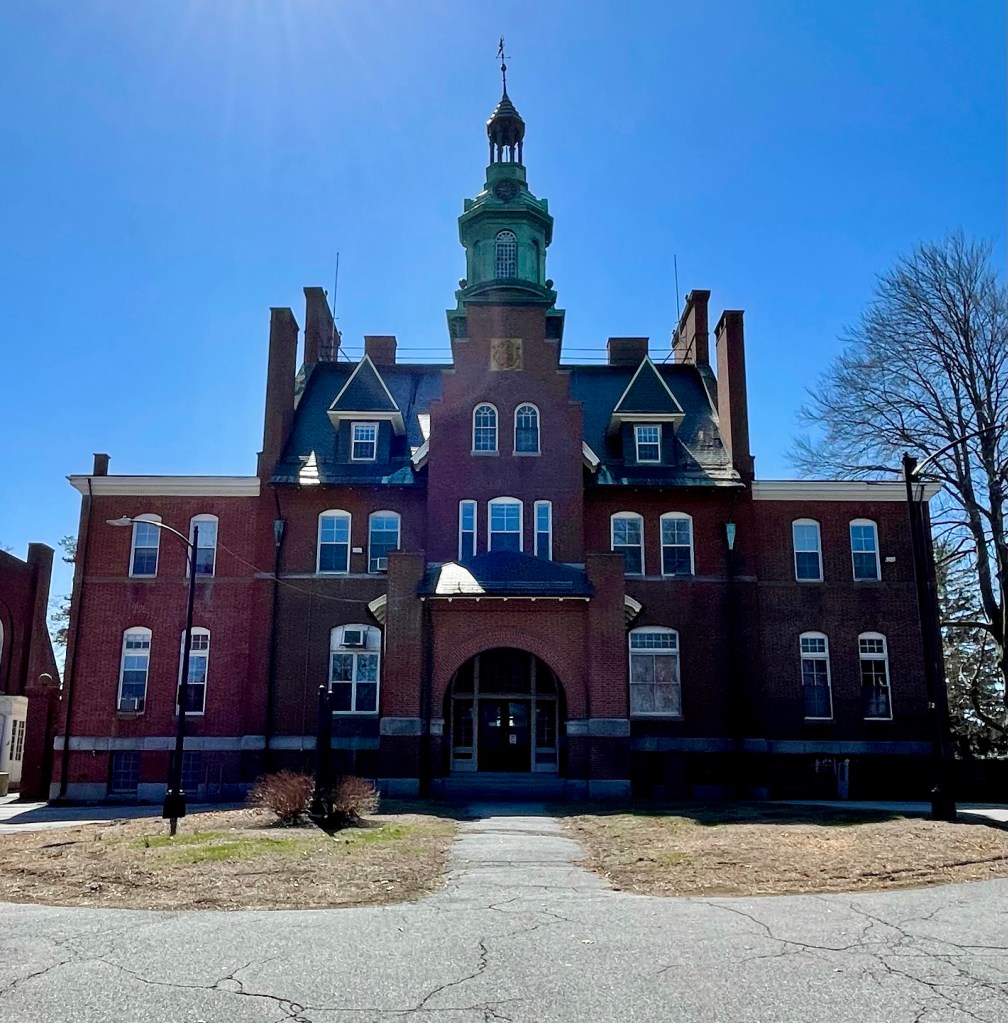
The Tewksbury State Hospital was established in 1852 as one of three Massachusetts State almshouses (along with Bridgewater and Monson). The almshouses were needed due to the unprecedented influx of Irish immigrants at that time, many of which found difficulty locating work. These almshouses represented the state’s first venture into care of the poor, a role previously filled by the cities and towns up to that time. In 1866, when Tewksbury began accepting the “pauper insane”, it became the state’s first facility to accept cases of chronic insanity specifically. Decades later, Massachusetts Governor Benjamin Butler accused the almshouse in Tewksbury in, “trading in bodies of dead paupers and transporting them for a profit to medical schools,” and “tanning human flesh to convert to shoes or other objects”. The facility was later investigated, and no conclusive evidence was found. In the late 19th century, a major rebuilding (and re-branding) campaign to upgrade the old almshouse by replacing its early wood-frame buildings with more durable and fireproof masonry ones was undertaken. One of the earliest “new” buildings was this Queen Anne-style Administration Building, standing at the head of the former entrance drive, which creates a fairly foreboding presence. This building was designed by Boston architect John A. Fox, and showcases the epitome of Queen Anne institutional design. The hospital runs today much like a traditional campus, with some of the older buildings unused, providing a strange composition. The former Administration Building is now home to the Massachusetts Public Health Museum.


 Buildings of New England