Davis House-Aunt Felicia’s Folly // 1805

If you stroll down Maine Street in Kennebunkport, you cant help but notice the most charming saltbox house. Constructed in 1805 by Samuel Davis, a master builder in Kennebunkport, the Federal home likely had a saltbox roof originally which would have housed the kitchen. After the Civil War, the home was owned by Silas Perkins, who then sold the home to his daughter, Felicia (Perkins) Cleaves and her husband, Albert, a teacher. By the 1870s, Felicia had the Colonial home completely renovated, turning into a Gothic Revival showpiece. Mrs. Cleaves added a new wing to the right of the original house, for she desired the high ceilings that were common during the Victorian era. The building became known in town as “Aunt Felicia’s Folly” and alternately, “the Witch House.” In 1966, owners restored the home back to what it likely looked like before the 1870s renovation, adding a saltbox roof.

Undated image showing “Aunt Felicia’s Folly” with Gothic alterations.

South Congregational Church // 1824

Built in 1824, the South Church in Kennebunkport Village looked very much as it does today, with the exception of the portico, which was added in 1912. In the early 19th century, architects were seldom employed in such remote areas therefore, builders often used manuals and examples of other churches in addition to their own experience gained from working the large shipbuilding yards adjacent to the Kennebunk River. The cupola, restored in 1991, is designed after an example by Christopher Wren and the steeple retains the original 1824 Aaron Willard clock with its unique wooden face, still keeps accurate time and rings on the hour. The church remains as an active space with a growing congregation in the summer months.

St. Martha’s Catholic Church // 1903

A happy blending of Mission, Colonial Revival and Shingle Styles for the Maine coastal community of Kennebunkport, the St. Martha’s Catholic Church exemplifies the charm of this town. The church is sited on a corner lot with a belfry at its corner. The nave features a central entry with Colonial pilasters and pediment above the second floor windows. The roofline is shaped with Mission style parapet walls and arched openings at the tower, showcasing the Spanish influence in the design. The entire building is wrapped with cedar shingles, as a nod to the coastal summer resort it resides. The church operated here until the mid-late 20th century when it was converted to an art gallery, and now is home to condos.

The Kedge // 1887

Located in the Cape Arundel Summer colony in Kennebunkport, this Shingle style cottage, built in 1887 sits perched on a hill with views of the Atlantic Ocean. Built for John Bach McMaster, a historian who was also a professor at the University of Pennsylvania, the house was the first of two he owned in Kennebunkport, where he summered. The son of a former Mississippi plantation owner, McMaster grew up in New York City and worked his way through the City College of New York. Although he obtained a degree in civil engineering in 1873, he was deeply interested in American history. He worked briefly as a civil engineer in Virginia and Chicago in 1873, but he returned to New York the following year and earned a meagre living by tutoring.

McMaster was appointed assistant professor of civil engineering at Princeton University in 1877. Meanwhile, he planned to write a broad-scale history of the United States. In the summer of 1878 he led an expedition to the American West, an experience that impressed on him the pioneers’ efforts and the need for a social history of the West. His inspiration materialized in 1881 with the completion of the first chapter of A History of the People of the United States from the Revolution to the Civil War. The earnings from the series gave him substantial wealth and he then bought a summer residence up in Maine seen here.

If anyone knows the architect of this house, please share!

Melville Walker House // 1860

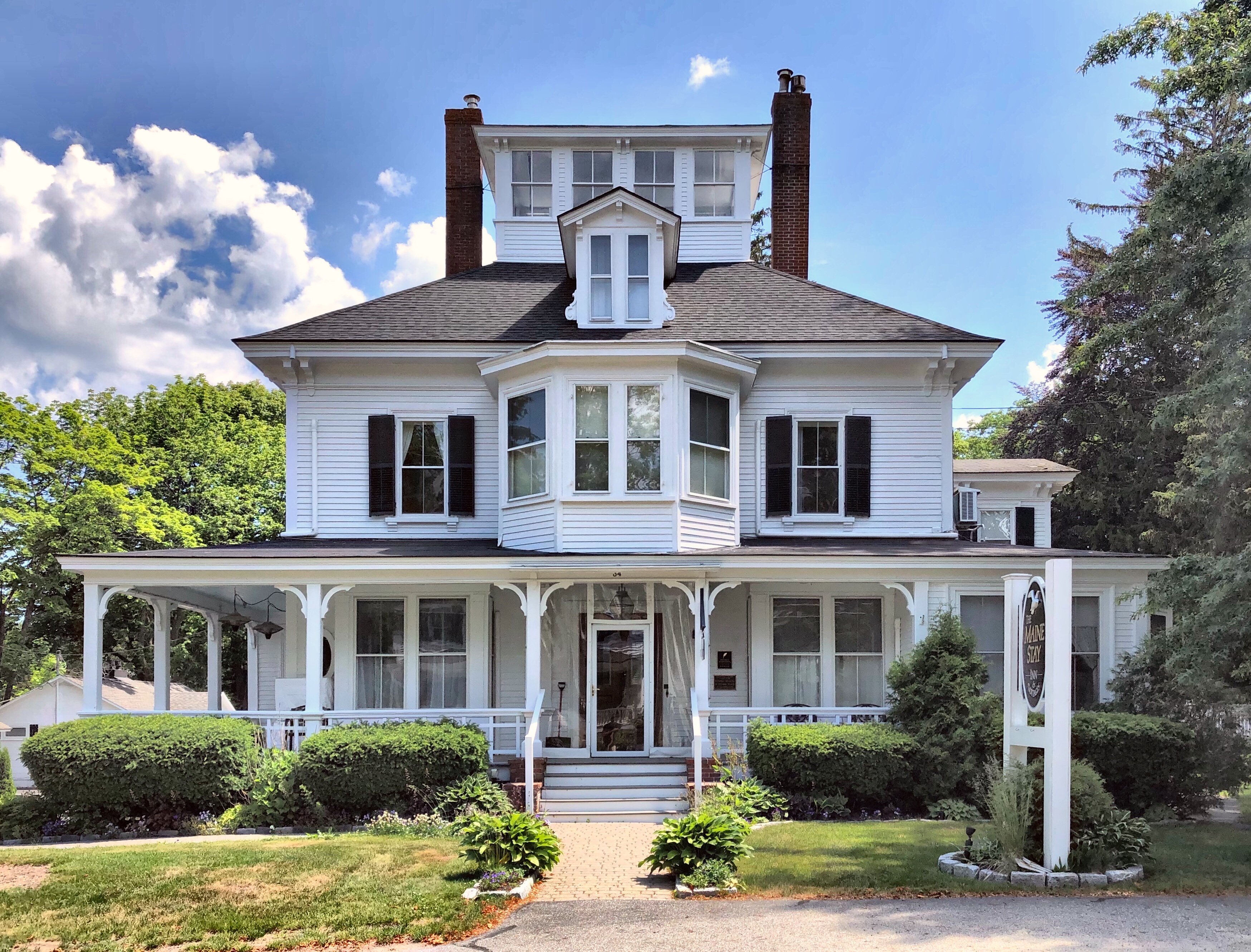
Built for Melville Walker, a sea captain on land gifted to him by his father, this home perfectly exhibits the changing dynamic of Kennebunkport. Melville Walker would often be out at sea for months at a time, and he apparently brought along his wife, three daughters and son on many trips to ports all over the world. The Italianate home was eventually sold out of the family, and by 1901, it was purchased by George Little, an executive with the New York, New Haven and Hartford Railroad. That year, he had the summer home renovated with Colonial Revival detailing, including the hipped roof, dormer, and other detailing. The belvedere, 2/2 windows, and Victorian era porch were retained, showing the original form and detailing of the Italianate version. In the 1950s, the home was converted to an inn, with small cottages constructed surrounding the property to house additional families. Today, Maine Stay Inn & Cottages welcomes families from all over the world to experience the beauty of Kennebunkport.

Ivory Goodwin House // c.1808

Built by Ivory Goodwin (1783-1851), a joiner who moved to Kennebunkport from Berwick, Maine in 1799. Goodwin and his wife Mary, lived in this small Cape house with their six children, a pretty amazing feat in its own right! The Federal/Greek Revival home is five bays wide with a central entry with sidelights and pilasters flanking.

Lyric Theater // 1919

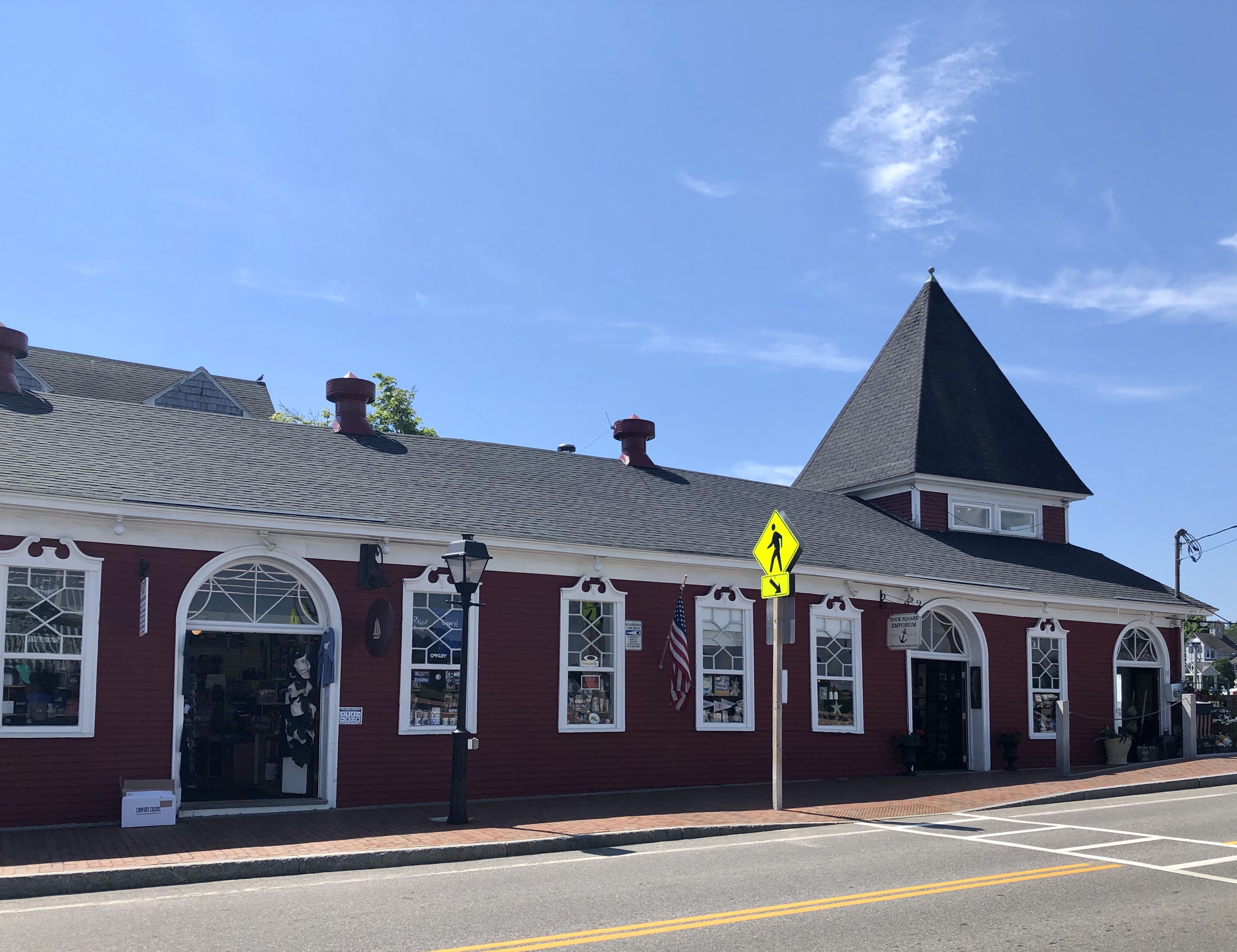
One of the more identifiable buildings in Dock Square in Kennebunkport Village is one of the first you typically see when arriving from neighboring Kennebunk. The wood-frame building perched on stilts at the edge of the Kennebunk River features a prominent pyramidal roof and stunning windows. Through some digging, it appears the building was built in 1919 as the Lyric Theater, a 350-seat motion-picture cinema, that catered to the summer residents. Sometime after the 1970s, the theater was converted to retail use and now is home to Saxony Imports a place where you can pick up some presidential swag, gag gifts, or touristy clothing.