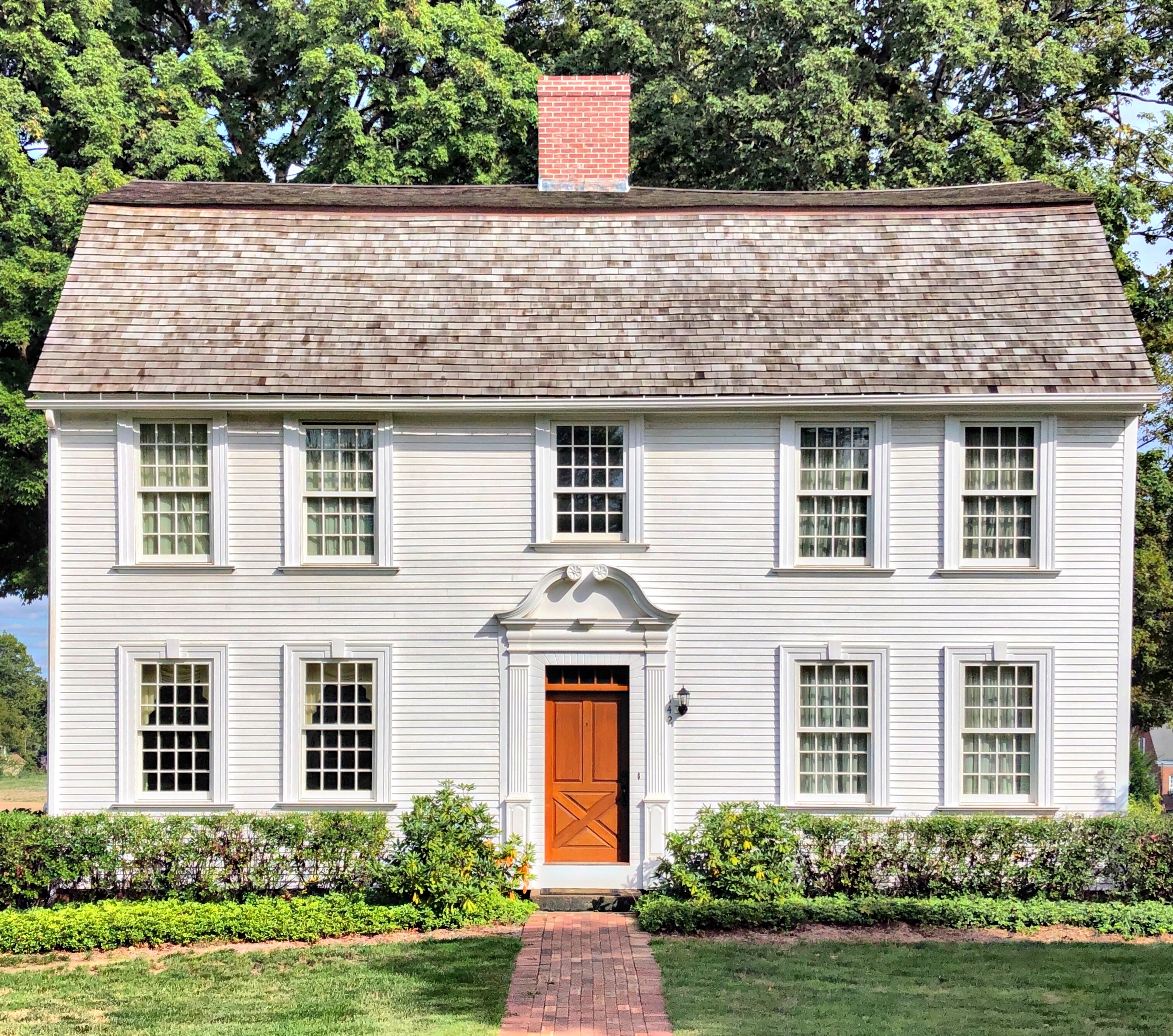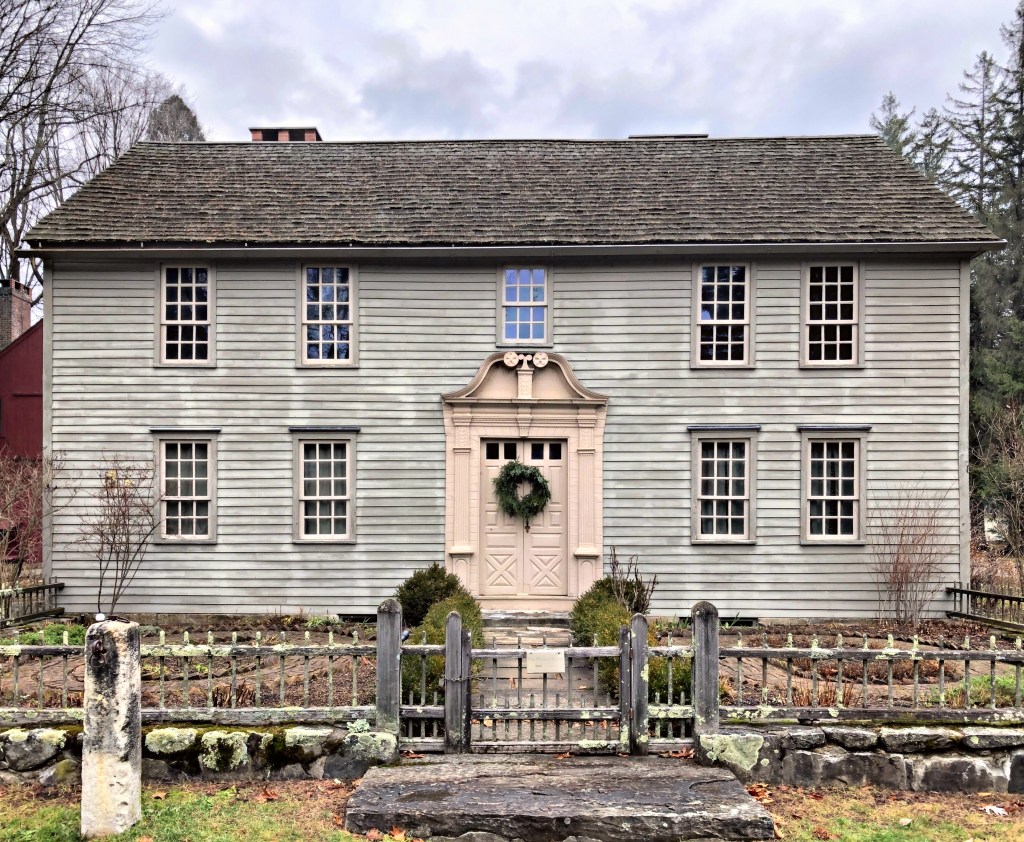
Mission House // c.1739

The Mission House, erected by the Reverend John Sergeant in 1739 on Prospect Hill in Stockbridge, Massachusetts, is an excellent and little-altered example of Georgian architecture as constructed on the New
England frontier. The home is a lasting remnant of early missionary efforts toward the local Mohican tribe. Reverend John Sergeant, the first missionary to the Housatonic Indians, moved to Stockbridge and preached to the native people here and at the Congregational Church. Sergeant and his wife Abigail moved to town, but she had made it clear that she wished to live on the hill, away from the village and the native people. Sergeant then built this home, a spacious and distinguished house for its frontier location. Though covered in part by a grant from the General Court, the cost of constructing such a house must have been a severe strain on Sergeant’s slender financial resources, as his salary at that time was 100 pounds per year. The home remained in the family until the 19th century. In 1928, long unoccupied and badly in need of repair, the house was purchased by Miss Mabel Choate, daughter of noted lawyer and former Ambassador to Great Britain, Joseph H. Choate. The house was taken down piece by piece, moved and reconstructed, on Main Street, in its current location. The Mission House was furnished with pieces appropriate to Sergeant’s economic status and his wife’s taste, many of them dating from the 1750’s or earlier. Since 1948, the home has been owned by the Trustees of Reservations.

Red Lion Inn // 1897

The largest building on Main Street in Stockbridge has to be the Red Lion Inn, a regional institution and one of the best places to rest your head in New England. The inn got its start just before the Revolutionary War. According to tradition, Silas Pepoon established a small tavern on the corner of Main Street in 1773, under the sign of a red lion. A year later, angry citizens gathered at the tavern to boycott English goods and to pass resolutions protesting the oppressive Acts of Intolerance levied against the colonies. Since its earliest days, the inn was a vital gathering place for locals and has continued to play an important role in the life of the community ever since. In 1862, the inn was owned by Mr. and Mrs. Charles Plumb, avid collectors of rare and fine items, who became renowned for their impressive compilation of colonial antiques. A fire in 1896 destroyed the building but its remarkable array of collectibles was saved and the inn was rebuilt within a year by designs from Harry E. Weeks, a Pittsfield-based architect.

Guerrieri Block // 1921

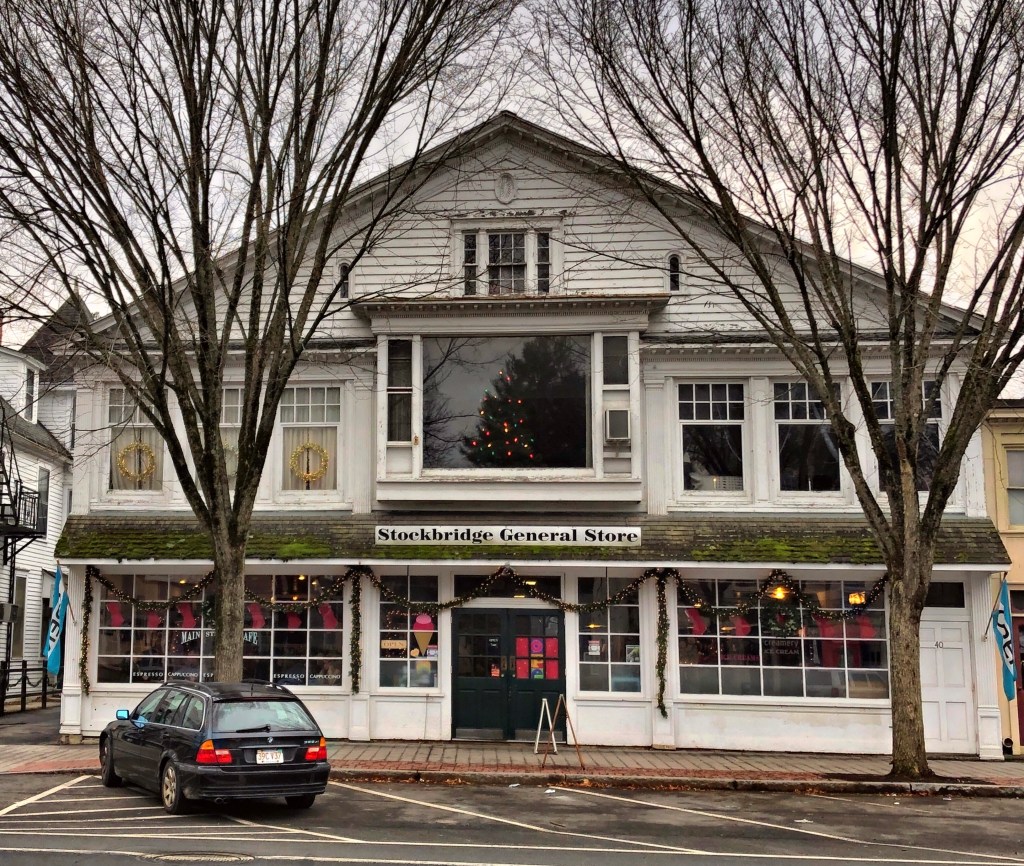
Norman Rockwell‘s ‘Home for Christmas’ painting in 1967 depicts the Main Street scene in Stockbridge, Massachusetts, and epitomizes the essence of Christmas in small towns across the country. In the iconic painting, you can find many landmarks (including the Town Offices building) that make up the quaint main street, that typifies many small New England towns. At the center of his painting, the Guerrieri Block can be seen with a Christmas tree lit up in the window on the second floor. The Guerrieri Block was built in 1921 by Antonio Guerrieri, a skilled woodworker who sold and repaired antiques in one of three street level shops in the block. He and his family lived in an apartment on the second floor. The next year he completed construction of a shop behind the block where he worked out of. In 1953, Norman Rockwell moved to Stockbridge and spoke with Antonio about using the second floor of his building as a studio. Antonio constructed a large central bay window with plate glass to flood the space with light and allow Rockwell to work while observing the street below. Rockwell used the space as his studio until 1957. The building has since been occupied as a general store.

Stockbridge Town Offices // 1884

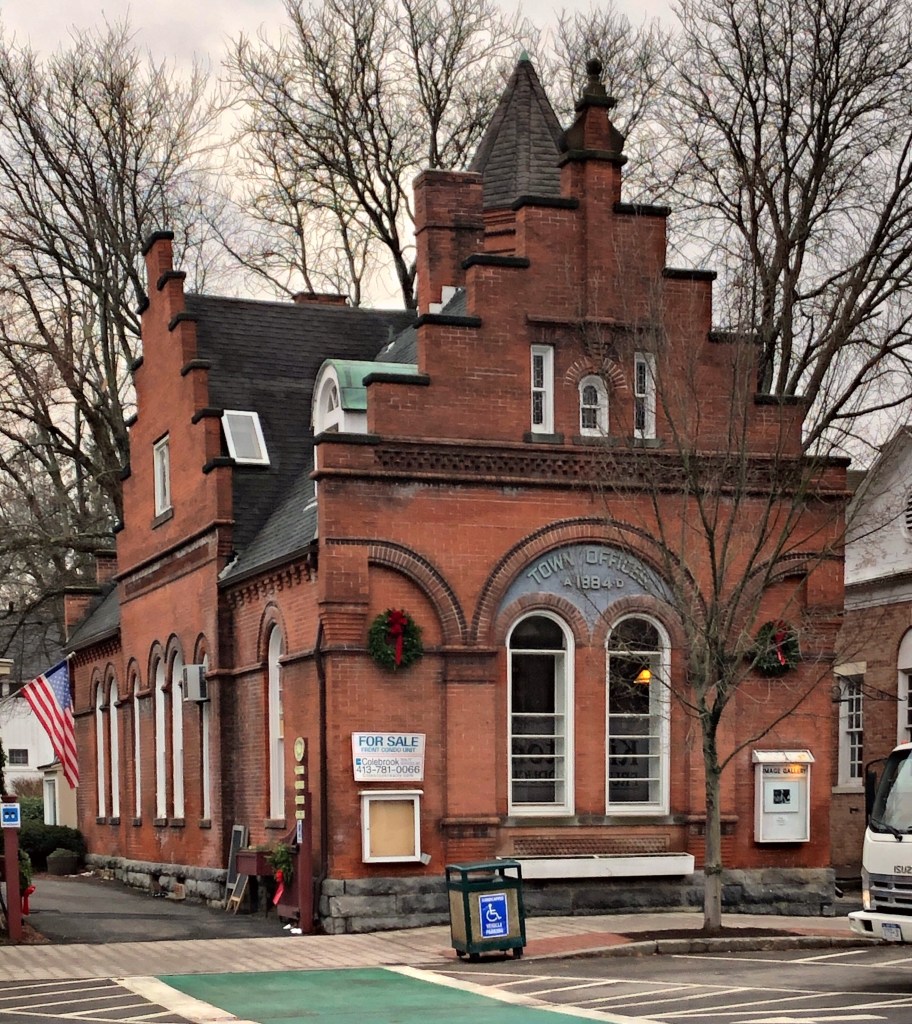
Built in 1884, the Town Office Building on Main Street in Stockbridge, housed more conveniently located government offices and came equipped with a basement jail. The building was constructed of brick to protect town records from fire and the adjacent buildings. The architecture is Flemish Revival with its stepped gables, a tower, and terra cotta and stained glass ornaments, a distinctive and different type of architecture on Main Street. The building was occupied after the Town Hall, further down Main Street, was deemed inadequate. The building displays the words “Town Offices” with the date 1884 A.D. as the town was sure to label the building as town offices over ‘town hall’ so they could retain the former town hall building after a deal with the First Congregational Church. The town sold the building to private owners in 1960 and has since been used as commercial space.

First Stockbridge Town Hall // 1840

The Town of Stockbridge, MA was incorporated on June 22, 1739. After that time the town held meetings and conducted business in the First Congregational Meeting House until 1840 when this Greek Revival town hall building was erected on the church’s property as a gift. A stipulation was made that if the Town government constructed or moved to a new town hall building, the property ownership would revert to the Church. The town outgrew the building and constructed a new building toward the center of town, but named it Town Offices, a cheeky way to retain ownership of this building. Eventually, that building too was outgrown, and the town hired Pittsfield-based architect Harry E. Weeks to modify and enlarge the building in 1903, in the Neo-Classical style to compliment the original Greek detailing. As expected, the town moved again in the 2000s to a former school, on Main Street, but again retained the building.

Copeland Block // 1897

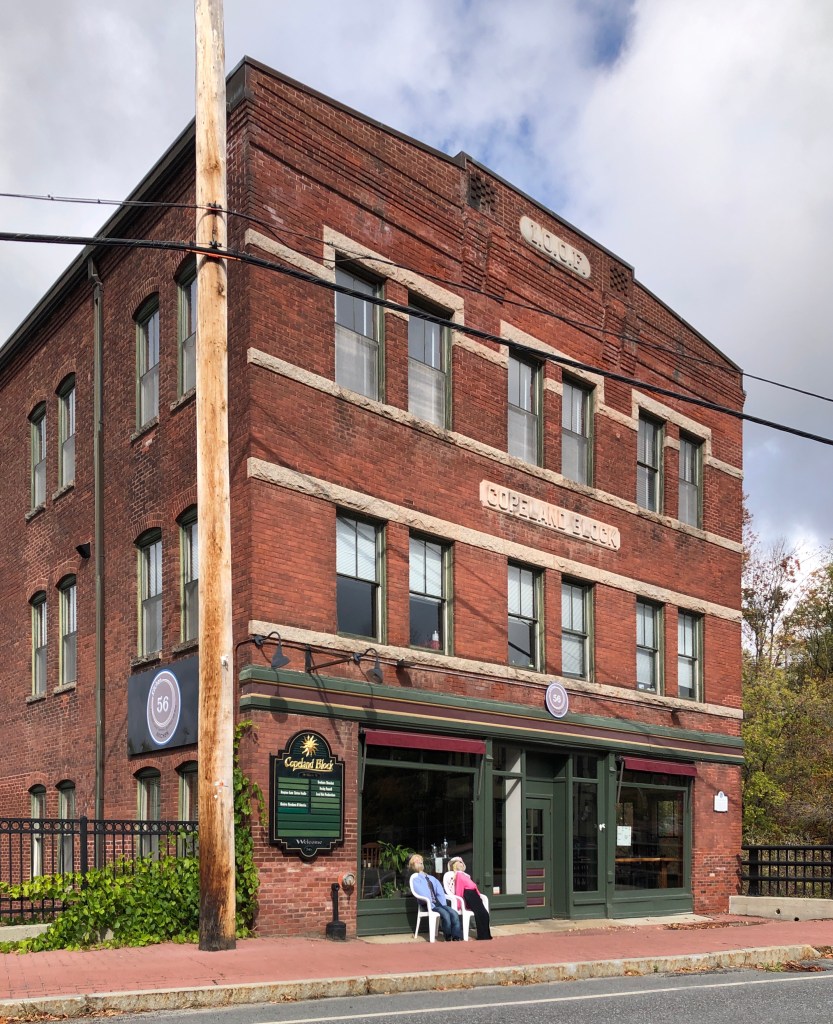
The Copeland Block is Enfield’s only brick commercial block. It is located on the bank of the river which cuts through the village and terminates at Mascoma Lake. Ira Copeland built the block for $10,000, during the final years of his life. He had lived in Enfield since 1853. He and his wife Elsina lived on her parent’s farm on Shaker Hill for many years. After her death in 1897, he abruptly moved to town, moved into a home on Depot Street, and built this commercial block with his lasting money. He died just years later. The Copeland Block contained a dmgstore, millinery shop and offices over its history, with an I.O.O.F. meeting space upstairs.

Dr. Asaph Bissell House // c.1835

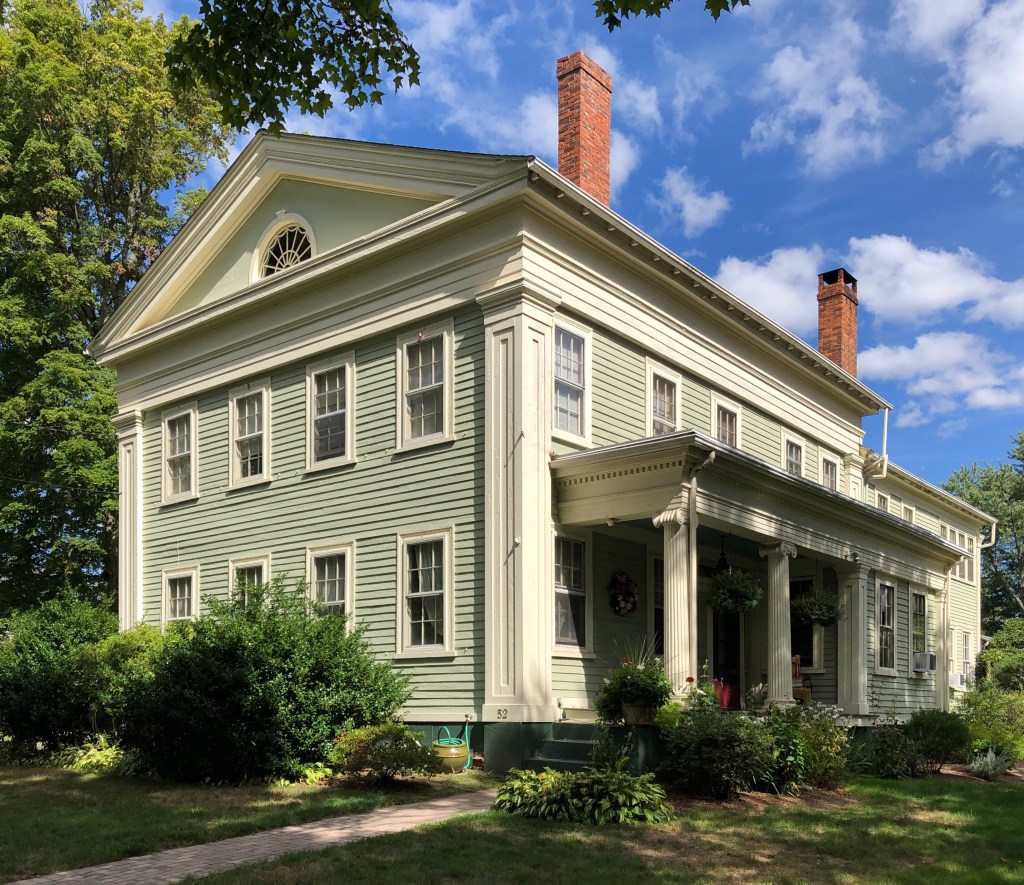
Dr. Asaph Bissell was born into the wealthy Bissell family which started here when John Bissell, the progenitor of the family in America, came from Somerset, England, and landed in Plymouth, Massachusetts, in 1628. He became one of the settlers of Windsor, CT. His descendant, Asaph Bissell became one of Yale’s earliest medical graduates. Dr. Bissell, a member of the school’s second class, practiced in Suffield, often making house calls from his home right on Main Street. The house is Greek Revival in style with a stunning fan light in the pediment, echoing the Federal style.

George Loomis House // 1860

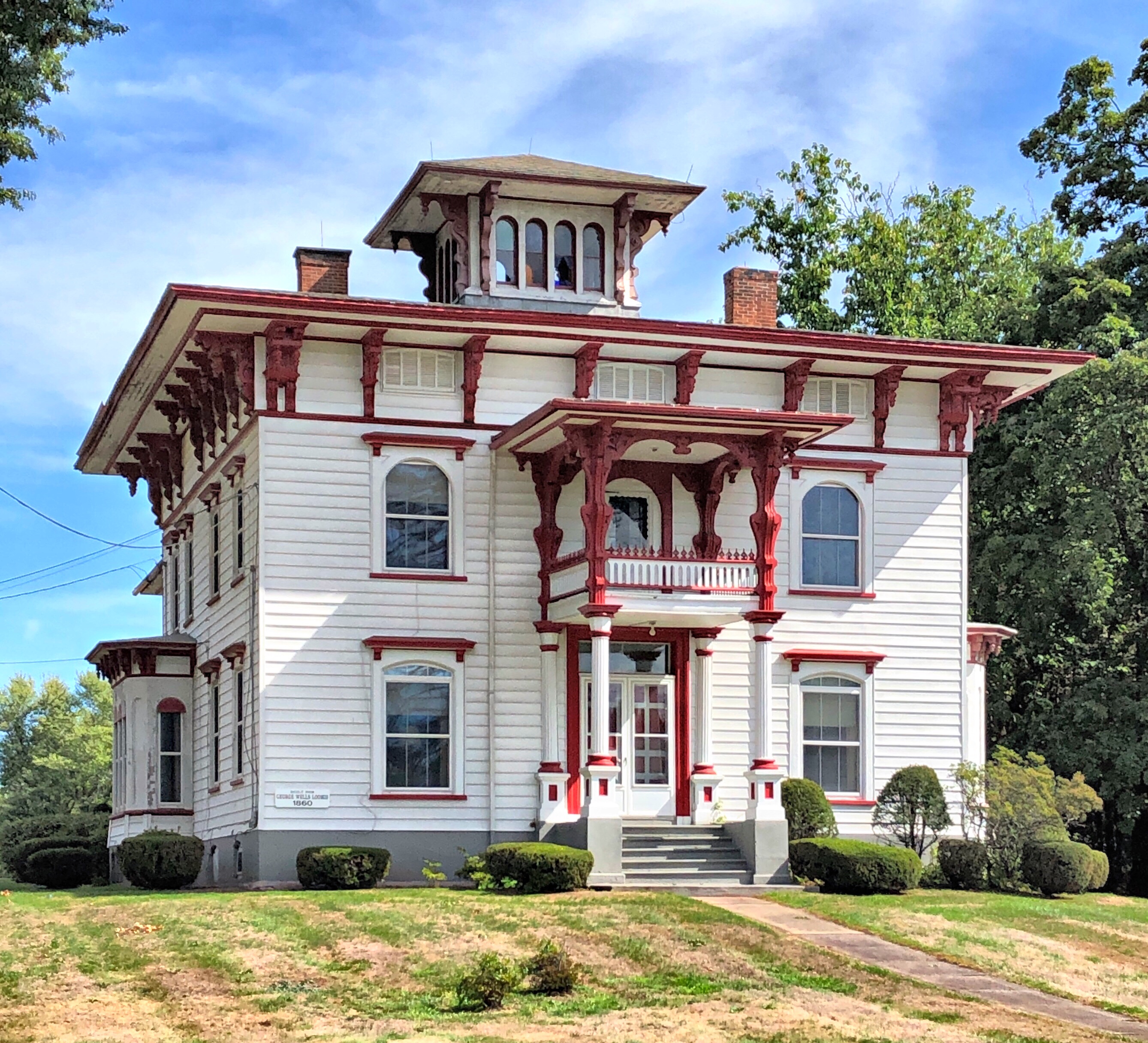
This large Italianate mansion on Main Street in Suffield was built in 1860 by John Wells Loomis for his son, George. George ran a cigar shop in a separate building on the lot, selling rolled cigars that his family harvested and rolled. The mansion features a belvedere atop the low sloped hip roof with broad overhanging eaves. John Loomis’ home is a couple lots away.

Suffield Academy-Memorial Building // 1854

Initially established as the Connecticut Literary Institute (the school was renamed Suffield School in 1916 and then Suffield Academy in 1937), the mission of this school with Baptist roots was to educate young men for the ministry. As the Connecticut Literary Institute was the only high school in Suffield, the town tax dollars paid for local students to attend. Although town and local Baptists served a major role in getting the school underway, the founders soon moved away from a denominational focus. Built for the Institute in 1854, this large brick academic building was designed in the Italianate style with brackets and decorative brickwork at the cornice. In 1950, the school “Colonialized” the campus beginning with the Memorial Building, removing the Victorian flair for a more traditional Colonial Revival appearance. They also did the same with Fuller Hall next door.

Gay Manse // 1743

Ebenezer Gay (1718-1796), the third minister of the First Congregational Church of Suffield, was born in 1718 in Dedham, Mass. His father was a substantial farmer, and his uncle was the famous minister, Ebenezer Gay of Hingham. Young Ebenezer graduated from Harvard in 1737, and held his first preaching job three years later. Reverend Gay became a candidate for a pastor in the Suffield Congregation, becoming ordained in 1742. That same year he married his wife, Hannah, and they had this massive home built adjacent to the town’s church. Rev. Gay and his wife had no children, but had adopted a black girl “Sybil” who was baptized as the “child of Ebenezer and Hannah”. There were other black members in the Gay household in later years including Titus Gay. “Old Ti” was born in 1787, and lived nearly his entire early life in Suffield, CT. He was born to a family of slaves also owned by Reverend Ebenezer Gay, making him born into slavery. His mother, Rose Gay, was a princess in Africa, and his father was owned by Major Elihu Kent. Reverend Gay was the pastor of the church until his death in 1796. The home was later occupied by other pastors at the church, and was eventually acquired by Suffield Academy for use as housing. The gambrel roof Georgian mansion features a stunning Connecticut Valley doorway with swan’s neck pediment.