Central Hall // c.1885

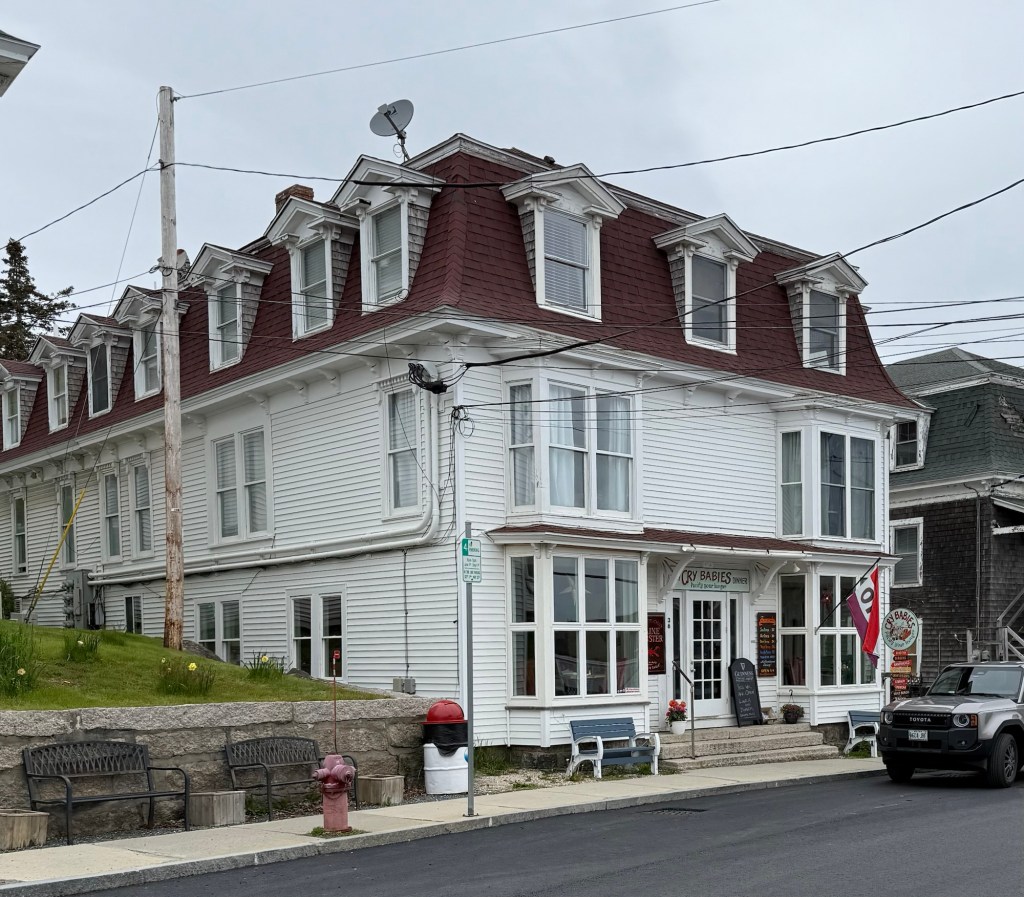
Located next door to the former High School (now the Town Hall) of Stonington, this mansard-roofed commercial building on Main Street is a prototypical example of late 19th century mixed-use architecture seen all over Maine. This building was constructed in the 1880s and known as Central Hall. The building contained retail spaces at the ground floor and tenement housing in the upper floors for workers at local granite quarries. The building is well-preserved and an important contributing building to the working village of Stonington.
Custom House Block // 1853

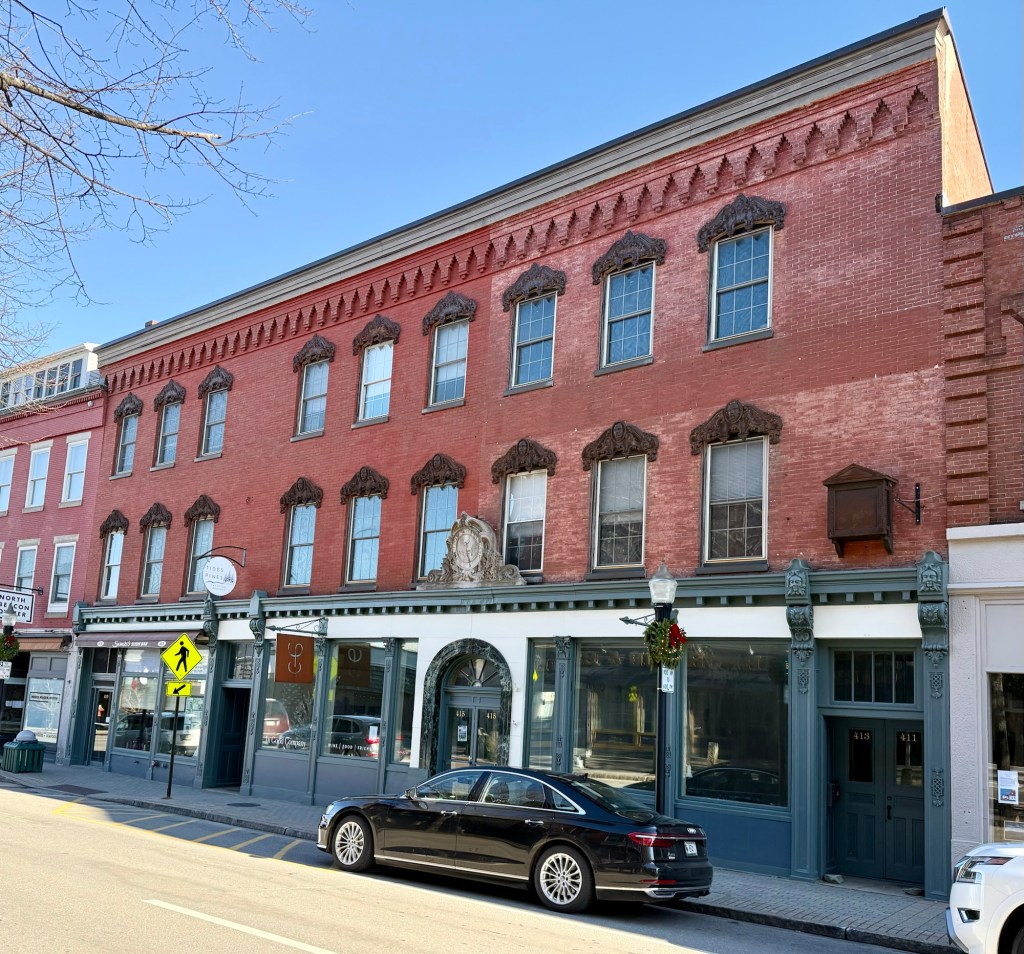
This stately commercial block is found on Main Street in Rockland, Maine. The block originally housed the local custom house (before a larger, purpose-built custom house was erected nearby in 1873) with other retail and commercial spaces at the ground floor with offices and meeting space above. The block is a great example of the Italianate style with an intricate brick corbeled cornice and cast iron and marble storefronts. The commercial space occupied by the First National Bank also exhibits a stone medallion with deer set within a wreath over the entrance. The detail that stood out to me most was the cast iron lintels over the windows, with the second floor lintels including a man’s face! The building is well preserved and is today occupied by local businesses.

Rockport Union Hall // 1856

Union Hall sits in the middle of the charming coastal village of Rockport, Maine. The Second Empire style building was built around 1856 as an original mixed-use structure with the first level containing retail spaces, the second level as a hall, and third level providing either office or living spaces. Rockport’s Union Hall was also once home of the town Post Office, a barrel factory, and a residence before it began to suffer from neglect and deferred maintenance at the end of the 20th century. In 2010, the owners underwent a massive restoration of Union Hall, which included: structural remediation to wood framing, a new elevator, slate roof repair, all new mechanical, electrical and plumbing systems, masonry repointing, restoration of windows and doors and more. These types of restorations are vital to small New England towns, providing jobs and the properties are often occupied by local small businesses, as is the case here!

Rockport Opera House // 1891

Built in 1891, the historic Rockport Opera House is located in the heart of Rockport Village overlooking picturesque mid-coast Maine harbor. The Opera House here was actually first built as a multi-purpose Town Hall and library by a F. E. Gilkey, possibly a local builder. Over the years, the Colonial Revival style building has also served as a town meeting space, theater, concert hall, and Y.M.C.A., complete with a basketball court and bowling alley. In the 1970s, the building had deteriorated such that the Town considered selling it or tearing it down. The women of the Rockport Garden Club led the effort to save and restore the building. An outpouring of local support and a grant from the Maine Commission of the Arts and Humanities enabled the building to be revitalized as the Rockport Opera House. The significant structure continues to host the annual town meeting and regularly hosts town committee and other public meetings.  It is also the home venue of the Bay Chamber Concerts, as well as other musical events, theater performances, wedding receptions, conferences, and other private functions. Preservation at its finest!

Old Head Tide Store // c.1890

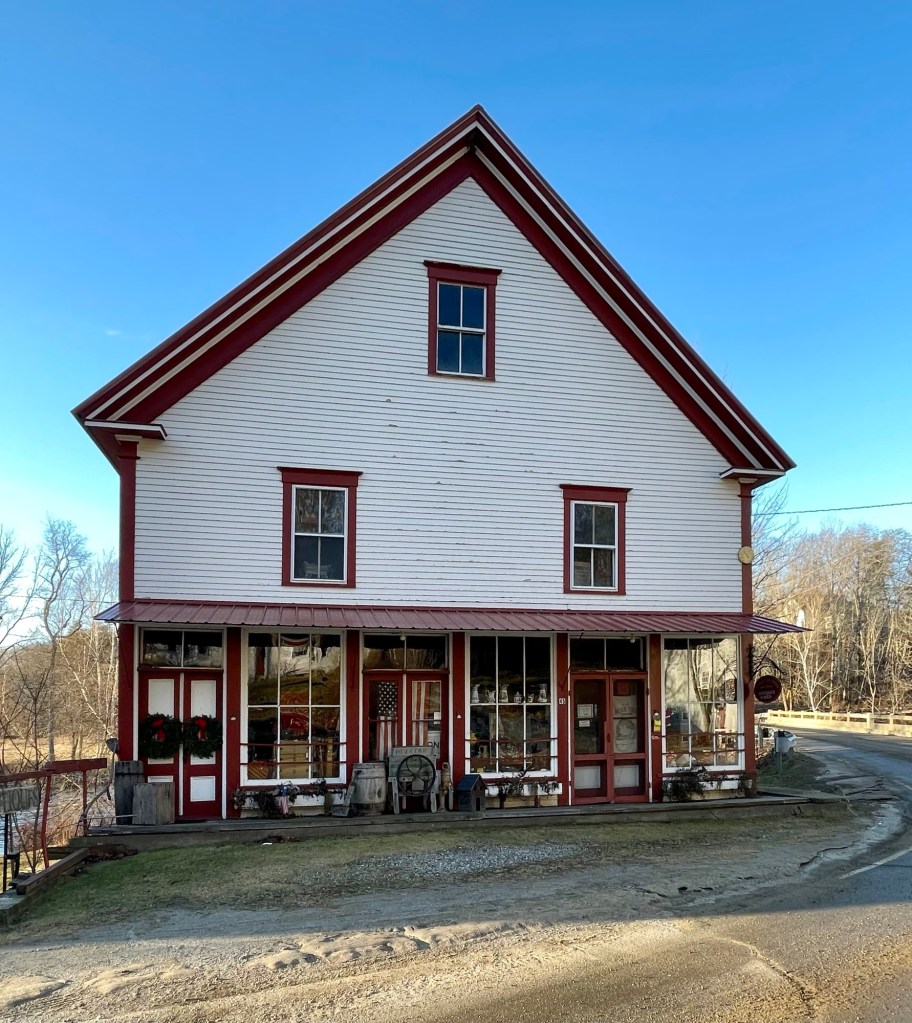
Every village needs a general store, and the store in the Head Tide village of Alna was this vernacular building constructed around 1886. The store was operated for years by John Allen Jewett, who’s ancestors settled in Alna generations before. Jewett sold grain from the building to local farmers and residents and lived across the street in the family home. Vernacular “mom and pop” stores like this are becoming more rare, but they are among the most charming in New England. Be sure to shop local and support small businesses when you can!

Norway Opera House // 1894

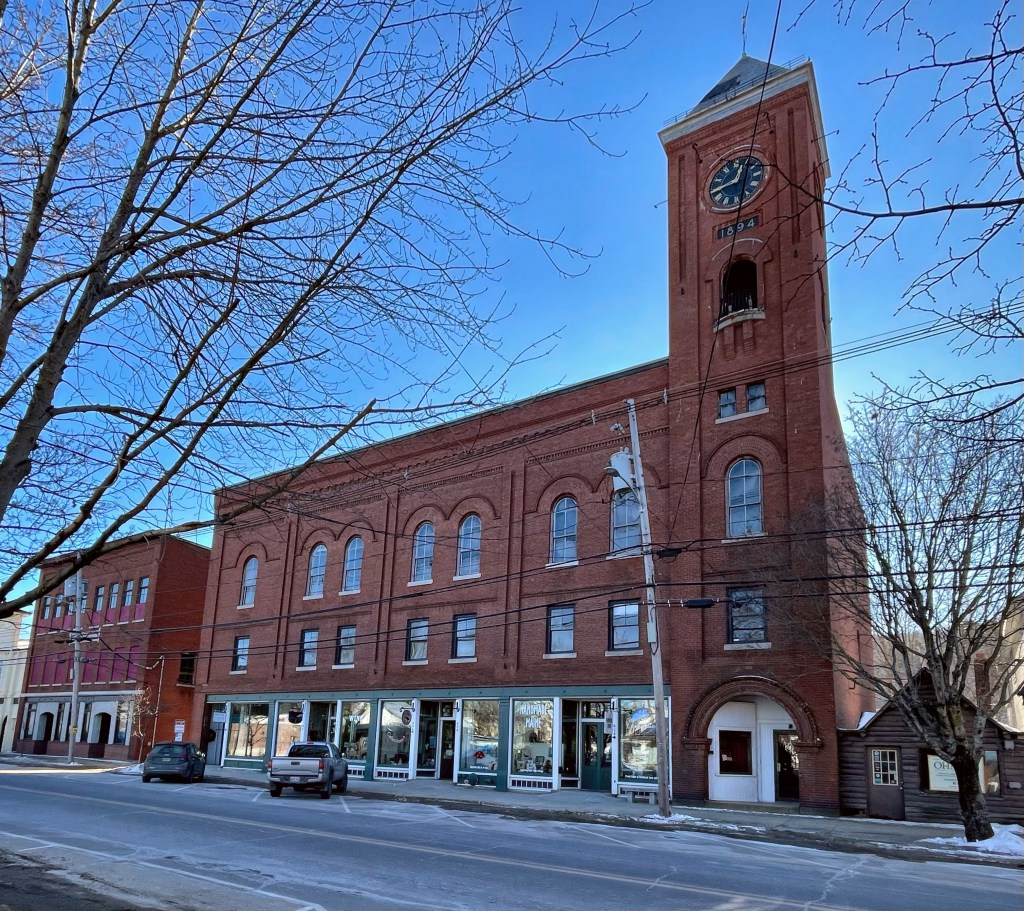
The most substantial building on Norway’s Main Street is this hefty brick commercial block with its prominent corner clock tower. The structure was designed by Maine architect Edwin E. Lewis and built in 1894 as the Opera House with stores along the ground floor. The building was constructed immediately after a large fire destroyed much of the downtown village area of Norway, and was built in such a way to show the strength and resolve of the town, leading the way for a larger re-building effort by the local business community. The Romanesque Revival building features lovely arched windows and brick detailing. The building has seen better days, but a local group has been working tirelessly to restore this beauty to her former glory! The group is presently soliciting donations to restore the roof and rear wall, to keep the building standing for future generations.

Denmark Odd Fellows Hall – Denmark Arts Center // 1884

This two-and-a-half-story building sits on Main Street in the small town of Denmark, Maine, and has contributed to the town’s cultural life since it was built in 1884. The Independent Order of Odd Fellows (IOOF) is a non-political and non-sectarian international fraternal group that promotes the ethic of reciprocity and charity. It was founded in 1819 by Thomas Wildey in Baltimore, Maryland, evolving from the Order of Odd Fellows founded in England during the 1700s. New buildings sprouted up all over the United States in the 19th century, in cities as large as New York City and towns as small as Denmark. This IOOF Hall is Italianate in style, with brackets at the cornice and hoods and round arched windows in the gable end; it also shows some Greek Revival details with corner pilasters and the pediment. When Raymond Hale, the last member of the IOOF Lodge passed away, the town purchased the old Odd Fellows Hall. The city could not maintain the property and had no good use for it. Residents in town voted in 1991 to sell the building rather than demolish it. Local residents bid on and won the building with the aim to convert it to a local arts center. In August 1994 the owners signed over the deed of the Odd Fellows Hall to the Denmark Arts Center, a non profit organization. From that time until present, the old building, now the Denmark Arts Center, has again served as a community focal point, providing cultural activities for the people of Denmark and surrounding towns.

Johnson Hall // 1864

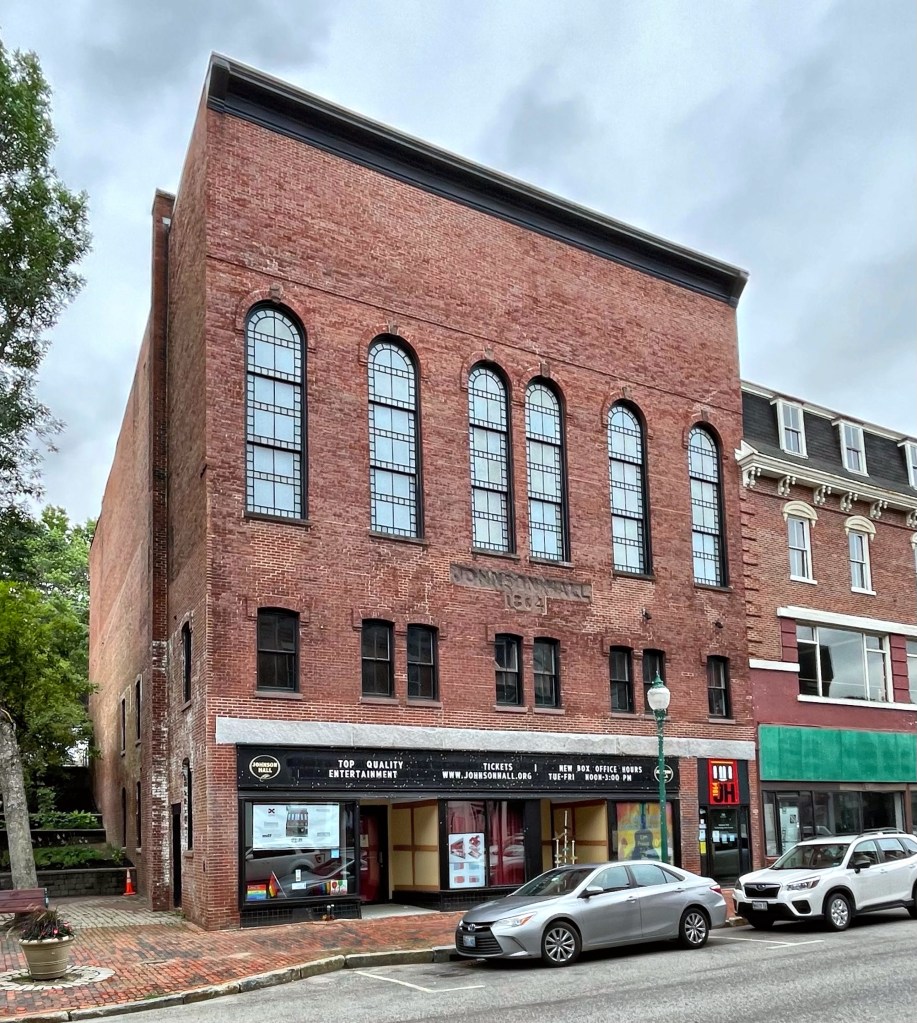
After heading west to seek his fortune in the California Gold Rush, Gardiner resident Benjamin Johnson, moved back to his hometown and immediately spent money to buy one of the finest hotels in town. He renamed the hotel Johnson House and served as the manager of the hotel through the American Civil War. The hotel included a two-story stable to the side which allowed visitors to keep their horses and carriages nearby. In December 1864, he completed a two-story vertical addition which added a large hall with gallery above for events and shows, retaining the stable on the ground floor. The demarcation of the two sections is evident from the windows on the main facade and the difference in brick. The hall opened to great fanfare, and with Johnson as manager, hundreds of plays, musicians, and events were held in the event space, which made Gardiner a major hub for socio-cultural life in Kennebec County. In the 1880s, he added a new wood floor upstairs which allowed the hall to be used for rollerskating, a very popular update. Not long after, the stable was converted to commercial space at the ground floor, and upstairs an opera hall. Benjamin died in 1903, and his widow, Henrietta took over, and kept-up with the times, changing the upstairs hall to a moving pictures and silent film theatre. The theatre closed in the mid-20th century, like so many other small local theaters. Good news though! A group of locals is working to fully restore all three floors of Johnson Hall, creating a new state-of-the-art performing arts theater, while maintaining the architectural character of the building.