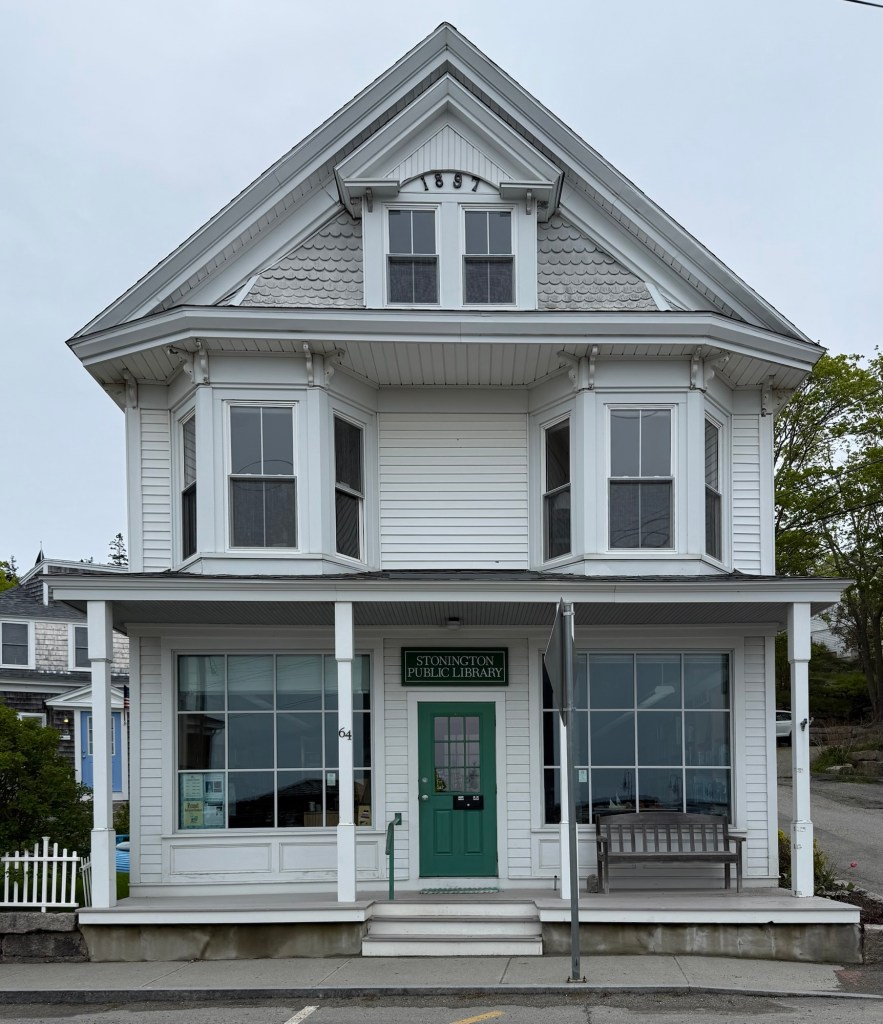
Thurlow Building – Stonington Public Library // 1897

This historic building on Main Street in the working harbor village of Stonington, Maine, was built in 1897 as a commercial block for Mr. Thurlow. John Leman Thurlow (1842-1928) was born on Deer Isle and was engaged in business in town. Mr. Thurlow had this commercial building constructed to house a local grocery store with residences above. Just before its completion, the Deer Isle Gazette wrote, “J. L. Thurlow’s new store is up and the side finish is being put on. It will be a fine commodious two story and a half building, an ornament to the place.” The building later was occupied as a millinery shop, a dress shop, and was purchased in 1959 by a newly established library association. The all-volunteer operation to establish a library in town began in 1955, and a collection of donated books was eventually housed in a rented space until this building was purchased as the home of the village library.
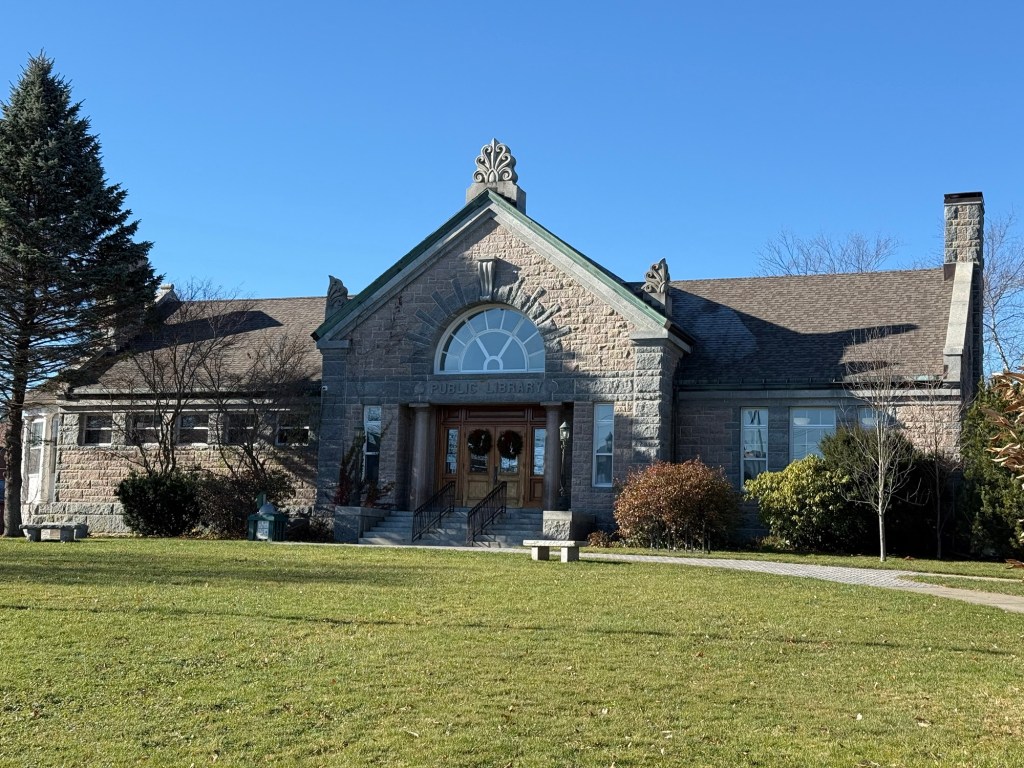
Rockland Public Library // 1903

The Rockland Public Library in Rockland, Maine, is an architecturally significant civic building that showcases the coastal town’s prosperity at the turn of the 20th century. The library was built in 1903–04, and was funded in part by a $20,000 grant from Andrew Carnegie. It is the city’s only major example of Beaux Arts architecture, a style that is also uncommon in the state. The library was designed by Maine native George Clough, who used granite quarried from nearby Vinalhaven in its construction. The building was later expanded by an addition at the rear, but from the street, the handsome Beaux Arts library looks near-identical as to when it was built over 120 years ago!

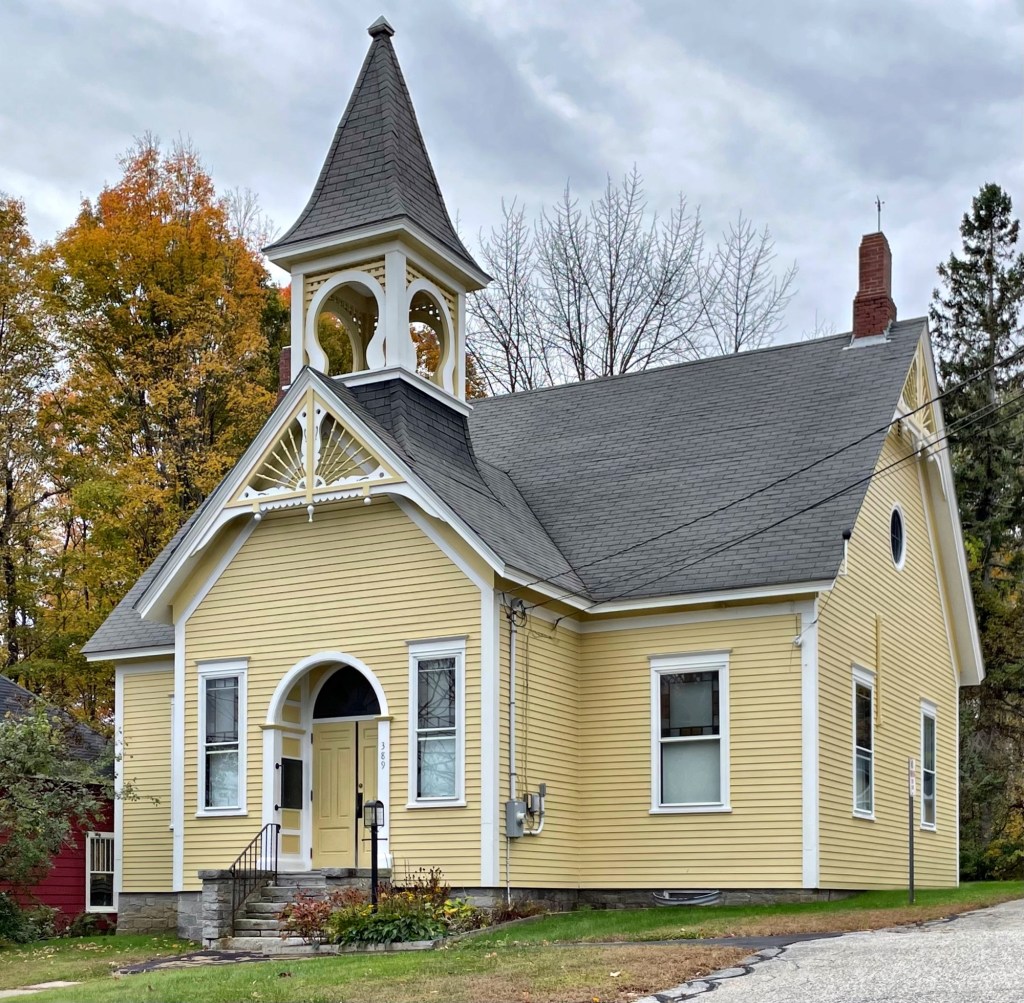
Old New Gloucester Public Library – New Gloucester Meetinghouse // 1895

The original New Gloucester Public Library is located in the central village of New Gloucester, Maine, and is one of the finest architectural buildings in the town. The library was established in 1888 when voters passed a resolution to establish a public town library as before this, a private, social library existed here. A committee was chosen to purchase books and make decisions for expenditures and staff. The library was originally located in the town hall building, and was supported by an annual poll tax of 50 cents. The first librarian was Helen A. Moseley, with a salary of $50 a year, she remained the town’s librarian until 1920. By 1895, the library had grown to more than 2,100 volumes and it was decided a new, purpose-built library was needed. That next year, a lot was purchased and this Victorian style building was constructed adjacent to the Town Hall. The wood-frame building has a decorative central section with recessed, arched entry and gable with decorative Stick style ornament. Additionally, a tower protrudes from the roof, giving the building additional whimsy. The library was eventually outgrown and relocated in the former High School, two buildings down the street. The old library has ever-since been the town’s meetinghouse.

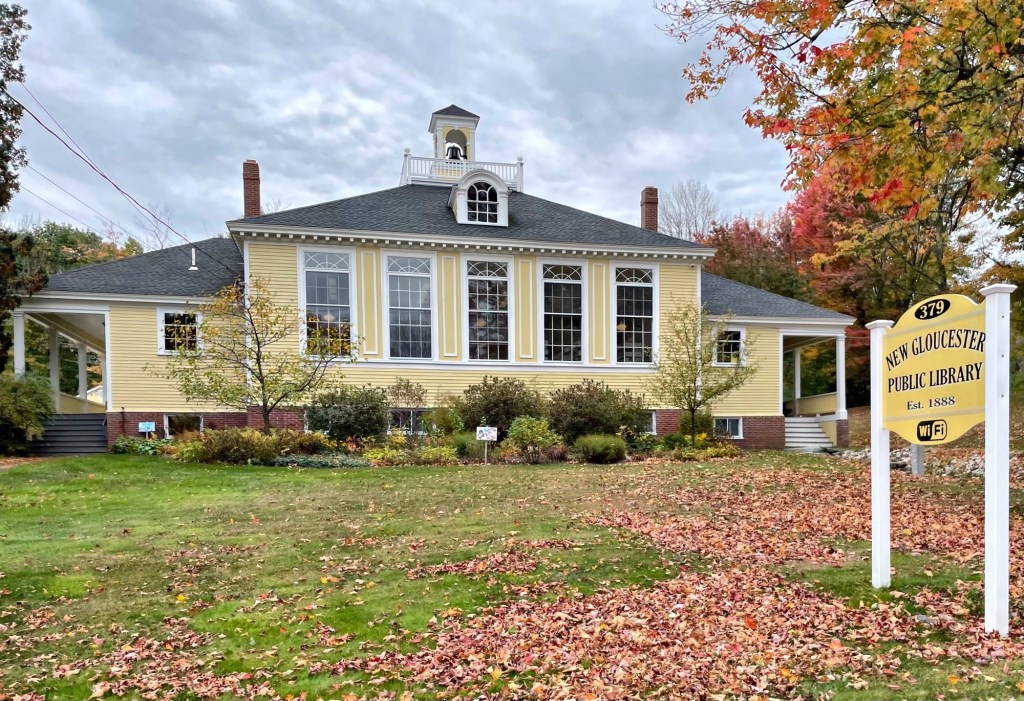
New Gloucester Old High School – New Gloucester Public Library // 1902

This building, the present New Gloucester Public Library, was originally constructed in 1902 as the town’s high school, a use that remained until 1962, when pupils would go to a modern school building in nearby Gray, Maine. The building is an excellent example of the Colonial Revival style with a symmetrical facade dominated by a row of multi-light windows separated by paneling, a segmental-arched dormer, and cupola at the roof with a bell. When the high school moved to its present location, this building sat vacant for some time and would be occupied by the New Gloucester Historical Society for storage and display of their collections until the public library moved into the building by the early 1990s.

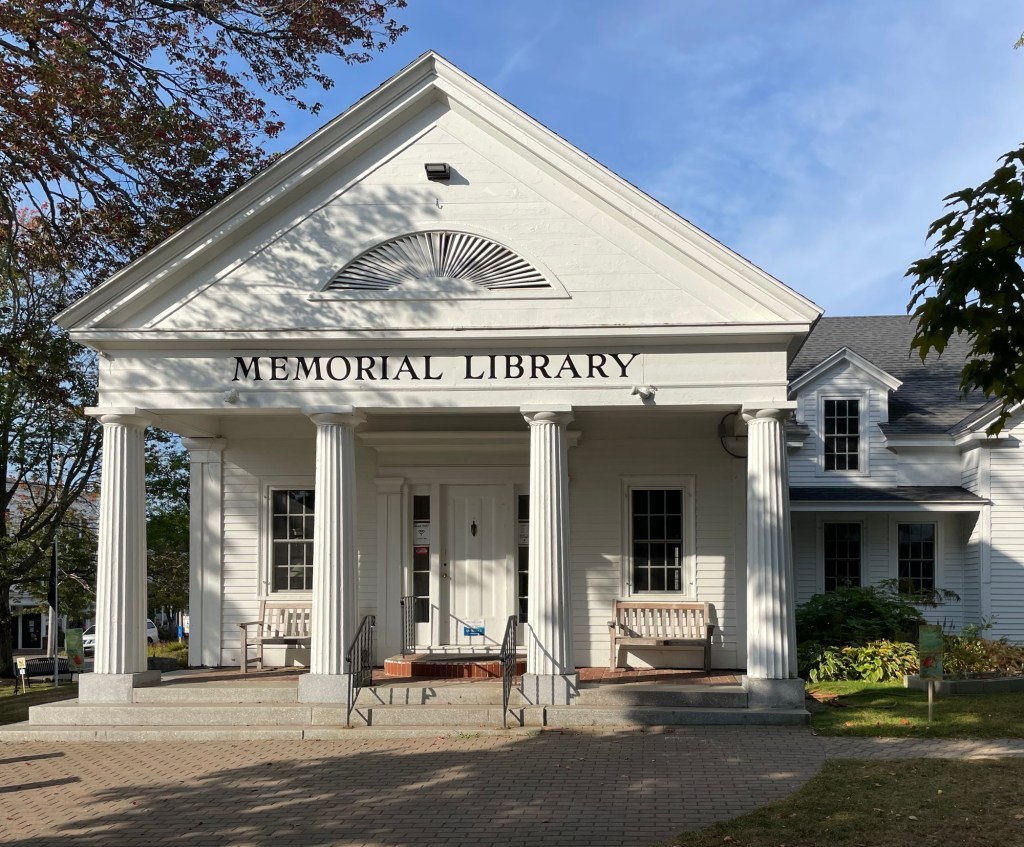
Boothbay Harbor Memorial Library // 1923

In 1906, the citizens of Boothbay Harbor voted to establish a free public library for all to enjoy. In 1923, the need for more library space, along with a desire for a World War I Memorial, led to the approval of a bond for the purchase of a 1842 Greek Revival style house on Oak Street. The building was remodelled for use as a library by the Boston architect William Stanley Parker, and was enlarged in 1966 to a design by Parker’s son, Stanley Jr. The temple-front, Neo-Classical entry was added at this time and harkens back to the original classical style Greek Revival home, while clearly showing a grander scale seen in the 20th century.

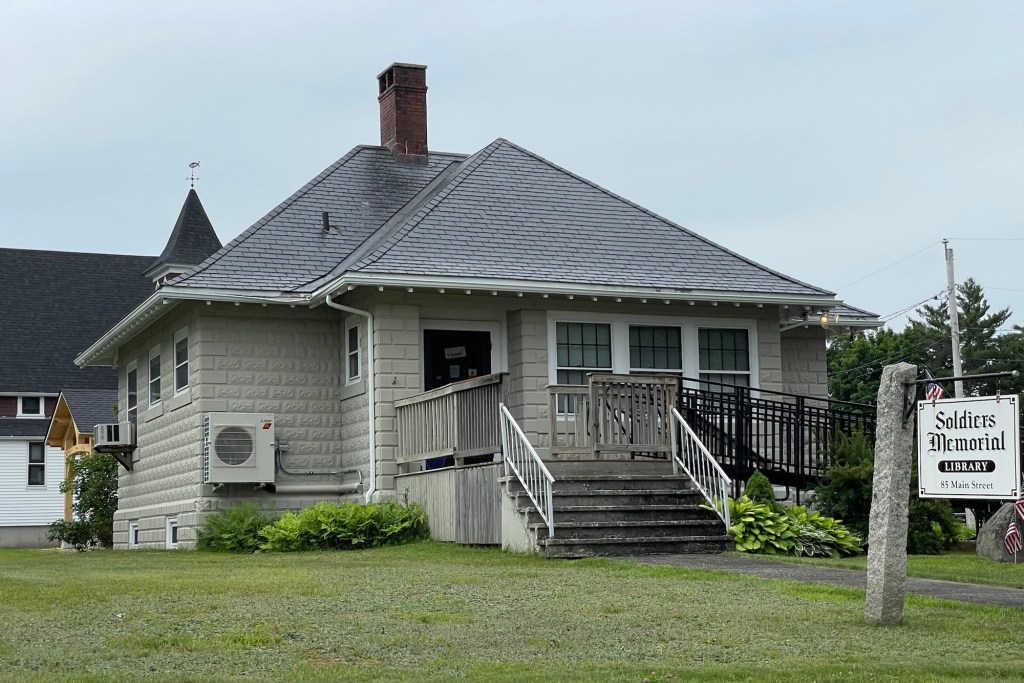
Hiram Public Library // 1915

Located on a slight rise above Main Street and across from the sprawling Hiram Village Cemetery, this one-story library with walls of textured concrete blocks was dedicated in August of 1915 and has been a center for cultural activities in the town of Hiram, Maine, since that time. The Soldier’s Memorial Library was built with funds provided largely by Virginia Barker Jordan, a granddaughter of local businessman Benjamin Barker. Also instrumental in organizing Hiram’s first free public library was Llewellyn A. Wadsworth, local poet and cousin of Henry Wadsworth Longfellow. Beyond the unique use of concrete block construction for a library, other interesting exterior architectural features include the wide-flaring eaves with exposed rafters and the bands of windows on the first story walls, which hint of the Arts and Crafts/Bungalow styles. The library building was designed by Boston architects Robert Wambolt and Amos A. Lawrence.

West Gouldsboro Village Library // 1907

One of the few libraries in Maine built in the Tudor Revival style can be found in the quaint coastal town of Gouldsboro. This library was built in 1907 from plans by Maine architect Frederick L. Savage after members of town sought a community space where they could meet and check out books. The small one-story building sits upon a tall fieldstone foundation and with a stuccoed exterior above. The entrance consists of a single door flanked by sidelight windows topped by an elliptical hood, above which sits within the half-timbered gable front. The small library was in operation until 1956. It reopened briefly in 1990, but closed again. It is owned by the West Gouldsboro Village Improvement Association. Historic library buildings are the best!

East Blue Hill Library // 1920

Every village needs a library, and East Blue Hill is no different! Without easy access to the main Blue Hill library, a group of “willing workers” amassed a collection of books with the hopes to donate to a future village library organization. A campaign to build the present building began in 1914 with the acquisition of land adjacent to the village post office, with major fundraising undertaken in 1917. The building, completed in 1920, was designed by John W. Merrow, a New York City theatrical architect and is an uncommon example of a small, Arts and Crafts style library in the state of Maine.

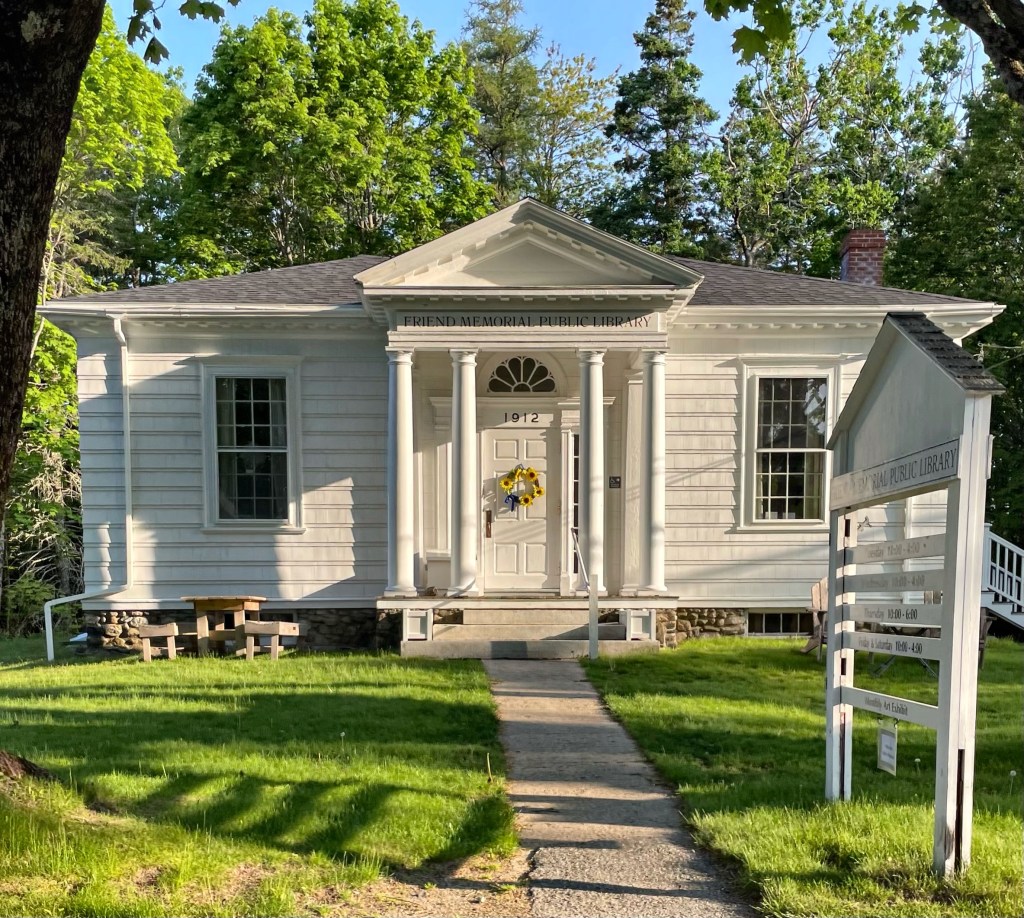
Friend Memorial Library // 1912

The Friend Memorial Public Library in Brooklin, Maine was built in 1912 on land donated three brothers in the Friend family. The brothers, Leslie, Robert and Victor Friend were born in Brooklin, but were raised in Melrose, Massachusetts. There, they made a fortune producing Friend’s Brick Oven Baked Beans. With their new wealth, the brothers had the bright idea of building a roller-skating rink for the enjoyment of the Brooklin community. As the need for a library overtook that of a roller rink, the brothers sought to cement their name in the town’s history by funding a new library building. The previous library was located in a small space in the IOOF Hall nearby (featured previously) and a new, purpose-built space for a library was a desire for the small community. William Nelson Wilkins, an architect of Magnolia, Massachusetts, and husband of Brooklin native Ella McFarland, was hired to furnish plans on the new building which was built in 1912 in the Colonial Revival style. In 1940, Katerine and E.B. White (author and summer resident), Owen Flye and others were instrumental in revitalizing the library, increasing the collections and hours of operations. About ten years ago, the library was restored and renovated inside by Elliott Architects.