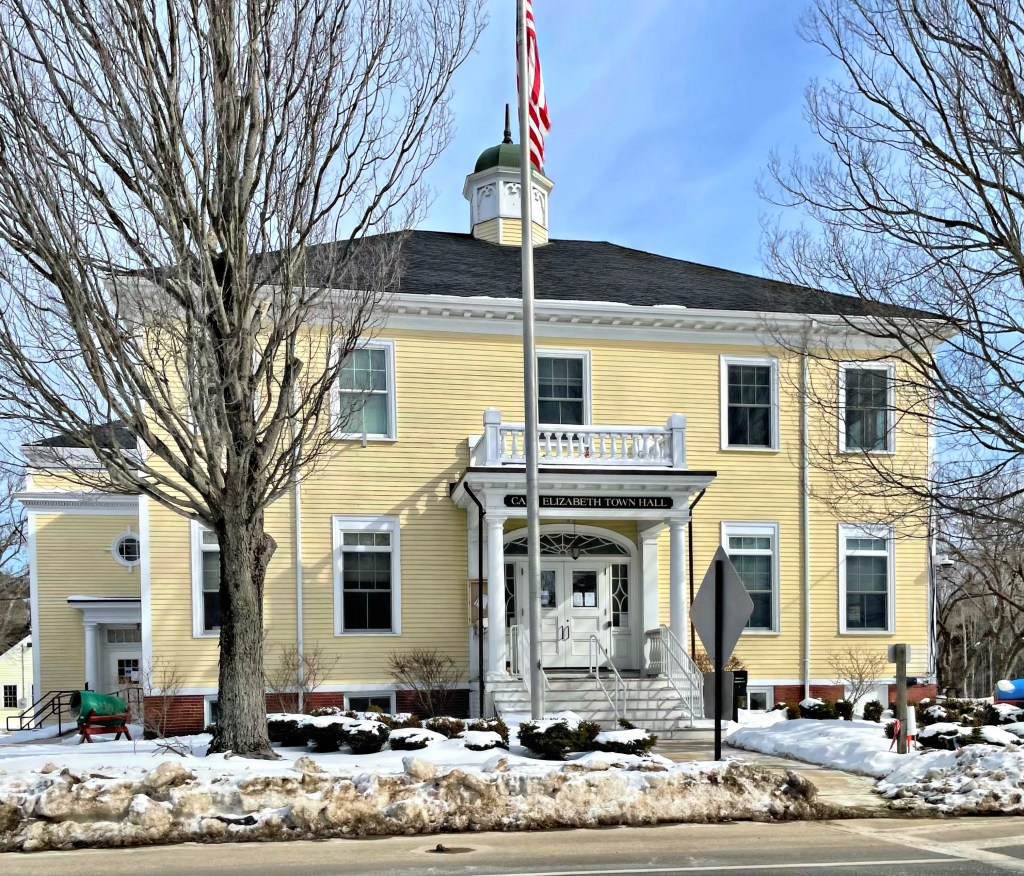
Cape Elizabeth Town Hall // 1900

The town of Cape Elizabeth, Maine was originally a part of Portland (named Falmouth at the time) until the citizens there petitioned for and obtained their own government in 1765. Commercial and industrial growth in the north end of the town, nearest the harbor (now South Portland), was in sharp contrast to the continuing rural character of the southern tip of the Cape. In 1895, the two sections agreed to separate, and from that date forward the southern end of the original town became the present town of Cape Elizabeth. Shortly after the separation of South Portland, funding for a new town hall was appropriated, and the town hired Portland-based architect Frederick A. Tompson to design the new building to mark the start of the new town. The Town Hall building was constructed in 1900 and is an excellent example of Colonial Revival architecture with its hipped roof with cupola, classic central portico, and entry with Federal Revival sidelights with a fanlight above.

Bayberry Cove Cottage // 1915

Perched atop a seaside cliff on a neck jutting into the Atlantic ocean, this large summer cottage exhibits the rugged, yet enchanting character of the Maine coast. The house is part of the Cape Arundel Summer Colony and is one of the last built as part of the original period of development. The home was designed by Henry Paston Clark, a Boston architect who previously built a home on Cape Arundel and had summered there for years. His most notable design here is St. Ann’s Church, built for the summer residents of the area. The Bayberry Cove Cottage was built in 1915 for James Harrison and his wife and employed the use of cedar shingles, stone, and slate, to blend in with the rugged plot of land.

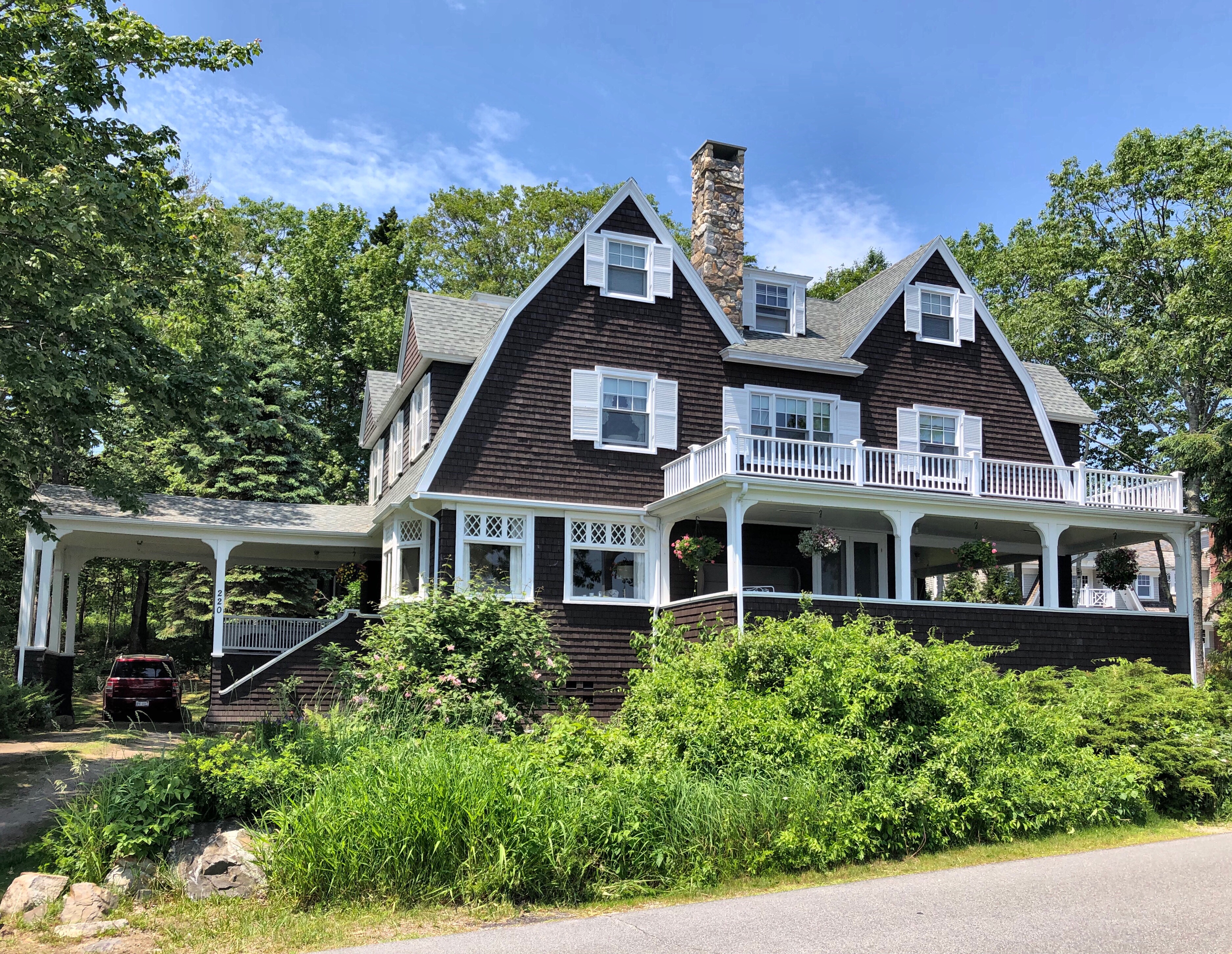
The Cedars // 1900

This shingled cottage was built in 1900 for Dr. Francis B. Harrington, a surgeon who worked at Mass. General Hospital in Boston. The stunning cottage was designed with double gambrel gables, a large piazza/porch overlooking the ocean, and a porte-cochere, which was likely added after the home was completed. The home was designed by architect Henry Paston Clark (1853-1927), a Boston area architect who was briefly associated with Henry Vaughan, a leading Boston architect who executed several significant institutional and ecclesiastical works in the Boston area. Clark would later become best-known for his Shingle-style and Colonial Revival works throughout New England and spent his final years in Kennebunkport, where he died.

Daniel Walker House // 1784

One of the older extant homes in Kennebunkport is the Daniel Walker House on Maine Street. After the American Revolution, shipbuilding and other maritime industries grew along the Maine coast, especially in Kennebunkport (then still named Arundel). Sea captain Daniel Walker built the home on ample land on the outskirts of the village at the time. By the early 19th century, he sold off much of his land closer to the river to family and friends. The Georgian home is minimal, yet commanding with its massive facade, rusticated lintels and corners, an elaborate entry and a large central fireplace.

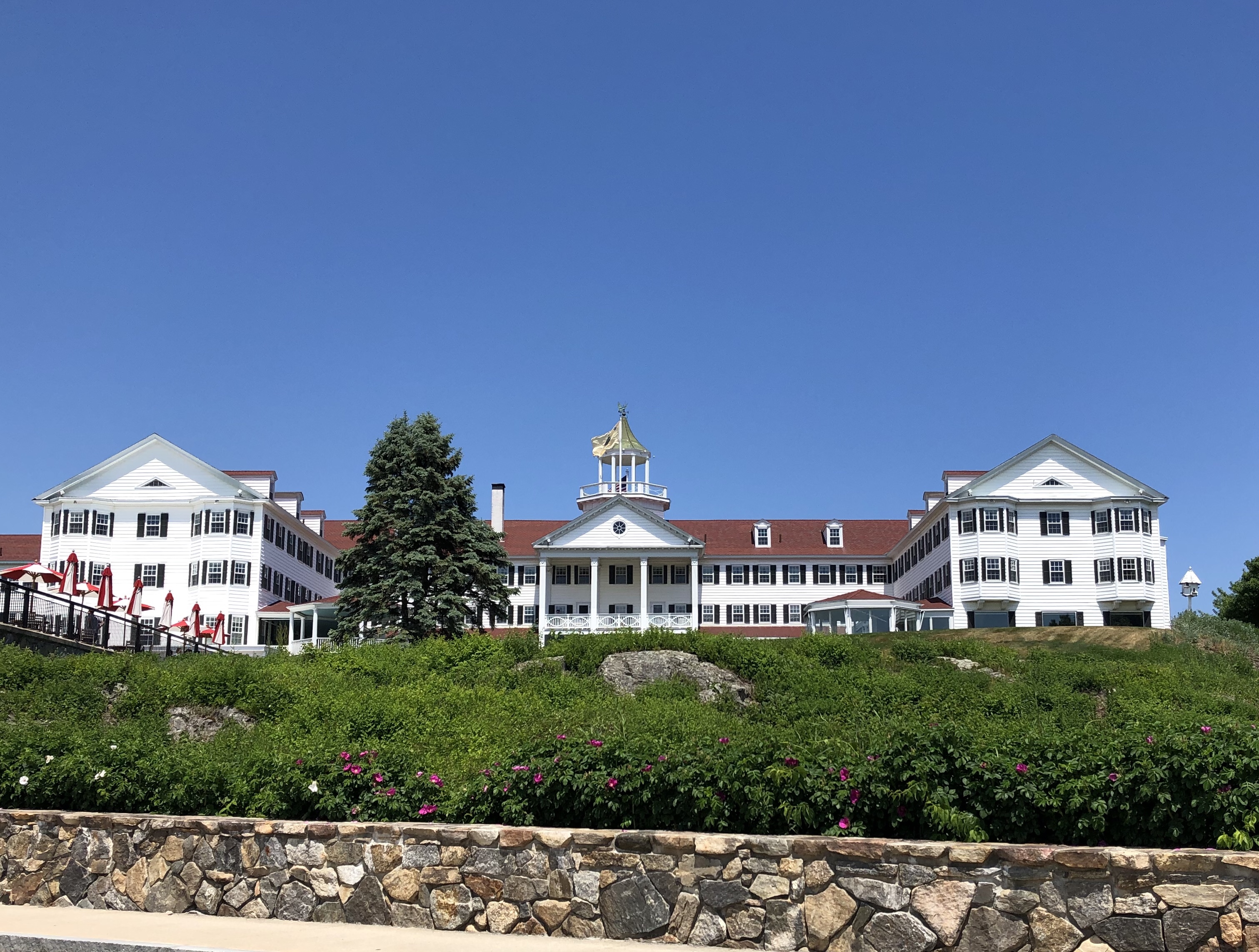
Colony Hotel // 1914

One of the larger hotels in Kennebunkport, the Colonial Revival Colony Hotel, built in 1914, provides historic charm with views of the Kennebunk River and Atlantic Ocean. Owner Ruel W. Norton had the new hotel built on the site of the Ocean Bluff Hotel (1873, burned 1898), to attract summer people, many of which stayed for months at a time. The Colony was originally called Breakwater Court until 1947, when George Boughton purchased Breakwater Court and changed the name to The Colony Hotel to complement their Florida property, The Colony Hotel in Delray Beach Florida. The hotel was designed by John Calvin Stevens, who lived in Maine and designed an estimated 1000+ buildings in the state, many of which in the Shingle or Colonial Revival styles.

Louis T. Graves Memorial Library // 1813

What is known today as the public library of Kennebunkport, the Louis T. Graves Memorial Library was not always used for books and learning. Built in 1813 as a branch office of the Kennebunk National Bank, the brick structure was valuable as a local bank for the growing port neighborhood. By 1831, the Kennebunk Bank’s charter was revoked and they sold their branch location to the U.S. Government as a Customs House (the second floor was already partially occupied as a Customs House). By the end of the 19th century, the second floor was leased out to the Kennebunkport Public Library. The Customs District was eliminated in 1913, and by 1920, the building was acquired by Mr. and Mrs. Abbott Graves, who purchased the property at auction for $1,350., the couple lived just a couple blocks away in a rare Prairie style home. In 1921, the Graves family deeded the property to the Library Association on the condition that the Library be named in memory of their deceased son Louis T. Graves who valued books all his life.

South Congregational Church // 1824

Built in 1824, the South Church in Kennebunkport Village looked very much as it does today, with the exception of the portico, which was added in 1912. In the early 19th century, architects were seldom employed in such remote areas therefore, builders often used manuals and examples of other churches in addition to their own experience gained from working the large shipbuilding yards adjacent to the Kennebunk River. The cupola, restored in 1991, is designed after an example by Christopher Wren and the steeple retains the original 1824 Aaron Willard clock with its unique wooden face, still keeps accurate time and rings on the hour. The church remains as an active space with a growing congregation in the summer months.

St. Martha’s Catholic Church // 1903

A happy blending of Mission, Colonial Revival and Shingle Styles for the Maine coastal community of Kennebunkport, the St. Martha’s Catholic Church exemplifies the charm of this town. The church is sited on a corner lot with a belfry at its corner. The nave features a central entry with Colonial pilasters and pediment above the second floor windows. The roofline is shaped with Mission style parapet walls and arched openings at the tower, showcasing the Spanish influence in the design. The entire building is wrapped with cedar shingles, as a nod to the coastal summer resort it resides. The church operated here until the mid-late 20th century when it was converted to an art gallery, and now is home to condos.

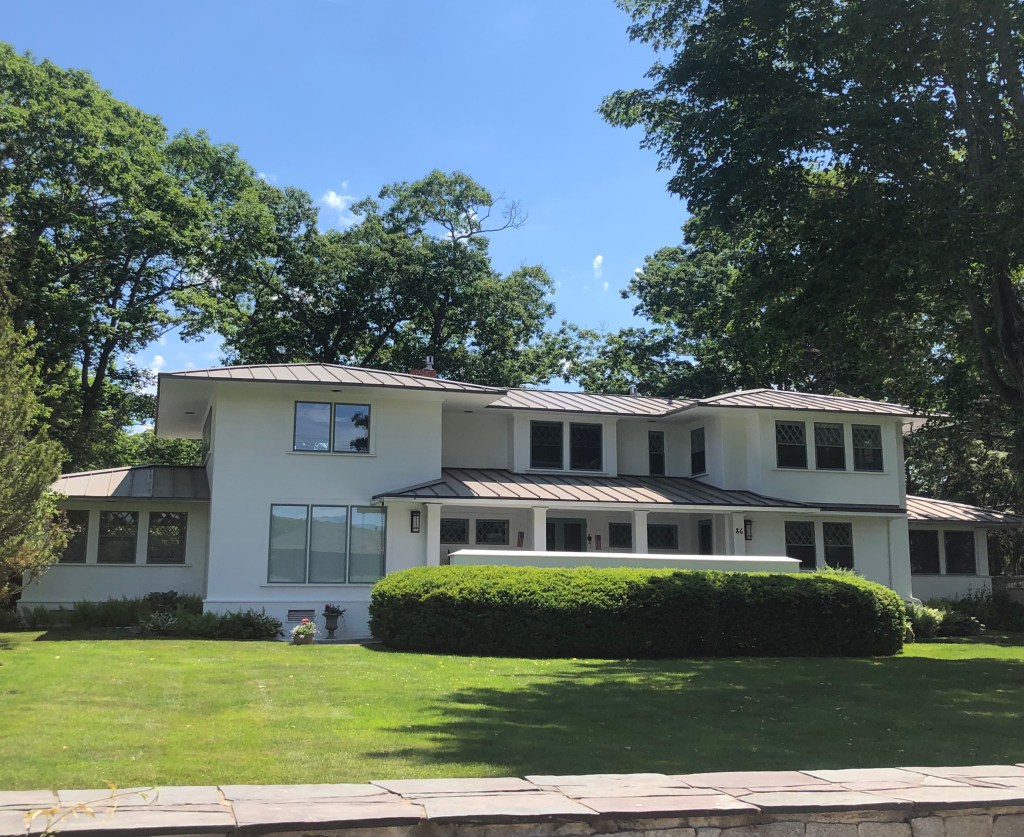
Westlook // 1905

One of a handful of Prairie style homes in Maine, the Abbott Graves House – named ‘Westlook‘ – of Kennebunkport, was designed by Graves himself and built in 1905. The two-story residence is of frame construction with a low-hipped metal roof (originally red tile) and three internal brick chimneys. The exterior is covered with a simulated stucco finish.

Born in Weymouth, Massachusetts in 1859, Graves began architectural studies at the Massachusetts Institute of Technology in 1867 but was forced to leave due to financial problems before completing the program. For a few years he supported himself by working in a florist’s establishment where he earned a reputation as an arranger of flowers for interior decoration. An amateur painter since early youth, he began in earnest to develop this talent, concentrating on floral still life. He was eventually able to support himself in a small Boston studio and in 1884 to 1887 studied in Paris. His work was exhibited in the Paris Salon in 1887 and received the first of five medals he was to be awarded by that illustrious institution. Returning to Boston in 1889, he opened his own school and established himself as a distinguished painter of floral scenes and genre works. He brought his family and some students to Kennebunkport for the first time in the summer of 1891 staying at one of the first hotels in that newly emerging resort community. Graves fell in love with the community spending more and more time there each year until eventually he became a year round resident. In 1905 he designed Westlook, as he named it, and resided there until his death in 1936.

Ivory Goodwin House // c.1808

Built by Ivory Goodwin (1783-1851), a joiner who moved to Kennebunkport from Berwick, Maine in 1799. Goodwin and his wife Mary, lived in this small Cape house with their six children, a pretty amazing feat in its own right! The Federal/Greek Revival home is five bays wide with a central entry with sidelights and pilasters flanking.