Rice-Petersen House // c.1890

Built in the 1890s by Dr. A.W. Rice, the ground floor of this Queen Anne style house served as the physician’s office, and he lived with his family in the upper floors. The home stands out as a fairly uncommon example of the Queen Anne style in Marion, a town dominated by Shingle style homes in that period. An enterprising Danish immigrant named Viggo V. Petersen, purchased the home and adjacent carriage house in 1921 and opened an ice cream parlor in it. When Viggo V. died in 1941, his son, Viggo C., attempted to carry on, until wartime cream shortages and rationing forced him to close for the duration of the conflict. Thereafter, Petersen’s ice cream resumed production and remained a Marion fixture until its final closing in the 1970s. The home is now occupied by two offices, and the former carriage house is home to the Mary Celeste Wine and Whiskey Library, a fun place that educates about wine and whiskey, offering tastings and events.

Delano House // c.1890

This late 19th century home in Marion was built for Florence and Walton S. Delano, a descendant of the great Delano family in Massachusetts. Walton worked in nearby Wareham at A. S. Gurney and Company, dealers in coal, grain and flour. The house is unique as it is in the American Foursquare form, a type of home built in the late 19th and early 20th centuries. The hallmarks of the style include a basically square, boxy design, two-and-one-half stories high, usually with four large, boxy rooms to a floor, a center dormer, and a large front porch with wide stairs. This example stands out for the shingle siding, flared eaves and rubblestone foundation. Swoon!

Harvey Everest Cottage // c.1890

Built during the 1890s for real estate agent Harvey W. Everest, this home in Marion has such a stately presence even as a cottage. The Colonial Revival home features a large gambrel roof with two shed dormers and one central gable dormer. Mr. Everest in was active in town affairs, he petitioned to build a section of sea wall in town to help protect the buildings from storms and flooding during inclement weather. After building this home, he lived out his final days here, until the old age of 92. There is a horse hitch near the street too!

Briggs House // c.1850

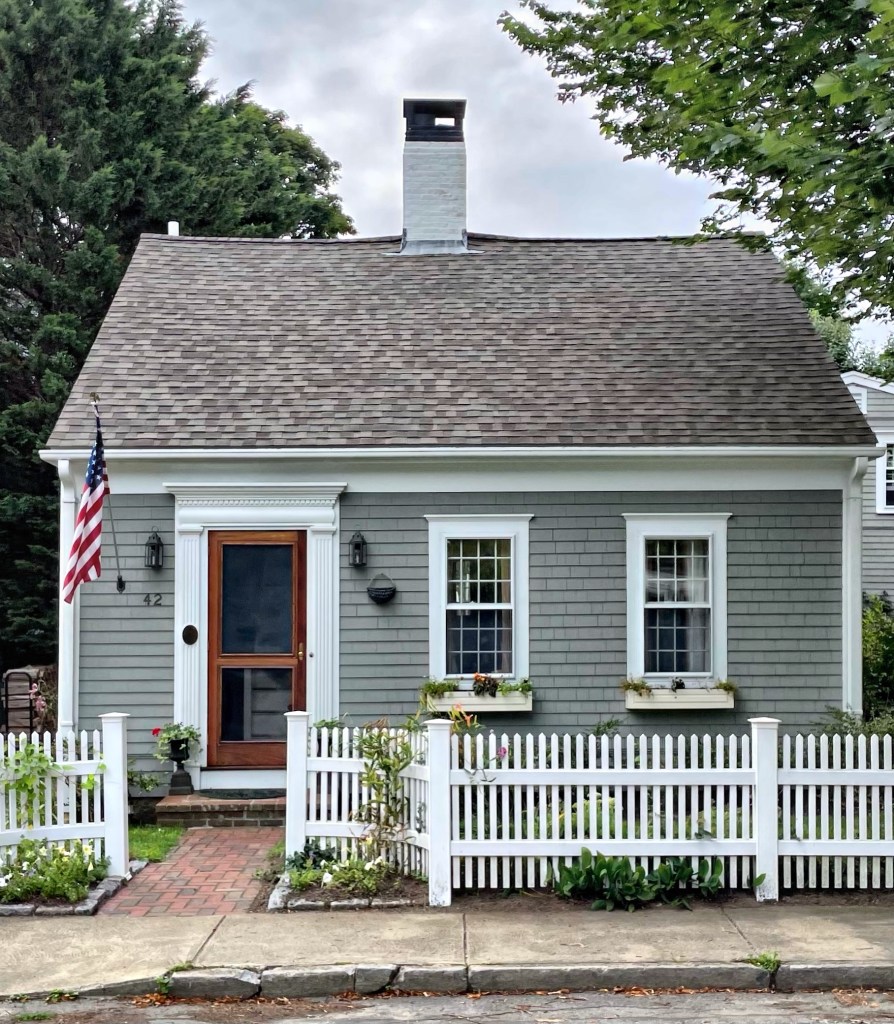
This tiny half-cape house in Marion was built in the mid-19th century for Timothy Hiller Briggs (1822-1877), a whaler. Based on the Federal/Greek detailing on the house, it is also likely the home was built much earlier for Timothy’s father, Silas, a sea captain, and was willed to his only son upon his death in 1833. Timothy died at the young age of 54 and his widow, Josephine, maintained the cottage until her death in 1924! The home is a half-cape as it has an off-center door with two bays of windows at the facade. A full-cape would be symmetrical with a central door and two windows on either side. The central chimney would provide heat to all rooms in the cold winter months.

Marion Congregational Chapel // 1885

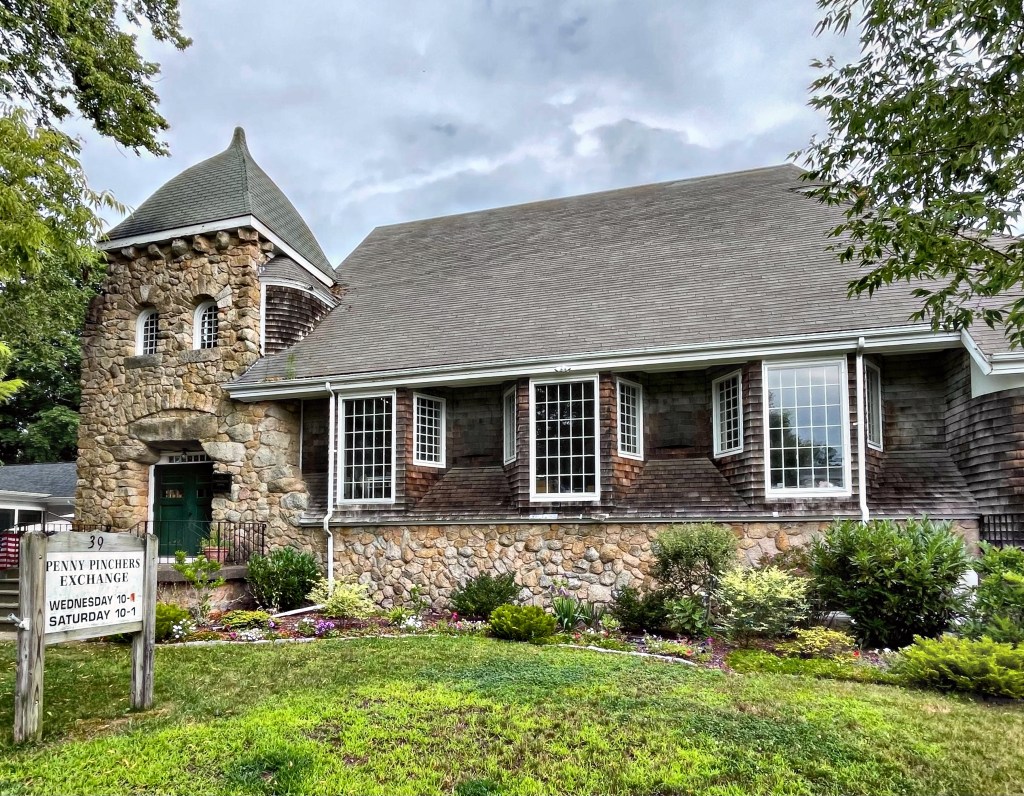
Built in 1885, Marion’s Congregational Chapel represents one of Elizabeth Pitcher Taber’s last substantial gifts to her community. Born in Marion in 1791, Mrs. Taber taught grammar school in Marion as a young woman, marrying, Stephen Taber, clock maker and whaling ship-owner in 1823, subsequently living in Acushnet and New Bedford. She refocused her interest in Marion after the death of her husband in 1862. A wealthy, childless widow, Mrs.Taber funded a library/natural history museum, music hall, and during the mid-late 1870s, she set about the daunting task of founding a private academy in Marion which still thrives in the town as Tabor Academy. Three years before her death in 1885, Mrs. Taber, in one of her last acts of generosity to her church and town, purchased a vacant lot owned by her Tabor Academy’s principal and her downstairs neighbor in Tabor Hall, Clark P. Howland. She paid him $300.00 for his land and subsequently had the Congregational Chapel built in the up-to-date Shingle Style. Composed of rubble stone, the church features a south-facing wall with a trio of polygonal bays that add depth and provides the hallmark cedar shingle siding in the style. The church is one of the most rustic and beautiful in the state of Massachusetts. The church here also runs Penny Pinchers Exchange, a church-run thrift shop.


“Old Parsonage” // 1813

The “Old Parsonage” was built in 1813 by Capt. John Pitcher, brother of Elizabeth Pitcher Taber, benefactress of the town of Marion. The side of the building that faces the street (what we see) is actually the back of the original dwelling. The Federal period house sits on a raised stone foundation with a central door and shingle siding above. Behind his home, a large pasture was situated where his sheep and cows grazed on fields. Pitcher used to hang a ship’s bell from the branch of an oak tree and ring it every evening at 9 p.m. as a curfew bell for the town. The bell is now located in the Marion Natural History Museum. When Capt. Pitcher died, he left his house to the Congregational Church, which used it as a parsonage for many years. It was sold in May of 2021 and is likely a private home now.

Look-Coggeshall House // 1828

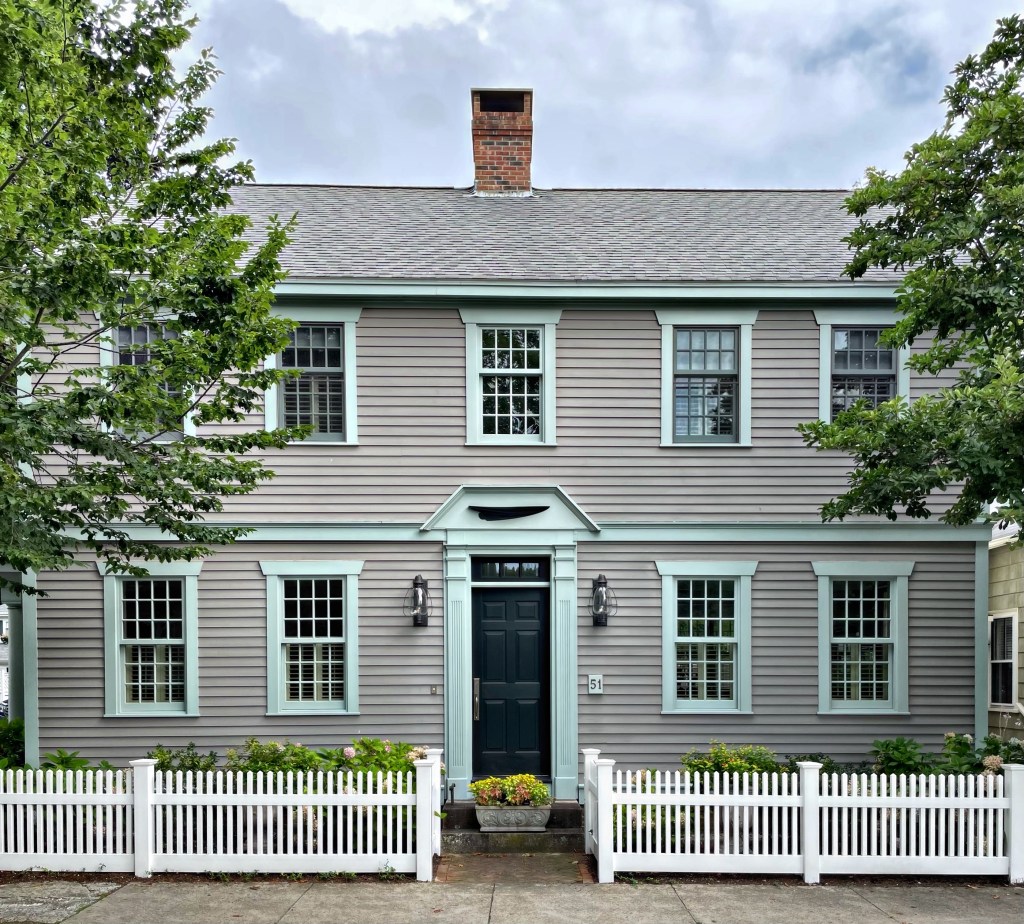
Believe it or not, this beautiful home was once a one-story Cape house! Built in 1828, the home was constructed for Captain Hiram Look, a sea captain, and his new wife Kezziah (Kezia) within a year of their marriage. They had two daughters. Hiram died in 1865, possibly related to the Civil War, which ended that year. After his and his widow’s death, the home was willed to their daughter and her husband, Bernard Coggeshall, who was likely a descendant of the Coggeshall Family of Bristol, RI. The Look daughter died in 1890, and Bernard remarried a year later. Sometime after 2008, this home was enlarged, giving it the second story we see today. If you look closely at photos from before 2008, you can see the matching door surround, window lintels, and window spacing seen today. While the home is completely different, the “updated” version is still appropriate and conveys the home’s history.

What do you think?