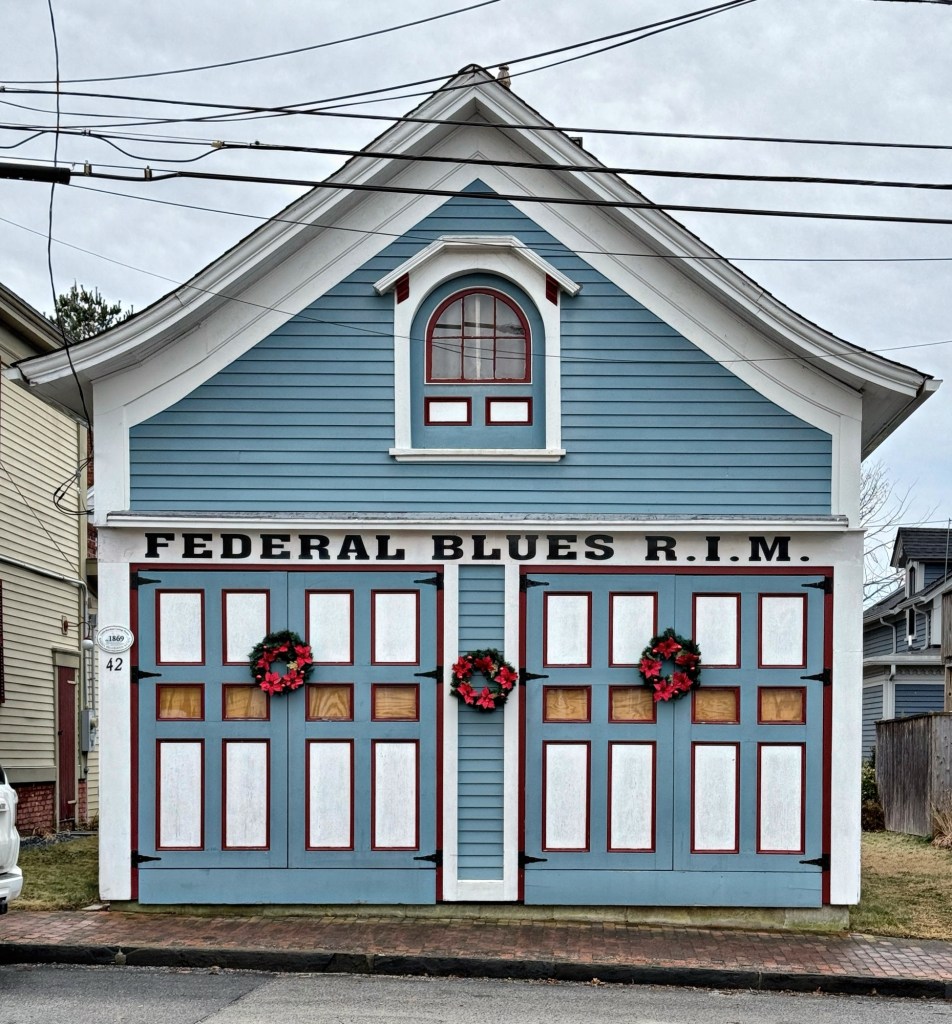
Warren Federal Blues Stable // c.1860

The Warren Federal Blues is an active independent military organization of the Rhode Island militia that was founded in 1798 and today, serves primarily as a ceremonial honor guard and as historic educational organization in Warren, Rhode Island. Members originally served as marines to police navy seamen on the USS General Greene (1799), which was commanded by Christopher Raymond Perry, the father of Oliver Hazard Perry, who also served aboard the ship. The Warren Federal Blues still remain part of the Rhode Island militia but serve in a largely ceremonial and educational role using period muskets and cannon for special events. The organization purchased the historic barn of the Baker-Merchant House on Main Street in about 1990, saving it from demolition for expansion of church parking, and moved the former barn to this site, adjacent to the old Narragansett Engine House, creating a unique composition of diminutive, but spectacular buildings. The former barn, which dates to around 1860, though is likely older, features paired double-leaf doors on the facade, round-arch window in the attic, and a flared roof with cupola centered on the ridge. 
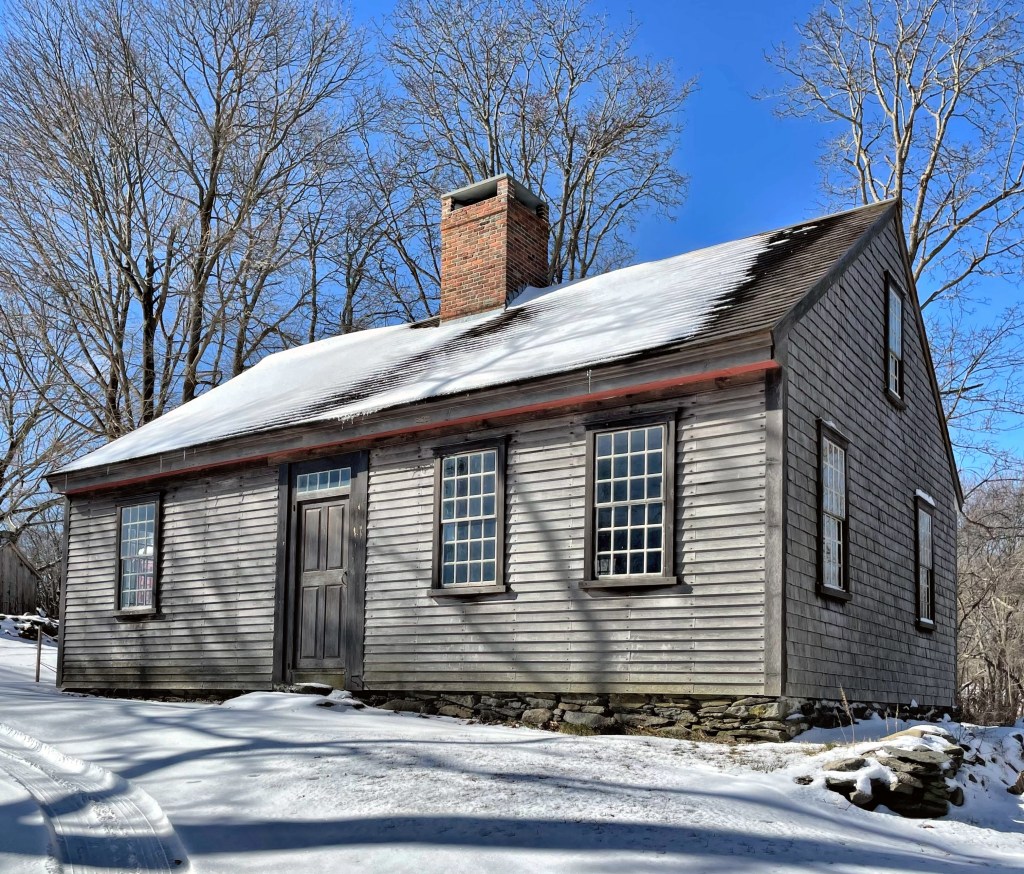
Coggeshall Farm // c.1750

Located on the Poppasquash Peninsula, in my favorite Rhode Island town of Bristol, the Coggeshall Farmhouse showcases the historic rural farming character of the town, which saw much development by the 19th century. In 1723, Samuel Viall (1667-1749 purchased farmland from Nathaniel Byfield, who had acquired most of the north part of Poppasquash as one of the original “founders” of Bristol (though the Wampanoag people had been already living here for centuries). Viall or a descendent likely had this small Georgian farmhouse built on the land, along with outbuildings to farm the beautiful land here. In the early nineteenth-century Wilbour and Eliza Coggeshall were tenant farmers at the farm. The Coggeshall’s son, Chandler Coggeshall, later became a politician and helped to found the Rhode Island College of Agriculture and Mechanic Arts in 1888, which became known as the University of Rhode Island. The farm eventually was acquired by industrialist Samuel P. Colt, nephew of firearms manufacturer Samuel Colt, who created a massive estate on the land. In 1965 the State of Rhode Island purchased the Colt Estate for use as a state park, and the Bristol Historical Society petitioned the state for permission to preserve the old Coggeshall farm house on the property as a museum. Coggeshall Farm Museum was established in 1973 to educate modern Americans about eighteenth century New England farm life.