The Tabernacle // 1879

The year after Trinity Methodist Church was constructed, the Martha’s Vineyard Camp Meeting Association at Wesleyan Grove, built the wrought-iron Tabernacle, the most significant single building in the campground. The beautiful iron Tabernacle, which seats over 2,000, was designed and built in 1879 by John W. Hoyt of Springfield, Massachusetts. The building was completed in less than four months after the contract was signed. The Tabernacle covers the original consecrated ground of 1835 where the first Methodists erected canvas tents to worship under the trees. By 1869, the attendees at the revival meetings needed more protection from the sun and rain because the large oaks that had attracted the founders 35 years before had begun to die. Since 1870, the Association erected a mammoth canvas tent supported on tall poles every summer. The tent proved unsatisfactory because of ventilation problems and a tendency to collapse in storms. In 1878 the Association solicited designs for a large wooden tabernacle a building of vast roofs, minimal supports, and open walls. The plans it received, which were elaborate versions of the wooden
tabernacles or “arbors” of southern camp meetings, proved too expensive to build on this site. Campground resident John W. Hoyt solved the problem with a much cheaper wrought iron structure that was largely prefabricated and could be speedily erected on the uneven site. The gorgeous Victorian Gothic tabernacle remains today as the centerpiece of the Wesleyan Grove National Historic Landmark District, an esteemed historical designation.
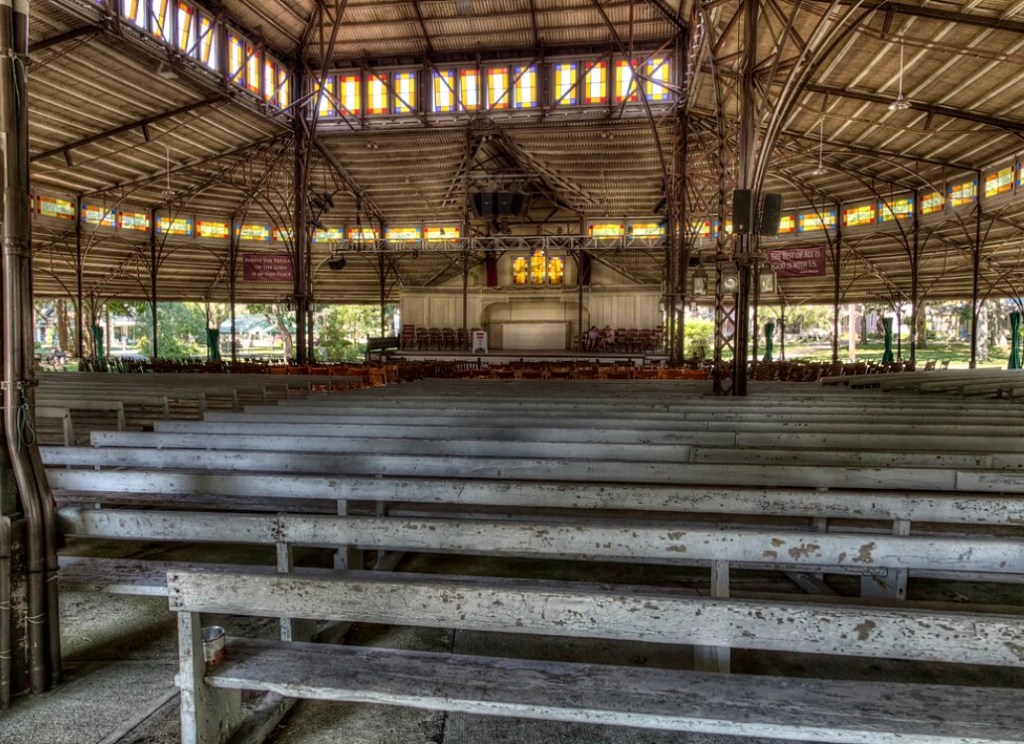
Image courtesy of John G. Hoey.

Trinity Methodist Church // 1878

Located on Trinity Park in Wesleyan Grove (aka the Martha’s Vineyard Camp Meeting Association), this 1878 church served the year round Methodist community in Oak Bluffs. The Trinity Methodist Church is a towered, Victorian Gothic structure of some distinction. Edward M. Hyde, a Methodist minister who had trained in architecture and art, designed it. The property that the church and Parish House sit on belongs to the Association, but the buildings are maintained by the congregation. Interestingly, should the congregation disband, the buildings would return to the Association.

Methodist Camp Meeting Association Office // 1859

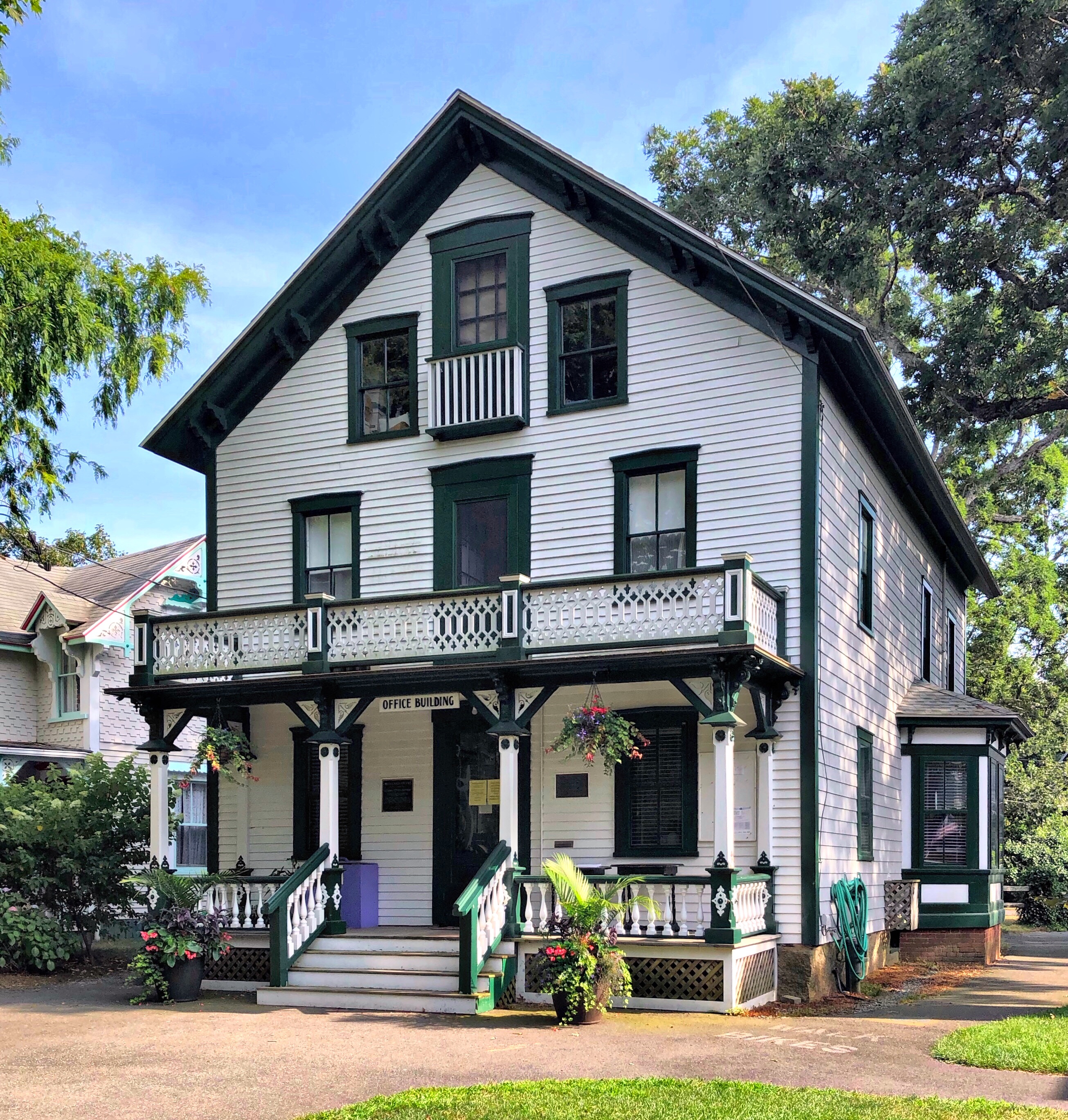
Located at the center of the Wesleyan Grove, – the Martha’s Vineyard Camp Meeting Association – this Italianate building has long served as a hub of the active summer community. The building was constructed in 1859, before any cottages were built in the newly formed summer colony. The office building was not only the headquarters for the Camp Meeting Association, it also served as a storage space for the baggage of the many who stayed in tents, many who didn’t have the means to purchase or rent a cottage. The building even was home to the associations’ post office. It now houses the Association director’s offices and contains the lease holders records back to 1864, a great way to learn about the diverse groups of people who visited and worshiped in this camp.

Jones Cottage // 1876

This charming little cottage in Oak Bluffs was built in 1876 for Charles N. Jones, a resident of Medford, MA who had a home built there in 1872. His family’s summer cottage on Martha’s Vineyard was designed by the Ripley Brothers, Alonzo and Walter, carpenters who lived in town and designed and built many of the charming little summer homes there. The home features a wrap-around porch, a covered balcony at the second floor, and pierced board balustrade and cornerboards. Oh, and the paint scheme is perfect!

Aunt Georgia’s House // c.1880

Located on the iconic Circuit Street in Oak Bluffs, this Eclectic Victorian cottage has a storied past related to Black history on the island. Even though Oak Bluffs was a relatively safe place for African Americans to be, there were still limits on their rights. In some parts of Oak Bluffs there were laws that said that certain property could only be owned by whites. The island became a vacation spot for thousands every summer in the 19th century and seeing a lack of options for Black travelers, Mrs. Georgia O’Brien and Ms. Louisa Izett began to operate an inn for people of color. The inn was one of two such residences in Oak Bluffs and has since been listed on the African American Heritage Trail of Martha’s Vineyard. The home has since been named the Tivoli Inn and retains much of the original gingerbread trim. In recent years, Martha’s Vineyard was given the nickname, “The Black Hamptons,” due to its popularity as a place for wealthy African-Americans to vacation, it remains a very diverse island in summer months.

Tall Timbers Cottage // c.1870

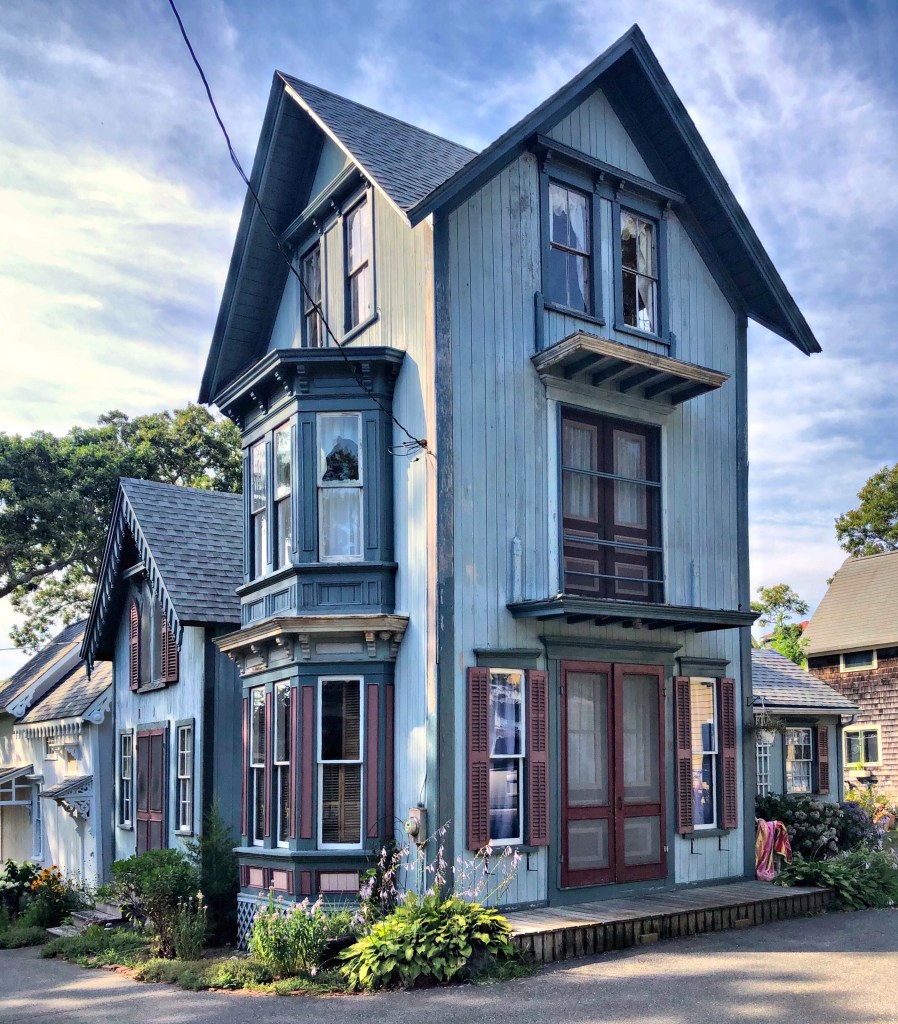
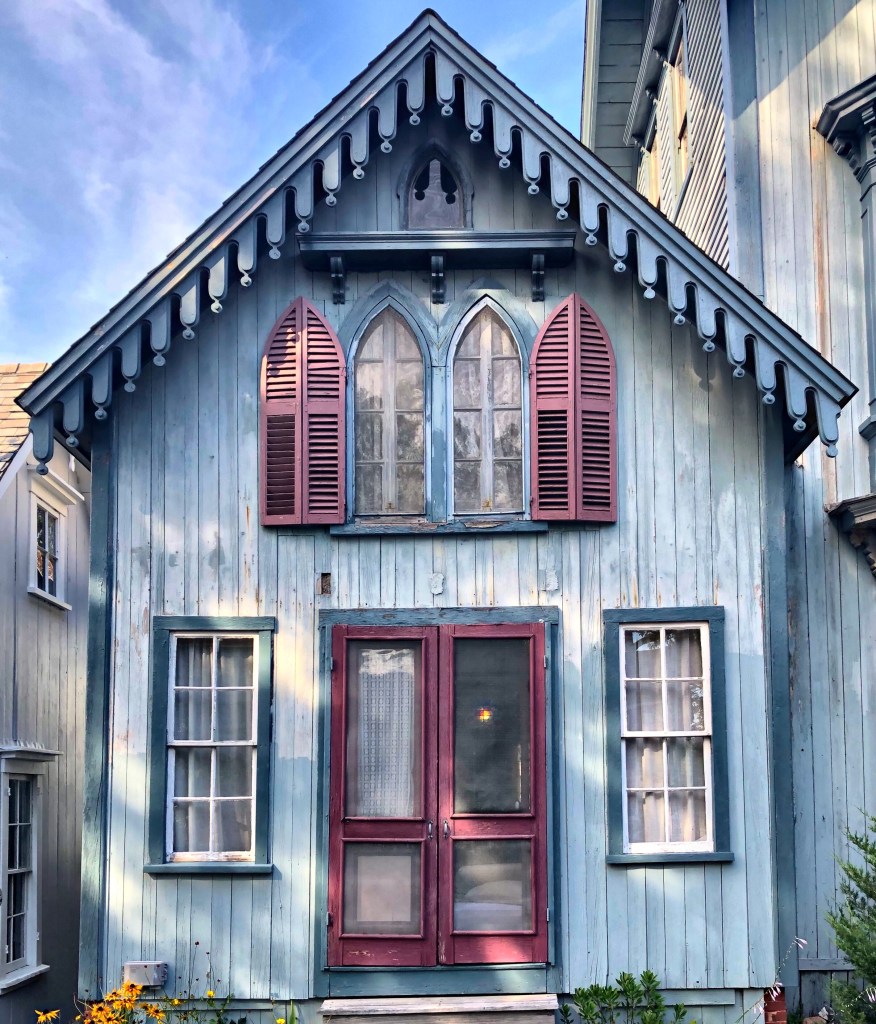
Tall Timbers is one of the more unique cottages in the Wesleyan Grove development, a religiously oriented summer community in Oak Bluffs on Martha’s Vineyard. The cottage was actually built in two phases. The small two story cottage was built first before 1870 and features gothic bargeboard, lancet windows, and paired doors. It was purchased around 1870 by William Newell, of Rhode Island, who had a three-story wing added to serve as a summer cottage. The addition is notable for the full-length vertical boards that rise through the entire three stories without a break like trees after harvesting, likely the inspiration for the name of the cottage. William Newell was a manufacturer of brass fixtures and ran a foundry in Central Falls in Rhode Island. Mr. Newell was active in politics and early in his career joined the cause of the anti-slavery party, which was likely solidified in his experiences in the ethnically diverse Martha’s Vineyard.