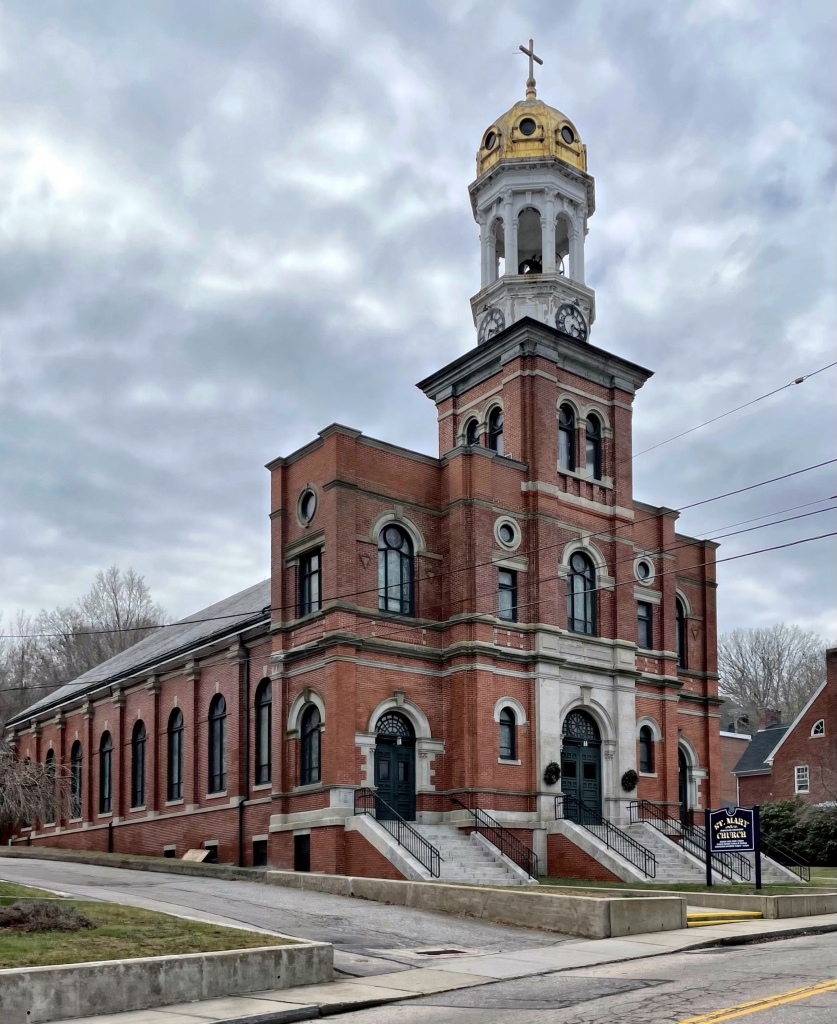
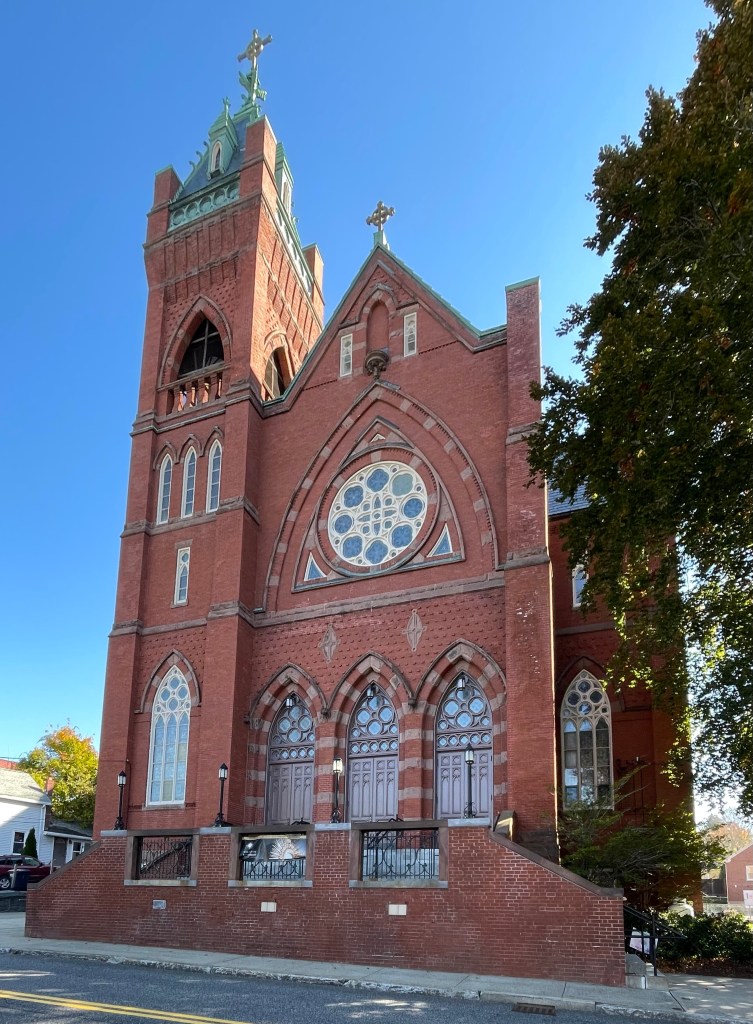
One of the grandest and high-style buildings in Sprague’s Baltic Village is the St. Mary of the Immaculate Conception Church. As Irish, French- Canadians and Poles settled in the village of Baltic, they formed a substantial Catholic community. This congregation was founded by 1860 and a modest church building was erected at that time. As the town’s Catholic population grew, the Archdiocese decided to fund a new church building. This Romanesque Revival style building was constructed in 1911 and it must have made a big statement when it was completed. The building is one of the most unique church designs that I have seen in Connecticut.
When the town of Franklin, Connecticut was still a part of Norwich, it was known as West Farms. The residents there had a meetinghouse built there as it took too long to travel into Norwich for town meetings and church services. The first meetinghouse was built in 1718 on what became Meetinghouse Hill. Decades later, the primitive building was replaced by a newer structure. That building was replaced two more times until the present Congregational Church was erected in 1863. The building takes cues from the Greek Revival church designs of decades prior and looks to the future with Italianate detailing and steeple. There remains a small, but active congregation here to this day, who maintain the old building very well!
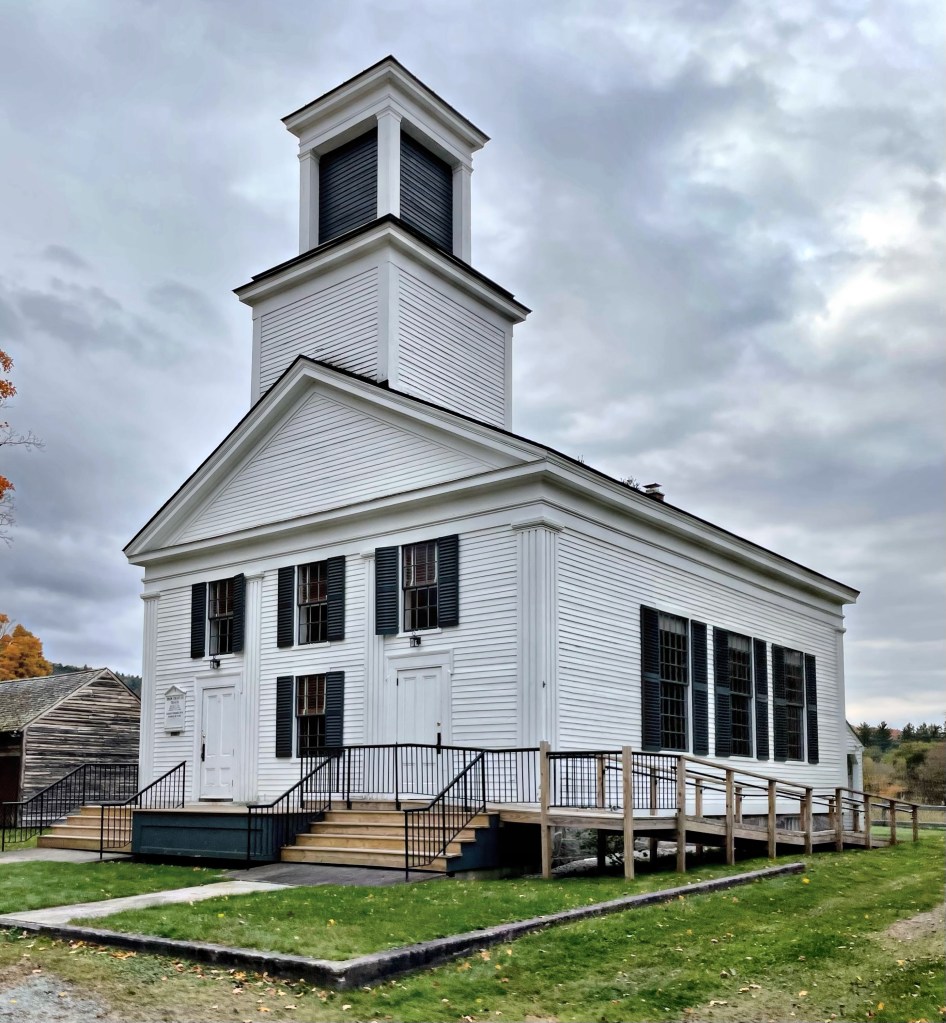
Located next to President Calvin Coolidge’s birthplace and the Coolidge Family store, the Union Christian Church of Plymouth Notch in Vermont stands as another of the village’s well-preserved buildings with direct ties to the former president. The church was built in 1840 as a modest, vernacular Greek Revival building with a two-stage tower and originally was the town’s meetinghouse. The building was dedicated as a Congregational church in 1842. President Coolidge attended services here as a child and later when visiting his hometown as Governor of Massachusetts and President of the United States. In 1942, the building became a union church for all congregations.
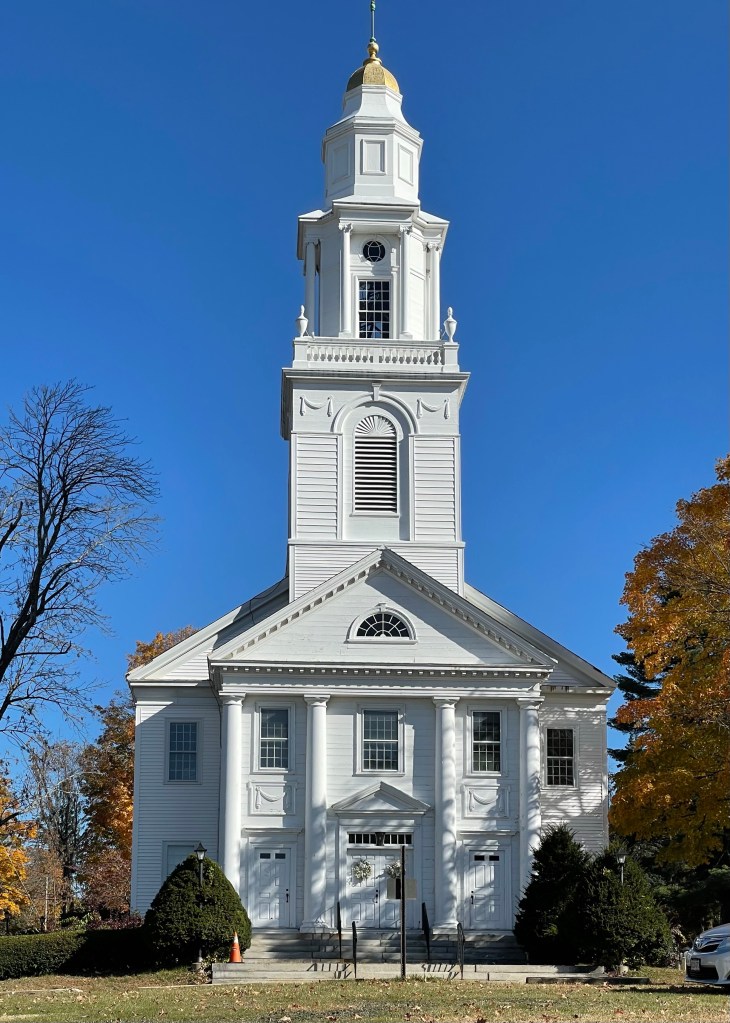
The United Methodist Church of Nantucket stands prominently at the top of Main Street on land was obtained from Peleg Mitchell in 1822. Construction on the site began in 1823 with the massive structure originally built with a pyramidal hip roof of enormous timbers brought to the island on whaling vessels. In 1840, the roofline was amended with the present gable roof, constructed over the original hip roof. The church is a highly significant example of Greek Revival architecture on the island and a more rare example of the temple-front form seen there. Deferred maintenance threatened the building to the point that in 1995, the building was listed as one of the most endangered buildings in Massachusetts. A restoration was undertaken funded by private contributions and the Massachusetts Preservation Project Fund, preserving the building for another 200 years.
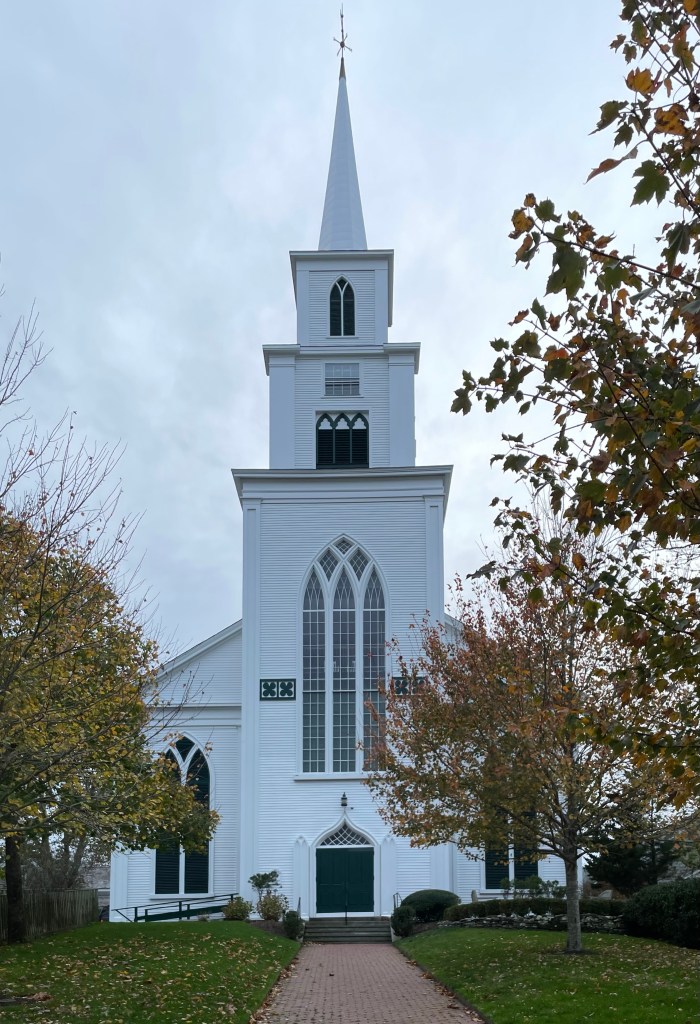
The First Congregational Church is one of Nantucket’s most prominent historic landmarks and is prominently located on a hilltop, being one of the first buildings you’ll see when arriving to the island by ferry. Constructed from a design by Samuel Waldron, a Boston housewright, the present church blends the Greek and Gothic Revival styles elegantly into a single composition. The interior of the church was painted with architectural trompe l’oeil paintings by E.H. Whitaker of Boston in 1852. The steeple was removed in 1849, likely from engineering concerns and high winds on the island. In 1968, the steeple was reconstructed from historic drawings by Philip Graves of Ames & Graves.
The East Congregational Church in Ware was established in 1826, spurred by the industrial growth and subsequent immigrant population boom in the village of Ware, Massachusetts. The Ware Manufacturing Company, a major player in town, contributed $3,000 to towards the construction of a new congregational church in the village, which was matched by residents. The original church was built in 1826, following plans prepared by Isaac Damon, a noted church architect from Northampton, in the Federal style, popular at the time. In 1925, just a year before its centennial, the church burned to the ground. Plans to rebuild the church formulated immediately. Due to changes to the neighborhood since 1826 (notably the construction of tenement housing adjacent to the church), the decision was made to locate the new church setback from the street. Plans were drawn by Frohman, Robb and Little of Boston for the new building, which was to be Federal Revival, a nod to the former church building. The grounds in front were landscaped by the prominent landscape architect Arthur A. Shurtleff. After WWII, population decline and dwindling membership of some churches in town required a few congregations to consolidate, creating a union or united church here. The United Church of Ware came into being in 1969 when the East Congregational Church, United Church of Christ and the Ware Methodist Church, United Methodist Church joined together and became one federated church with ties to two denominations.
All Saints’ Church in Ware Massachusetts was originally known as St. William’s parish, and was the oldest Roman Catholic Church in the town. Beginning in 1850, regular Catholic services were held in the new industrial village, as large a population of French Canadians moved there for work in the textile mills. A small frame church was built on West Street and a cemetery laid out around it for members of the congregation. As the congregation grew, a larger building was needed. In 1888, work began on the present structure which was to be located in a more central location. The Archdiocese worked with Patrick W. Ford, an architect who designed many Roman Catholic churches built in the eastern part of United States through the latter half of the 19th century. The Victorian Gothic church building remains one of the best examples of the style in central Massachusetts.
Arguably the most high-style building in the quaint village of Dorset, Vermont is the Congregational Church, which appropriately sits on Church Street. The original congregational church in Dorset was located in nearby Maple Hill Cemetery. When the wood structure burned in 1832, an new wooden church was built on this site. The second wooden building burned in 1907, and then this church was built, but of fireproof construction. Jordan Greene, an architect from New York, designed this Neo Gothic Revival style in the historic district. The church was constructed by the contracting firm of O. W. Norcross, partner in the Norcross-West Marble Company, which donated the building stone from its South Dorset quarry. The design is dominated by a massive square central tower that ascends its facade and is capped by pinnacles. Behind the tower, the gable-roofed church is built of rough-faced Dorset marble laid in patterned coursed ashlar and trimmed with dressed stone. How many other marble churches can you think of?
Early in the 17th century, the Rev. John Lothrop and his followers left England for these shores seeking religious independence. They settled first in Scituate and a few years later came to Barnstable, arriving in 1639. They constructed their first meetinghouse in 1646 on Coggins Pond, about a mile west of this church. Lothrop’s second dwelling in Barnstable is the current Public Library in town (featured previously). In the early 19th century there was considerable theological debate in the “churches of the standing order” in New England. Many churches actually split over this debate, the traditionalists becoming Congregationalists and the liberals becoming Unitarians. The Eastern Parish in town was thus occupied by the Unitarians. In 1836 the original meeting house was removed and a new, larger one was constructed. It was destroyed by fire in 1905, and planning began for a new church. The present edifice was dedicated in 1907, and was designed by architect Guy Lowell, the architect of the Boston Museum of Fine Arts and the New York County Courthouse. His traditional, Classical designs were featured in publications all over the country. This church in the Classical Revival style is one of the finest on Cape Cod.
When you think of the quintessential New England Village, what do you think of? These villages of white houses around a town green, usually anchored by a congregational church with a tall, white steeple, have been the subject of myriad photographs and memories for decades. Why are so many like this? Well, historically, the bright white we know of as a common house color was not available until the 1920s. Before the early 1900s, “white” paint was more cream or off-white as we would describe it. Many such villages started seeing white paint proliferate as Titanium Dioxide was mixed with pigments to generate the bright white, about at the same time Colonial Revival style homes saw a second resurgence in popularity. The bright-white paint was more expensive and represented stability and prestige. Publications like Yankee Magazine showed photographs of these charming villages blending into the freshly fallen snow or fall foliage and the romanticization of New England truly began. Newfane, Vermont is one of these villages, which are dominated by the bright white paint. It is an obvious choice, especially due to the number of classically inspired Greek Revival style houses.




 Buildings of New England