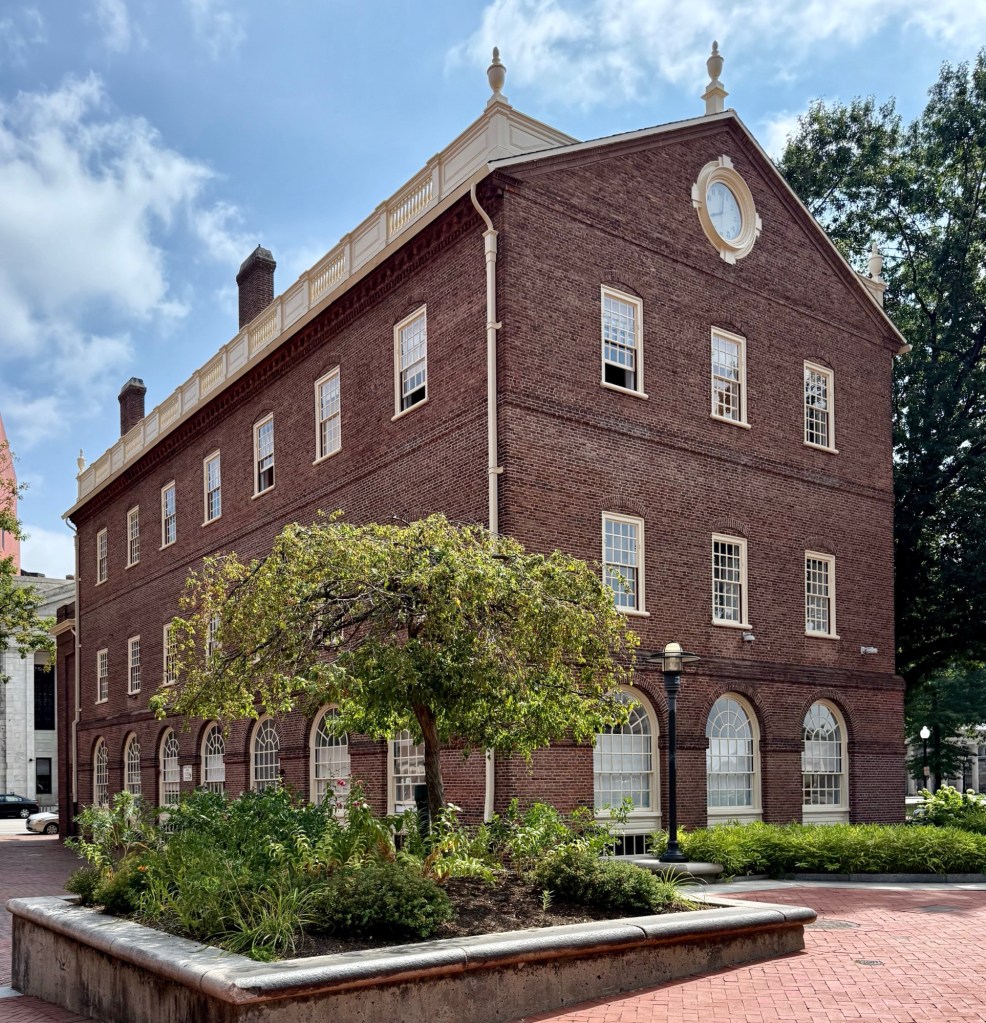
Providence Market Hall // 1773

Located in Market Square between Downtown and College Hill in Providence, Rhode Island, the old Colonial Market House stands as one of the city’s oldest and most architecturally significant buildings. Constructed between 1773-1775, this Georgian-style structure originally served as a public market and meeting space. The building was originally two stories in height with an open arcade on the first story, it was used by vendors below and town officials above. The building was expanded in 1797 with a third floor, which housed the first Masonic Lodge in Rhode Island. The Market Hall was designed by local businessman, astronomer, and architect, Joseph Brown, who was also a brother of the founders and namesake of Brown University. Over the centuries, the Market House has played many civic roles. During the Revolutionary War, it was used for military purposes, and later became a hub of commercial and political activity in the growing city. It housed Providence’s first post office, and housed the Providence City Council in the decades before the completion of City Hall. In 1948, Mayor Dennis J. Roberts signed a deed to give the building to the Rhode Island School of Design, with the provision that the exterior of the building be maintained, an early preservation win! Architect John Hutchins Cady was hired to remodel the interior with classrooms and studios, and the Market House remains as a significant piece of the RISD campus. Its enduring presence on Market Square connects modern Providence to its colonial roots, embodying a rich legacy of adaptive reuse and historic preservation.

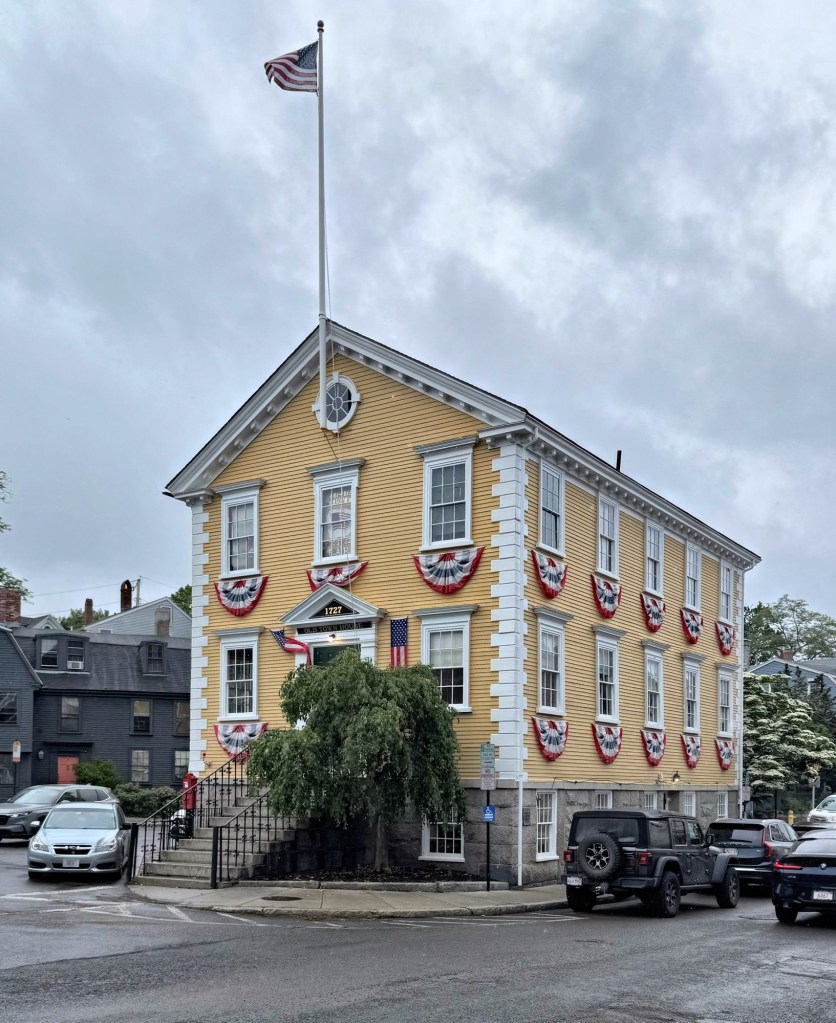
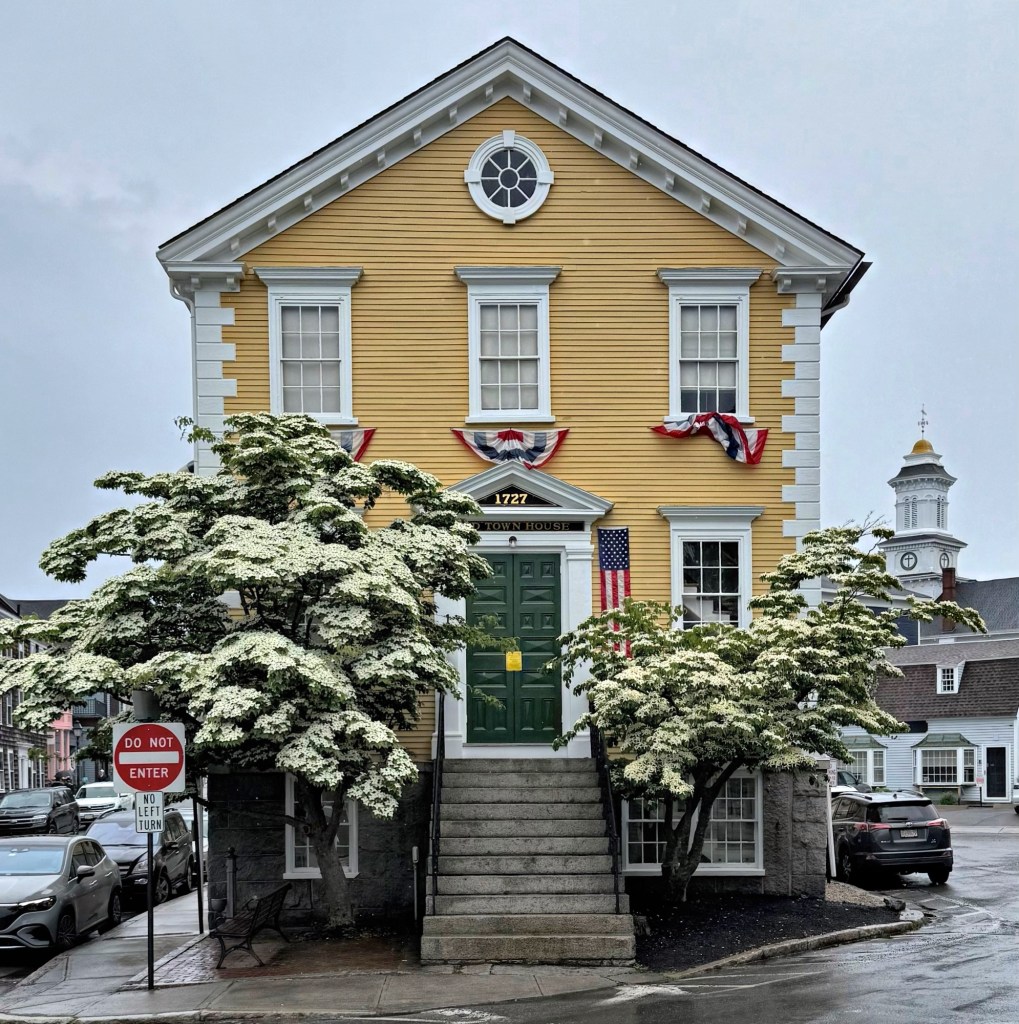
Old Town House, Marblehead // 1727

By the early 18th century, Marblehead had grown from a small fishing village to one of the most affluent and influential seaports in the colonies. This new wealth and the increasing secularization of government led town officials in 1727 to fund and build a Town House, to replace the Old Meeting House from 1696. The upper level of the building served as a town hall, while the lower level was originally used as a market. The Town House was later the gathering place to protest the Stamp Act and the Boston Port Act, and was a primary location for Sons of Liberty to meet and discuss Revolution. After Independence, the Town House was host to such dignitaries as presidents George Washington, Adams, Jackson and Munroe, Samuel Adams, John Hancock and the Marquis de Lafayette. The building would eventually be replaced as the town hall when the new Abbot Hall was built in 1876. The top floor became the GAR Museum, established after the Civil War as The Grand Army of the Republic veterans organization. The main floor houses meeting and exhibition space. The iconic Revolutionary-era Georgian building has been lovingly maintained and restored for nearly 300 years, a testament to the historic and architectural significance of this handsome structure.

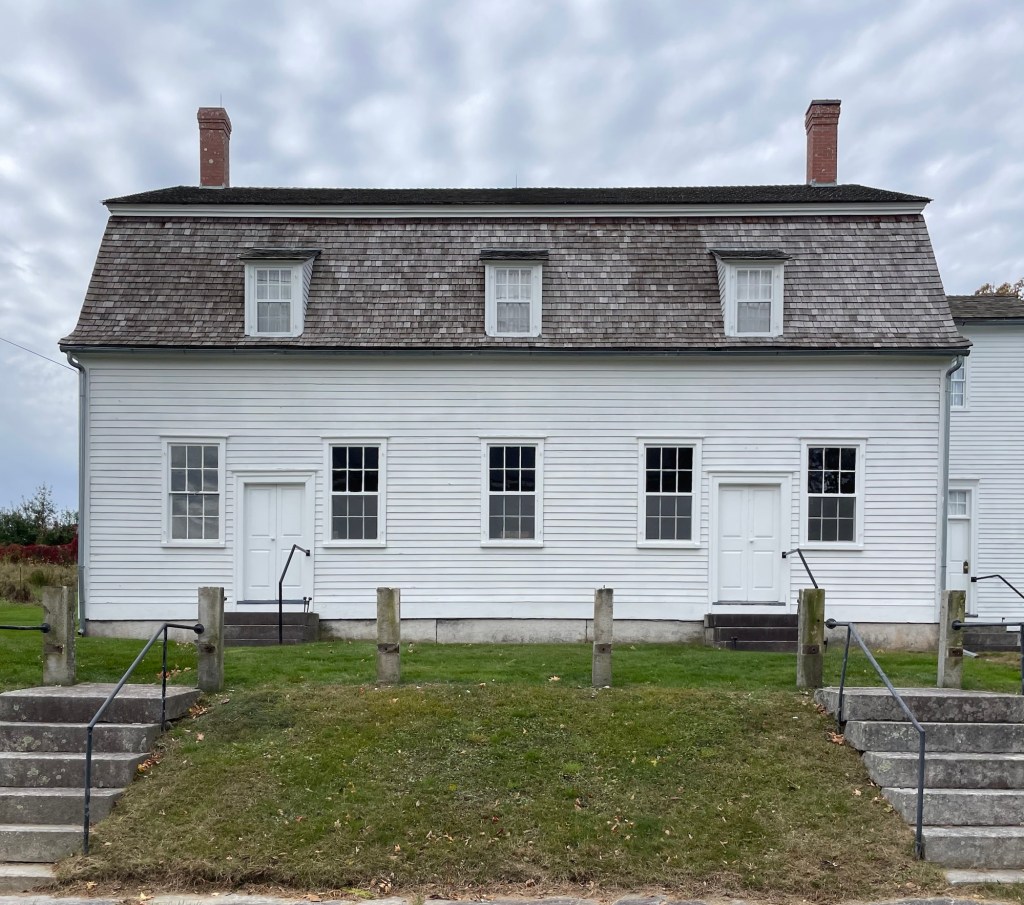
Sabbathday Lake Shaker Meetinghouse // 1794

The last active Shaker community in the world can be found in New Gloucester, Maine. The Shakers migrated to Colonial America in 1774 in pursuit of religious freedom and developed from the religious group called the Quakers, which originated in the 17th century. Both groups believed that everybody could find God within him or herself, rather than through clergy or rituals, but the Shakers tended to be more emotional and demonstrative in their worship. Shakers also believed that their lives should be dedicated to pursuing perfection, continuously confessing their sins, and attempting a cessation of sinning, including sex and marriage. They built 19 communal settlements (so far I have featured two: Enfield Shaker Village and Canterbury Shaker Village) that attracted some 20,000 converts over the next century and maintained their numbers through conversion and adoption of orphans, numbers which have dropped to just three active members in 2024! The Sabbathday Lake community was established in 1782 and grew to a size of 1,900 acres with 26 large buildings by 1850. This building, the Shaker’s meetinghouse, was built in 1794 with all materials and labor supplied by the community. The small but significant structure remains a landmark in the community and is occasionally open for tours.

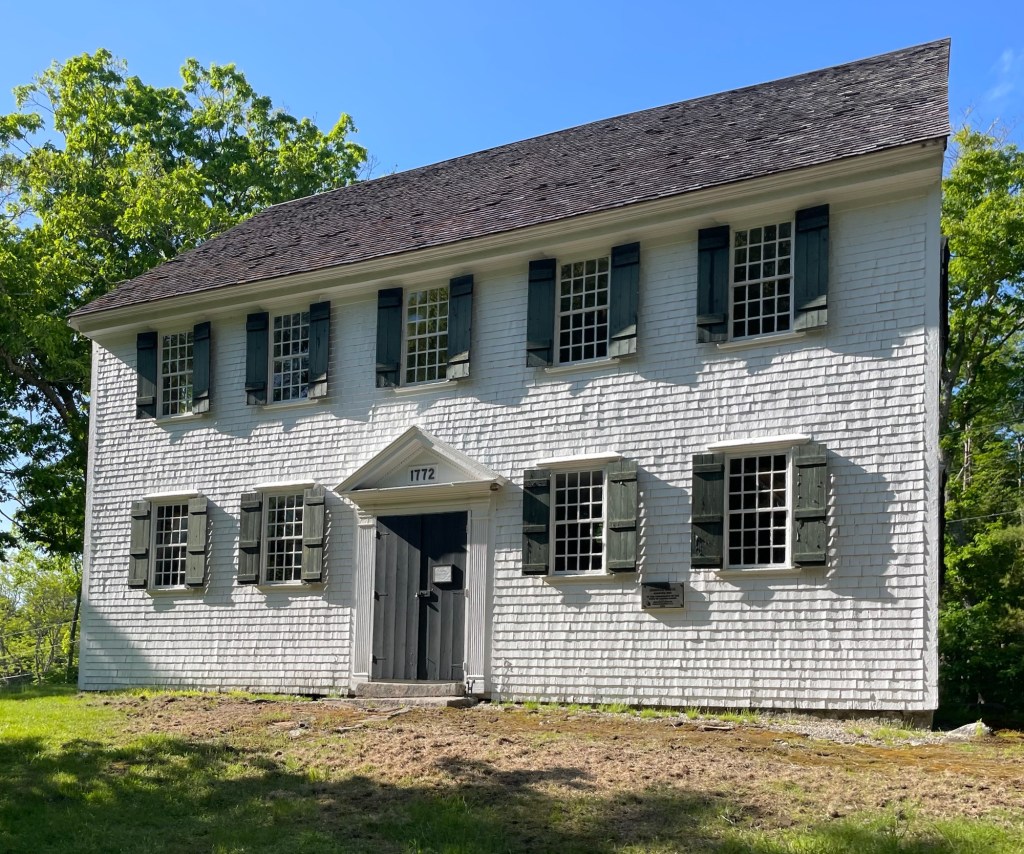
Walpole Meetinghouse // 1772

The Old Walpole Meetinghouse is a rare extant example of a Colonial meetinghouse in New England. The building is located in South Bristol, Maine, in the village of Walpole, and was constructed in 1772. The Walpole Meetinghouse is a little-altered example of a late colonial church in Maine (and one of the oldest actively used churches in the state.) The building originally housed a predominantly Presbyterian congregation of Scottish immigrants, but as the presbytery was based far away in Boston (Maine at this point was still a part of the Commonwealth of Massachusetts) the congregation eventually became Congregationalist. The Georgian-style building is clad in wood shingles, originally stained painted a brownish yellow to blend in with the birch leaves as to camouflage it among the trees. The building was painted white in the 20th century. It is one of a few extant meetinghouses in New England that utilized shingle siding instead of the quintessential New England clapboards. It is said that these are still the original shingles. Inside, the doors all enter the single main chamber, where the ground floor is dominated by a series of box pews and the elevated pulpit is sited at the north wall. It is maintained by the South Bristol Historical Society, and is still used occasionally for summer services.