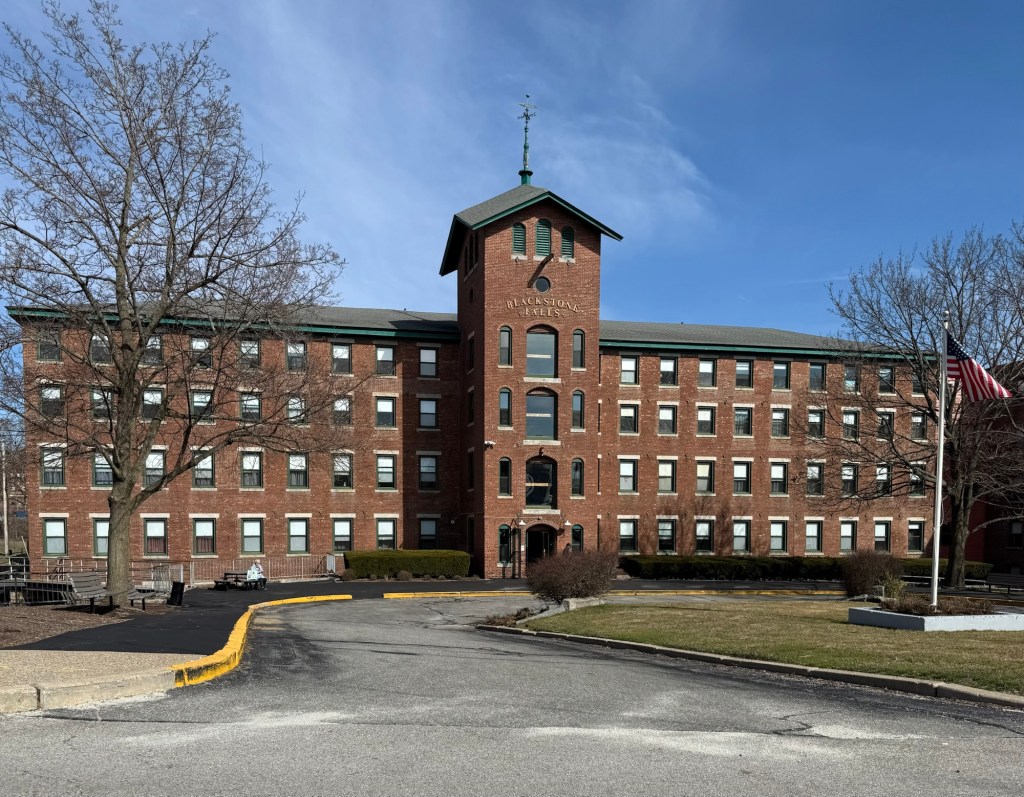
Fales & Jenks Mill // 1863

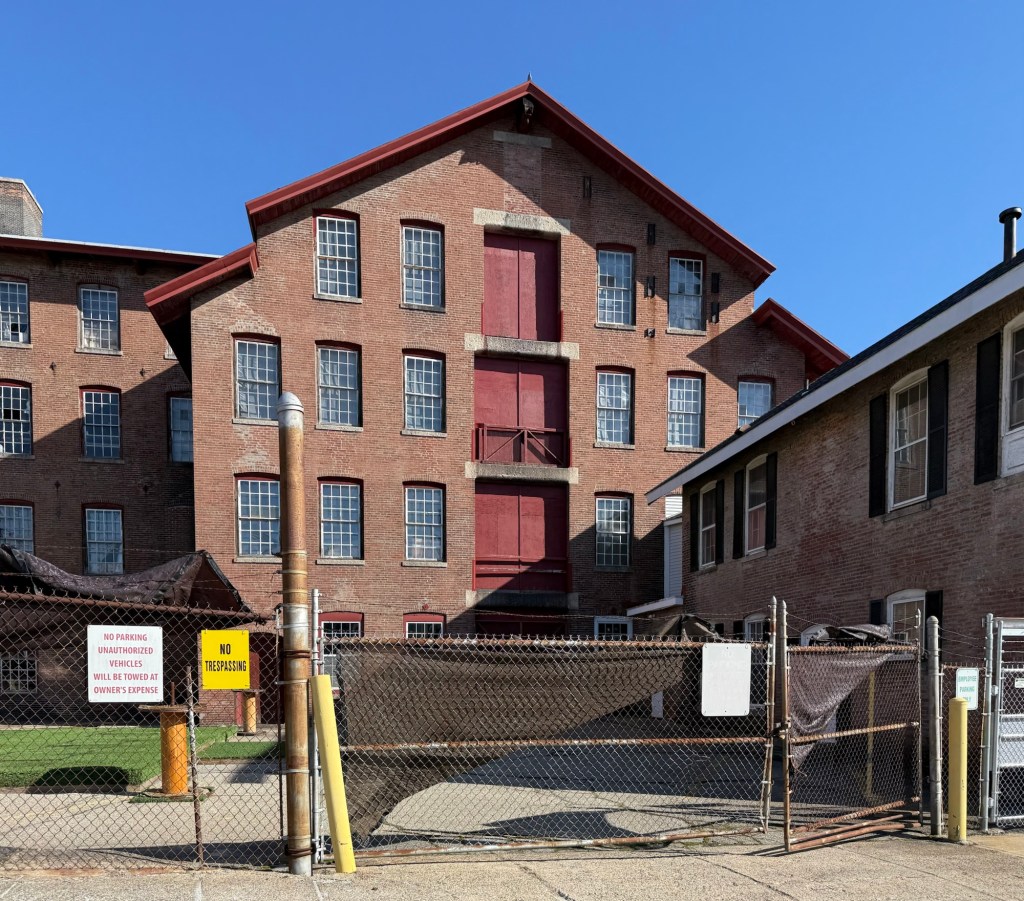
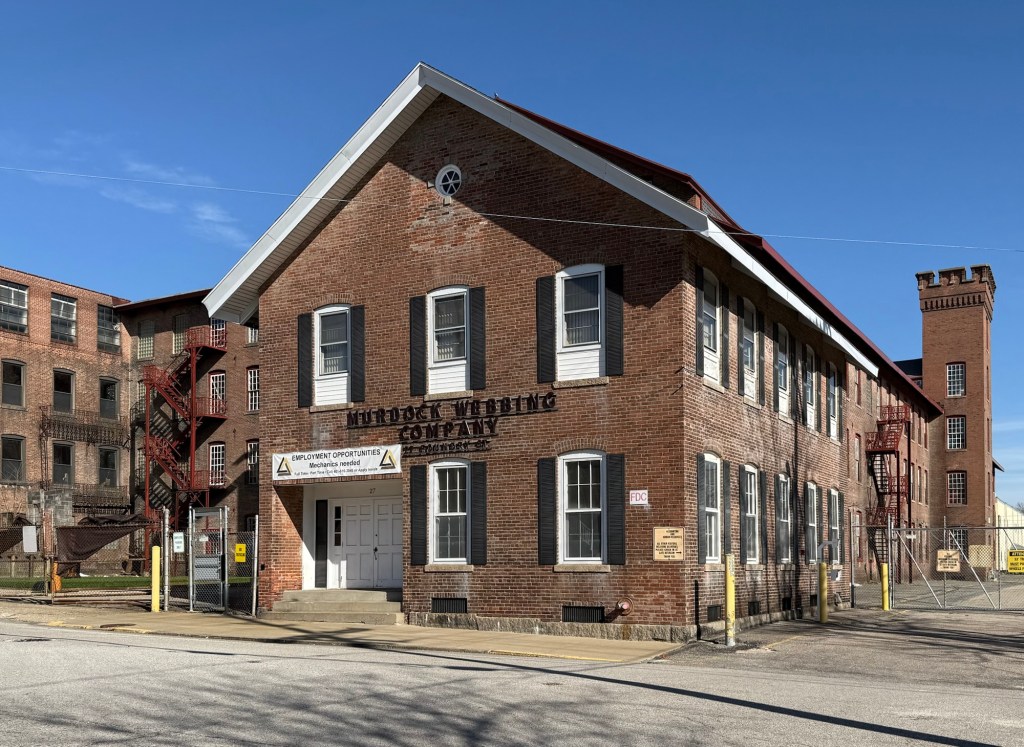
One of the largest mills in Central Falls, Rhode Island, is this complex tucked away on Foundry Street. Constructed in phases beginning in 1863, the site was originally owned by the firm of Fales & Jenks, manufacturers, and it was the first major factory in the town to not be built on a river, but on the railroad, showcasing a shift in the transportation of goods along with the increasing availability of steam power, relieving mill owners from having to build on the rivers. Fales & Jenks manufactured textile machinery here for just a few years until they moved to Pawtucket, and the complex was purchased by A. & W. Sprague in 1865 and after slight enlargement, was used as a flax mill until the Spragues’ failure in 1873. In the late 19th century, the mill was occupied by the U.S. Cotton Company. The oldest buildings are brick with granite lintels under a monitor roof. Later additions include a massive brick factory with a tower with castellated parapet. The small, two-story gable-roofed building at the corner was the mill office. The complex is today owned and maintained by the Murdock Webbing Company.

Sheafe Warehouse // c.1740

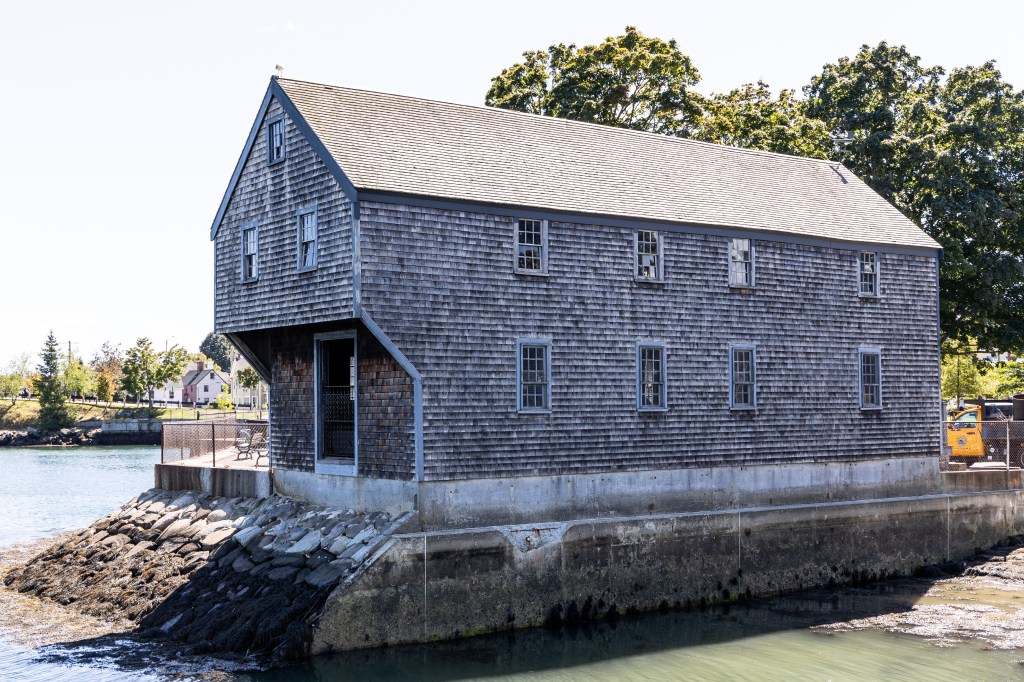
The Sheafe Warehouse in Prescott Park in Portsmouth, New Hampshire was constructed in the first half of the 18th century in a spot ideally situated on the Piscataqua River to receive incoming ships. The design of the building is unique with a garrison (second story overhang) which enabled cargo to be unloaded directly from ships arriving in the port. The structure was apparently built (and named after) Jacob Sheafe (1715-1791) a prominent and prosperous merchant who followed in his father’s footsteps engaged in trade with the West Indies. The building was used as storage for centuries until the 1930s when the owner sold the warehouse to two Portsmouth sisters, Mary E. and Josie F. Prescott, the founders of Prescott Park. Interested in preserving the history of their native city, the sisters had the building moved to its current location and restored. The building (and the adjacent Shaw Warehouse) was listed on the State Register of Historic Places.

Shaw Warehouse // 1806

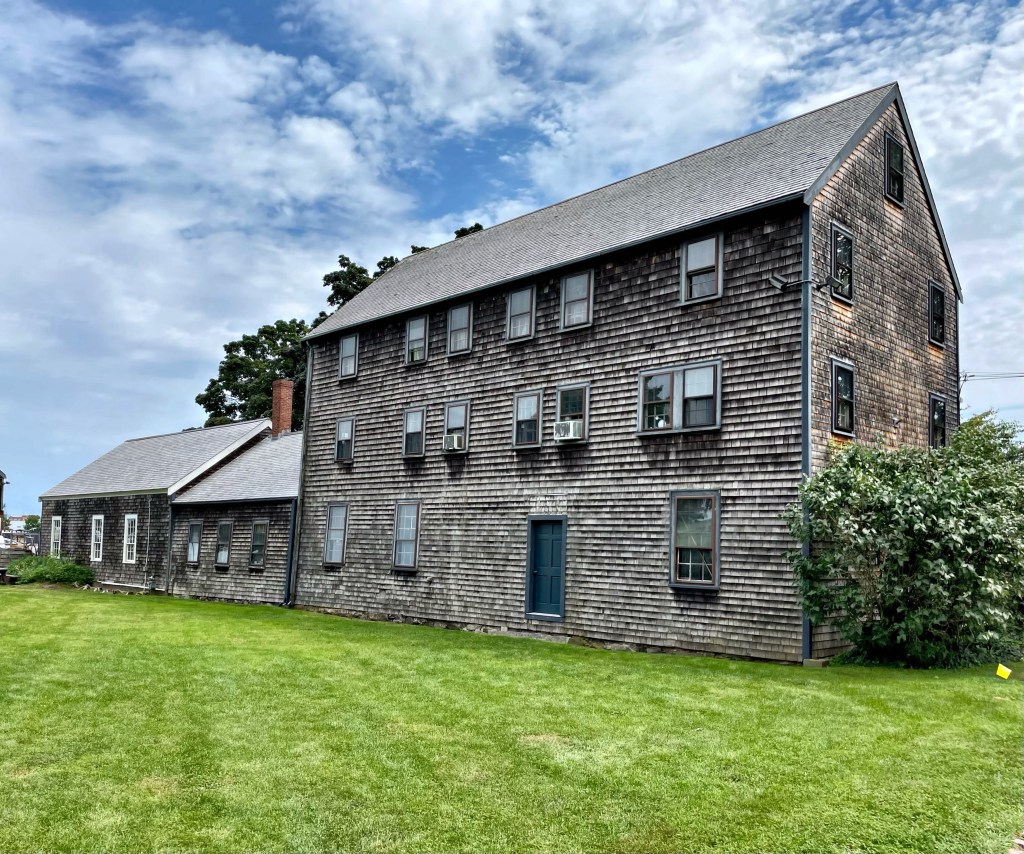
The Shaw Warehouse located inside Prescott Park in Portsmouth, New Hampshire, was constructed between 1806 and 1813 and is significant as a rare example of a vernacular warehouse building from the early 19th century. It is very vernacular, unadorned with a very functional use, but these types of buildings (like barns and stables) are some of the most charming and provide a link to working-class history from the past. The building is the only of its kind remaining in its original location in Portsmouth, and as a result, was listed in 2011 on the New Hampshire State Register of Historic Places. It now houses offices for the nearby park.

Otis Company Mill #1 // 1845

This five-story granite mill building was one of the major catalysts for the 19th century population surge in Ware, Massachusetts. As New England’s fledgling textile industry of the era played a vanguard role in transforming the U.S. into an industrial nation, the significance of this type of mill can hardly be understated. The Otis Mill #1 in Ware is one of the last remaining granite textile mills of this early period in central/western Massachusetts. The mill was built in 1845 for the Otis Company, which initially manufactured woven cotton fabric, but later branched out into stockings, woolen shirts and drawers underwear. The company was Ware’s largest employer for about 100 years! The company prospered thru WWI employing over 2,500 people. During the 1920’s the business began a decline due to the southern state’s mills and lack of modernization. In the mid 30’s the Otis Co sold its property to the citizens of Ware, which they formed Ware Industries, Inc to continue the major employer in the town. Due to this Ware came to be known nation-wide as “The Town That Can’t Be Licked.” The mill is now home to local small businesses as a sort of incubator, providing jobs to local residents!