Joseph Low Mansion // 1857

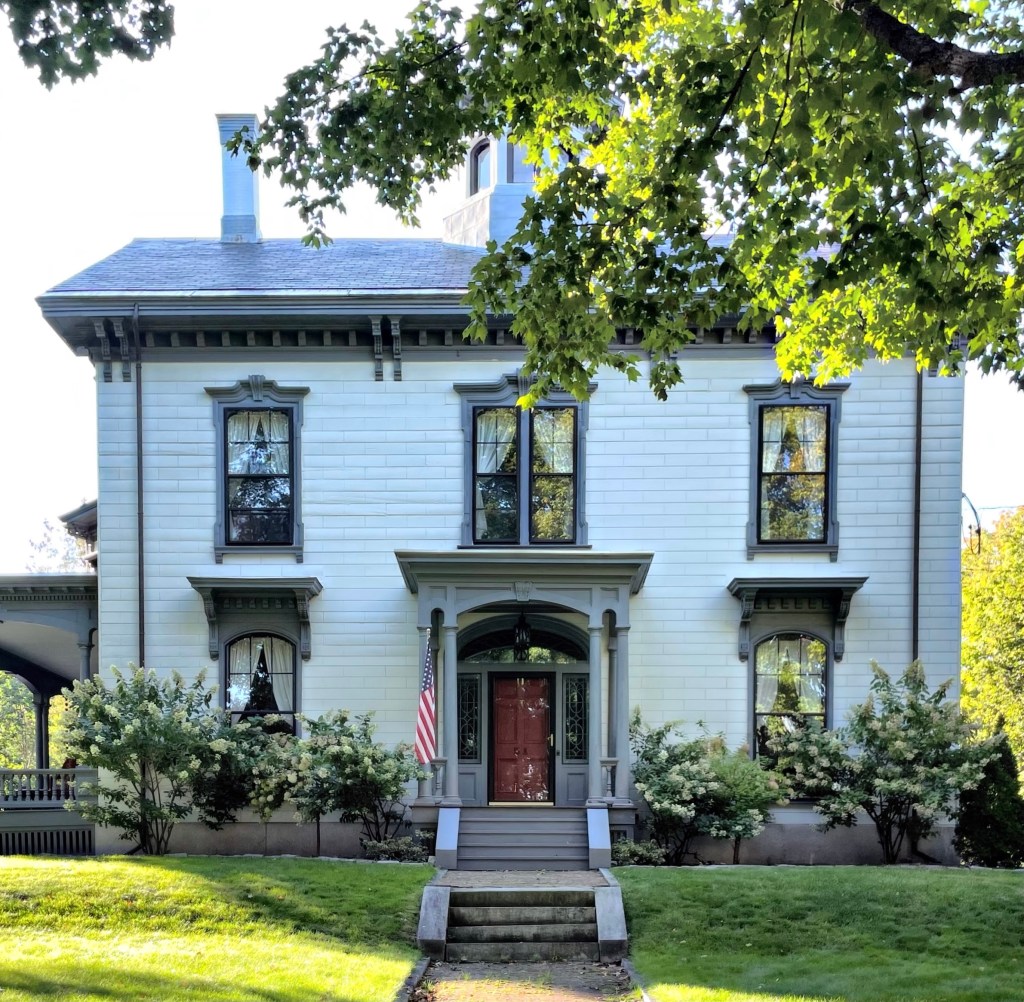
The neighbor to the iconic Thomas Hill Standpipe (last post), this pre-Civil War Italianate mansion predates the water tower and has long been one of the most grand homes in Bangor, Maine. The house was constructed in 1857 for Joseph W. Low, a businessman and trustee of the Bangor Savings Bank. The house he had built is one of eastern Maine’s outstanding Italianate residences, designed by Boston architect Harvey Graves, who was born in Maine. Soon after the Civil War, Graves moved west to California, likely seeking additional wealth from the spurned from the success of the Gold Rush. He appears to have lived out the remainder of his life out west, giving his family in Maine this home. The house exhibits flushboard siding with scored wood to resemble ashlar masonry, gorgeous window hoods and mouldings, and a large belvedere at the roof, which would have provided sweeping views of the Maine frontier when built, atop one of the highest hills in Bangor.

Judge Corwin House – The Witch House // 1675

The iconic Witch House in Salem was the home of Judge Jonathan Corwin (1640–1718) and is the only structure you can visit in Salem with direct ties to the Salem witch trials of 1692. The Post Medieval English house was constructed by Nathaniel Davenport, commander of the fort on Castle Island in Boston from 1645-1665. After he left that post, he moved to Salem and began construction on his house. Jonathan Corwin, a merchant and judge, purchased the unfinished home from Davenport in 1675, he soon after finished construction of the large home. When reports of witchcraft began circulating in Essex County, Corwin was one of the magistrates called on to make preliminary inquiries into the reports. He and John Hathorne, another local magistrate, held hearings in early March 1692 in which testimony was gathered from Tituba, Sarah Good, and Sarah Osborne, the first three women accused of being witches. Corwin presided over all the other cases, which ended after thirty individuals were found guilty, nineteen of whom were executed by hanging (fourteen women and five men). One other man, Giles Corey, was pressed to death for refusing to plead, and at least five people died in jail. The lasting legacy of the Salem Witch Trials still draws thousands every year to Salem to learn more as to how such a terrible set of circumstances could happen. Jonathan Corwin’s grandson George, lived in the house until his death in 1746. His widow, Sarah Corwin “modernized” the old house by replacing the iconic pitched roof with a gambrel roof, more in line with Georgian design, popular at the time. The building underwent more changes when George P. Farrington, a druggist, owned altered the home and added an apothecary shop to the east side front in 1856. The Corwin House was moved back 35 feet in 1945 to allow for the widening of North Street, and at that time, a new pitched roof (a recreation of the original) was put on, restoring the building to its former glory. It has since been owned by the City of Salem, who maintain the property and open the doors as a museum.


James Braden House // 1867

One of the most stunning homes in Salem (and obviously has the best Halloween decorations every year) is the James Braden House on Federal Street. This Italianate style home was built in 1867 for James Braden, a tanner who made his fortune in manufacturing leather which coincided with Salem’s shifting from maritime trade hub to industrial center. The home he built packs a lot of architectural detail and intrigue into a typical box form. The faux ashlar wood facade and corner quoins make the house appear like stone giving it weight and a strong presence on the street, while the recessed entry with a large, highly-ornamented door hood on scroll bracket give the home the traditional Victorian flair. James Braden died in 1895, and his mansion was willed to his widow Margaret, who rented the home until her death in 1907.

William Jelly House // 1905

Ernest Machado, the Cuban-American architect mentioned in the last post is credited with designing this massive Colonial Revival mansion on Beckford Street in Salem. The house was constructed in 1905 for William Jelly, a teller at the Salem Five Cent Savings Bank. William’s family-owned property on the street before he acquired the property, seemingly from his father. Ernest Machado was a locally significant architect who designed stately city mansions and enchanting country estates for some of Boston’s wealthiest families in the late 19th- and early 20th centuries. This home is setback off the street and faces the side, a common practice for larger homes in narrow urban lots. The house has a five bay symmetrical facade facing south, with clapboard sheathing, rusticated quoins, and a modillion cornice. It is topped by a gambrel roof, which has two large interior brick chimneys at the ridge. A Chippendale patterned balustrade stretches between three pedimented dormers which rise above the roof on main facade. Who else loves Colonial Revival houses?!

Orne-Derby House // 1808

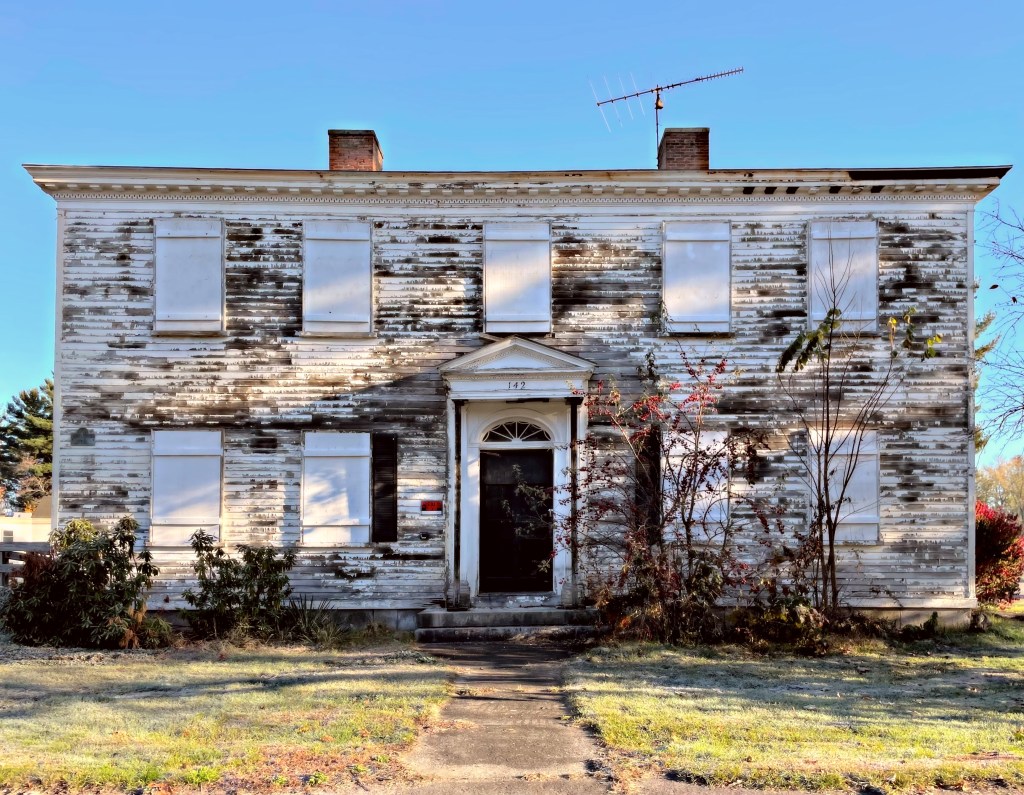
It’s rare to find a house with so much potential in Salem, a town where seemingly every old house has been purchased and lovingly maintained or restored. This home on Federal Street could use some TLC to restore her to her former glory. In 1808, William Orne Jr., a housewright and his wife Polly acquired a mortgage for the lot here and he built a large, Federal style home with gambrel roof, showcasing his building skills. The property was a little more than the couple could handle financially, which was compounded by the War of 1812, and the Royal British Navy blockading maritime trade, which especially hurt Salem’s port. The Orne House was sold in 1817 to Captain John Derby III, who died just a year later, leaving his widow Sarah (Felton)
Derby all his estate. Sarah rented the home to family, but was allowed to live there until her own death in 1857. The stunning home with fanlight at the front door, historic wood windows, and pair of large brick end chimneys all could be saved with a good restoration of the home. Fingers crossed!

Daniel Bray House // 1766

Here is a preservation success story for you all! The Daniel Bray House in Salem, MA was built around 1766 as a two-and-a-half story wood-frame vernacular house with side-gable roof. Captain Daniel Bray, a master mariner, was born in 1735 in Salem, eventually marrying Mary Ingalls in 1760, and six years later the couple built this house for their growing family, on his family’s land, which he later purchased in 1770. Bray’s work as a master mariner gained him connections in town, especially since he sailed as captain on several vessels owned by merchant John Derby. After retiring from the sea, Bray managed Derby Wharf in Salem until his death in 1798. The home was willed to Daniel’s son, Daniel Jr., who was also a master mariner. By the early 1900s, the home was converted to commercial use, as a grocery and later as a candy store. The home was given storefront windows to showcase the goods inside. The home was eventually purchased by the Peabody Essex Museum in the 1980s. They undertook a massive restoration of the home using forensic study and research and skilled restoration carpenters and masons.

Canterbury Shaker Infirmary // 1811

Constructed in 1811 as a guest house for the Canterbury Shakers, this beautiful structure follows the Georgian, center-hall residential floor plan constructed in the Federal period. Shaker records indicate that in 1849, the building was converted to an infirmary and the next year, the roof was tinned and the portico over the front door, called a “jet” by the Shakers, was added. After 1892, the first floor housed the nurses’ quarters, pharmacy, nurses’ sitting room and office and the dentist’s office. Upstairs, the patients’ rooms were fitted with lavatories and running water. The attic was used to store medical supplies and as a mortuary. All for the growing Shaker community here. Following the death of the last nurse in 1937, the building ceased to be used as an infirmary and was used as living quarters for sisters.

Canterbury Shaker Bee House // 1837

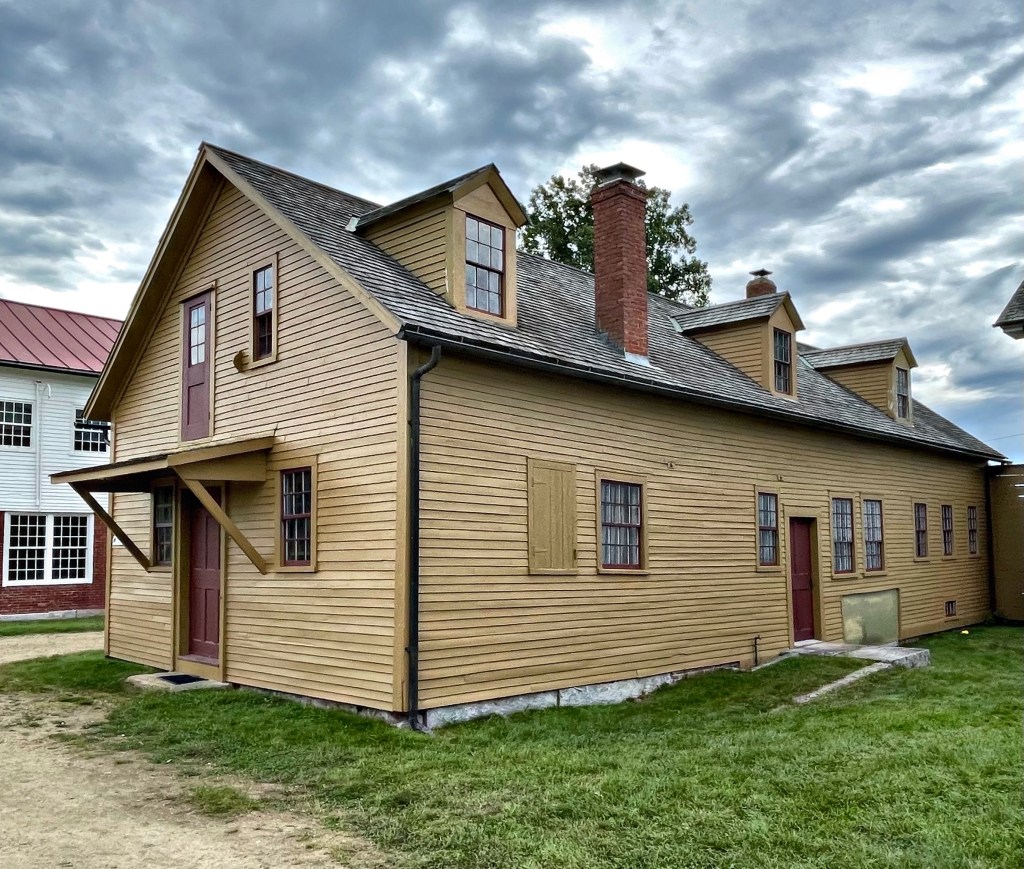
The original purpose served by this small clapboard building in the Canterbury Shaker Village, built in 1837 and measuring just 12 x 25 feet is subject to some debate, although it was definitely used as a drying house. Early writings indicate it was built as an apple-drying house while others state that the original purpose was to dry lumber. The present off-center gable-roofed cupola on the gable roof served as a ventilator. In 1865, the building became the headquarters of the bee keepers of the local Shakers.

Canterbury Shaker Syrup Shop // c. 1780

When Benjamin Whitcher donated his farm for the beginnings of a utopian Shaker community, the land and buildings became the catalyst for the next 200 years of Shaker life in the community. It is known that Benjamin Whitcher constructed his farmhouse sometime between 1775 and 1782. With the arrival of the first Shakers in 1783, Whitcher allowed families to reside on the farmland, with the 1790 Census counting 35 people on the Whitcher property. This structure was one of the original structures on the old Whitcher Farm, and is possibly the oldest extant building in the Shaker village today. The building was moved to its present location in 1841 and was used for distilling sarsaparilla syrup for medicinal purposes by members of the community.

Breeze Cottage // 1896

The marriage of Anna Perkins Pingree to Joseph Peabody in 1866 was a merging of two of the most influential and wealthy families of Salem, Massachusetts. The marriage however did not meet the mark, as the couple eventually had a large falling-out after purchasing a mansion in Boston’s Back Bay neighborhood in 1877. In her time away from her estranged husband, Anna became heavily involved in the arts, collecting hundreds of paintings and decorating her homes in Boston, Ipswich, and her new summer cottage in Bar Harbor. In 1896, she had her Bar Harbor cottage built on West Street, a road of substantial summer homes right next to downtown. The Colonial Revival “cottage” sits on the waterfront of Frenchman Bay and has only 12 bedrooms and 7 bathrooms, in 12,500 square feet.