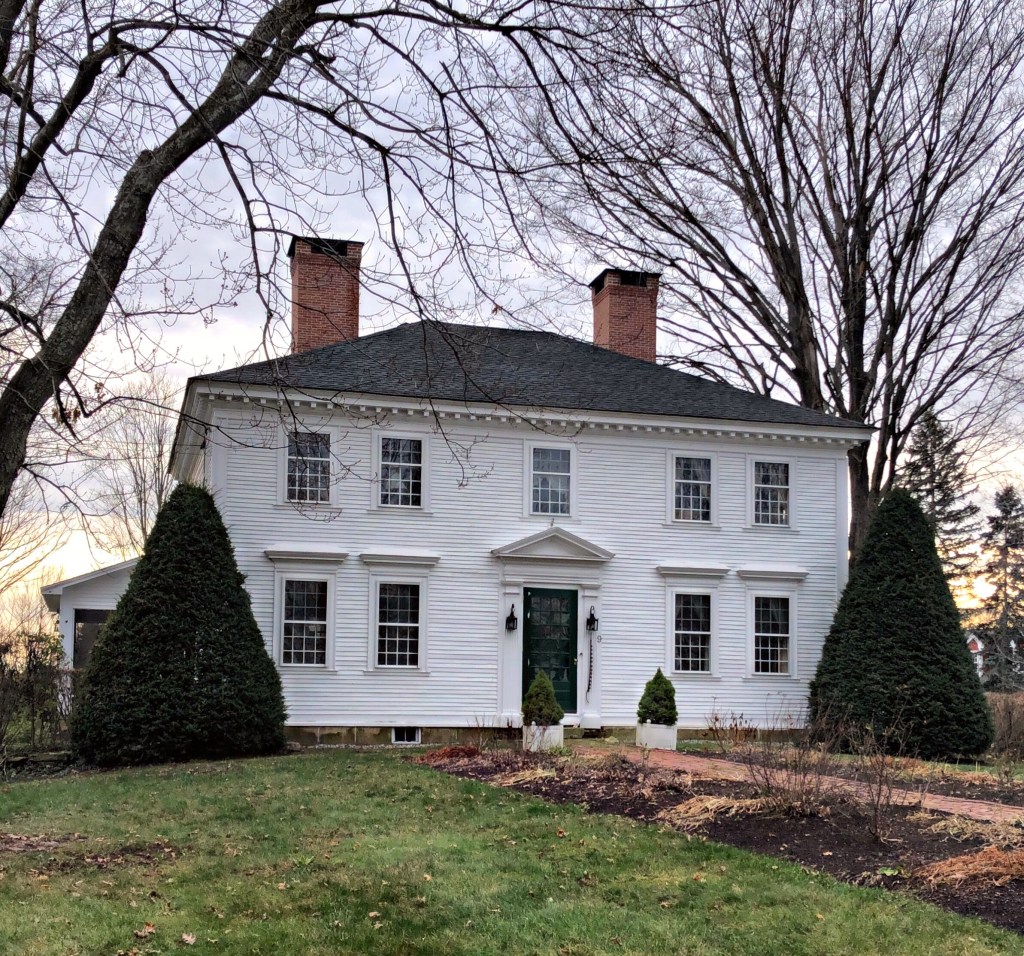
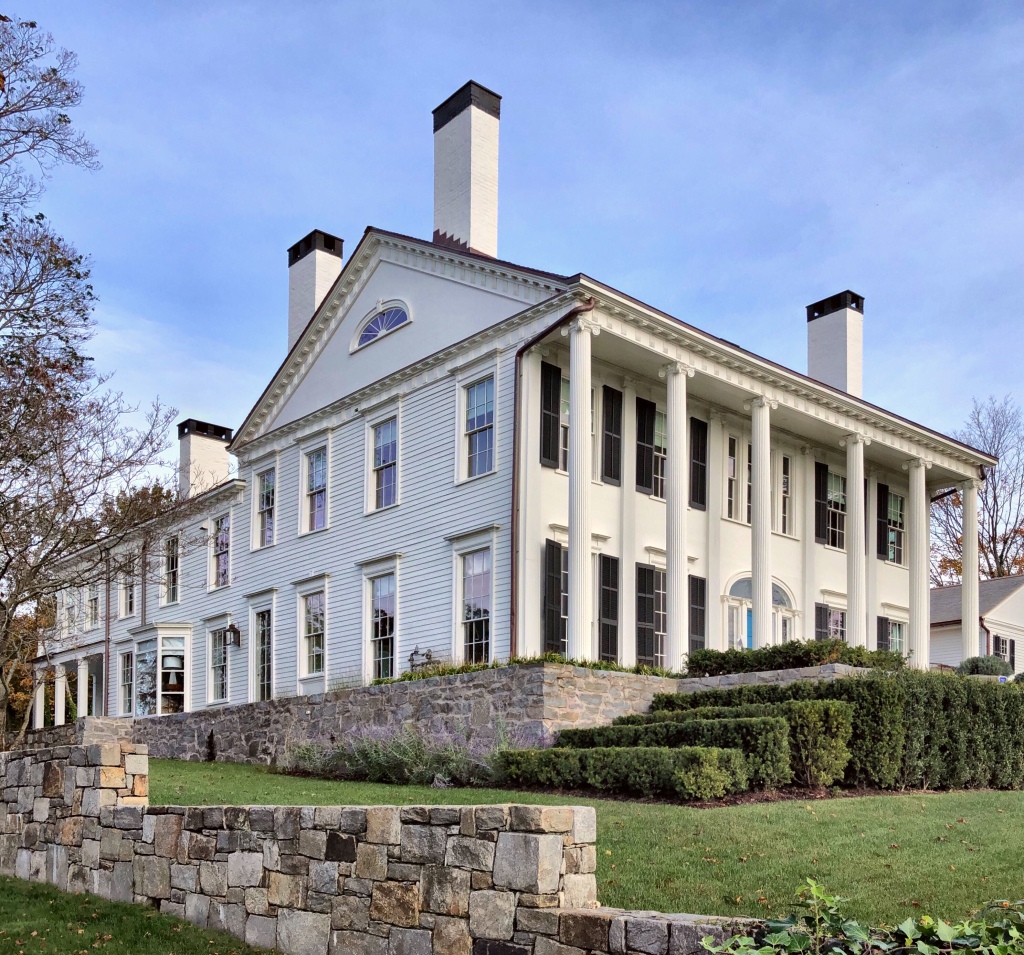
This house on a prominent lot opposite the Town Green in Hollis, NH, was constructed in 1794 for Reverend Eli Smith (1760-1847). In 1794, Rev. Smith married Ama Emerson, the daughter of Rev. Daniel Emerson, then the minister of the Congregational Church in Hollis. After Rev. Emerson’s death, Eli Smith took over the church and became the second minister of the town. Eli’s brother Andrew, a skilled carpenter, is said to have built the stunning Georgian house. After his death in 1847, the property was subdivided and another home was constructed, likely for a member of the family, while Joseph Emerson, one of Eli’s sons lived in the former family home. It remains one of the best-preserved late 18th century homes in the area.
One of the oldest extant homes (and one of my favorites) in Hollis, NH is this charming gambrel-roofed Georgian built in 1768. The home was built for Deacon Daniel Emerson Jr., the son of Reverend Daniel Emerson, who was the first minister in Hollis (his home was the last post). Besides serving as the Deacon for the Congregational Church, Daniel Jr. (1746-1820) also was Coroner and High Sheriff of Hillsborough County. He was Captain of the Hollis Company that went to Ticonderoga in July 1776 returning a year later. The home retains the massive central chimney, a common feature in older homes, to radiate heat to the entire home from the central heat source.
The oldest extant building in the village center of Hollis, New Hampshire is the Emerson House, which overlooks the town green. The home was constructed in 1744 for Reverend Daniel Emerson, the first settled minister in Hollis. The home stands on land that was part of the 40-acre ministerial parcel set aside when the town was planned that year. Over the next 21 years, Reverend Emerson and his wife had 13 children (seven sons and six daughters) which caused them to expand the home numerous times until his death in 1801. The home remained in the Emerson family for some years until it was sold at some point in the 20th century when the home was modified with the storefront windows. It now houses apartment units.
Samuel Cummings (1709-1772) married Prudence Lawrence (1715-1796) and moved to Hollis, NH from Groton, MA. The couple had a home built in town and raised at least four children, Samuel Jr., Mary, Sibbel, and Prudence. The original house built by Cummings was a single-story, four room, center chimney type. After his death in 1772, the property passed to Cummings’ son, Samuel Cummings, Jr., an acknowledged Tory. Interestingly, Samuel’s sister Prudence was an ardent patriot, who moved to Pepperell, MA and married a militia man, David Wright. While the Revolutionary War was raging, Prudence visited her brother in the old family home, when she overheard her brother Samuel talk to his friend, a British army officer about passing information to the British. Prudence returned to Pepperell and gathered the women of the town. Then a 35-year-old mother of five, she organized 30 or 40 of them into a militia called ‘Mrs. David Wright’s Guard.’ The women dressed in their husbands’ clothes and carried whatever they could for weapons. As the men had probably taken muskets with them, the women probably used farm implements such as pitchforks. The women patrolled the roads leading into town. The group eventually captured two British soldiers on horseback and let them go only once they agreed to never come back to the colony. Due to this event, Prudence never spoke to her loyalist brother again.
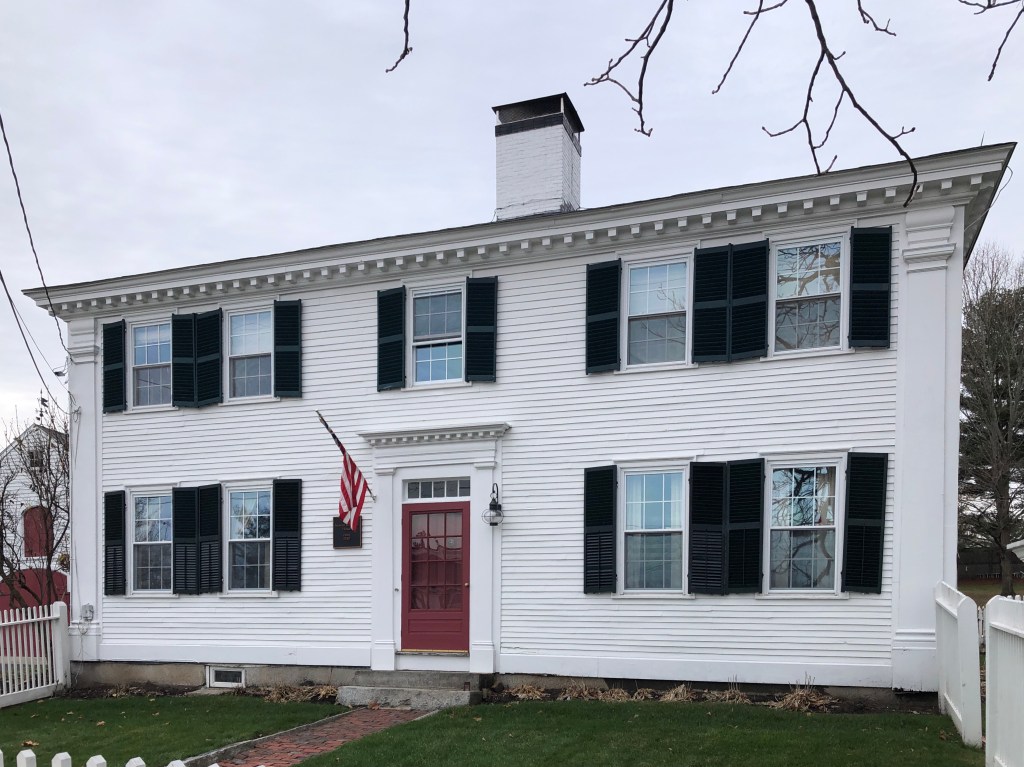
In the 1850s, the house was owned by Superintendent of Schools, Levi Abbott and his wife, Matilda. It was the Abbotts who reportedly added a second story to the house with a hip roof, cornice and corner pilasters, giving it the appearance we see today.
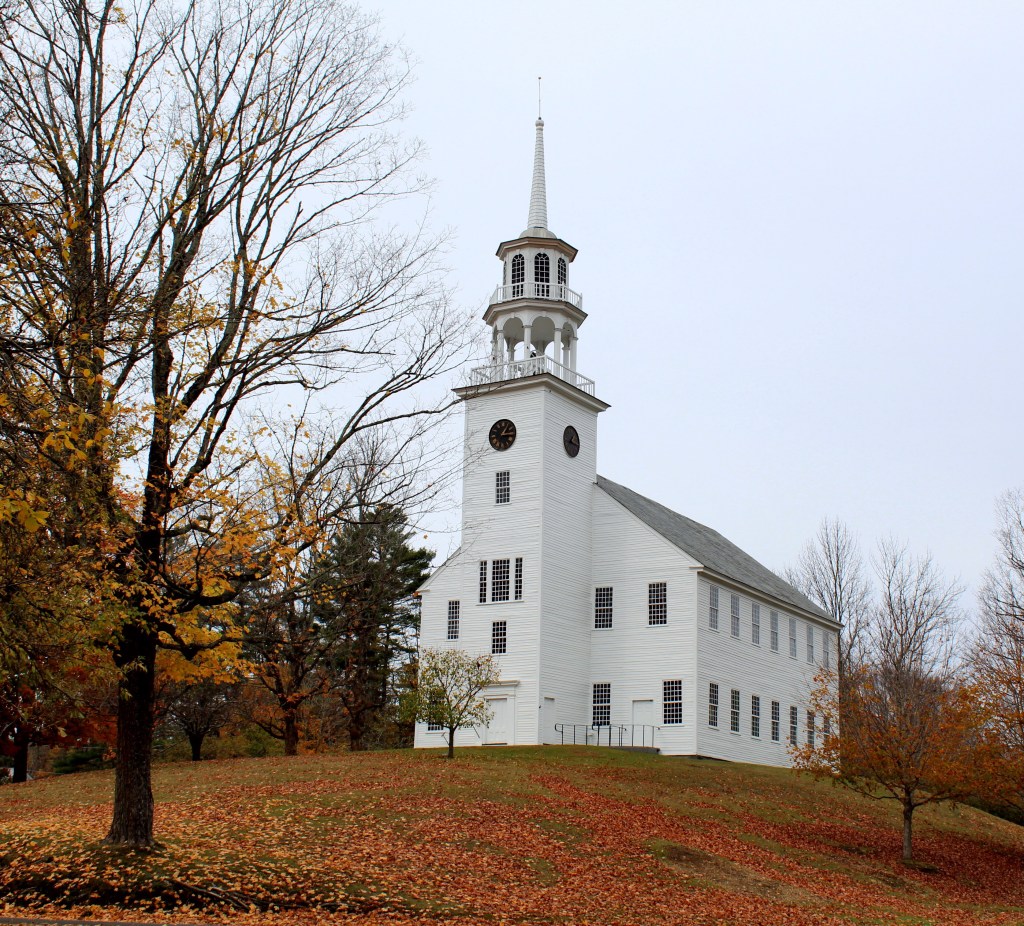
Perched atop a hill at the edge of the town common in Strafford, Vermont, the Strafford Town House epitomizes rural New England charm. The town house was constructed in 1799 by local carpenters as a place to do public business and served for a brief period in the early days as a meeting house for various local congregations. The building is one of the oldest meeting houses in Vermont and was one of the first meeting houses to put the entrance at the tower-end and the pulpit at the other end of the building. The change from a side-entrance orientation reflected a time when New Englanders were clearly deciding to separate their political business from their ecclesiastical affairs.
Charles C. Perry (1795-1870) was a wealthy nineteenth-century shipowner and sea captain and a prominent figure within Southport’s community. After his father’s death in 1814, when Charles was just 25, he inherited a large sum of money from his father’s will and followed his footsteps as a career. Miah Perry’s will stipulated that in order to keep the family together, members were to reside at the family home for five years from his death if neither of the daughters married; “but in case they remain unmarried at the expiration of five years…my estate shall not be divided until eight years from my decease unless one of the said daughters should marry…partition may be immediately thereafter made.” Talk about pressure to get married!
It is unclear if any daughters got married before, (Julia, one daughter died in 1821 at 22 years old). That same year, Charles Perry seemingly got his part of the inheritance and acquired the land upon which this house stands. He was then twenty-six years old and unmarried. He appears to have built it later as a blending of the Federal and Greek Revival styles, perfectly complimenting each other.
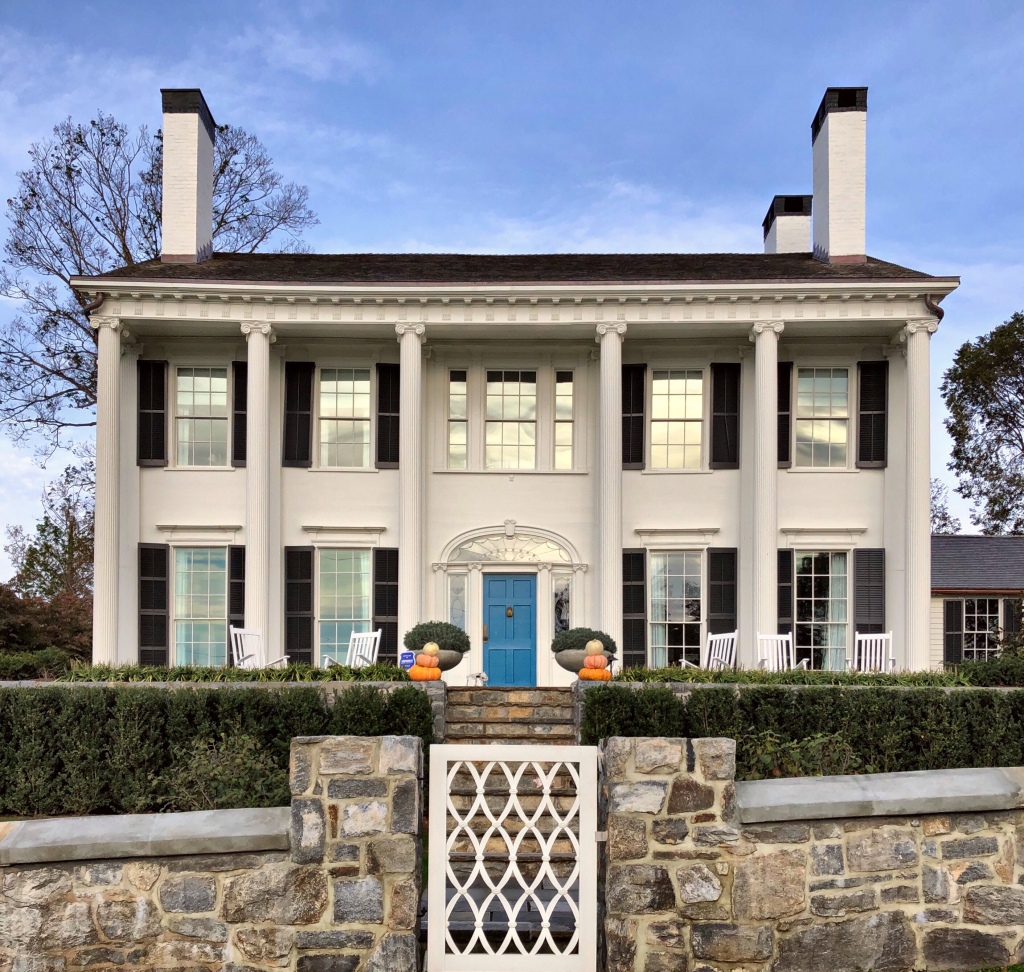
One of the nicest examples of residential Greek Revival architecture I have ever seen is the Austin Perry House (c.1830) in the Southport area of Fairfield, CT. Austin Perry (1798-1864) was a member of a prominent merchant family, holding businesses in Fredericksburg, Virginia, before returning to Southport to manage a general store. He retired in his forties and resided at this home until his death. His home is a balanced, symmetrical design with massive Corinthian columns surmounted by a carved anthemion motif ornamenting the gable pediment.
Warren Demman Gookin (1810-1874) was born in Haverhill, New Hampshire. He was educated at Haverhill Academy and Dartmouth College, graduating from the latter institution in 1830. In 1835 he went to Cuba where he remained for ten years as a sugar planter. Later, he was engaged in a mercantile business in Oregon, finally settling in Brooklyn, NY and working as a shipping merchant in New York City until his death in 1874. After his death, his widow Hetty moved back to her hometown of Southport, CT and built this large home. Later this was the home of Mrs Gookin’s stepdaughter, Mrs Edwin Waterman.
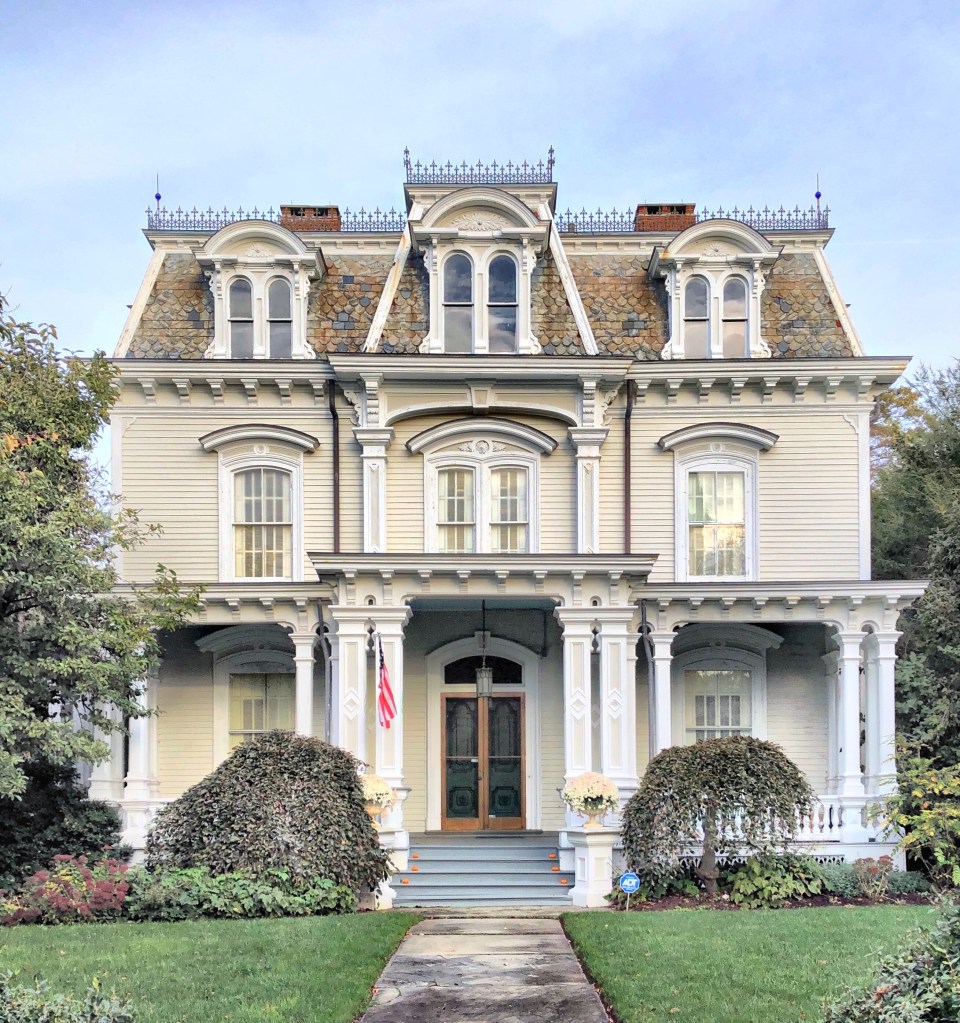
Mrs. Mary Pomeroy, the widow of one of Southport’s industrious and wealthy shipping merchants, Benjamin Pomeroy, built this large residence for herself and her daughters, soon after her husband’s death. Mr. Pomeroy was a merchant who also served as a Senator. In 1866 with ailing health, he took a doctor on a private ship to try various remedies in the West Indies, to no avail, he died at 48 years old. Ms. Pomeroy appears to have taken the money her and her husband had saved and built a large mansion to cement her position in town as the most eligible bachelorette in town. While she never remarried, she sure showed the town what good taste looks like! The facade of the Pomeroy house is symmetrical with a projecting three-story central pavilion, all surmounted by a mansard roof with cresting. Rounded dormers with twin round-headed windows pierce the roof’s multicolored slate surface, making this Second Empire house one of the nicest in a town full of historic homes!
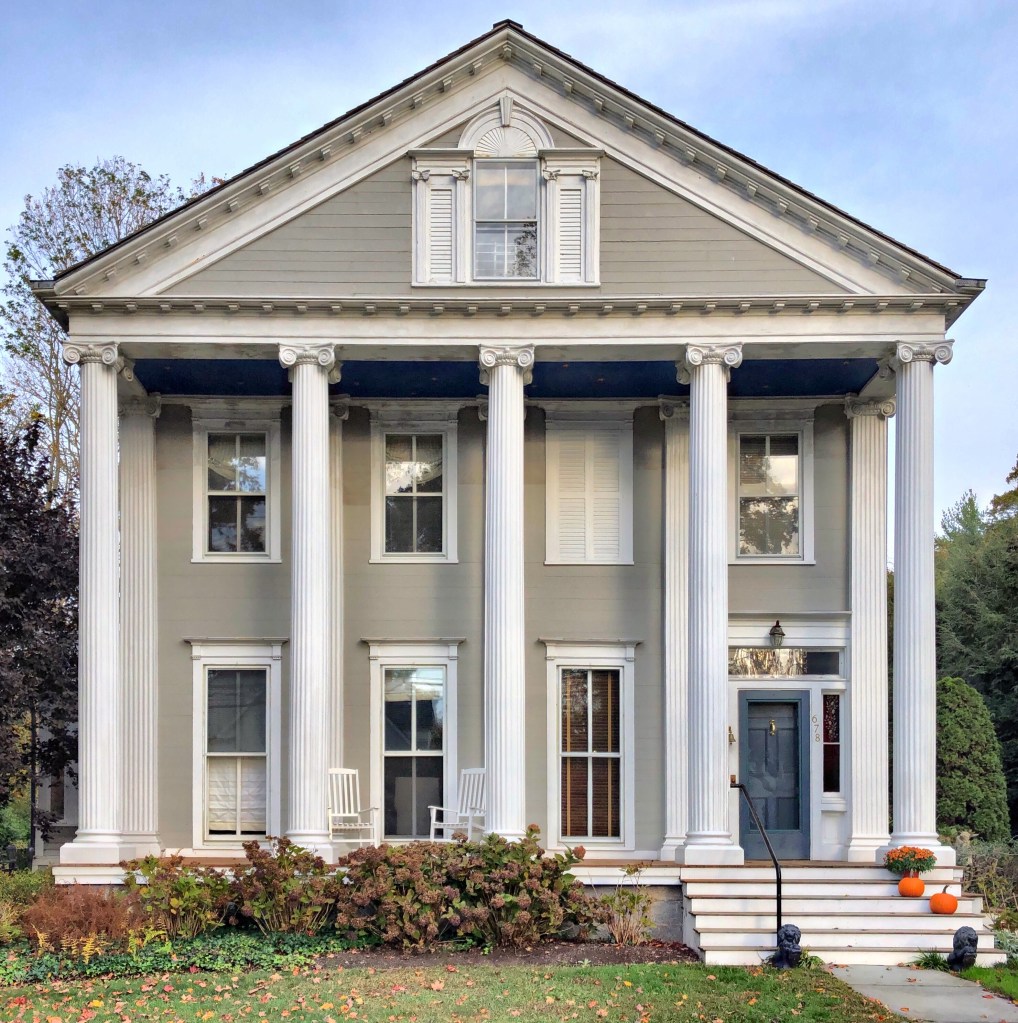
I have a thing for temple-front Greek Revival homes, and this is no exception. This marvelous home was built in 1832 for Francis Dimon Perry (1809-1884), who inherited some of his father’s wealth and became President of Southport National Bank in town. He was a devoted member of Trinity Church throughout his life. Upon Mrs. Perry‘s death in 1893, couple left their residence to the Trinity Church to be used as the parish rectory.
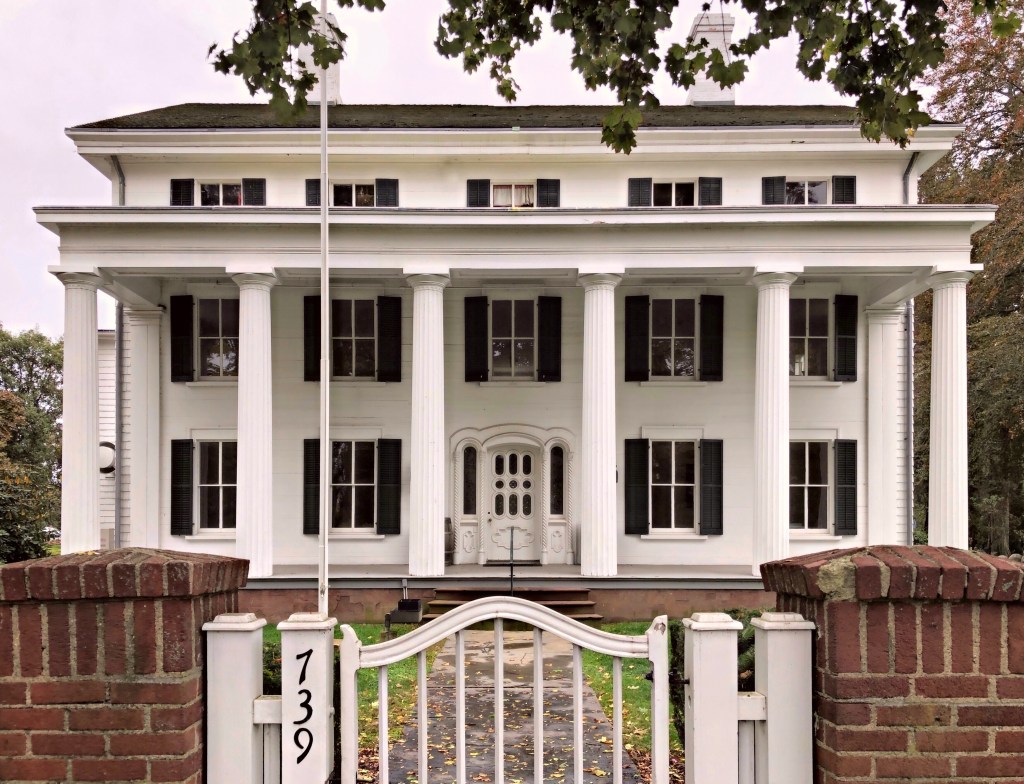
Originally built in 1775, the first iteration of the Burr Homestead, home of Thaddeus and Eunice Burr, which actually saw the marriage of John Hancock, President of the Continental Congress, to Dorothy Quincy. Thaddeus was the cousin of the famous Aaron Burr, Jr., who was the 3rd vice-president of the United States alongside Thomas Jefferson as President. Aaron Burr Jr. is best-known today through his portrayal in the popular play “Hamilton,” where he shoots Alexander Hamilton in a duel. The house was rebuilt in 1794 in its former location in Fairfield, Connecticut after a fire by the British in Fairfield destroyed the first. The home was willed to Thaddeus’ son General Gershom Burr, who eventually sold the mansion to Obadiah Jones. Mr. Jones updated the home by, ““taking out the dormer windows and lifting the roof, taking away the porch and building the broad veranda with its lofty massive fluted columns”. The home was eventually gifted to the Town of Fairfield and is presently maintained by the Fairfield Museum and History Center.
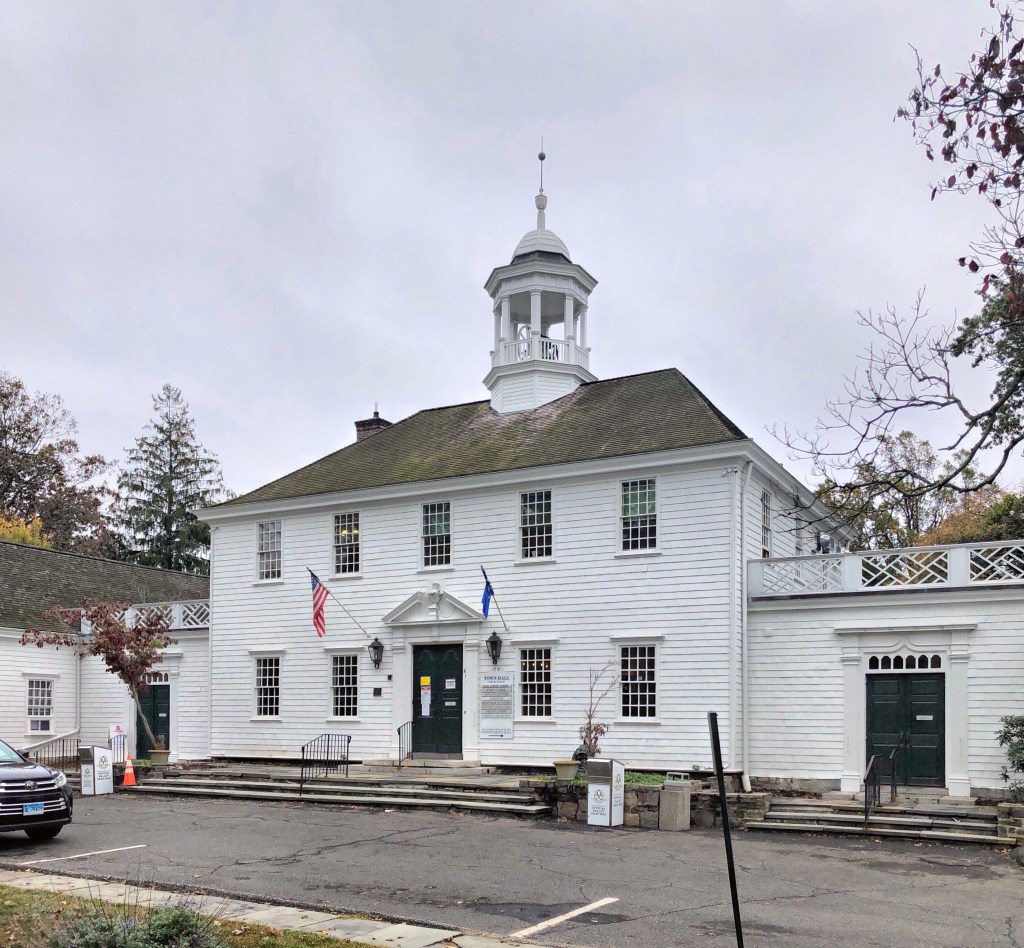
Located at the Fairfield Town Green, the Georgian-style Fairfield County Courthouse stands as a reminder on the town of Fairfield’s Colonial-era history. The first courthouse at the site was built in 1720. After a fire destroyed the first (which housed the jail as well), a second structure was built in 1767. That second courthouse was the center of a thriving, wealthy village with a port just blocks away. In July 1779, the British landed in Fairfield and destroyed much of the town, harming its prosperity for decades to come (though it has clearly recovered since). In 1794, a new courthouse was built, also housing town offices. In 1870, it became solely a town hall (the County Court moved to Bridgeport years before) modified and altered in the Second Empire style to ‘modernize’ the building. As Colonial Revival resurged in popularity in the late 19th and early 20th- centuries, the town sought to bring back the Georgian style Town Hall building, in 1936 hiring architect Cameron Clark, to restore the building.




 Buildings of New England

