Christian Science Church, Gardiner // 1905

The first purpose-built Church of Christ, Scientist church in Maine is this turn-of-the-century edifice constructed in 1905 in Gardiner. Organized in 1897, this Christian Science Society of Gardiner met for several years in members’ homes and public places nearby until Palmer Noyes and his wife Caroline funded the new building. Caroline and Palmer helped establish the first such church in Chicago, after the couple witnessing a ‘healing’ and then heard Mrs. Mary Baker Eddy lecture in 1882. This church in Gardiner was seemingly designed by Caroline, who was likely inspired by architectural influences on the churches in town, from Gothic style lancet windows, to the shingle style facades. The building was eventually converted to a development center for the disabled, and is now known as “The Stone Turret”, a bed & breakfast, with amazing stained glass windows!

Gardiner Public Library // 1881

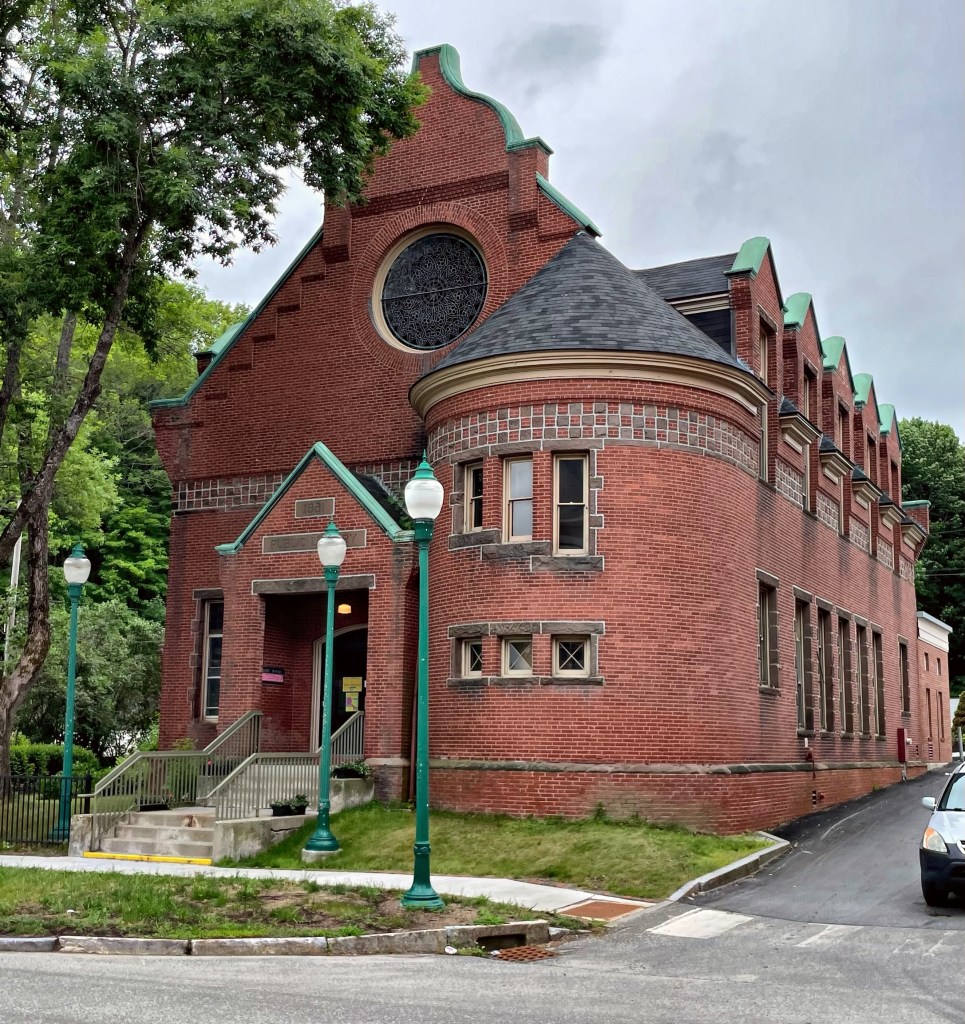
Possibly my favorite building type, the local town library buildings of New England, always amaze me with their small scale, yet architectural variety and intrigue. The library in Gardiner, Maine is no exception! This library building was constructed in 1881 from plans by Henry Richards, who was actually born in town in 1848. Henry graduated from Harvard in 1869, and soon after, took a post-graduate course in architecture at MIT. After completing schooling, he was a draftsman with Ware and Van Brunt. Soon after, he was a draftsman with Peabody and Stearns from 1872 to 1876, and then practiced architecture briefly on his own in Boston. During this time he married Laura Elizabeth Howe, daughter of Samuel Gridley and Julia Ward Howe. They moved to Gardiner, Maine and settled in a Federal house (featured previously), to learn more about Laura Richards and their house, check out the last post. Henry lived to be 100 years old! The library building is Queen Anne and Romanesque in style with a round corner tower with conical roof, brownstone and brick construction, and a stained glass ocular window with ogee parapet at the gable end roof. The small local library was added onto numerous times to hold a growing collection which includes works from Laura E. Richards, and Edwin Arlington Robinson, both Pulitzer Prize winning authors who lived in town.
Gardiner Train Depot // 1911

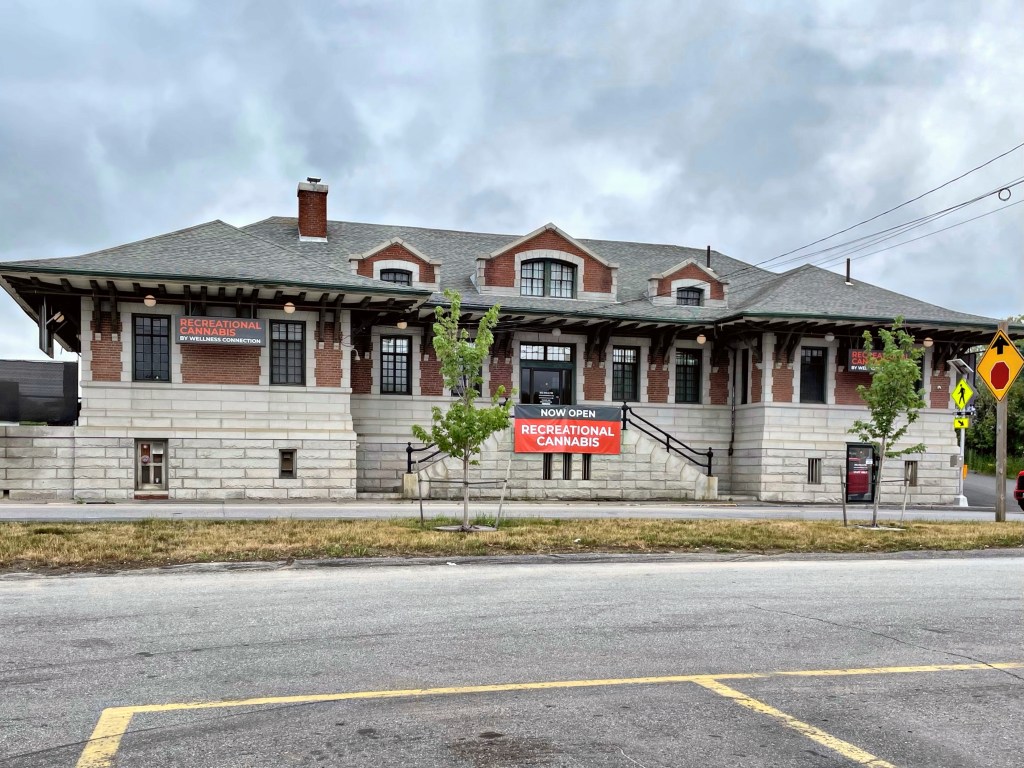
The first train arrived in Gardiner, Maine in 1851. Rail here introduced a new mode of transportation for passengers and freight, which previously relied on horse or ship up the Kennebec River. When the old station was deemed too small and outdated, the Maine Central Railroad Company decided to hire Portland architect, George Burnham to complete plans for a more fitting station. This building is a mix of styles, the two I would categorize it as are Romanesque Revival and Spanish Revival. The building incorporates a number of influences of the two along with a deep overhanging roof supported by large brackets, heavy rusticated granite blocks at the base, and quoining around the windows and corners. The station was in operation until about 1960 when rail service here halted. Since that time, the building has been adaptively reused as a retail store, today as a recreational cannabis dispensary. So you can get high and look at cool architecture!

Harkness Estate – Carriage House // 1908

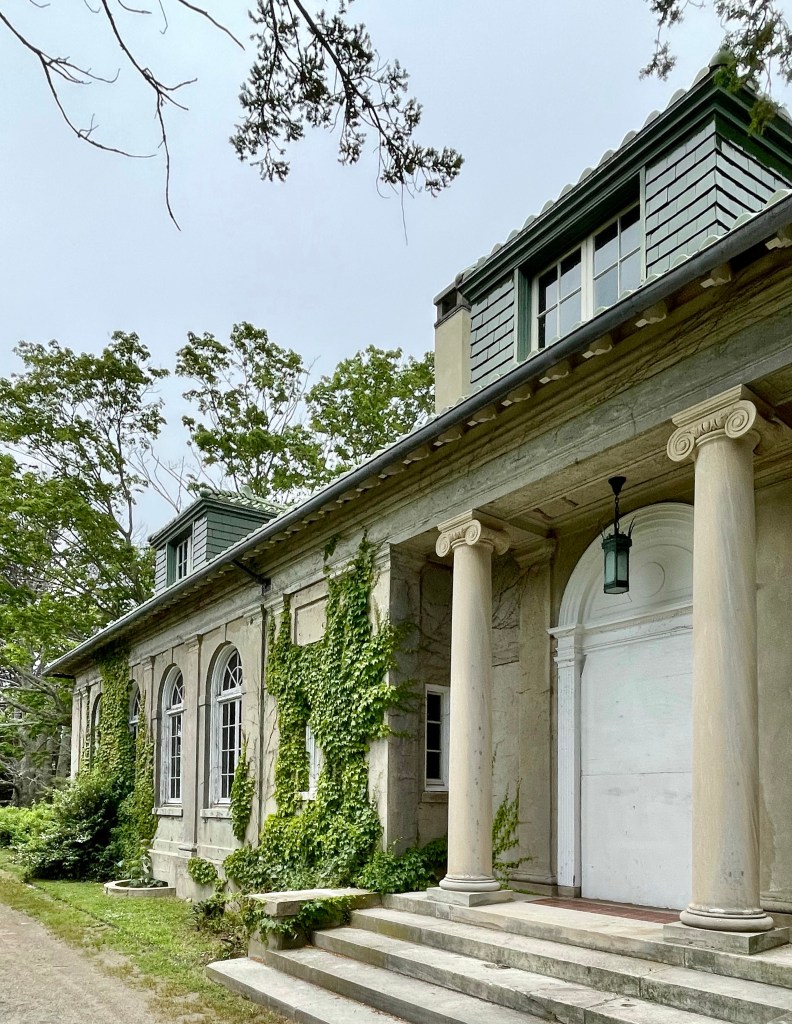
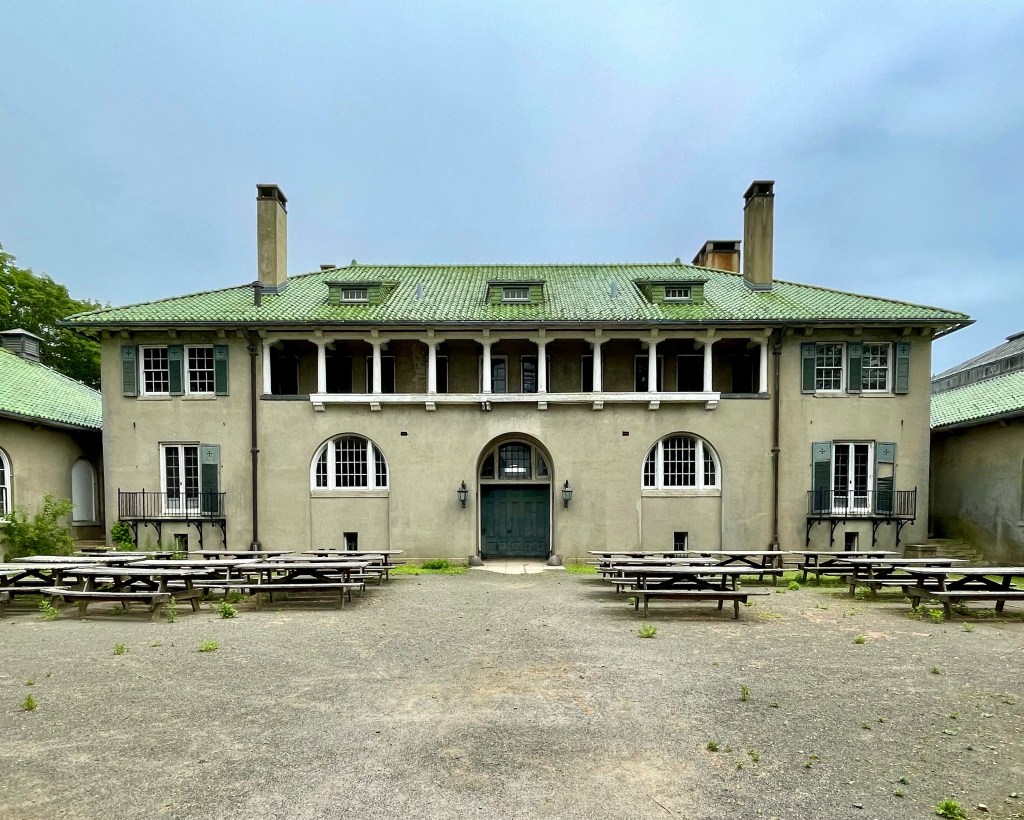
Another of the stunning buildings on the Harkness Estate is this massive all-purpose building that served a variety of functions, but I will call it the Carriage House. The building was constructed in 1908 and designed by James Gamble Rogers, mimicking the Renaissance Revival grandeur of the main home, Eolia. As previously mentioned, the large, U-shaped building was a multi-use support compound for the Harkness Family and their farm. The South Wing (right) of the building served as a clubhouse for Edward Harkness and his friends, with a billiards room, squash court, and two bowling lanes. This wing has large windows looking out towards the ocean and the large gardens on the property. The central block contained a garage with a turntable to facilitate the parking of limousines, a gas pump and a car wash for Mr. Harkness and his growing automobile collection. The North Wing (left) contained the horse stables, carriage area, tack room, smithy, and even a space dedicated to dog grooming. Upon close inspection you can see small rounded stones near the portals to allow the wheels to hit them rather than damage the building. Perhaps most importantly, the Carriage House was the location for the furnace room with its huge steam boiler. This boiler heated the Carriage House as well as the Mansion via an underground steam line. Apparently the building will soon be undergoing a restoration. Fingers crossed!

Boxborough Town Hall // 1901

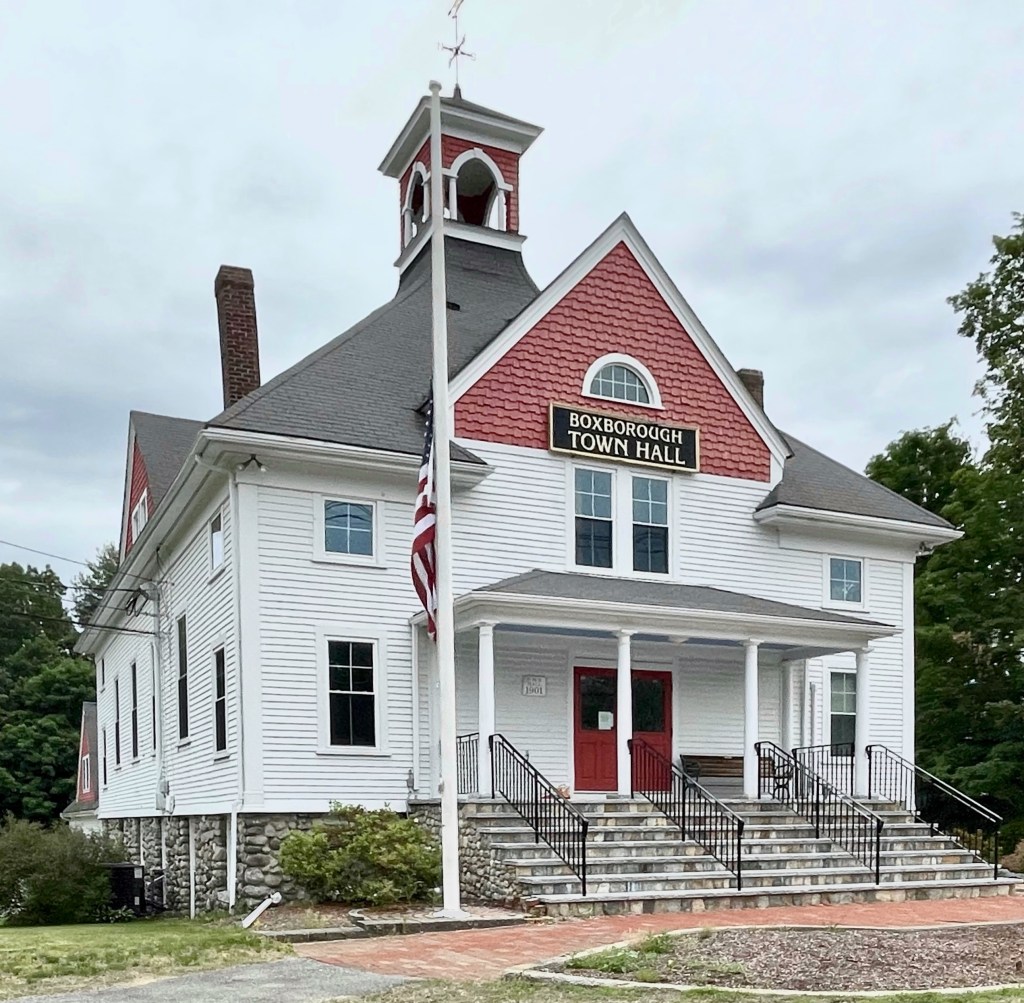
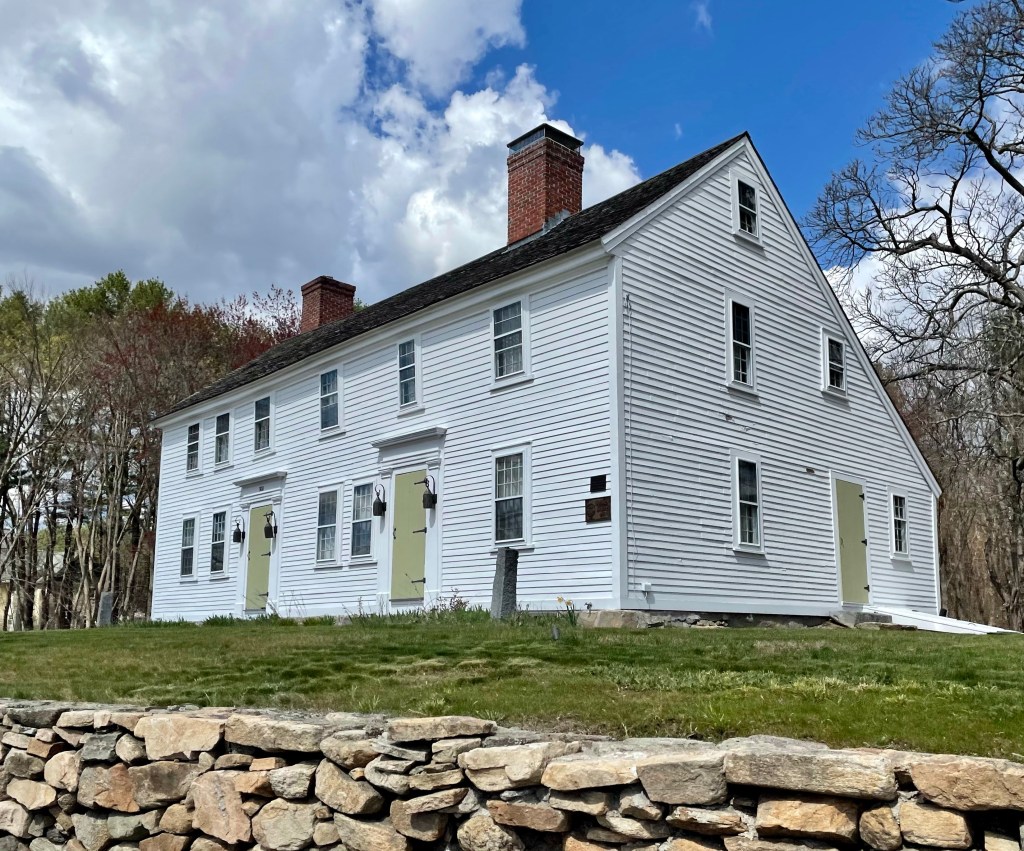
The area which became the town of Boxborough, Massachusetts, was first inhabited by the Native Americans of the Nipmuc and Pennacook tribes. Land in Boxborough was not settled by colonists until the beginning of the eighteenth century by farmers looking for fertile land to establish farms, who branched out from nearby Acton. Boxborough was formed from Harvard, Littleton, and Stow in 1783 and was incorporated as its own town. With the exception of small local industries including gristmills, sawmills, and cooperages as well as some minor boot and shoemaking, comb-making, and a lime quarry and kiln, Boxborough’s economy remained almost entirely agricultural through the 19th century. The town grew steadily and a Town Hall building was funded by the turn of the 20th century. This Queen Anne/Colonial Revival Town Hall building was constructed in 1901, atop the foundation which was constructed of locally gathered cobblestone by local volunteer farmers. Today, the town retains much of its agricultural heritage, but it is definitely under threat by subdivisions and Neo-Colonial mansions further contributing to Bostons suburban sprawl.

Jacob A. Swits House // 1792

This gorgeous house in Schenectady’s Stockade neighborhood was built in 1792 for Jacob A. Swits. Swits was a descendant of the first settlers of Schenectady and served in the local militia upon the start of the American Revolution. He later, worked in town as a merchant and was involved with local affairs. He became Major General of the regional militia during the War of 1812. Between these two wars, he had this home built, which was likely a asymmetrical three-bay Federal home. Sometime later, the rightmost bay was added and much of the ornate detailing was added.

Henry S. DeForest Mansion // c.1890

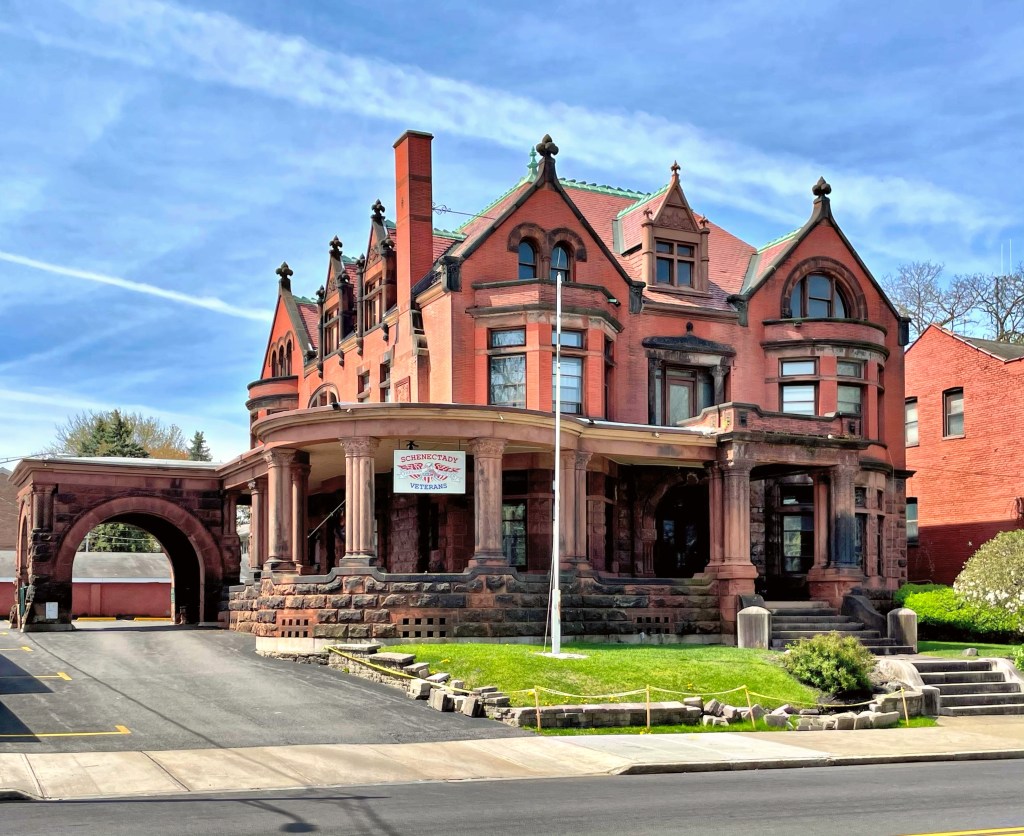
Henry Schermerhorn DeForest (1847-1917) was born in Schenectady, New York and became a leading citizen of the bustling upstate city. He attended school in his hometown before leaving to study at Eastman Business College in Poughkeepsie. He returned to Schenectady and married Lucie Van Epps, soon after gaining employment by her brother at his broom manufacturing company as a clerk and bookkeeper. He began using his earnings to buy and develop property in the city, eventually making him the city’s largest landlord. He was also a building contractor, with his company constructing more than 1,000 homes in the Schenectady area. He served as Mayor, in a role that he successfully advocated for General Electric to locate in Schenectady when it was formed from the mergers of several other companies, including Edison Machine Works, which had moved to Schenectady in 1886, creating a huge boom in development and growth for the city. After this, he has this large stone mansion constructed to showcase his wealth and success as a developer and Mayor. After his death in 1917, the home remained in the family for some time until it was acquired by the Schenectady Veterans Association not long after WWII, who maintain the building to this day.

George L. Allen Summer Residence // c.1895

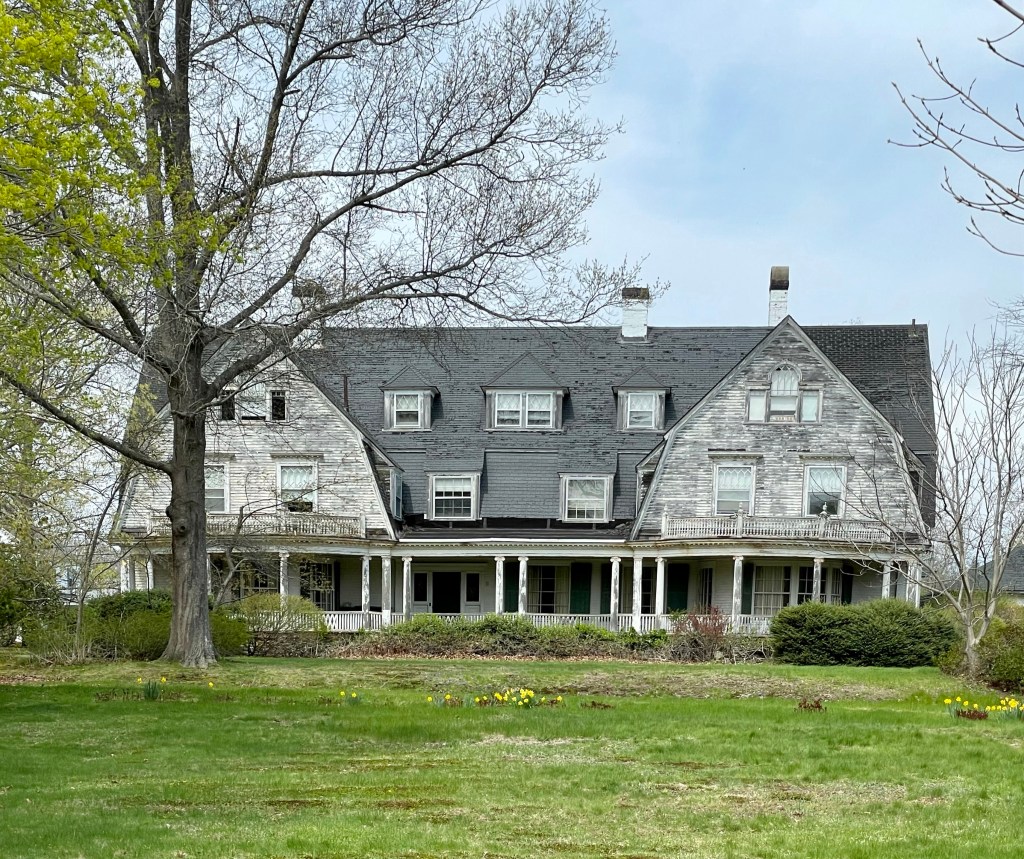
This massive summer “cottage” in Rye Beach, NH, was built around 1895 for St. Louis businessman George L. Allen. The massive Colonial Revival home features a gambrel roof with a series of gabled, hipped and shed dormers to break it up. A circular driveway would have allowed visitors for Great Gatsby-esque parties to get dropped off by their driver and enter right into the home’s large stair-hall. The most stunning facade is the rear, which faces a lawn with views out to the Atlantic Ocean. A full-length porch on the first floor sits recessed under the floor above to provide shelter from the harsh summer sun. Sadly, the mansion has seen better days and appears to be a shadow of its former self. Luckily, almost all of the historic windows remain and the home can definitely be saved. Fingers and toes are crossed to see this beauty preserved.

Rye Beach Club // 1925

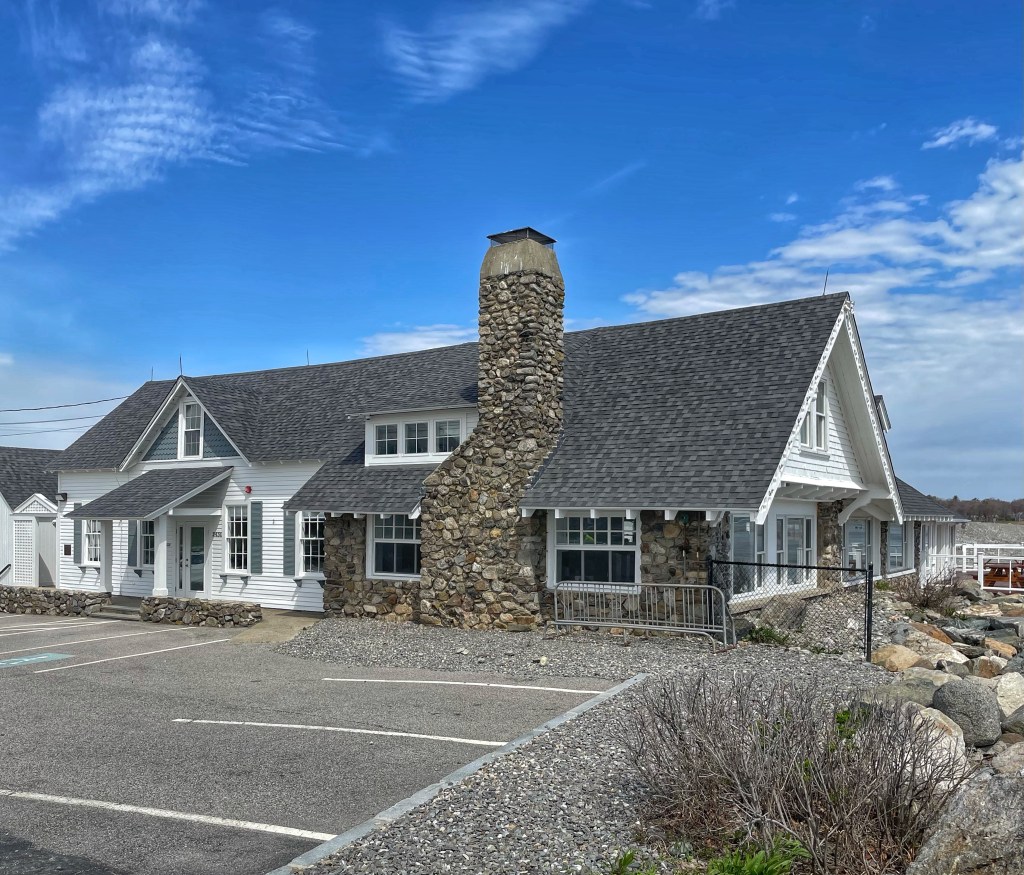
The Rye Beach Club is located right on Rye Beach, one of New Hampshire’s most upscale seaside communities, one whose history as a fashionable summer resort dates back to the 1840s. The Beach Club was established in 1925 in the decade after the First World War as the nation was experiencing a social transformation fueled by the postwar boom of the “Roaring Twenties”. As automobile ownership rates increased by the 1920s, the average motorist was no longer dependent upon schedules and the fixed routes of streetcars, railroads and steamboats. As one early historian of American recreation noted tongue-in-cheek, “The wealthy could make the fashionable tour in 1825, the well-to-do built up summer resorts of the 1890s, but every Tom, Dick and Harry toured the country in the 1930s.” As a result, many wealthy communities created private, exclusive recreation and social clubs where they would not be forced to mingle with the “average” American. Rye Beach residents formed the Rye Beach Club in 1925, which comprises of a rubblestone building with various wood-frame additions.

Fort Dearborn // 1943-1961

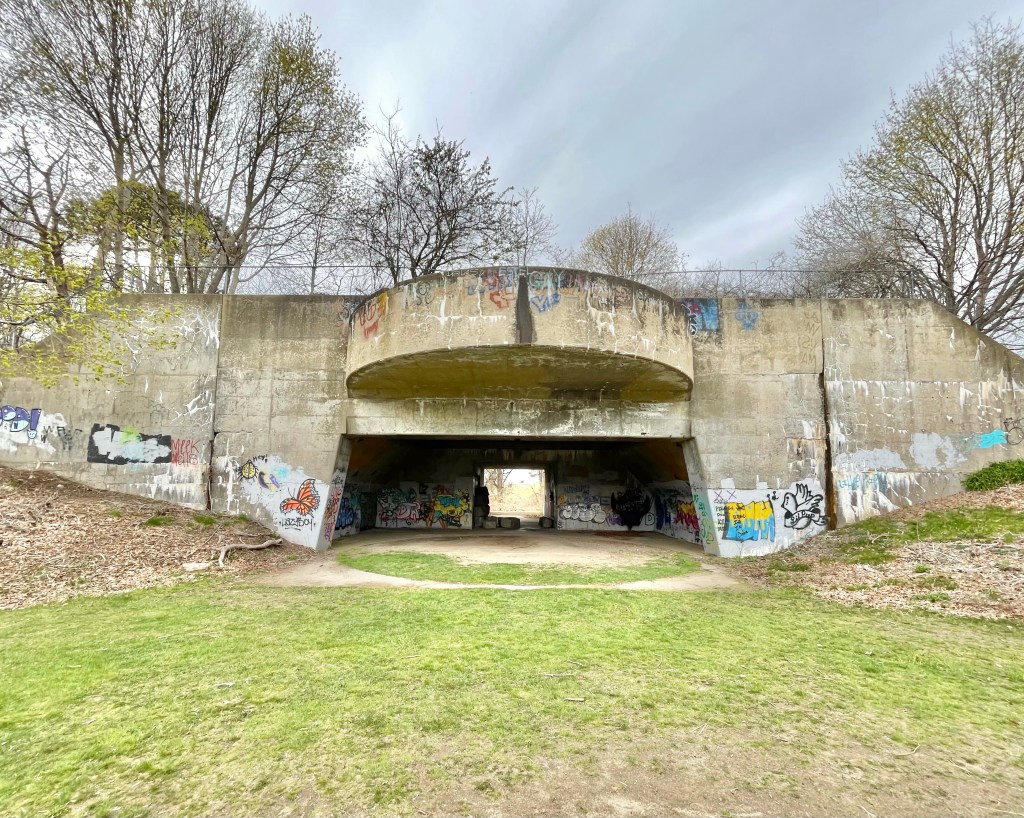
Odiorne Point in Rye New Hampshire was owned by the Odiorne Family from at least 1800, when the family built a farmhouse on the land. The peninsula juts out into the Atlantic Ocean, just south of Portsmouth, and it was seen as a strategic position by the United States Government, to protect the Portsmouth Naval Shipyard. With the advent of World War II, the United States Government deemed it necessary to improve the fortifications commanding the approaches to the Portsmouth Navy Yard, so the Government acquired this property and named it Fort Dearborn. Giant 16” coast defense guns and other equipment were installed to protect the coast from the impending German advance into North America. The Government acquisition on Odiorne’s Point included Mr. Odiorne’s home and 24 other properties, with many fine old homes on the coast demolished to make way for military facilities, but the Odiorne house was converted to a barracks. When The Nazi forces were beat in Europe, the fort was deactivated and all the guns were removed. In the Cold War period, the U.S. Air Force took formal possession of 45.3 acres at Odiorne’s Point in 1955, which it had been using since 1949 as the Rye Air Force Station. By 1961, the defensive use of the site was not as important, and the site was sold to the State of New Hampshire as a State Park. Today, you can explore the park and the decaying concrete batteries up close, which is a favorite excursion of mine.