General George Stark House // 1856

Inspired by suggestions from books by Andrew Jackson Downing, the Gen. George Stark House is one of the finest dwellings in the Italian villa style in New Hampshire. Located on a triangular plot just north of Downtown Nashua, the house was built in 1856 by a man who, though then only in his early thirties, was one of New Hampshire’s most experienced civil engineers and surveyors, and was the superintendent of the Nashua and Lowell Railroad. General George W. Stark (1823-1892) was born in Manchester, N.H., and as a young man worked on surveys of the canals and factories being built in the late 1830s in his native city. In 1836, during the first days of railroading in northern New England, Stark was employed with the engineers who laid out the route of the Nashua and Lowell Railroad. He climbed the ladder, eventually working as treasurer and assistant superintendent of theHudson River Railroad, subsequently rising to the position of superintendent. He later became superintendent of the Nashua and Lowell Railroad, whose route he had helped to plan, and in 1857, at about the time he saw the completion of his Italianate villa, he became managing agent of the Boston and Lowell line. In the same year, he was commissioned Brigadier General of the Third Brigade of New Hampshire Militia, giving him his title, General. The Stark House was occupied by General Stark and by members of his family until the property was acquired by The First Church of Christ, Scientist, about 1928. Today, it houses offices but retains a distinct residential character regardless.
Elijah Shaw House // 1889

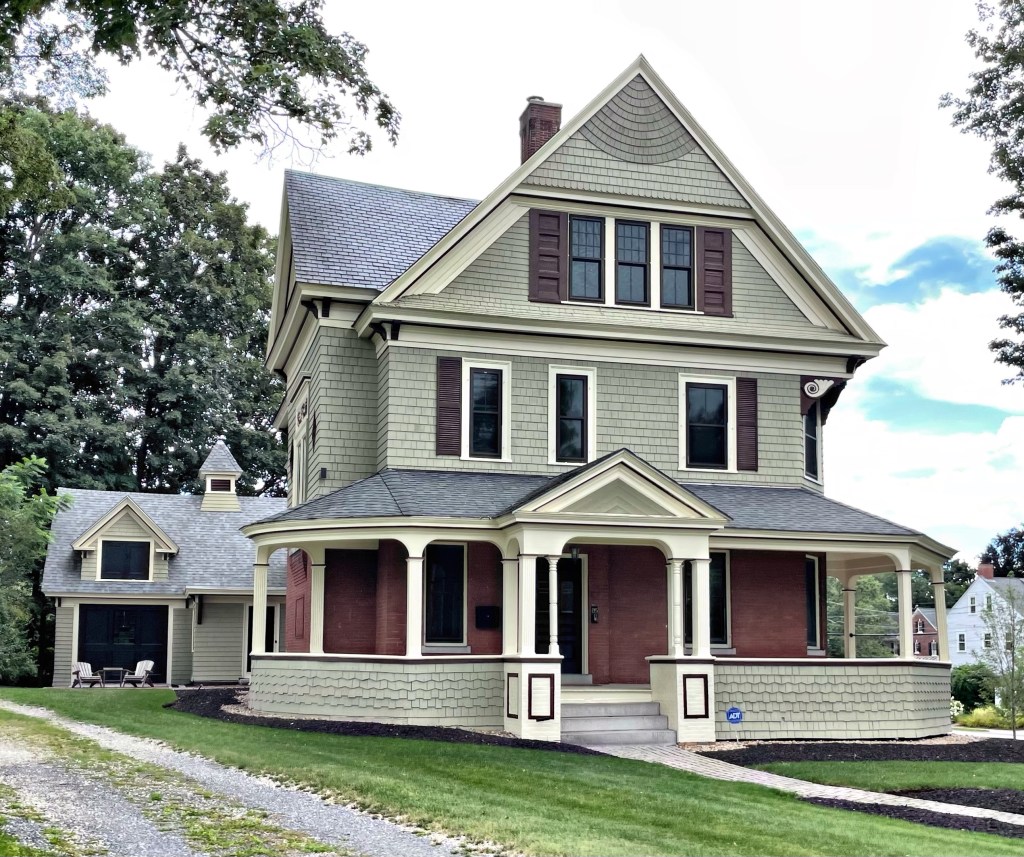
This Queen Anne Victorian residence sits at 85 Concord Street in Nashua, New Hampshire. Built in 1889-90 for Elijah Shaw, the house is one of a dozen or so well-preserved Victorian-era mansions along the prominent street. Elijah Morrill Shaw (1826-1903) was born in Kensington, NH and spent many of his early years working at woolen mills all over the Northeast until the outbreak of the American Civil War. Obeying his country’s call to arms, at the time of the Rebellion, he entered the army in 1861 and was later promoted to Captain in 1863. After the war, he continued working at mills all over the region until 1888 when he was hired by the Nashua Manufacturing Company. He built this house soon after his arrival and remained there until his death in 1903. The dwelling and rear carriage house are clad in shingles with the house built with a brick first floor.

Charles Hoitt House // 1895

Charles William Hoitt (1847-1925) was born in Newmarket, New Hampshire, the son of William K. A. and Sarah C. (Swain) Hoitt. His father was a descendant of John Hoyt, one of the original settlers of Salisbury, Massachusetts. On the maternal side he is a descendant of Phineas Swain who served at Bunker Hill on the American side. Charles enrolled at Dartmouth College in 1867, and was graduated in the class of 1871. He moved to Nashua to work as Master of the Mt. Pleasant School and later worked as an usher at the Lincoln Grammar School in Boston. He eventually gave up teaching as a profession and returned to Nashua and worked at a local law office. He was admitted to the Hillsboro bar in 1877, and worked as a City Solicitor and later as Justice to the Nashua Police Court. With his standing, he erected this fine house on Concord Avenue, with a deep lot where he raised rare exotic birds. Judge Hoitt served in the New Hampshire House of Representatives in 1901 and in 1907, was appointed by Theodore Roosevelt to be the United States Attorney for the District of New Hampshire. His residence in Nashua blends Queen Anne, Shingle, and Colonial Revival styles elegantly. The property was purchased in the 1920s by the Unitarian Universalist Church of Nashua as a parsonage, a use it held until it was sold in 1977 to a private homeowner. The shingled porch was removed during the time it was a parsonage, but the house remains in excellent condition today!

Stephen & Maria Mansfield House // 1888

The Stephen and Maria Mansfield House is located at 70 Concord Street in Nashua, New Hampshire, and is one of many stunning old houses along the largely residential street. The dwelling was built in 1888 for Stephen Willard Mansfield, a shoe dealer in Nashua, and his wife, Maria. The Mansfield House is a great example of a more modestly sized Queen Anne style house, which is typified by the asymmetrical plan, varied siding types, and intricate carvings and turned posts. This house is dominated by a two-story rounded bay which is capped by a conical roof. She could definitely use a good paint job but it’s a really sturdy old home built from old-growth lumber. She’s here to stay!

Aldrich House // c.1790

An unknown builder erected this Portsmouth house during the 1790s. Thomas D. Bailey lived here in 1836 when his grandson, Thomas Bailey Aldrich, was born up the street in the Laighton House (featured previously). Thomas Bailey Aldrich (1836-1907) became a revered American poet and author. Although he grew up in New Orleans and New York City, some of his fondest childhood memories were of the years 1849 to 1852 when he lived with his grandfather in this house. Later, from 1877 to 1883, the Society for the Benefit of Orphan and Destitute Children ran their Children’s Home in this building. Thomas Bailey Aldrich died on March 19, 1907. A few months later, on August 1, 1907, the Thomas Bailey Aldrich Memorial Association purchased this building, restored it to the time period when Aldrich was a boy here, and opened it as a memorial museum. The Aldrich House was acquired by Strawbery Banke museum in 1979, and it remains a historic house museum.

Laighton House // c.1795

This stunning Late-Georgian house in Portsmouth dates to the end of the 18th century and is one of the many well-preserved homes near downtown. Deed research shows that the property was purchased in 1795 by Amos Tappan from a Nabby Chase (a widow) and he would erect this house on the lot. The house was purchased in 1822 and sold again in 1835 to John Laighton, the namesake of the house. John Laighton (1784-1866) was the eleventh of thirteen children. His family were “mechanics” – carpenters and makers of sails, blocks, spars, and masts. He became a mast and block maker with his place of employment not far from the relocated Sheafe Warehouse in Prescott Park (featured on here previously). Captain Laighton held the post of Navy Agent for the port of Portsmouth during the presidencies of William Henry Harrison and Andrew Jackson, and he also served as mayor of Portsmouth in 1851. In 1864, two years before his death, John Laighton sold the house to his third son, Lafayette Laighton. The historic home features a massive brick chimney at the center ridge, with clapboard walls atop a fieldstone foundation. The facade has a wood-paneled entrance door with four-light transom, pilasters, and triangular pediment. The house faces southwest with a large front lawn, and it sits next-door to the stunning Gov. Langdon House. Pretty spectacular.


Former Portsmouth Marine Railway Office // c.1833

In 1833, a group of prominent Portsmouth merchants organized the Marine Railway Company and installed a set of tracks from the water in Portsmouth’s harbor to this brick machine house. When coupled with two horses, the machinery would, as the owners proclaimed, “draw vessels of 500 tons and upwards, entirely out of the water, placing them in a situation where any part of their hulls can be inspected or repaired with great dispatch.” The Portsmouth Marine Railway Company continued to operate until the mid- 1850’s. Thereafter the wealthy merchant Leonard Cotton bought it and ran it as a private venture. The railway ceased operations somewhere around 1875, though the tracks remained in place well into the 1980s. The brick building has been adaptively reused and is occupied by the Players Ring Theatre, a local non-profit group.

Ebenezer Lord House // 1780

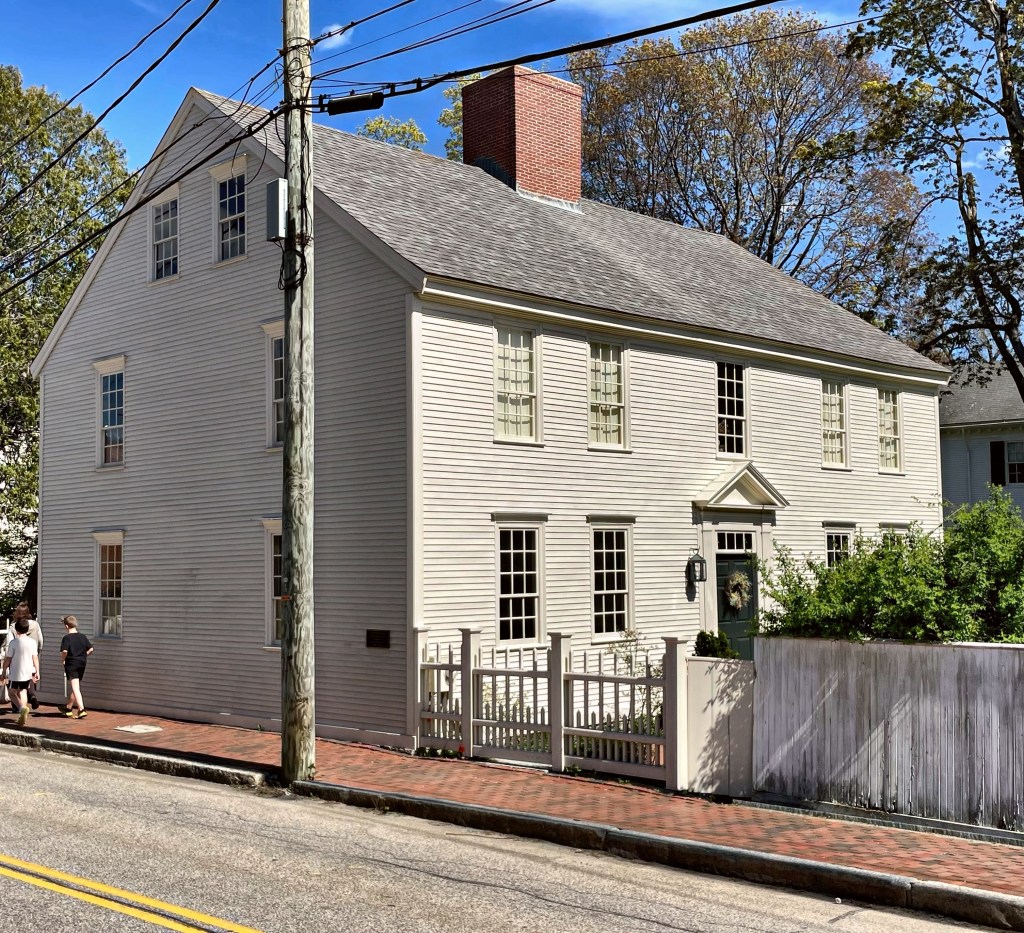
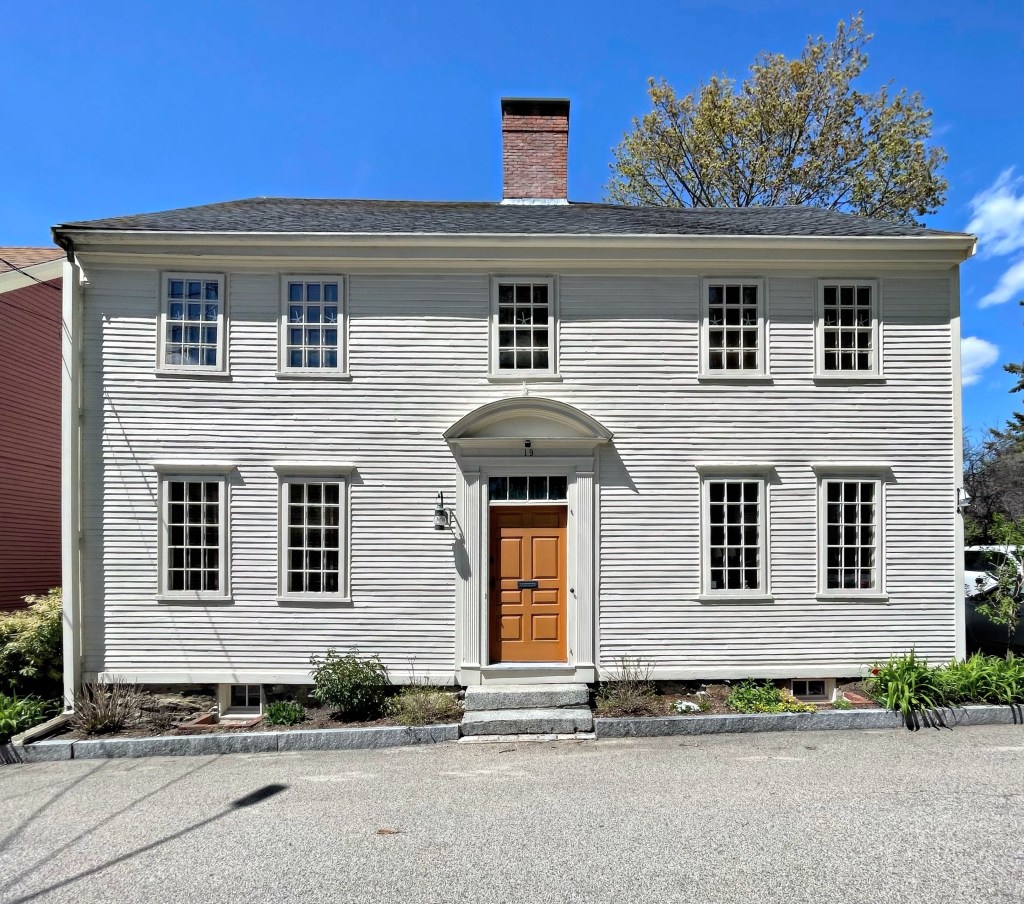
Another of the absolutely stunning 18th century homes in Portsmouth I stumbled upon in my recent walk there is this late-Georgian home, built in 1780 and owned by Ebenezer Lord. Lord worked as a cabinetmaker and produced many fine pieces of furniture, many of which are sold today for high values at auction. Due to his high skill with woodworking, it is possible that Ebenezer built this home himself for his family, down to the segmental pediment over the front door. The house has been maintained very well, and even retains historic wood windows.

Nathan Parker House // 1815

Many may not know this fact about Portsmouth, which shaped the city’s development for some of the formative years of the coastal town. The 1814 Brick Act was passed by the New Hampshire legislature after three devastating fires wiped out hundreds of closely-packed wooden buildings in the heart of the state’s only seaport. The act prohibited the erection of wooden buildings of more than twelve feet high in the downtown area which was the densest, it was effectively an early building code. The regulation helped change the look of the city, creating the red brick image Downtown that many identify today as Portsmouth. As a result, nearly all homes and buildings in the downtown area of Portsmouth were constructed of brick, largely in the Federal style, popular at the time. This home was constructed around 1815 as a wedding present for the South Parish’s minister, Reverend Doctor Nathan Parker, upon his marriage to Susan Pickering, the daughter of New Hampshire Chief Justice John Pickering and a descendant of the original John Pickering.

Aaron Cutler Memorial Library // 1924

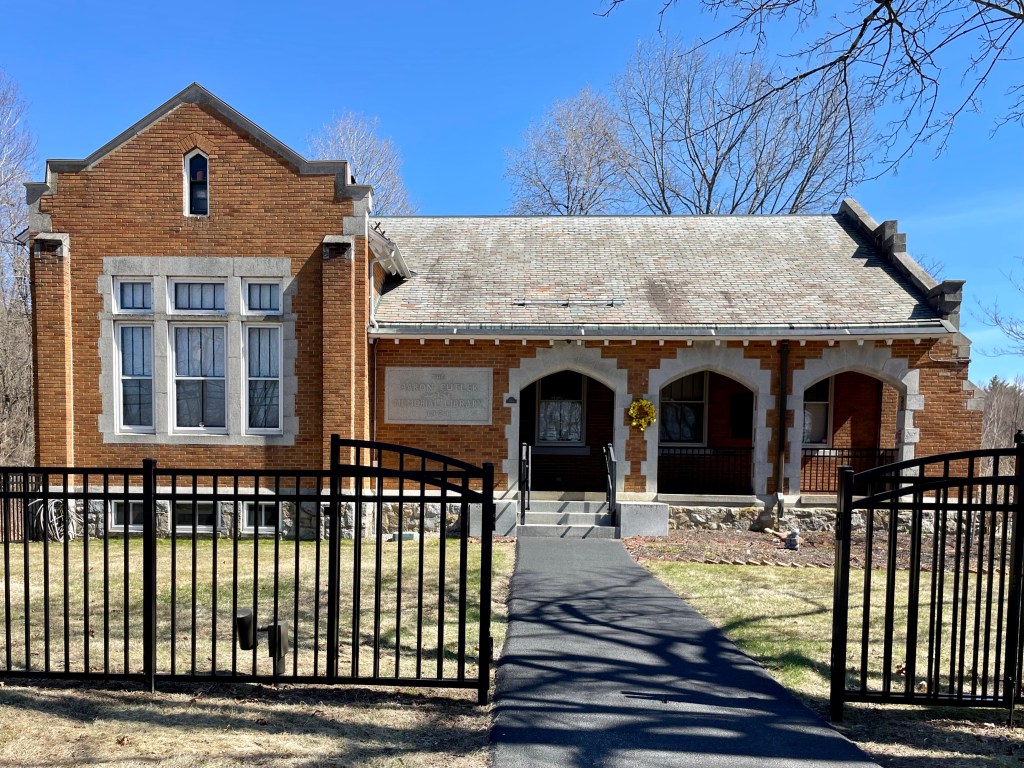
In his 1917 will, Aaron Cutler of Hudson, N.H. left his estate to family and friends with his remaining estate to be bequeathed “for the purpose of the erection, furnishing and maintenance of a Public Library, upon the express condition that the citizens of said town give land upon which to erect the same. Said land to be located within one-quarter of a mile of the town hall. Said Library to be of brick and slate. And to be known as “The Aaron Cutler Memorial Library.” His town of Hudson recently erected a memorial library, so he sought to fund a library in an adjacent municipality. Land was donated in Litchfield for a new library there and architect William M. Butterfield furnished plans for the building. The library was completed in 1924 and exhibits Tudor/English Revival design, unique for the town.