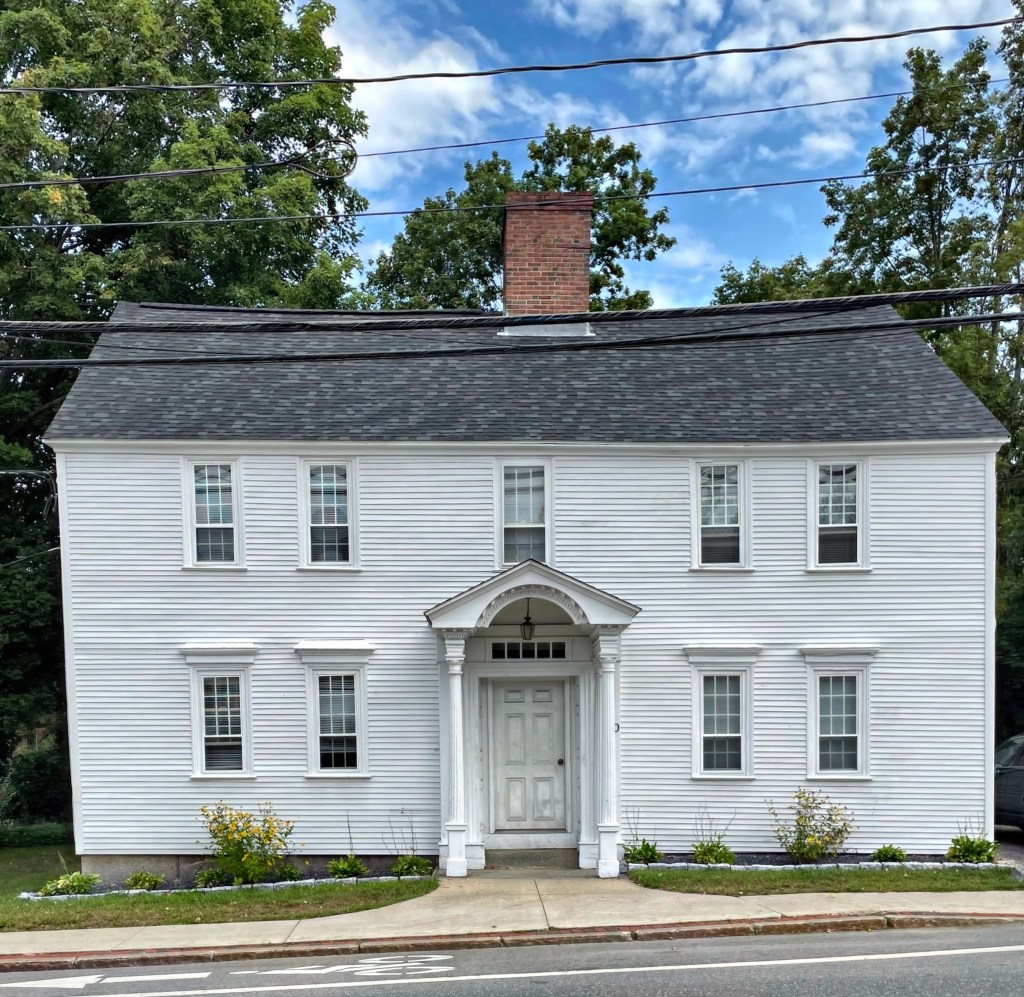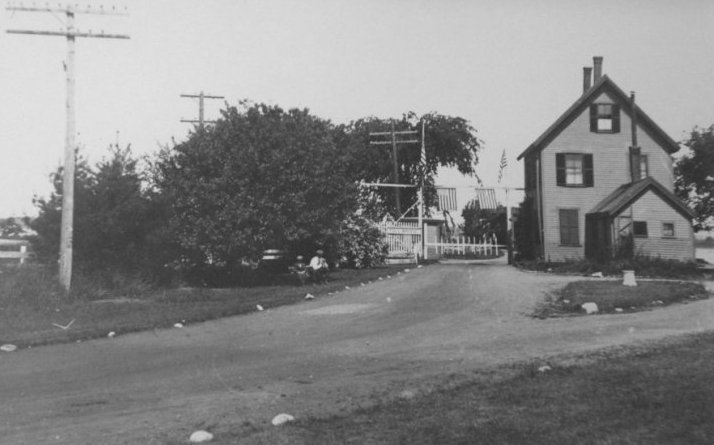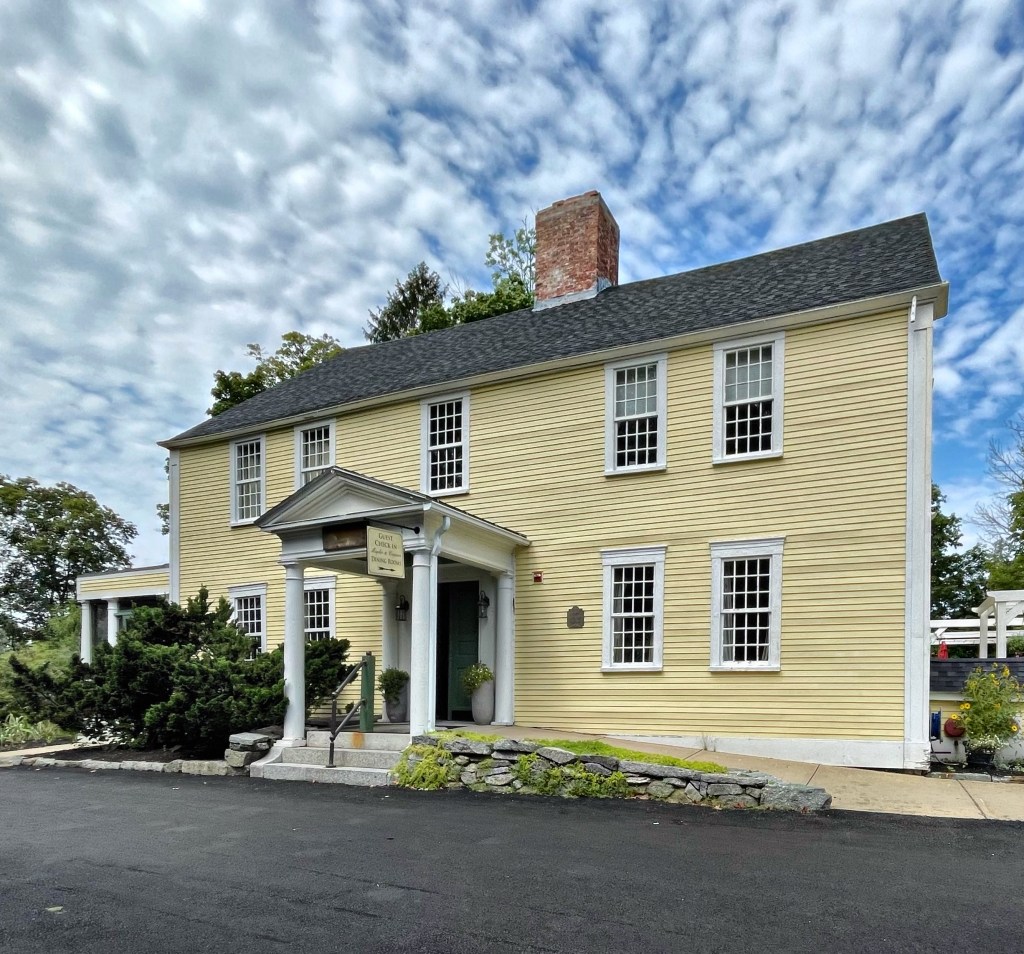
Valentine Hill House // c.1649

Valentine Hill emigrated to Boston in 1636 from England with his brother and began a successful career as a merchant and trader. In 1638 Valentine was made a member of the Artillery Company, In 1640 he took the Freeman’s Oath, and in that same year ordained as a Deacon in the Boston Church. In 1641 he was elected a Selectman serving until 1647. In 1643 Valentine received a grant of land at the falls of the Oyster River in what is now Durham, N.H. In 1649, Valentine and an associate got permission to build a saw mill on the river. Additional grants of land included 500 acres for farming. Due to issues with his businesses in Boston, he moved up to present-day Durham to manage his mills and property there. On the property, he employed “seven Scots”, who were indentured servants captured by British forces in the Battle of Dunbar, and among other industries, lumber was milled for use in the shipbuilding industry in surrounding towns. In 1649 Valentine Hill built the original homestead, a single-story house with a basement. In 1699, Nathaniel Hill, son and heir of Valentine, made a two-story addition to the house, giving the home the appearance we see today. After successive owners, the next major period of the property was early in the 1900’s, when James Frost took over the estate, completing the transformation of the grounds and turned into a Colonial Revival summer estate with extensive formal gardens, arbors and an elaborate stone wall. The property remained in the family until the 1980s, but suffered from some neglect. The house was purchased in 1997 and restored to her former glory and is now known as the Three Chimneys Inn. Interestingly, if this home can be dated with dendrochronology (aging the home based on the age of the cut timber), this home would be at least a decade older than the present oldest home in New Hampshire!
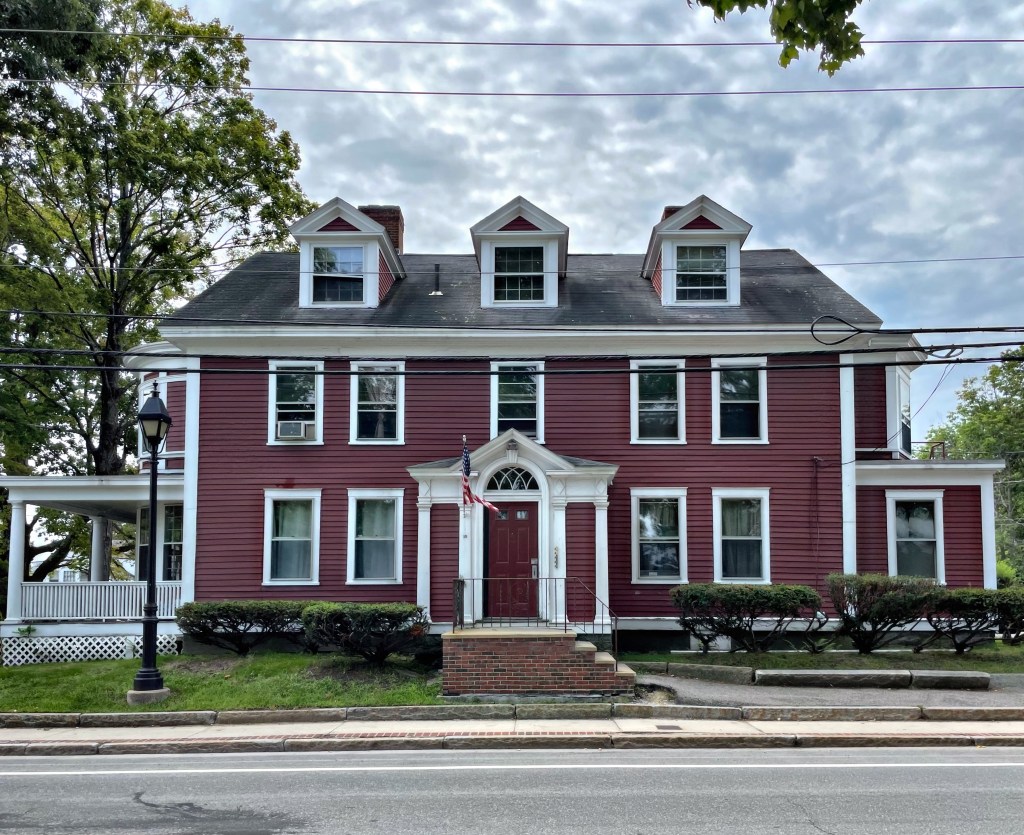
“Red Tower” // 1780 & 1895

One of the most interesting homes in Durham, NH, sits right on Main Street, and while lacks much of its original grandeur, the house still has a story to tell. When mining engineer, Hamilton Smith met and married Alice Congreve while working in London, the couple envisioned and planned for a sprawling gentleman’s farm in New England to retire to. In 1895, the couple purchased the 1780 Rev. Blydenburgh home on Main Street, a large Federal style mansion. When Alice and Hamilton retired to the Red Tower in 1895, they set about renovating the estate into a jewel of the Gilded Age. They added a three-story tower to the rear of the home, large additions and Colonial Revival alterations, and they purchased large land holdings behind the house for a working farm. On the farmland, they built a carriage house, creamery, and men’s and women’s accessory buildings (a billiards building and tea house, respectively). Hamilton could only enjoy the home for a couple years until his death in 1900. His widow created the family cemetery at the farthest extent of the property and built the stunning Smith Memorial Chapel (last post). In the 1940s, much of the property was sold off and developed for a residential neighborhood for UNH faculty, and the Red Tower mansion was converted to an apartment house for students.

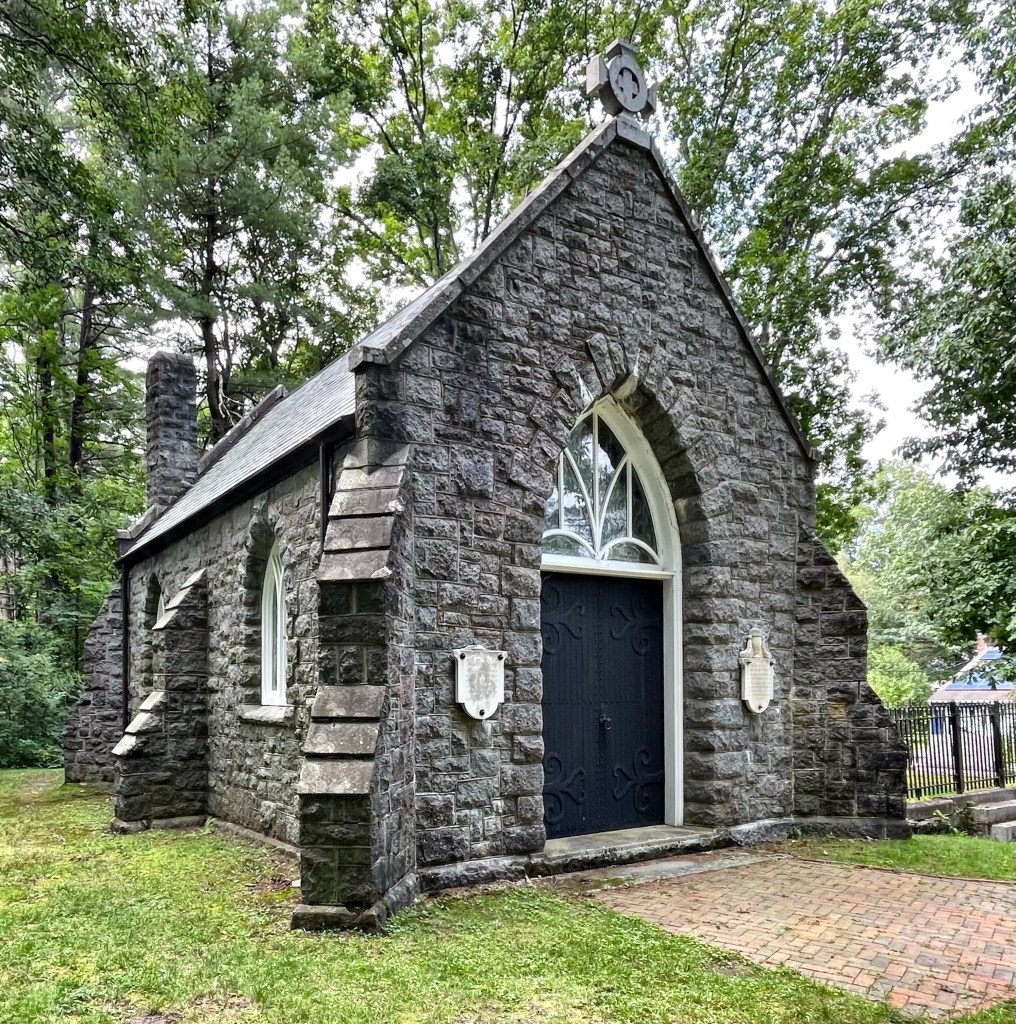
Smith Memorial Chapel // 1900

The Smith Memorial Chapel, located in Durham, NH, was built for and named after Hamilton Smith by his wife, Alice Congreve, in 1900. From their marriage in 1886, Hamilton and Alice Smith lived in England for ten years, where Hamilton worked and lived in mining operations in South Africa. He had a home in New York and by the end of 1895, Hamilton acquired property in Durham to create a country estate (next post). On the Fourth of July in 1900, Hamilton and a family friend went boating downriver on the Oyster River, in Durham along with his two dogs Hana and Joy. While attempting to free the boat after it ran aground, he suffered a fatal heart attack at just 59 years old. Almost immediately, his widow Alice funded a memorial chapel to her late husband on the family cemetery. The Gothic Revival chapel features amazing lancet stained glass windows and stone buttresses resembling old English chapels. Also on the grounds of the cemetery are the burials of Mr. and Mrs. Smith and their beloved dogs, marked by small gravestones. The property, including the small cemetery in which both family members and pets are interred, remained in the family until 1979, when it was donated to the town.

Ebenezer Smith House // c.1785

This home in Durham, NH, was built around 1785 and is among the oldest downtown. The late-Georgian/Federal house was constructed for Ebenezer Smith the year of his marriage to wife, Mehitable. When Ebenezer was 17 years old, he pursued the study of law in the office of John Sullivan, afterwards General John Sullivan, until the breaking out of the war when he followed his mentor to the field, becoming and remaining his aide-de-camp until peace was declared. Upon the conclusion of the war, he resumed his studies, was admitted to the bar and subsequently became a prominent jurist and attorney in Durham. General Lafayette stayed in the Smith house upon his tour of the United States in 1824-5.

Ballard-Hoitt House // 1790

In 1790, Joshua Ballard built this house on a prominent triangular lot on the turnpike connecting New Hampshire’s largest city at the time (Portsmouth) with the future Capital (Concord). The main door is flanked by fluted pilasters and surmounted by a pediment with dentils and strong proportions. The old tavern was purchased in the late 1800s by Charles A. Hoitt, a granger and selectman in town. As with many old homes on Main Street in town, the house was converted to apartments with a small commercial space at the ground floor.

Captain Richardson Tavern // c.1785

The Richardson Tavern on Main Street in Durham, NH, was built shortly after the conclusion of the Revolutionary War by Captain Joseph Richardson (1756-1824). The tavern was sited on a rise, providing views of Mill Pond in the distance. The tavern provided meeting spaces for town officials and juries to meet and discuss important city matters before the construction of the first purpose-built town hall just a block away. The Federal style tavern was “modernized” in the early 20th century with Colonial Revival dormers and eventually was converted into apartments as the ever-growing University of New Hampshire brought more students into town.

Old Durham Town Hall // 1825

Durham, New Hampshire, sits beside Great Bay at the mouth of the Oyster River, an ideal location for settlement, like the Western Abenaki and their ancestors who’ve lived in the region for an estimated 11,000 years. By 1633, English colonists were spread along the tidal shores of the Oyster River, and brought non-native livestock aboard their ships, “thousands of cattle, swine, sheep, and horses,” requiring them to clear acres merely for pasture. Formerly un-molested fields, carefully cultivated across centuries, were trampled and their crops destroyed. Due to this, violence between the native people and colonizers erupted, and livestock were frequently killed. The Abenaki saw them as a direct threat to their food supply. The Oyster River Plantation (as it was originally named by colonizers), was so named Durham in 1732 when it was incorporated, after County Durham in England.

Built in 1825 by Joseph Coe, local merchant and shipbuilder, this brick building was constructed as a prominent corner store with two stories of windows for commercial use and a top floor apartment. The brick structure is an excellent example of Federal style architecture in the Great Bay area of New Hampshire, and its location at the end of Main Street, where it converges with Dover and Newmarket roads, historic routes to the town’s neighbors, provided a lot of traffic of potential customers.After years of meeting in taverns and schoolhouses, the town selectmen voted in 1840 to purchase Coe’s Store for use as a town hall. They purchased the building, later opening the top two floors into one large meeting space. The town outgrew the building and relocated across the street, and since 1961, the building has been occupied by the Durham Historic Association and Museum.

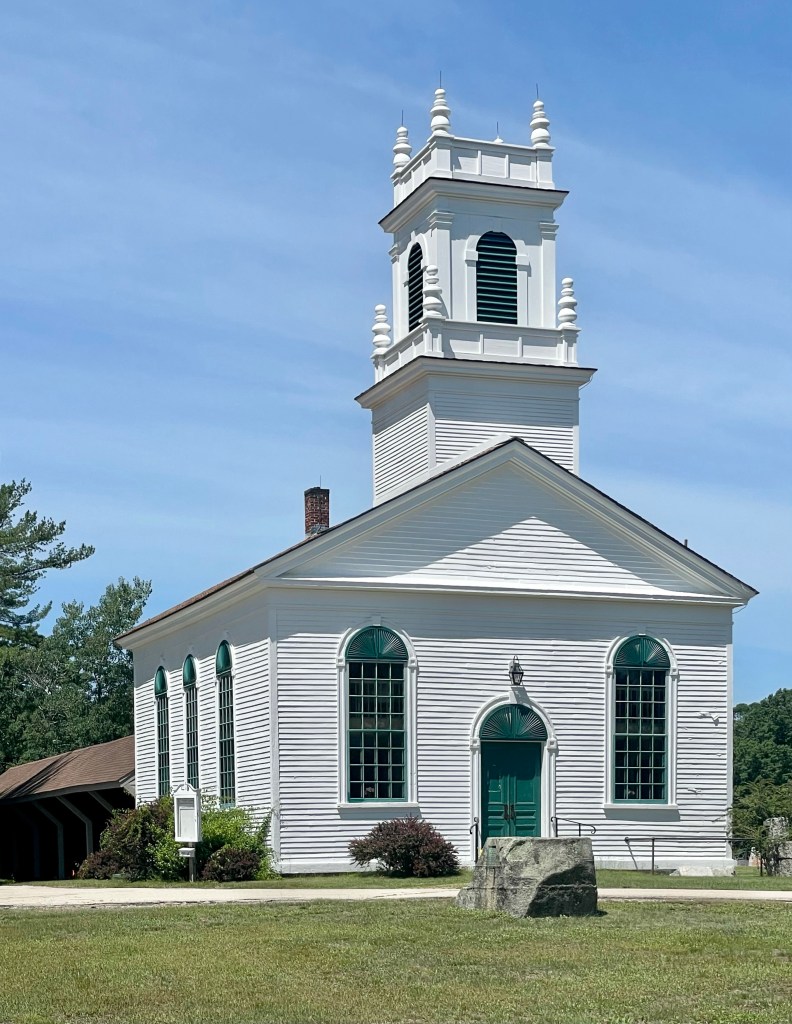
Newington Meetinghouse // 1713

This old meetinghouse predates the Town of Newington having been erected when the area was known as “Bloody Point,” which was claimed by both Dover and Portsmouth. Surrounded on three sides by the Piscataqua River and the Great Bay estuary, early residents of Bloody Point found it difficult to attend town meeting or church service in either Dover or Portsmouth. Bloody Point residents soon decided to establish a parish, independent from both Portsmouth and Dover. The granting of a separate parish with town privileges in the early 1700s required the construction of a village meetinghouse, and the establishment of a church with a settled minster. There was no requirement for separation of church and state at that time, so a meetinghouse would serve the dual purpose of being both a place for feisty town meetings and solemn worship. Construction of the Bloody Point Meetinghouse began in 1712, and the first meeting was held in it in January, 1713, even though the building was far from completed. There were no seats, and the windows were only holes in the walls. On August 6, 1713, a meeting was held to organize the parish in the new building. The name “Newington” was chosen after an English village that provided a bell for the new meetinghouse. Rev. Joseph Adams was the first settled minister in the new meetinghouse, and he preached there for 68 years. Rev. Adams was the uncle to John Adams, second president of the United States, and great uncle of John Quincy Adams, the sixth president. The building was modernized in 1838-39 to its present church-shape appearance. Windows were reconfigured, the main entrance was moved from the long south side to the east gable end, and the freestanding belfry was relocated onto the roof of the east gable end, effectively rotating the building 90 degrees without moving it. The present-day Greek Revival building remains as a highly significant relic of the founding of Newington.

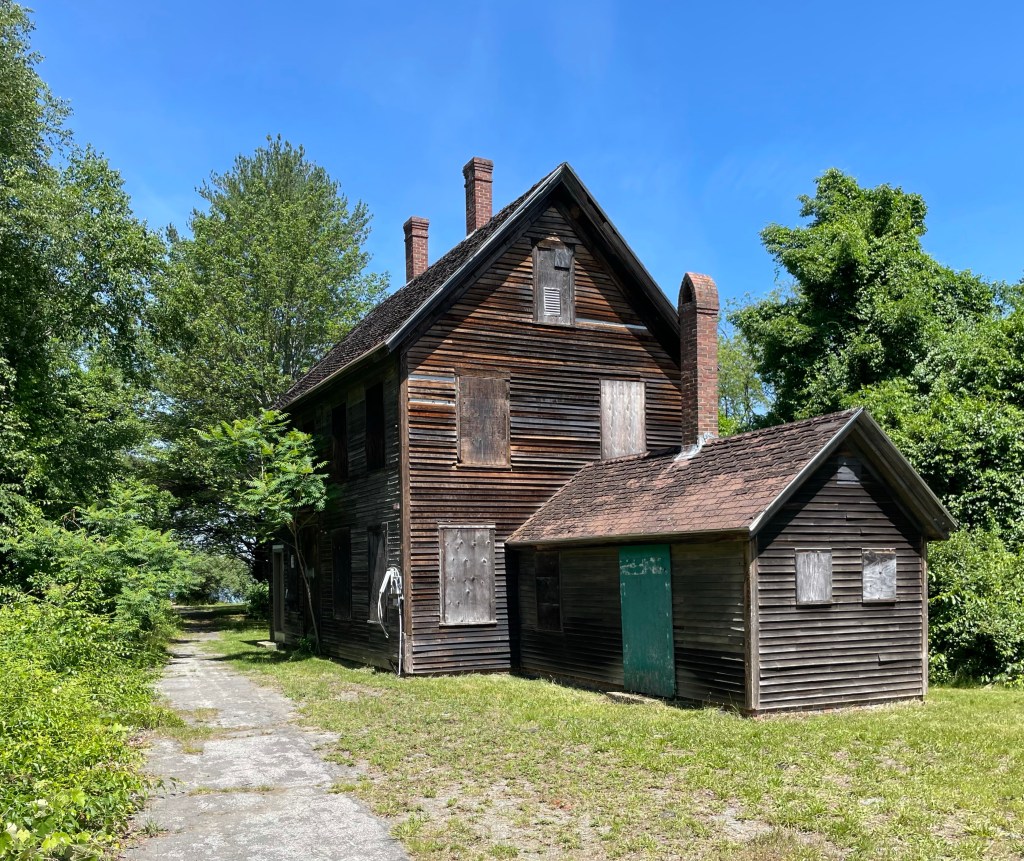
Newington Railroad Depot // 1873

The Newington Railroad Depot was built in 1873 at the narrowest point at the Piscataqua River as part of the Portsmouth and Dover Railroad. The Portsmouth and Dover Railroad Company was chartered in 1866 in order to provide a link between the eastern and western divisions of the Boston and Maine Railroad and also included the means to cross Great Bay. The rail line was completed in 1874 and included this railroad depot which included a residence for the stationmaster while he collected tolls for pedestrians and carriages crossing the bridge nearby, and operated the swing section of the bridge to permit boat traffic to pass. By 1915, the one story wing was constructed which served as a 10’x20′ waiting room and ticket office. The offshoot rail line remained in service until the completion of the General Sullivan Bridge in 1934, due to the popularity of the automobile. The rail line was subsequently abandoned, and the nearby tracks were taken up in 1940. Elmer Brooks, the longtime stationkeeper was allowed to remain in the old depot, renting the building from the State of New Hampshire, who acquired the site in 1940. He lived here until his death in 1971. After which, the building has decayed. The State of New Hampshire should restore this valuable piece of history and has an amazing opportunity for a park in the surrounding area. Hopefully something is done to preserve the building!

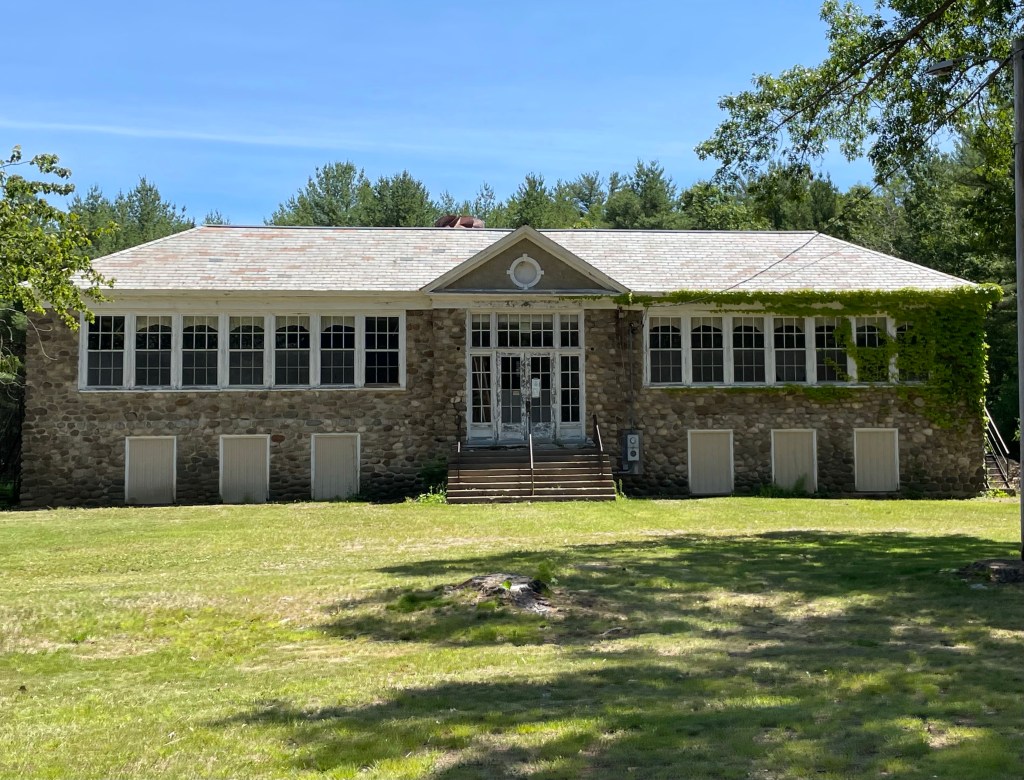
Newington Stone Schoolhouse // 1921

When the first floor of the Old Town Hall was deemed too cramped for the students of Newington, NH, to receive their education, the town worked out a solution, build a new school. Town revenue from timber-cutting in the Town Forest (the oldest Town Forest in the United States) helped finance construction of the school. Additionally, many landowners and farmers were asked to gather and donate stones on their properties and in stone walls for the material of the new building, which many contributed. The school closed in 1959, not long after the Pease Air Force Base was expanded and destroyed much of the southern edge of town. The U.S. Government acquired many parcels of land in Newington and Portsmouth and redeveloped the site over time in the mid 20th century. In Newington, the government leveled 26 local homesteads an action that left a deep scar on the town’s collective memory. The town has used the building for years, but only recently acquired the property from the Federal Government when they de-accessioned some of their properties here. Hopefully this building will be restored and serve as an educational tool for the town’s later generations.