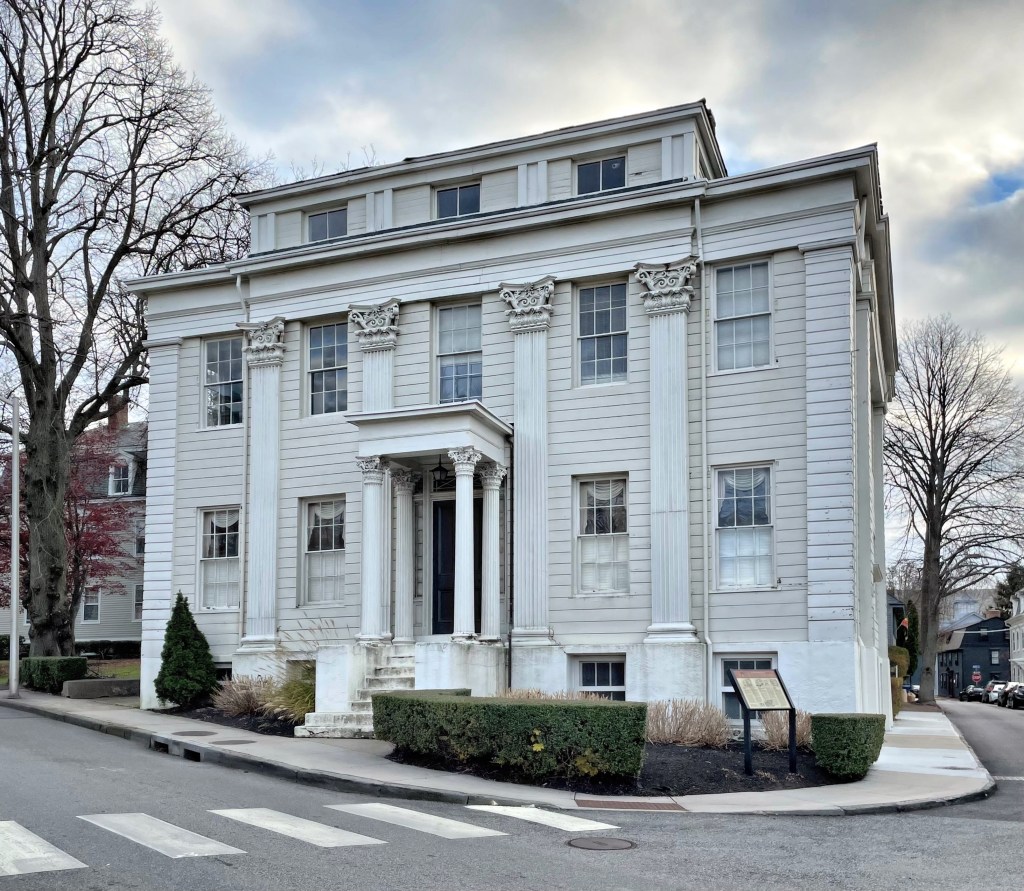
Levi Gale Mansion // 1835

One of my favorite houses in Newport, Rhode Island is this amazing high-style Greek Revival mansion across from the Touro Synagogue. The house was built in 1835 for Levi Gale, and designed by esteemed Rhode Island architect Russell Warren. Gale was born in New Orleans and moved to Newport and is listed as a merchant. It is possible that Levi Gale was involved in the Triangular Trade, the trading of enslaved people, sugar (often in its liquid form, molasses), and rum between West Africa, the West Indies and Rhode Island. Many do not realize, but Rhode Island was heavily involved in the slave trade. The house follows the more traditional Federal form, but with two-story composite pilasters and flush siding, scored and painted white to resemble ashlar marble. The home is elegantly sited, but it is actually not on its original lot. It was actually built adjacent to Washington Square, in the place of the present Newport County Courthouse, and was moved to its present site in 1925. The mansion was cut in half, moved a block away, and re-assembled on a new foundation. It is now used as a Jewish community center, owned by the congregation that owns Touro Synagogue.

Peckham Houses // c.1855

On a little stretch of Kay Street in Newport, you can find four strikingly similar Italianate style houses, all neighbors. Upon further research, it turns out they were designed by the same man, Job Peckham. Job Almy Peckham (1807-1885) was a descendant of one of nearby Middletown’s “founding” families. He ran a lumberyard and began working as a housewright, building homes. He was a believer of the philosophy “if it ain’t broke, don’t fix it”, so he built many of his houses in a sort of cookie-cutter way, but each showcasing slight design changes. One of the most impressive features of these homes is the massive overhanging eaves with scrolled brackets. Peckham’s own house (bottom right) is included in the bunch. What do you think of these homes?

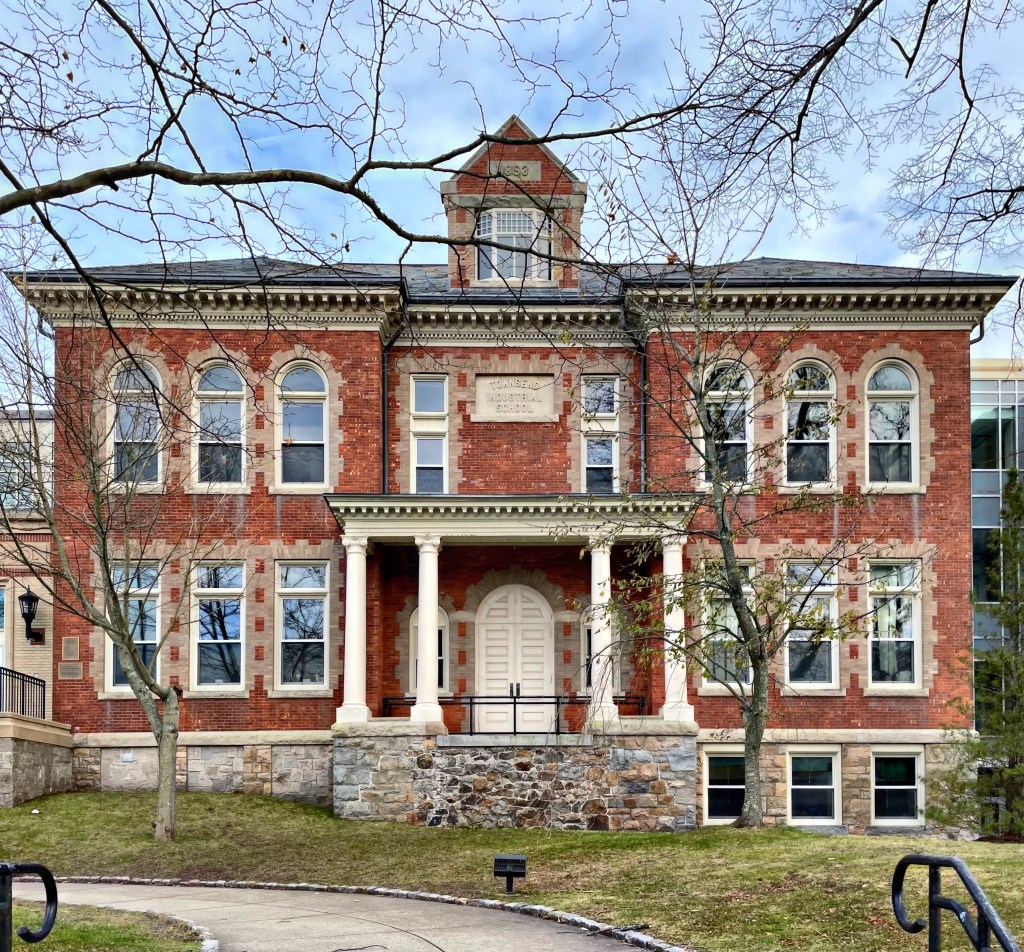
Townsend Industrial School // 1894

Located next to and predating Newport City Hall (a previous post), the Townsend Industrial School building is a great, eclectic Victorian-era building in Newport, that is often overlooked. The school itself evolved from a vocational school for women, that Katherine Prescott Wormeley began in town in 1872. The school taught pupils “not destined for classic education” but taught them skills that they would be able to use in the “real world”. The school was located next to the Rogers High School (demolished in 1957), which provided a more traditional education. The building was designed by Newport architect James C. Fludder and has maintained its stately presence to this day. The building has been acquired by the City of Newport, who added a Post-Modern addition, and it is now known as the Frank E. Thompson Middle School.

Armington House // c.1863

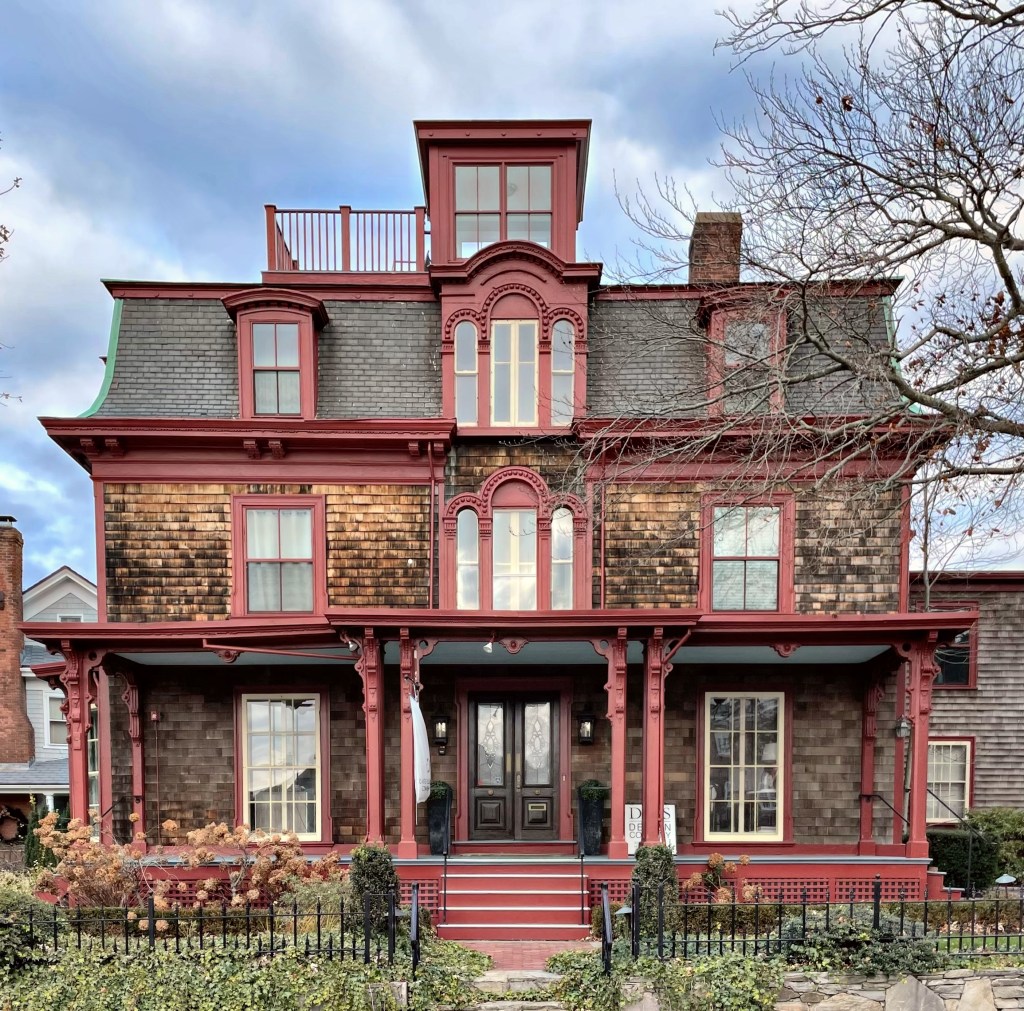
This beautiful mansard-roofed home in Newport was long the residence of the Armington Family. The history is a little murky, but deed research shows the property was purchased in 1863 by Horace E. Armington, a Boston tailor. Horace likely purchased an earlier home and from it, built this larger, Second Empire style house to serve as a summer retreat. The family eventually settled in Newport full-time and their son, also Horace, took a job as Assistant Librarian at the Redwood Library in town. The family owned the property for generations until it was converted to professional office use, likely due to the commercialization in the 20th century of the main streets in Newport. The house retains much of its original detailing including the rooftop belvedere. The later-added shingle siding adds a rustic touch.

Touro Synagogue // 1763

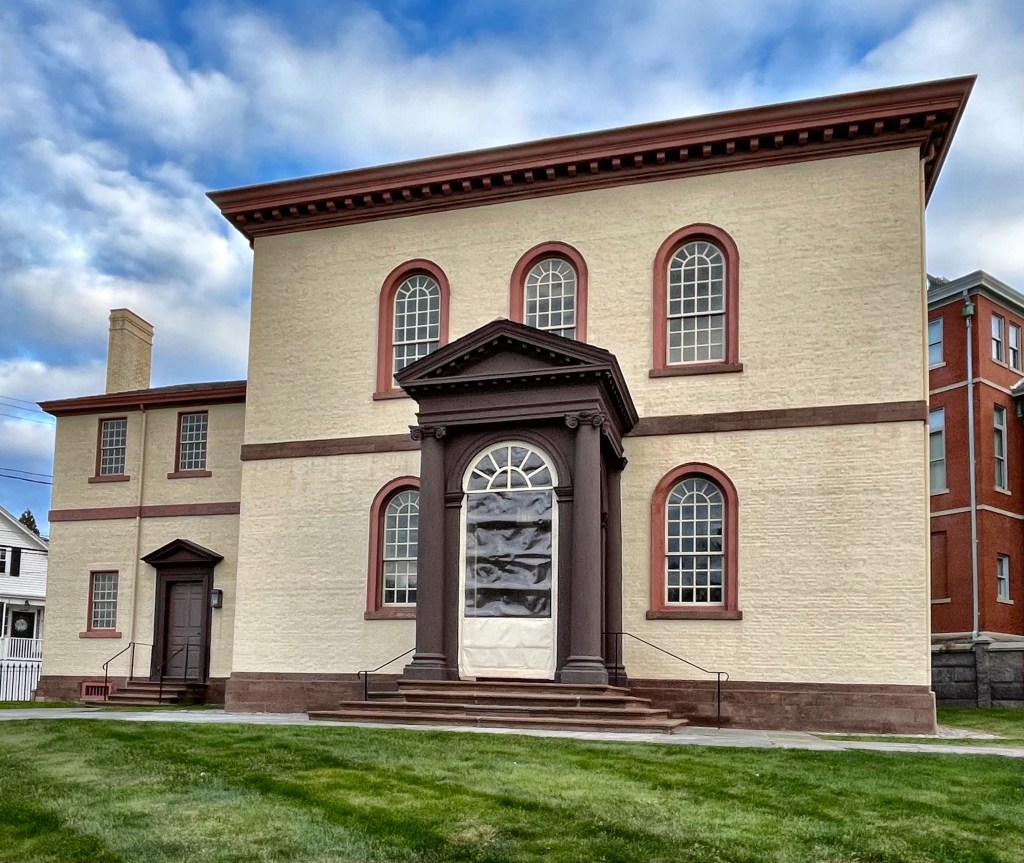
While Newport is arguably best-known for the Newport mansions from the Gilded Age, there are soooo many amazing buildings from the Colonial era, including some of the most significant and historic in the United States. Touro Synagogue in Newport is the oldest synagogue building still standing in the United States, the only surviving synagogue building in the U.S. dating to the colonial era, and the oldest surviving Jewish synagogue building in North America (for reference, second-oldest extant synagogue in North America was built in 1833, seventy years later)! Its history begins in the 17th century when the small but growing colony of Newport received its first Jewish residents possibly as early as 1658. The earliest known Jewish settlers arrived from Barbados, where they participated in the triangular trade along with Dutch and English settlements. By 1758, the Jewish population had grown sufficiently that there was a need for a house of worship. The Congregation now known as Congregation Jeshuat Israel (Salvation of Israel) engaged Newport resident Peter Harrison to design the synagogue. Harrison, a British American merchant and sea captain, who was self-tutored in architecture, studying mostly from books and drawings. By the time he designed Touro Synagogue, he had already completed iconic buildings including Newport’s Redwood Library and King’s Chapel in Boston. Construction began on the “Jews Synagogue” in 1759, which was completed years later in 1763. The building is one of the most significant buildings in America, and is open to tours where you can see the immaculately restored interiors.

Alfred Smith House // c.1843

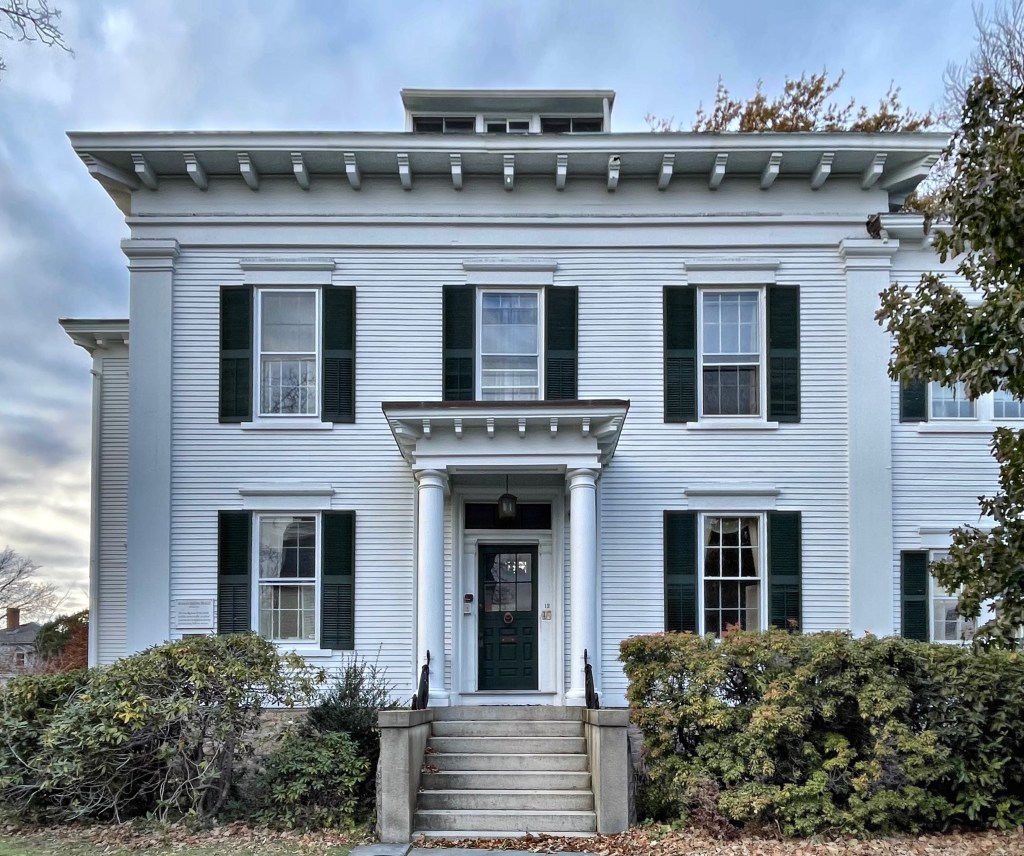
Alfred Smith (1809-1886) was known as “Newport’s Millionaire Real Estate Agent”, working in the mid-late 19th century to get some of America’s most well-connected upper-class acquire properties to build their summer cottages. In his early days, he prospered by assisting prospective developers and buyers to purchase house lots on newly platted streets, including Bellevue Avenue. By the time of his marriage in 1843, he built this stunning Greek Revival mansion, equipped with stunning proportions and corner pilasters. Decades later, to “keep up with the Joneses”, he modernized the house by extending the eaves and adding brackets and the addition of a belvedere at the roof. He was instrumental in much of Newport’s later development, even bankrolling the erection of a stone bridge on Ocean Avenue, to allow carriages and subsequent developable lots to extend in the previously untouched land in south and west Newport. He suffered a stroke in 1886, and died a year later, two years after his late wife. He funded a monument to the family, hiring Augustus St. Gaudens to furnish a stunning memorial “Amor Caritas” which stands in Island Cemetery in Newport. Mr. Smith’s estate was mentioned in the New York Times and stated there was no will, and his four living children would each get upwards of $1 Million (nearly $30 Million a piece based on inflation today)!

Newport City Hall // 1900

Newport, Rhode Island was settled in 1639 from colonists, who took land from the Narragansett people, who had lived on the land for generations. Newport eventually grew to be the largest of the original settlements that later became the Colony of Rhode Island and Providence Plantations. Newport served as the seat of Rhode Island’s government until the current Rhode Island State House in Providence was completed in 1904. Newport was a major center of the slave trade in colonial and early America, active in the “triangle trade” in which slave-produced sugar and molasses from the Caribbean were carried to Rhode Island and distilled into rum that was then carried to West Africa and exchanged for captives. In all, about 60% of slave-trading voyages launched from North America – in some years more than 90% departed from the tiny state, many of which left from Newport. Beginning in the mid-nineteenth century, wealthy southern planters seeking to escape the heat began to build summer cottages. By the end of the 19th century, a large number of America’s elite would build summer “cottages” in the town, transforming much of it to the Gilded Age splendor we see today. Stay tuned for a sampling of Newport buildings.

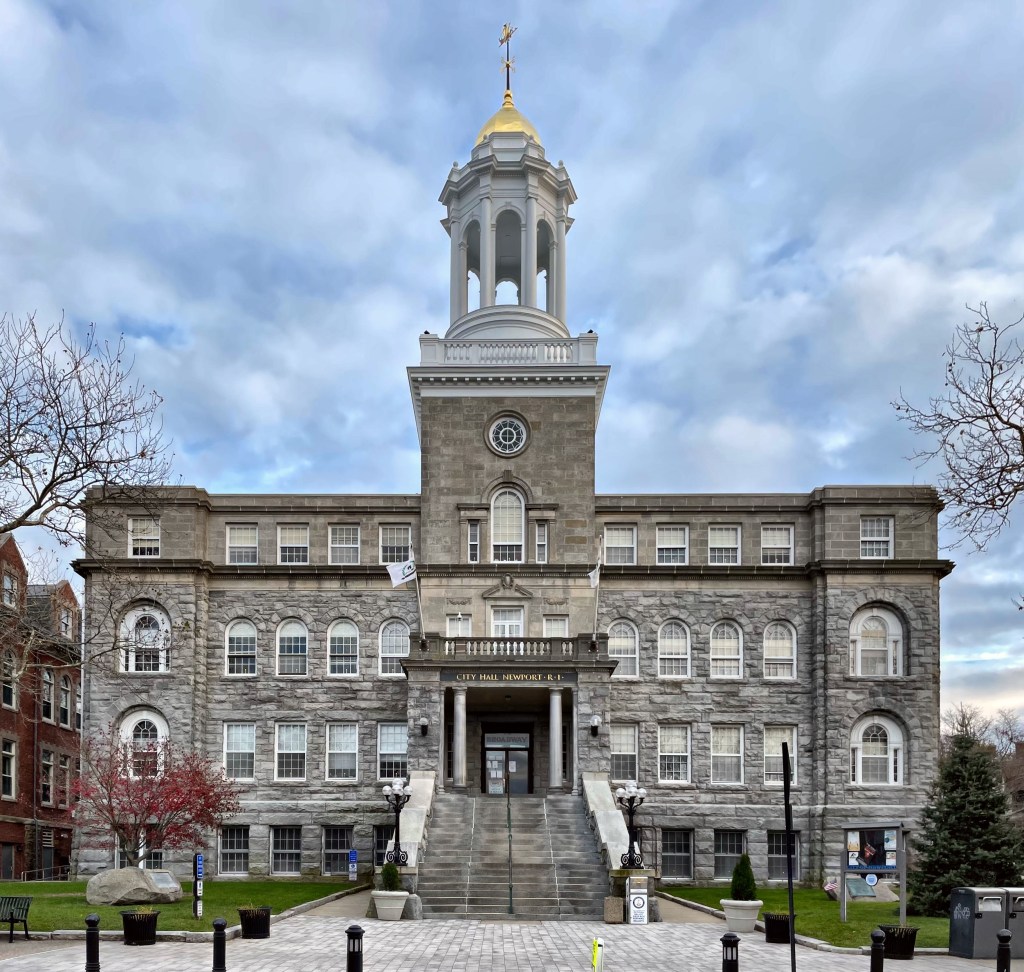
Newport City Hall was completed in 1900 from Newport-based architect and builder John Dixon Johnston. The massive Beaux-Arts style building was constructed of granite block and capped with a mansard roof with iron cresting. Tragically, a fire destroyed much of the interior and the roof in 1925, leading to a re-imagining of City Hall. In the 1920s, Colonial design prevailed in New England, and architect William Cornell Appleton envisioned the building with more Colonial features. Palladian windows and a boxed-off fourth floor were added, along with a towering cupola.