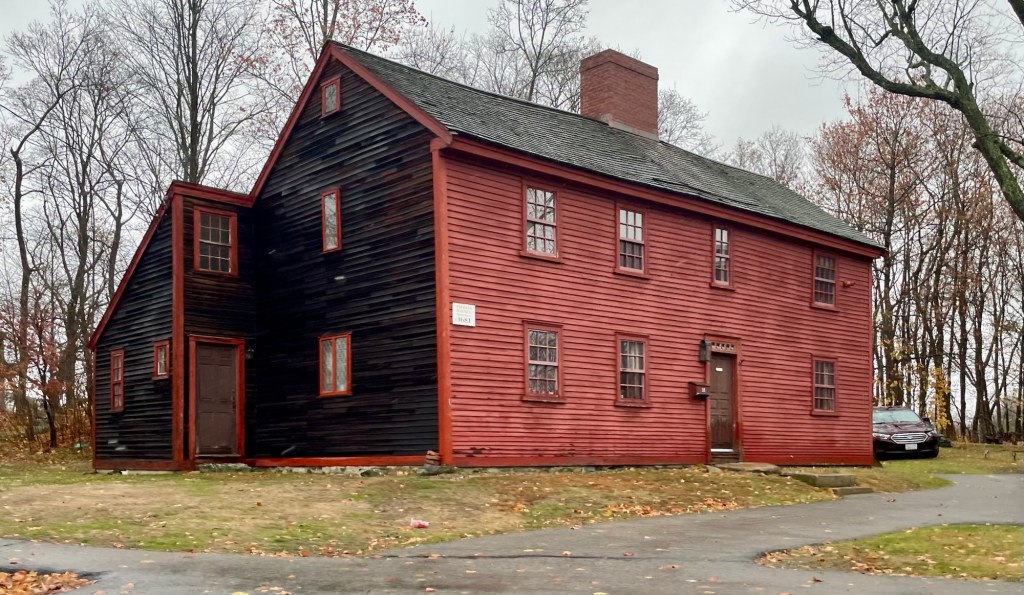
Thomas Haines House // 1681

There aren’t many extant buildings with direct ties to the Salem witch trials of the 1690s, but this First Period house on Centre Street in Danvers is one of them! This is the Thomas Haines House, built in 1681 for Thomas Haines. During the witchcraft hysteria of 1692, Thomas testified in the trials of Elizabeth Howe and John Willard, who were accused of witchcraft. Elizabeth would be executed by hanging on July 19, 1692 and John was hanged on August 19, 1692. Less than a year following the frenzy of the trials, Thomas received a license to keep a public house of entertainment & sell strong drink as an innholder. He remained here until 1703, when he sold his home and land to John Allen, a gunsmith, and removed to Salem, New Jersey. The First Period home with saltbox roof is in great condition and was restored to its historic appearance in the 20th century. The property is privately owned.
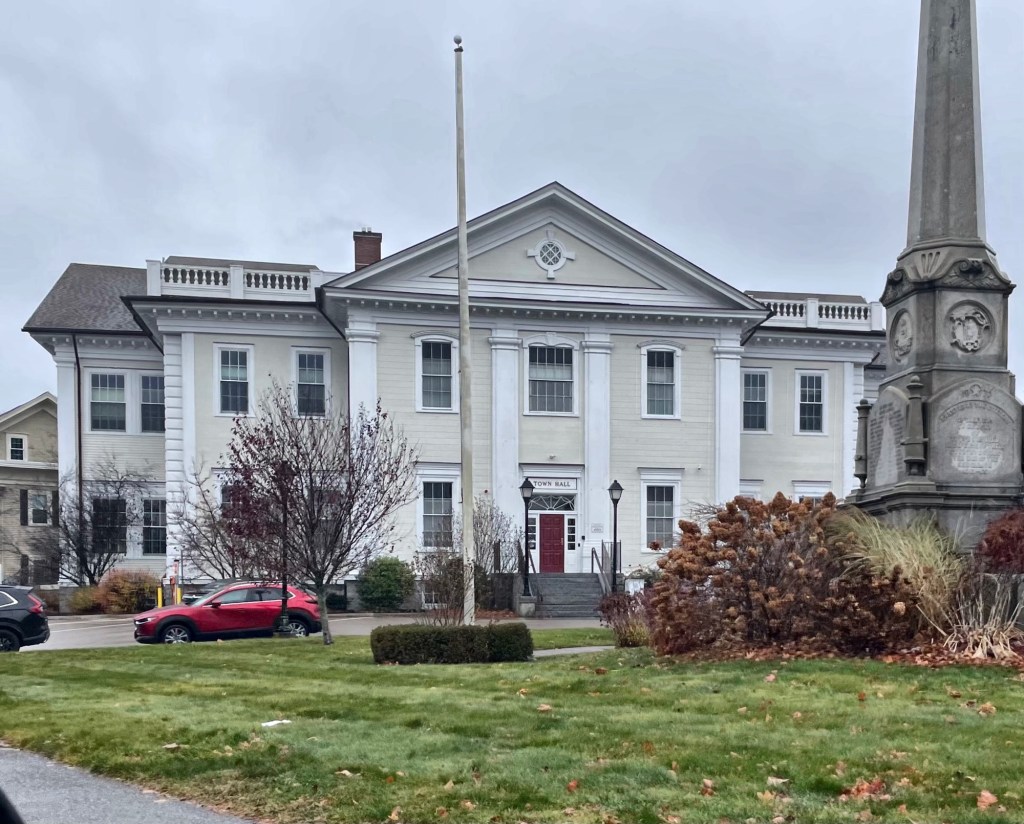
Danvers Town Hall // 1854

The land that is now Danvers, Massachusetts, was once owned by the Naumkeag branch of the Massachusett tribe. Permanent European settlement began in 1636, when present-day Danvers was known as Salem Village, a village of Salem. The historical event for which Danvers is best-known is the Salem witch trials of 1692, which began in the home of Rev. Samuel Parris, in Salem Village. Danvers officially separated from Salem in 1752 and is likely named after Sir Danvers Osborn, a Colonial Governor of New York. In 1757, Massachusetts incorporated Danvers as a town and, according to legend, King George II later vetoed this act of incorporation and returned his decree with the message, “The King Unwilling.” They simply ignored this royal veto, which was later included on the town’s seal! Danvers would eventually build a central town hall building , this structure, in 1854 which partially functioned as a high school as well. Plans were drawn by the Salem architectural firm of Emmerton & Foster in a pleasing blending of Greek Revival and Italianate styles. As the town grew, the building was expanded in 1883, and in the 1890s. When a new, purpose-built high-school was constructed elsewhere in town in the early 1930s, it was decided to renovate the town hall building. Due to financial constraints during the Great Depression, the town got a lifeline by the Federal government, who in 1934, appropriated $6,500 to the town for a renovated town hall as part of the New Deal. Additional funds from the WPA went to murals (many of which still adorn the walls inside). Architect Lester S. Couch of Danvers, a partner in the firm Little & Browne, oversaw the renovations in the Colonial Revival style.

Spofford-Root House // c.1830

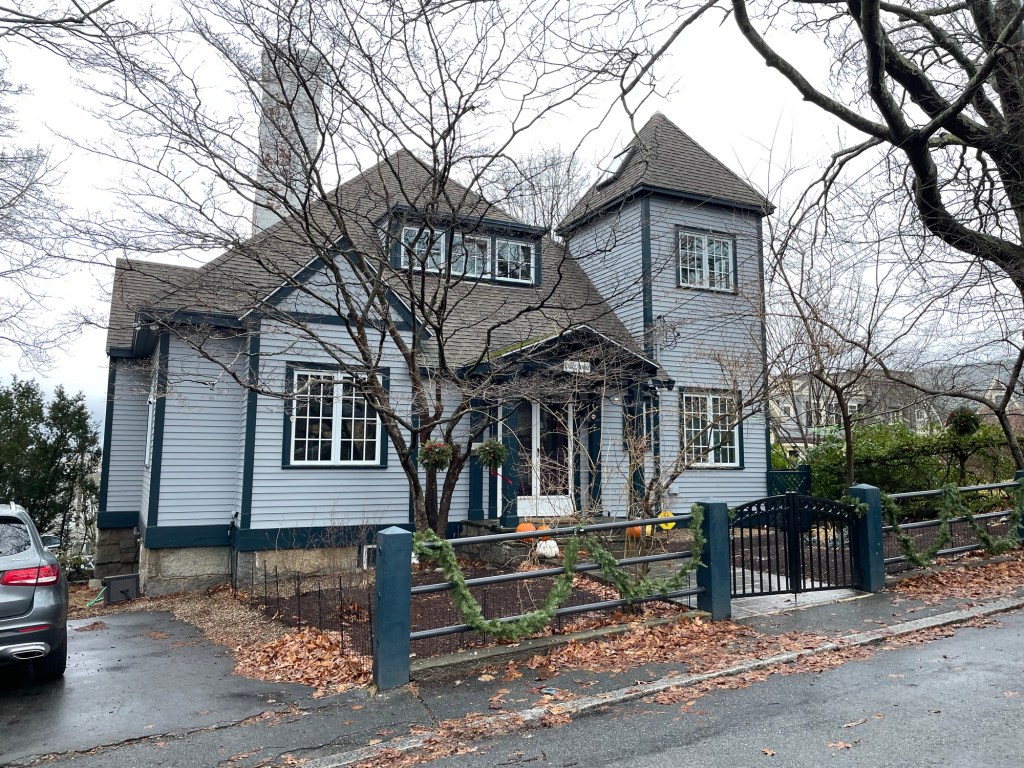
The Spofford Family was one of the earliest to settle in present-day Georgetown, with the earliest enclave of homes built along Andover Road in the western part of town. A few generations later, subsequent family members would built in the town center, taking advantage of the growing commercial and business community. This Federal period home (with later alterations) was built around 1830 for Greenleaf Spofford (1801-1887) the same year as his marriage to Emily Willmarth. The couple would move out of town and sold the home to Dr. Richmond Barbour Root (1846-1930),  the second of a highly respected, three generation family to practice medicine in Georgetown. The overlay of machine-sawn Stick Style decorative porch, bracketed cornice and bay windows were likely added by Root sometime after the Civil War. Unlike most owners of Federal and Greek Revival-style dwellings, Dr. Root may have held a valid professional interest in appearing as up-to-date as possible with a “modernized” home that also served as the site of his office and consulting rooms.

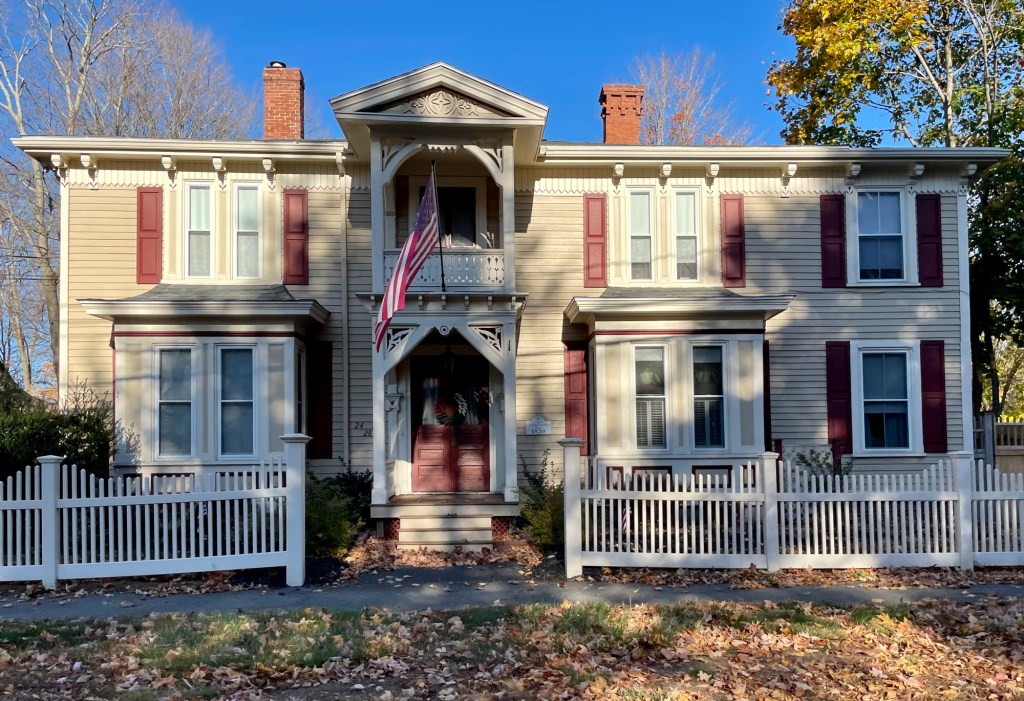
Moody-Hall House // 1830

Transitional Federal/Greek Revival style houses are among my favorite. You can see the emergence of Classical architecture blending with American architecture with features of both styles, which work well together. This example can be found on Elm Street in Georgetown, Massachusetts. The dwelling appears to have been built for Dr. George Moody, one of four physicians in Georgetown in 1840, who began his practice in town in 1830. In his first years there, he oversaw patients during Typhus and Dysentery outbreaks and was credited with having determined that a high sulphur content in the local water supply accounted for the increased cases. Dr. Moody died in 1866, and his widow continued to live in the house until her death in 1880, after which it was sold to Mrs. Charlotte Sawyer Hall, the widow of local shoemaker Seth Hall.

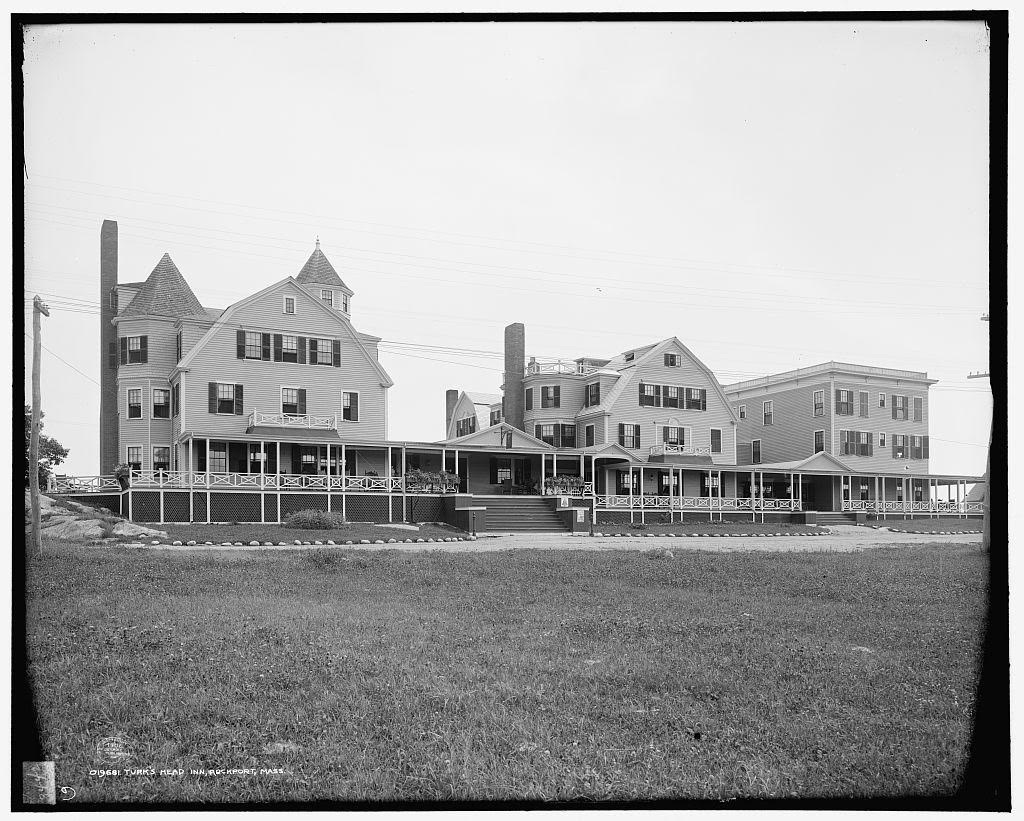
Turk’s Head Inn // 1890-1970

The Turk’s Head Inn was once Rockport’s grandest getaway. For those uninterested in building their own summer cottage to spend the along the coast of Massachusetts, luxury summer resorts provided summer rentals for those escaping the hot and polluted cities in favor of cool ocean breezes. Once situated in the  Land’s End section of Rockport, the Turk’s Head Inn, had sweeping views of the coast and islands in the distance. The initial portion was built from 1889 to 1890 by builder J. M. Wetherill of Rockport based on plans by architect H. M. Stephenson of Boston. It was expanded and became this rambling, E-shaped Colonial Revival structure with a seaboard frontage of two hundred feet and wraparound verandas over three hundred feet in length. Over the years, the Turk’s Head Inn suffered a number of fires, and its central and southeast wings were rebuilt, the latter in 1905 by then owner C.B. Martin. With a peak capacity of 200, the hotel, uncharacteristic of the regional hospitality industry, remained in operation for eighty years before it was closed down, partially destroyed by fire, and the remains removed in 1970.

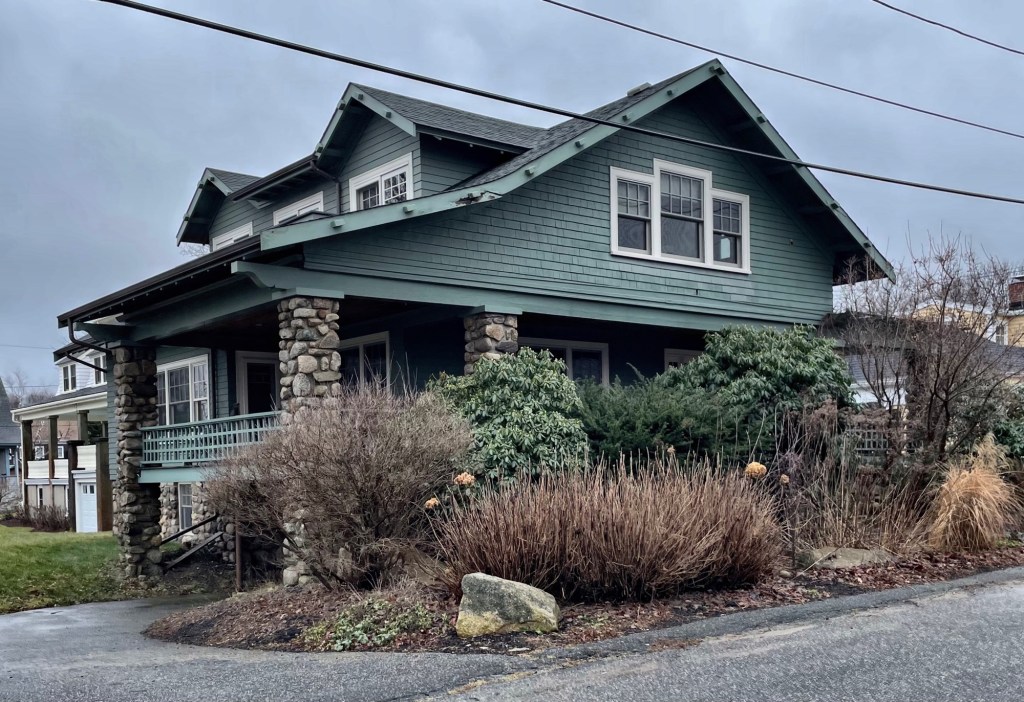
Haskins Cottage // c.1910

Another great turn-of-the-century summer cottage in Rockport’s Headlands neighborhood is this c.1910 Craftsman house on Norwood Street. The listed early owner was L. S. Haskins who likely utilized the house as a summer residence. Architecturally, the cottage follows the Craftsman form with a low-sloped roof with broad eaves, shed dormer, exposed rafters, and rubblestone foundation and columns of stones taken from the site and nearby neighborhood.  

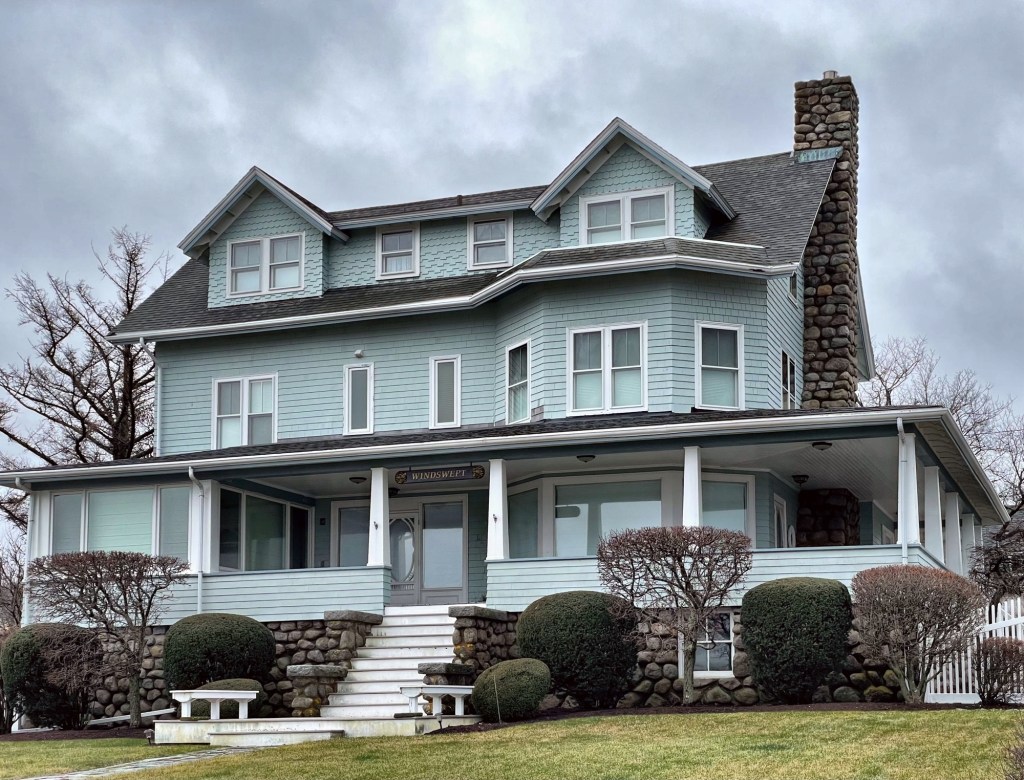
Windswept Cottage // 1909

The coastal towns of Gloucester, Manchester, and Beverly on the North Shore of Massachusetts often are known for their historic summer “cottages” but great examples can be found right here in Rockport! This is “Windswept”, the W. W. Blunt cottage, located in the Headlands section of town, just south of the harbor. Walton W. Blunt worked as the Treasurer and General Manager of the Boston Journal newspaper and resided in Boston, later purchasing multiple adjoining house lots in Rockport for a summer residence. The two-and-a-half story house was designed by a Rutherford Smith, who sought to utilize fieldstone found nearby for the foundation and chimneys and shingle siding above. Detailed descriptions of the new house were featured in a local newspaper in 1909 and mentioned tennis courts on the grounds, an apartment for servants, and a billiard room in the third floor. It is not clear when the house got its name, “Windswept”, but the name is just too fitting!

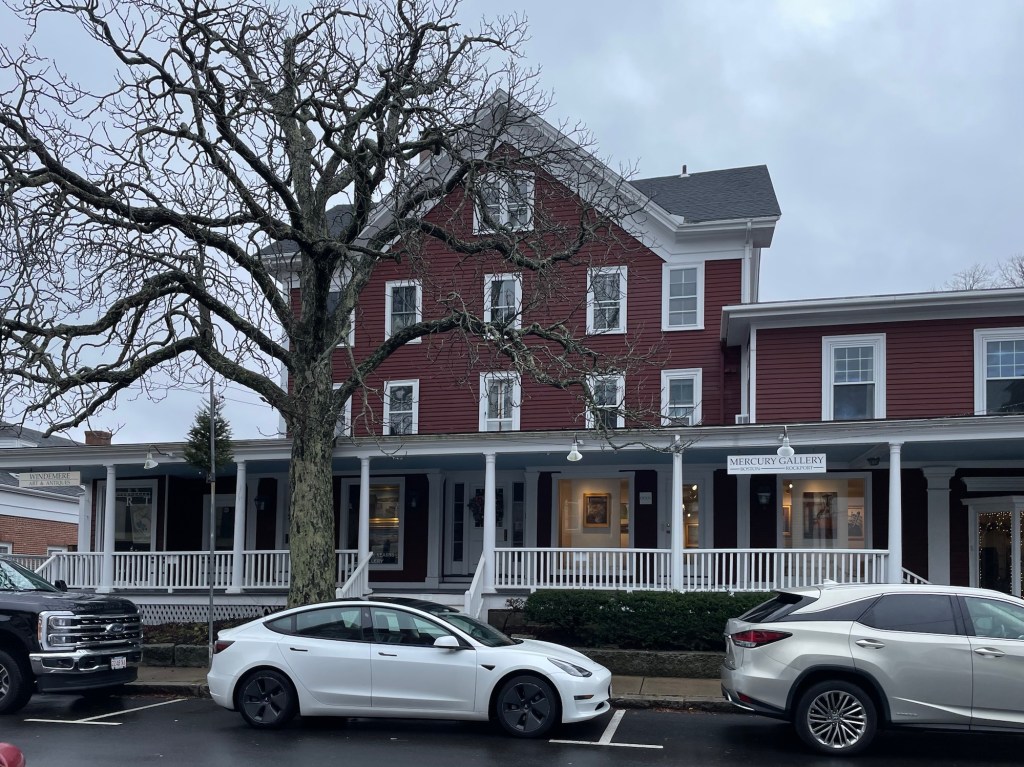
Old Granite Shore Hotel // c.1755

Reverend Ebenezer Cleveland (1725-1805) graduated from Yale College in 1749 and would move to Rockport (then a parish town of Gloucester) accepting the call as the village’s pastor for its Congregational Church. By around 1755, he lived in a house on this site next to the church before becoming a chaplain in the French and Indian War, fighting at the Battle of Bunker Hill, and helping to establish Dartmouth College. The property here was later owned by Jabez R. Gott, a deacon of the Congregational Church and the original cashier of the Rockport National Bank until his death in 1876. Sometime in the next decade, the Cleveland House was converted to a summer hotel, known as the Granite Shore Hotel. The original Georgian-era structure was heavily altered and expanded to provide new rooms and amenities for seasonal guests. An 1905 book showed rooms available at the Granite Shore for $2 a night. By 1919, the rates were $3 a day or between $15 and $18 a week! The hotel closed sometime in the 1940s and the building is now home to art galleries.

Commercial Cable Company Relay House // 1884

This shingled house in Rockport may look like an ordinary 1880s residence, but it was actually built as an important piece of infrastructure! This is the Commercial Cable Company’s Relay House, built in 1884 to serve as a terminus to a transatlantic cable providing communication across the Atlantic Ocean. Up until 1884, a French company, the Atlantic Telegraph Company, was the sole provider of transatlantic telegraph cables. James Gordon Bennett, editor of the New York Herald, was dissatisfied was the 50 cents per word he had to pay for transatlantic telegraphs. Seeking to break ATC’s monopoly, he convinced millionaire John W. Mackay to create the Commercial Cable Company. That company put down two cables from Ireland to Nova Scotia with two other lines to the United States, one to Rockaway Beach, Long Island, and the other to Rockport. This building housed offices on the first floor and a billiards room for employees on the second floor with machine shop in the basement to service equipment. Cable operations continued from this building until 1935 when newer international communications made cable lines obsolete. The Relay House was converted to residential use, and while it has been altered, it still maintains its significance architecturally and historically.

Patrick Dempsey Cottage // c.1875

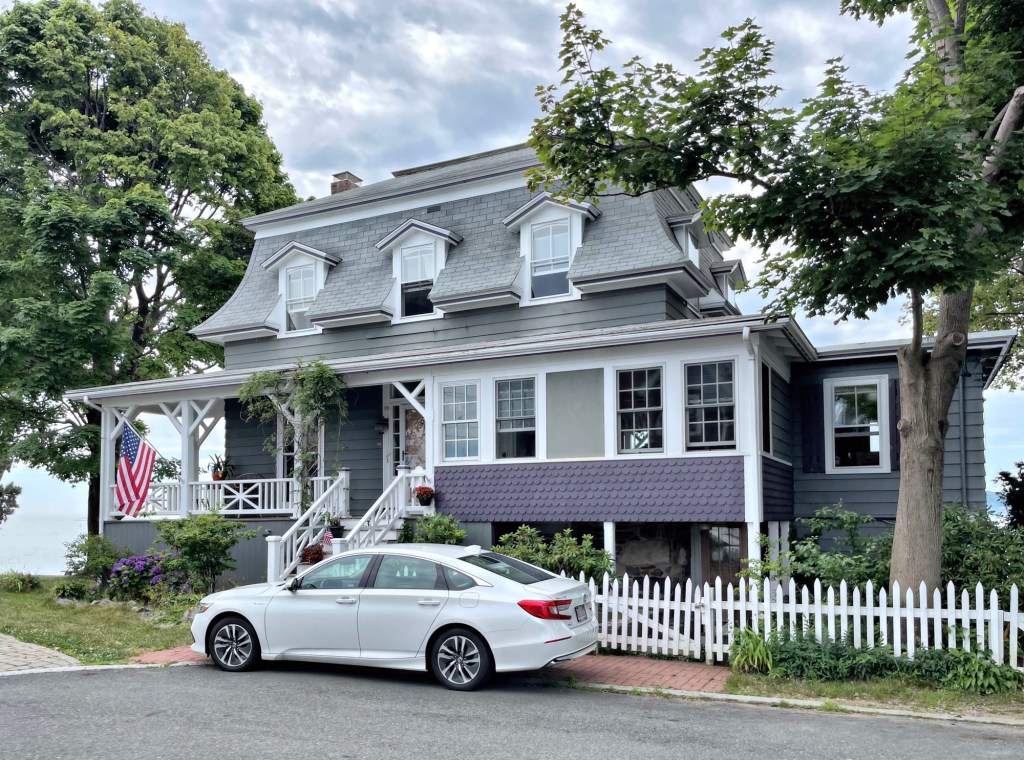
This charming mini-mansard summer cottage is located in the coastal neighborhood of Salem Willows, in Salem, Massachusetts. The neighborhood developed in the 1870s-1900s as a summer colony for middle-income families who wanted a second home away from the hustle-and-bustle of urban living in favor of ocean breezes. The cottage likely dates to the mid-1870s as one of the earliest summer homes in the neighborhood, and historic maps show it was owned by a P. Dempsey. It appears this is Patrick Dempsey (1821-1902), an Irish immigrant who settled in Lowell, Massachusetts, making it big as a liquor dealer and saloon-keeper. The Second Empire style cottage has a partially enclosed porch, but retains much of its original character and is located right on the water with sweeping views of the Atlantic Ocean.