Thurston-Gladding House // 1886

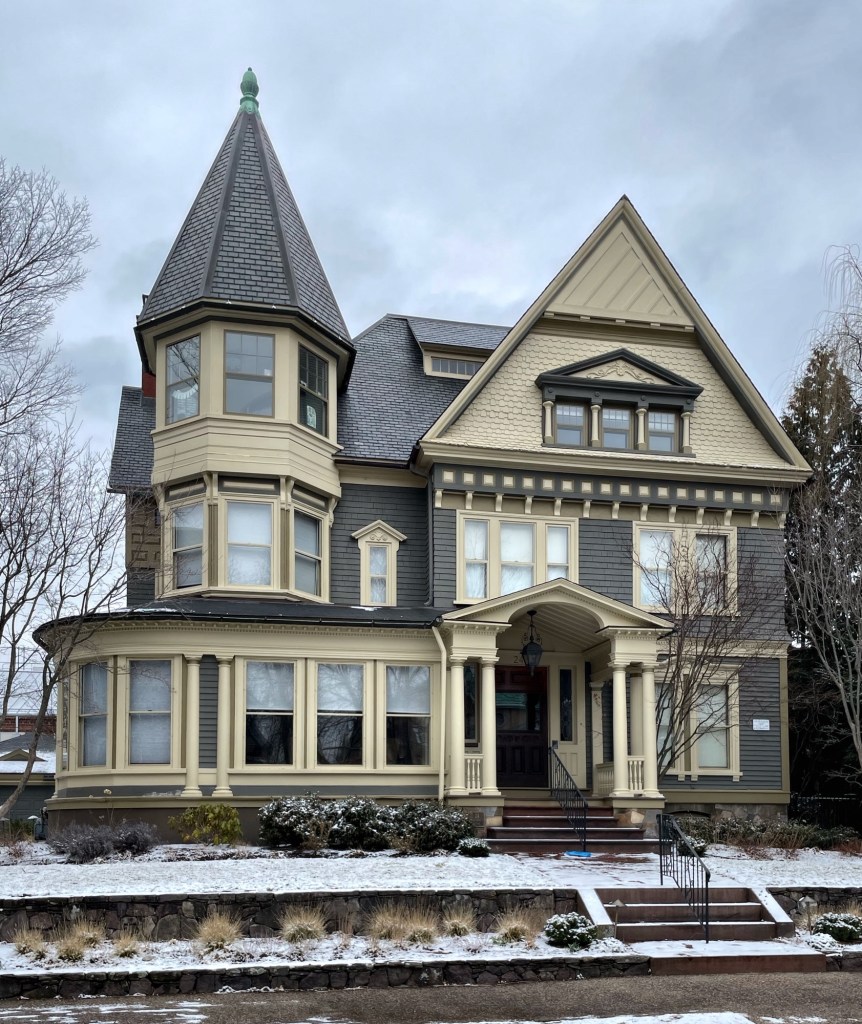
One of the finest Victorian-era houses in the College Hill/East Side area of Providence is this stately residence at 30 Stimson Avenue, known as the Thurston-Gladding House. The house was built for newlyweds, John Russell Gladding and Ellen (Thurston), on land given to the couple by Ellen’s father, attorney and judge, Benjamin Thurston. John Gladding was originally from Connecticut and the couple split their time between their Providence home and a country retreat in Thompson, Connecticut. Architects Thomas J. Gould and Frank W. Angell (Gould & Angell) furnished the plans for the home, which features a ground floor faced with textured brick and walls adorned by continuous wood shingle siding above. A rounded tower, projecting bays and dormers, and a elongated front porch break up the massing into a pleasing composition.

Louis E. Robinson House // 1892

Built in 1892, at the height of the convergence of tastes of the Queen Anne Victorian and more traditional Colonial Revival architectural styles, the Louis E. Robinson House at 60 Stimson Avenue in Providence, Rhode Island, showcases the intricacies and whimsy that can be designed when a house is a blending of styles. The residence was built for Louis Elmer Robinson (not Robertson like so many sources claim), a cotton dealer and merchant, from plans by architect Frank W. Angell of the firm, Gould & Angell of Providence. The Robinson House is a gambrel-roofed mass, set gable end to the street, leaving only the ground story and side elevations in clapboard. The polygonal half-tower attached to the side elevation and its paneled grouping of windows retains the older medieval allusion of the early Queen Anne style, but with a swans neck pediment topping the stair hall window showcased the Colonial influence. I am imagining the home with a more period-appropriate color palette, but it still shines!

Newton D. Arnold House // 1888

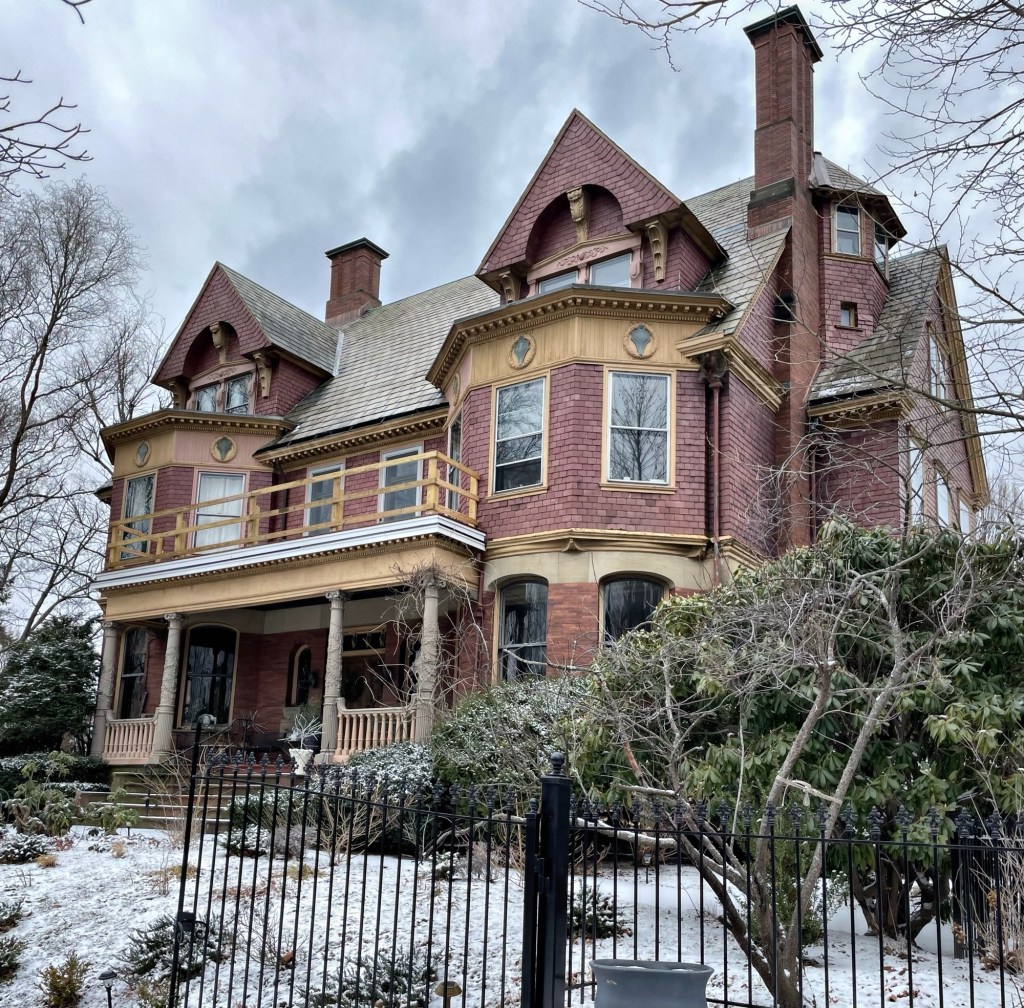
Behold, a Queen Anne Victorian house in all her majesty! This residence, the Newton D. Arnold House, is located at 24 Stimson Avenue in Providence, and is one of the finest examples of its style in the city. Newton Darling Arnold (1843-1916) was employed at the Rumford Chemical Works serving as Treasurer for the company and from this position, accepted additional roles in banking and fraternal organizations, like the Freemasons, where he served a term as Grand Master of the secret society. Newton and his wife, Caroline, purchased a house lot on Stimson Avenue and set out to build one of the finest homes in Providence. To achieve this, they hired local architect, Edward I. Nickerson, to furnish designs. The Arnold House is covered by clapboard and shingle siding beneath a complex, cross-gabled roof of slate, with an ornate gable end and two-story corner tower.

Ellen and Charles Baker House // 1898

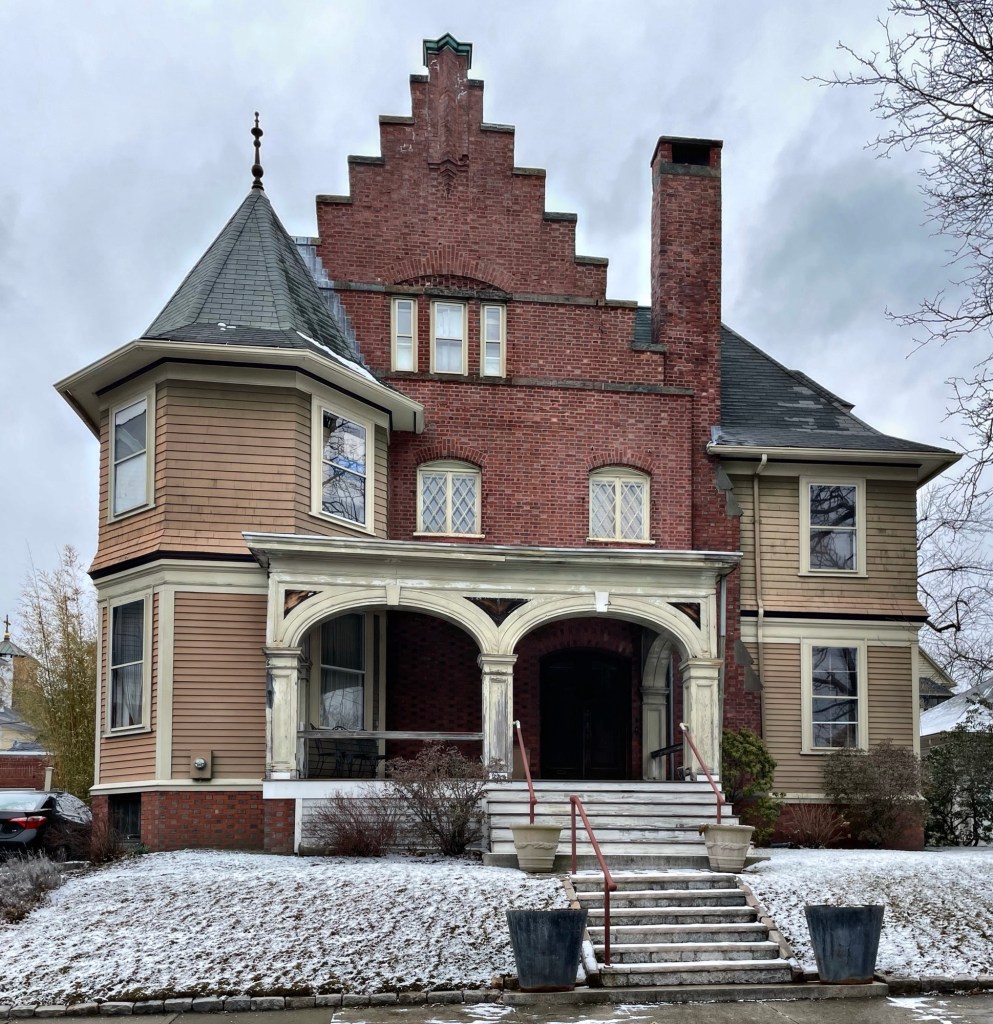
The versatility of the Queen Anne style of architecture is unmatched! This stunning example is located at 67 Stimson Avenue in Providence, Rhode Island, and was built in 1898 for Charles H. Baker and his wife, Ellen. Mr. Baker was a superintendent at the Gorham Manufacturing Company, one of the largest manufacturers of sterling and silverplate tableware in America. Sadly, Charles Baker would not get to enjoy the house for long as he died within a year of the house being finished. Ellen and the couple’s daughter, Maude, would reside here for years later. The Providence architectural firm of Gould and Angell designed the house with a large brick Flemish gable breaking the shingled mass of the house in a really abrupt, yet pleasing way.

Goodwin House // 1886

Queen Anne style buildings are a favorite as they are all so different and interesting to look at with all the ornate details, asymmetrical forms, varied siding, and rooflines. This example on Stimson Avenue in Providence is a great example of the style. The house was built in 1886 for William P. Goodwin (1852-1921), a banker, insurance executive, and author, who never married and lived in the house with his sister, Sarah Jane Goodwin. Keeping it in the family, William hired his brother, architect, John Bray Goodwin, to design his residence, with little expense spared. Interestingly, the house is built right at the street with its front door accessed up a stair and a brick base adjacent to enclose the property from the sidewalk, creating a high garden wall with gate. There is so much to look at here, it is spectacular.

Joseph Fletcher House and Stable // 1889

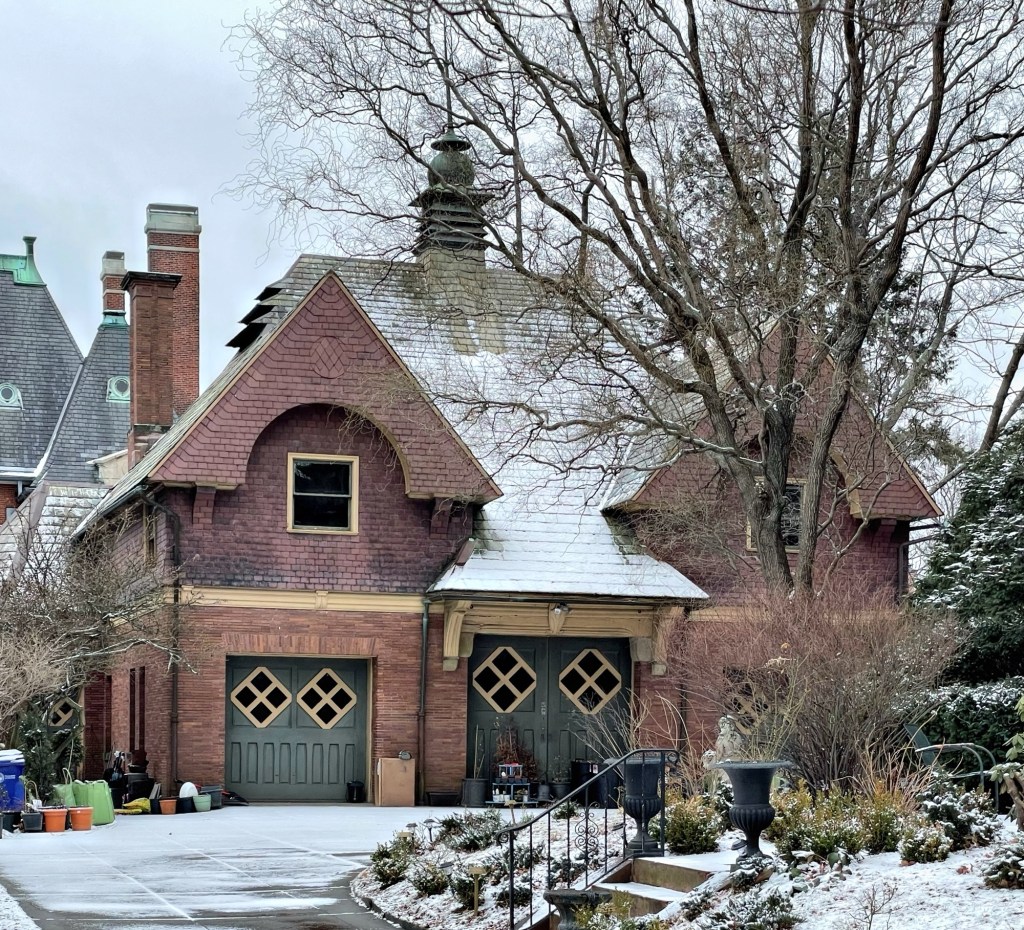
With red brick and slate siding and all the finest trimmings, this house looks like a present wrapped under the Christmas tree! The Joseph Fletcher House is located at 19 Stimson Avenue in Providence, Rhode Island, and is an excellent example of a Queen Anne residence with the innovative use of siding types often found in the style. The residence was built in 1889 for textile manufacturer, Joseph Edward Fletcher (1866-1924), the son of wealthy, English-born manufacturer, Charles Fletcher. The Fletcher house and adjacent stable were designed by Stone, Carpenter & Willson, one of the most prestigious architectural firms in New England at this period. It is believed that the site was developed by Charles Fletcher, as a wedding gift to his 23-year-old son and daughter-in-law following their marriage. The home was recently sold, and the interiors are as stunning as the exterior!

Beckwith House – Partridge Hall // 1882

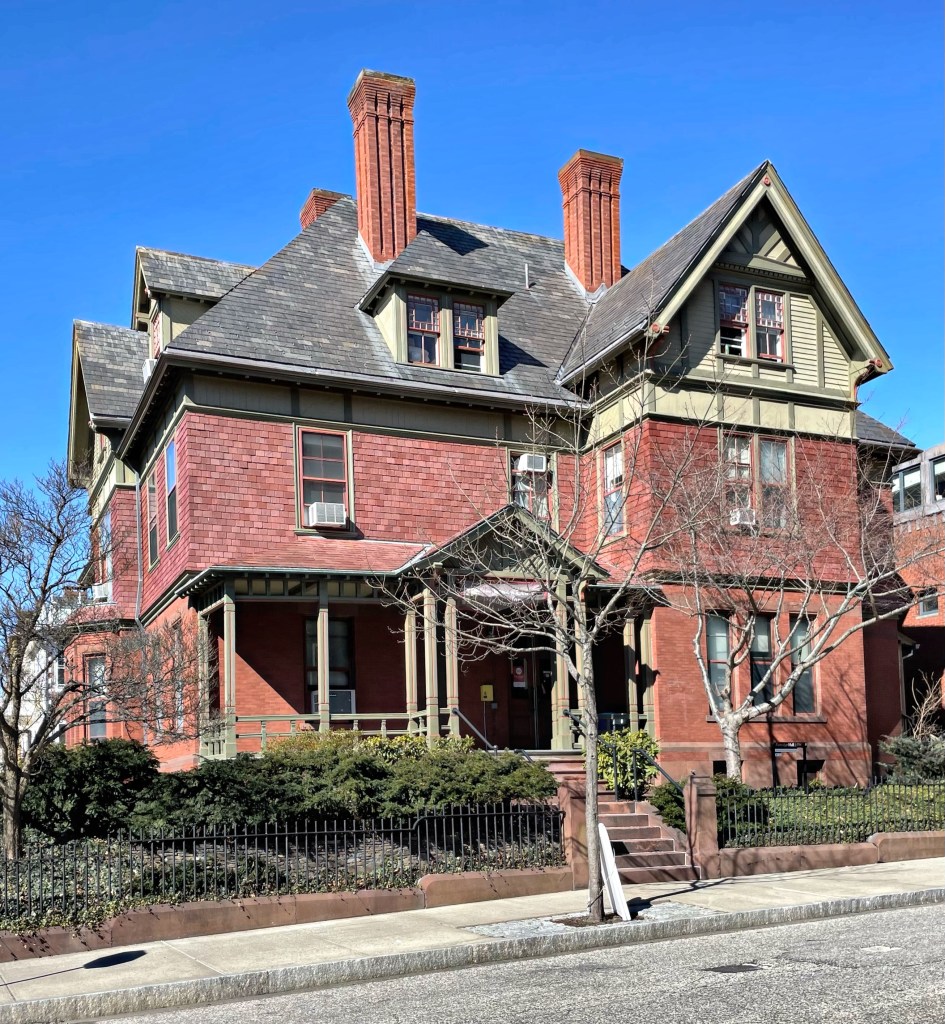
Henry Truman Beckwith (1808-1893) was born in Providence and (of course) enrolled at Brown University. He left school after two years and wished to see the world. He began to work as a cargo clerk aboard ships for a cotton merchant of Macon, Georgia. He traveled between Boston and Calcutta at least twice, bringing aboard novels from American and British authors, spending much of his time reading. Being well-read and without a family of his own (he never married), he devoted much of his time to clubs and organizations including: the Providence Athenaeum, Rhode Island Historical Society, and the Rhode Island Horticultural Society. In the later years of his life, Henry had this Queen Anne style home built in College Hill, on the same block as the Historical Society where he was a member. The Beckwith House was eventually acquired by Brown University and has since been known as Partridge Hall. The building is now home to the Brown Center for Students of Color, an organization that was established after a series of student protests in 1968 and 1975. Amid the civil rights movement of the late 1960s and 1970s, a group of Black students walked out of Brown University in December 1968 in protest of fierce racism on campus. The mission of the Brown Center for Students of Color has evolved over the years, but its current mission statement reads “Visualize. Vocalize. Mobilize”, they remain an integral piece of the campus and provide much-needed space for students of color to build a sense of community on campus.