The Billingsgate Cottage // 1892

In 1892, this large summer “cottage” was built in the Land’s End section on the coast of Rockport, Massachusetts. The large summer residence was built for the Thatcher sisters of Roxbury and was named “The Billingsgate” after their mother’s maiden name, Billings. Caroline Billings Thatcher would summer here with upwards of her four other sisters, Lillian, Margaret, Mary, and Elizabeth, to escape from the city. The large summer cottage features a rubblestone first floor with stone columns supporting the shingled floor above. A large gambrel roof and dormers punctuate the façade and showcase the simplicity and elegance of the Shingle style.
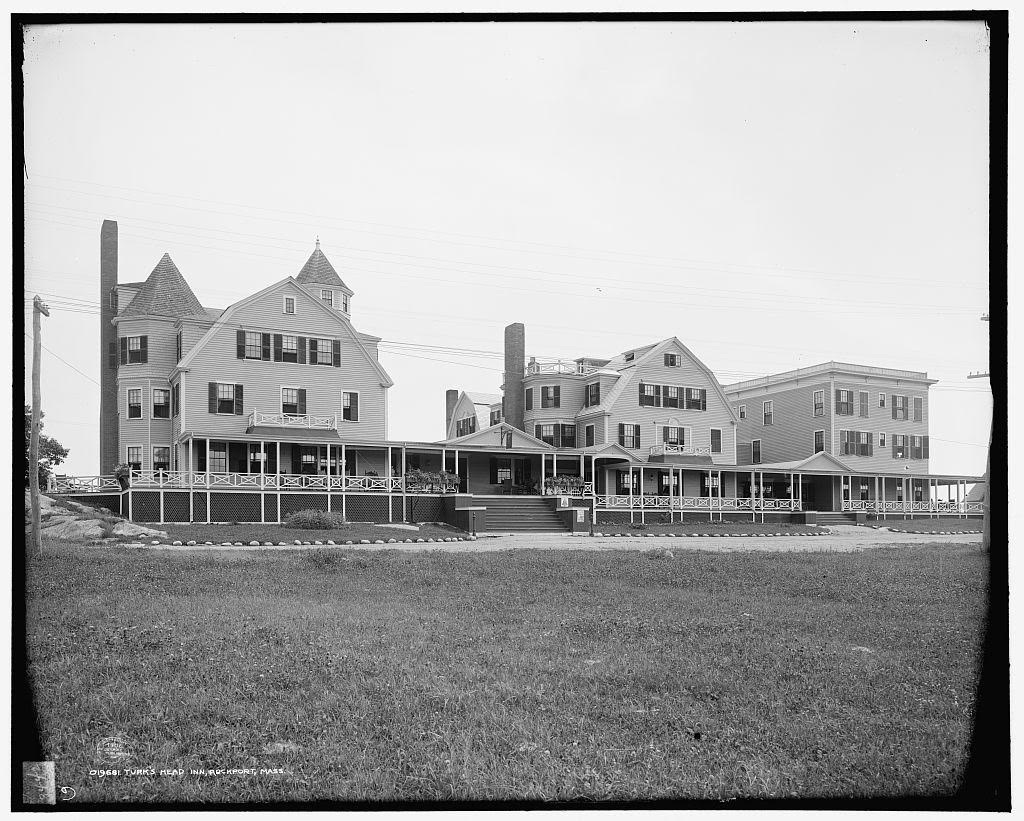
Turk’s Head Inn // 1890-1970

The Turk’s Head Inn was once Rockport’s grandest getaway. For those uninterested in building their own summer cottage to spend the along the coast of Massachusetts, luxury summer resorts provided summer rentals for those escaping the hot and polluted cities in favor of cool ocean breezes. Once situated in the  Land’s End section of Rockport, the Turk’s Head Inn, had sweeping views of the coast and islands in the distance. The initial portion was built from 1889 to 1890 by builder J. M. Wetherill of Rockport based on plans by architect H. M. Stephenson of Boston. It was expanded and became this rambling, E-shaped Colonial Revival structure with a seaboard frontage of two hundred feet and wraparound verandas over three hundred feet in length. Over the years, the Turk’s Head Inn suffered a number of fires, and its central and southeast wings were rebuilt, the latter in 1905 by then owner C.B. Martin. With a peak capacity of 200, the hotel, uncharacteristic of the regional hospitality industry, remained in operation for eighty years before it was closed down, partially destroyed by fire, and the remains removed in 1970.

Haskins Cottage // c.1910

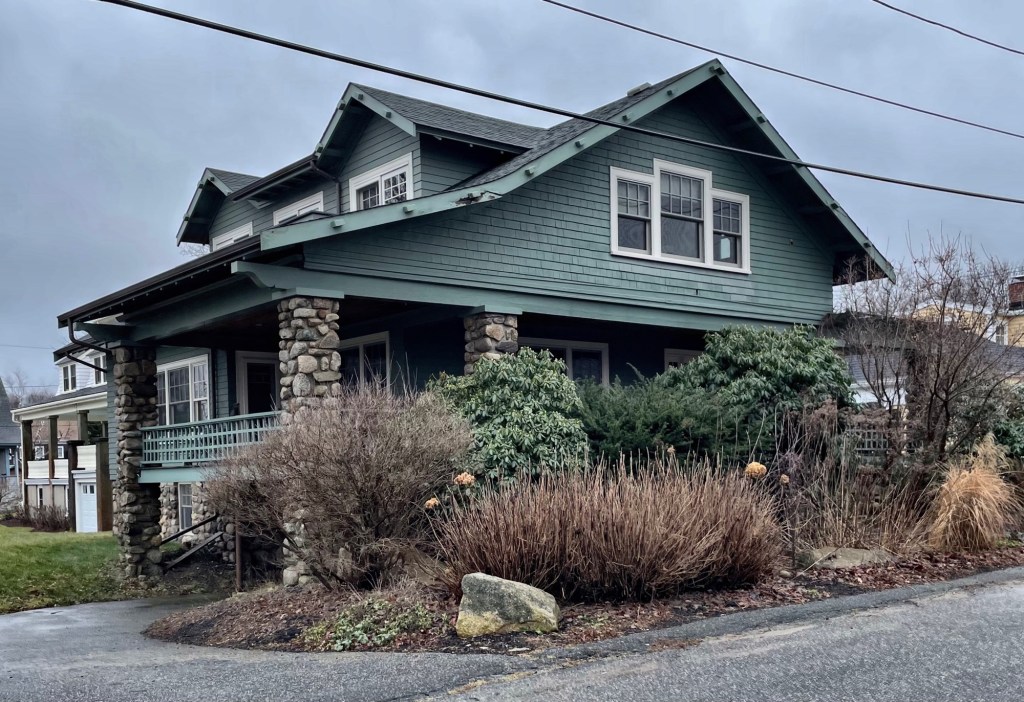
Another great turn-of-the-century summer cottage in Rockport’s Headlands neighborhood is this c.1910 Craftsman house on Norwood Street. The listed early owner was L. S. Haskins who likely utilized the house as a summer residence. Architecturally, the cottage follows the Craftsman form with a low-sloped roof with broad eaves, shed dormer, exposed rafters, and rubblestone foundation and columns of stones taken from the site and nearby neighborhood.  

Windswept Cottage // 1909

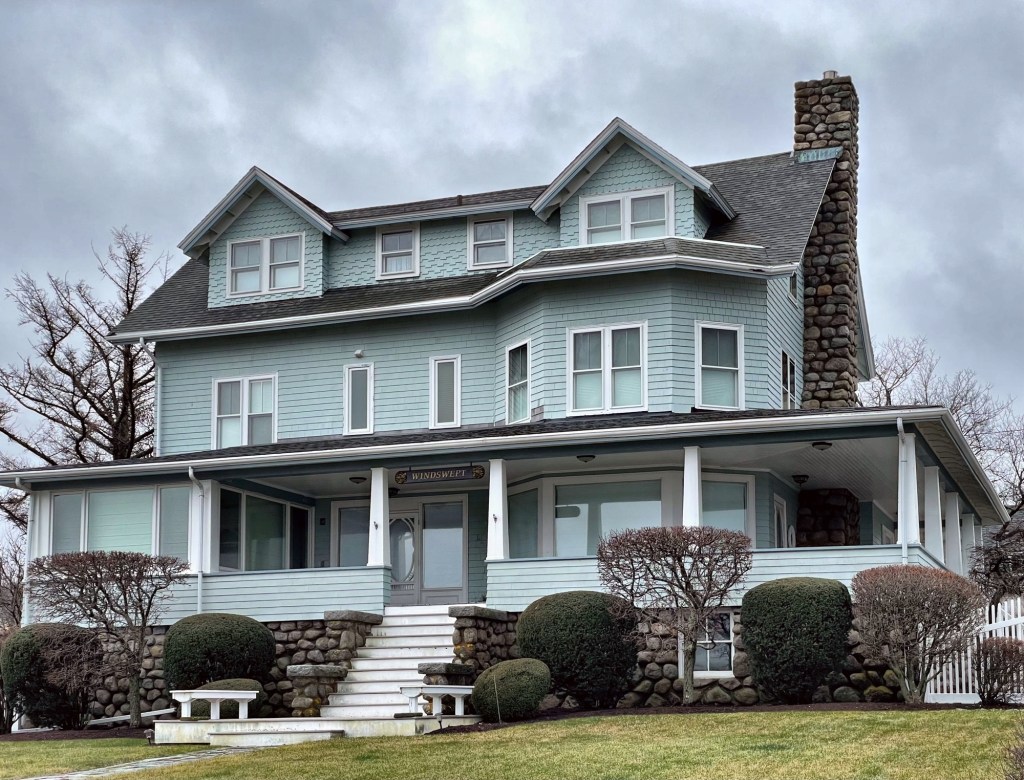
The coastal towns of Gloucester, Manchester, and Beverly on the North Shore of Massachusetts often are known for their historic summer “cottages” but great examples can be found right here in Rockport! This is “Windswept”, the W. W. Blunt cottage, located in the Headlands section of town, just south of the harbor. Walton W. Blunt worked as the Treasurer and General Manager of the Boston Journal newspaper and resided in Boston, later purchasing multiple adjoining house lots in Rockport for a summer residence. The two-and-a-half story house was designed by a Rutherford Smith, who sought to utilize fieldstone found nearby for the foundation and chimneys and shingle siding above. Detailed descriptions of the new house were featured in a local newspaper in 1909 and mentioned tennis courts on the grounds, an apartment for servants, and a billiard room in the third floor. It is not clear when the house got its name, “Windswept”, but the name is just too fitting!

Old Granite Shore Hotel // c.1755

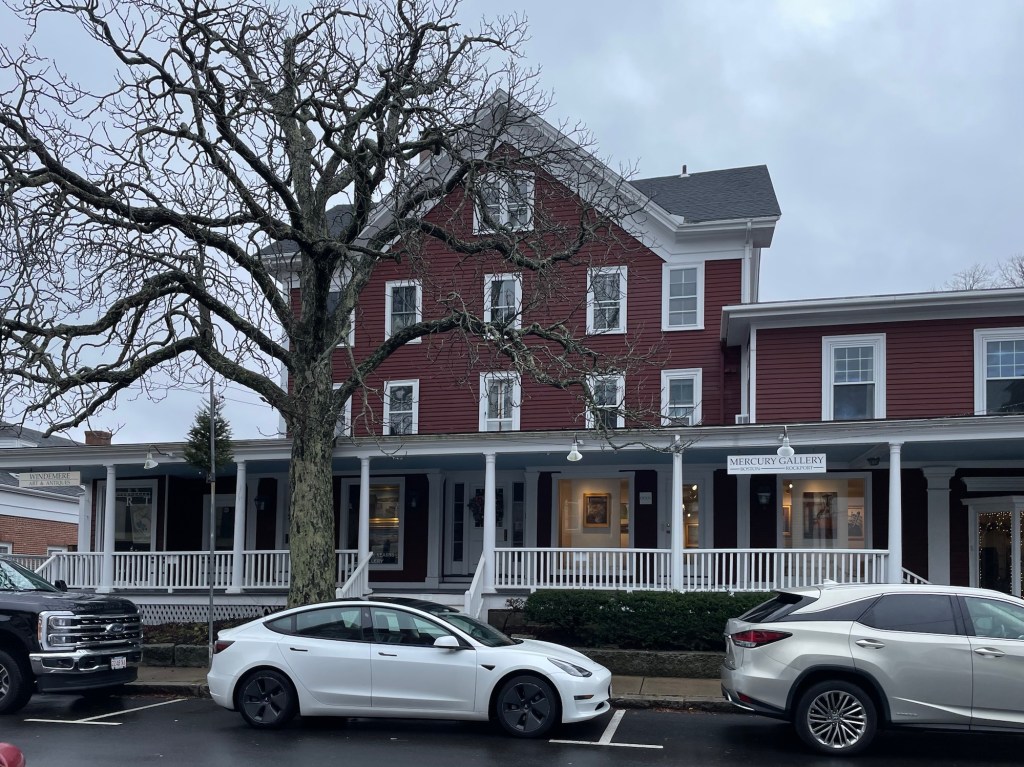
Reverend Ebenezer Cleveland (1725-1805) graduated from Yale College in 1749 and would move to Rockport (then a parish town of Gloucester) accepting the call as the village’s pastor for its Congregational Church. By around 1755, he lived in a house on this site next to the church before becoming a chaplain in the French and Indian War, fighting at the Battle of Bunker Hill, and helping to establish Dartmouth College. The property here was later owned by Jabez R. Gott, a deacon of the Congregational Church and the original cashier of the Rockport National Bank until his death in 1876. Sometime in the next decade, the Cleveland House was converted to a summer hotel, known as the Granite Shore Hotel. The original Georgian-era structure was heavily altered and expanded to provide new rooms and amenities for seasonal guests. An 1905 book showed rooms available at the Granite Shore for $2 a night. By 1919, the rates were $3 a day or between $15 and $18 a week! The hotel closed sometime in the 1940s and the building is now home to art galleries.

Commercial Cable Company Relay House // 1884

This shingled house in Rockport may look like an ordinary 1880s residence, but it was actually built as an important piece of infrastructure! This is the Commercial Cable Company’s Relay House, built in 1884 to serve as a terminus to a transatlantic cable providing communication across the Atlantic Ocean. Up until 1884, a French company, the Atlantic Telegraph Company, was the sole provider of transatlantic telegraph cables. James Gordon Bennett, editor of the New York Herald, was dissatisfied was the 50 cents per word he had to pay for transatlantic telegraphs. Seeking to break ATC’s monopoly, he convinced millionaire John W. Mackay to create the Commercial Cable Company. That company put down two cables from Ireland to Nova Scotia with two other lines to the United States, one to Rockaway Beach, Long Island, and the other to Rockport. This building housed offices on the first floor and a billiards room for employees on the second floor with machine shop in the basement to service equipment. Cable operations continued from this building until 1935 when newer international communications made cable lines obsolete. The Relay House was converted to residential use, and while it has been altered, it still maintains its significance architecturally and historically.

Sewall-Scripture House // 1832

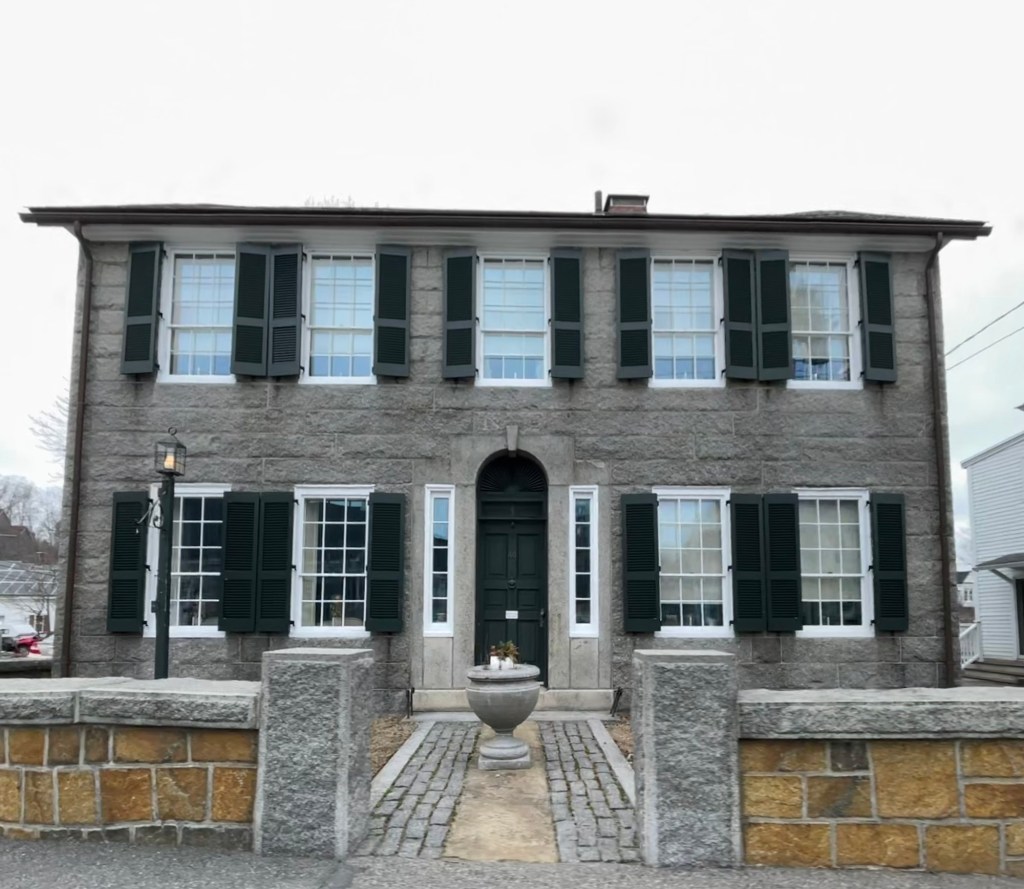
Levi Sewall (1805-1880), a native of Maine, built this stunning granite Federal style house in Rockport, Massachusetts in 1832 in preparation for his marriage to Mary Ann Robards. The granite blocks used to build the house were hauled by oxen from Sewall’s own quarry in Pigeon Cove, which is said to have produced stone of excellent quality. Sewall was one of the towns earliest entrepreneurs in the granite business and did quite well, supplying the building material to many of the region’s buildings in the mid 19th century. The property was inherited by Levi and Mary’s son-in-law, Frank Scripture, who took over the family business. Levi Sewall’s descendants occupied the Sewall-Scripture House until 1957, and ever since, it has been home to the Sandy Bay Historical Society and Museum.

Saunders Cottage // c.1900

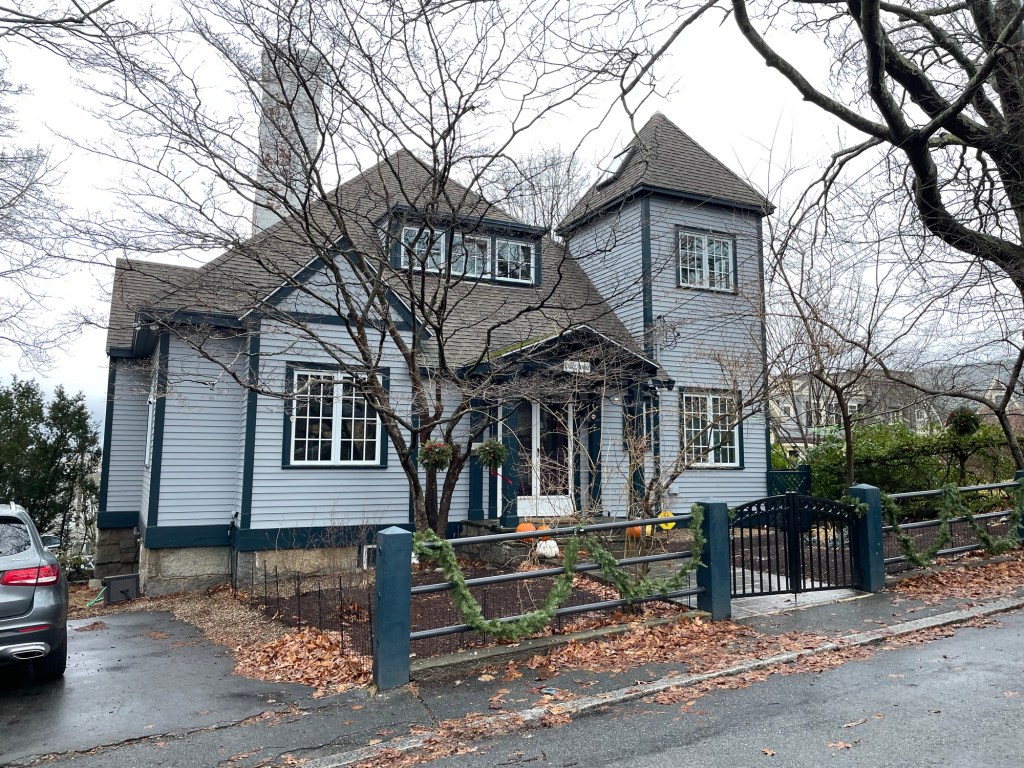
Charles Saunders, a carpenter, and his wife Annie Saunders, seemingly built and lived in this Shingle style cottage in the Ocean View summer colony of Rockport. The couple shows up in census records as living here in 1910 while in their 50s. The house likely dates to the 1890s and is a great example of the Shingle style for a middle-class residence. The house features a corner tower and a wrap-around porch with continuous shingle siding and columns. The property was deeded to a Lawrence Regester in 1924 when Annie sold the property after Charles’ death. The shingled cottage has remained in a great state of preservation for its existence!

Haven Avenue Cottages // c.1877

When Andrews Point in northern Rockport, Massachusetts, was opened for development by speculators Eben B. Phillips and George Babson, they envisioned the colony, “Ocean View” as a rival to other nearby summer colonies of Beverly Farms, Gloucester, and Magnolia. Roads were laid out and house lots were plotted with larger lots for big summer cottages along the coast and smaller cottage lots at the interior of the development. The rocky coast and more limited access compared to its rivals, caused Ocean View to lack in sales, but there are still some great remaining cottages to be found here. These two early cottages are great surviving examples of the modest, middle-class homes for summer residents. These two charming Victorian cottages sit side-by-side and were owned by an L. Brigham and Benjamin Lewis and both are in a great state of preservation 150 years later.

Oak Knoll Cottage // c.1877

One of the earlier cottages built in the Oceanview summer colony of Rockport, Massachusetts is this charming example of a late-Italianate style residence on Phillips Avenue. Local lore states that the cottage was owned by Lucy Canney, the wife of Edwin Canney, who operated multiple granite quarries in town. Oak Knoll was possibly used as a boarding house for visiting guests of the quarries to stay at when inspecting the quality of the granite. The Canney’s sold off much of their property in the area by the end of the 19th century, and the cottage was later owned or occupied by Dr. Helen Morton (1834-1916), a Boston-based obstetrician and one of the early generation of women physicians practicing in Boston in the nineteenth century. Dr. Morton spent most of her time in a townhouse on Marlborough Street in Boston’s Back Bay with her possible partner, another obstetrician, Mary Forrester Hobart, but likely escaped to this cottage for some rest and relaxation for the summers.