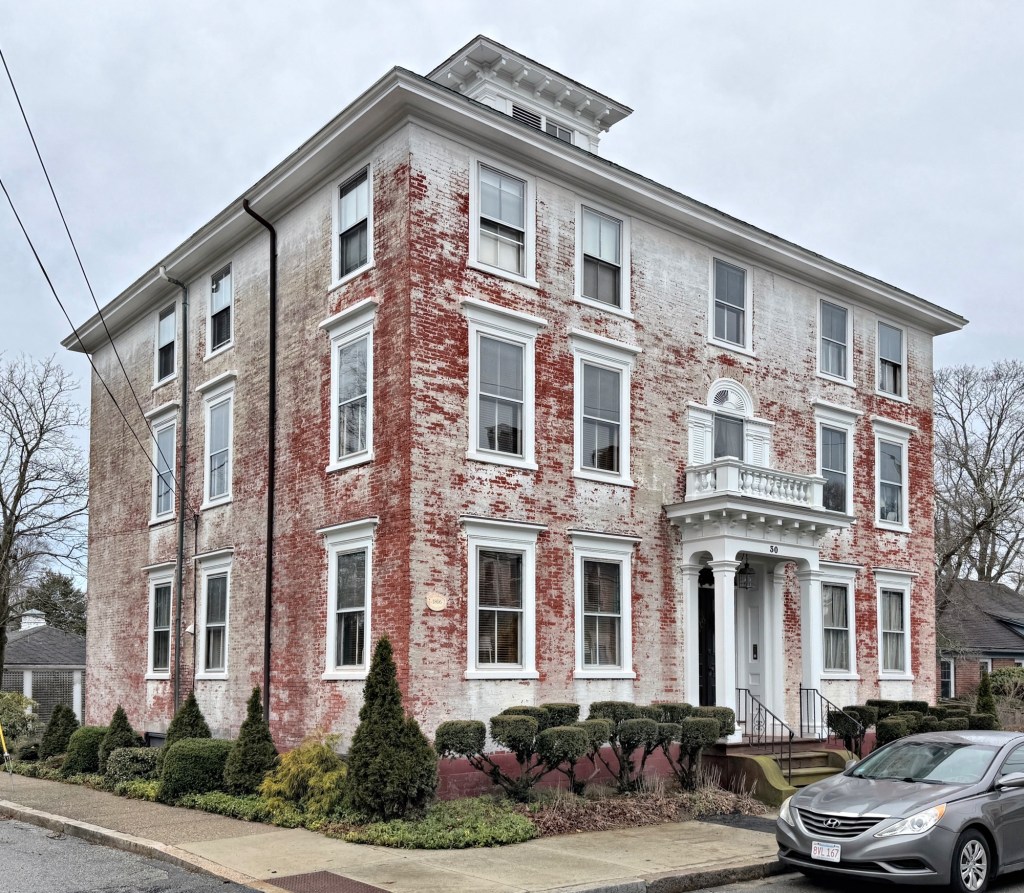
Eddy-Cutler House // c.1806

Located next door to the Rebecca Maxwell Phillips House on State Street in Warren, Rhode Island the Eddy-Cutler House remains as one of the finest Federal style residences built of brick in the charming waterfront town. Warren merchant and slave trader Benjamin Eddy purchased this desirable house lot in 1806 from John Throop Child, a town councilman and slave owner in 1774 who built slave ships before the Revolutionary War. Benjamin Eddy began construction on his mansion by 1806, and it was completed sometime before the War of 1812. Like many of the town’s wealthiest residents, Benjamin Eddy was engaged in the slave trade. Captain Benjamin Eddy was captain of at least three slave voyages, delivering 139 captives to docks in Charleston, South Carolina, in June 1806 alone. In 1808, just before the “Act Prohibiting the Importation of Slaves” he purchased and imprisoned 176 Africans – the largest number ever carried on a Warren slave ship. Nineteen died during the return voyage. When he reached Charleston, South Carolina the remaining 157 people were sold into slavery. At the time, the sale would have returned nearly $33,000. He would return home to this mansion on money profited from human suffering, a story as American as apple pie. In 1871, the Eddy Homestead was sold to Charles R. Cutler, a ship master and whaler who had many successful voyages to the Indian Ocean before working in the manufacturing of cotton cordage. The three-story, five-bay Federal style mansion of brick features a Victorian-era porch, but retains its Palladian window with blind fan and lights over the entry and belvedere at the roof. Once painted, the brick is now slowly being re-exposed, a great sight to see.
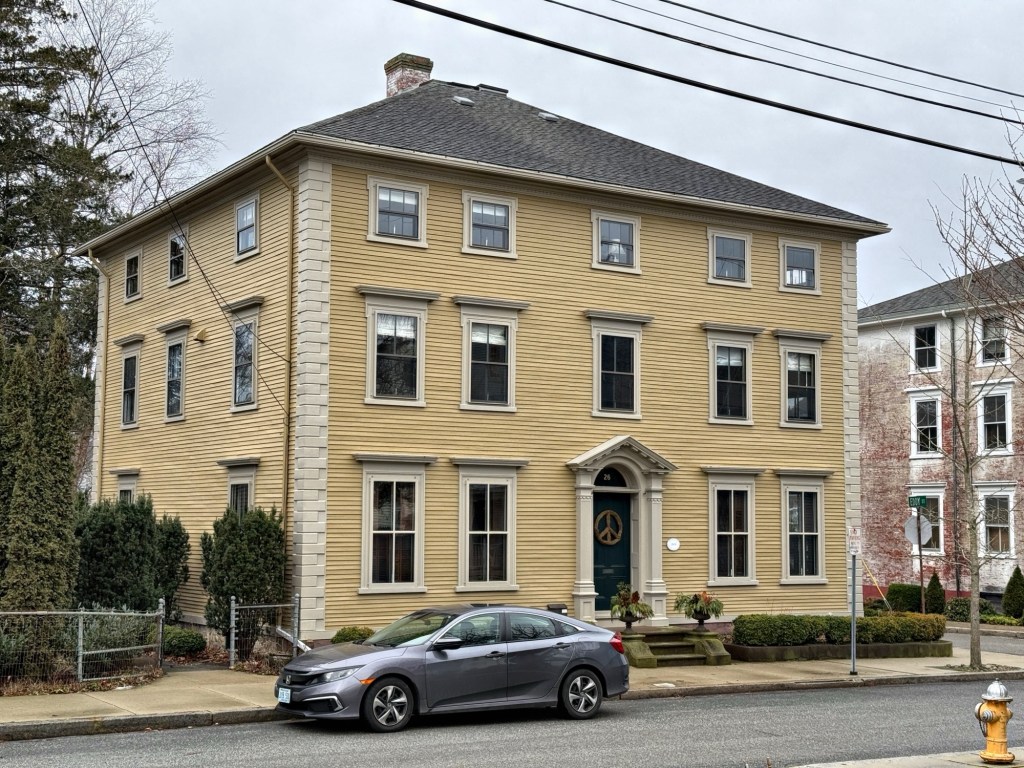
Rebecca Maxwell Phillips House // 1806

The Rebecca Maxwell Phillips House at 26 State Street in Warren, Rhode Island, is one of the state’s finest examples of the Federal style of architecture, though the building was funded through profits off of enslaved people. The house was funded by Warren resident, Squire James Maxwell for his daughter, Rebecca, and is traditionally said to have been a wedding present or possibly a gift to potential suitors to his daughter. The Maxwell family’s immense wealth was partially resulted from the illegal sale of enslaved Africans, including those illegally transported on his schooner, Abigail, which left Warren in September 1789. The captain of the vessel, Charles Collins, purchased 64 slaves on the coast of Africa, and sold them in the Americas by June of 1790. Of the 64 captives embarked on the ship, only 53 survived the voyage. This home was occupied by Rebecca Maxwell and her new husband, William Phillips. The three-story mansion exhibits a pedimented fanlight transom, corner quoins, and a shallow hipped roof. The property is located on an oversized lot which contains a massive Japanese Beech tree in the side yard, which is said to have been brought from Japan by Commodore Joel Abbot, who lived nearby, in 1853.

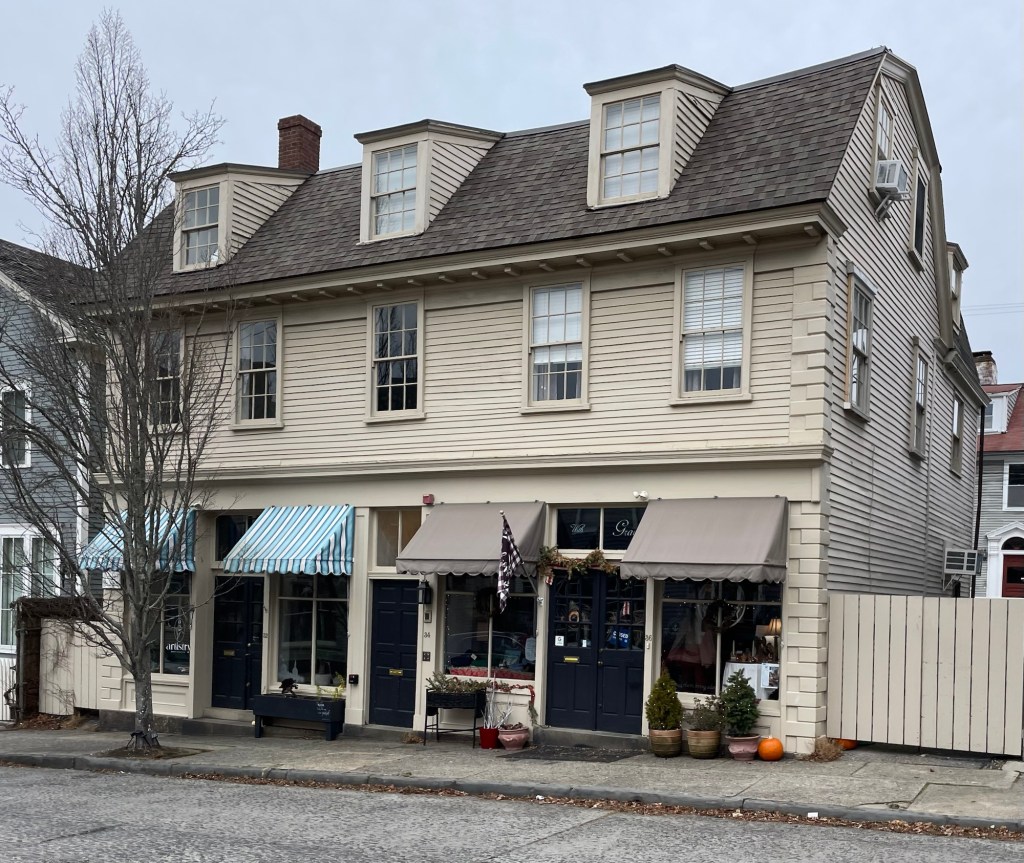
Captain Caleb Godfrey House // c.1740

In Newport, Rhode Island, you can find that even the more regular-looking historic buildings often hold an interesting (and sometimes troubling) past. Little information was available on this Georgian-era house, but I did some digging and turned up a lot. Rhode Island and Newport specifically had been a hub of trade going back to its founding by white settlers. Even though it was the smallest of the colonies, the great majority of slave ships leaving British North America came from Rhode Island ports. Historian Christy Clark-Pujara, in her book Dark Work, The Business of Slavery in Rhode Island, indicates that during “the colonial period in total, Rhode Island sent 514 slave ships to the coast of West Africa, while the rest of the colonies sent just 189.” Captain Caleb Godfrey, who owned this home on Franklin Street in Newport, was a sea captain and hired by wealthy merchants to pick up slaves in West Africa and bring them back to the British colonies. In 1754, Samuel and William Vernon of Newport hired Caleb to take their ship, “Hare“, taking captives from Sierra Leone and embarking them from South Carolina. Godfrey left Sierra Leone with 84 slaves aboard, but 16 died on the 10-week voyage or soon after the ship arrived in Charleston, their bodies were dumped at night into the sea. In South Carolina, a prominent slave dealer named Henry Laurens handled the sale of African captives from the Hare, placing an advertisement to attract the attention of local rice planters. Godfrey’s Newport home is a visual reminder on New England’s direct ties to the enslavement of African people and how the colonies benefited financially from this terrible trade.