Half Moon Tavern – Elmendorf House // c.1710

When Pieter Ostrander settled in Hurley, NY with his family in the late 1600s. Being of Dutch descent, he (and other settlers) built their homes and barns in Dutch traditions. This lot along the village’s main street was acquired by Pieter and inherited by his son, Arent in about 1710, about the time the home is estimated to have been built. It was acquired by the Elmendorf Family by the early 19th century. At that time, the property operated as the Half Moon Tavern, after Petrus Elmendorf purchased it in 1804. The addition to the east (right) was built as a weaving room. The property remained in the Elmendorf family until 2008 (that’s almost 300 years in two families!) It was acquired by the new owner who has been restoring and researching the home ever since. He runs a blog documenting the property’s rich history.
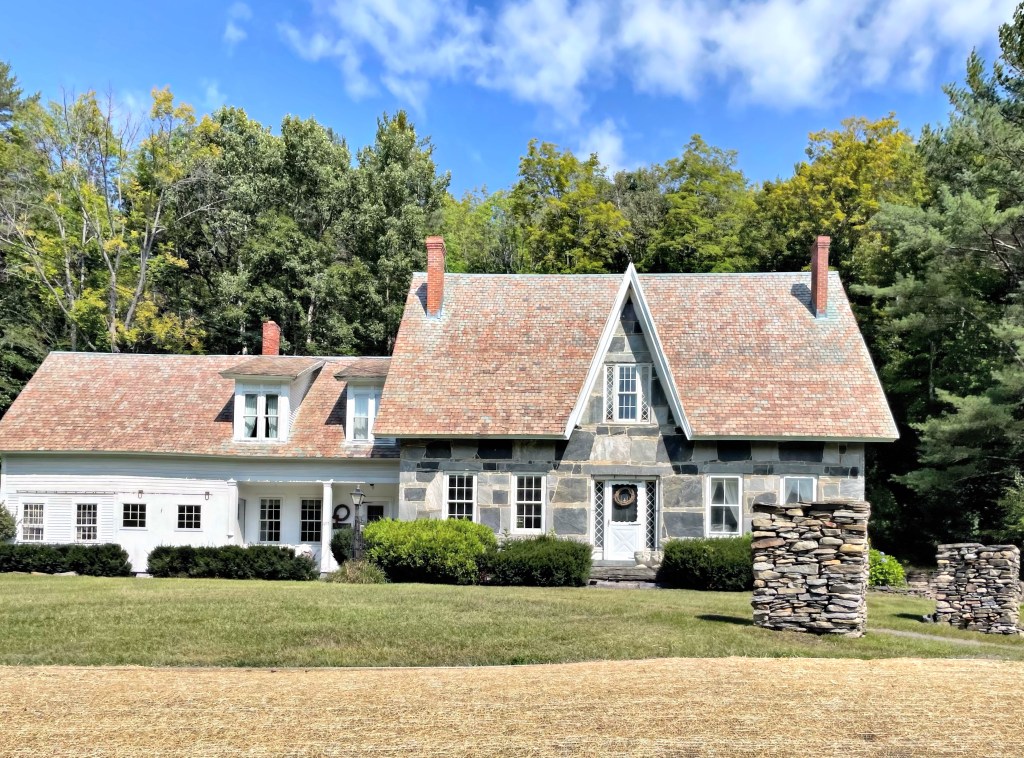
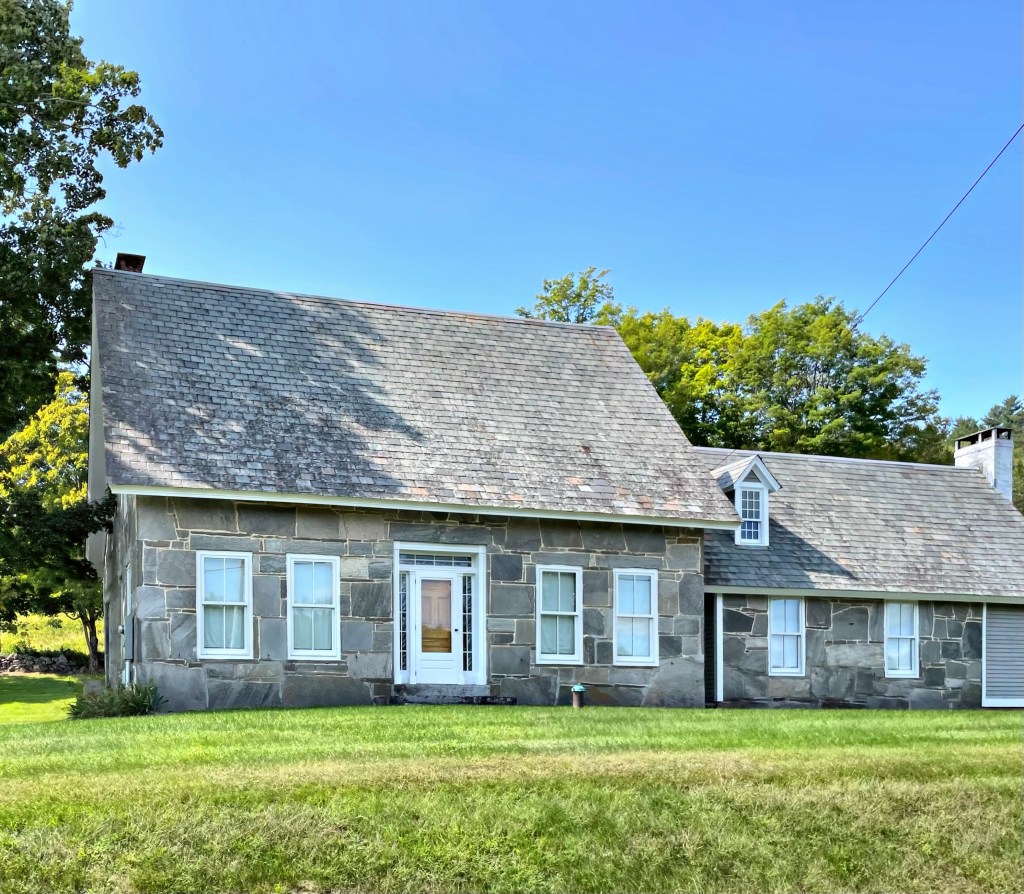
Joshua Parker Farmhouse // 1850

This house in Cavendish was constructed in 1850 by Joshua Parker and is an outstanding example of a gothicized snecked ashlar house. The house is in the Cape form and largely exhibits a more traditional cottage layout, but with the steep gable dormer, giving the home a distinctive Gothic feeling. The 1850 home replaced a late 18th century farmhouse, but in the iconic snecked ashlar construction. The farm grew over the subsequent decades, including a c.1900 snecked ashlar barn (not pictured), which is probably the last building of “Snecked Ashlar” construction erected in the State of Vermont.


James Spaulding House // c.1840

This Greek Revival cape house in Cavendish, Vermont sits along a rural road and is one of the few dozen examples of Snecked Ashlar buildings in this part of the state. In the early 1830s, skilled masons from Scotland settled in central Vermont to work on building projects there. A number of these builders, mainly from the Aberdeen area, were experienced in snecked ashlar construction, in which plates of stone are affixed to a rubblestone wall. This home was built for James Spaulding, and remained in the Spaulding family for generations, lovingly maintained as an excellent example of a Snecked Ashlar home in Vermont.

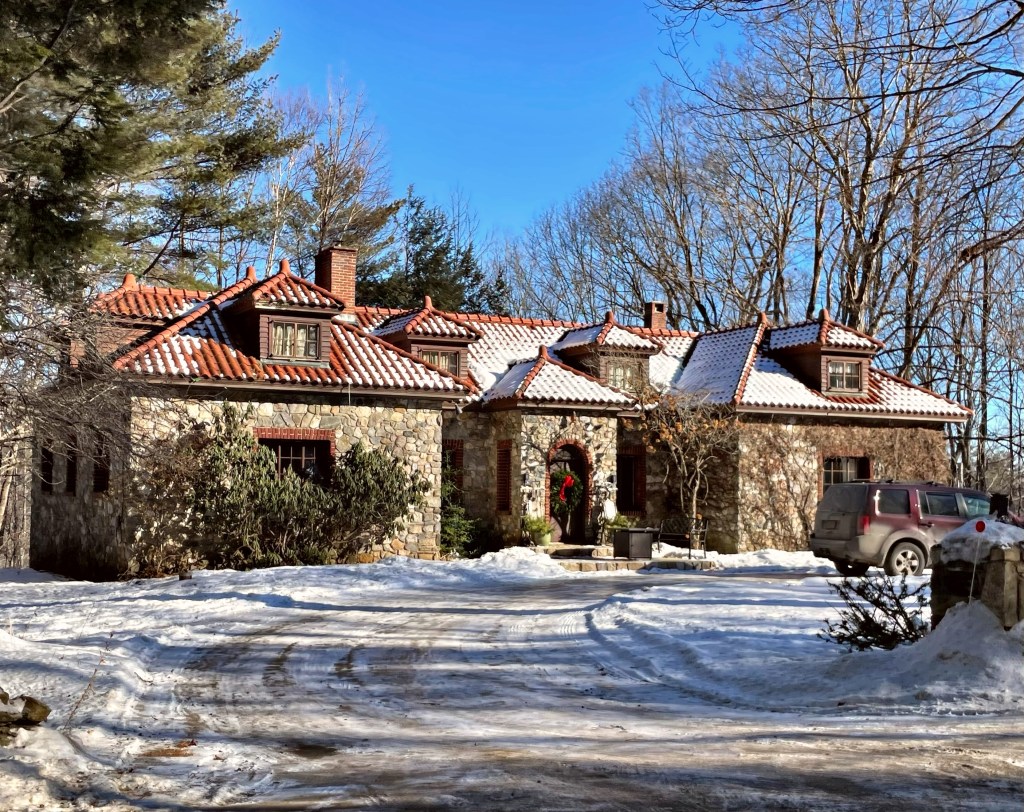
Wrightstone // 1925

In the early 20th century, Norway, Maine and the surrounding towns were sought-after for their natural beauty with large lakes and rivers with untouched expanses of forest. Upper-middle class residents of Portland, Boston and other larger cities in New England built more rustic summer homes, compared to the elaborate “White Elephants” in Newport, Rhode Island. This home in Norway was named Wrightstone and was built in 1925 for the Wright Family. The U-shaped home is constructed from rubblestone, likely gathered from the land on which it sits. The house blends the Arts and Crafts movement with the uncommon (in Maine) Spanish Colonial Revival style, with the terracotta roof! I bet the interior is so cozy!

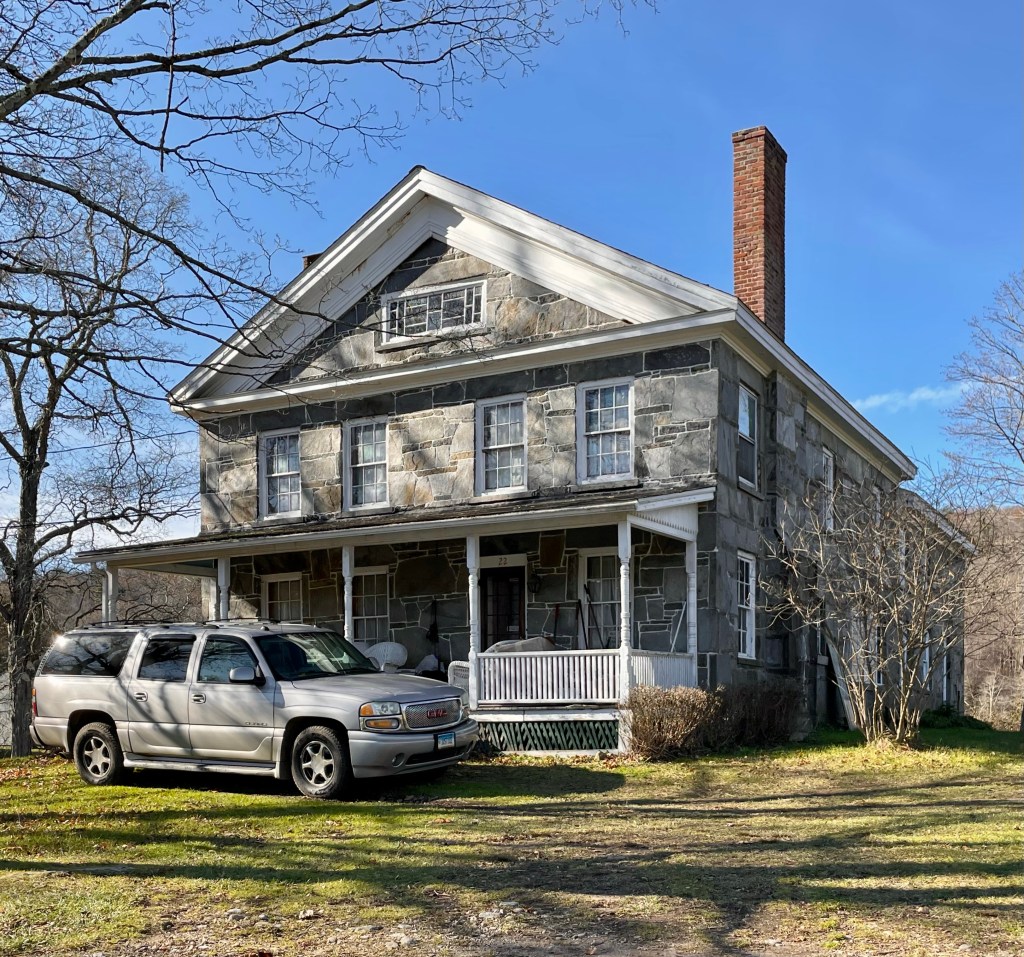
Barber-Perry Farmhouse // 1843

Known locally in Canton as the “Stone House,” the Barber-Perry House was built in 1843 by two brothers, Volney and Linus Barber, seemingly for their brother, Samuel. They used local stone for the construction, that was quarried to the north of the property. The house was bought by George W. Lamphier in 1866 and by Thomas M. Perry in 1944. Perry was a physicist working on gears for naval ordinance during the war. He worked in a shop on his property and soon started the T.M. Perry Company in 1955. The property here is still a working dairy farm, known as Perrys Dairy, and is reportedly the last working dairy farm in town!

Case Tavern // 1786

I now have a new favorite house! This STUNNING stone Georgian house with gambrel roof is located on a quiet country road in Canton, Connecticut. The house was built in 1786 by Dan Case (1761-1815), who served in the Revolutionary Army as a boy. Case operated the building as a tavern with an events/meeting hall in the third floor. Daniel later moved to Ohio, likely for more opportunity. The property is a single-family home and just looks so dang cozy. I am picturing small candles lit in the windows, with wreaths and snow dusting the lawn. Is it too early to dream about old houses dressed up for the Holidays?

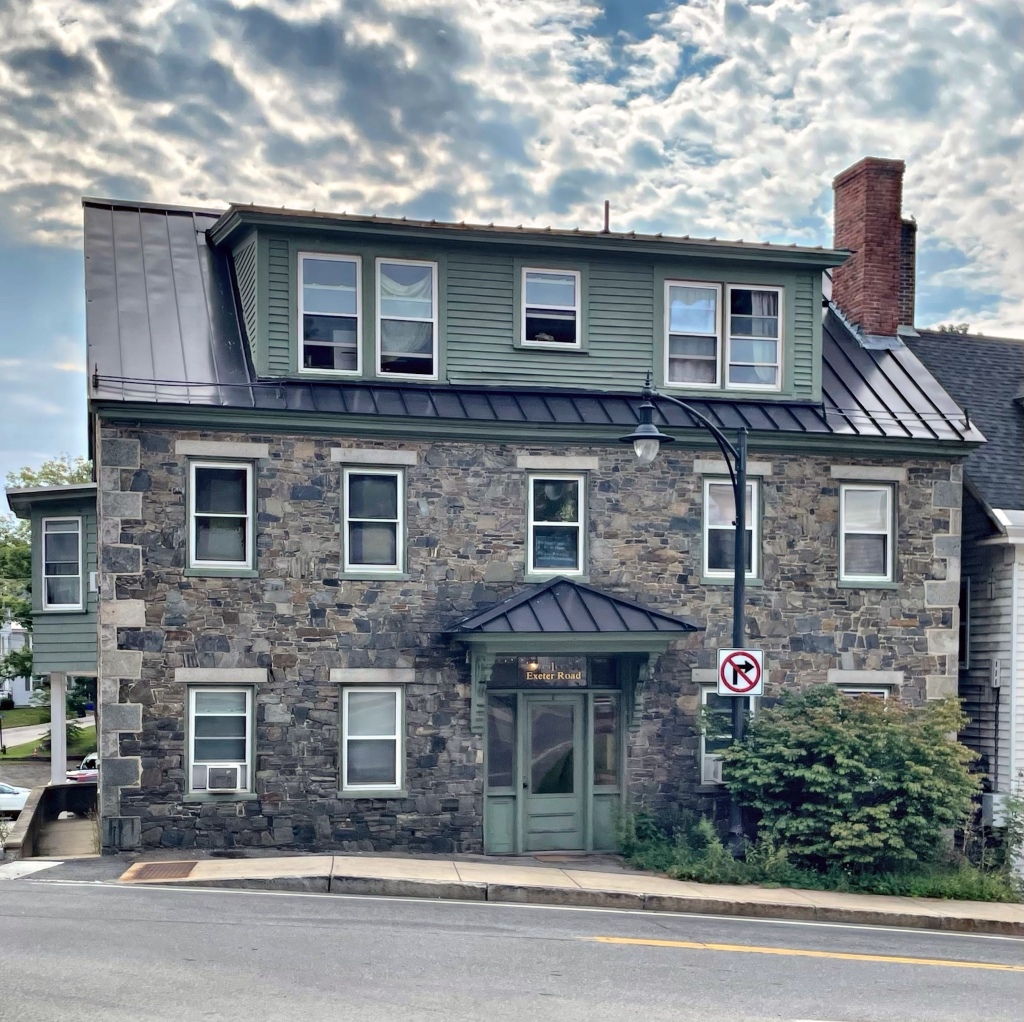
Mathes House // c.1835

Benjamin Mathes built this stone home around 1835 for his family, of the same stone he used to build a store across the street. The Federal/Greek Revival building has amazing granite quoins (stone blocks at the corners) and lintels (blocks above the windows). Even though there are later alterations, including the bracketed door hood and massive central dormer at the roof, the home remains one of the most visually stunning buildings in town.

Snell House // 1849

Amasa Snell (1794-1850) and his son Nelson built this house, just a year before his death. The house is yet another example of the vernacular snecked ashlar construction method, which Chester, Vermont is known for. This house is located in the rural Trebo section of town, an area where many of the masons who built these snecked ashlar homes lived. It stands out for the use of light and dark stone laid in alternating rows. This house is perfect!

Israel Moore Snecked Ashlar House // c.1846

Located on Main Street in Chester, Vermont, you can find this perfect little Snecked Ashlar home. The building technique is very local and can be found in just a handful of towns in central Vermont. Scottish-born masons from Canada introduced the technique to local masons while erecting a mill in nearby Cavendish in 1832, and within a few years, the first stone structure in North Chester village was built by local masons. Soon after, the local school, church and other homes were all constructed the same way. This home outside the Stone Village district was built later than almost all other examples in town. It features Federal and Greek Revival detailing with a central fluted fan at the door and large gable-front roof.

Have you heard of Snecked Ashlar before?

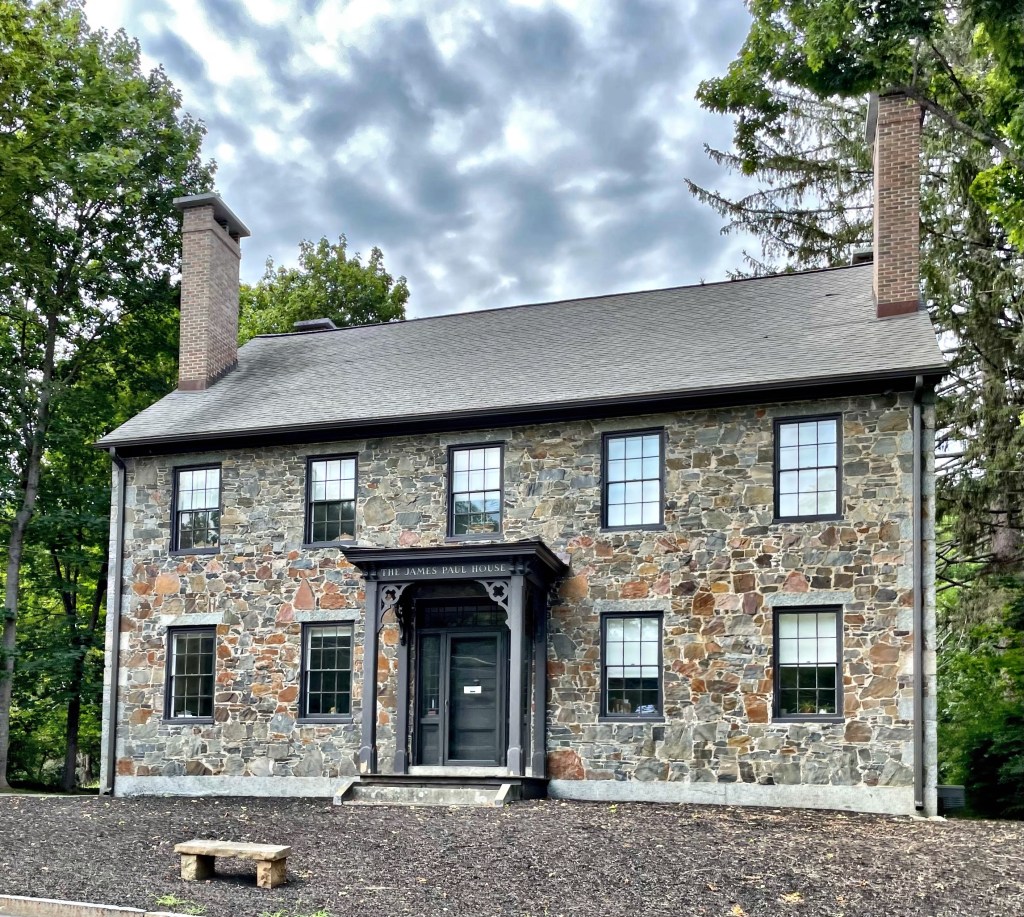
James Paul House // c.1835

The James Paul House in Durham, NH, stands out as a rare example of stone construction in town. The house was built between 1830 and 1840, and is transitional Federal/Greek Revival in style. It has four tall chimneys (two on each slope of the roof), granite lintels over the windows, and granite quoins at the corners which together, create an elegant composition. Tragically, James Paul died unexpectedly when removing the staging on this house, he was never able to live in this beauty. The home was occupied by two reverends of a local church.